

When you see a number on a bourbon bottle, it’s telling you a story. It’s a story of time, patience, and the incredible transformation that happens inside a barrel. The age of bourbon isn't just an arbitrary number; it’s the exact amount of time the spirit has spent resting in a new, charred oak barrel, soaking up all the color and flavor that makes it so special.
This is where the real magic happens, and for new whiskey drinkers, understanding this process is the first step to appreciating what’s in your glass.
What the Age of Bourbon Really Means
When you pick up a bottle of bourbon, the number on the label—or the lack of one—is your first clue to what’s inside. These aren't just suggestions from the marketing department; they're part of a strict legal framework designed to give whiskey drinkers a clear picture of what they’re buying.
The modern story of bourbon’s age was truly cemented in 1964 when the U.S. Congress officially declared it "America's Native Spirit." This resolution laid down the law, including the non-negotiable rule that all bourbon must be aged in new, charred oak containers. This single requirement is the bedrock of bourbon’s unique flavor profile, setting it apart from just about every other whiskey in the world.
The Legal Language of Bourbon Aging
While the law demands aging in new charred oak, it doesn’t always set a minimum time limit. The rules shift based on the exact words you see on the label. This is where things get interesting for enthusiasts, especially when you're exploring the incredible variety offered by American craft whiskey brands.
Here are the key distinctions every bourbon fan should commit to memory:
- Bourbon: If the label simply says "Bourbon," it could have technically been aged for just a few moments. There's no minimum aging requirement, but don't worry—most producers let their spirits rest for much longer.
- Straight Bourbon: This term is a big step up. To earn the "Straight Bourbon" title, the whiskey must be aged for a minimum of two years. Think of it as a baseline for quality you can trust.
- Age Statements: If a Straight Bourbon is aged for less than four years, the distillery must print its exact age on the label. Once it hits the four-year mark, the age statement becomes optional, though many distillers proudly display it as a badge of honor.
Tip for new whiskey drinkers: Looking for the term "Straight Bourbon" is a great way to ensure you're getting a whiskey with at least two years of maturation, which generally means a smoother, more balanced flavor profile.
To make it even simpler, here's a quick reference guide to what those labels are telling you.
Bourbon Age Labeling at a Glance
| Label Term | Minimum Age Requirement | What It Tells You |
|---|---|---|
| Bourbon | None | The spirit has touched new, charred oak, but for an unspecified time. |
| Straight Bourbon | 2 years | This whiskey has met a quality benchmark of at least two years of aging. |
| Age-Stated Bourbon | Varies | If under 4 years, the age must be stated. If 4+ years, the statement is optional. |
| Bottled-in-Bond | 4 years | A gold standard: aged at least four years, from one distillery, in one season. |
This quick guide cuts through the noise, helping you understand the commitment behind each bottle you pick up.
A Spirit with a Global Story
This deep-rooted dedication to aging and quality has fueled a massive global appetite for America's native spirit. In 2023 alone, bourbon sales hit a staggering 19,840 thousand 9-liter cases. And it's not slowing down. Projections show that number soaring towards 36,031 thousand cases by 2032, growing at a rate of 7.4% annually.
If you're interested in the numbers behind the boom, you can explore more insights about the bourbon whiskey market. This popularity has created an amazing landscape where iconic distilleries and scrappy American craft whiskey brands are all pushing the boundaries of maturation, giving us an incredible variety of unique whiskeys to explore.
How the Barrel Transforms Bourbon Flavor
Think of a brand-new, charred American oak barrel as the world's most complex tea bag. The raw, unaged spirit? That's the hot water. The aging process is really just a slow, patient steeping where the whiskey soaks up an incredible amount of character straight from the wood. It’s not magic, but it might as well be—it’s a beautiful symphony of chemistry that turns clear, grainy distillate into the rich, amber spirit we know and love.
This maturation, which is everything when it comes to the age of bourbon, can be broken down into three core stages. Each one plays its own part in building the layers of aroma, flavor, and color that make the final product. Getting a handle on these stages is the key to understanding why that time in the barrel is so non-negotiable.
The Three Pillars of Bourbon Maturation
The journey from fiery white dog to mellow, mature bourbon is guided by three natural processes all happening at once inside that barrel. They work together, creating a whiskey that's far more complex than the sum of its parts.
- Extraction: This is the most straightforward part of the process. As temperatures change, the whiskey expands deep into the wood's pores and then contracts, pulling out all sorts of goodies. The char layer helps break down the oak, releasing compounds that give us classic bourbon flavors like vanilla (from vanillin), caramel and toffee (from hemicellulose), and a bit of spice (from tannins).
- Interaction: The whiskey isn't just taking from the wood; it's also creating new flavors. Chemical reactions between the alcohol, water, and wood compounds form esters, which are responsible for many of the fruity and floral notes you find. This is where those delicate hints of apple, cherry, or even rose start to appear over time.
- Oxidation: Barrels aren't airtight. They breathe. A tiny, controlled amount of air seeps in and mingles with the whiskey. This slow-burn oxidation is what softens the spirit’s harsh edges, deepens its complexity, and helps develop those richer, nuttier notes.
You could think of it like this: Extraction gives bourbon its backbone. Interaction adds the personality. And Oxidation provides that smooth, polished finish. All three are needed to create a balanced, complete whiskey.
This infographic breaks down the essential aging requirements that set the stage for this transformation to happen.
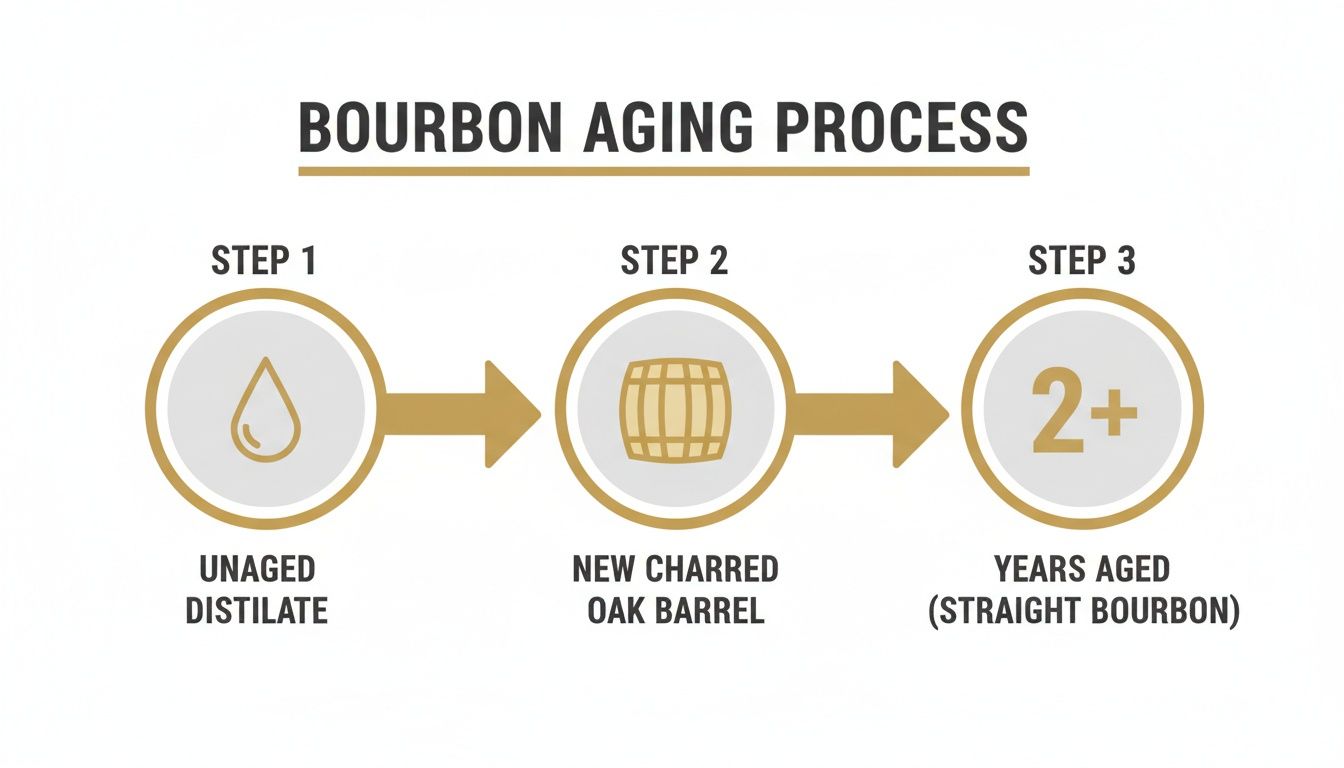
As you can see, the journey from raw spirit to the legally defined "Straight Bourbon" requires a minimum of two years in that new, charred oak.
Why No Two Barrels Are Alike
Here’s where things get really interesting. You can fill two barrels from the same distillation run on the same day, stick them in the same warehouse, and end up with two remarkably different bourbons years later. Each barrel is its own self-contained experiment, which is why single-barrel releases are so exciting—they capture a totally unique moment in time.
Several variables are at play here, but the big ones include:
- Warehouse Location: A barrel sitting on the hot top floor of a rickhouse is going to interact with the wood way more aggressively than one chilling on the cool, stable bottom floor. The top-floor barrel will almost always taste older, oakier, and more concentrated.
- Barrel Char Level: Distillers can order barrels with different char levels, usually on a scale from 1 to 4. A heavy #4 char (the "alligator char") creates a thick layer of activated carbon that filters the spirit more and can add deep notes of smoke or dark chocolate.
- Entry Proof: The proof of the spirit when it goes into the barrel makes a big difference. A lower entry proof (closer to the legal max of 125 proof) has a higher water content, which means it will pull out different water-soluble compounds from the wood than a higher-proof spirit would.
Recognizing these nuances is a huge step in developing your palate. When you taste a really unique bourbon from an American craft whiskey brand, you're often tasting the deliberate choices a distiller made in these very areas. Many smaller producers even use smaller barrels to speed up maturation, proving that you can get incredible complexity without waiting a decade.
If you’re fascinated by how distillers tweak these factors to shape the final product, you can dive deeper into the science of barrel aging whiskey in our detailed guide. At the end of the day, this dance between science and nature ensures the journey is never predictable, making every sip a new discovery.
A Sensory Journey Through Bourbon's Ages
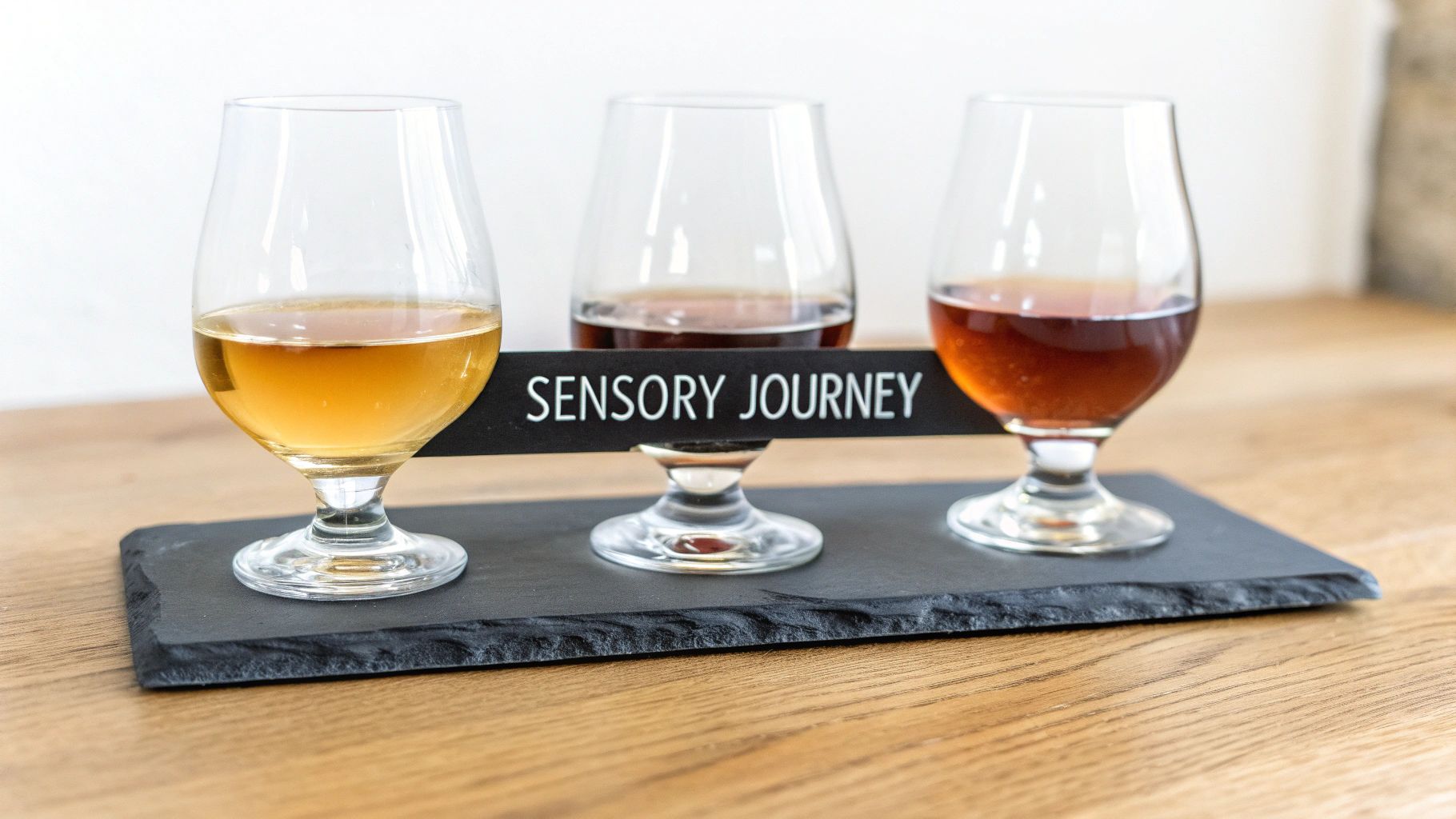
Alright, now that we've pulled back the curtain on how the barrel works its magic, let's take our palates on a tour through time. A bourbon's age isn't just some number on a label; it's a roadmap that tells you a lot about its aroma, flavor, and texture. Once you learn to read the signs, you'll be amazed at how you can start making educated guesses in a blind tasting and truly appreciate what each stage of life brings to the bottle.
I like to think of it this way: a young bourbon is like listening to your favorite song on bright, crisp earbuds—all the high notes are sharp, energetic, and right up front. An older bourbon is like hearing that same tune on a vintage vinyl sound system—the sound is deeper, warmer, and full of a rich resonance you didn't know was there. Same song, completely different experience.
Young and Spirited: Under 4 Years
Bourbon in its youth is a live wire—vibrant, expressive, and still very connected to the grains it came from. At this stage, typically under 4 years, the spirit hasn't had quite enough time in the barrel for the oak to completely tame its fiery, grainy origins. The result is a whiskey that’s often bright, sweet, and wonderfully straightforward.
Get your nose in the glass, and you’ll likely pick up fresh corn, a touch of cereal grain, and maybe a hint of newly sawn wood or vanilla extract. The palate usually follows suit, hitting you with flavors of caramel corn, honey, and a little green apple tartness. The finish? It's often on the shorter side, sometimes with a spicy kick that’s a fun reminder of its youthful energy.
This isn't a flaw; it's a feature. For many people just getting into whiskey, the accessible sweetness of a young bourbon is the perfect welcome mat. It’s an honest look at the distillate with just the first whispers of the barrel’s influence.
Balanced and Classic: 4 to 8 Years
This is the sweet spot, the age range where so many of the classic bourbons we know and love truly find their voice. Between 4 and 8 years, the whiskey has spent enough time with the oak to soak up all those key flavors, and the rough edges of its youth have been smoothed away. What you get is a beautiful harmony between the spirit and the wood.
The aromas here deepen into rich caramel, toasted vanilla bean, and classic baking spices like cinnamon and nutmeg. On the palate, that initial corn sweetness has integrated beautifully, mingling with notes of toffee, dried fruit, and a gentle oak structure that provides the perfect backbone. The mouthfeel starts getting richer and more rounded, leading to a long, satisfying finish. For many enthusiasts, this is the quintessential bourbon profile.
Mature and Complex: 9 Years and Beyond
Once a bourbon sails past the 9-year mark, it enters a whole new territory. All those years of slow oxidation and deep, patient interaction with the charred oak build incredible layers of complexity. The bright, sweet notes of its younger days take a step back, making room for darker, more savory, and sophisticated characteristics to come forward.
Now, the aromas might remind you of an old library—think antique leather, pipe tobacco, dark chocolate, and stewed fruits. The palate is often rich and viscous, delivering deep flavors of toasted nuts, molasses, and a heavy, decadent oak presence that can sometimes lean into tannic territory. The finish is typically very long and memorable, leaving a warm, spicy, and sometimes earthy impression that sticks with you.
Of course, these are just guidelines, not unbreakable laws. Innovative American craft whiskey brands are constantly pushing the boundaries and playing with these timelines. A great example is Pennsylvania's McLaughlin Distillery, which uses smaller barrels to speed up maturation, creating remarkably complex profiles in a fraction of the time. It just goes to show that craftsmanship and technique can shape the sensory journey just as much as time itself.
For anyone looking to get better at picking out these specific notes, exploring a bourbon flavor wheel is a fantastic next step. It gives you a visual map to connect what you’re smelling and tasting to a shared vocabulary.
Typical Flavor Profiles by Bourbon Age
To tie it all together, here’s a quick-reference table that breaks down what you can generally expect at each stage. Think of it as a field guide for your next tasting.
| Age Range | Common Aromas | Typical Taste Notes | General Mouthfeel |
|---|---|---|---|
| Under 4 Years | Fresh corn, vanilla extract, new oak, grain | Caramel corn, honey, green apple, light spice | Lighter-bodied, sometimes sharp or thin |
| 4 to 8 Years | Caramel, toasted vanilla, baking spice, orange peel | Toffee, dried fruit (apricot, cherry), cinnamon, oak | Balanced, medium-bodied, smooth |
| 9+ Years | Leather, tobacco, dark chocolate, stewed plums | Toasted nuts, molasses, heavy oak, dark fruit | Rich, viscous, often chewy and complex |
Keep this chart in mind, but always trust your own palate. The fun is in the discovery, and every bottle has its own story to tell, regardless of the number on the label.
Challenging the Myth That Older Is Always Better
In the whiskey world, there's one piece of "common knowledge" that just won't quit: older is always better. It's a simple, tidy idea—that a big number on the bottle automatically means a better pour. But it's time we put that myth to rest. The real goal for any bourbon isn’t just to get older; it’s to hit peak maturity. That’s the magic moment when the spirit and the barrel have settled into a perfect, harmonious balance.
More time in wood isn't always a good thing. Let a bourbon sit too long, and it can become over-oaked. Think about steeping a tea bag for way too long. What started as a lovely, fragrant infusion quickly turns bitter, dry, and tannic. The exact same thing can happen with bourbon. The wood's influence, which once gave you those beautiful vanilla and caramel notes, can turn into an aggressive, mouth-puckering bitterness that completely bulldozes the delicate flavors of the original spirit.
This is why chasing the highest age statement can be a recipe for disappointment. An over-oaked bourbon often tastes more like you're chewing on a barrel stave than sipping a well-crafted whiskey. All the vibrant fruit and sweetness get smothered, leaving you with something that just feels harsh and out of whack.
The Ingenuity of American Craft Distillers
This is where the creativity of American craft whiskey brands really comes to the forefront. So many of the smaller distilleries—like the ones we love to feature in Blind Barrels tasting kits—have become masters at coaxing out incredible complexity without waiting a decade or more. They get that peak maturity is a game of chemistry and technique, not just a waiting game.
So, how do they pull it off? By cleverly playing with the variables of maturation.
- Smaller Barrels: Many craft producers use smaller casks, like 15 or 30-gallon barrels instead of the standard 53. This move dramatically increases the ratio of wood surface area to liquid, forcing a much more intense interaction in a shorter amount of time.
- Unique Climates: Some distillers use temperature-controlled rickhouses to force more frequent cycles of expansion and contraction. This essentially makes the barrel "breathe" more often, accelerating the extraction of all those good things from the wood.
- Varied Mash Bills: By starting with unique grain recipes, distillers create a base spirit with a bold, robust character that simply doesn't need as long in the barrel to develop its personality.
Tip for new whiskey drinkers: Don't dismiss a bourbon just because it has a low age statement, especially if it's from a craft distillery. You might be surprised by how much flavor and complexity they can achieve in just a few years.
This smart, hands-on approach means you can often find a younger craft bourbon that delivers a tasting experience that stands shoulder-to-shoulder with spirits twice its age. You can dive deeper into these fascinating techniques by exploring the world of rapid maturation in American craft whiskey.
A New Golden Age of Bourbon
This shift in focus—valuing craft and quality over simple age—is happening during a true golden era for the industry. The 'age of bourbon' isn't just about barrel time anymore; it's also about the market's own maturity. With global valuations projected to hit $8.79 billion in 2025 and climb to $9.35 billion by 2026, it's clear we're in a boom. This growth is fueled by a more sophisticated drinker who is increasingly looking past the label to find true quality, which is right where small, innovative distilleries thrive. You can discover more insights about the evolving bourbon market on focusonrisksv.substack.com.
Ultimately, the best advice for any whiskey drinker is simple: trust your own palate above all else. An age statement is just one piece of the puzzle, not a final judgment. If you keep an open mind, you’ll discover some absolutely exceptional craft whiskeys that prove a top-shelf experience has everything to do with craftsmanship and nothing to do with a number.
How to Identify Age in a Blind Tasting
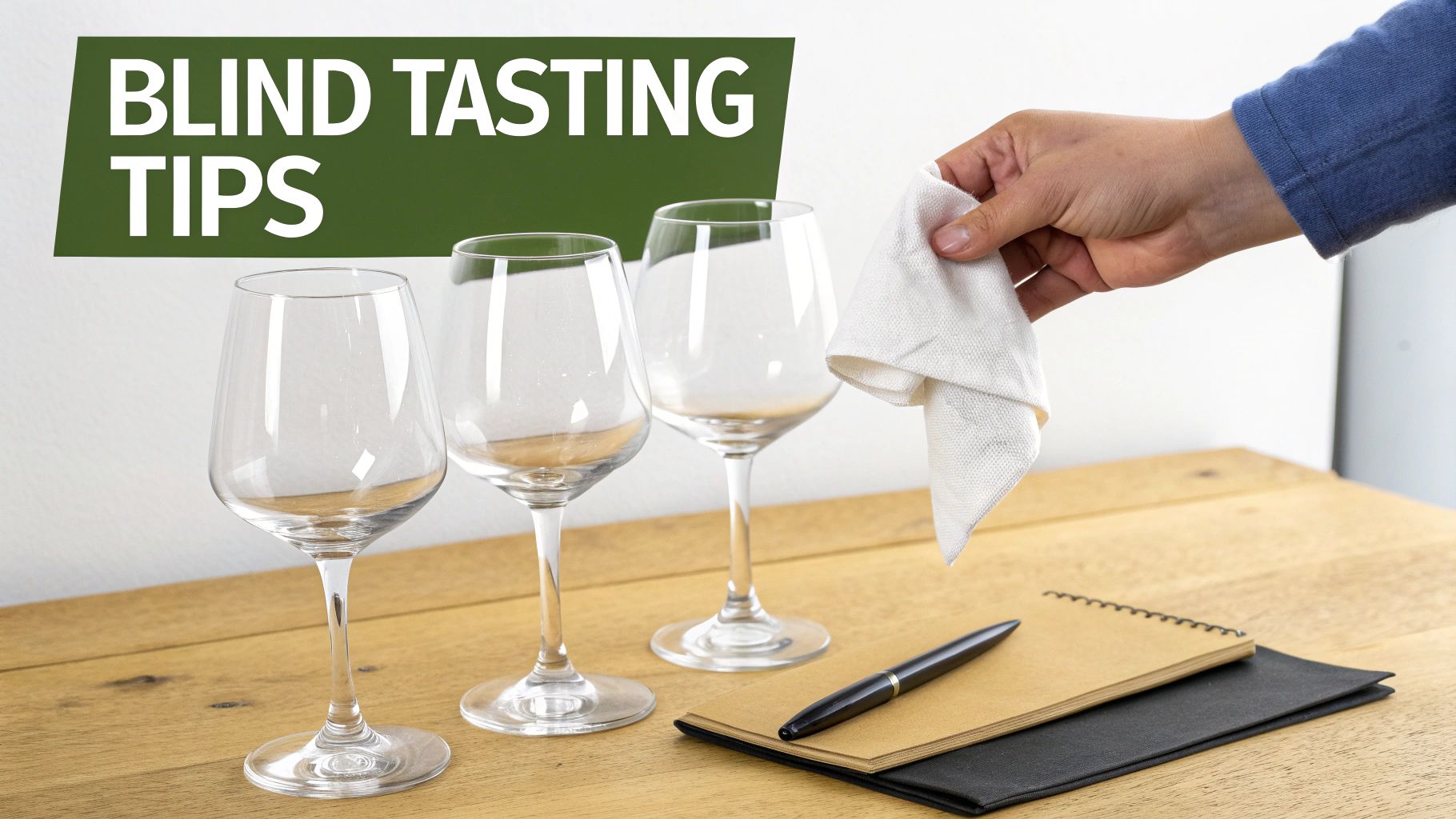
This is where the real fun begins. Stripping away the fancy label, the price tag, and all the marketing hype forces you to focus on one thing: what’s actually in the glass. Learning to pick up on the subtle clues that hint at the age of bourbon is a skill that elevates tasting from a simple pastime to an engaging game, sharpening your palate with every pour.
Don't worry, you don’t need to be a master sommelier to start making educated guesses. By systematically examining the color, aroma, taste, and finish, you can start to piece together the story of how long that spirit rested in its barrel. Let’s walk through how to taste like a pro and decode the secrets of maturation.
Step 1: Look with Your Eyes
Before you even take a sniff, hold your glass up to a neutral light source. A bourbon's color is its first and most direct message about its time in the barrel. Since all bourbon must be aged in new charred oak barrels, every bit of its hue comes directly from that wood.
- Pale Straw to Light Gold: This often suggests a younger bourbon, probably under four years old. The spirit simply hasn't had enough time to pull those deep pigments from the oak staves.
- Amber to Deep Copper: This is the classic bourbon look, typically pointing to a whiskey that’s hit its sweet spot in the 4-to-8-year range. It's had plenty of time to soak up rich color and flavor.
- Dark Brown to Mahogany: A very dark color is a strong sign of a well-aged bourbon, often 10 years or older. It can also signal a bourbon aged on the scorching upper floors of a rickhouse, where the intense heat accelerates maturation.
Just remember, color is only one clue. Some American craft whiskey brands use smaller barrels, which have a higher wood-to-whiskey ratio and can impart a darker color in less time, adding a fun curveball to your tasting game.
Step 2: Analyze the Aroma
Now, give the glass a gentle swirl and take a few short sniffs. Your nose is arguably the most powerful tool you have for gauging a bourbon’s maturity. What you’re looking for is integration—how well all the different aromatic compounds have married together.
A tip for beginners: Don't stick your nose deep inside the glass, as the alcohol vapor can overwhelm your senses. Instead, hold the glass a few inches away and gently wave the aromas toward you.
For instance, a young craft bourbon from a distillery like Pennsylvania’s McLaughlin Distillery might hit you with vibrant corn and a touch of sweet, fresh oak. Contrast that with an older bourbon that offers deeper scents of antique furniture, pipe tobacco, and dark chocolate. The more cohesive and layered the aroma, the more time it has likely spent mellowing in the barrel.
Step 3: Trust Your Palate and Finish
Finally, take a sip. Let the whiskey coat your tongue and pay close attention to its texture and how the flavors evolve. This is where you confirm—or challenge—the hypotheses you formed from the color and aroma.
Ask yourself these key questions as you taste:
- What's the immediate flavor? Younger bourbons often lead with bright, sweet notes of corn, fresh caramel, and honey. Older bourbons tend to introduce darker, more savory flavors right away, like toasted nuts, molasses, and even a hint of old leather.
- How does it feel? The mouthfeel, or texture, is a huge tell. Younger spirits can feel thinner or deliver a sharper, more aggressive alcohol "burn." Well-aged bourbons often develop a richer, more viscous, and oily texture that coats the mouth beautifully.
- How long does the finish last? The finish is the final piece of the puzzle. A short, simple finish is classic for younger whiskeys. A long, evolving finish that lingers with complex notes of spice, leather, and oak is the true hallmark of a mature, well-aged spirit.
By breaking down the experience this way, you turn a simple drink into an interactive investigation. For new whiskey drinkers, this methodical approach is the best way to train your palate, build confidence, and discover what profiles you truly enjoy—regardless of the number on the bottle.
Trust Your Palate, Not the Price Tag
After all the talk about mash bills, barrel science, and age statements, the journey through the world of bourbon leads to one simple, liberating truth: the numbers, the hype, and the price tag are all secondary to what’s in your glass. Age is a huge part of bourbon's story, for sure. It builds depth and complexity. But it doesn't get the final say.
True appreciation comes when you set aside what you think you know about a bottle and just trust your own taste. This is exactly why we love blind tasting. When you strip away the fancy labels and marketing stories, you force a whiskey to stand on its own two feet. You might just find that a spunky 3-year-old bourbon from a tiny craft distillery blows a revered 12-year-old out of the water. That’s the real joy of discovery—letting your senses lead the way.
Dive into the Craft Whiskey Movement
This mindset is your best tool for exploring the incredibly dynamic world of American craft whiskey. All across the country, new distillers are rewriting the rulebook. They’re using innovative techniques to coax surprisingly mature flavors out of younger spirits, proving that incredible craftsmanship, quality grains, and smart aging can deliver a top-shelf experience without a double-digit number on the label.
Ready to start exploring? Here are a few tips to get you started:
- Start with a Flight: Find a good whiskey bar and order a flight that features different ages from different producers. It’s a fantastic, low-commitment way to compare profiles side-by-side and see what you gravitate towards.
- Join a Tasting Group: Sharing the experience with others, especially in a blind format like a Blind Barrels tasting, is a game-changer. It exposes you to new whiskeys and helps you build the vocabulary to describe what you're tasting.
- Don't Fear the Youth: Make a point to seek out bourbons from craft distilleries that are under four years old. You will be absolutely amazed by the quality and complexity being achieved.
The most rewarding part of being a whiskey enthusiast isn't about chasing the oldest or most expensive bottle. It’s about the endless journey of exploration and stumbling upon those hidden gems that truly speak to you.
Ultimately, understanding the role of age in bourbon enriches every single sip. It gives you context, helps you form theories about what you're tasting, and deepens your respect for the incredible art form behind it. But when it’s all said and done, the only expert opinion that truly matters is your own. So go ahead—pour a dram, close your eyes, and let your palate tell you what’s great.
Your Bourbon Aging Questions, Answered
To wrap up our deep dive into the world of bourbon aging, let's tackle some of the most common questions that pop up. Think of this as clearing the fog around a few key ideas, giving you a much sharper picture of what maturation really means for the whiskey in your glass.
Age Versus an Age Statement
So, what's the real difference between a bourbon's 'age' and its 'age statement'?
This is a great question, and the distinction is crucial. A bourbon's 'age' is simply how long it has slumbered inside that new charred oak barrel. An 'age statement', on the other hand, is the specific number you see printed on the label.
A bourbon can be aged for three years, for instance, but the producer isn't legally required to put that number on the bottle. But here's the kicker: if a bottle is labeled 'Straight Bourbon' and it's aged for less than four years, it must have an age statement. Once it hits that four-year mark, the statement becomes optional.
And if you're looking at a bourbon that's a blend of different barrels? The age statement always has to reflect the youngest whiskey in that mix. No exceptions.
The Craft Distillery Edge
Why do some young craft bourbons taste so incredibly complex?
American craft distillers are playing a different game, and it’s one of constant innovation. Many use smaller barrels—think 15 or 30 gallons instead of the standard 53—which dramatically increases the ratio of wood to liquid. This greater surface contact puts maturation into overdrive.
So, here's a pro tip for anyone exploring the whiskey aisle: don't ever write off a bottle just because of a low age statement, especially from an American craft whiskey brand.
Many of these smaller producers are also experimenting with fascinating grain recipes, dialing in unique barrel char levels, or even using climate-controlled warehouses to coax out rich, mature flavor profiles in a fraction of the time. Their creativity is exactly why you can find a 3-year-old craft bourbon that drinks with the complexity of a spirit twice its age.
Does Bourbon Keep Aging in the Bottle?
Will my bourbon continue to age after I buy it?
Nope. Unlike wine, a bourbon's aging journey comes to a dead stop the second it leaves the barrel. All that magical interaction with the charred oak is over. A 10-year-old bourbon will still be a 10-year-old bourbon even if it sits unopened on your shelf for another 20 years.
For serious collectors who are passionate about vintage spirits, keeping a meticulous record of your prized bottles is a must. A detailed Antique Wine Spirits Inventory is a great way to manage a valuable collection, helping you track a bottle's origin, age, and other critical details.
As long as you store your bottles properly—upright, out of direct sunlight, and away from wild temperature swings—their flavor profile will remain perfectly stable.
Ready to put your palate to the test and discover your next favorite American craft whiskey? The Blind Barrels tasting experience removes brand bias and lets you focus purely on flavor. Join us and see what amazing discoveries await. Explore Our Blind Tasting Kits.