

Most advice about the best bottled-in-bond bourbon starts and ends with the legal definition. That's a mistake. The seal tells you a bottle cleared a meaningful production floor, but it doesn't tell you whether the whiskey has enough aroma, palate weight, or finish to justify its shelf position.
I buy bonded bourbon for a simpler reason. Every bottle begins with a comparable baseline, 100 proof and at least four years of age, so the useful question becomes value versus structure. Does the whiskey taste more layered than its price suggests, or are you paying for a famous label with an ordinary pour?
The recommendations below favor bottles that deliver something specific. Some are excellent daily pours, some are serious comparison whiskeys, and some are better gifts than they are bargains. American craft producers get particular attention because their bonded releases make provenance and distillery character easier to evaluate.
Why Bottled in Bond Matters in 2026
Bottled-in-bond isn't just a decorative phrase for a brown bottle. The designation comes from the Bottled-in-Bond Act of 1897, the first U.S. federal consumer protection law for whiskey. It requires one distiller, one distillery, one distilling season, at least four years in a federally bonded warehouse, and bottling at exactly 100 proof, or 50% ABV. Garden & Gun's history of bottled-in-bond bourbon explains how those rules emerged after widespread concern over adulterated whiskey.
That fixed standard matters at the tasting table. A distillery can't lower the proof to make a rough young whiskey seem softer, and it can't blend spirit from multiple distilling seasons under one bonded designation. The result is a narrower production brief, one that exposes the producer's decisions instead of allowing proof and blending to do all the smoothing.
The useful comparison isn't the legal trivia
The law gives you a starting line, not a finishing order. Once every contender reaches 100 proof and the four-year minimum, compare four things:
- Aroma depth: Can you find more than generic sweetness?
- Palate weight: Does the whiskey feel concentrated or thin?
- Finish length: Does oak, spice, fruit, or caramel stay present?
- Value: Does the structure justify the bottle's price tier?
That framework is more useful than treating every bonded bottle as automatically superior. A younger bonded bourbon can be lively and affordable, while an older bottle may bring deeper oak and fruit but lose some freshness. A high-rye mash bill can sharpen the finish, while a wheated bourbon can feel rounder and easier for a new drinker.
The category also gives American craft distilleries a powerful way to prove consistency and origin. Producers such as Wilderness Trail and New Riff use bonded releases to put their own fermentation, distillation, and maturation decisions in front of drinkers. That makes the category worth exploring in 2026, but it also makes comparison necessary. The best bottle for you isn't the bottle with the most prestigious name. It's the one whose flavor structure earns its price.
The Legal Rules Behind Every Bonded Bottle
The law is simple on paper, but each rule changes how you should buy. Bottled-in-bond was created in response to adulterated whiskey and the weak labeling habits that came with it. The Act passed on March 3, 1897, and turned a vague promise into a federally supervised standard. The category overview from the Alcohol and Tobacco Tax and Trade Bureau shows why the designation still matters: fixed rules, required disclosures, and government oversight give buyers a clean baseline.
One distiller, one distillery, one season
The whiskey must come from one distiller at one distillery during one distilling season. A season means either January through June or July through December. That gives the bottle a clear production identity. It is not a blended catch-all from several facilities or a mix of unrelated runs.
For buyers, that matters because the label says something real about origin. It also limits how producers manage stock. They cannot pull every useful barrel from the warehouse and still call it one bonded season.
Four years under federal supervision
The spirit must age for at least four years in a federally bonded warehouse. That floor keeps bonded bourbon out of the young-whiskey trap, where oak contact is present but not fully developed. The warehouse requirement also ties the spirit that enters storage to the spirit that leaves for bottling.
Age does not guarantee quality. Four years can produce a bright, grain-driven bourbon, while a longer-aged bottle can bring more oak, dried fruit, and concentration. The useful point is simple. Bonded bourbon has a legally defined maturation floor, but maturity still depends on how the distillery handled fermentation, barrel selection, and warehouse time. If you want a clean map of the main bourbon styles, start with this bourbon whiskey types guide.
Exactly 100 proof
Bonded bourbon must be bottled at exactly 100 proof, or 50% ABV. That fixed strength makes comparison easier because proof swings are taken out of the equation. Aroma, texture, sweetness, spice, and finish become the main variables.
It also changes the value math. A 100-proof bottle gives you more spirit concentration per pour than a lower-proof bourbon, but it can also carry more ethanol heat. Do not confuse that heat with depth. Let the glass sit, sip slowly, and add water only if it opens flavor instead of flattening it.
The label must identify the distillery
The bottle must identify the distillery. Period bonded labels typically disclosed details such as the distillery location, proof, year, and distilling season, which helped consumers separate genuine whiskey from adulterated product. That history is the reason bonded labeling still feels useful today.
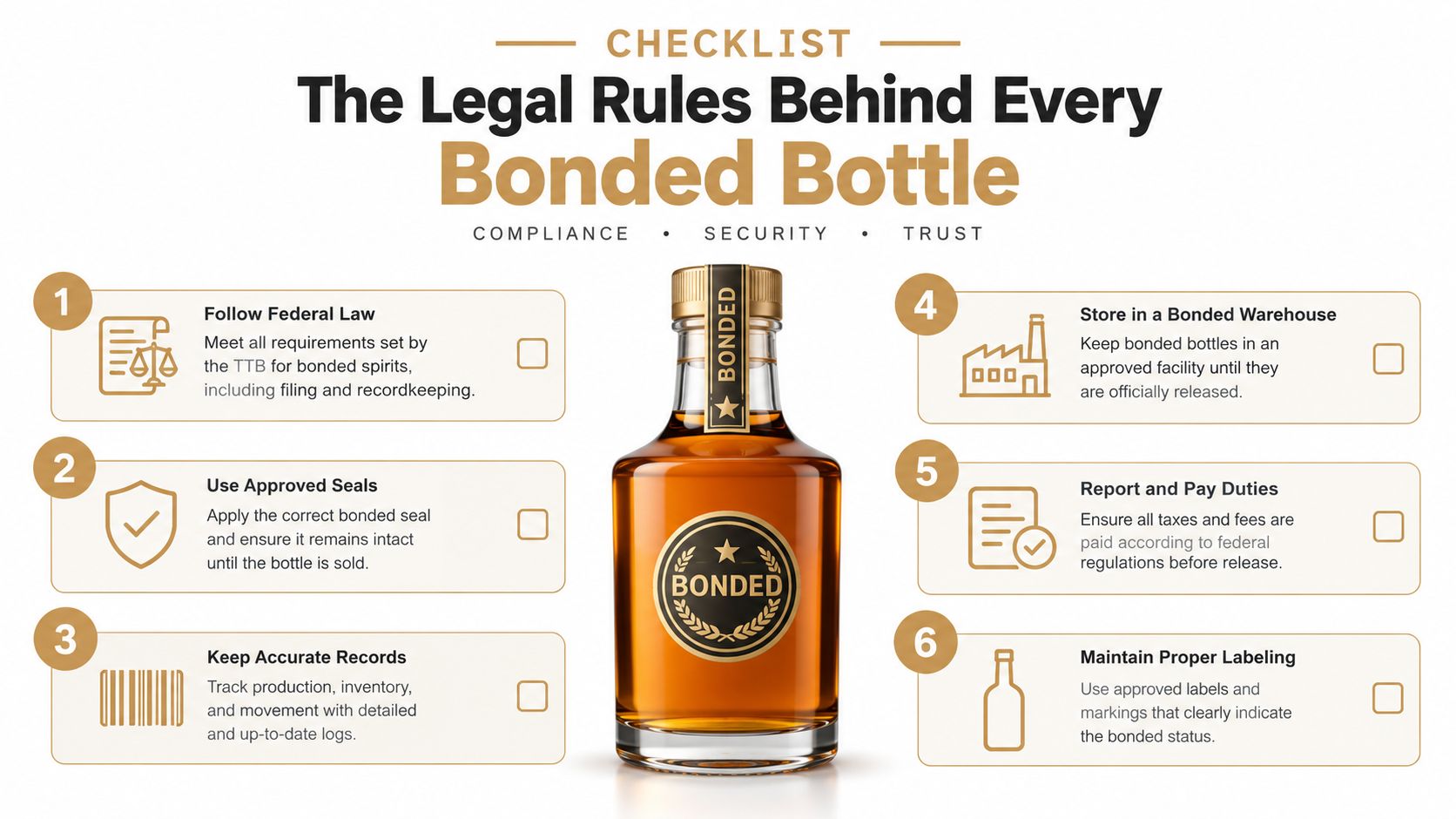
The bonded rules matter because they force structure. Once every bottle sits at 100 proof and clears the four-year minimum, the question is whether the whiskey earns its price through aroma, palate, and finish.
Quick Answer Table of Standout Picks
The table below is a buying map, not a contest scorecard. Bonded bourbon already strips away the usual proof games, so the question is simple: which bottles deliver more aroma, palate, and finish than their price tier suggests.
| Bottle | Proof | Age | Mash Bill Character | Price Tier | Flavor Snapshot |
|---|---|---|---|---|---|
| Henry McKenna 10 Year Bottled-in-Bond | 100 proof | 10 years | Traditional bourbon profile | Premium | Concentrated oak, caramel, vanilla, long mature structure |
| Wilderness Trail Bottled-in-Bond | 100 proof | At least 4 years | Craft profile, mash bill varies by release | Mid-shelf to premium | Distillery character first, with grain and oak definition |
| New Riff Bottled-in-Bond | 100 proof | At least 4 years | High-rye or bourbon-led, release dependent | Mid-shelf | Bright spice, sweet oak, firm finish |
| Colonel E.H. Taylor Single Barrel | 100 proof | Bonded minimum applies | Traditional bourbon profile | Premium or allocation tier | Toasted oak, dried fruit, spice |
| Early Times Bottled-in-Bond | 100 proof | Bonded minimum applies | Classic bourbon profile | Value to mid-shelf | Caramel, vanilla, oak, spice |
| Woodford Reserve Bottled-in-Bond | 100 proof | At least 4 years (bonded requirement) | Balanced bourbon profile | Premium | Rich oak, baking spice, rounded sweetness |
| Old Forester Bottled-in-Bond | 100 proof | Bonded minimum applies | Rye-led character in some releases | Mid-shelf | Brown sugar, oak, baking spice |
| Bib & Tucker Bottled-in-Bond | 100 proof | At least 4 years (bonded requirement) | High-rye bourbon profile | Premium | Layered oak and confectionery notes |
| Bloody Butcher Bottled-in-Bond | 100 proof | Bonded minimum applies | Heirloom corn character | Craft premium | Distinctive grain, sweet oak, dense texture |
How to read the comparison
Proof is the least useful differentiator here, because every bonded bottle sits at 100 proof. Start with age, then pay attention to mash bill character and flavor direction. If you want mature oak and concentration, Henry McKenna 10 Year is the clearest benchmark. If you want a sharper look at American craft whiskey, Wilderness Trail and New Riff should be your first pours.
Price tier sets expectations, not the verdict. A value bottle can outdrink a premium bottle when you want brightness and easy mixing. A premium bottle earns its shelf space when the palate opens across several sips and the finish stays distinct instead of turning flat or hot.
Matching Bottles to Real Drinking Moments
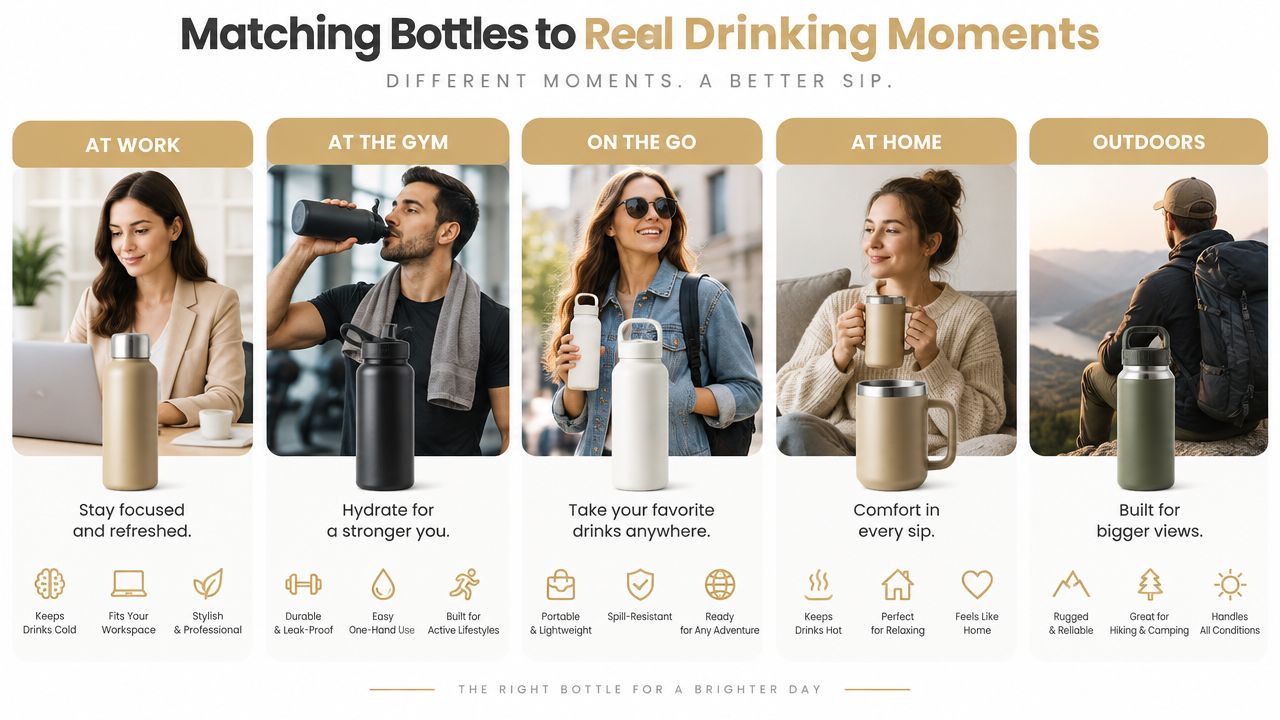
The right bonded bourbon depends on the moment. A whiskey that works as a weeknight pour can fall flat as a gift, while a polished premium bottle can be the wrong call for someone who just wants an affordable Old Fashioned.
For the daily sipper
For an affordable neat pour, Early Times Bottled-in-Bond is the practical starting point. Its 100-proof format gives it enough body for sipping, and the familiar caramel, vanilla, oak, and spice profile works without demanding a long tasting ritual. Serve it neat in a tulip-shaped glass, or add a few drops of room-temperature water if the alcohol stands out.
New Riff Bottled-in-Bond is the better pick for drinkers who want more visible craft character. Its high-rye mash bill brings brighter spice and a more assertive finish. Keep it at room temperature, and do not decant it unless you are moving it into a temporary serving vessel.
A non-bonded bourbon can still beat both when you want a softer, lower-proof pour or a specific mash bill that is not available in bonded form. The seal does not make a bottle automatically better for every palate.
For a weekend slow-drinker
Wilderness Trail Bottled-in-Bond earns the serious weekend slot because its appeal comes from distillery identity rather than generic sweetness. Pour it slowly, taste it neat first, then return to it with water. American craft bourbon often rewards attention to fermentation and grain character, and the bonded frame makes that easier to judge.
Henry McKenna 10 Year Bottled-in-Bond brings a different kind of depth. The extra age gives it a more concentrated oak and caramel profile, but it is not the automatic choice for someone who dislikes tannin. Pour it neat before trying ice. One cube can soften the edges, but heavy chilling may mute the aroma that justifies the higher price.
For food, use the guidance in food pairing ideas for whiskey. Dark chocolate, smoked almonds, and aged hard cheese can support oak and caramel without burying the finish.
For a gift
Colonel E.H. Taylor Single Barrel Bottled-in-Bond is the strongest gift-tier recommendation when presentation and historical connection matter. Its 100-proof structure and notes of toasted oak, dried fruit, and spice give the recipient a clear reason to open it, but availability can make it less predictable than a standard shelf bottle.
Woodford Reserve Bottled-in-Bond is the safer presentation choice when you want a recognizable name with a polished profile. It suits a recipient who prefers balanced bourbon over aggressive rye spice. Serve it neat first, with water available rather than ice already in the glass.
If the recipient values unusual grain character over packaging, Bloody Butcher Bottled-in-Bond is the more interesting call. It is not the universal gift, but it gives an American craft fan something real to talk about.
How the Category Grew From 1897 to Today
Bottled-in-bond started as a trust measure, not a tasting-room status symbol. The Act passed on March 3, 1897, requiring producers to meet defined production, aging, proof, and labeling standards. Buyers gained a dependable way to identify whiskey made under controlled conditions at a time when adulteration had damaged confidence. The Whiskey Wash's bonded bourbon overview summarizes the production rules that still shape the category.
Old Forester is widely cited as the first bottled-in-bond whiskey brand, launched in 1897. The designation quickly became more than a government-backed safeguard. Brown-Forman introduced Early Times Bottled in Bond in 1945, and the brand became the most popular bourbon in America in 1953. That commercial run showed bonded whiskey could reach a broad audience while retaining a clear production standard. The milestone also established a useful historical lesson: legal structure can support scale, but it does not guarantee that every bottle deserves its price.
From safeguard to shelf staple
As the whiskey market changed and regulation evolved, the bonded seal lost some of its everyday urgency. Consumers gained easier access to reliably packaged spirits, so many drinkers treated bonded bourbon as a dependable workhorse rather than a prestige pour. The category remained relevant, but its value was often judged by consistency instead of character.
Craft distillers helped change that view. Producers including Wilderness Trail, New Riff, and FEW connected the designation with transparent production, local identity, and distinctive distillery profiles. Their releases encouraged drinkers to examine the full label and the whiskey in the glass, not just the proof.
Why the field feels different now
The modern shelf includes far more than legacy names. Retail counts of bonded expressions have grown substantially since 2022, according to Flight Wine Bar's overview of bottled-in-bond bourbon. That expansion gives buyers more styles to compare, while making the legal designation less useful as a final buying decision.
Every bonded bourbon already shares a baseline of 100 proof and at least four years of age. The worthwhile question is what happens above that baseline. Compare aroma, palate development, and finish within the same price tier. A bottle earns its premium when it delivers more flavor and structure, not when the bonded label does all the selling.
Tasting Bonded Bourbon Without Getting Burned
A 100-proof bourbon deserves a slower method than an 80-proof pour. New drinkers often nose too aggressively, take a large sip, and decide the whiskey is only hot. That first impression is usually a technique problem.
Use this four-part approach:
- Choose the right glass. A tulip-shaped or Glencairn-style glass concentrates aroma while giving ethanol room to move away from the rim. Hold it a few inches below your nose and smell gently.
- Let the pour rest. Give the whiskey about five minutes after pouring. A beginner guide from Beam Distilling's bourbon tasting advice recommends resting bourbon for about five minutes, then taking three small sips.
- Take three small sips. The first sip prepares your palate, the second reveals the main flavor, and the third shows the finish and nuance. Don't judge the bottle from the first contact.
- Add water only with a purpose. If ethanol overwhelms the sweetness, add a few drops of room-temperature water. The aim is to expose mid-palate caramel, vanilla, fruit, or spice without flattening the finish.
What to look for
Start with the basic sensory pattern, then separate the details:
- Caramel and vanilla: These suggest the sweet oak foundation.
- Rye spice: Look for pepper, cinnamon, or baking spice rather than undifferentiated heat.
- Oak tannin: Notice whether the wood grips pleasantly or dries the tongue.
- Finish length: Track which flavor remains after the spirit leaves your mouth.
Expert notes on benchmark bonded bourbons commonly identify nutmeg, caramel, oak, brown sugar, black pepper, and barrel char, with a stout texture and medium-length finish. UPROXX's bonded bourbon reviews and Bourbon Valinch tasting notes show how caramel, vanilla, oak, butterscotch, orange, and cinnamon can appear across the category.
Cleanse your palate with plain water and plain crackers between pours. For a fuller guide to the process, use this how to taste whiskey tutorial. The goal isn't to prove that you can tolerate proof. It's to determine whether the whiskey has balance.
Final Picks Serving Tips and FAQ
Three bottles cover most buying situations.
First-time buyer: Choose Early Times Bottled-in-Bond when you want an approachable, widely understood bourbon profile at a value-oriented price tier. Its caramel, vanilla, oak, and spice combination gives a new drinker familiar reference points without making the whiskey feel empty. Pour it neat first, then add water if needed.
Value hunter: Choose Wilderness Trail Bottled-in-Bond when you want an American craft expression with more visible distillery character. The justification for spending into the mid-shelf is structural clarity, not a famous label. Look for grain, oak, and finish development across several sips.
Gift giver: Choose Colonel E.H. Taylor Single Barrel Bottled-in-Bond when the recipient appreciates historical names, premium presentation, and a more serious pour. The toasted oak, dried fruit, and spice profile gives the gift substance beyond its packaging. If availability or pricing gets unreasonable, switch to a well-presented Woodford Reserve Bottled-in-Bond rather than chasing an inflated bottle.
Serve the whiskey according to its strengths
Start neat at room temperature in a tulip glass. That gives you the clearest read on aroma and texture. A single ice cube is useful when the whiskey feels too intense, but it will also reduce aroma as the drink chills and dilutes.
Use a few drops of room-temperature water when you want to open the mid-palate. Don't add water automatically, and don't decant bonded bourbon for storage. Decanting can make sense for a dinner service or a blind tasting setup, but the original bottle protects the whiskey's identity and label information.
Food pairing should support the finish. Try dark chocolate, smoked almonds, dry-cured charcuterie, or aged hard cheeses. Sweeter foods can emphasize caramel and vanilla, while salty, smoky foods can make oak and spice feel more pronounced.
Frequently asked questions
Is bottled-in-bond bourbon always worth paying more for?
No. The designation guarantees a production standard, not a superior flavor score. If a bonded bottle costs more than its aroma, texture, and finish justify, choose a non-bonded bourbon that better matches your palate.
Does bonded bourbon need decanting?
No. Pour it directly from the bottle into a suitable glass. Decant only for serving or comparison purposes, not because the whiskey requires breathing in the way wine often does.
How long does an opened bottle stay good?
An opened bottle usually remains enjoyable when stored upright, sealed tightly, and kept away from heat and direct light. Its flavor can gradually change as air enters the bottle, so don't treat an opened bottle as an aging project.
Should you cellar bonded bourbon?
No. Bourbon doesn't continue aging in the bottle. Store it upright at stable room temperature, protect the label from light, and enjoy it rather than waiting for the calendar to improve it.
How can you run a fair blind tasting?
Pour bonded bourbon beside a non-bonded control at a similar proof when possible. Use identical glasses, conceal the labels, serve the samples in a random order, and record aroma, palate, and finish before discussing price or reputation. Since bonded bottles share a fixed 100-proof requirement, the comparison can reveal whether the legal structure translates into a flavor advantage for your palate.
Which bonded bourbon should you buy first?
Buy Early Times Bottled-in-Bond for an easy entry point, Wilderness Trail for a craft-focused value comparison, and Henry McKenna 10 Year Bottled-in-Bond when you want mature oak and concentration. Those three choices cover accessibility, distillery character, and age-driven depth without pretending one bottle suits every drinker.
Blind Barrels offers quarterly blind whiskey tasting kits with four samples, tasting guidance, and a reveal process that lets you compare small American craft distilleries without brand or price bias. Visit Blind Barrels to turn your next bottled-in-bond comparison into a structured tasting rather than a label-driven purchase.