

So you want to get into bourbon. Welcome. It’s a rewarding world, but let’s be honest—it can also feel like trying to learn a whole new language. You’ll hear people throwing around terms like "mash bill," "Bottled-in-Bond," and "small batch," and each one represents a different stop on the flavor map.
This guide is your translator. We're here to cut through the jargon and turn those confusing industry terms into practical knowledge you can actually use. Our goal is to make the diverse world of bourbon feel less intimidating and a lot more exciting, giving you the confidence to start your own tasting adventure.
For newcomers, this is your starting point. For seasoned fans, think of it as a solid refresher. We’ll walk through the main categories you'll see on the shelf, showing you how to read a label and understand the story of the whiskey inside the bottle.
How to Start Your Bourbon Exploration
The only real way to learn is by tasting. But just grabbing a bottle because the label looks cool or the price is high is a total shot in the dark. A more deliberate approach will get you much further, much faster, in figuring out what you actually like.
If you’re just starting out, here are a few simple tips:
- Start with Softer Styles: Try kicking things off with a "wheated" bourbon. They tend to be softer and sweeter, with less of the sharp spice you get from their rye-heavy cousins, making them a great, gentle introduction.
- Don't Get Sucked into the Hype: The bottles everyone is talking about aren't necessarily the best fit for your palate. You can find incredible flavor and value in plenty of excellent, affordable options, especially from smaller American craft whiskey brands like Laws Whiskey House or Frey Ranch.
- Taste Things Side-by-Side: The best way to understand the differences is to compare them directly. Pour a high-rye bourbon next to a wheated one, and their unique personalities will jump right out at you.
By far, the most eye-opening way to discover what you genuinely love is a blind tasting. When you remove all the noise—the branding, the price tag, the reputation—your palate gets to be the one and only judge.
This is all about real discovery. As we break down the different bourbon whiskey types in the sections ahead—from legally defined categories like Straight and Bottled-in-Bond to stylistic ones like Single Barrel and Small Batch—we’ll give you all the context you need.
You'll quickly go from a curious beginner to a confident enthusiast, ready to explore the ever-expanding universe of American whiskey. Let's get into it.
How the Mash Bill Shapes Your Bourbon's Flavor
At the heart of every bottle of bourbon is its unique recipe of grains, what distillers call the mash bill. The law is simple: it has to be at least 51% corn. That corn is what gives bourbon its trademark sweetness. But it's the other grains in that recipe where the real magic happens and where distillers get to show off their artistry.
Think of the corn as the sturdy foundation of a house, providing that reliable base of sweet vanilla and caramel. The other "flavoring grains"—usually rye or wheat—are the architectural style. They decide whether the bourbon will be bold and spicy or soft and gentle. Getting a feel for these key differences is your first big step toward knowing what you’re likely to find in the bottle.
This chart gives you a great visual for how bourbon types are broken down, separating them into categories based on their recipe versus those defined by legal standards.
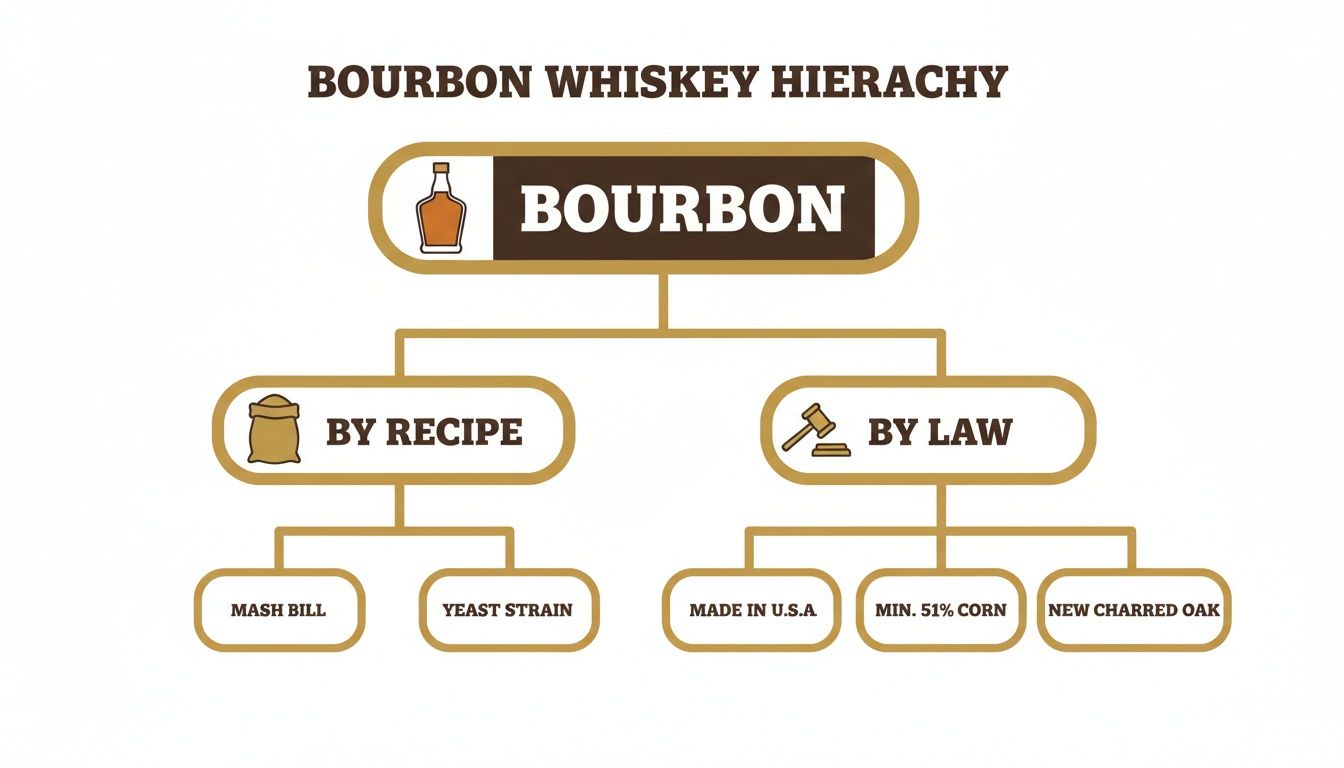
As you can see, the mash bill is one of the two main pillars used to classify a bourbon. It sets the core taste profile before any of the rules about aging or bottling even come into play.
The Spicy Kick of High-Rye Bourbon
When rye is the main supporting grain, it brings a bold, spicy punch to the whiskey. High-Rye bourbons take this even further, often using 20-35% rye in the mash bill to create a much more assertive and complex spirit. This is a style that makes its presence known from the very first sip.
If you’re a fan of black pepper, baking spices like cinnamon and clove, or even a touch of mint, then a high-rye bourbon will be right in your wheelhouse. They tend to have a robust, dry finish that sticks around for a while. For someone new to bourbon, that kick of spice can be a surprise, but for many enthusiasts, it's the mark of a truly memorable pour.
The Soft and Sweet Touch of Wheated Bourbon
On the complete opposite end of the spectrum, you'll find Wheated bourbons. In this style, wheat takes rye's place as the primary flavoring grain. This one simple swap results in a dramatically different whiskey—one that’s noticeably softer, sweeter, and often described as having a gentler, more rounded feel in your mouth.
Tasting notes for wheated bourbons are full of words like honey, fresh bread, toffee, and subtle fruit. The finish is usually smooth and mellow, lacking the sharp, peppery bite you get from rye. This approachability makes wheated bourbons a fantastic gateway for people just starting their whiskey journey.
The choice between rye and wheat is one of the most fundamental decisions a distiller makes. It sends the whiskey down one of two very different flavor paths—spicy and bold versus soft and sweet—long before a single drop ever touches a barrel.
Finding Balance with Traditional Bourbon
Right in the middle of these two styles is what we call Traditional or "low-rye" bourbon. This is the classic profile that many of the most iconic distilleries have built their legacies on. They use a more modest amount of rye (typically 8-15%) to add just enough spice to complement the corn's sweetness without stealing the show. It’s the best of both worlds, really, offering a balanced and incredibly versatile flavor.
For a deeper look at how these grain ratios create such distinct profiles, check out our detailed guide on the bourbon mash bill.
A Quick Look at Mash Bill Flavors
To make it even simpler, here’s a quick breakdown of what to expect from these three primary mash bill styles.
Bourbon Mash Bill Flavor Profiles at a Glance
| Mash Bill Type | Key Secondary Grain | Common Flavor Profile | Mouthfeel |
|---|---|---|---|
| High-Rye Bourbon | Rye (20%+) | Black pepper, baking spices (cinnamon, clove), mint, dill | Robust, sometimes sharp, with a dry finish |
| Traditional Bourbon | Rye (8-15%) | Caramel, vanilla, balanced with light spice and oak notes | Well-rounded, versatile, classic bourbon feel |
| Wheated Bourbon | Wheat | Honey, bread, toffee, gentle fruit, butterscotch | Soft, smooth, and creamy with a mellow finish |
This table is a great starting point, but remember, every distillery has its own unique process—from the yeast they use to the barrels they age in—that adds the final layers of complexity. The mash bill sets the stage, but the distiller directs the final performance.
Decoding Bourbon Labels: Straight vs. Bottled-in-Bond
Beyond the mash bill that sets a bourbon's core flavor, you'll find a few key legal terms on the label. These aren't just marketing fluff—they're powerful guarantees of quality, age, and authenticity, backed by some serious rules.
Think of these terms like a seal of approval. They give you a transparent look at what's inside the bottle, telling you that the spirit has met a specific, government-regulated standard. Understanding them is your key to making smarter choices, especially when you're navigating the exciting world of new American craft whiskey brands.
Two of the most important designations you'll see are Straight Bourbon and Bottled-in-Bond.
What Makes a Bourbon "Straight"
Seeing the word "Straight" on a bourbon label is your first clue that you're holding a more mature and unadulterated whiskey. To earn this title, a bourbon has to play by two simple but critical rules.
First, it must be aged for a minimum of two years in brand-new, charred oak containers. This time in the barrel is where all the magic happens, developing the deep amber color and classic flavors of vanilla, caramel, and oak that we all look for in a good bourbon.
Second, the only thing that can be added after it comes out of the barrel is water, which is used to bring it down to the desired proof. That means no added colors, no extra flavors, and no other spirits. The taste comes purely from the grain, the yeast, the distillation, and that all-important barrel time.
In short, the "Straight" designation is a promise of purity and a baseline for age. If a Straight Bourbon is aged for less than four years, the distillery is required to state the age right on the label, giving you even more transparency.
The Gold Standard: Bottled-in-Bond
If "Straight Bourbon" is a promise, then Bottled-in-Bond is a sworn affidavit. This prestigious classification goes all the way back to the Bottled-in-Bond Act of 1897, which was actually one of America's first major consumer protection laws. It was created to fight back against the rampant problem of shady producers adding everything from tobacco spit to turpentine to their "whiskey."
To qualify as Bottled-in-Bond, a spirit has to meet four incredibly strict requirements, each one telling a detailed story about its journey from grain to glass:
- A Single Distillery Product: The whiskey must be made by one distiller at a single distillery. No blending products from different sources.
- From a Single Distilling Season: It all has to come from one "distilling season," which the government defines as either January-June or July-December of a single year.
- Aged for at least Four Years: It has to be aged for a minimum of four years in a federally bonded warehouse, literally under U.S. government supervision.
- Bottled at Exactly 100 Proof: Finally, it must be bottled at precisely 100 proof (50% alcohol by volume). No more, no less.
This set of rules guarantees an impressive level of quality control and consistency. That 100-proof requirement, in particular, delivers a robust, full-flavored spirit that stands up beautifully on its own or in a cocktail. While Bottled-in-Bond products are locked in at 100 proof, it's interesting to see how that compares to other styles. To dive deeper, you can learn more about the unique characteristics of cask strength whiskey, which is bottled at the even higher proof it comes out of the barrel at.
For anyone new to whiskey, seeking out a Bottled-in-Bond bourbon is one of the smartest moves you can make. The strict regulations ensure you’re getting a well-made, mature, and flavorful product without any guesswork. You'll find that many of today's best American craft distilleries, such as New Riff and Kings County Distillery, proudly release Bottled-in-Bond expressions to showcase their skill and commitment to these time-honored standards.
Single Barrel vs. Small Batch: Which is Right for You?
Walking down the whiskey aisle, you're bound to run into two of the most popular—and most misunderstood—terms in bourbon: Single Barrel and Small Batch. While both sound premium, they describe fundamentally different philosophies and offer wildly different tasting experiences.
Getting a handle on the distinction is the key to finding what you truly love and making smarter buys. These aren't just clever marketing phrases; they describe the process behind what ends up in the bottle.
Think of it like this: One chef might source every ingredient from a single, unique farm to showcase its distinct character. Another might masterfully blend ingredients from several fantastic farms to create a perfectly balanced, signature flavor. That, in a nutshell, is the difference between Single Barrel and Small Batch.
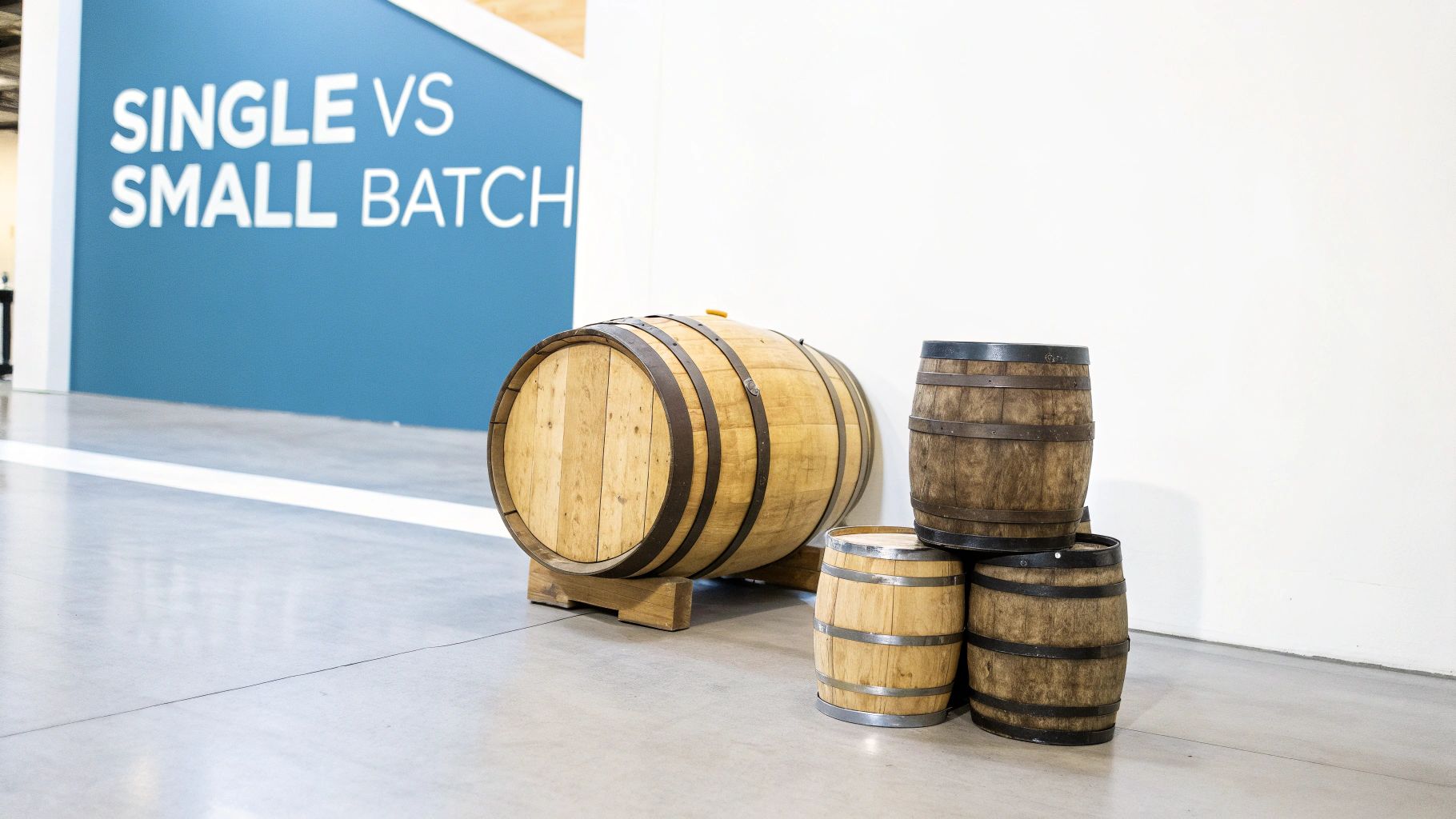
Single Barrel: A Unique Snapshot in Time
Just as the name implies, a Single Barrel bourbon means every drop in your bottle came from one—and only one—aging cask.
No two oak trees are identical, and barrels can age differently even in the same warehouse. One might sit higher up where it's hotter, another lower down where it's cooler. Because of this, each barrel imparts a truly one-of-a-kind flavor profile on the whiskey inside. Every Single Barrel release is a unique, unrepeatable expression of that specific cask's journey.
Choosing a Single Barrel bourbon is all about embracing this beautiful inconsistency. One barrel might give you deep notes of dark chocolate and cherry, while the very next one—filled on the same day from the same distillate—could burst with bright citrus and spicy oak. It's a fantastic choice for the adventurous drinker who loves the surprise and wants to taste whiskey in its most raw, unfiltered form.
Small Batch: A Masterclass in Consistency
Small Batch bourbon is the polar opposite. It’s a blend of a select number of barrels, all carefully chosen by a Master Distiller to create a specific, consistent, and signature flavor profile. The goal here is to craft the distillery's ideal expression of their whiskey.
A Small Batch bourbon is the distiller's art in a bottle. They skillfully marry the unique characteristics of multiple barrels—some spicy, some sweet, some oaky—to achieve a harmonious and reliable final product.
While the term "small batch" isn't legally defined—it could mean a handful of barrels or a few hundred—it always signifies a thoughtfully curated blend. This is the perfect bottle for someone who finds a flavor they love and wants to experience that same great taste every single time. It's excellence through expert craftsmanship and reliability.
Tips for Choosing Your Style
So, which one should you grab? It really just comes down to what you’re looking for in your glass.
- For the Adventurer: If you get a thrill from discovery and love trying something new, seek out Single Barrel offerings. They're a fantastic way to see just how much variation can exist within a single brand.
- For the Loyalist: If you value consistency and want a go-to bottle that always hits the spot with a flavor you love, Small Batch is your best bet.
Many distillers, especially in the craft whiskey scene, are doing amazing things with both styles. They might use a small batch blend for their flagship product, then offer special single barrel releases to give dedicated fans a peek behind the curtain.
To get a deeper understanding of this fascinating bottling method, you can discover precisely what "single barrel bourbon" means in our detailed article. Ultimately, the best way to find your preference is to get out there and explore both. Your palate will thank you.
Putting Your Bourbon Knowledge to the Test
Alright, you’ve done the homework. You know the difference between a high-rye and a wheated mash bill, and you can spot a Bottled-in-Bond label from a mile away. But all that theory is just the setup for the best part: actually tasting the whiskey.
The single best way to connect what you've learned to what’s in your glass is by running a blind tasting.
It’s a simple, fun, and honestly, an eye-opening exercise you can easily do at home. A blind tasting cuts through all the noise—the slick marketing, the fancy label, the price tag—and forces you to focus on the only thing that really matters: the bourbon itself. It’s how you find out what you genuinely enjoy, without any preconceived notions.
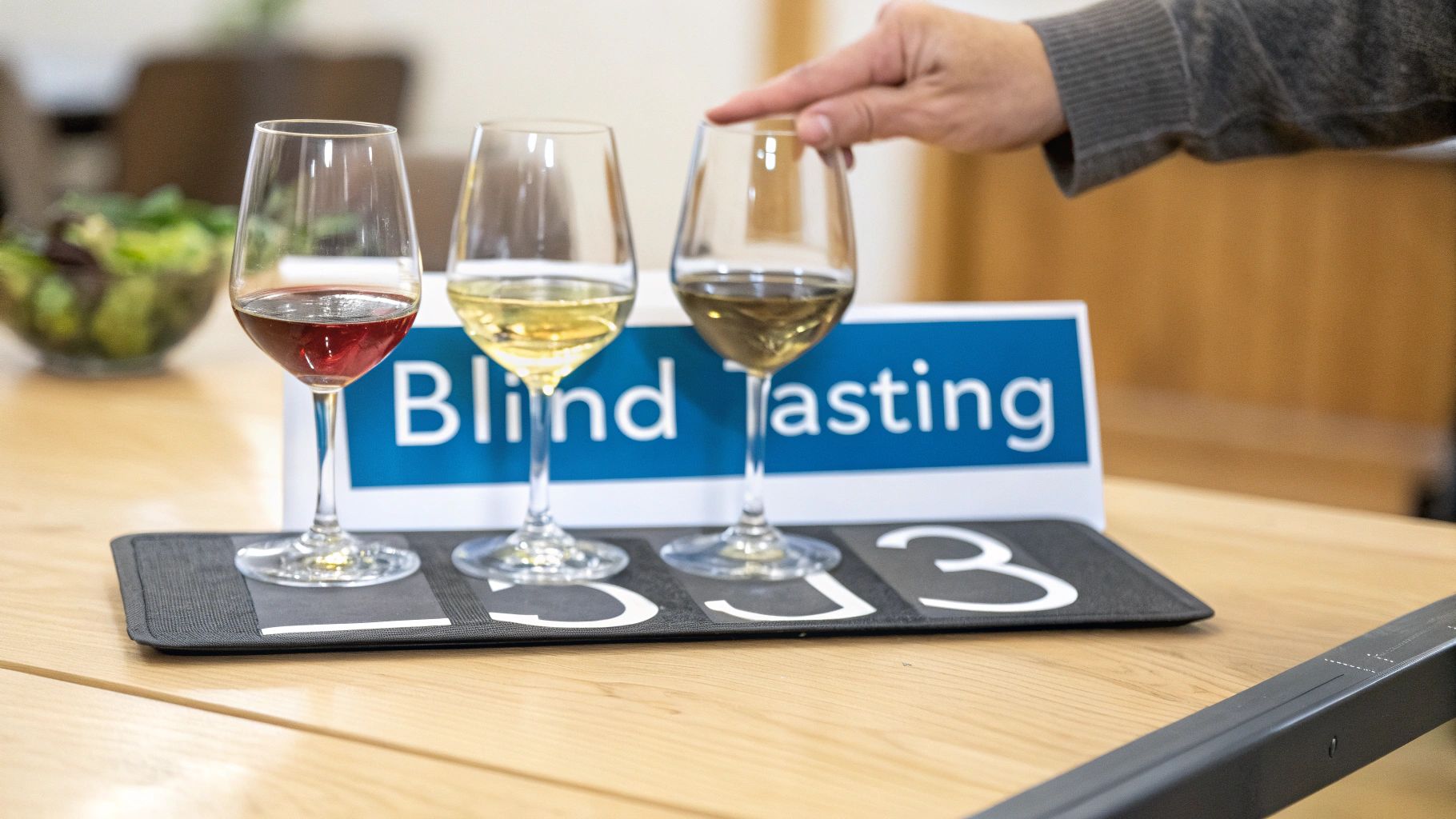
Setting Up Your First Blind Tasting
Don't let the name intimidate you; hosting a blind tasting is incredibly simple. All you need are a few different bourbons, some glasses, and maybe a friend or two to join in. The point isn’t to become an expert overnight. It’s about building your palate and figuring out what you like.
Here's how to get it done in three easy steps:
- Select a Diverse Flight: Grab three different bourbons that showcase distinct profiles. A fantastic starting point is to pick one high-rye, one wheated, and one Bottled-in-Bond bourbon. This variety ensures you’ll taste a real spectrum of flavors.
- Pour and Conceal: Have a friend pour about a one-ounce sample of each into identical glasses. They can label the bottoms A, B, and C for the reveal later, but make sure you can't see which is which.
- Taste and Take Notes: Go through the samples one by one. Slow down. Spend time with each, smelling and sipping, and just jot down your first impressions without overthinking it.
A Glencairn glass is the gold standard for tasting because its shape funnels all those great aromas right to your nose, but a regular wine glass will do the job just fine.
How to Taste Like a Pro
Tasting is much more than just drinking—it’s a full sensory experience. When you approach each glass, try to break it down into three distinct phases. This little trick helps you organize your thoughts and notice details you might otherwise miss.
- Nose (Aroma): Give the glass a gentle swirl and take a few short sniffs, keeping your mouth open just a bit. What do you pick up? Sweet notes like caramel and vanilla? Baking spices like cinnamon or black pepper? Or maybe fruit, like cherry and orange peel?
- Palate (Taste): Take a small sip and let it roll across your tongue. Do the flavors match the aroma, or does something new show up? Maybe that sweet smell gives way to a big, spicy rye kick.
- Finish (Aftertaste): After you swallow, what sticks around? Notice the flavors that linger. Is the finish long and warm, or does it end quickly? Do you get any oaky or leathery notes right at the end?
The most important rule for anyone new to whiskey is to simply trust your palate. There are no right or wrong answers here. If you smell baked apples and your buddy smells old leather, you’re both correct. It's all about your personal perception.
Using a tasting sheet or even just a plain notebook makes this whole process easier. A few words for the nose, palate, and finish for each sample is all you need.
Once everyone has their notes down, it's time for the big reveal. You might be shocked to discover your favorite of the night was the one you expected to like the least. That’s the magic of tasting blind. It strips away bias and lets the whiskey do the talking.
Of course, tasting neat is just the beginning. Many find their sweet spot using bourbon in cocktails. For those who love playing bartender, check out these excellent gifts for crafting cocktails to really deck out your home bar.
The Craft Bourbon Movement and Why It Matters
Beyond the big, familiar names that have long lined the liquor store shelves, something exciting is happening. The American craft whiskey movement has absolutely exploded, and it’s changing how we think about the different bourbon whiskey types out there. This is more than just new labels popping up; it’s a ground-level shift driven by passion, creativity, and a genuine connection to local ingredients.
Whiskey drinkers are actively seeking out these smaller, independent producers, hunting for unique bottles that tell a story. While the legacy distilleries are masters of consistency—and there's a lot to be said for that—craft distilleries are the champions of experimentation. They’re the ones pushing boundaries, playing with unique mash bills, using non-traditional grains, and exploring new aging techniques that create a whole spectrum of flavors you just won't find from the big guys.
What Defines a Craft Distillery
The word "craft" isn't just about size. It’s a philosophy. Think of it like the difference between a farm-to-table restaurant and a national chain. One is all about showcasing the character of its local sources, while the other is built to deliver the exact same experience every single time, no matter where you are.
Craft producers live out this ethos in a few key ways:
- Grain-to-Glass Production: Many of these distillers control the entire process. They’re sourcing local (often heirloom) grains, then milling, distilling, aging, and bottling it all right there on-site. Brands like Westland and FEW Spirits exemplify this commitment.
- Story and Terroir: They aren't just making bourbon; they're making their bourbon. They celebrate their specific region, connecting their whiskey to the local agriculture and climate—a concept the wine world calls "terroir."
- Bold Experimentation: Whether it's aging bourbon in funky, unconventional casks or building a four-grain mash bill, craft distillers aren't afraid to step away from tradition to create something totally new.
Why Craft Matters to You
For anyone new to whiskey, diving into craft bourbon is an incredible way to learn. It’s a shortcut to tasting the direct impact of a distiller's choices. You can really taste the difference between a high-rye mash bill made with grain from a farm down the road and a wheated bourbon aged in smaller barrels for a more intense oak interaction. These smaller producers often feel more personal, too, inviting you to understand their process and share in their passion.
This isn’t just some niche trend, either. It’s part of a much bigger shift in how people drink. The market has been moving toward premium spirits for years. For instance, between 2009 and 2014, the total volume of bourbon cases sold grew by 28.5%, which is impressive on its own. But get this: gross supplier revenues shot up by a massive 46.7%. This tells us people weren’t just buying more bourbon—they were actively choosing to spend more on higher-quality, premium bottles. You can discover more about this market trend on Wikipedia.
This growing appreciation for craftsmanship is the engine driving the whole craft movement. Enthusiasts are actively seeking out unique, quality-focused experiences and are willing to invest in discovering new distilleries that offer something different.
This movement validates your journey beyond the mainstream aisle. Exploring American craft whiskey connects you with the passionate people who are shaping the future of bourbon right now. It's the vibrant, exciting frontier of American whiskey, offering a nearly endless variety of new flavors and stories to discover, one glass at a time. It's a great time to be a bourbon fan.
Of all the questions that pop up when you're digging into bourbon, a few seem to come up time and time again. Getting a handle on these will clear up a lot of confusion and make your tasting journey that much more rewarding. Let's tackle some of the big ones.
Is Older Bourbon Always Better?
Absolutely not. It's one of the biggest myths in the whiskey world. While age can certainly add complexity and smooth out some rough edges, there's a definite point where things go south. Leave a bourbon in the barrel for too long, and the oak completely takes over, making it taste bitter and tannic.
Most bourbon lovers I know agree that the sweet spot is usually somewhere between 6 and 12 years. The real magic comes from the quality of the initial spirit and the barrel it was aged in, not just the number on the bottle.
What Is the Best Bourbon for a Beginner?
If you're just dipping your toes into the bourbon pool, you can't go wrong starting with a wheated bourbon. By swapping out the spicy rye grain for softer wheat in the recipe, distillers create a much gentler, sweeter profile.
These bourbons are incredibly approachable, full of those classic caramel, vanilla, and honey notes, but without the peppery bite that can sometimes be a bit much for a newcomer. It’s the perfect, friendly handshake to welcome you into the world of bourbon. Brands like Wyoming Whiskey or Maker's Mark are excellent starting points.
One of the first questions I get from new whiskey drinkers is whether a high price tag means better quality. The answer is a hard no. Price is so often driven by age, how rare a bottle is, and plain old marketing—not just what’s inside. The only way to find out what you think is best is to taste it blind, without the fancy label or hefty price staring back at you.
What Is the Difference Between Bourbon and Tennessee Whiskey?
This is a classic. The truth is, Tennessee whiskey—think Jack Daniel's—actually checks all the legal boxes to be called bourbon. But there’s one extra, all-important step it goes through before the barrel aging begins: the Lincoln County Process.
This is where the new-make spirit is slowly filtered through a deep bed of sugar maple charcoal. That extra filtration is what gives Tennessee whiskey its famous smoothness and a character that’s just a touch sweeter, setting it apart from its Kentucky cousins. And it's not just Kentucky and Tennessee anymore; many small American craft whiskey brands are popping up all over the country, producing some truly fantastic bourbons worth seeking out.
At Blind Barrels, we’re firm believers that the only way to truly learn is by tasting. Our blind tasting subscription sends you quarterly kits packed with top-shelf samples from America's best craft distilleries, so you can discover what you genuinely love without any brand bias getting in the way. Start your tasting adventure with us today.