

If you're trying to find the best bourbon small batch, the first thing you have to wrap your head around is what 'small batch' even means. It’s not just some buzzword slapped on a label for marketing; it's a whole philosophy. It’s about a distiller intentionally hand-selecting a limited number of barrels to blend together, chasing a very specific and exceptional flavor.
Think of it like a chef crafting a signature sauce. They aren't just dumping ingredients into a massive vat; they're carefully combining a few choice components to get the balance just right. That’s a small batch bourbon in a nutshell—a curated experience in a bottle, which is why so many American craft whiskey brands have embraced this approach.
What Exactly Is a Small Batch Bourbon?
The term "small batch" can feel a little murky, and that's mostly because there isn't a hard-and-fast legal definition for it. One distillery might call 10 barrels a small batch, while another might go as high as 150.
But the spirit of the term is what matters: quality control through curation.
Instead of blending hundreds or thousands of barrels to create a single, homogenous product for the masses, a master distiller picks a much smaller, more exclusive group. Every single barrel is its own little world, imparting unique character into the whiskey aging inside it. The real art is in knowing how to marry those barrels—blending the rich sweetness from one with the spicy oak from another and the subtle fruit notes from a third—to create something truly special.
The Blender's Craft
This blending process is where the real magic happens. By hand-picking specific barrels, the distiller can filter out any that don't make the cut, ensuring every single bottle in that release delivers on its promise. They can dial in the flavor, aiming for anything from a consistently smooth and easy-sipping bourbon to something bold, complex, and punchy.
It's the perfect middle ground between the two other main types of bourbon you'll see on the shelf:
- Single Barrel Bourbon: This is whiskey bottled from one, individual cask. Its flavor is a one-of-a-kind snapshot of that barrel's life, meaning no two bottles will ever be exactly the same.
- Standard (Mass-Market) Bourbon: Here, we're talking about a blend of hundreds, sometimes thousands, of barrels to guarantee absolute consistency on a massive scale.
Small batch bourbon gives you more reliability than a single barrel but way more character and nuance than a standard big-brand offering. This meticulous approach is a cornerstone of the craft whiskey movement, which is all about flavor exploration over sheer volume. To get a better handle on this, you can explore our complete guide to craft whiskey and small-batch spirits.
Why American Craft Distilleries Shine
So many of the most exciting things happening in small batch bourbon are coming from American craft distilleries. These are the smaller, often independent producers who aren't afraid to experiment. They're playing with unique grain recipes, novel aging techniques, and creative blending strategies, constantly pushing the boundaries of what bourbon can be.
For anyone new to whiskey, this is fantastic news. It means there's an incredible variety of flavors out there to discover, from spicy high-rye bourbons to soft, sweet "wheaters" made by passionate distillers you can often meet in person.
Small batch is less about a specific number and more about a commitment to craftsmanship. It's the distiller's promise that every barrel in the blend was chosen for a reason—to create a bourbon that is both delicious and distinctive.
And people are noticing. The appreciation for this quality-first mindset is fueling a boom in the market, which was valued at USD 1.59 billion globally in 2024. Projections show it climbing to a staggering USD 2.97 billion by 2033. This surge is driven by drinkers like us who want unique flavors and the authentic stories behind them, with North American producers leading the charge. You can read more about the exploding demand for premium bourbon and see just how this trend is reshaping the entire industry.
How to Decode a Bourbon Label
Every bourbon bottle tells a story, and learning to read its label is the first step toward figuring out what's inside. Think of it less like a sales pitch and more like a roadmap to the liquid in the bottle. Once you understand the landmarks on that map, you can stop guessing and start choosing the best small-batch bourbon for your palate with confidence.
The most critical piece of information on that roadmap is the mash bill. This is just the distiller’s grain recipe. By law, bourbon must be at least 51% corn, which is where its trademark sweetness comes from. But it's the other grains—the "flavoring grains"—that really let a distiller's creativity shine and dramatically shape the final taste.
Understanding the Mash Bill
Those secondary grains are what create the fundamental flavor profiles you'll find on the shelf. They usually fall into two main camps, and each one offers a totally different drinking experience.
- High-Rye Bourbons: When rye is the main flavoring grain (typically making up 15-35% of the recipe), it lends a distinct spicy, peppery kick. If you like the zesty bite of rye bread, you'll feel right at home with a high-rye bourbon. They often bring notes of baking spice and mint, with a drier finish that cuts through the corn's sweetness.
- Wheated Bourbons ("Wheaters"): Swap that rye for wheat, and you get a completely different spirit—much softer, sweeter, and smoother. Imagine the difference between a hearty rye cracker and a soft, sweet brioche bun. Wheaters are known for gentle notes of vanilla, caramel, and honey, making them incredibly approachable for folks new to bourbon.
To help you find your footing, here’s a quick breakdown of how these mash bills translate into the glass.
How Mash Bills Shape Bourbon Flavor Profiles
| Mash Bill Type | Primary Flavor Grain | Common Tasting Notes | Example Profile |
|---|---|---|---|
| Traditional (Low-Rye) | Corn (dominant), Rye | Balanced sweetness with a hint of spice, caramel, oak | Classic, well-rounded |
| High-Rye | Corn, Rye (prominent) | Spicy, peppery, baking spices (cinnamon, clove), mint | Bold, zesty, dry finish |
| Wheated ("Wheater") | Corn, Wheat | Soft, sweet, vanilla, honey, bready, creamy mouthfeel | Gentle, smooth, approachable |
| Four-Grain | Corn, Rye, Wheat, Barley | Complex blend of sweet, spicy, and soft notes | Layered, nuanced, intricate |
As you can see, the grain recipe is your first and best clue to what a bourbon will taste like. It's the foundation of its entire personality.
This is where small-batch producers, especially American craft distilleries, really excel—they aren't trying to create one uniform product for everyone. Instead, they're blending a handful of carefully selected barrels to hit a specific, nuanced flavor profile.
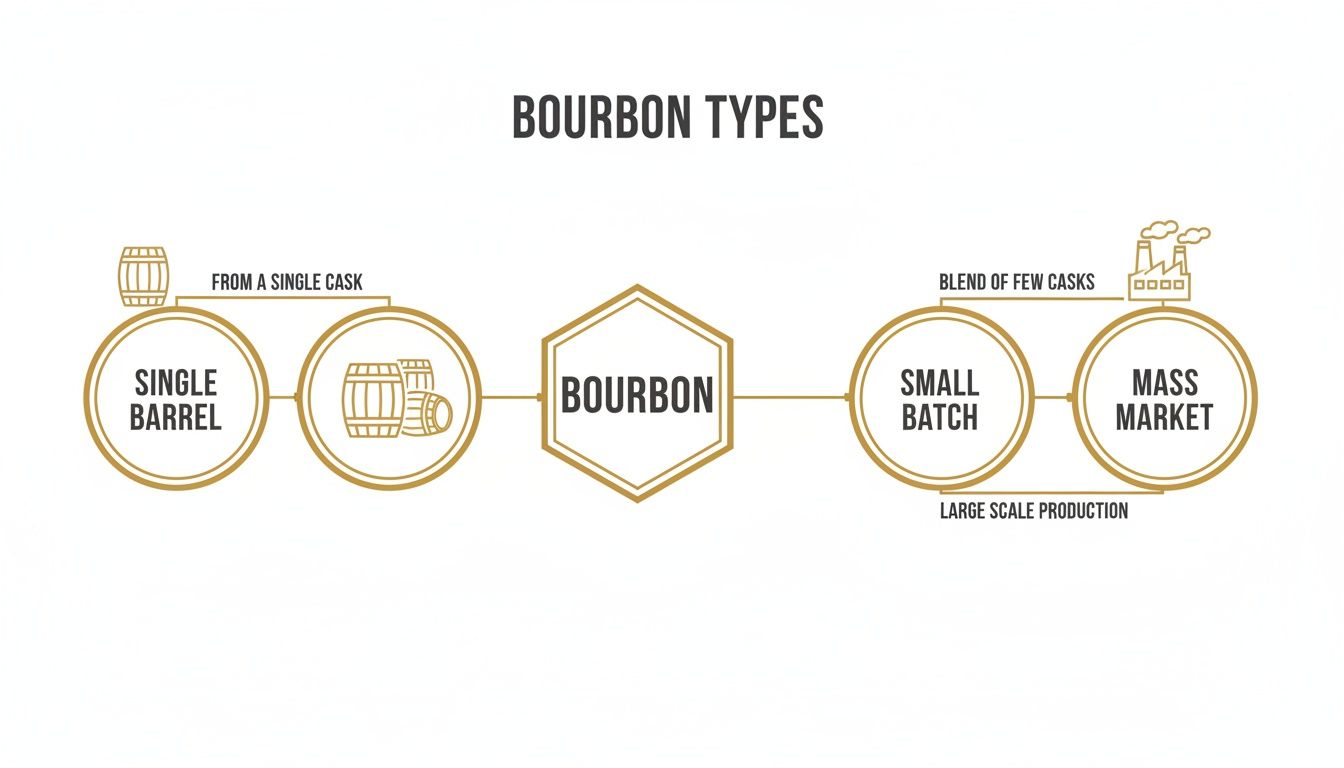
Small-batch bourbon hits that sweet spot between the wild-card nature of a single barrel and the one-size-fits-all approach of a mass-market brand. It’s all about intentionality.
Age Statements and Proof
After the mash bill, two numbers on the label give you huge clues: the age and the proof.
An age statement tells you how long the youngest whiskey in the bottle spent aging in a new, charred oak barrel. Now, older isn't automatically better, but age definitely smooths out the rough edges and adds layers of oak, leather, and dark fruit.
The proof (or Alcohol By Volume, ABV) is all about intensity. A higher proof isn't just about more alcohol; it means less water was added before bottling, resulting in richer, more concentrated flavors and an oilier texture. For anyone just starting out, sticking to bourbons between 90-100 proof is a great way to explore without overwhelming your palate.
A bourbon label is a roadmap to flavor. The mash bill tells you the primary taste direction, the age statement hints at its depth and maturity, and the proof indicates its intensity.
Understanding this is more important than ever. The bourbon world is exploding—U.S. producers filled a record 2.7 million barrels in 2024 to meet the insane demand, which followed a 12% sales jump to $5.3 billion. Much of that growth is driven by drinkers who are moving away from corporate uniformity and toward the nuanced profiles that brands like Elijah Craig and Four Roses are known for. You can explore more about the booming bourbon industry and see just how much craft brands are shaking things up.
Finally, keep an eye out for terms like "Cask Finish." This means the bourbon spent a little extra time in a barrel that previously held something else, like sherry, port, or rum. This finishing touch can add a beautiful and unexpected layer of flavor, creating a truly unique pour. By learning to spot these key details, you can predict a bourbon’s character before you even pop the cork.
A Practical Guide to Tasting Bourbon Like an Expert
Finding the best bourbon small batch isn't about memorizing tasting notes from a label. It's about learning the language your own palate speaks. The good news? You don’t need a stuffy ritual or a Ph.D. in distilling to really appreciate a great pour. All it takes is a glass, a little bit of focus, and an open mind.
This guide is designed to give you some practical, no-nonsense techniques to sharpen your tasting skills, especially if you're new to whiskey. Think of it less like a science class and more like learning to truly savor a complex, delicious meal.
The Four Steps of Tasting
A truly rewarding tasting experience breaks down into four simple stages. By slowing down and giving each step its moment, you’ll unlock a depth of flavor you might have otherwise missed completely.
- See: Take a good look at the bourbon.
- Smell: Give it a proper nosing.
- Sip: Let the flavors unfold on your palate.
- Savor: Experience the lingering finish.
This isn't just about being methodical; it's about preventing yourself from just gulping it down. This process gives the bourbon a chance to tell its whole story—from the grains it was born from to the barrel it called home.
Step 1 Look at the Color
Before you even think about taking a sip, hold your glass up to a light source. The color of a bourbon can drop some serious hints about its age and personality.
- Pale straw or light gold: This often points to a younger bourbon. You can probably expect more vibrant, grain-forward notes here.
- Amber and copper: This is that classic bourbon color. It suggests a spirit that has spent a respectable amount of time in the barrel, developing those deeper caramel and oak characteristics.
- Deep brown or mahogany: A darker hue usually means a more mature bourbon, one that has pulled a ton of rich, complex flavor from the charred oak over many years.
While you're at it, give the glass a gentle swirl. See those "legs" or "tears" that run down the side? Thicker, slower legs can suggest a higher proof or a richer, more viscous feel in your mouth.
Step 2 Nose the Aromas
This is the most important step, period. Your sense of smell is responsible for the vast majority of what you perceive as taste. But don't just shove your nose in the glass and inhale—that's a surefire way to get a snootful of alcohol vapor that will overwhelm your senses.
Instead, hold the glass a few inches from your face. Open your mouth just a bit as you gently breathe in through your nose. This little trick helps you pick up on more subtle aromas. Start identifying what you smell. Is it sweet like caramel or vanilla? Fruity like dark cherry or orange peel? Spicy like cinnamon or rye bread?
Tip for New Drinkers: Don't worry if you can't identify ten different aromas right away. Start simple. Can you smell something sweet? Something spicy? Something woody? Building from there is how you train your nose.
Step 3 Taste Across Your Palate
Alright, it's time. Take a small sip—just enough to coat your tongue. Before you swallow, let it rest in your mouth for a few seconds. Some people call this the "Kentucky Chew," where you gently move the liquid around to make sure it hits all your taste buds.
Pay close attention to how the flavors change and develop.
- Initial Taste: What's the very first thing you notice? Often, it's the sweetness from the corn mash bill.
- Mid-Palate: As the bourbon sits, what other flavors start to emerge? This is where you might find those fruit, spice, or oaky notes.
- Mouthfeel: How does the whiskey actually feel? Is it thin and light, or is it thick, oily, and creamy on your tongue?
This process helps you peel back the complex layers of a well-made small batch bourbon. For a deeper dive, exploring a guide on bourbon tasting notes can give you a fantastic vocabulary to describe exactly what you're experiencing.
Step 4 Appreciate the Finish
The finish is the grand finale—the lingering taste and sensation after you've swallowed. Does the flavor vanish instantly, or does it hang around for a while? A long, pleasant finish is almost always the sign of a high-quality, well-crafted spirit.
Notice which flavors are left behind. Is it a warm, spicy tingle? A sweet, oaky residue? Sometimes the finish can reveal entirely new notes that you didn't even pick up on the palate.
The Power of Blind Tasting
If you really want to discover your true preferences, blind tasting is the ultimate tool. When you strip away the brand name, the price tag, and all the marketing hype, you're forced to judge a bourbon purely on its own merits.
This is, hands down, the best way for new whiskey drinkers to figure out what they genuinely enjoy without any preconceived notions. It puts your palate in the driver's seat. You might just be surprised to find that your favorite of the bunch is an affordable bottle from a small American craft distillery you've never even heard of.
Discovering Notable American Craft Bourbons
Now that you've got the tasting fundamentals down, it's time to dive into the really exciting stuff: the world of American craft distilleries. These smaller, independent producers are the heart and soul of the small-batch movement. They're pouring their passion and creativity into bottles that are anything but ordinary.
Think of this less as a ranked list and more as a jumping-off point. We're highlighting a few standout producers whose bourbons tell a story in the glass, connecting their unique flavor profiles right back to the concepts you've just learned. This is your chance to put those new tasting skills to the test.
Why Craft Bourbon Matters
The explosion of American craft whiskey is one of the biggest things to happen to the spirits world in a long time. These distilleries are pushing boundaries—reviving heirloom grains, playing with unique barrel finishes, and just flat-out refusing to do things the old way.
This is incredible news for anyone getting into whiskey. The spectrum of flavors has never been wider. You can find everything from a spicy, high-rye bourbon made in a bustling city to a soft, sweet wheater from a family farm. Exploring these brands is how you'll find what your personal best bourbon small batch truly is.
Standout Small Batch Bourbons to Try
Here are a few examples of American craft bourbons that showcase exceptional quality and character. Each one offers a distinct lesson in flavor, making them perfect for sharpening your palate.
- Still Austin "The Musician": Hailing from the Texas heat, this bourbon proves that great whiskey doesn't always need a high age statement. At around two years old, it drinks with a surprising maturity, delivering rich notes of toasted caramel and roasted oak that completely defy expectations. It's a masterclass in how a hot climate can accelerate aging.
- New Riff Single Barrel Bourbon: This Kentucky distillery is famous for its high-rye mash bill and strict Bottled-in-Bond standards. Their single barrels are consistently bold and spicy, but they can vary wildly from one cask to the next. Tasting them side-by-side is the perfect lesson in how much an individual barrel shapes a whiskey's final personality.
- Bardstown Bourbon Company Origin Wheated Bourbon: As a newer player in the heart of bourbon country, Bardstown Bourbon Co. has made huge waves with its own distilled spirits. Their wheated bourbon is a study in balance, bringing that classic gentle sweetness and citrus you expect from wheat while keeping a complex, spicy backbone from its time in oak.
Exploring craft bourbon is like visiting a farmer's market instead of a big-box grocery store. You'll find unique varieties, hear the stories behind the products, and discover flavors you never knew existed. It’s an adventure for your palate.
The global appetite for premium spirits like these is growing fast. The bourbon whiskey market, valued at USD 9,567.53 million in 2025, is expected to climb to an impressive USD 15,515.05 million by 2034. This trend powers discovery-focused services like Blind Barrels, which delivers top-shelf craft samples for blind tasting, helping you find your next favorite small American distillery without any bias.
This list is just the beginning. To keep the adventure going, check out our guide on other small batch bourbon brands worth tracking down. Happy hunting
How to Choose Your Next Bottle of Small Batch Bourbon
Walking into a good whiskey shop can be a bit intimidating. That wall of bottles, all amber and inviting, can feel like a test you didn't study for. But finding your next favorite bottle doesn't have to be overwhelming.
Choosing the best bourbon small batch isn’t about some mythical, single "perfect" whiskey. It's really about matching the right bottle to the right moment and, most importantly, to your own taste. Let's break down a simple, practical way to think about it, using three key factors: your budget, the occasion, and your palate.
Thinking through these elements before you even step foot in the store can turn that confusing wall of options into a handful of great choices. It’s a straightforward method to make sure you always walk away with a bottle you’re genuinely excited to open.
Start with Your Budget
One of the best things about bourbon is the incredible quality you can find at almost any price. A bigger price tag doesn't always mean you'll like it more, so there's no need to overspend to get a fantastic experience. A good way to frame it is by thinking in three tiers.
- Great Value (Under $35): This is the sweet spot for workhorse bourbons. These are the bottles perfect for everyday sipping and that absolutely shine in a cocktail. A classic example like Elijah Craig Small Batch delivers a complexity and maturity that punches way above its weight, with rich notes of caramel and oak spice.
- Mid-Range ($35-$55): In this range, things get more interesting. You'll find more nuanced and often higher-proof expressions, especially from exciting American craft whiskey brands. A bottle like Bardstown Bourbon Company's Origin Wheated offers a beautifully balanced profile of sweet orange and oak spice, making it a fantastic pour to explore neat.
- Special Occasion Splurges ($60+): This is where the treasure hunt begins. You can explore older age statements, unique cask finishes, and highly sought-after releases. These are the bottles meant for savoring, celebrating, and telling a story with every sip.
Match the Bourbon to the Occasion
Next up, think about how you plan to enjoy the bourbon. Are you looking for a quiet sipper for the end of a long day, or something to mix up for a backyard party? The answer will point you in the right direction.
For instance, if you want a versatile daily drinker that’s great neat but also makes a killer Old Fashioned, a balanced and flavorful bourbon around 90-100 proof is a fantastic choice. But if you’re planning a dedicated tasting night with friends to really dig into some complex flavors, you might reach for a cask-strength release that offers a much bolder, more intense experience.
Tip for New Drinkers: Don’t feel pressured to grab the most expensive or highest-proof bourbon on the shelf. Your best bet is to start with a respected, accessible bottle in that mid-proof range to build your palate. Versatility is your best friend when you're just starting out.
Shop with Your Palate in Mind
Okay, you've got your budget and the occasion figured out. The final step is the most personal: listening to your own taste. Don't just think about other whiskeys you've liked; think about flavors you enjoy in food and other drinks, too.
- Do you have a sweet tooth? Look for wheated bourbons, which often have notes of vanilla, honey, and soft caramel.
- Prefer something with a little kick? A high-rye bourbon is your ticket. It will deliver those classic notes of cinnamon, pepper, and baking spice.
- Enjoy rich, fruity flavors? Seek out bourbons known for profiles heavy on cherry, dark fruit, and citrus.
When you're at the shop, don't be afraid to use this language. Talk to the staff. Saying, "I’m looking for a smooth, wheated bourbon under $50 that's great for sipping," is a thousand times more helpful than just asking, "What's good?" By layering these three simple steps, you can confidently walk up to that whiskey wall and pick out the best small batch bourbon for you, every single time.
Frequently Asked Questions About Small Batch Bourbon
Diving into the world of small batch bourbon often feels like learning a new language. You're bound to have questions as you explore deeper. We’ve put together this section to tackle some of the most common queries we hear, giving you clear, straightforward answers to build your confidence on the tasting trail.
Our goal is to clear up those lingering "what ifs" and "how comes," giving you the practical knowledge to explore the best bourbon small batch options with a solid foundation.
Is Older Small Batch Bourbon Always Better?
It’s a common myth that a higher age statement on a bottle automatically means better bourbon. That's just not the whole story. While aging in a new, charred oak barrel is absolutely crucial for developing those classic caramel, vanilla, and spice notes, "older" isn't always "superior."
Age can definitely smooth out a whiskey's rough edges and add incredible layers of complexity. However, every single barrel hits its peak at a different time. Some bourbons are vibrant and perfectly balanced at six years, while others might need twelve or more to really hit their stride.
The 'best' age is completely subjective—it all comes down to the specific whiskey and your personal taste. Sometimes, over-aging a bourbon can make it taste overly woody or tannic, smothering the more delicate flavors from the grain. A beautifully crafted younger bourbon from an American craft whiskey brand can easily outshine an older, poorly balanced one.
What Is the Difference Between Small Batch and Single Barrel?
This is easily one of the most frequent points of confusion for newcomers, but the distinction is pretty simple once you picture the process. Think of it like a musical performance.
- Single Barrel: This is the solo artist. The bourbon is bottled from one individual barrel, which means every bottle offers a unique, one-of-a-kind expression of that specific cask's journey. Its flavor can be wonderfully distinct but also quite variable from one barrel to the next.
- Small Batch: This is the perfectly harmonized quartet. A master distiller carefully selects a limited number of barrels and blends them together to create a specific, consistent, and exceptional flavor profile. The goal is to craft a final product that is greater than the sum of its parts.
So, while a single barrel gives you a unique snapshot in time, a small batch bourbon delivers a more reliable and intentionally crafted experience.
How Should I Store My Bourbon to Keep It Fresh?
You've brought home a fantastic bottle, and now you want to make sure it stays that way. Thankfully, proper storage is simple and key to preserving the integrity of your whiskey. The two biggest enemies of bourbon are sunlight and big temperature swings.
Here are the golden rules to follow:
- Store It Upright: Never, ever store your bourbon on its side like a wine bottle. The high alcohol content can eat away at the cork over time, causing it to fall apart and potentially taint your whiskey.
- Keep It Cool and Dark: Direct sunlight can break down the complex flavor compounds in your bourbon. Stash your bottles in a cool, dark place like a cabinet, pantry, or cellar where the temperature stays relatively stable.
- Seal It Tight: After you open a bottle, make sure the cork or cap is sealed tightly to minimize its exposure to oxygen. While a sealed, unopened bottle will last pretty much forever, an opened bottle will slowly change over months or years due to oxidation. For most of us, though, a properly stored bottle will taste great for a very long time.
Can I Use Premium Small Batch Bourbon in Cocktails?
Absolutely! In fact, using a high-quality small batch bourbon is one of the best ways to elevate your cocktail game. While many of us prefer to sip our best bottles neat to appreciate every nuance, a well-made bourbon with a complex flavor profile can add incredible depth to classic drinks.
A great small batch bourbon can take a simple Old Fashioned or Whiskey Sour from a good drink to a truly unforgettable one. The secret is choosing a bourbon that’s bold enough to stand up to the other ingredients without getting lost.
A Tip for New Mixologists: Look for a small batch bourbon in the 90 to 105 proof range. This proof level gives it enough intensity to ensure the bourbon's character—all its unique notes of spice, fruit, and oak—shines through instead of being drowned out by sugar and bitters. It's a perfect way to explore how different bourbon profiles play with other flavors.
Ready to discover your next favorite bourbon without the guesswork? At Blind Barrels, we send you curated flights of top-shelf American craft whiskeys to taste blind. Remove the bias, trust your palate, and find out what you truly love. Start your blind tasting adventure with Blind Barrels today!