

Most advice about the best rye bourbons gets the category backwards. It tells you to chase the spiciest bottle on the shelf, then acts surprised when you've bought a straight rye whiskey or a bourbon that drinks too hot for the occasion. The smarter move is to read the mash bill first, then decide whether you want a rye-forward bourbon for balance or a true rye whiskey for a sharper grain profile.
That distinction matters because bourbon still has to lead with corn, while rye whiskey has to lead with rye. A bottle can be legally bourbon and still lean hard into spice, pepper, and dry baking notes if the rye percentage is high enough. That's why blind tasting is so useful, it strips away the label game and helps you find the bottles your palate wants, including craft distillery releases you'd probably skip on price or name recognition alone.
Why Rye Bourbon Is Not the Same as Rye Whiskey
A lot of shoppers use “rye bourbon” and “rye whiskey” like they mean the same thing, but they don't. Bourbon must be at least 51% corn, while straight rye whiskey must be at least 51% rye. That legal split changes the glass in a very real way, because corn pushes bourbon toward sweetness and roundness, while rye pushes whiskey toward dryness, pepper, and sharper spice.
A high-rye bourbon sits in the middle. It's still bourbon, still corn-led, but the rye content climbs high enough that the whiskey starts tasting noticeably more assertive. Forbes notes that rye grain usually makes up only 10% to 15% of most bourbon mash bills, while a much more rye-forward example from Liquor.com uses 60% corn, 36% rye, and 4% barley. That spread is the reason this substyle exists at all, and it's why the bottle on the shelf can feel much closer to rye whiskey than to a soft, classic bourbon. Blind Barrels' rye whiskey guide is a helpful companion if you want a plain-language refresher on how rye behaves in the mash.
A simple label test
Practical rule: if the label or product sheet shows rye in the mid-20s or higher, you're probably in rye-forward territory, even if the bottle still says bourbon.
That's the core shopper mistake. People buy by style name alone, then complain that one bourbon tastes spicy and another doesn't, even though the mash bills were never close in the first place. Once you know the legal floor for bourbon and the legal floor for rye whiskey, the category stops feeling fuzzy. You can spot the difference before you ever pour a glass.
Reading Mash Bills to Find Rye-Forward Flavor
Mash bills are where the personality lives. A bourbon with 10% to 15% rye usually stays in classic bourbon territory, meaning you'll still get the sweeter corn-driven profile first. Once rye rises toward 20% to 25%, the whiskey starts speaking more loudly in the glass, and by the time a published example reaches 36% rye, the spice and dryness are hard to miss. A useful benchmark is that a technically meaningful high-rye bourbon still has at least 51% corn, but the rye content has climbed enough to change the balance. HiConsumption's high-rye bourbon guide lays out that threshold clearly, and it's a better buying cue than vague talk about “bold” whiskey.
What the grain shift actually tastes like
Rye doesn't just make whiskey “spicier” in a generic way. It raises perceived dryness, adds pepper, and pushes baking-spice character toward the front, while the bourbon gets less of the round vanilla-caramel softness that comes from a higher corn load. A bottle can have a big proof and still feel less rye-forward than a lower-proof whiskey with a richer rye mash bill, so proof alone isn't the whole story.
That's why the most useful mental model is simple. Below 15% rye usually means classic bourbon. Around 20% to 25% rye is where many drinkers first notice the shift. At 30%+, you're firmly in the spice-driven lane that attracts people who keep buying the best rye bourbons for cocktails and for neat pours.
A label reading shortcut
- Look for the corn share first: if the label confirms bourbon and the corn stays above the legal minimum, you're still in bourbon.
- Then check the rye percentage: the higher it climbs, the more likely you are to get pepper, clove, and dry spice.
- Use published mash bills, not marketing language: words like “bold” don't tell you nearly as much as the grain split.
The grain bill is also where craft distilleries earn attention. A small producer can make a whiskey that drinks more distinctive than a bigger brand by moving the rye higher in the recipe. Blind Barrels' bourbon grain bill guide is useful if you want to cross-check how grain ratios translate into the glass without wading through marketing copy.
Tasting Rye Bourbon Like You Mean It
The easiest way to taste rye-forward bourbon is to stop treating it like one more brown spirit and give it the same attention you would a flight. Pour a small amount, let it rest for a minute, then smell before you sip. That pause matters because rye often shows up first as peppery lift on the nose, then as baking spice, oak, and sometimes a little citrus peel or herbal edge. If you want a cleaner framework, our guide to proper whiskey tasting technique walks through the basics step by step.
Use aroma, palate, and finish
Take one sip, then follow it in order. The nose tells you whether the rye is presenting itself as pepper, clove, or fresh grain. The palate usually fills in the middle, where cinnamon, nutmeg, and toasted oak can sit beside caramel and vanilla. The finish is where a rye-forward bourbon often separates from a softer bourbon, because the aftertaste tends to turn drier and stay around longer instead of dropping straight into sweetness.
Helpful tasting rule: if the finish feels dry and spice-led, the rye is doing real work. If the finish folds into sweetness, you are probably dealing with a lower-rye bourbon.
Proof changes the experience too. A 100-proof rye or rye-forward bourbon often gives enough structure for a balanced sip and for cocktails, while barrel-proof bottles can feel much denser and louder. Higher proof can also hide aromas until you add a little water, because ethanol can crowd out the more volatile notes. Bourbon Proof's rye whiskey guide makes a practical case for 100 proof as a useful benchmark, and that lines up well for drinkers still learning how to taste with confidence.
Keep notes, not guesses
Write down three things for each pour.
- Aroma: pepper, herbal note, citrus, caramel.
- Palate: spice, sweetness, oak, breadiness.
- Finish: short, dry, warm, lingering.
That simple table makes side-by-side tasting far more useful, especially when you line up bottles that look similar on the shelf but behave very differently in the glass. A small craft distillery can show more character than a bigger label if the rye in the mash bill is pushed higher, and blind tasting helps you notice that without brand bias getting in the way. The more you repeat the process, the less you rely on reputation and the more you trust your own palate.
Choosing the Right Rye Bourbon for How You Actually Drink
The wrong buying guide treats every bottle like it serves the same purpose. A whiskey that shines in a Manhattan isn't always the one you want to sip slowly after dinner, and the bottle you use to bridge from bourbon to rye doesn't need to be the most aggressive one in the lineup. Use case matters more than ranking.
| Use Case | Rye Percentage | Ideal Proof Range | Why It Works |
|---|---|---|---|
| Cocktails | 20% to 30% | 90 to 100 proof | Holds up against vermouth, bitters, and citrus without overwhelming the drink |
| Neat sipping | 25% to 36% | 100 proof or higher | Gives enough structure for spice, oak, and finish to stay interesting |
| Step-up from standard bourbon | 20% to 25% | 90 to 100 proof | Adds rye character without jumping straight to a rye-dominant profile |
A cocktail drinker usually wants balance first. A rye-forward bourbon with enough proof to stand up in a mixed drink is often the smarter buy than a very hot barrel-proof bottle that disappears once you add sugar, vermouth, or ice. For a neat pour, more proof can help if you like concentration and a slower, more detailed sip, but it can also ask for dilution.
That's where buying gets more personal. If you're moving from standard bourbon into rye-forward territory, start in the 20% to 25% rye range and work upward. If you already enjoy drier whiskey, 30%+ rye tends to deliver the sharper profile many people mean when they say they want the best rye bourbons.
For a broader whiskey night, it can be useful to pair bottle hunting with another discovery channel, especially if you already enjoy regional drinking culture. A curated resource like wine club membership Sonoma can be a helpful reminder that taste is often about context, not just category. Whiskey fans make the same mistake all the time, they chase reputation instead of building a reference point for what they enjoy.
The other buying trap is mixing straight rye whiskey into a bourbon search without saying so. If you want bourbon structure with more spice, stay in the high-rye bourbon lane. If you want rye grain to lead outright, buy straight rye whiskey and skip the confusion.
How Blind Tasting Reveals Your Real Favorites
Brand bias is powerful. A label you've seen everywhere feels safer, and a higher price tag can make a bottle seem better before you've even poured it. Blind tasting cuts through that fast, because the glass doesn't care what the bottle cost or how famous the distillery is.
A good example is a quarterly blind tasting kit built around four blind samples from small American craft distilleries, with a tasting table for aroma, palate, and finish notes, plus a QR code reveal after you've already written down your impressions. Blind Barrels works that way, and the value is in the order of operations. You taste first, then learn the distillery, age, proof, and mash bill after your own reaction is on paper. That sequence is exactly what keeps brand prestige from steering the outcome.
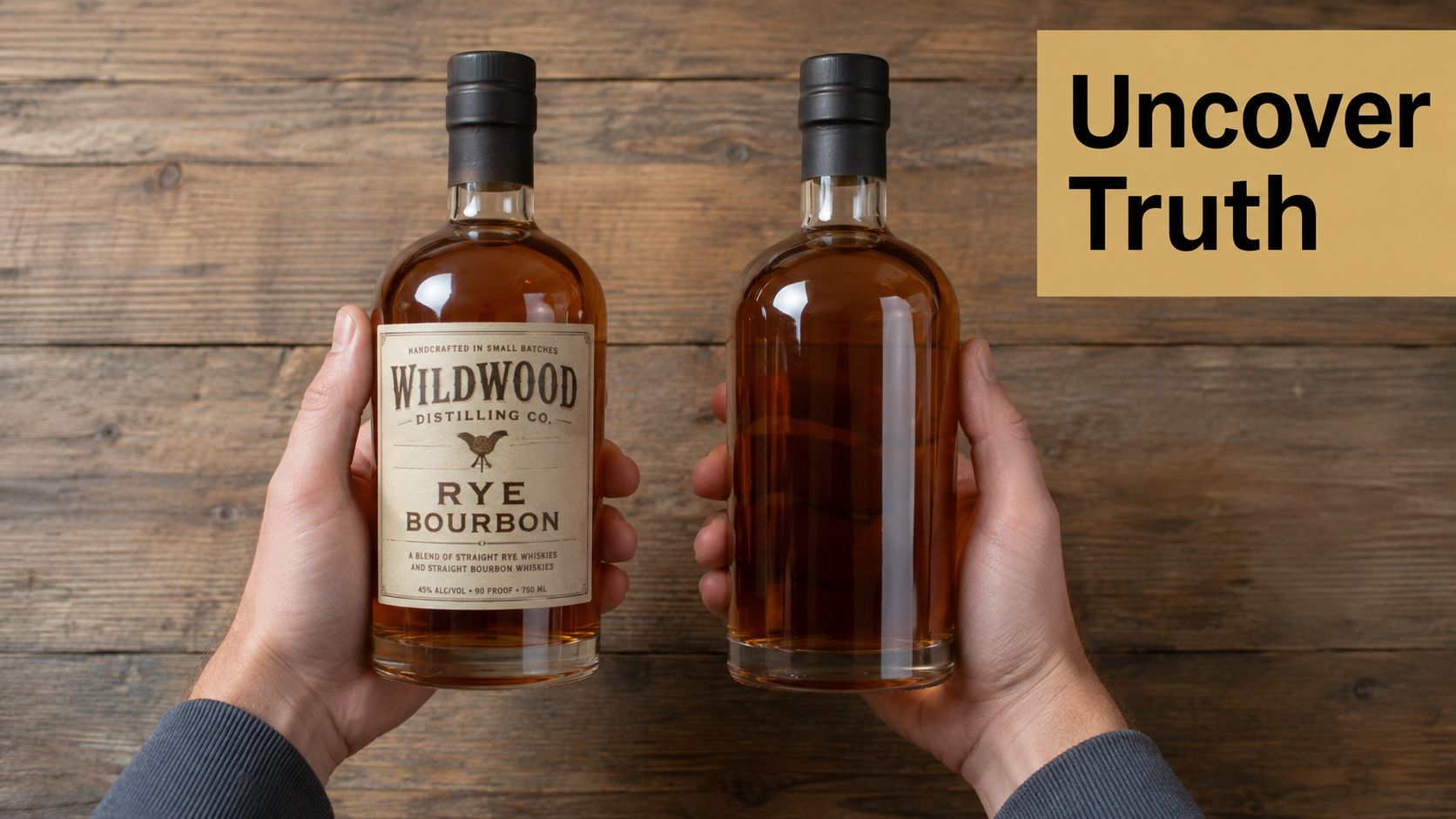
Why craft bottles show up so well blind
Small American distilleries often make some of the most interesting high-rye mash bills in the market. That doesn't automatically make them “better,” but it does make them more likely to surprise you when the label is hidden. A bourbon drinker might think they're loyal to a familiar legacy brand, then end up preferring a craft release with brighter spice, cleaner grain notes, or a drier finish.
There's also a game element that makes people pay attention. Guessing age, proof, and whiskey type gives you a reality check on how well your palate reads a glass without visual cues. Sometimes you'll nail the whiskey type and miss the proof. Sometimes you'll think a pour is older than it is, because the oak integration feels more mature than expected.
That's the point. Blind tasting turns preference into something you can test instead of something you inherit from the shelf.
Buying and Storing Your Rye Bourbon Collection
A small rye bourbon collection works best when every bottle has a job. One bottle should cover cocktails, one should reward neat pours, and one should be there when you want to explore a more distinctive craft distillery expression. If you can't find a bottle locally, check the label description carefully before you substitute something else, because a bourbon's mash bill often tells you more than the brand name ever will.
What to look for before you buy
- Examine the label: look for “rye bourbon” language or a mash bill that clearly shows a high rye percentage.
- Compare value, not hype: craft bottles can cost more, but the flavor difference often justifies the premium when the grain bill is more distinctive.
- Watch for source information: knowing whether a whiskey is distillery-made, sourced, or a limited single barrel can help set expectations before you commit.
Storage matters more than people think. Keep bottles upright, away from direct sunlight, and in a cool, dark place. Once a bottle sits half-empty for months, the air in the headspace can flatten the spicy detail that makes rye-forward bourbon interesting in the first place.
Food can help, too. Rye-forward whiskey handles smoked meats, aged cheeses, and dark chocolate especially well, because those flavors match the whiskey's dry spice and oak rather than fighting it. If you want a bottle to feel more expressive, don't only pour it on its own, pair it with something that lets the pepper and baking spice show up clearly.
A practical home bar habit
Keep your most expressive bottle within easy reach, and put the slow-sipper somewhere stable. The more often you taste them side by side, the faster your palate learns what rye is actually doing.
Trust Your Palate Over the Label
The best bottle in this category isn't the most famous one, it's the one that gives you the finish, spice, and balance you wanted in the first place. That might be a high-rye bourbon with a mash bill in the mid-20s, a bolder bottle in the 30s, or a straight rye whiskey if you really want rye to lead. Proof matters, use case matters, and blind tasting matters because it shows you what you like without brand noise.
Craft distilleries deserve a real shot here because they're often where the most interesting grain bills show up. A blind pour can turn a bottle you'd never have picked into a new favorite, and that's a better whiskey education than chasing whatever list the internet is repeating this week.
Blind Barrels sends quarterly blind whiskey kits with four samples from small American craft distilleries, plus tasting tables and a QR reveal so you can judge the whiskey before the label shapes your opinion. If you want to compare rye-forward bourbons without brand bias and see what your palate prefers, visit Blind Barrels and start tasting the category the honest way.