

Before a bourbon ever sees the inside of a barrel, its destiny is already being written. The author of that story? The grain bill. This is the foundational recipe, the specific mix of grains a distiller chooses, that sets the stage for everything that follows.
The one non-negotiable rule is that bourbon must be made from at least 51% corn. That corn is where the spirit’s signature sweetness comes from. But it’s the other 49% that gives a bourbon its soul. For new whiskey drinkers, understanding this concept is the first step to figuring out what you truly enjoy.
The Secret Recipe Behind Every Bourbon
Think of a bourbon grain bill as its DNA. Just like a chef’s ingredients determine the final dish, a distiller’s chosen grains create the blueprint for a bourbon’s aroma, taste, and texture. This simple list of ingredients is the first, most critical step on the long journey from field to bottle.
For anyone new to whiskey, getting a handle on this concept is the key to unlocking why you prefer one bourbon over another. It’s the reason some are spicy and bold, while others are soft, gentle, and sweet.
Tip for New Drinkers: At its core, the grain bill is all about balance. That sweetness from the corn needs a partner. That partner—usually rye or wheat—is what gives a bourbon its personality and makes it stand out from every other bottle on the shelf.
The Foundation of Bourbon Law
This idea of a recipe isn't just a quaint tradition; it’s the law of the land, rooted deep in American history. The legal framework for bourbon was shaped over decades, all to protect its identity as a uniquely American spirit. Back in 1909, President William Howard Taft made a key decision that bourbon should be made primarily from corn, paving the way for federal law.
This was officially cemented in 1964 when Congress designated bourbon as a "distinctive product of the United States," mandating the minimum 51% corn requirement that every single distiller follows today. You can dive deeper into how these historical decisions shape the bourbon in your glass over on Wikipedia.
Why the Grain Bill Matters to You
Getting familiar with the grain bill is your superpower as a whiskey drinker. Instead of grabbing a random bottle and hoping for the best, you can start identifying the styles you truly enjoy. This knowledge is a game-changer when you’re exploring the exciting world of American craft distilleries, many of which proudly print their unique grain bills right on the label.
Knowing the recipe helps you:
- Predict Flavor: You can make an educated guess about whether a bourbon will be spicy, sweet, or soft before you even pop the cork.
- Refine Your Palate: You’ll start connecting specific grain flavors to what you’re tasting, which makes you a much more confident taster.
- Discover New Favorites: Love a high-rye bourbon from an American craft brand like New Riff? Now you can confidently seek out similar styles from other distillers.
Ultimately, the grain bill tells the story of the spirit. Learning to read it is your first step toward tasting like an expert.
Meet the Flavor-Making Grains
Think of a bourbon's grain bill like the recipe for a legendary barbecue sauce. A few core ingredients are non-negotiable, but the specific amounts and the little extras are what separate the good from the truly great. Each grain plays a specific role, contributing its own distinct personality to the final spirit. Getting to know these key players is the first step in understanding what you're tasting in the glass.
Corn: The Sweet Foundation
Corn is the heart and soul of bourbon. Legally, the recipe has to be at least 51% corn, but most distillers push that number much higher, often into the 70-80% range. This is where bourbon gets its classic sweetness. Corn lays down a rich, often oily base layer of flavor, bringing notes of caramel, vanilla, and sweet buttered popcorn to the party.
When you sip a bourbon that feels viscous and coats your tongue with a comforting sweetness, you're tasting the corn's heavy influence. Some American craft distillers, like Balcones Distilling in Texas, even use unique heirloom blue corn varieties to create an incredibly robust, nutty, and toasty profile that’s a world away from the norm.
Rye: The Spicy Counterpart
If corn is the smooth, sweet bassline, rye is the fiery lead guitar. As the most common "flavoring" grain, rye slices through the corn's richness with a bold, peppery kick. It's the source of those complex baking spice notes—cinnamon, clove, nutmeg—along with hints of mint, and sometimes even a little dill or dark fruit.
A bourbon with a healthy dose of rye will often feel drier on the palate and leave a spicy tingle that lingers long after you swallow. This is the profile that many seasoned whiskey drinkers gravitate toward, seeking out high-rye expressions from craft producers like Sagamore Spirit, where that zesty, assertive character is front and center.
Tip for New Drinkers: Want a quick way to train your palate? Set up a blind tasting comparing a traditional bourbon, a high-rye, and a wheated one. With the labels hidden, you're forced to rely only on your senses to pick out the sweet corn, spicy rye, or soft wheat.
Wheat: The Softer Alternative
Where rye brings the spice, wheat brings the soft, comforting sweetness. When a distiller swaps rye for wheat in the grain bill, the entire profile of the bourbon changes. The sharp, peppery notes disappear, replaced by delicate flavors of honey, fresh-baked bread, and soft caramel.
The result is a bourbon with a famously smooth, creamy mouthfeel and a mellow finish. These "wheated" bourbons are often recommended as a perfect starting point for people new to whiskey. For a great example, look at what Wyoming Whiskey is doing; their prominent use of wheat creates a remarkably smooth and approachable spirit that really lets the grain's gentle character shine.
Malted Barley: The Unsung Hero
Malted barley might be the MVP that never gets the credit. It usually only makes up a small fraction of the recipe, typically 5-12%, but its role is absolutely critical. On a scientific level, its job is to release enzymes that break down the starches in the other grains, converting them into the fermentable sugars that yeast needs to create alcohol. Without it, you don't have bourbon.
But barley is more than just a chemical workhorse. It also adds its own subtle but important flavors, contributing notes of chocolate, nuts, toasted cereal, and a distinct malty richness that rounds out the final product and adds another layer of complexity.
While these four are the classic bourbon grains, the craft world is always experimenting. You can explore alternative grains in craft whiskey to see how distillers are using things like oat, quinoa, and even millet to push the boundaries of flavor.
Decoding the Three Main Bourbon Styles
Now that you know the key players on the field, let's look at how distillers arrange them into winning teams. Think of the bourbon grain bill as a playbook with three core strategies. While distillers can create endless variations, almost every bourbon you'll find falls into one of these fundamental styles: Traditional, High-Rye, or Wheated.
Learning to spot these categories is the quickest way to predict what's in your glass. It’s a game-changing skill for navigating the whiskey aisle with confidence, especially when you're diving into the exciting world of American craft whiskey. Each style delivers a totally different experience, and it all comes down to that all-important flavoring grain.
The Traditional Bourbon Recipe
The traditional bourbon mash bill is the quintessential American whiskey profile. It’s all about striking that perfect, classic balance, usually with about 10-15% rye rounding out the corn and malted barley. This recipe gives you the best of both worlds—that rich, deep sweetness from the corn gets a perfect counterpoint from the rye's gentle, warming spice.
This style is the absolute bedrock of the bourbon industry, defining the taste of countless iconic brands. In fact, many traditional bourbon recipes are so well-established that major distillers often use nearly identical formulas. For example, both Wild Turkey and Jim Beam famously use a mash bill of 75% corn, 13% rye, and 12% malted barley. It's a testament to how small tweaks in production can create wildly different whiskeys from the same starting point.
The High-Rye Bourbon Recipe
If you're someone who craves a bolder, spicier kick, high-rye bourbon is your ticket. For this style, the rye content is cranked way up, typically hitting 20% or more of the total recipe. This assertive move pushes the corn’s sweetness into a supporting role, letting the rye’s signature notes of black pepper, cinnamon, and mint take center stage.
High-rye bourbons are often described as robust, complex, and packing a long, spicy finish. They make for fantastic sipping whiskeys and are bold enough to stand up beautifully in cocktails like an Old Fashioned or a Manhattan. If you want to dig deeper into what makes these two spirits tick, you can compare rye vs. bourbon whiskey in our detailed guide.
The Wheated Bourbon Recipe
If high-rye is the bold and spicy one, wheated bourbon is its smooth, mellow cousin. In this style, distillers swap out the rye entirely, using wheat as the secondary flavoring grain instead. This one simple change creates a dramatically different spirit defined by its soft, gentle character and creamy mouthfeel.
Tip for New Drinkers: Wheated bourbons are an excellent entry point for new whiskey drinkers. Their gentle sweetness, with notes of honey, caramel, and baked bread, makes them incredibly approachable and easy to enjoy.
This infographic neatly breaks down the primary roles these key grains play in crafting a bourbon's unique personality.
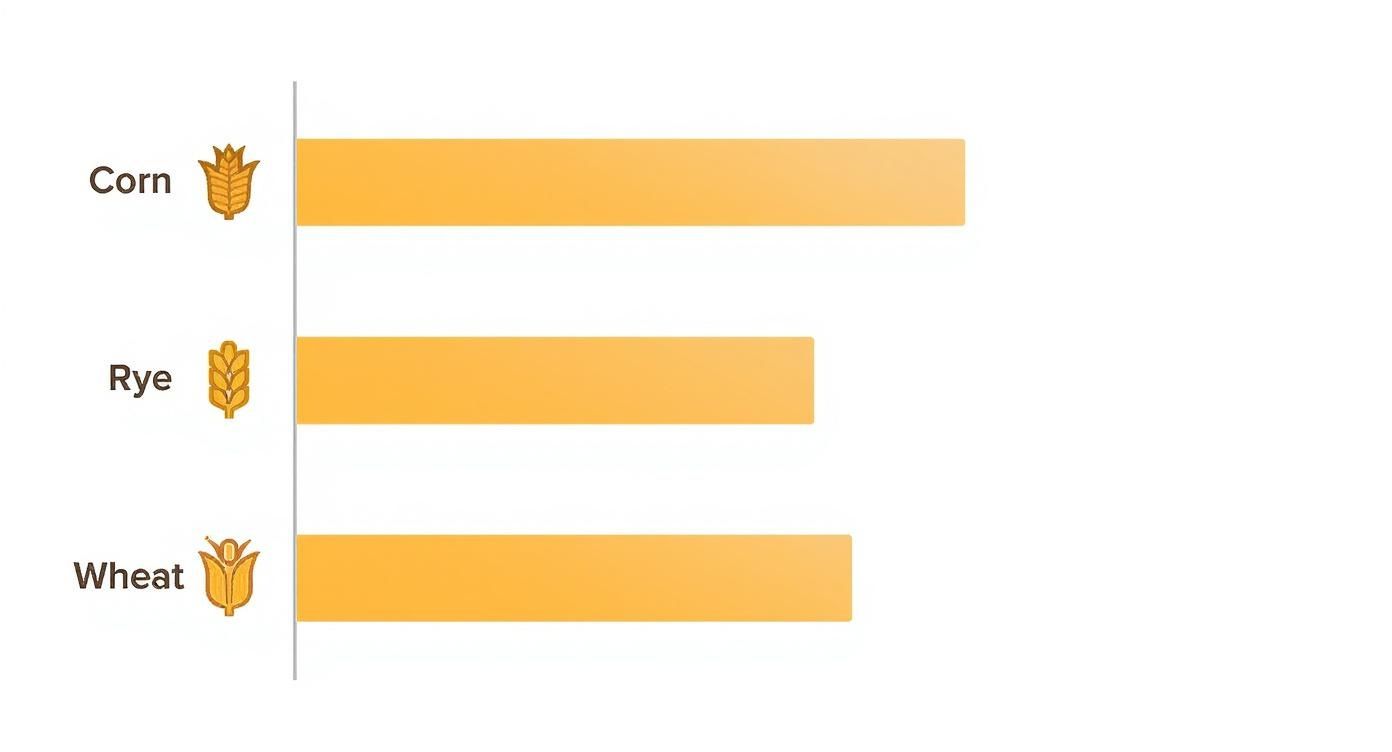
As the chart shows, each grain brings a distinct set of flavors to the party. By simply adjusting the percentages, distillers can craft a massive spectrum of bourbon styles, all starting from the same basic ingredients.
Comparing Common Bourbon Mash Bill Styles
To make it even clearer, let's put these three styles side-by-side. This table breaks down what you can generally expect from each category, from the grain percentages to the final flavor profile.
| Mash Bill Type | Typical Grain Percentages (Corn/Flavoring/Barley) | Common Flavor Profile | Example Brand |
|---|---|---|---|
| Traditional | 70-79% / 10-15% Rye / 5-15% Barley | Balanced sweetness with gentle baking spice, caramel, and vanilla. The classic bourbon taste. | Wild Turkey 101 |
| High-Rye | 60-70% / 20-35% Rye / 5-15% Barley | Bold and spicy, with notes of black pepper, cinnamon, and mint alongside the underlying sweetness. | Four Roses Single Barrel |
| Wheated | 60-75% / 15-25% Wheat / 5-15% Barley | Soft, gentle, and creamy with flavors of honey, baked bread, and vanilla. Less spice, more sweetness. | Maker's Mark |
Keep in mind these are just general guidelines. The magic of whiskey is in the details, but knowing these foundational recipes is the first step to becoming a more confident taster and a smarter shopper.
How the Grain Bill Shapes What You Taste
A bourbon's grain bill isn't just a list of ingredients; it's the recipe that writes the story you're about to taste. Think of the percentage of each grain as a control knob on a soundboard—one turns up the spice, another softens the edges, and a third deepens the sweetness. Getting a feel for this relationship is your ticket from just drinking bourbon to truly tasting it.
A high-rye bourbon, for instance, often makes its presence known before it even hits your lips, with bold aromas of cinnamon, clove, and a touch of black pepper. Take a sip, and that rye spice pops on your tongue with a vibrant, tingling sensation. It’s what gives these bourbons their characteristically long, warming finish that seems to hang around for a good while.
On the flip side, a wheated bourbon takes you on a totally different ride. The nose is usually much softer and sweeter, pulling you in with notes of vanilla, caramel, and even freshly baked bread. The tasting experience is all about that gentle, creamy mouthfeel that coats your tongue, followed by a mellow, sweet finish that fades out gracefully.
From Recipe to Sensory Experience
The grain bill’s signature is stamped all over the tasting experience, from the first sniff to the final aftertaste. Learning to spot these tells is a game-changer for any whiskey drinker, especially if you're trying to nail down your personal style.
- Aroma (The Nose): This is your first clue. Does it smell sharp and peppery (rye) or soft and doughy (wheat)? Corn lays down a sweet baseline, but it's the flavoring grain that really sets the aromatic stage.
- Palate (The Taste): How does it feel in your mouth? Oily and rich points to high corn content. Crisp and zesty is a classic high-rye move. And if it’s creamy and smooth, you're likely in wheated territory.
- Finish (The Aftertaste): How does the flavor fade? High-rye bourbons often leave a lingering, spicy warmth. Wheated bourbons tend to have a shorter, sweeter, and gentler exit.
Of course, the real magic happens inside the barrel. As the spirit ages, the charred oak interacts with the whiskey, pulling out and amplifying the unique character of each grain. It’s this conversation between the spirit and the wood that transforms a simple distillate into the complex bourbon we know and love.
While the grain bill is the foundation, don't underestimate the barrel's role. It's a similar principle you see in other artisan products, like with Guatemalan coffee aged in whiskey barrels, where the beans soak up distinct notes left behind in the wood.
Putting Your Palate to the Test
For anyone new to this, the best way to grasp the difference is to try them side-by-side. Pour a little high-rye bourbon in one glass and a wheated bourbon in another. Smell them both first, then taste. You'll be amazed at how a simple tweak in the recipe creates two entirely different spirits.
Thankfully, many American craft distilleries are pretty open about their recipes, making it easy to connect the dots. Take a brand like Laws Whiskey House in Colorado. They're famous for their Four Grain bourbons, which masterfully balance corn, wheat, rye, and malted barley. When you taste their whiskey knowing the grain bill, you can start to pick out how each element adds another layer to the final product. It turns every sip into a fun, delicious lesson.
Tips for Tasting Like a Pro

Alright, you've got the theory down. Now it's time to put that knowledge of the bourbon grain bill to the test. With just a little practice, you can actually start picking out a bourbon’s recipe just by using your senses. This is where the real fun begins—transforming you from someone who just drinks bourbon into someone who truly tastes it.
The secret is learning to spot the signature calling cards of each flavoring grain. That peppery tingle that seems to dance on your tongue? The warm, spicy finish that spreads through your chest? Classic rye. On the flip side, if you get a soft, almost doughy sweetness and a creamy, gentle mouthfeel, you're almost certainly tasting a wheated bourbon.
Set Up a Tasting Flight at Home
The single best way to train your palate is to taste things side-by-side. A blind tasting is perfect for this because it strips away all the marketing and brand loyalty, forcing you to focus only on what’s in the glass. Setting one up is easy and the results can be incredibly eye-opening, especially for newcomers.
- Choose Your Lineup: Grab one bottle from each of the three main styles. A great starting trio would be something like Buffalo Trace (Traditional), Old Forester (High-Rye), and Maker's Mark (Wheated).
- Pour and Label: Pour a small amount of each into identical glasses. Have a friend secretly label the bottom of each glass—A, B, C—so you have no idea which is which.
- Taste and Analyze: Take your time with each one. Nose it first, then take a small sip. Really focus on the initial flavor, how it feels on your tongue, and what the finish is like. Jot down a few notes for each.
- The Big Reveal: Once you’ve made your guesses, check the labels. Don’t sweat it if you get them wrong! The whole point is to start building the connection between the recipe and the experience.
The great divide between rye and wheat as flavoring grains is largely a product of economics. Historically, rye became the dominant secondary grain because it was significantly cheaper than wheat, which was prized for making bread. To learn more about this history, check out these insights on wheat recipe bourbon.
What to Look For on the Label
As you get deeper into your bourbon journey, start paying close attention to the labels, especially those from American craft distillers. Many smaller producers proudly display their mash bills right on the bottle. This transparency is a gift, giving you an instant cheat sheet connecting their grain percentages to the flavors you're experiencing.
Brands like Frey Ranch and Laws Whiskey House are fantastic examples of distillers who share their recipes, basically inviting you to taste along with them.
To really sharpen your palate and understand bourbon's incredible complexity, it helps to nail down the fundamentals of flavor. Brushing up on the five basic tastes in food builds a solid foundation for everything else. You can also use tools like our bourbon flavor wheel to help you put a name to the specific notes you're tasting. Before you know it, you'll be calling out grain bills like a seasoned pro.
Wrapping Up: Your Bourbon Grain Bill Questions Answered
We’ve covered a lot of ground, from the grains themselves to the styles they create and the flavors they impart. To bring it all home, let's tackle a few of the most common questions that pop up when you're digging into bourbon's DNA. These are the details that can clear up lingering confusion for newcomers and seasoned drinkers alike.
Does a Higher Corn Percentage Always Mean a Sweeter Bourbon?
For the most part, yes. Corn is where all those classic sweet notes of caramel, vanilla, and butterscotch come from. But it's not the whole story. The barrel, its char level, and especially age play a massive role in the final flavor.
An older, high-corn bourbon might have spent so much time in the barrel that dry oak and spice flavors have taken over, balancing out that initial sweetness. You could easily find it tastes less sweet than a much younger bourbon with the exact same recipe.
Why Do Distilleries Keep Their Grain Bills Secret?
Think of it like a family recipe—it's a trade secret. Many of the big distilleries view their exact grain bill as a proprietary formula that defines their brand's identity. The law just says it has to be at least 51% corn; the specific percentages of everything else are what make their whiskey unique.
On the other hand, many American craft distillers are shaking things up by being more transparent. They often share their mash bills as a way to connect with whiskey fans and show off what makes their process special. It's a huge plus for those of us who love to know exactly what’s in our glass.
Tip for New Drinkers: One of the best ways to understand a bourbon's character is to remove all bias and simply taste it. A blind tasting forces you to rely solely on your senses, making the grain bill's influence much clearer.
Can Bourbon Be Made with Only Corn and Malted Barley?
Absolutely. A distiller could create a perfectly legal bourbon with a grain bill of, say, 80% corn and 20% malted barley. That whiskey would be intensely corn-forward, likely bursting with sweetness and framed by some of the gentle cereal, nutty, or chocolate notes from the barley.
What it would be missing is the sharp spice of rye or the soft, bready character of wheat. While it’s not a common style, it’s a great example of the creative freedom distillers have, and it can make for a really fun and unique tasting experience.
What Is a Four Grain Bourbon?
A "four grain" bourbon is exactly what it sounds like: a more complex style that uses corn, rye, wheat, and malted barley all in one mash bill. It's a real balancing act for the distiller, who has to make sure none of the grains overpower the others.
When they get it right, the result is a deeply layered and nuanced whiskey. You get the sweetness from the corn, a pop of spice from the rye, a soft texture from the wheat, and a malty backbone from the barley. Many American craft distilleries, like the fantastic Laws Whiskey House, have become famous for perfecting this intricate and rewarding style. It's a must-try for any adventurous drinker looking to see what a grain bill can really do.
Ready to put your palate to the test and discover your next favorite American craft whiskey? The Blind Barrels tasting experience removes all the guesswork and brand bias. Each curated kit lets your taste buds lead the way, helping you identify the styles and grain bills you truly love. Start your blind tasting journey today!