

You're standing in front of the whiskey shelf with a Manhattan in mind, wondering whether the pricier rye will make a better drink. The labels offer proof, age, and plenty of personality, but none tells you what happens when sweet vermouth and melting ice enter the glass. My advice: buy for the cocktail you make, not the reputation you recognize.
Why the Best Rye Depends on the Cocktail
The bar's busy, someone orders a Manhattan, and you've got a choice: a rounded rye with gentle grain sweetness or an assertive bottle with a peppery edge. Keep the vermouth and bitters unchanged, and those pours can produce very different drinks. Treat that as a useful comparison, not evidence that either whiskey is universally superior.
With the softer pour, I'd look for integration: does the whiskey sit comfortably beside the wine, or disappear beneath it? With the more forceful rye, I'd ask the opposite question: does the extra intensity sharpen the drink, or make the vermouth seem irrelevant? These are the questions I'd ask before checking the price tag.
Choose the job before the bottle
For a guest who wants a whiskey-led Manhattan, I'd reach for a rye with an identifiable spicy center. For someone who enjoys a gentler, vermouth-forward drink, I'd choose a more accommodating pour. Neither guest needs the bottle that won somebody else's neat-tasting contest.
- Start with the modifier: Decide whether you want the vermouth, sugar, herbs, or citrus to remain prominent.
- Name the desired character: Peppery, rounded, herbal, and oak-driven are more useful shopping words than premium.
- Judge the finished glass: A lovely sipping whiskey doesn't automatically justify its price in your usual recipe.
Rye's historical connection to the Manhattan makes that cocktail an especially sensible reference point. But history doesn't settle your preference, and a prestigious label won't rescue a mismatch between whiskey and recipe.
My buying rule: Choose the least expensive bottle that delivers the character you want in the finished cocktail.
That's how I approach the best rye whiskey for cocktails: as a matching problem, not a championship. I'd rather keep complementary styles than repeatedly buy a powerful bottle and spend every evening trying to tame it. Your regular order should determine what earns shelf space.
What Makes Rye Whiskey Taste Like Rye
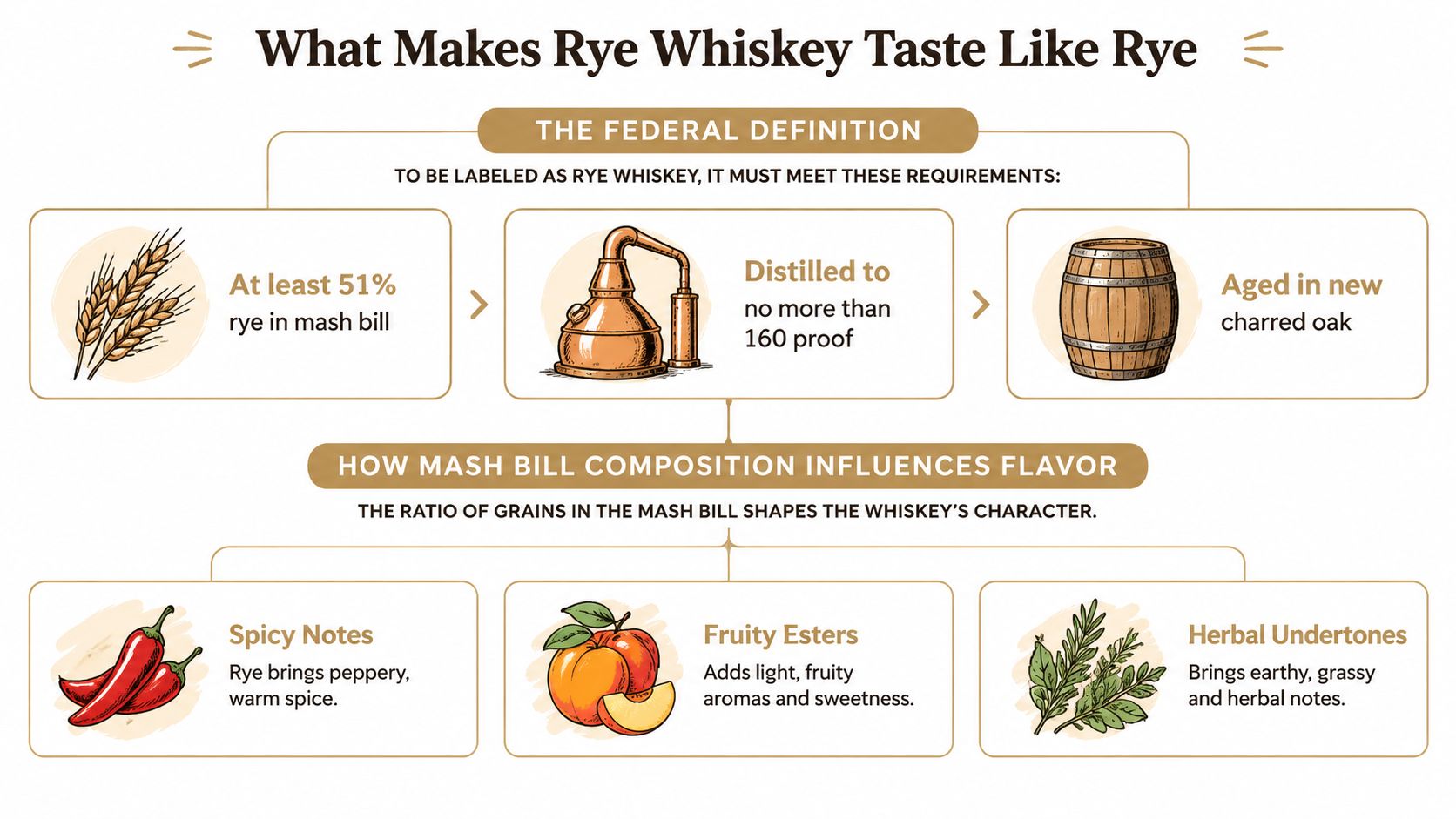
Start with mash bill, the grain recipe used to make the whiskey. American rye must contain at least 51% rye, be distilled to no more than 160 proof, and age in new charred-oak containers, as outlined in NPR's explanation of American rye whiskey.
That definition establishes a category, not a single flavor. Think of the grain recipe like seasoning a dish: meeting the baseline doesn't tell you how assertive the finished result will be. The other grains and the producer's choices still matter.
Read the grain recipe before the tasting notes
Many American ryes fall around 60% to 70% rye, while others use 90% to 95%, and some reach 100%, according to Whisky Advocate's examination of rye styles. That same account describes New York's Empire Rye distinction, including at least 75% New York-grown raw materials.
- Rounder grain recipes: Look toward these when you want sweetness and softer edges rather than an emphatic peppery impression.
- Rye-heavy recipes: Consider these when sharper grain spice and herbal character sound appealing.
- Regional identity: Treat grain origin as a reason to explore, not a guarantee that you'll prefer the whiskey.
For new drinkers, the useful distinction is flavor family, not technical mastery. You don't need to identify every aroma before choosing a cocktail bottle. Decide whether you enjoy rounded sweetness, savory herbs, or pointed spice, then use the label to narrow your search.
The guide to what rye whiskey tastes like can help you put those preferences into words. When considering American craft names such as New Riff or Sagamore Spirit, check the specific expression rather than treating the brand name as a complete description. Buy the recipe and character that interest you, not an assumption about everything the distillery makes.
Proof and Why It Matters in a Cocktail Glass
Proof is a mixing tool, not a quality score. I want enough concentration to make a convincing cocktail, but I'm not buying alcohol strength for its own sake.
A useful starting point for stirred classics is around 100 proof, which Esquire's cocktail-focused rye guidance favors for retaining spice and presence alongside vermouth, bitters, and dilution. That's a benchmark, not an instruction to reject everything below it.
Distinguish flavor from heat
Taste a small pour at bottle strength, then compare it after approximately 15–20% water dilution, the stirring-related benchmark discussed in Rye Central's guide to adding water to whiskey. Look for recognizable pepper, clove, cinnamon, dill, or mint against the barrel's vanilla and oak character.
The important moment is the mid-palate, after the first impression but before the finish. Does the whiskey still have a defined center, or do you get an initial sting followed by very little flavor? I'd choose the bottle that remains articulate, even if its label looks less impressive.
- Keep the comparison controlled: Use matching glasses and the same water for each sample.
- Separate observations: Record aroma, flavor, and alcoholic heat independently.
- Follow the finish: Note whether you still recognize something specific after swallowing, rather than writing strong.
The explanation of what proof means in whiskey is useful if the label terminology is unfamiliar. For shopping purposes, the distinction is straightforward: concentration gives you room to work, but balance decides whether you should use it.
Don't pay extra for a number you'll spend the whole cocktail trying to soften.
I'd reserve cask-strength rye for a drink where I actively want that intensity. If you're new to whiskey cocktails, begin with a manageable bottle and learn what happens as you stir, rather than making every glass a dilution experiment.
Matching Rye Intensity to Drink Families
Use the following as a buying framework, not a set of legal boundaries. The proof bands reflect the recipe-sensitive distinctions discussed in BBC Good Food's rye review: softer bottles can suit delicate drinks, while stronger rye can preserve definition in more demanding combinations.
Rye Intensity Matched to Cocktail Family
| Cocktail Family | Proof Range | Mash Bill Lean | Example Drink |
|---|---|---|---|
| Stirred classics | Roughly 93–100 proof | Moderate rye for integration, higher rye for emphasis | Manhattan, Sazerac |
| Sugar-forward short drinks | Around 100 proof, adjusted to the recipe | Rounded grain with a clear spicy or oak-driven center | Old Fashioned, Vieux Carré |
| Citrus-forward drinks | Around 90–93 proof as a softer starting point | Moderate rye | Citrus-forward rye cocktail |
| Delicate or long drinks | Around 90–93 proof, with stronger bottles tested cautiously | Gentler rather than aggressively spicy | Modern Highball |
My default is to match the whiskey's intensity to the strongest competing ingredient. That doesn't mean every sweet drink needs a muscular rye or every long drink needs a gentle one. It means you should know what you're asking the whiskey to stand beside.
Stirred and sugar-forward drinks
For a Manhattan, decide how much of the vermouth you want to hear. For a Sazerac, think about whether the rye's herbal character complements the rinse. Those are different assignments, even though both drinks can suit a concentrated whiskey.
In an Old Fashioned or Vieux Carré, I'd avoid buying strength without considering sweetness and aromatic weight. A rounded rye can be more satisfying than a sharper expression if you want a cohesive drink rather than a deliberately angular one.
Citrus, aromatic drinks, and Highballs
For citrus-forward recipes, I'd start with a moderate mash bill and adjust from there. A whiskey that makes a stern, impressive neat pour may not be the bottle you want beside bright acidity.
The Improved Whiskey Cocktail belongs on the aromatic, spirit-forward side of this framework, not in the citrus category. I'd choose its rye by how well it works with the drink's aromatic additions, rather than borrowing advice intended for a sour.
With a modern Highball, decide whether you want refreshment with a whiskey accent or an unmistakably rye-led drink. Start gently for the former. For the latter, increase intensity deliberately and taste before committing the whole glass.
Three Classic Cocktails and the Rye That Loves Them
Manhattan
What I'd pour: A concentrated rye with identifiable pepper and clove, but enough roundness to remain comfortable beside sweet vermouth. New Riff and Sagamore Spirit are craft names I'd put on the shopping shortlist, then assess expression by expression.
Use the standardized proportions described in the proof guidance earlier: 2 ounces rye, 1 ounce sweet vermouth, and bitters. Keep the vermouth, preparation, and glassware unchanged when comparing bottles. You're testing the whiskey, not your ability to improvise a different drink each time.
Look for continuity between the first sip and the finish. If the whiskey becomes anonymous, choose a more expressive style. If you can barely recognize the vermouth, consider a less forceful rye before rewriting the entire recipe.
Sazerac
What I'd pour: An herbal, spicy rye whose character I enjoy beside anise, rather than the most heavily oaked bottle available.
Use the Herbsaint or absinthe rinse as a compatibility test. Keep its application consistent, then ask whether the rye's savory and herbal notes remain distinct or make the drink feel cluttered. I'd rather have a clear relationship between the whiskey and rinse than maximum intensity from both.
Old Fashioned
What I'd pour: A rye with a defined oak-and-baking-spice center and a finish I want to linger over.
Keep sugar and bitters fixed during the comparison. If you adjust sweetness separately for every bottle, you can make the drinks pleasant while learning very little about which whiskey naturally suits your preference.
At the bar: Fix the recipe first. Change the rye second. Only then decide whether the drink needs an adjustment.
Why the Manhattan's balance keeps changing
The Manhattan was documented by 1884, and Jerry Thomas's 1887 guide specified rye, according to Britannica's history of the Manhattan. That history also traces a move from 2:1 vermouth to whiskey in an 1880s recipe to 1:1 by 1910, with modern versions commonly around four parts whiskey to one part vermouth.
The standardized tasting recipe above isn't a claim that every Manhattan must follow the same proportions. It's a controlled test. Historical variation is precisely why I wouldn't crown a cocktail rye without knowing how you like your drink built.
American Craft Rye Versus the National Brands
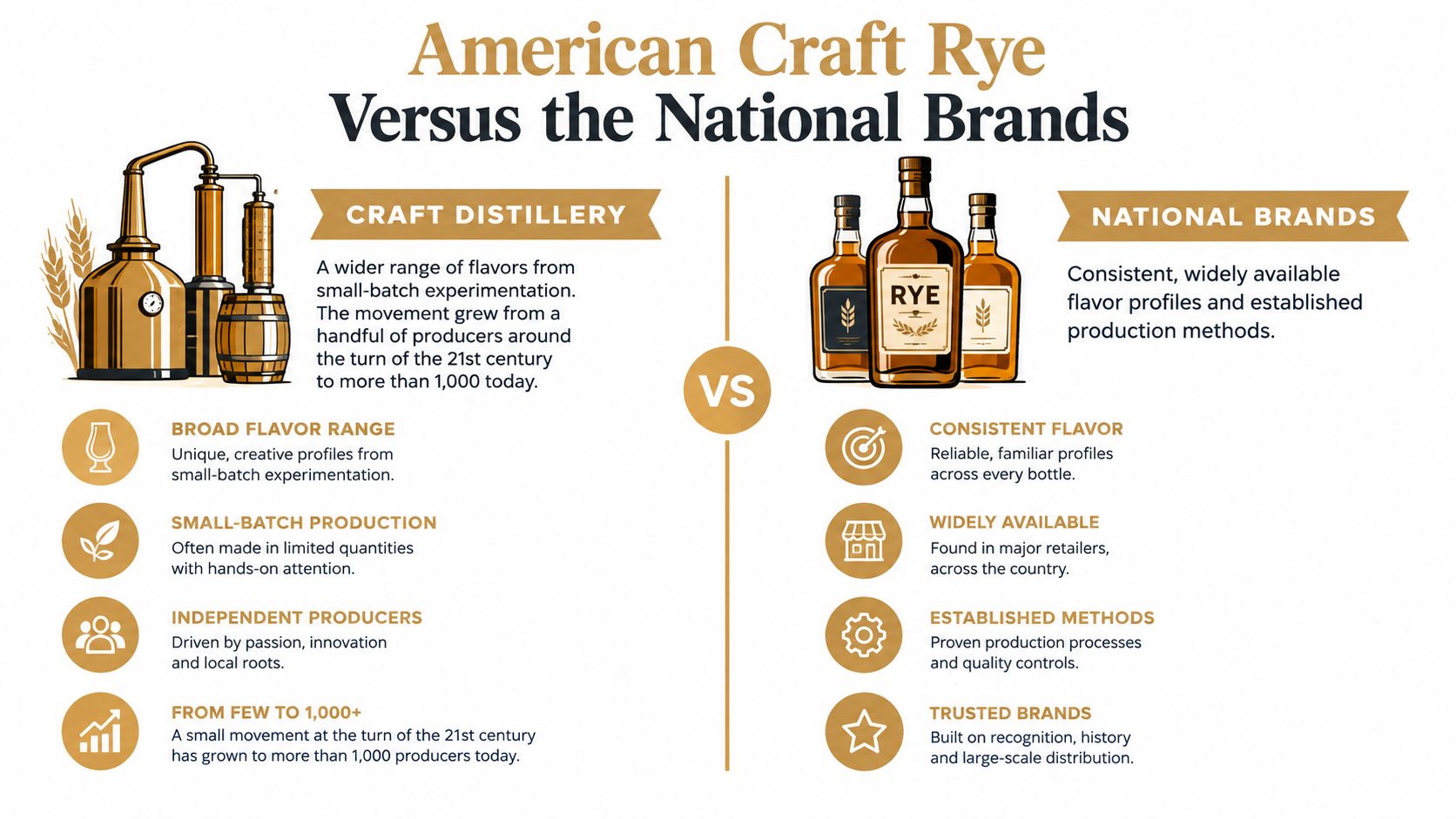
American craft rye deserves space in your cocktail cabinet, but not an automatic exemption from scrutiny. I'd ask a small-distillery bottle to earn its place exactly as I would a nationally distributed rye: by making a drink I want again.
The American craft-spirits movement began around the turn of the 21st century and expanded to more than 1,000 distilleries, many producing rye, as described in the history of craft whiskey published by the Distilled Spirits Council. Regional grains, unusual fermentation choices, and different grain recipes give drinkers useful avenues to explore.
Make the comparison concrete
I'd put a New Riff rye or a Sagamore Spirit expression beside a Sazerac Rye benchmark. That's a tasting shortlist, not a claim that these bottles share proof, mash bill, price, or production methods. Check the actual labels before deciding what the comparison will teach you.
- The craft candidate: Choose a specific expression because its disclosed grain recipe or production story interests you. Ask whether that difference is perceptible in the cocktail.
- The national benchmark: Use a familiar bottle to establish what you already like. Familiarity is useful when you're identifying a meaningful change.
- The purchasing decision: Compare the finished drinks before deciding whether the craft bottle deserves an additional spend.
For a high-rye craft expression, I'd be especially interested in whether its distinctive grain character makes the drink more engaging. I wouldn't declare it the winner merely because it tastes less familiar.
Pay for a difference you can taste
My price test is blunt: if the expensive bottle's most appealing feature disappears after mixing, I'd save it for another use. If its unusual fruit or herbal character makes your preferred cocktail more interesting, that can justify the purchase.
New drinkers don't need to choose a side in craft versus national whiskey. Keep a dependable reference bottle, then explore producers such as New Riff, Sagamore Spirit, Frey Ranch, or Southern Star by checking what each specific release offers.
Choosing Blind, the Smart Way to Pick a Cocktail Rye
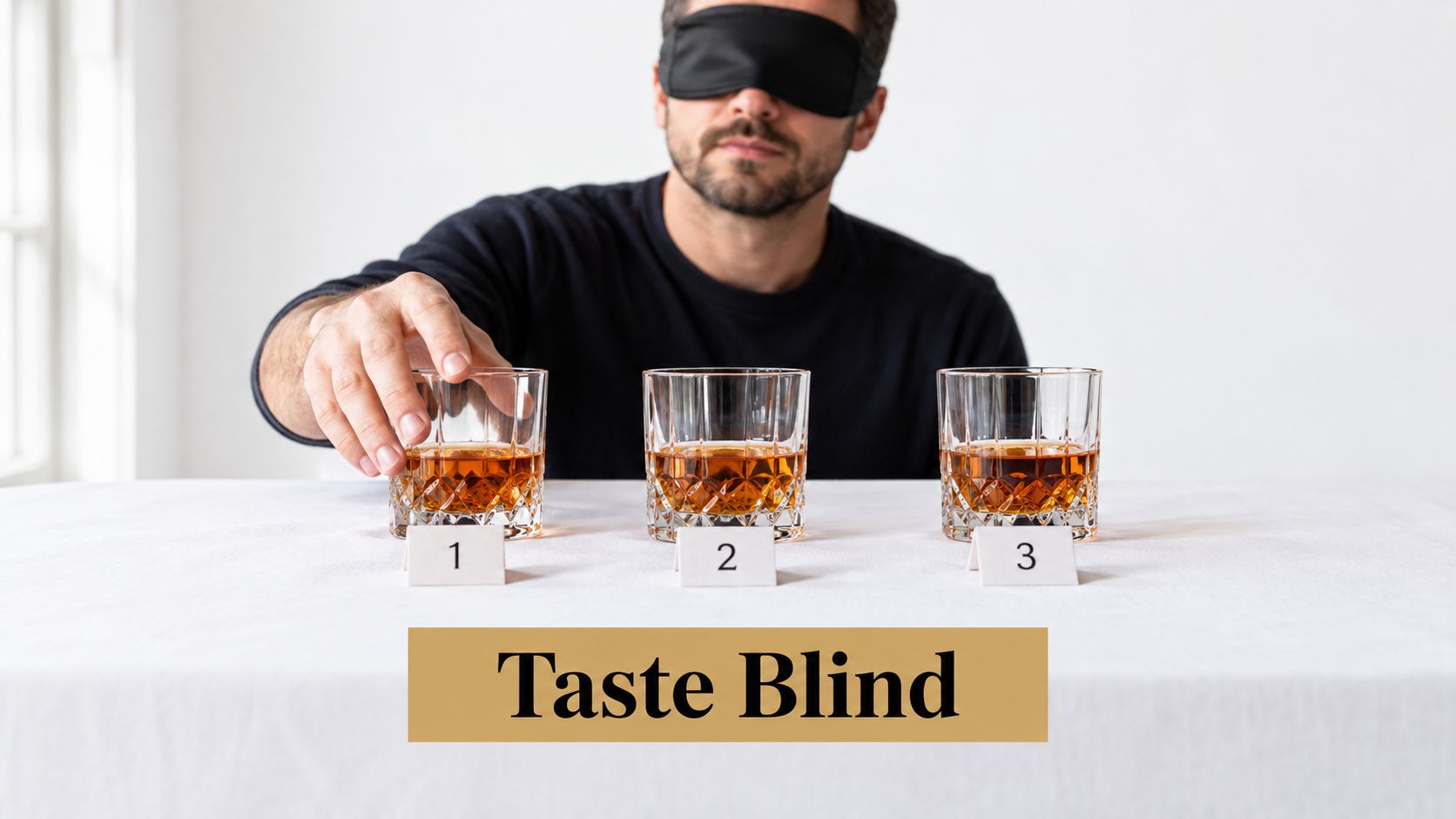
Covering labels is my preferred way to settle a close buying decision. You're not trying to prove that price never matters. You're checking whether you can taste the difference you're considering paying for.
Rye's expanding selection makes that discipline useful: category volume grew 934% from 2009 through 2017, reaching 912.2 thousand 9-liter cases and $175.4 million in supplier sales in 2017, according to the Distilled Spirits Council's rye whiskey report. Those figures describe a commercial revival, not a reason to assume every bottle deserves your money.
Run a useful comparison at home
Ask someone to conceal the bottle identities and mark the glasses. Choose a cocktail you already know well, prepare matching versions, and write your impressions before revealing anything.
- Record aroma: Use plain words, such as grassy, peppery, sweet, woody, or floral.
- Describe the sip: Note what you enjoy and what feels out of place.
- Assess the finish: Record whether you want another sip and why.
- Make a buying call: Decide which glass you'd pay for before checking the labels.
The practical guide to blind whiskey tasting offers another way to organize those observations. For a subscription-based version, quarterly kits with four blind American craft whiskey samples and a tasting table provide a structured alternative to covering bottles yourself.
Give each whiskey a fair assignment
Compare the candidates in a Manhattan, Sazerac, Old Fashioned, and Highball across separate tasting sessions. You may prefer different bottles in different drinks. That's a useful result, not an inconvenient failure to produce a winner.
Keep pours modest and don't feel obliged to finish every sample. The point is to make a clearer purchasing decision, not to turn an evening into an endurance test.
Building a Rye Shelf for the Home Bartender
Build by role before you build by price. I'd start with a versatile mixing bottle, add a gentler option only if your regular drinks call for it, and leave the specialist purchase until you know what's missing.
Shop for distinct jobs
- Entry-price workhorse: Choose an approachable rye for refreshing drinks and casual mixing. Buy something you won't resent using while you learn.
- Mid-price regular: Look for definition in stirred cocktails. A New Riff or Sagamore Spirit expression can go on the shortlist, but let your controlled comparison decide.
- Special-occasion bottle: Buy a cask-strength or high-rye expression because you want its particular character, not because you assume expensive means better.
I wouldn't buy the entire shelf at once. Start with your regular, borrow or sample alternatives where possible, and spend more only when you can name the difference you're seeking.
Make a month of useful practice
Begin with your familiar cocktail and keep a notebook. Next, try the same whiskey in a different drink family; later, compare it blind against a contrasting bottle. At the end of the month, buy to fill a demonstrated gap rather than repeat a style you already own.
Chill Manhattan glasses and stir with clean, solid ice. Taste during preparation at an early, middle, and later stage so you learn your preferred dilution instead of relying on habit.
Your shelf is ready when you can point to each bottle and explain what you'd pour it into. More bottles won't necessarily improve that answer.
Blind Barrels offers quarterly kits with four blind samples from small American craft distilleries and a tasting table for aroma, palate, and finish notes. Visit Blind Barrels to explore craft whiskey without seeing the label first, then use your tasting notes to choose which styles deserve a place in your cocktails.