

If you're wondering what rye whiskey tastes like, the short answer is it's the spicy, bold, and sometimes surprisingly fruity member of the American whiskey family.
Picture the rustic, earthy warmth of a freshly baked loaf of pumpernickel or rye bread, then add a kick of black pepper and classic baking spices like cinnamon and clove. It’s typically drier and packs a spicier punch than its sweeter cousin, bourbon.
Your First Sip of Rye Whiskey Explained
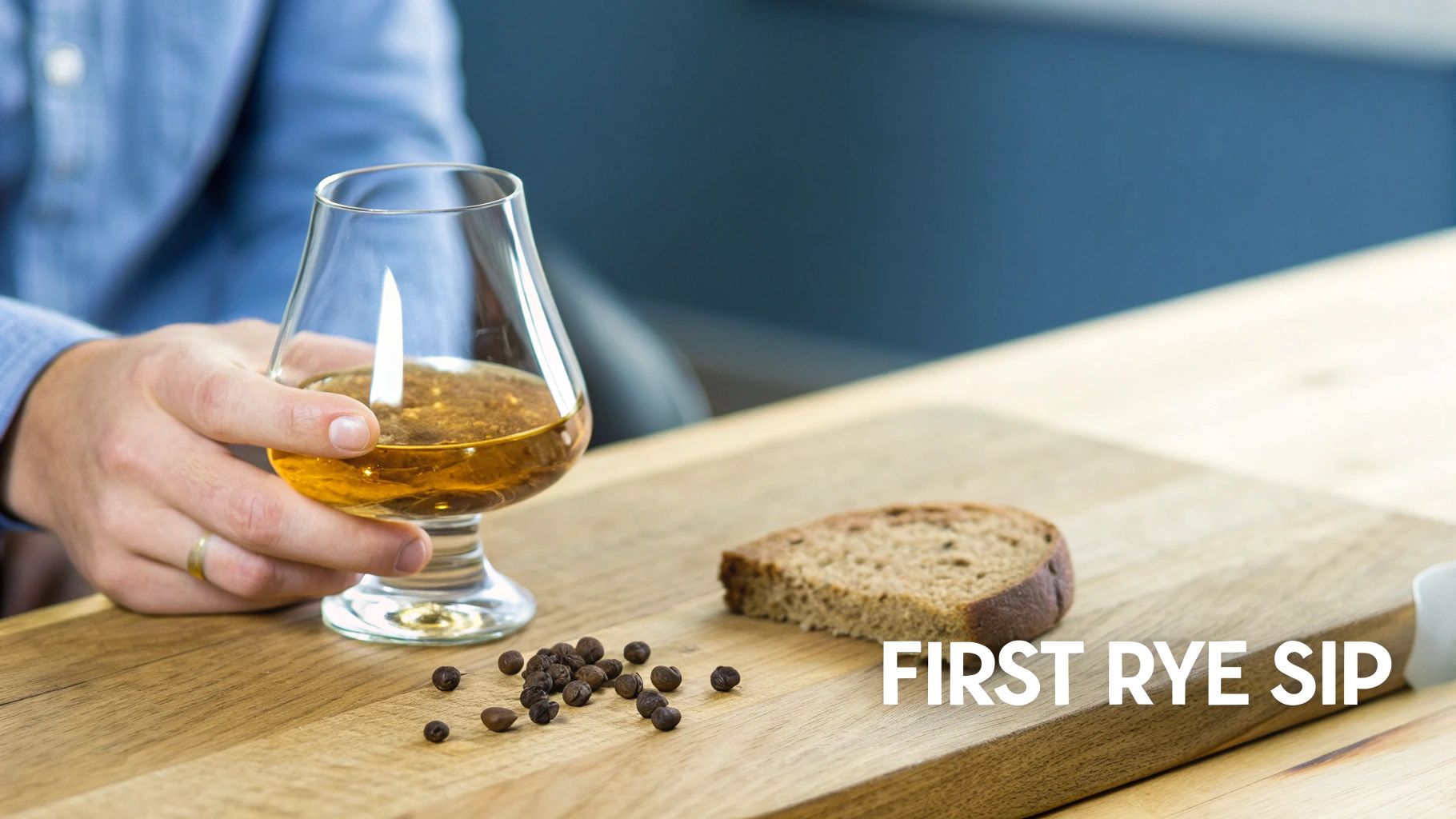
If bourbon is like a sweet, comforting slice of cornbread, then rye whiskey is that hearty, aromatic slice of spiced rye. That very first sip often delivers a characteristic spicy tingle right on the tip of your tongue. It’s not an alcohol burn, but a wave of flavor that’s more akin to black pepper or nutmeg.
For newcomers to whiskey, this initial boldness can be a bit of a surprise, but it’s the very heart of rye’s identity. It's precisely this spicy character that makes it a star in classic cocktails and a fascinating spirit to sip all on its own.
Breaking Down the Tasting Experience
To give you a better idea of what to expect, let's walk through the tasting experience from start to finish. American craft distillers, who are always pushing the flavor boundaries, often highlight these notes in really exciting ways.
Here's a quick cheat sheet to help you pinpoint what you're smelling and tasting.
Rye Whiskey Tasting Notes at a Glance
| Tasting Stage | Common Notes | What It Feels Like |
|---|---|---|
| Aroma | Baking spices, fresh mint or dill, black pepper, citrus | Like walking into a kitchen during holiday baking. |
| Palate | Black pepper, cinnamon, clove, honey, vanilla, oak | A spicy kick upfront that mellows into a warm sweetness. |
| Finish | Lingering spice, warm oak, dry | A long, pleasant tingle that makes you want another sip. |
This table gives you a general map, but the fun part is discovering the unique twists each bottle offers.
Ultimately, understanding what rye whiskey tastes like is all about experiencing that beautiful tension between the bold spice from the grain and the subtle sweetness picked up from the barrel. It’s a dynamic profile that keeps you coming back for more.
A Quick Tip for Your First Pour: Take a tiny initial sip and just let it coat your tongue for a moment. This helps your palate adjust to the proof and prepares it for the complex flavors to come, so you can appreciate the nuance instead of just the spice. For a deeper dive into its history and production, check out our guide on what is rye whiskey.
So, what's the deal with rye whiskey's signature spice?
The secret is right there in the name: the rye grain. Think of it as the lead guitarist in a rock band—its electrifying solo cuts through everything else and defines the sound. The rye grain is just naturally full of chemical compounds that our taste buds register as peppery, spicy, and even a little bit herbal.
By law, any American whiskey labeled as "rye" has to be made from a mash bill (the distiller's grain recipe) with at least 51% rye. This rule is the very foundation of its spicy character. That high concentration of rye is what gives you those classic notes of black pepper, baking spice, and cinnamon that make it a world apart from other whiskeys.
But for a lot of distillers, especially in the American craft scene, just hitting the minimum isn't enough. They love to push the limits and see just how much personality they can wring out of this incredible grain.
High-Rye Mash Bills: The Spice-Lover’s Holy Grail
When a distiller really wants to crank up that quintessential rye spice, they'll use what's called a "high-rye" mash bill. This isn't some official legal term, but it's common industry slang for recipes that blow past the 51% minimum, sometimes going all the way up to 100% rye.
- "Barely Legal" Rye (51-70%): These whiskeys are a great starting point for beginners. They have that signature rye kick, but it's balanced by the sweetness of corn or the creamy texture of wheat.
- High-Rye (70-90%): Now we're talking. The spice and herbal notes really step into the spotlight, often bringing along complex friends like mint, dill, or anise.
- 100% Rye: This is rye in its purest, boldest form. Expect an intense, unfiltered experience that’s often earthy, profoundly peppery, and incredibly complex.
Lots of craft distilleries, like the highly-regarded Sagamore Spirit in Maryland, have built their entire reputation on mastering these high-rye styles. They produce spirits that are unapologetically bold and brimming with character, showing off what the grain can really do.
The rye whiskey you taste bursts onto the palate with a bold, spicy kick that's largely due to this high rye content—often pushing up to 95% or even 100% in recipes that echo early American distilling traditions. This grain imparts a distinctive black pepper and clove-like heat, setting it worlds apart from the sweeter, caramel-heavy profile of bourbon. Discover more insights about rye's unique profile at Eight Oaks Distillery.
At the end of the day, the level of spice in your glass comes down to the choices made by the distiller. By tweaking the percentage of rye, they can dial that peppery heat up or down, creating a whole spectrum of flavors for us to explore. Understanding this direct line from the grain to the glass is the key to truly appreciating why rye whiskey has such a vibrant and assertive personality.
How Oak Barrels and Age Transform Rye's Flavor
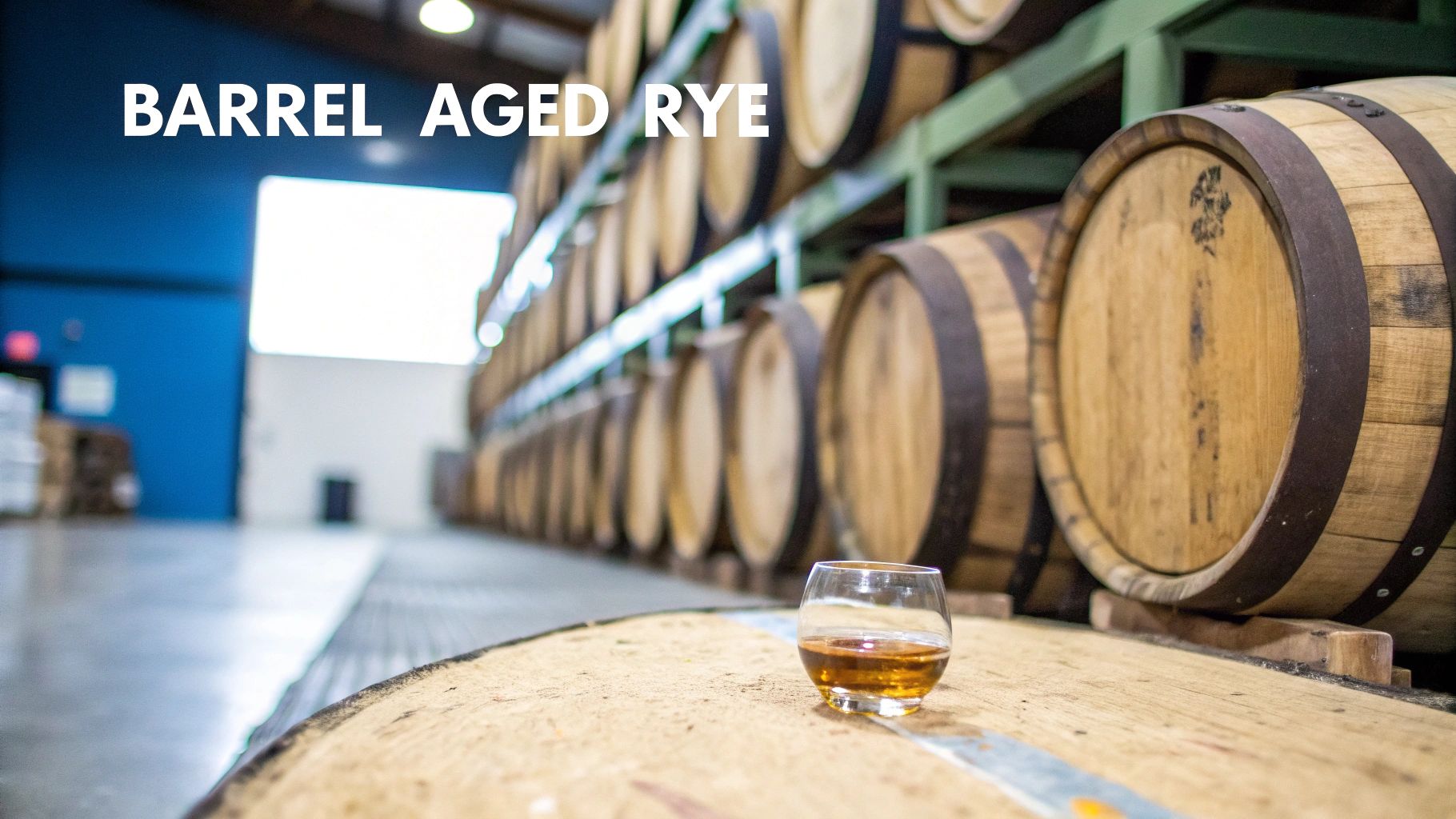
If the rye grain provides the whiskey's spicy blueprint, the charred oak barrel is the artist that brings in the color, depth, and character. Right off the still, the spirit is clear, fiery, and a bit wild. It's the time spent resting in that barrel that coaxes the raw liquid into the complex, amber-hued whiskey we know and love.
This transformation isn't rushed. It's a slow, magical dance between the wood and the spirit. The barrel's charred interior acts like a natural filter, rounding off the harsh edges while giving back its own unique flavors. This is where the sharp, peppery spice from the rye grain starts to mellow out and mingle with richer, sweeter notes.
From Spicy Spirit to Smooth Sipper
Think of a young, two-year-old rye as a bold, energetic teenager. It’s bursting with raw pepper spice and a straightforward grain character. It’s feisty and exciting, but it hasn’t quite found its sophisticated side yet. That youthful punch is fantastic in cocktails where you really want the rye to announce its presence.
Now, imagine that same whiskey after spending eight years maturing in a barrel. It has grown into a smooth, confident adult. The barrel has patiently layered in new flavors that balance out that initial spice, introducing notes like:
- Vanilla: Pulled directly from compounds called vanillins in the oak wood.
- Caramel and Toffee: These sweet notes come from the sugars in the wood that were caramelized during the charring process.
- Dark Fruit: Over time, oxidation and interactions with the wood can bring out hints of cherry, plum, or even fig.
- Oak and Leather: The wood itself imparts tannins and deep, earthy notes that build incredible complexity.
A fantastic way to experience this evolution firsthand is to find a craft distillery that offers a range of age statements. Comparing a younger bottle to an older one from the very same producer lets you taste the direct impact of the barrel in the clearest way possible.
The barrel doesn't just add flavor; it subtracts harshness and multiplies complexity. It’s where the fiery spirit of the grain is tamed, resulting in a more balanced and approachable whiskey that still honors its spicy roots. To really get into the weeds of this process, you can explore the science behind aging barrels for whiskey and how they work their magic.
Ultimately, the barrel completes the story of rye. It takes the vibrant, spicy character defined by the grain and weaves it into a richer, more nuanced tapestry of flavor, making every aged rye a unique expression of time and wood.
Exploring Different Rye Grain Varieties
Thinking you know what rye whiskey tastes like after just one or two bottles is like hearing a single guitar chord and assuming you understand all of music. The reality is far more complex. The specific variety of rye grain a distiller uses has a massive impact on the final flavor, often creating more variation than small tweaks to the mash bill percentage. It’s the spirit’s foundational DNA.
Most large-scale rye whiskeys are made from modern, high-yield hybrid grains. These are efficient to grow and typically produce a softer, milder, and often fruitier spirit. They deliver that classic rye spice but in a more restrained, approachable way, which makes them a great starting point for anyone new to the category.
But the real magic in the American craft whiskey scene is happening with distillers who are digging into the past and planting heirloom rye varieties.
The Heirloom Grain Revolution
Heirloom grains are older, non-hybridized varieties that fell out of favor for large-scale commercial farming but are now prized by craft distillers for their incredible depth of flavor. Think of it like the difference between a standard grocery store tomato and a lumpy, vibrant heirloom tomato from a farmer's market—the latter is just bursting with a complex, unforgettable taste.
When distilled, these heirloom ryes often produce a spirit that is wildly different from their modern counterparts. Instead of simple fruit and pepper notes, you get a whole symphony of complex flavors:
- Deeply herbaceous character, with hints of mint, dill, and fresh-cut grass.
- Earthy and rustic tones that might bring to mind dark bread or dried herbs.
- A more robust and complex spice that goes beyond black pepper into cinnamon, anise, and clove.
This is where true whiskey terroir comes into play. American craft distilleries like Frey Ranch in Nevada are champions of this "grain-to-glass" philosophy. By growing their own non-GMO rye right on their farm, they have complete control over the final product, ensuring the unique character of their grain shines through in every single bottle. This approach allows drinkers to taste the direct influence of the land and the specific grain variety. For a broader look at how distillers are using unique grains, you can explore the world of alternative grains in craft whiskey.
And this isn't just marketing fluff; it's backed by science. A groundbreaking five-year study proved that rye grain variety is a primary driver of a whiskey's flavor. When nearly 200 participants blind-tasted unaged spirits from 15 different rye types, the results were clear: older, heirloom ryes delivered wild herbal and spicy notes, while modern hybrids were consistently milder and fruitier. Read the full research about these rye variety findings.
By understanding the difference between grain varieties, you can start to appreciate rye whiskey on a much deeper level. It’s not just about the spice; it’s about the soul of the grain itself.
Rye vs. Bourbon: A Head-to-Head Flavor Comparison
It’s the classic American whiskey showdown: rye versus bourbon. While they share a family tree, their flavor profiles make them more like distinct cousins than identical twins. Getting a handle on this difference is the key to figuring out not just what rye tastes like, but which style is going to hit the spot for you.
I find the easiest way to think about it is through a dessert analogy:
If bourbon is a warm slice of pecan pie topped with a rich caramel drizzle, then rye is a rustic, spiced fruitcake—drier, bolder, and packed with complex spice notes.
This fundamental split comes directly from their primary grain. Bourbon must legally use at least 51% corn in its mash bill, which is where it gets its signature sweetness. Rye, on the other hand, must use at least 51% rye grain, the source of its characteristic peppery spice.
The Core Flavor Divide
Even though both whiskeys are aged in new, charred oak barrels, their foundational grain recipes send them down two very different flavor paths. Bourbon’s corn-heavy base leans into notes of vanilla, caramel, and sweet corn, offering a rounder, softer mouthfeel.
Rye, however, brings a spicier, fruitier, and often more herbaceous profile to the table. That minimum 51% rye grain delivers a unique peppery and herbal earthiness, often backed by sweet cherry and apple undertones and a distinctly dry finish.
As Harlen Wheatley of Buffalo Trace has noted, demand for rye has surged in recent years. He points out that after an optimal six to eight years of aging, the vanilla notes from the charred oak barrels beautifully bind with the grain's inherent spice. You can dive deeper into the evolution of rye whiskey on distilledspirits.org.
Even the specific variety of rye grain used—modern versus heirloom—can create wildly different flavor experiences.
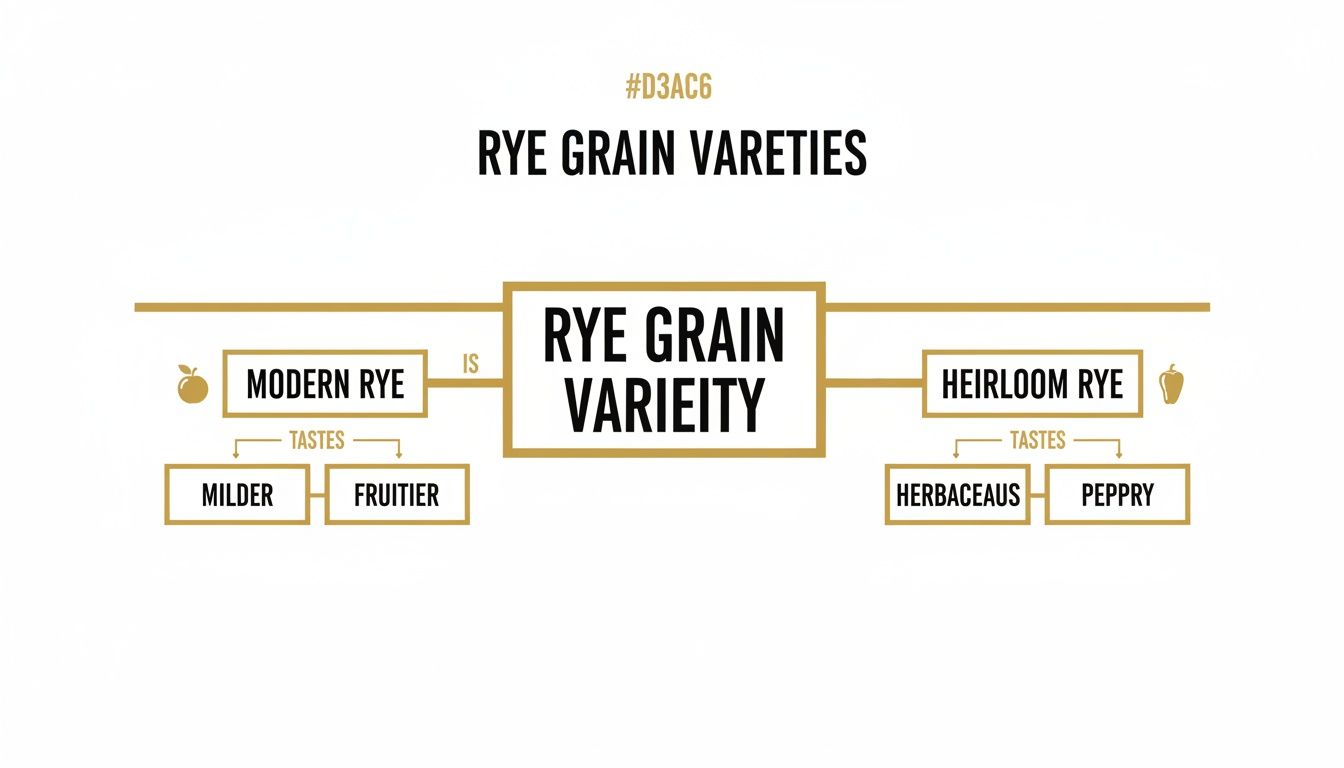
As you can see, modern rye varieties tend to produce a milder, fruitier whiskey, while heirloom grains often bring a much more intense herbaceous and peppery character to the final spirit.
Side-by-Side Comparison
To make it even clearer, let's break down their key differences in a simple table. This is a great reference for anyone new to whiskey and trying to decide which bottle to try next.
Rye vs. Bourbon Key Flavor Differences
| Characteristic | Rye Whiskey | Bourbon Whiskey |
|---|---|---|
| Primary Grain | Minimum 51% Rye | Minimum 51% Corn |
| Core Flavor | Spicy, peppery, herbal, fruity | Sweet, rich, caramel, vanilla |
| Typical Body | Lighter, drier | Fuller, richer, often oilier |
| Common Notes | Black pepper, cinnamon, dill, mint, dark fruit | Toffee, brown sugar, sweet corn, toasted oak |
| Classic Cocktail | Manhattan, Sazerac | Old Fashioned, Mint Julep |
Ultimately, the goal isn't to declare one better than the other, but to help you find what you enjoy. Do you prefer the bold spice of rye or the mellow sweetness of bourbon? The only way to know for sure is to taste them both. Many American craft distilleries produce both styles, offering a perfect opportunity to compare their house character across different grain expressions.
How to Properly Taste Rye Whiskey

Alright, you now understand the nuts and bolts of what shapes a rye’s flavor profile. Time for the best part: putting that knowledge to the test. Tasting whiskey like a pro isn’t about having some magical palate; it’s really just about slowing down and following a simple process to wake up your senses.
This little ritual helps you get way beyond a generic "it's spicy" and start pulling out the individual threads of flavor woven into the whiskey.
First things first, glassware actually matters. A standard rocks glass is perfectly fine for a casual drink, but if you're serious about tasting, a Glencairn glass (or a similar tulip-shaped one) is the way to go. Its wide bowl and narrow rim work to concentrate all those delicate aromas, funneling them right to your nose so you don’t miss a thing.
See, Smell, Sip: A Beginner's Guide
Before that first drop even hits your tongue, give the whiskey a gentle swirl in the glass. Hold it up to a light source. The color alone can tell you a story, hinting at its age or the type of barrel it rested in. Those oily streaks that run down the inside of the glass—the "legs"—can even give you a clue about its texture and mouthfeel.
Now for the most important step: nosing the whiskey. Whatever you do, don't shove your nose deep into the glass and take a huge whiff. That’s a fast track to alcohol burn, and it’ll just overwhelm your senses. Instead, keep your mouth slightly open (this really helps!) and gently sniff around the rim, moving your nose to catch different waves of aroma.
Finally, it’s time for a taste. Take a tiny initial sip and let it wash over your tongue and gums before you swallow. Think of this as a "primer sip" that just gets your palate ready for the proof. On the second sip, give the famous "Kentucky Chew" a try. Just gently swish the whiskey around your mouth for a few seconds. This ensures it hits every taste bud and helps unlock the full spectrum of flavors, from that grainy spice to the sweet vanilla and caramel from the barrel.
Pro Tip for New Drinkers: If you’re tasting a high-proof rye and it feels a little too hot, add just a few drops of room-temperature water. This little trick can tame the alcohol "burn" and open up the whiskey, allowing more subtle fruit, spice, and oak notes to come forward.
How to Isolate Flavors
As you’re sipping, try connecting the dots between what you’re tasting and the flavors you already know from your everyday life. Does that spiciness remind you more of black pepper or baking spices like cinnamon? Is the fruitiness coming through as a crisp green apple or a deep, rich dark cherry?
Here’s a simple checklist to run through:
- Look: Check out the color. Is it a pale straw or a deep, rich amber?
- Smell: Nose it gently. What are the first things you pick up? Spice, fruit, maybe some herbs?
- Sip: Take that first small taste. What flavors hit you right away?
- Chew: Swish the second sip around. Does the flavor change or evolve? Do new sweet or oaky notes pop up?
- Finish: After you swallow, what taste lingers? Is it a long, warming sensation or is it short and dry?
By following these steps, you’ll start training your palate to see past the initial spice and really appreciate the full story each rye whiskey tells. Distilleries like Woodinville Whiskey Co. are known for producing ryes with incredible layers of complexity that truly reward this kind of mindful tasting.
Common Questions About Rye Whiskey
Let's tackle a few of the usual suspects that pop up when folks start digging into what makes rye whiskey tick. This should help clear things up and give you a bit more confidence for your next pour.
Is Rye Whiskey Sweeter Than Bourbon?
Nine times out of ten, no. Bourbon gets its signature sweetness from its corn-heavy mash bill—it has to be at least 51% corn, after all. That corn base is what gives you those big, round notes of caramel, vanilla, and sweet corn.
Rye, on the other hand, is built on a minimum of 51% rye grain. This foundation makes it a whole different animal. It’s typically spicier, a bit drier, and leans into more herbal notes like black pepper and baking spices. While you'll still get some sweetness from the barrel aging, rye's defining characteristic is spice, not sugar.
What Are the Best Cocktails for Rye Whiskey?
Rye's assertive, spicy backbone makes it the perfect choice for classic cocktails where you don't want the whiskey to get lost. It has the muscle to stand up to other bold ingredients.
Historically, rye is the go-to for a proper Manhattan or a Sazerac. It also makes for a much punchier Old Fashioned. Its drier nature is brilliant at cutting through the sweetness of vermouths and liqueurs, creating a drink that’s robust and perfectly balanced.
If you're new to whiskey, a simple Rye and Ginger Ale with a squeeze of lime is a fantastic starting point. The sharp ginger plays perfectly with the rye's spice, making for a refreshing highball that’s easy to drink but still lets the whiskey's personality come through.
How Should a Beginner Start Exploring Rye?
One of the best ways to jump in is with a blind tasting flight, either at a good whiskey bar or with a curated tasting kit. This approach strips away all the marketing hype from fancy labels or big price tags, letting you focus on what's actually in the glass.
For your first bottles, look for some well-regarded, approachable ryes that hover around the 90-proof mark. American craft distilleries like Dad's Hat Pennsylvania Rye or New Riff Distilling are great places to start, as they're known for quality and are often transparent about their process. This will give you a solid feel for the category before you venture into the more intense world of barrel-strength or single-barrel bottlings.
And for those curious to venture beyond the world of rye, exploring the wide array of other types of spirits can be a truly rewarding journey.
Ready to put your palate to the test and discover your next favorite craft rye without the guesswork? Blind Barrels delivers a curated, blind tasting experience to your door, featuring top-shelf whiskeys from America's best small distilleries. Let your taste buds lead the way and find out what you truly love at https://www.blindbarrels.com.