

You're standing in a shop with a gift deadline approaching, staring at rows of Scotch bottles that all look important. One has a famous name, another has a much older age statement, and a third comes in a striking presentation box. The problem is simple but easy to miss: the best Scotch whiskey to gift isn't automatically the most expensive bottle. It's the bottle that fits the recipient's palate, the occasion, and the way they'll enjoy whisky.
Scotch carries unusual weight as a present. It's exported to 180 markets and reached £5.4 billion in export value in 2024, with 1.4 billion 70cl bottles shipped worldwide, according to the Scotch Whisky Association's 2024 export figures. That global reach gives the category dependable availability, broad recognition, and the sense that you're giving something established rather than obscure.
But recognition only gets the bottle onto the shelf. Flavor gets it poured. A smoke-loving whisky drinker may be delighted by a coastal malt, while someone who prefers soft fruit and vanilla could find the same bottle overwhelming. This guide uses a palate-first approach, then adds practical advice about maturation, spending, glassware, and presentation. If you want more general ideas before choosing a style, this guide to gifts for Scotch lovers offers useful context.
Why Gifting Scotch Feels Harder Than It Should
Consider two thoughtful gift buyers. The first chooses a famous bottle because it looks prestigious. The recipient opens it politely, takes a sip, and sets it aside because the whisky tastes intensely smoky. The second buyer asks one small question first: “Do you prefer sweet, fruity whisky, or smoky whisky?” That answer produces a less flashy but much more personal gift.
Most buying anxiety comes from treating Scotch as a ranking exercise. Gift lists often sort bottles by prestige, price, or beginner status, but those labels don't tell you whether the liquid suits a particular person. A bottle can be beautifully presented and still be a poor match if the recipient dislikes peat, prefers cocktails, or enjoys lighter spirits.
Heritage makes Scotch meaningful
Scotch also has a story that supports gifting beyond simple consumption. The first written record of whisky production in Scotland dates to 1494, and the industry marked the 500th anniversary of whisky-making in Scotland in 1994, as described in this history of Scotch exports and heritage. That history gives a bottle conversation value. You're not only handing someone a drink, you're giving them a connection to a long-running craft tradition.
The export story adds modern status. Scotch first passed the £2 billion export mark in 1994, and exports surpassed £6 billion in 2022, according to the same historical account. Those milestones help explain why Scotch works for birthdays, professional thank-yous, anniversaries, and milestone celebrations.
Palate before prestige
Start with three questions:
- What does the recipient already drink? Bourbon, wine, cocktails, Irish whiskey, and smoky barbecue can all offer clues.
- What flavors do they avoid? Smoke, salt, bitter oak, and high alcohol are important signals.
- What is the occasion asking for? A host gift should be easy to share, while a milestone present can reward rarity, packaging, or a more technical style.
You don't need to identify a perfect distillery from memory. You only need to place the recipient somewhere on the spectrum from soft and fruity to rich and spicy, then from coastal and savory to heavily smoky. That shift turns a daunting shelf into a manageable decision.
Understanding Scotch Regions and Flavor Profiles
Regions are useful as a first map, but they aren't strict flavor laws. Distilleries can produce varied styles, and cask selection can change the final character. Still, regional associations give a new buyer a practical starting point.
Begin with lighter, approachable styles
Lowland Scotch often makes a gentle introduction. Think fresh grass, cereal, light citrus, and a clean texture. It can suit someone who prefers delicate drinks or who hasn't developed a strong whisky preference yet.
Speyside is one of the safest starting points for broad gifting. Imagine orchard fruit, honey, vanilla, malt, and sometimes soft dried fruit from sherry casks. A non-peated Speyside is particularly useful for a bourbon drinker because the familiar sweetness and oak influence can feel more welcoming than maritime salt or dense peat.
Highland is the broadest and most varied category. Some Highland whiskies are floral and light, others are oily, fruity, spicy, or gently smoky. Treat the region as a wide menu rather than a single taste. If you don't know the recipient well, a mellow Highland or Speyside bottle is usually easier to place than an intensely regional expression.
Practical rule: If you're choosing blind for a mixed-preference household, start with fruit, honey, vanilla, and malt before reaching for smoke.
Move toward coastal character
Island Scotch can bring sea air, pepper, brine, dried fruit, and restrained smoke. It suits a recipient who enjoys complexity but may not want the full force of peat. Coastal flavors can resemble oysters, salted caramel, grilled fish, or a walk beside the sea, depending on the whisky.
Campbeltown is often associated with a distinctive combination of oiliness, malt, coastal notes, fruit, and funk. It's an interesting choice for someone who already explores whisky and enjoys savory or unusual flavors. It may be less suitable as a first-ever bottle for a recipient who prefers clean, sweet spirits.
Finish with the smoky end of the spectrum
Islay is the clearest warning zone for gift buyers. Many Islay whiskies feature peat smoke, medicinal notes, seaweed, ash, and intense maritime character. For the right drinker, that profile is thrilling. For someone who dislikes smoke, it can dominate every other flavor.
A simple mental picture helps: Speyside can suggest baked apples and honey, coastal styles can suggest sea salt and citrus, and Islay can suggest a bonfire beside the ocean. None is better. The gift succeeds when the image matches the person.
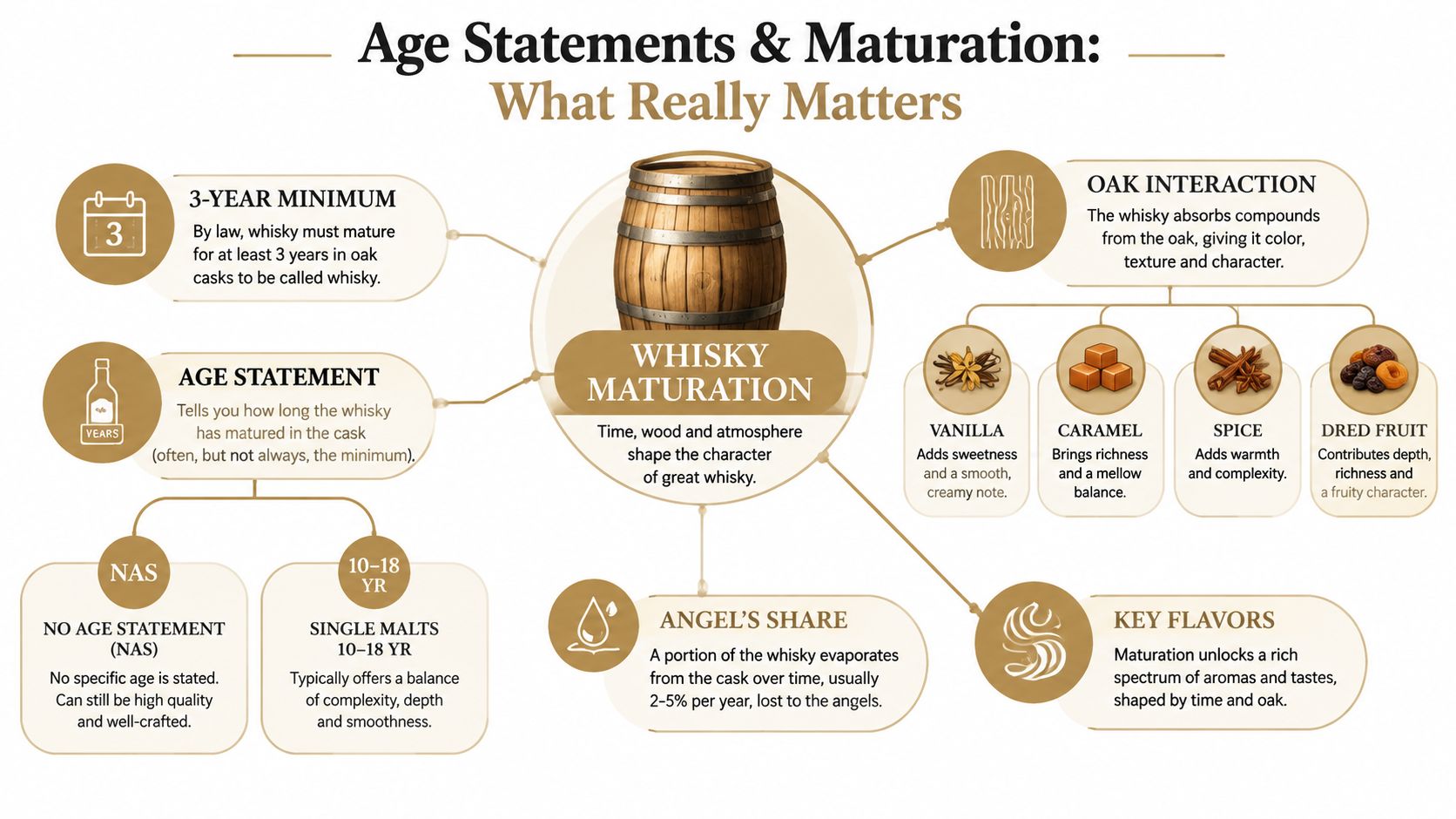
Age Statements Maturation and What Actually Signals Quality
A large age number looks persuasive on a gift label, but age alone doesn't tell you how enjoyable the whisky will be. Scotch must mature in oak casks in Scotland for at least 3 years, and the maturation environment shapes flavor through wood interaction, oxidation, and evaporation, as explained in this guide to whisky maturation.
The useful comparison is between age statement, maturation regime, and bottling choices. An age statement tells you the youngest whisky in the bottle. It doesn't tell you whether the cask worked beautifully, whether the spirit has balance, or whether the bottler preserved texture and aroma.
Read the cask story
Scotch is typically filled into casks at about 63.5% ABV, a level that supports interaction between spirit and oak. Maturation commonly lowers alcohol strength by roughly 0.5% to 1% per year through evaporation. Oak can contribute vanilla, caramel, spice, and dried-fruit character, while time allows those elements to integrate.
That's why a well-made whisky in the 10 to 18 year range can offer an appealing balance of oak-derived flavor, concentration, and spirit character. An older bottle may be more prestigious, but excessive oak influence isn't automatically better. For gifting, balance usually matters more than the largest number on the front.
No age statement, or NAS, isn't a quality verdict either. Some NAS whiskies use carefully selected casks and focus on a particular flavor profile rather than a minimum age. Look for clear information about cask types, finish, strength, and style instead of dismissing the bottle because it lacks an age number.
Check the bottling strength
Standard Scotch often sits at the lower end of the category's strength range, while premium single malts may be bottled at 43%, 46%, or 50%+ ABV. Cask-strength releases commonly fall around 52% to 65% ABV, according to this explanation of whisky strength.
Higher strength can preserve more volatile aroma compounds and a fuller texture. It can also make the whisky feel hotter, so cask strength is most appropriate for an experienced drinker who enjoys adding water and adjusting the pour.
For a premium gift, 46% ABV is often a useful middle ground. It can offer more body and aromatic intensity than a standard bottling without demanding the same level of dilution experimentation as cask strength.
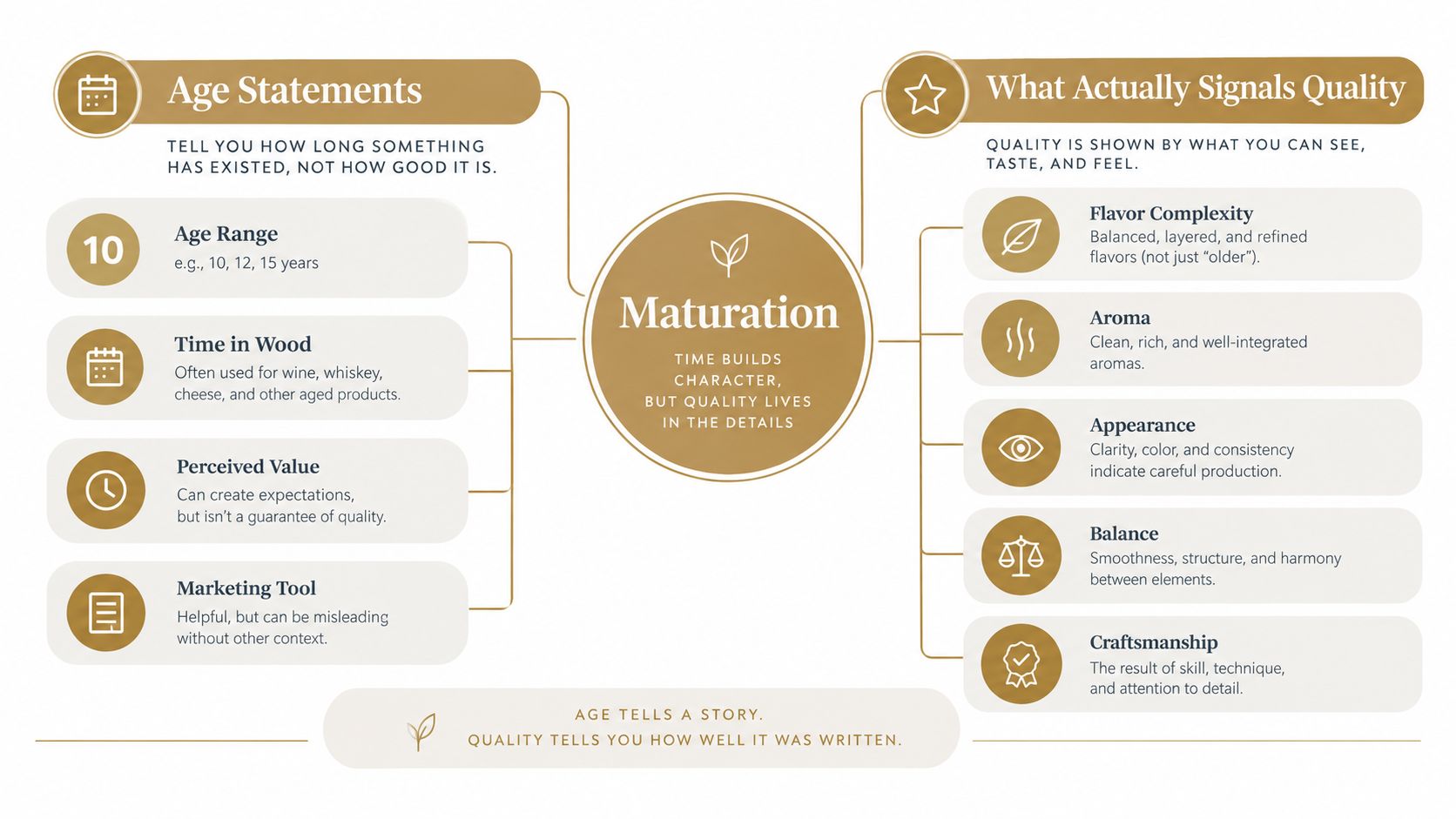
Single-cask and non-chill-filtered bottlings can also signal a more distinctive tasting experience. They don't guarantee universal appeal, but they can suit a recipient who values nuance, texture, and the feeling of receiving something less standardized.
Matching Price Tiers and Occasions to the Right Bottle
A thoughtful budget should answer a practical question: what kind of experience should this gift create? A bottle for an office thank-you doesn't need the same presentation as a milestone celebration, and a host gift should be easy to open and share rather than too rare to pour.
Recent gift coverage separates accessible recommendations around the $40 to $70 range from premium and special-edition bottles, including releases such as Johnnie Walker Blue Label Year of the Horse 2026, as discussed in this Scotch gift guide by USA Today. Those figures are useful as a market reference, not as a rule. Availability and local pricing vary, so use the tier to think about intent rather than chase an exact number.
| Gift Tier | Best Occasion | What Recipient Values Most |
|---|---|---|
| Accessible, everyday bottle | Host gift, office thank-you, casual birthday | Easy drinking, shareability, and a recognizable style |
| Mid-range single malt | Holiday, birthday, dinner invitation | Flavor quality, a personal palate match, and a bottle worth discussing |
| Premium age-stated or higher-strength whisky | Anniversary, promotion, significant birthday | Maturation detail, texture, and a sense of occasion |
| Limited edition or presentation set | Milestone celebration, executive gift, collector occasion | Scarcity, packaging, brand recognition, and shelf presence |
| Discovery bundle or tasting format | Curious drinker, hard-to-shop-for recipient | Variety, comparison, and an activity rather than one fixed choice |
For a workplace gift, choose a balanced, non-peated style with polished packaging. You want something recognizable enough to feel intentional, but not so idiosyncratic that the recipient must already understand peat or cask strength.
A host gift benefits from drinkability. A soft Speyside, accessible Highland malt, or well-made blend can be opened during the gathering. If the recipient already owns many bottles, a limited release or unusual cask finish may be more interesting, but only if they enjoy collecting.
Milestone occasions allow you to spend more on presentation and rarity. Even then, don't confuse a luxury label with personal fit. A beautifully boxed smoky whisky is still a poor anniversary gift for someone who avoids peat.
How to Match Scotch Style to Your Recipient Palate
The fastest way to choose well is to study the recipient's existing habits. You're looking for flavor clues, not proof of technical expertise. Someone who orders bourbon neat may appreciate vanilla, caramel, oak, and dried fruit. Someone who talks about campfires, smoked food, or coastal flavors may welcome peat or brine.
A practical palate matrix
| Recipient Clue | Recommended Scotch Style | Why It's a Sensible Match |
|---|---|---|
| Drinks bourbon or sweet Old Fashioneds | Non-peated Speyside or mellow Highland | Fruit, vanilla, honey, and oak provide a familiar bridge |
| Avoids smoke and medicinal flavors | Non-peated Lowland, Speyside, or gentle Highland | The profile stays focused on malt, fruit, citrus, and soft spice |
| Enjoys smoky barbecue or mezcal | Peated Highland, Island, or Islay | Smoke becomes part of the attraction rather than a surprise |
| Likes oysters, salty snacks, or coastal gin | Coastal Island, Campbeltown, or restrained Islay | Brine, pepper, sea air, and savory notes add interest |
| Loves dessert, dark chocolate, or fruitcake | Lightly sherried Speyside or rich Highland | Dried fruit, spice, caramel, and chocolate-like notes feel generous |
| Enjoys wine and food pairing | Cask-finished or wine-influenced malt | The changing cask character creates more material for comparison |
| Tries new spirits constantly | Coastal malt, Campbeltown, or a distinctive single-cask bottle | Unusual texture and savory complexity reward curiosity |
Bourbon drinkers are often the easiest group to translate because oak and sweetness provide a familiar starting point. Look for a non-peated Speyside with vanilla, orchard fruit, caramel, or gentle sherry influence. That doesn't mean the whiskies taste the same. It means the first sip has a friendly point of reference.
For a smoke-averse recipient, avoid assuming that “premium” means “peaty.” Select a bottle described through fruit, floral notes, honey, citrus, malt, or soft spice. A non-peated bottle is the safest default when you don't know whether smoke is welcome.
Adventurous sippers can handle more distinctive choices. Coastal malts offer salinity and pepper without always delivering the full intensity of Islay. Campbeltown can suit people who enjoy savory, oily, or slightly funky spirits.
The critical rule is simple: don't gift heavily peated Islay unless the recipient already likes smoke. If you're uncertain, choose a balanced non-peated malt and add a note explaining what flavors led you to it. For more bottle-level ideas after identifying the style, browse these single malt whiskey recommendations.
Presentation Glassware and Tips for New Whiskey Drinkers
The gift begins before the first sip. A clean presentation box, protective wrapping, and a handwritten card make the bottle feel selected rather than grabbed. You don't need elaborate accessories. The details should help the recipient open, smell, taste, and enjoy the whisky without feeling tested.
Build a welcoming package
Use a sturdy gift bag or a simple box that keeps the bottle upright. Add a short note such as, “I chose this because you like rich fruit and gentle spice. I hope we can taste it together.” That wording explains the choice without turning the card into a tasting lecture.
If you're including glassware, choose a tulip-shaped whisky glass or another glass that gathers aroma. This guide to the best glasses for Scotch whisky can help you compare practical shapes. A tumbler is perfectly acceptable for relaxed drinking, but a narrower bowl makes it easier for a new drinker to notice aroma.
Keep the first pour simple
Rolling Stone's beginner guidance recommends starting with high-quality glasses and an easy-to-drink whiskey, then reading the label before tasting, as described in this beginner guide to drinking whiskey. That advice removes pressure. The recipient doesn't need to identify every aroma or use specialist vocabulary.
Try this sequence:
- Read the label. Notice the region, age statement, ABV, cask information, and whether the whisky is single malt or blended.
- Smell gently. Hold the glass below the nose first, then bring it closer. Look for broad impressions such as fruit, cereal, vanilla, spice, salt, or smoke.
- Taste a small sip. Let the whisky move across the palate, then notice whether the finish feels sweet, dry, spicy, smoky, or coastal.
- Add a little water if desired. Water can soften alcohol intensity and reveal different aromas. It isn't a correction, it's a preference.
- Compare reactions. Ask what the recipient likes, not whether they tasted the “right” note.
A gift becomes more memorable when the recipient feels invited to explore rather than expected to perform.
Give an Experience That Outlasts One Bottle
A bottle can be meaningful, but a shared tasting gives the recipient a story, a conversation, and a way to discover what they like. That matters especially when the buyer knows the person enjoys whiskey but doesn't know whether their ideal pour is fruity, spicy, coastal, or smoky.
American craft whiskey makes that discovery especially broad. Forbes' holiday guide selected a dozen American craft whiskey expressions from a field of more than 3,000 available expressions, showing how much variety exists beyond familiar national brands in this American craft whiskey guide. Featuring American craft brands alongside Scotch can turn a gift into a comparison between production choices, regional identity, and personal taste.
Remove the label bias
Blind tasting changes the question from “Is this a prestigious bottle?” to “Do I enjoy what's in the glass?” A recipient can compare aroma, flavor, finish, age, proof, and whiskey type before a brand name influences the verdict.
Blind Barrels is one option for extending a Scotch gift into that kind of activity. Its quarterly subscription sends four blind samples from small American craft distilleries, with a tasting table for aroma, tasting, and finish notes, a QR reveal, and a scoring game based on age, proof, and whiskey type. A gift card can make the experience suitable for a curious recipient, a couple, or a group tasting night.
The same principle works for a private gathering. If you're organizing a larger celebration, resources for Sonoma estate group events can help you think about how drinks, food, and conversation fit together in a more complete occasion. You don't need to create a formal tasting. Pouring two contrasting styles and asking which one feels more enjoyable is enough.
The strongest whiskey gift doesn't end when the bottle opens. It gives the recipient a reason to taste, compare, and tell the story later.
Choose the bottle by palate first, then refine the decision with maturation, occasion, and presentation. That approach will serve you better than chasing the oldest label or the most recognizable name.
Blind Barrels offers gift cards for guided blind whiskey tastings featuring small American craft distilleries, tasting notes, bottle reveals, and a playful palate-scoring game. Visit Blind Barrels to turn a thoughtful Scotch gift into a shared whiskey discovery experience.