

Welcome to the rich, rewarding world of small batch bourbon. It’s a corner of the whiskey universe celebrated for its meticulous craftsmanship and wildly expressive flavors. More often than not, the best small batch bourbons are born in passionate American craft whiskey distilleries, offering a genuine alternative to the big, mass-market names. This guide is your map to navigating this exciting landscape, especially if you're new to whiskey, and discovering what you truly enjoy.
Your Guide to the World of Craft Bourbon
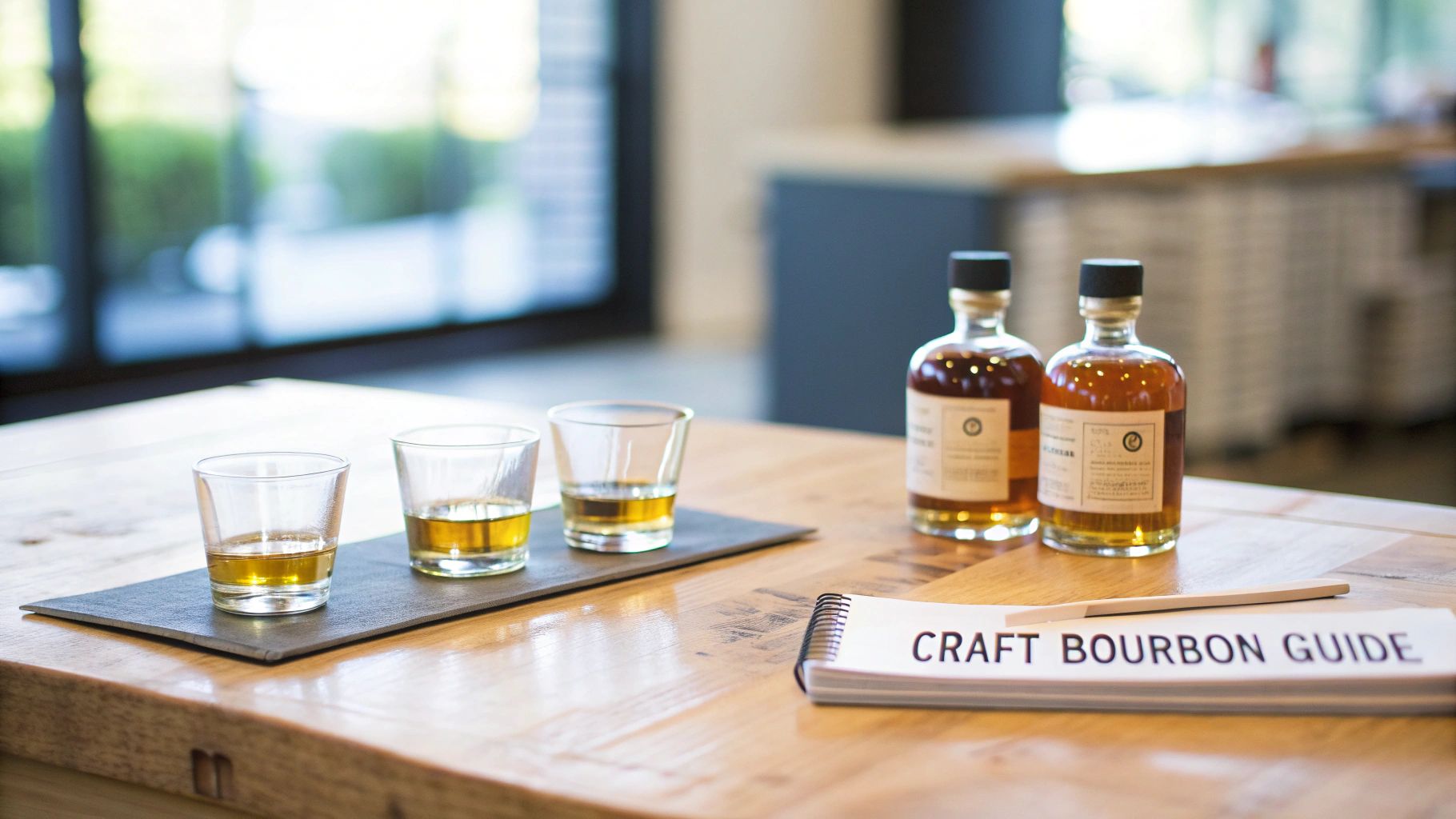
If you're just dipping your toes into whiskey, the term "small batch" might sound a little exclusive or intimidating. Don't let it. The idea is actually pretty simple.
Think of it like the difference between a cookie from a boutique, local bakery and one churned out by a massive factory. Both are cookies, sure. But one is made with a personal touch, with someone paying close attention to every ingredient and step of the process. That's small batch bourbon, and it's a hallmark of the American craft whiskey movement.
This very distinction is what makes exploring the best small batch bourbons such a thrill. It’s a journey straight into the heart of American craft distilleries, where distillers are constantly pushing boundaries and creating spirits with real soul.
The Rise of American Craft Whiskey
The bourbon scene has exploded over the last decade. Small batch bourbons have surged in popularity, now capturing about 25% market share of the U.S. whiskey scene. This growth is directly tied to the craft distillery boom, with over 2,500 active distilleries now contributing more than $1.4 billion to the market. If you're curious, you can discover more about recent bourbon industry statistics and see just how much tastes are evolving.
This movement has uncorked an incredible diversity of flavors, stories, and techniques. For anyone new to whiskey, this is fantastic news—it means more choices than ever before. To really navigate this vibrant market, it helps to understand what makes these bourbons special in the first place. That's what this guide is all about.
The real secret to finding your favorite bourbon isn't about chasing expensive bottles or hyped-up brands. It's about training your palate to recognize quality and identify the flavors you personally love.
Our entire approach is built on one core belief: the most honest way to find your perfect bourbon is by tasting it blind. When you remove the label and the brand bias, you let your senses take the lead. This method empowers you to:
- Focus purely on aroma and taste: You can appreciate the whiskey for what's actually in the glass, not what the marketing tells you it should be.
- Build confidence in your palate: You'll start to trust your own judgment and get better at putting words to what you like and dislike.
- Discover hidden gems: You might just find that your new favorite bourbon comes from a small, up-and-coming American craft whiskey distillery you’ve never even heard of.
What Exactly Makes a Bourbon Small Batch?
When you see "small batch" on a bourbon label, it’s easy to get a little turned around. Unlike legally protected terms like "straight bourbon," the definition of small batch is not regulated by law. This means there’s no official rulebook dictating exactly how many barrels can be used.
Instead, it’s better to think of it as a philosophy. Picture a chef crafting a signature sauce. They wouldn’t just dump ingredients from some massive vat; they’d carefully select a handful of specific, high-quality components to build a precise flavor. That’s the art behind the best small-batch bourbons.
A master distiller hand-selects a limited number of barrels—often anywhere from 10 to 150—that they believe will harmonize beautifully when blended. The goal isn't just mixing whiskey; it's about crafting a consistent and expressive final product that truly reflects the distiller's vision. This intentional process is a hallmark of many American craft whiskey distilleries. For a deeper look into this world, check out our complete guide on what makes a spirit a craft whiskey.
Small Batch vs. Other Bourbon Types
To really get what small batch means, it helps to see how it stacks up against its cousins on the whiskey shelf. Each type offers a different experience, driven entirely by how the bourbon gets bottled.
- Single Barrel Bourbon: Just like it sounds, this whiskey comes from one individual barrel. Each bottle will have a unique flavor profile reflecting that specific cask's journey. It’s like a solo performance—distinct and never exactly repeatable.
- Large Batch Bourbon: This is the standard for the big distilleries, where hundreds or even thousands of barrels are mingled together. The main goal here is consistency on a massive scale, making sure the bottle you buy today tastes exactly like the one you'll buy next year.
The magic of small-batch bourbon lies in the balance it strikes. It offers more consistency and complexity than a single barrel but far more character and nuance than a massive, large-batch release.
Why Does It Matter for New Drinkers?
If you’re just getting into bourbon, the "small batch" label is a fantastic starting point. It's a signal that a distiller has put extra thought and care into what's in the bottle. You're getting a curated experience, where barrels were chosen for their specific qualities to create a balanced, flavorful, and often more complex spirit.
This selective process lets distillers smooth out any rough edges while amplifying those delicious notes of caramel, vanilla, or spice. The result is typically a high-quality, approachable, and memorable bourbon—a perfect invitation to taste the artistry that defines the American craft whiskey movement.
Decoding the Anatomy of a Great Bourbon
So, what separates a decent bourbon from a truly phenomenal one? It’s a lot like the difference between a home cook and a master chef. The chef understands how a few core ingredients and techniques can be combined to create something unforgettable. For a distiller, those elements are what build the flavor, aroma, and texture of the whiskey in your glass.
Getting a handle on these components is the first step toward really appreciating the best small batch bourbons. Think of it as learning the basic vocabulary of flavor. Once you know what to look for, you can start picking up on the little details that make each bottle a unique experience.
Let's break down the key factors that distillers play with to craft a top-tier small batch bourbon. The table below gives a quick overview, and then we'll dive into the specifics of each.
| Factor | What It Is | Impact on Flavor | What to Look For |
|---|---|---|---|
| Mash Bill | The grain recipe used to make the bourbon. | Determines the foundational sweet, spicy, or soft notes. | High-rye for spice, wheated for smoothness, traditional for balance. |
| Proof | The alcohol by volume (ABV), a measure of strength. | Higher proof often delivers more concentrated flavors and a richer mouthfeel. | 90-120 proof for a robust profile; anything over 120 is "barrel proof." |
| Age | How long the bourbon matures in a new, charred oak barrel. | Imparts notes of vanilla, caramel, and oak. Affects smoothness and complexity. | 4-8 years is a sweet spot for balance; older isn't always better. |
| Finish | An optional secondary aging period in a different type of cask. | Adds unique layers of flavor, like dark fruit from port barrels or sweetness from rum casks. | Labels specifying a finish, like "Port Cask Finish" or "Sherry Cask Finish." |
| Aroma | The scent, or "nose," of the bourbon. | A great indicator of the flavors to come. Complexity here often means complexity on the palate. | A bouquet of distinct scents—vanilla, fruit, spice, oak—without a harsh alcohol smell. |
| Mouthfeel | The texture of the whiskey in your mouth. | Can be thin and watery or thick, oily, and viscous. | A rich, coating texture that lingers, often found in higher-proof or non-chill filtered bourbons. |
| Craft Provenance | The story and philosophy of the distillery. | Reflects the passion and hands-on approach of the distiller. | Small, independent distilleries focused on quality over quantity. |
Understanding these building blocks is your key to unlocking a deeper appreciation for the spirit. It's how you go from just drinking bourbon to truly tasting it.
The Mash Bill: The Flavor Foundation
Every bourbon starts its life as a mash bill—basically, the grain recipe that serves as its soul. By law, a bourbon has to be at least 51% corn, which is where that classic sweetness comes from. But it's the other 49% where distillers really get to play and show their creativity. This is where many of the best American craft whiskey brands make their mark.
- Rye: When a distiller adds a healthy dose of rye, you get spicy notes like black pepper, cinnamon, and a hint of mint. A "high-rye" bourbon packs a much bolder, spicier punch.
- Wheat: Swapping rye for wheat gives you a "wheated" bourbon. This grain creates a much softer, gentler profile with notes of honey, fresh-baked bread, and creamy caramel.
- Barley: Malted barley is the unsung hero. It contains crucial enzymes needed for fermentation to even happen, and it also chips in with subtle notes of chocolate, nuts, and toast.
This recipe has a massive impact on the final taste. A bourbon with 25% rye will feel like a completely different spirit than one made with 15% wheat. To get a better handle on these flavors, you can explore a guide to the bourbon flavor wheel to see how these grains translate into specific notes you can taste.
Proof: How Alcohol Shapes the Experience
The proof, or alcohol by volume (ABV), isn’t just about how strong the whiskey is; it’s a critical part of the flavor delivery system. A higher proof generally means a richer, more concentrated taste and a thicker, almost oily texture in your mouth.
A bourbon bottled at 80 proof (40% ABV) might be smooth and easy to sip, but some of the more delicate flavors can get lost in the dilution. On the other hand, a bourbon at 100 proof or higher often brings a much more robust and complex profile to the table, carrying those deep caramel, oak, and spice notes with a lot more authority.
Age and Finishing: The Art of Maturation
That beautiful amber color and a huge chunk of a bourbon's flavor come from aging it in a new, charred oak barrel. This is where the real magic happens. The whiskey seeps into the wood and pulls out all those wonderful notes of vanilla, caramel, and baking spice. But "older" doesn't automatically mean "better." The distiller is aiming for balance. Too much time in the barrel, and a bourbon can become bitter and overwhelmingly woody.
The barrel is not just a container; it's the final, and arguably most important, ingredient in bourbon. Its influence is so powerful that the concept is being adopted by other craft industries.
For a cool perspective on how barrel aging can transform flavor, check out how other artisans are using the technique with products like coffee aged in whiskey barrels.
Some distillers take this a step further with finishing. After the initial aging, they'll move the bourbon into a second barrel—maybe one that previously held port, sherry, or rum—for a few extra months. This finishing process adds incredible new layers of flavor, like dark fruits or sweet molasses, creating a truly one-of-a-kind whiskey.
How to Properly Taste Bourbon and Find Your Profile
Tasting bourbon is a full-sensory experience, and learning how to do it right can transform a simple drink into a genuine discovery. For anyone new to the game, a structured approach is the key to looking past the fancy label or the price tag. It helps you zero in on the specific notes and textures that make a small-batch bourbon truly great for you.
To really get to know a whiskey, the pros often use a simple five-step method: See, Swirl, Sniff, Sip, and Savor. Don't worry, this isn't about being stuffy or pretentious. It’s about paying attention and learning how to put words to what you're smelling and tasting.
The Five Steps to a Perfect Tasting
Let's walk through the process. These techniques are surprisingly easy to pick up and will immediately deepen your appreciation for what’s in the bottle, especially when you're exploring unique spirits from American craft whiskey brands.
-
See: First, just look at it. Hold your glass up to a light source. The color tells a story, ranging from a pale straw to a deep, rich mahogany, giving you hints about its age and the kind of barrel it slept in. Give the glass a little swirl and watch the "legs"—those oily streaks that crawl down the side. Thicker, slower legs often point to a higher proof or a richer, more viscous feel in your mouth.
-
Swirl: Now, give the bourbon a gentle swirl in your glass. This isn’t just for looks. It lets a little air into the whiskey, which coaxes out the more delicate aromatic compounds that have been waiting to be released.
-
Sniff (or "Nose"): This might be the most important step of all. Resist the urge to stick your nose right into the glass; you'll just get a blast of alcohol. Instead, bring the glass slowly toward you while keeping your mouth slightly open. This little trick softens the alcohol burn and lets you pick up on the good stuff—notes of vanilla, caramel, fruit, or spice.
-
Sip: Take a small sip, just enough to coat your tongue. Before you swallow, let the bourbon move around your mouth for a moment. This move, sometimes called the "Kentucky Chew," makes sure the whiskey hits every part of your palate. You'll notice sweetness on the tip of your tongue, maybe some saltiness on the sides, and bitterness toward the back.
-
Savor: Finally, the finish. After you swallow, what impression does the bourbon leave behind? Is it a long, warming sensation or does it disappear quickly? Do new flavors pop up, like oak, leather, or dark chocolate? A long, pleasant finish is often the signature of a beautifully crafted bourbon.
For a deeper dive into these techniques, our guide on how to taste whiskey offers more tips to help you sharpen your palate.
This diagram shows how a bourbon's foundation—its mash bill, age, and proof—all come together to create the final spirit you're tasting.
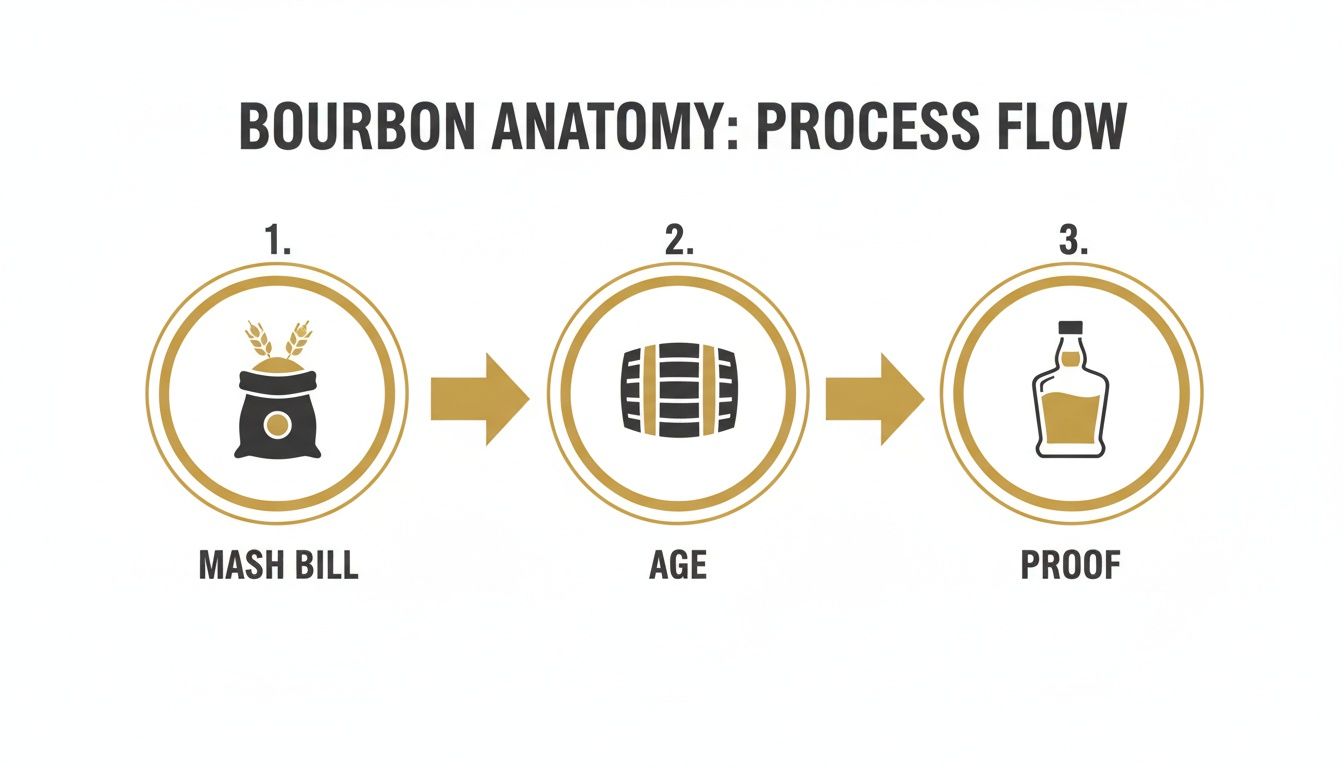
Every one of those elements plays a direct role in the aromas and flavors you'll find, from the sweetness of the grain to the deep, oaky character from the barrel.
Trust Your Palate with a Blind Tasting
The single best way to figure out what you truly like is to remove all the marketing noise. A blind tasting forces you to judge a bourbon on its own merits, without any brand bias getting in the way. It’s easy to do at home—just pour a few different bourbons into identical glasses and taste them without knowing what's what.
By removing the influence of a familiar label or a hefty price tag, a blind tasting empowers your palate to be the sole judge. It's the most honest way to discover what you genuinely enjoy.
This is the perfect exercise for anyone new to whiskey. It builds confidence and trains your senses to focus only on what's in the glass: the aroma, the taste, and the finish. You might just be surprised to find that your favorite of the night comes from a small American craft whiskey distillery you’ve never even heard of.
Discovering Hidden Gems from Craft Distilleries
Alright, now that you know how to taste, it’s time to put those skills to the test and dive into the vibrant world of American craft whiskey distilleries. The best small-batch bourbons aren't always the ones with flashy marketing campaigns. More often than not, they’re hidden gems from passionate distillers who pour their hearts into every single bottle.
This isn’t going to be another generic "best of" list. My goal here is to highlight a few standout American craft whiskey brands that showcase different philosophies and flavor profiles. These stories are proof that the most memorable bourbon is the one that connects with your taste, not just the one everyone else is buzzing about.
Celebrating Craftsmanship and Unique Philosophies
The American craft whiskey movement is where the real innovation is happening. Distillers are getting creative, experimenting with local grains, unique aging climates, and bold mash bills to produce some truly remarkable spirits. Exploring these brands is one of the best ways to discover what’s possible beyond the traditional Kentucky style.
One of the most fascinating parts of this exploration is seeing how a distillery’s story actually shapes its whiskey. For instance, a Texas distillery like Garrison Brothers uses the punishing local heat to their advantage, accelerating the aging process and pulling deep, rich flavors from the oak. In stark contrast, a distillery in a cooler climate might end up with a softer, more delicate bourbon.
The real joy in bourbon comes from discovery. By stepping away from the familiar names, you open your palate to a whole new world of flavors and the fascinating stories behind them.
Examples of Craft Distilleries to Explore
To give you a taste of the incredible diversity out there, here are a few American craft whiskey brands known for shaking things up. Think of these not as endorsements, but as illustrations of what makes the craft scene so exciting.
- Still Austin Whiskey Co. (Texas): Known for using 100% Texas-grown grains, this distillery is all about capturing the essence of its local terroir. Their bourbons often punch well above their weight in terms of maturity, bringing unique notes like mocha and earthy caraway seed that you just won't find anywhere else.
- New Riff Distilling (Kentucky): Even though they're right in the heart of bourbon country, New Riff operates with a pure craft-first mindset. They’re celebrated for their strict commitment to Bottled-in-Bond standards, which guarantees quality and transparency. Their high-rye bourbons are bold, spicy, and absolutely packed with character.
- Minden Mill (Nevada): This is a perfect example of a distillery that’s pushing the boundaries of flavor. Their bourbon has a truly unique spicy profile with notes of fennel and cardamom, creating an effervescence that’s miles away from traditional products. It’s a compelling dram that really showcases what regional creativity is all about.
The growing appetite for these unique spirits is reshaping the entire market. This trend, often called "premiumization," is fueling an 18% growth in high-end sales, with small-batch releases leading the charge. You can read more about the latest bourbon industry trends to see just how consumer tastes are evolving. Finding your next favorite bottle is all about embracing this spirit of adventure.
Embark on Your Own Blind Tasting Adventure
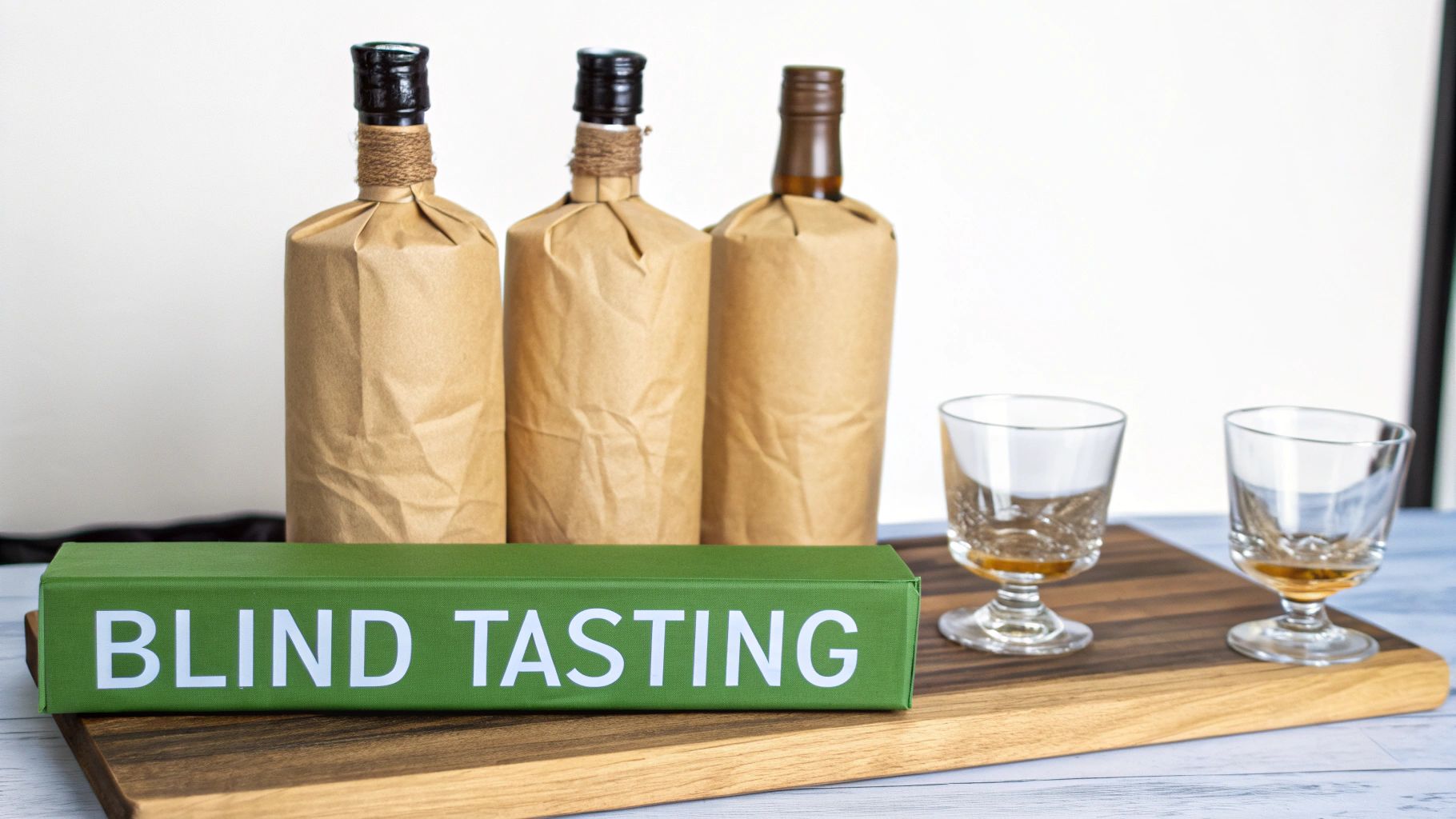
Alright, you’ve learned what makes a small batch bourbon special, how to decode its flavors, and where to find unique bottles from American craft whiskey brands. Now it’s time to bring all that knowledge together and put your palate to the ultimate test.
The single best next step in your journey is a blind tasting.
This simple exercise is a game-changer. By concealing the labels, you strip away every preconceived notion tied to brand reputation, price, or slick marketing. Suddenly, the only thing that matters is the liquid in the glass—its aroma, taste, and finish. It’s the most honest way to discover what you genuinely enjoy, not just what you think you should enjoy.
A blind tasting is more than just a fun Saturday night activity; it’s an active form of discovery. It’s your chance to apply everything you’ve learned about mash bills, proof, and aging, helping you build real confidence in your tasting abilities.
From Passive Drinking to Active Discovery
This method levels the playing field, allowing a hidden gem from a small, independent distillery to compete directly with a legacy brand. You might be shocked to find your new favorite bourbon is one you’d normally overlook on a crowded shelf.
Here are a few tips for getting started:
- Gather Your Lineup: Select three to five different bourbons. Try to include a mix of styles—perhaps a high-rye, a wheated, and a more traditional mash bill to see what really sings to you.
- Conceal and Pour: Have a friend pour small samples into identical glasses while you aren't looking. Make sure they keep a secret key to track which is which!
- Taste and Take Notes: Use the "See, Swirl, Sniff, Sip, Savor" method for each sample. Jot down your impressions without judgment before the big reveal.
A blind tasting isn't about getting it "right." It's about training your palate to listen to what's in the glass and trusting your own preferences.
Stop just reading about the best small batch bourbons. It’s time to start experiencing them for yourself and let your taste buds lead the way.
Your Small Batch Questions, Answered
Jumping into the world of small-batch bourbon can bring up a few questions, especially when you're just starting out. Here are some straightforward answers to the things we hear most often from fellow whiskey lovers.
How Should I Store My Bourbon?
Proper storage is your best friend for preserving all that incredible flavor. The golden rule is to keep your bourbon bottles standing upright in a cool, dark place—a cabinet or pantry works perfectly. If you lay them on their side like wine, the high-proof alcohol will slowly eat away at the cork, which can ruin the whiskey over time.
Is Older Always Better?
Not at all. While age can definitely add layers of complexity, balance is what truly matters, not just a big number on the bottle. In fact, many bourbons from American craft whiskey brands really hit their stride between 6-8 years. Let a bourbon sit in the barrel too long, and it can become bitter and unpleasantly woody.
The best way to drink small batch bourbon is however you enjoy it most. There’s no right or wrong answer, but there are ways to get more out of the experience.
When you first crack a bottle, try it neat in a proper tasting glass to really get a sense of its undiluted character. After that first sip, feel free to add a few drops of water or a single large ice cube. This little trick can open up the aromas and soften the alcohol's heat, letting more of those subtle, hidden flavors come forward. It's a simple move that even the most seasoned drinkers rely on to explore every last note.
Ready to put your palate to the test and find your next favorite American craft whiskey? The Blind Barrels tasting experience is designed to help you discover the absolute best small-batch bourbons without getting swayed by a fancy label. Come explore our subscriptions and start your own tasting adventure today at https://www.blindbarrels.com.