

A friend hands you a neat pour with no warning. The burn hits first. The flavor disappears behind it, and you decide whiskey just isn't for you.
That first sip doesn't have to work that way. The best whisky drink for a beginner softens the heat without hiding the grain, oak, and spice that make the bottle worth tasting. Some drinks do that with sugar and bitters. Others use citrus, bubbles, crushed ice, or hot water. Each one teaches you something different about what's in the glass.
The eight classics below move from spirit-forward stirred drinks to bright sours and warm toddies. Every entry names American craft bottles to buy and gives you a blind-tasting swap to run at home. Taste the same recipe two ways, guess which is which before you check, and you'll learn faster than drinking the same pour on repeat. Start simple, keep notes, and let your palate decide.
1. Old Fashioned Beginner Tasting Guide and American Craft Picks
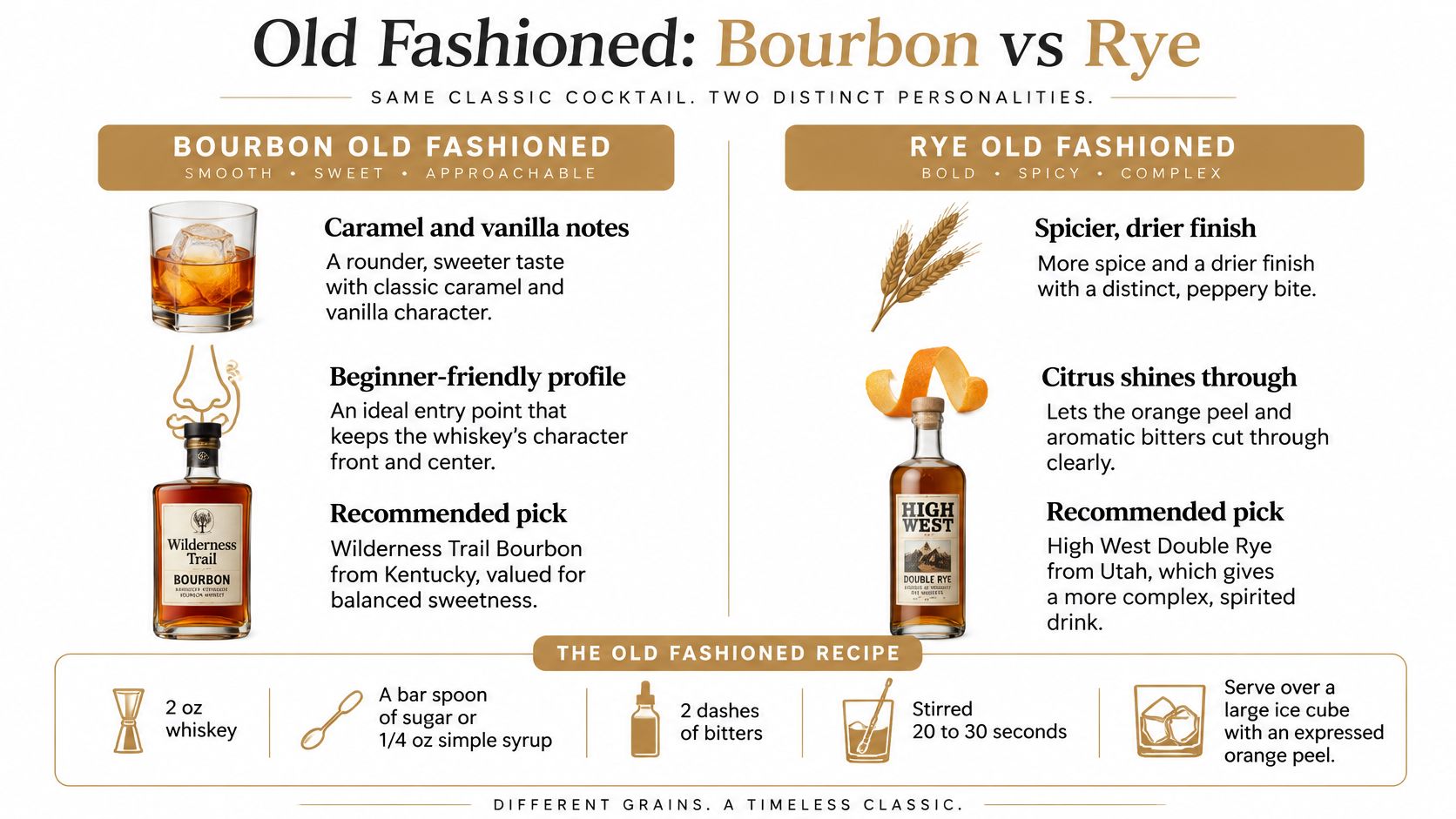
The Old Fashioned is where I start new drinkers. It keeps whiskey front and center, with just sugar, bitters, and water to round the edges. That structure is the original cocktail template, and the May 13, 1806 issue of the Balance and Columbian Repository defined a "cock-tail" as spirits, bitters, water, and sugar. Nothing hides a weak whiskey here.
How to build it
- Start measured: Use 2 oz whiskey, 1 bar spoon of sugar or 1/4 oz simple syrup, and 2 dashes of bitters.
- Stir with intent: Stir 20 to 30 seconds over ice to chill and dilute, then strain over fresh ice.
- Finish with aroma: Express an orange peel over the glass and drop it in. The oils hit your nose before the first sip.
Tasting rule: Smell first, sip once, then wait 30 seconds. The finish tells you more than the first taste.
Craft picks and blind swap
Wilderness Trail Bourbon, a Kentucky craft bourbon, gives you balanced sweetness that suits beginners. High West Double Rye from Utah makes a spicier, drier version. Make both drinks with the identical build, have someone shuffle the glasses, and guess the mash bill. You'll hear corn sweetness in one and rye spice in the other. That's the lesson. Grain changes the whole drink even when everything else stays fixed.
2. Manhattan Beginner Tasting Guide and American Craft Picks
If the Old Fashioned teaches grain, the Manhattan teaches structure. Sweet vermouth adds herbal weight and dried fruit, so the whiskey feels rounder and less sharp. The drink's origin is debated, with stories placing it in New York in the 1870s, but the build settled into an American standard long ago.
Start with a 2 to 1 ratio. Stir 2 oz whiskey, 1 oz sweet vermouth, and 2 dashes of bitters with plenty of ice for 20 to 30 seconds. Strain into a chilled glass and add a cherry. Sip, then taste again after a minute. Vanilla, dried fruit, and baking spice often show up on the second pass, once the cold shock fades.
What makes it work or fail
Fresh vermouth matters. Store an opened bottle in the refrigerator and use it within a few weeks. Old, oxidized vermouth turns flat and sour, and beginners blame the whiskey. Don't let that happen. Buy a small bottle if you mix Manhattans only now and then.
A Manhattan forgives a bold whiskey, but it won't forgive tired vermouth.
High West Double Rye gives the drink a spicy backbone that cuts through vermouth sweetness. Frey Ranch rye from Nevada, a farm distillery that grows its own grain, works beautifully in stirred drinks for the same reason. For your blind swap, build one rye Manhattan and one bourbon Manhattan. The bourbon version drinks sweeter and rounder. The rye version stays lean and spicy. Most new drinkers pick a clear favorite, and that's useful information for every bottle you buy next.
3. Whiskey Sour Beginner Tasting Guide and American Craft Picks
A Whiskey Sour is the friendliest door into whiskey. Lemon juice lifts the spirit, sugar balances the acid, and shaking adds air and chill. It belongs to the sour family, which pairs a base spirit with citrus and sugar, and that simple frame makes whiskey taste fresh instead of heavy.
Use 2 oz whiskey, 3/4 oz fresh lemon juice, and 3/4 oz simple syrup. Shake hard for 10 to 15 seconds until the tin frosts, then strain over fresh ice. Juice lemons the same day you serve. Bottled juice tastes dull and metallic, and it flattens an otherwise good bottle.
Find your balance
- Too tart: Add syrup a spoonful at a time and retaste between additions.
- Too sweet: Add a squeeze more lemon, not more whiskey.
- Too hot: Shake longer. Extra chill and dilution tame high-proof pours.
That tuning process is the lesson. You're learning your own acid and sugar preference, which carries into every sour you'll make. If you want bottle guidance before you shop, read up on picking a whiskey for a whiskey sour and note which styles sound like your taste.
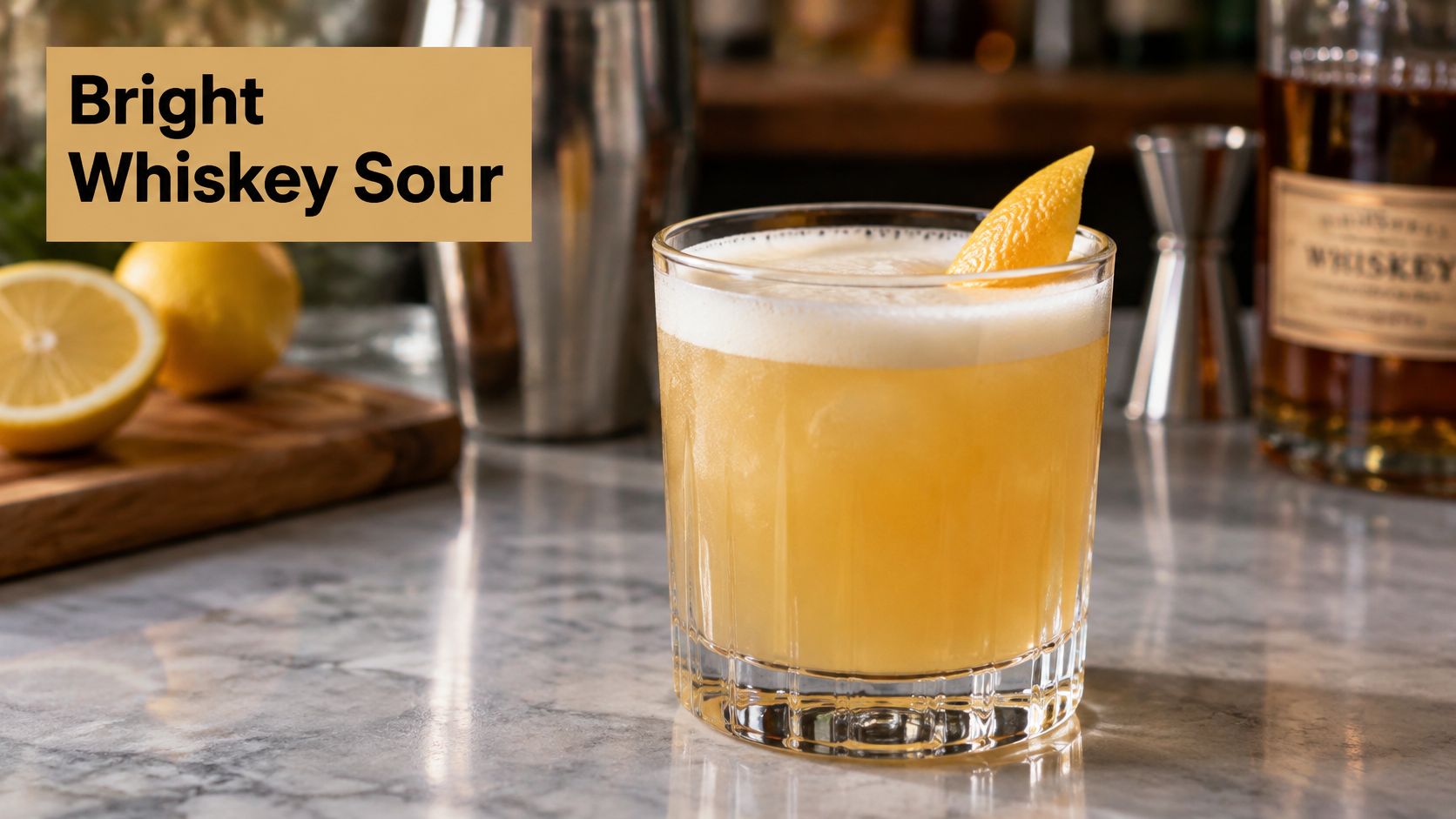
Southern Star Bourbon from North Carolina makes a bright, approachable sour that suits a tasting group with mixed experience. For the blind swap, make one sour with a wheated bourbon and one with a high-rye bourbon. The wheated version tastes softer and sweeter. The high-rye version pushes spice through the lemon. Sugar and citrus don't erase grain. They reframe it.
4. Mint Julep Beginner Tasting Guide and American Craft Picks
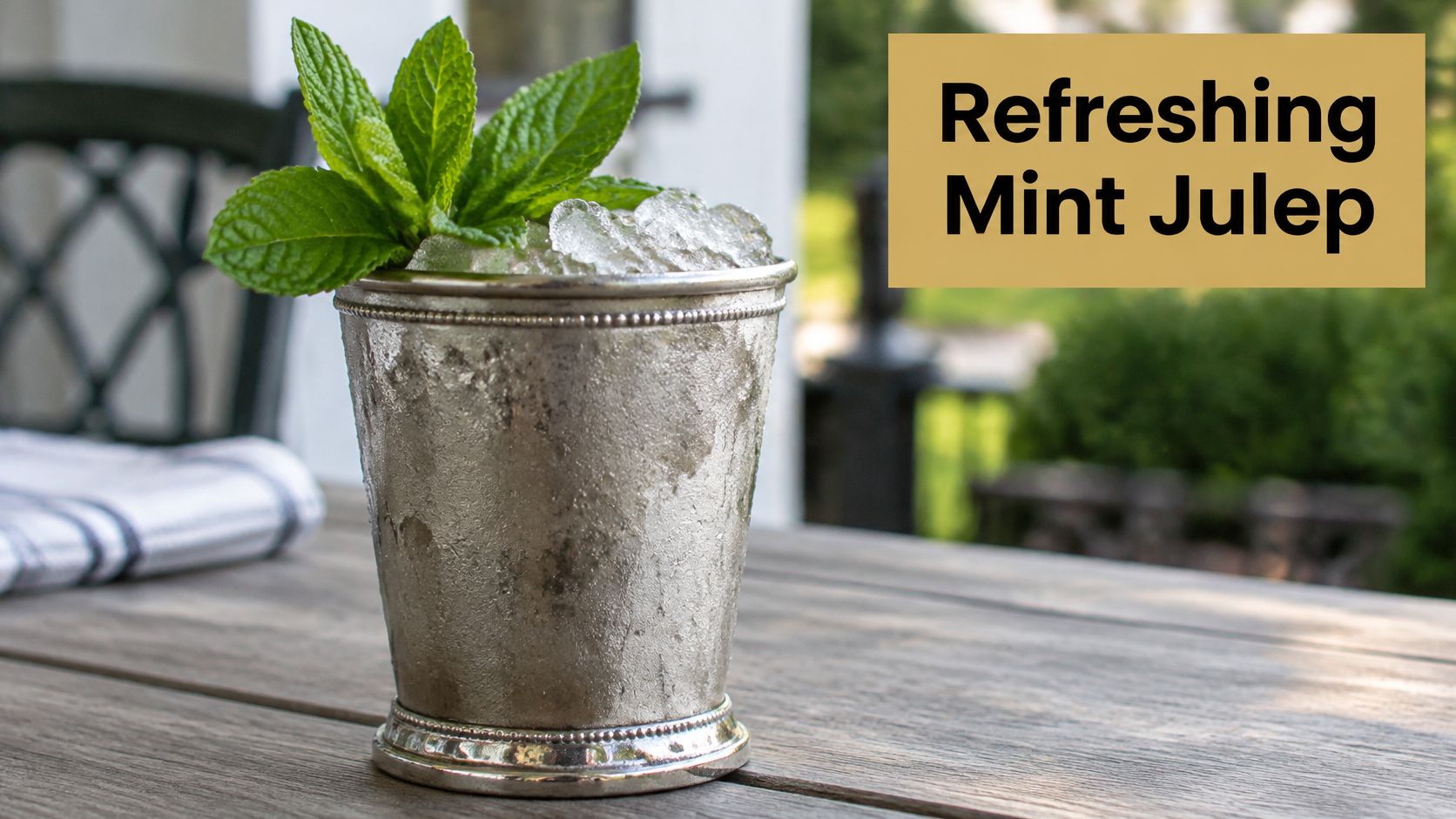
The Mint Julep looks gentle and drinks strong. Bourbon, sugar, mint, and a mountain of crushed ice go into a frosted cup, and the cold does most of the softening work. It's the signature pour of the Kentucky Derby, where juleps flow nonstop through Derby week. Few cocktails carry that much tradition in one cup.
Technique decides whether you taste fresh mint or lawn clippings. Gently press 6 to 8 mint leaves with simple syrup in the cup. Torn or shredded mint releases bitter, grassy notes that fight the bourbon, so press lightly and stop. Add 2 oz bourbon, pack the cup with crushed ice, and stir until frost forms on the outside. Crushed ice is the point. Cubes melt slower and leave the drink hot and tight.
Serving notes for hosts
- Smack the garnish: Slap a mint sprig between your palms before placing it. That wakes up the aroma.
- Keep portions small: Crushed ice makes the drink sip fast. Small cups keep a tasting night on the rails.
- Drink through the mint: Set the sprig right by the straw so every sip carries the smell.
Wilderness Trail Bourbon works well here because its balanced sweetness holds up as the ice melts. If your group prefers a softer sip, a wheated pour like McKenzie Bottled-in-Bond Wheated Bourbon reads rounder against the mint. Now the blind lesson. Make two juleps and stir one twice as long as the other, then taste them side by side. The longer-stirred cup drinks lighter and sweeter. That is dilution working as an ingredient, and once you notice it you will control stirring time in every drink on this list. Run a second swap with a rye like Buzzard's Roost Toasted Barrel Straight Rye Whiskey and the spice pushes up through the mint where bourbon stayed soft. Grain and ice, two lessons in one cup.
5. Boulevardier Beginner Tasting Guide and American Craft Picks
The Boulevardier is your introduction to bitterness. It swaps gin for whiskey in a Negroni frame, mixing whiskey, Campari, and sweet vermouth into something bittersweet and slow. Harry's New York Bar in Paris is widely credited with the original in the 1920s. Nearly a century later, it's still the drink that converts people who thought they only liked sweet cocktails.
The classic build uses equal parts. Stir 1 oz each of whiskey, Campari, and sweet vermouth with ice for about 30 seconds, then strain over a large cube or serve up. Express an orange peel over the top. Taste in stages. Bitter hits first, sweetness follows, and the whiskey finish carries the end. Naming that sequence helps beginners describe what they like.
Ease into Campari
Campari shocks first-time drinkers. If that's you, don't abandon the drink. Shift the ratio to 1.5 oz whiskey with 1 oz each of Campari and vermouth. You'll get the same character with less bite, and you can work toward equal parts over time.
Bartender's shortcut: Bitterness grows on people in small doses. Adjust the ratio, keep the drink.
High West Double Rye works well here because rye spice stands up to Campari instead of getting buried. For the blind swap, build a bourbon Boulevardier against a rye Boulevardier. Bourbon rounds the bitterness into something almost candied. Rye sharpens it and dries the finish. Same bitter base, two very different drinks. That contrast shows why grain choice matters most when other strong flavors compete for space.
6. Highball Beginner Tasting Guide and American Craft Picks
Two ingredients. That's the whole drink. Whiskey over ice, topped with soda water or ginger ale, served tall and cold. Whisky highballs are a daily staple in Japan, and American bars value them for the same reason. Bubbles lighten the body while the whiskey's aroma still leads.
Market numbers back up that appeal. A 2025 whiskey ready-to-drink market analysis from MarketIntelo estimated the Whiskey Highball held a 32.5% segment share, ahead of the Sour and the Old Fashioned. Treat that figure as directional, since it comes from a commercial research provider. It still tells you something real. Plenty of drinkers want whiskey in a longer, lighter format.
Building a proper highball
- Chill everything first: Cold glass, cold whiskey, cold soda. Warm soda goes flat on contact.
- Pour with care: Add 1.5 to 2 oz whiskey over ice, then run the soda slowly down the side of the glass.
- Stir once: One gentle lift mixes the drink. Aggressive stirring kills the carbonation you just protected.
Temperature control makes or breaks this drink, and the same principles show up in tips for longer-lasting cold drinks for any tall serve. Balcones Texas Single Malt makes a distinctive highball with rich, malt-forward character. For the blind swap, split one whiskey between soda water and ginger ale. Soda keeps the whiskey exposed. Ginger ale adds sweetness and spice that can mask a subtle bottle. Start with soda, then compare. You'll learn how much mixer you need.
7. Sazerac Beginner Tasting Guide and American Craft Picks
The Sazerac teaches aroma. This New Orleans classic pairs rye whiskey, sugar, and Peychaud's bitters with an absinthe rinse, and that rinse changes everything despite being mostly poured out. It's often cited as one of the oldest American cocktails, and it's the official cocktail of New Orleans. The Sazerac Bar at the Roosevelt Hotel remains a well-known place to try one made properly.
Chill a rocks glass, add a small splash of absinthe, swirl to coat, and discard the excess. In a separate glass, stir 2 oz rye with sugar and 2 to 3 dashes of Peychaud's bitters over ice. Strain into the rinsed glass with no ice. Express a lemon peel over the surface.
What to notice first
Smell the glass before you sip. The anise aroma from the rinse frames the rye, so the first taste lands differently than the same whiskey neat. That's the lesson for beginners. A tiny amount of a strong ingredient, applied to the glass rather than the drink, can still steer the whole experience. If you're shopping for the base spirit, a guide to the best rye whiskey for cocktails will help you match spice level to your taste.
Frey Ranch rye from Nevada suits the Sazerac's spicy structure and holds its own against absinthe and bitters. Run a rye-versus-bourbon swap for guests. The bourbon version tastes rounder and loses some snap. The rye version stays sharp and herbal. Many people find the rye build more coherent, and now they understand why classic recipes specify a grain instead of saying any whiskey will do.
8. Hot Toddy Beginner Tasting Guide and American Craft Picks
Heat changes whiskey. A Hot Toddy mixes whiskey with hot water, honey, and lemon, and the steam carries aroma straight to your nose before you ever sip. Cold-weather tasting nights lean on toddies as a warm alternative to neat pours, and the format suits couples or small groups who want something slow and cozy rather than strong and cold.
Build it in a warmed mug. Stir 1 teaspoon of honey into 4 oz hot water first, so it dissolves fully instead of sinking. Add 1.5 to 2 oz whiskey and 1/2 oz lemon juice. Drop in a cinnamon stick or a clove for aroma, then remove it before drinking. Spices left too long turn medicinal and crowd out the whiskey.
Getting the balance right
- Water too hot: Boiling water blows off aroma and scalds. Let the kettle sit a minute.
- Too sweet: Honey reads stronger in hot drinks. Start with less than you think.
- Too thin: Cut the water slightly rather than adding more whiskey.
There's overlap between a toddy and the old home remedy tradition, which is why so many people search for whiskey and honey for a cough in winter. Treat the toddy as a drink first and enjoy it on those terms.
Southern Star Bourbon makes a smooth, approachable base that won't overwhelm the honey. Balcones Texas Single Malt adds richer malt depth to a spiced version. For your blind swap, make one toddy with each and serve them in identical mugs. Heat amplifies sweetness and softens spice, so the bourbon can taste almost dessert-like while the single malt stays grainy and dry. Sip slowly. The drink shifts as it cools, and that last warm sip rarely tastes like the first.
Eight Classic Whiskey Drinks at a Glance
| Item | Typical Whiskey | Serving Style | Best For | Beginner Starting Point |
|---|---|---|---|---|
| Old Fashioned | Bourbon or rye | Stirred over a large ice cube | Tasting whiskey's character | 2 oz whiskey, sugar, and 2 dashes of bitters |
| Manhattan | Rye or bourbon | Stirred and served up in a chilled glass | Exploring whiskey with vermouth | 2:1 whiskey-to-vermouth ratio with bitters |
| Whiskey Sour | Bourbon, rye, or blended whiskey | Shaken; served over ice or up | A refreshing, citrus-forward introduction | 2 oz whiskey, 3/4 oz lemon juice, and 3/4 oz simple syrup |
| Mint Julep | Bourbon | Served over crushed ice in a julep cup | Warm-weather sipping and mint aroma | Bourbon, gently pressed mint, and simple syrup over crushed ice |
| Boulevardier | Bourbon or rye | Stirred over ice and served in a rocks glass | Enjoying bitter, layered flavors | 1.5 oz whiskey and 1 oz each Campari and sweet vermouth |
| Highball | Any whiskey | Served tall over ice with a carbonated mixer | A light, refreshing drink and easy mixing | 1.5–2 oz whiskey topped with soda water |
| Sazerac | Rye | Served neat or up in a chilled, absinthe-rinsed glass | Exploring aromatic, spirit-forward drinks | 2 oz rye, sugar, bitters, and a light absinthe rinse |
| Hot Toddy | Bourbon or rye | Served hot in a heatproof mug | Cozy, cold-weather sipping | 1.5–2 oz whiskey, honey, lemon juice, and hot water |
Taste Side by Side and Build Your Own Favorite
Pick two drinks from this list and make both on the same night with the same whiskey. Taste them in order and write down where sweetness, bitterness, and spice land. That simple comparison does more for your palate than a month of random pours. You'll start separating the whiskey's character from the recipe's character, which is the whole skill.
Dilution deserves its own experiment. A peer-reviewed study of 25 whiskies in PMC found that beyond an 80 to 20 whisky-to-water ratio, differences among whiskies in the same style got harder to tell apart. So taste neat first, then add water slowly. Our own guidance on the best ways to drink bourbon makes the same point with a few drops of room-temperature water, swirled and retasted. Small changes, noticed carefully, beat big pours.
There's plenty to explore. The 2024 Craft Spirits Data Project counted 3,069 active U.S. craft distillers in August 2024, so regional bottles like Frey Ranch, Balcones, and Southern Star are easy to find and compare. We feature hard-to-find distilleries in our quarterly kits for exactly this reason. Each box includes four 50 mL samples labeled A, B, C, and D, plus a tasting table for aroma, taste, and finish notes.
Blind tasting makes every lesson above stick. Have someone pour two whiskeys without labels and guess the style before you check. Before the reveal in our Whiskey Game, members guess age, proof, and whiskey type and get a score for palate accuracy. That removes brand and price bias, so you learn what you like. Keep a short notebook with the drink, the bottle, and one honest line about each taste. Within a few weeks, you'll know whether you lean toward rye spice, bourbon sweetness, or malt depth, and you'll know which of these eight drinks shows it best. Then build your home bar around that answer, one craft bottle at a time, and keep the swaps going with friends. Your favorite whisky drink is the one you've tested, not the one a label sold you.
Blind Barrels sends members 4 blind samples of small American craft whiskey every quarter, with a tasting table and a Whiskey Game that scores your guesses on age, proof, and type before the reveal. It's a practical way to run the blind swaps in this guide with bottles you wouldn't find on your own, then order full bottles of your favorites at member prices. Start your first tasting at Blind Barrels and let your palate pick your next favorite drink.