

Let’s get one thing straight right away: all bourbon and rye are types of whiskey, but not all whiskey is bourbon or rye. Think of "whiskey" as the big family name. Bourbon and rye are two of the well-known siblings, each with its own distinct personality shaped by what it’s made from.
Decoding Bourbon, Rye, and Whiskey
To really wrap your head around the spirit in your glass, it helps to see "whiskey" as the parent category. Just like apples and oranges are both fruits but taste wildly different, bourbon and rye are both whiskeys defined by their unique ingredients and production rules. This isn't just about personal preference; it's a difference written into law.
Three main things set these spirits apart from each other:
- The Mash Bill: This is just the grain recipe. By law, a bourbon's mash bill must contain at least 51% corn. This is what gives bourbon its trademark sweetness. Rye whiskey, as you might guess, has to be made from at least 51% rye grain, which is the source of its classic spicy, peppery kick.
- Legal Production Rules: The government is surprisingly specific about whiskey. Beyond the grain, strict regulations dictate everything from distillation proof to where the spirit can be made. Bourbon, for instance, has to be produced in the United States and aged in brand-new, charred oak containers.
- The Aging Process: This is where the magic happens. Time spent in a charred oak barrel is what gives the spirit most of its color and develops those complex flavors we love, like vanilla, caramel, and oak.
A First Look at Flavor
If you're just starting your whiskey journey, the main grain in the mash bill is your best roadmap for flavor. Bourbon's corn-heavy recipe usually creates a sweeter, rounder spirit with notes of caramel, vanilla, and even dark fruit. You can taste this profile perfectly in an approachable craft bourbon like Woodinville Straight Bourbon, which is famous for its smooth, rich finish.
Rye, on the other hand, almost always brings a drier, spicier, and more assertive character to the table. You'll often find notes of black pepper, baking spices, and sometimes a cool hint of mint or dill. For a classic taste of American craft rye, grab a bottle from a distillery like New Riff Distilling—it showcases that bold, spicy profile beautifully. If you want to go deeper on this, our guide on the difference between bourbon and whiskey breaks it down even further.
Tip for New Drinkers: Here’s the simplest way to remember it: Bourbon’s corn base makes it sweet and smooth. Rye’s grain base makes it spicy and bold. Both are proud members of the American whiskey family. If you generally prefer sweeter flavors, start with bourbon. If you like things a bit spicier, give rye a try.
| Spirit Type | Primary Grain | Dominant Flavor Profile | American Craft Example |
|---|---|---|---|
| Bourbon | At least 51% Corn | Sweet, Caramel, Vanilla | Woodinville Straight Bourbon |
| Rye Whiskey | At least 51% Rye | Spicy, Black Pepper, Herbal | New Riff Distilling Rye |
Understanding the Legal Rules of American Whiskey
When you see "bourbon" or "rye" on a label, you're not just looking at a brand name—you're looking at a legally protected identity. The U.S. government has a surprisingly strict set of rules, known as the Standards of Identity for Distilled Spirits, that dictate exactly what a distillery must do to use these terms. These aren't suggestions; they are the law, ensuring consistency and quality in every bottle.
This legal framework is what separates a true American bourbon from just any corn-based whiskey made elsewhere in the world. It’s a guarantee of provenance and process.
The Core Legal Distinctions
The fundamental difference in the bourbon vs. rye debate comes down to one thing: the primary grain.
For a spirit to be legally called bourbon, it must be made in the United States from a mash bill of at least 51% corn and aged in brand-new, charred oak containers. There are also specific rules about the proof it can be distilled to and barreled at.
Rye whiskey follows a similar, yet distinct, path. To earn the "rye" designation, its mash bill must contain at least 51% rye grain. This one ingredient shift is responsible for the signature spicy and peppery profile that sets it apart from bourbon’s sweeter, corn-driven character.
This simple diagram shows the crucial fork in the road where bourbon and rye begin their unique journeys.
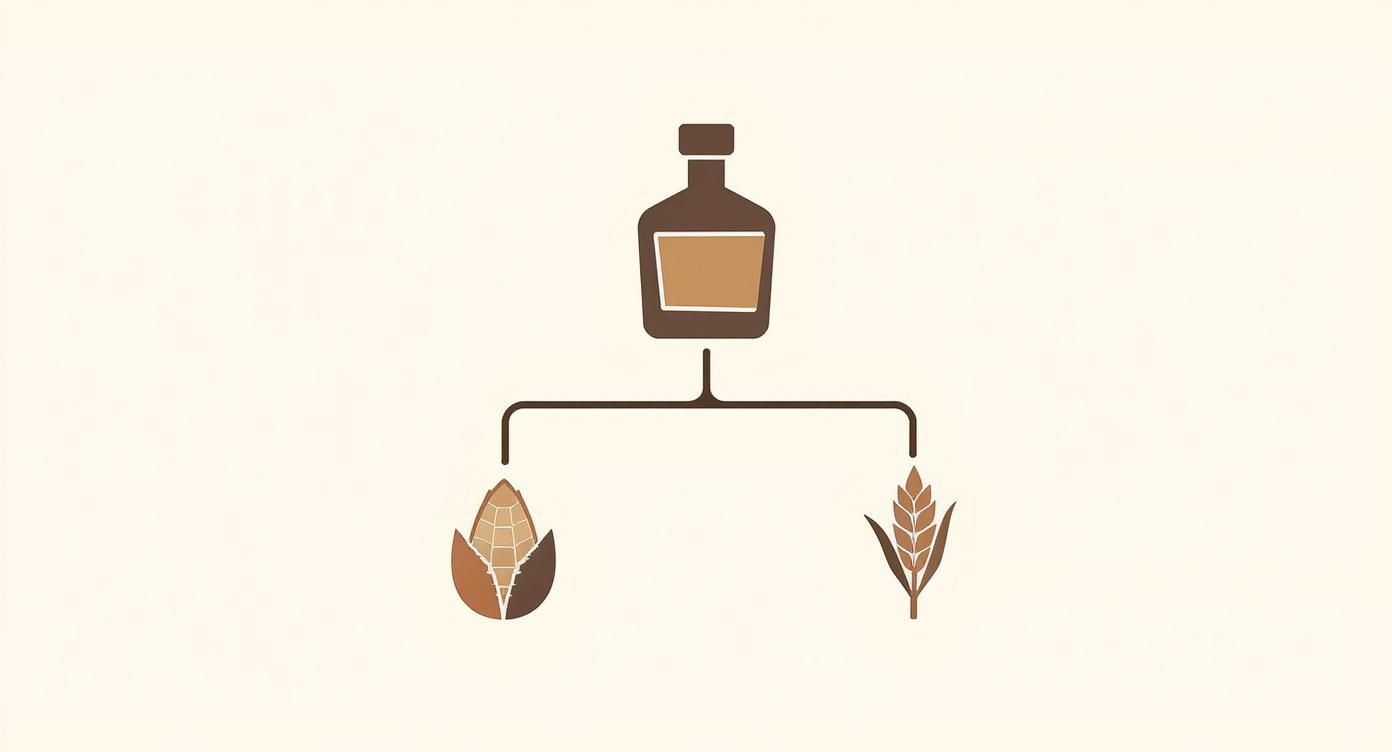
As you can see, both fall under the broad "whiskey" umbrella, but their specific identities are legally tied to that primary grain—corn for bourbon, rye for rye whiskey.
What About "Straight" Whiskey?
You'll often see the word "Straight" on a label, as in "Straight Bourbon Whiskey" or "Straight Rye Whiskey." This isn't just marketing fluff. It’s a legal term that adds another layer of requirements, signifying a higher standard of aging and purity.
To be labeled "Straight," a whiskey must:
- Follow all the base rules for its category (like bourbon or rye).
- Be aged for a minimum of two years in the proper oak containers.
- Contain no added coloring or flavoring.
- If aged for less than four years, it must include an age statement on the label.
A Tip for New Drinkers: When you're just starting out, look for the word "Straight" on the label. It’s a reliable sign that the whiskey has spent enough time in the barrel to develop a more complex and mellow flavor profile, steering clear of the harshness younger spirits can sometimes have.
For a closer look at these legal guardrails, here's a side-by-side comparison.
Legal Requirements Bourbon vs Rye vs American Whiskey
This table breaks down the non-negotiable rules for each category, showing exactly what distillers must do to label their spirits accurately.
| Requirement | Bourbon | Rye Whiskey | General American Whiskey |
|---|---|---|---|
| Primary Grain | At least 51% corn | At least 51% rye | No specific grain majority required |
| Geographic Origin | Must be made in the U.S. | Must be made in the U.S. | Can be made in the U.S. |
| Aging Container | New, charred oak containers | New, charred oak containers | Can be aged in used barrels |
| Max Distillation Proof | 160 proof (80% ABV) | 160 proof (80% ABV) | 190 proof (95% ABV) |
| Max Barrel Entry Proof | 125 proof (62.5% ABV) | 125 proof (62.5% ABV) | No specific maximum |
| "Straight" Minimum Age | 2 years | 2 years | 2 years (if labeled as such) |
| Additives | None allowed (except water) | None allowed (except water) | Coloring and flavoring are permitted |
These legal definitions are more than just technicalities; they are the foundation of the industry's integrity. For a deeper dive into the commercial aspects and regulatory frameworks influencing the spirits world, insights from general beverage industry market research can be invaluable.
These regulations ensure that when you buy a bottle of bourbon or rye, you are getting a product with a guaranteed heritage and production method. They provide clear signposts for your journey of exploring American whiskey.
Comparing the Flavor Profiles of Bourbon and Rye
The legal definitions and mash bill numbers give you the blueprint, but the real story of bourbon versus rye unfolds on your palate. If you move past the simple tags of "sweet" and "spicy," you'll discover a world of complex flavors, all stemming from that primary grain and its long journey inside a charred oak barrel.
The mash bill is the absolute foundation of flavor. Think of it like choosing flour for bread—cornmeal gives you a soft, sweet cornbread, while rye flour makes for a dense, peppery, and hearty loaf. It’s the exact same principle at work in a distillery.
The Classic Sweetness of Bourbon
Bourbon’s entire character is built on its legally required corn base of at least 51%. Corn is loaded with natural sugars, which means the spirit is already sweeter, fuller, and generally smoother right off the still. But the real magic happens when that spirit goes into a new, charred oak barrel.
Inside the barrel, the char layer caramelizes the wood's own sugars, which then slowly seep into the aging whiskey. This interaction is what creates bourbon’s most iconic notes:
- Caramel and Toffee: These are front and center, coming straight from those caramelized wood sugars.
- Vanilla: A compound in the oak called vanillin is released, giving the whiskey a rich, creamy vanilla backbone.
- Dark Fruits: With enough time, you’ll start to taste notes of cherry, fig, and baked apple, adding a delicious fruity depth.
- Oak and Char: A pleasant, toasty foundation that keeps all that sweetness in check.
Tip for New Drinkers: If you have a sweet tooth or just love rich, dessert-like flavors, bourbon is the perfect place to start your whiskey journey. Its inherent sweetness and approachable profile make it incredibly easy to sip and enjoy from the very first taste.
The Impact of Secondary Grains in Bourbon
That other 49% of the mash bill—the "secondary" or "flavoring" grains—is where distillers really get to play and define their bourbon's unique personality. The two most common choices are rye and wheat.
A "high-rye" bourbon uses a healthy dose of rye to cut through the corn's sweetness with a pop of spice. On the flip side, a "wheated bourbon" uses wheat, creating an even softer, gentler, and sometimes bready character.
For a fantastic real-world example of a classic wheated bourbon, you have to look at what craft distilleries like Wilderness Trail Distillery are doing. Their bourbons often have a soft, inviting sweetness that perfectly showcases the gentle touch of wheat, making them an ideal reference for this style.
The Bold Spice of Rye Whiskey
Rye whiskey is bourbon’s assertive, peppery cousin. Its legal minimum of 51% rye grain crafts a profile that’s distinctly drier, spicier, and often more herbal. The rye grain itself contains chemical compounds that produce these signature notes, offering a sharp, invigorating contrast to bourbon’s mellow sweetness.
When you’re tasting a rye whiskey, especially one with a high-rye mash bill, get ready for a vibrant burst of flavor:
- Black Pepper and Baking Spices: Notes of clove, cinnamon, and nutmeg are usually the first things you’ll notice.
- Herbal and Floral Notes: Many ryes bring hints of mint, dill, or even fresh-cut grass to the party.
- Crisp Fruit: Instead of the dark, cooked fruits you find in bourbon, rye tends to lean toward brighter notes like green apple or pear.
- Drier Finish: Rye whiskeys typically finish much cleaner, with less of that lingering sweetness you get from bourbon.
To really wrap your head around this profile, you need to taste a benchmark example. A bottle of High West Double Rye! is a masterclass in what rye is all about. It nails that balance between signature spice and underlying sweetness, giving you a clear picture of what the category can do. For an even deeper dive, our comprehensive guide on rye vs bourbon whiskey breaks down these differences even further.
Once you understand how the main grain shapes the final spirit, you can start predicting what a bottle will taste like before you even pop the cork. This knowledge is your key to picking a whiskey that hits all the right notes for you, whether you’re in the mood for the comforting sweetness of bourbon or the lively spice of a rye.
How Whiskey Is Made From Grain to Glass
The magic in a bottle of bourbon or rye doesn't just happen. It's the result of a deliberate, time-honored journey from a humble pile of grain to the complex spirit in your glass. This process, honed over centuries, is exactly where the core differences between American whiskeys begin to emerge.
By understanding these fundamental steps, you can start to see how a simple recipe of grain, water, and yeast is transformed into something truly special.
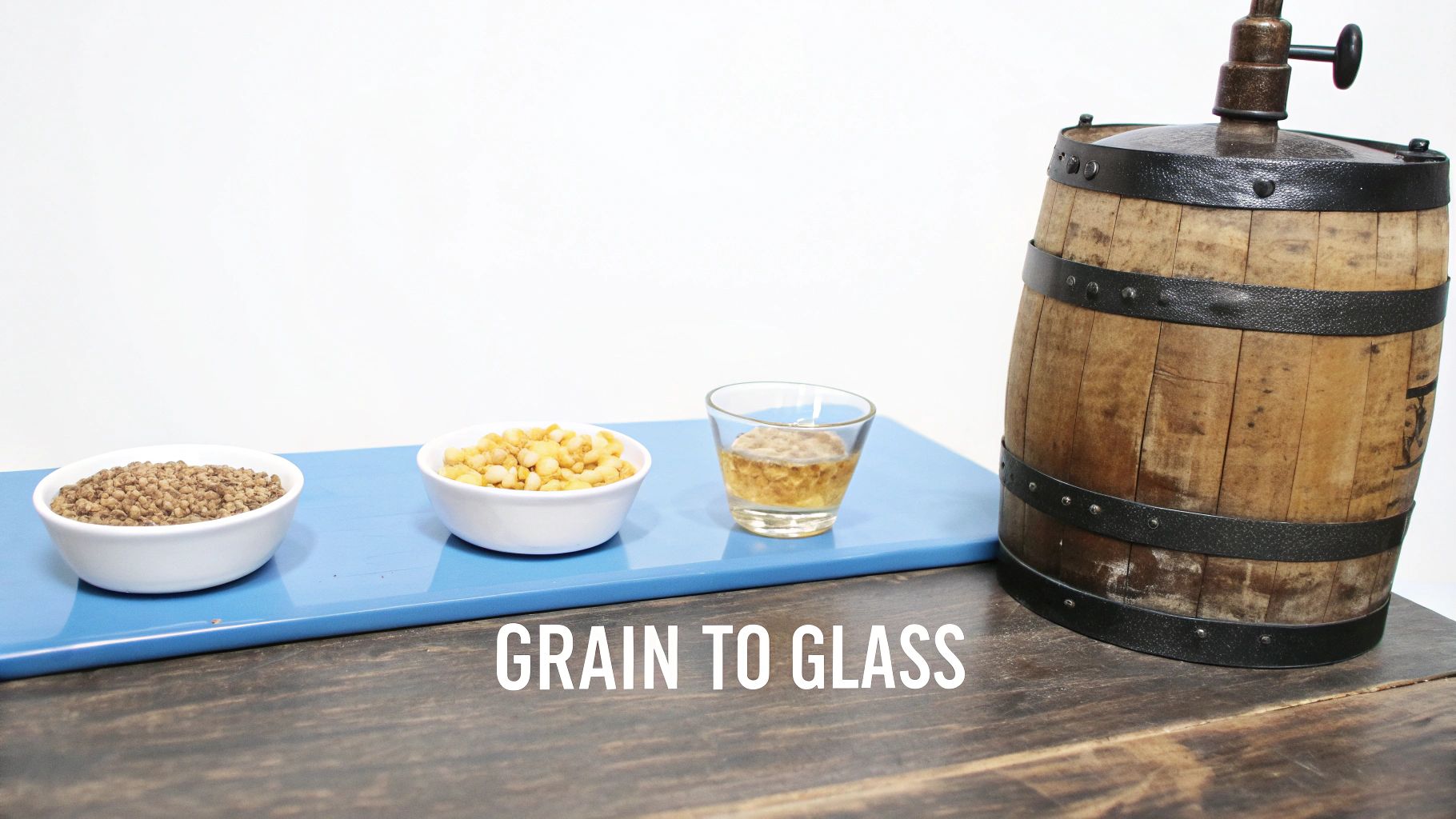
The entire production can be broken down into four critical stages. Each one layers its own distinct character onto the final whiskey.
- Mashing: Grains are cooked in water, converting their natural starches into fermentable sugars.
- Fermentation: Yeast is added to the sweet liquid (the "wort") to kick off alcohol production.
- Distillation: The alcohol is carefully separated and concentrated into a high-proof spirit.
- Maturation: The new spirit is aged in barrels, where it gains the vast majority of its color and flavor.
Mashing and Fermentation
The very first fork in the road is mashing. This is where the distiller's chosen grain recipe—the mash bill—is cooked down into a sweet, porridge-like mixture. For bourbon, that recipe legally requires at least 51% corn, which immediately sets the stage for its characteristic sweetness. Rye mash bills, on the other hand, must start with a minimum of 51% rye, laying the groundwork for a spicier, more assertive spirit.
After the mash cools, yeast gets to work. These tiny organisms feast on the sugars, producing alcohol and carbon dioxide. Different yeast strains can yield an incredible range of flavors, from bright and fruity to earthy and floral, giving distillers one more lever to pull in crafting their unique profile. This is where a bourbon's inherent sweetness or a rye's signature spice really gets locked in before distillation even begins.
Distillation and the Birth of a Spirit
Once fermentation is complete, the alcoholic liquid—now called "distiller's beer"—is moved to the still. Distillation is a process of separation. The liquid is heated until the alcohol turns to vapor, leaving most of the water behind. This vapor is then collected and condensed back into a much higher-proof liquid. The result is a raw, un-aged spirit often called "white dog."
The type of still a distillery uses, whether it’s a traditional copper pot still or a towering modern column still, has a massive impact on the spirit's final character. Each method concentrates flavors differently. You can take a deeper dive into this crucial step by exploring the art of whiskey distillation in our detailed guide. This clear spirit holds the pure essence of its grain—sweet for bourbon, peppery for rye.
Maturation in Charred Oak
The final, and arguably most transformative, stage is maturation. Here, that clear "white dog" evolves into the rich, amber-colored whiskey we know and love. For a spirit to be legally called bourbon or straight rye whiskey, the law demands it be aged in new, charred oak barrels. This single requirement is the most important factor in developing flavor.
The intense charring of the barrel's interior caramelizes sugars in the wood and creates a layer of activated carbon that filters out harsh, undesirable compounds. As the whiskey rests in the warehouse, temperature swings cause it to expand and contract, pushing it deep into the wood and pulling out compounds that create familiar notes of vanilla, caramel, and baking spice.
Tip for New Whiskey Drinkers: Pay close attention to the age statement on a bottle. While older isn't always better, the time spent in the barrel has a direct and profound effect on a whiskey's smoothness and complexity. A two-year-old bourbon will be a completely different animal than a ten-year-old one, having soaked up far more character from the oak.
How to Choose and Drink Your Whiskey
Walking into the whiskey aisle can be a bit intimidating. Rows upon rows of bottles, all vying for your attention. But once you have a little knowledge under your belt, you can stroll in with confidence and pick a bottle that’s just right for your palate.
The choice between bourbon and rye, or any American craft whiskey for that matter, really boils down to one simple question: what kind of flavor experience are you in the mood for tonight? Your answer will point you straight to the perfect section of the shelf.
Choosing Your Bottle Bourbon vs Rye
The two most important factors here are your personal taste and how you plan to drink the whiskey. Let’s walk through a few common scenarios to make your next purchase a guaranteed success.
-
For a Sweet, Smooth Sipper: If you’re looking for something rich, mellow, and easy to enjoy neat, bourbon is your best bet. Its corn-based sweetness, full of caramel and vanilla notes, is naturally inviting. For an even softer profile, look for a "wheated" bourbon from a craft distillery like Laws Whiskey House.
-
For a Bold, Spicy Kick: Prefer a spirit with a bit more attitude and a drier finish? Reach for a rye. You can count on its signature peppery and herbal character to deliver a vibrant, complex sipping experience. An American craft rye, maybe from a place like Leopold Bros., will often showcase the deep, authentic spice that rye lovers crave.
-
For Classic Cocktails: The cocktail you're mixing should absolutely guide your choice. For an Old Fashioned, bourbon’s inherent sweetness is a perfect dance partner for the sugar and bitters. But if you’re making a Manhattan or a Sazerac, rye’s spicy backbone is what you need to cut through the vermouth, creating a perfectly balanced and assertive drink.
Tip for New Drinkers: Don’t feel like you have to jump straight into drinking whiskey neat. The goal is to enjoy it! Start with a classic cocktail or serve it on the rocks to get your palate accustomed to the flavors before you dive into sipping it straight.
A Simple Guide to Tasting
Once you've got your bottle, remember that tasting is an experience, not just a drink. You don't need to be a seasoned expert to pick up on the subtleties in your glass. A few simple steps can elevate your enjoyment and help you figure out what you truly like.
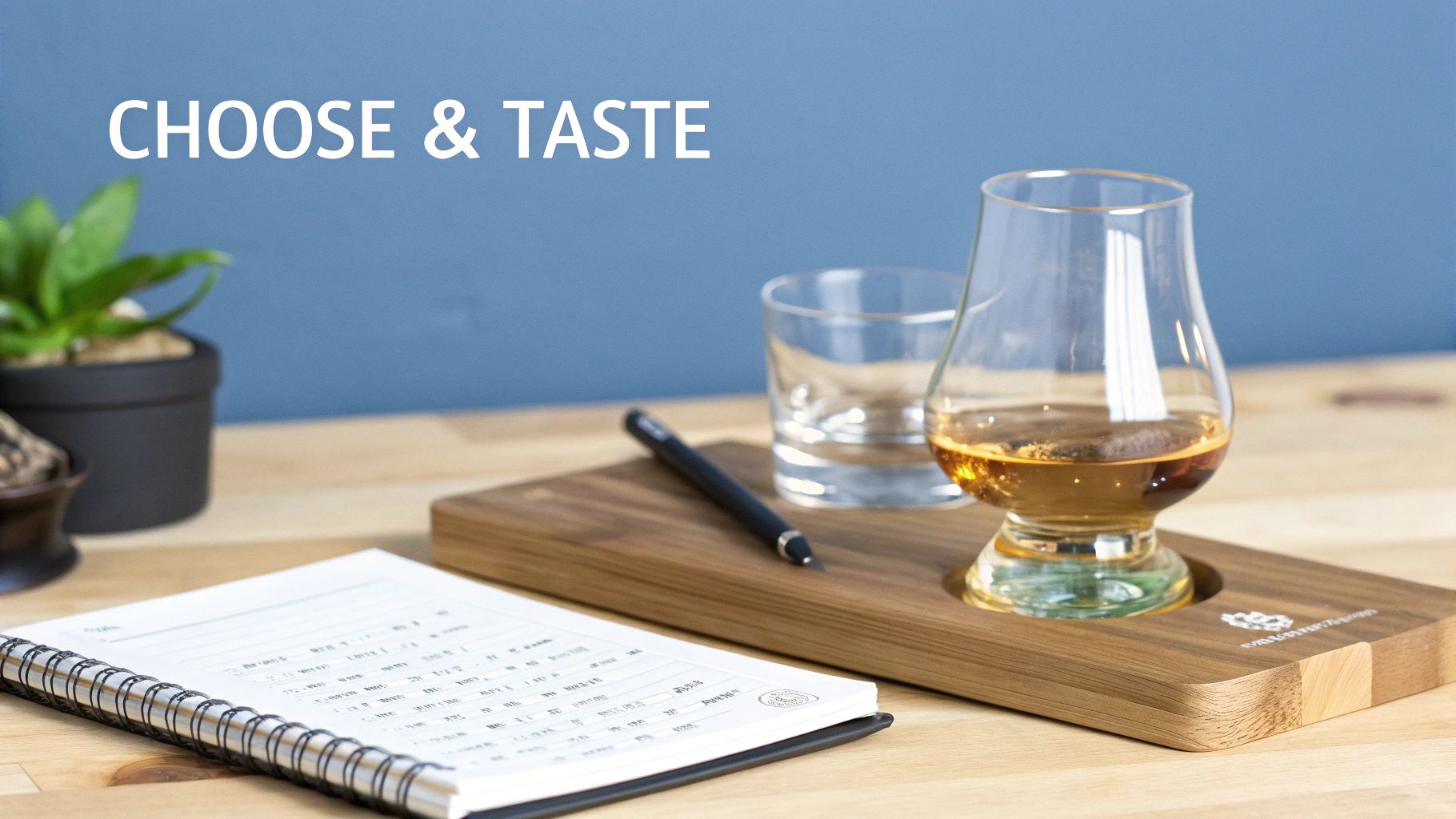
- Choose the Right Glassware: A Glencairn or any tulip-shaped glass is your best friend here. The shape is designed to concentrate the aromas and funnel them right to your nose, giving you a much richer experience than a standard rocks glass.
- Observe the Color: Hold your glass up to the light. The color, ranging from pale gold to deep mahogany, offers hints about the whiskey's age and the type of barrel it called home.
- Nose the Whiskey: Swirl the whiskey gently and bring the glass to your nose, keeping your mouth slightly open. Take small, gentle sniffs to avoid getting hit with pure alcohol vapor. What do you pick up? Sweet caramel? Spicy cinnamon? Fruity cherry?
- Take Your First Sip: Let a small amount of whiskey wash over your entire tongue. Pay attention to the texture, what we call the "mouthfeel." Does it feel creamy and rich, or is it thin and sharp?
- Identify the Flavors: This is where the real fun starts. Try to connect what you’re tasting to the aromas you just identified. Does that caramel on the nose carry through to the palate? Can you taste the black pepper spice you’d expect from a rye?
- Savor the Finish: After you swallow, notice the flavors that linger. That’s the finish. Is it short and clean, or does it hang around with a warm, spicy glow? A long, pleasant finish is almost always the sign of a well-made whiskey.
For those curious about the wider world of spirits, you can even explore their cultural roots through experiences like culinary indulgence tours in Ireland, where local spirits are often a star of the show.
The Power of a Few Drops of Water
Here's a pro tip that makes any whiskey more approachable, especially if you're just starting out. Adding just a few drops of room-temperature water can completely "open up" the spirit.
This simple act slightly lowers the alcohol proof, taming the burn and allowing the more subtle, complex aromas and flavors to step forward. It's the easiest trick in the book for unlocking the hidden depths in your glass.
Common Questions About Bourbon, Rye, and Whiskey
As you dive deeper into the world of American spirits, you're bound to have some questions. We've all been there. The great bourbon vs. rye vs. whiskey debate is a journey, and every enthusiast starts somewhere. Let's tackle some of the most common questions to clear up the confusion and sharpen your whiskey know-how.
These are the quick, clear insights you need to build a solid foundation.
Is All Bourbon From Kentucky?
This is probably the most persistent myth in the entire whiskey world. While it’s true that a whopping 95% of all bourbon hails from the Bluegrass State, it’s not a legal requirement. The law simply states that bourbon must be made in the United States. Period.
Today, you can find fantastic bourbon being produced all across the country. American craft distilleries from Texas to New York are creating exceptional spirits that both honor tradition and explore new frontiers of flavor. Just look at a distillery like Frey Ranch in Nevada—they're crafting award-winning bourbons that showcase a unique sense of place, proving that great bourbon has no state borders.
Which Is Better for Cocktails: Bourbon or Rye?
There's no single "better" option here. It all comes down to the cocktail you're mixing and, frankly, what you're in the mood for. Choosing between bourbon and rye fundamentally changes the entire character of a drink.
- Go with Bourbon for sweeter, richer cocktails. Its classic notes of caramel, vanilla, and oak are a perfect match for an Old Fashioned or a Whiskey Sour, where you want a smooth, mellow base.
- Reach for Rye when you want a sharper, spicier kick. That peppery backbone is essential for balancing the sweet vermouth in a classic Manhattan or for providing the assertive punch needed in a Sazerac.
A Pro Tip: The best way to really get this is to make two Old Fashioned cocktails side-by-side—one with bourbon, one with rye. The contrast will immediately show you how each whiskey’s unique profile plays with the other ingredients. You'll learn more from that simple experiment than any book could ever teach you.
Can Any Whiskey Be Called American Whiskey?
Not exactly. While "American Whiskey" is a broad category, the term is typically reserved for spirits that don't quite fit the strict legal definitions of bourbon or rye. This is where distillers get to play. A whiskey maker might use a mash bill that’s less than 51% of any single grain, or maybe they age their spirit in used barrels instead of new ones.
For example, a distillery might create a fantastic "four-grain" whiskey with a balanced recipe of corn, rye, wheat, and barley. Since no single grain hits that 51% mark, it can't be called bourbon or rye. Instead, it proudly wears the "American Whiskey" label. This category is where you'll find some of the most creative and boundary-pushing spirits from craft distillers today.
Does Higher Proof Mean Better Quality?
Absolutely not. Proof—which is simply double the alcohol by volume (ABV)—indicates strength, not quality. It's purely a matter of preference. While many experienced drinkers seek out higher-proof or "cask strength" bottles for their intense, concentrated flavor, that power can come with a significant alcohol burn that might just steamroll the subtler notes.
On the other hand, lower-proof whiskeys, often bottled around 80 to 90 proof, can be incredibly flavorful, balanced, and easy to sip. If you're just starting out, sticking to lower-proof options is a great way to train your palate to pick out flavors without battling the heat. At the end of the day, the "best" whiskey is the one you enjoy drinking the most, regardless of what the label says.
Ready to put your palate to the test and discover your next favorite craft whiskey? With Blind Barrels, you can move beyond the labels and let your taste buds lead the way. Our blind tasting subscription sends you curated samples from America's best small-batch distilleries, helping you build skills, have fun, and find incredible spirits you won't see on every shelf. Start your tasting adventure today at https://www.blindbarrels.com.