

When you're trying to figure out the bourbon vs whiskey taste, here's the simplest way to think about it: all bourbon is whiskey, but not all whiskey is bourbon.
Bourbon’s flavor profile is reliably sweet, leaning heavily on notes of caramel, vanilla, and oak. This isn't a happy accident; it's the direct result of some very strict legal requirements governing how it's made. Whiskey, on the other hand, is the bigger family. As a global category, it offers a massive spectrum of flavors, from smoky and peaty Scotch to spicy rye or smooth, fruity Irish whiskeys.
What Really Separates Bourbon and Whiskey Flavors
The easiest analogy is to think of "whiskey" as the parent category, like "fruit," and "bourbon" as a specific type, like "apple." An apple is always a fruit, but you can't say all fruit is an apple. In the same way, bourbon is a legally defined type of American whiskey with its own unique rulebook, giving it a distinct character that sets it apart from the rest of the whiskey family.
This chart helps visualize how the whiskey family tree branches out, showing that bourbon is just one of several major flavor profiles you'll encounter.
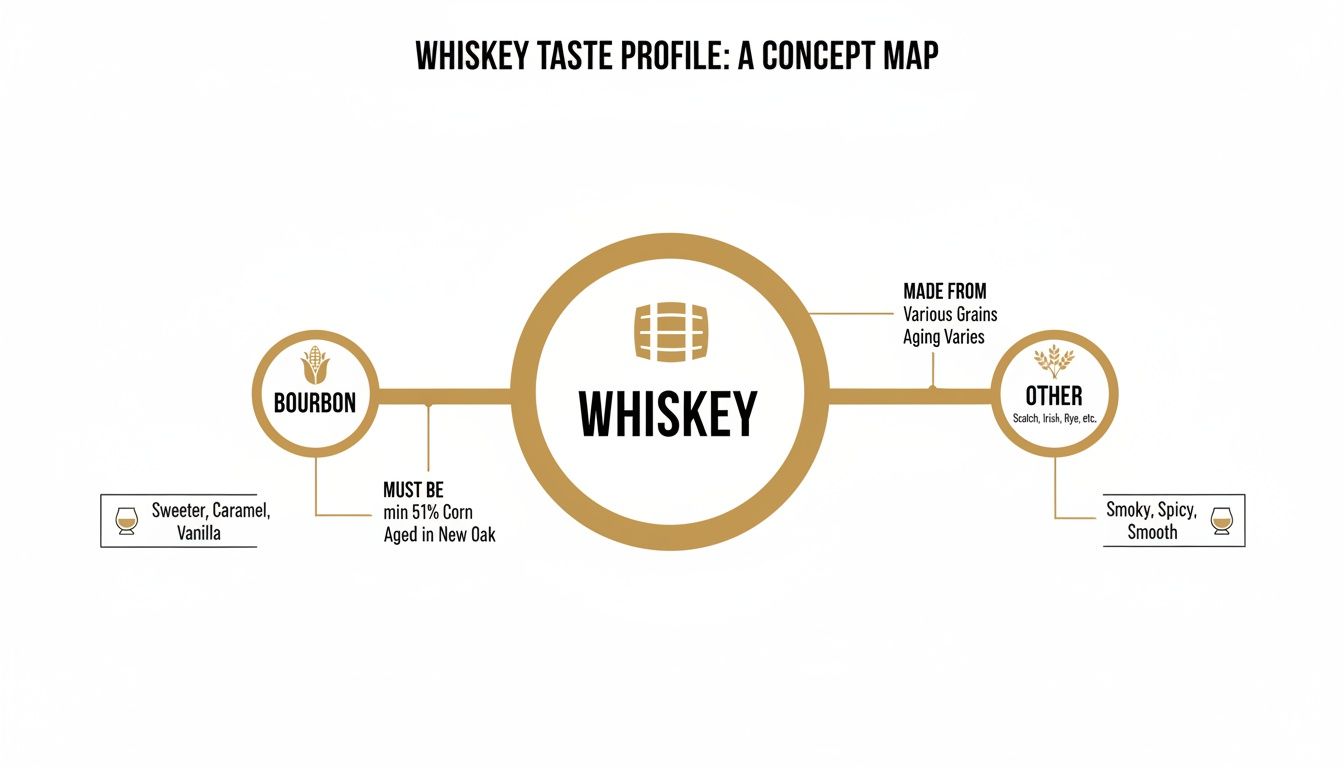
As you can see, while bourbon’s identity is built on its corn-based sweetness, other whiskeys get their core profiles from different grains or processes, creating iconic styles like smoky Scotch or spicy rye.
The Rules That Shape the Taste
For anyone new to whiskey, the best way to understand the taste difference is to look at the laws. These aren't just bureaucratic red tape; they are a recipe for flavor. The U.S. government has a strict checklist for what can be called bourbon, and every single rule directly impacts what you taste in the glass.
At its heart, bourbon is an American spirit defined by its corn-heavy mash bill and maturation in new, charred oak barrels. These two factors alone are responsible for its trademark sweet and robust character.
Meanwhile, whiskeys from places like Scotland, Ireland, or Japan operate under their own sets of rules. They might use different grains like barley, reuse their barrels multiple times, or employ unique distillation methods. This is why the world of whiskey is so wonderfully diverse—there's truly a flavor for every palate.
Even within the U.S., exploring small American craft whiskey brands can show you how distillers innovate both inside and outside these traditional rules.
The table below breaks down the key production rules that create the distinct profiles of bourbon versus the wider whiskey category.
Core Production Rules Shaping Taste: Bourbon vs. General Whiskey
This table summarizes the legal and production requirements that are most responsible for the distinct taste profiles of bourbon compared to the broader whiskey category.
| Production Factor | Bourbon Requirement | General Whiskey (Varies) | Direct Impact on Taste |
|---|---|---|---|
| Primary Grain | Must be at least 51% corn | Can be barley, rye, wheat, or corn | Corn provides sweetness; other grains add spice (rye) or earthy notes (barley). |
| Aging Container | Must be aged in new, charred oak containers | Can be aged in new or used barrels | New oak imparts strong vanilla, caramel, and spice; used barrels offer subtler, more mellow flavors. |
| Geography | Must be made in the United States | Can be made anywhere in the world | Terroir, climate, and local traditions influence aging and final flavor profiles. |
| Distillation Proof | Cannot be distilled over 160 proof (80% ABV) | Varies by country and style | A lower distillation proof retains more of the original grain flavor, creating a richer spirit. |
These production guardrails are precisely why bourbon has such a consistent and recognizable character. While all whiskeys share a common heritage, it's these specific, legally-mandated choices that make bourbon a uniquely American and distinctly sweet spirit.
How Corn Content Defines Bourbon's Sweet Foundation
If you want to get to the heart of what separates bourbon from the wider world of whiskey, it all comes down to a single grain: corn. While other whiskeys build their identity on barley, rye, or wheat, bourbon is legally bound to start its life with a mash bill—the grain recipe—of at least 51% corn. This isn't just a technicality; it’s the very soul of bourbon's flavor.
Corn is packed with natural sugars. When it's distilled and left to age, those sugars lay down a foundational sweetness that has become bourbon’s most famous trait. Think of it like the sweet crust that sets the stage for a great pie. Corn creates that inviting canvas for all the other flavors to build upon.
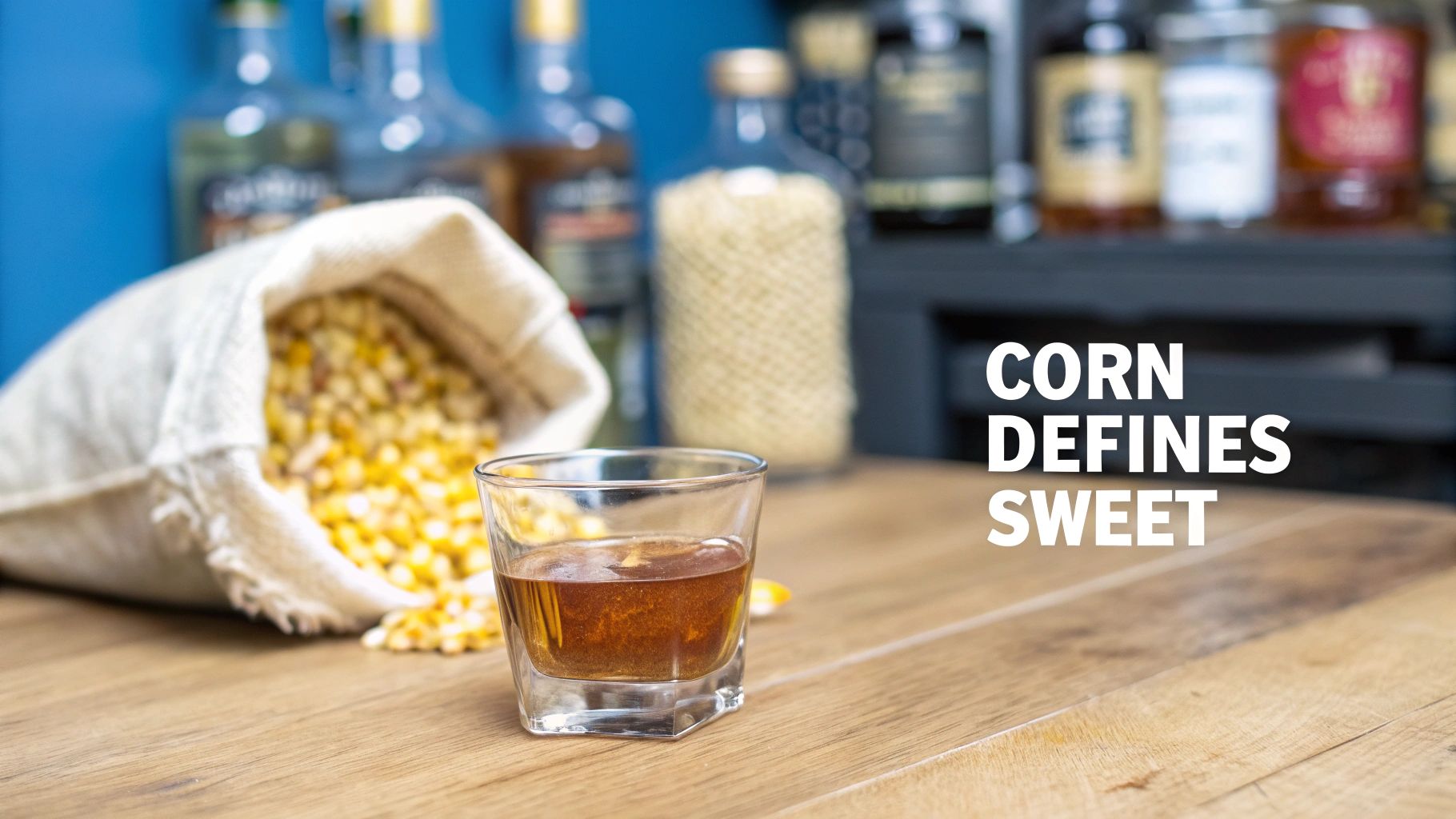
This corn-forward sweetness is exactly what makes bourbon such a fantastic entry point for anyone new to whiskey. Its warm, approachable character is far less of a shock to the system than the smoky punch of a peated Scotch or the spicy bite of a high-rye whiskey.
The Role of High-Corn Mash Bills
While 51% is the legal floor, many distillers crank up the corn content way higher, often landing in the 70-80% range. This is where bourbon’s signature notes of caramel, vanilla, and crème brûlée really start to sing. More corn means more sugars are available to react with the charred oak barrel during aging, which in turn deepens those rich, dessert-like flavors.
For a classic example, just look at a bourbon from a distillery like Heaven Hill, which often uses a mash bill clocking in at 78% corn. That high percentage is a huge reason why their whiskeys are so well-known for those deep, satisfying caramel and brown sugar notes.
Contrasting Corn with Other Grains
To really appreciate what corn brings to the table, it helps to see how it stacks up against the lead grains in other whiskeys. Each one creates a totally different experience in the glass.
- Rye: Famous as the star of American Rye Whiskey, this grain delivers a distinctly spicy and peppery kick. You’ll find sharp, crisp notes of black pepper, clove, and cinnamon. A high-rye bourbon will have a nice spicy finish, but a true rye whiskey puts that spice right up front.
- Malted Barley: The absolute cornerstone of Scotch and Irish whiskey, malted barley gives you a much earthier, cereal-like character. Depending on how it's treated, it can taste bready and nutty or, if dried over peat smoke, deeply smoky.
- Wheat: When used as the secondary grain in "wheated" bourbons, wheat creates a much softer, gentler, and often sweeter profile. It dials down the spice you’d get from rye and brings out delicate notes of honey, fresh-baked bread, and stone fruit.
Tip for New Drinkers: If you find traditional bourbon a little too bold for your liking, try seeking out a wheated bourbon. Brands like Maker's Mark or Larceny offer a smoother introduction, perfectly showcasing how swapping rye for wheat can soften the entire flavor profile.
Ultimately, that high corn content is what makes bourbon, well, bourbon. It’s the reason it stands out in the vast world of whiskey with a sweet, bold, and unapologetically American character. For a deeper look into how distillers craft their unique recipes, you can explore our full guide on the importance of the bourbon grain bill.
Why New Charred Oak Barrels Are a Flavor Game Changer
Beyond the mash bill, the single most significant factor in the great bourbon vs whiskey taste debate is the barrel. While all whiskeys owe much of their flavor to wood, bourbon’s relationship with its barrel is unique and, more importantly, legally mandated. Every single drop of bourbon must be aged in a brand-new, charred American oak barrel.
This isn't just a quirky tradition; it’s a flavor-defining law. Because the barrel has never held another spirit, the whiskey gets full, undiluted access to all the incredible compounds locked inside the wood. The charring process itself is a work of art, caramelizing the natural wood sugars and creating a layer of activated carbon that both filters out harsh elements and unleashes a torrent of flavor.
The result is a consistently bold and oak-forward spirit. This one-and-done barrel rule is precisely why bourbon is famous for its robust notes of vanilla, caramel, coconut, and baking spices. The new wood acts like a powerful flavor engine, working tirelessly to shape the whiskey aging inside.
The Impact of Virgin Oak vs. Used Barrels
This strict requirement for new oak creates a clear dividing line between bourbon and most other world whiskeys. Spirits like Scotch, Irish whiskey, and Japanese whisky almost always mature in used barrels, a practice that is absolutely fundamental to their own distinct character.
So, what kind of used barrels are we talking about? More often than not, they’re ex-bourbon barrels. Once a bourbon barrel is emptied, it can’t be used to make bourbon again. It gets a second life when it’s sold to distilleries around the globe.
This one crucial difference sends the spirits on two completely different maturation journeys:
- Bourbon's Journey (New Oak): The spirit aggressively pulls compounds like vanillin (vanilla), lactones (coconut, woody notes), and caramelized sugars directly from that fresh, virgin wood. The flavor impact is immediate, powerful, and wood-centric.
- Other Whiskeys' Journey (Used Oak): The spirit interacts with a barrel that has already given its most potent flavors to a batch of bourbon. The influence is far more subtle, allowing the spirit's own grain character to shine through while it gently picks up layered notes from the barrel's past life.
This is exactly why a Scotch aged in an ex-bourbon cask might have soft vanilla notes, but they will be far more restrained than the powerful vanilla blast you’d find in a classic bourbon.
The barrel isn’t just a container; it's the most important ingredient. Experts suggest that up to 70% of a bourbon's final flavor and all of its color come directly from its time in a new charred oak barrel.
The taste contrast is undeniable. Bourbon's reliance on 100% new charred oak guarantees a rich infusion of caramel and spice. Meanwhile, whiskeys aged in reused barrels develop more nuanced notes, often influenced by whatever the barrel held before.
A Tip for Newcomers: The Magic of Wheated Bourbon
For anyone just starting their whiskey journey, the intensity of a traditional high-rye bourbon can sometimes be a bit much. The peppery spice from the rye, combined with the powerful oak, creates a very bold profile. This is where "wheated" bourbons offer a perfect, softer introduction.
In a wheated bourbon, the spicy rye is simply swapped for soft winter wheat in the mash bill. This one change has a profound effect on the final taste.
- What it does: Wheat tames the spicy notes, allowing the sweet flavors from the corn and the vanilla from the barrel to come forward more gently.
- Tasting Notes: Instead of black pepper, you'll find notes of honey, baked bread, and a creamier, rounder mouthfeel.
- Why it's great for beginners: It smooths out the rough edges, making the bourbon exceptionally approachable without sacrificing that core caramel and vanilla character.
An excellent example comes from American craft distilleries like Wyoming Whiskey, which produces a highly regarded wheated bourbon. Their spirit showcases how wheat can create a beautifully smooth and accessible profile that still delivers deep, complex flavor. Trying a wheated bourbon is one of the best tips for new whiskey drinkers looking to ease into the category.
For an even closer look at this process, check out our article on the art and science of barrel charring.
Translating Proof and Aging into Flavor and Feel
The numbers on a whiskey label aren't just trivia; they're a direct roadmap to what’s waiting for you in the glass. When you're comparing bourbon vs. whiskey, these stats—proof, age, and even distillation figures—are the key to understanding why bourbon often packs a richer, more robust punch than many of its global cousins. It all boils down to a set of strict rules designed to capture as much flavor as possible from the grain and the barrel.
Think of bourbon's production laws as flavor guardians. The spirit has to be distilled to no more than 160 proof (80% ABV) and must enter a brand-new charred oak barrel at 125 proof (62.5% ABV) or lower. These aren't arbitrary numbers. These lower proof points are crucial because they force more of the original grain character and flavorful congeners—the chemical compounds that create aroma and taste—to carry over from the still and into the barrel.
This process gives you a fuller-bodied, more viscous spirit right out of the gate. In contrast, other whiskeys, especially those made on an industrial scale, are often distilled to much higher proofs, getting closer to pure alcohol. While this makes for a lighter, cleaner spirit, it can also strip away the foundational grain notes that give bourbon its signature heft and complexity.
How Proof Shapes the Tasting Experience
The proof on the bottle is the final piece of the puzzle, telling you just how intense the spirit is. While bourbon must be bottled at a minimum of 80 proof (40% ABV), many of the most celebrated bottles are offered at higher strengths like barrel proof or cask strength. That means zero water was added before bottling.
A higher proof isn't just about more alcoholic heat; it delivers a more concentrated flavor experience. The oils and esters carrying those delicious notes of vanilla, caramel, and spice are simply more present. If you're new to whiskey, a high-proof bourbon might seem intimidating, but a few drops of water or a large ice cube can be a total game-changer. This small bit of dilution "opens up" the whiskey, taming the burn and letting more subtle aromas and flavors step forward.
Tip for New Drinkers: Don't shy away from high-proof bourbon. Pour a little, taste it neat, and then add water drop by drop. You'll be amazed at how the flavor profile evolves until it hits that sweet spot for your palate.
If you really want to get into the weeds of how this key number impacts your drink, you can learn more about what proof means in whiskey and how to use it to your advantage.
The Mellowing Magic of Aging
Aging is where the real transformation happens, turning a raw, fiery spirit into a smooth, complex whiskey. For a bourbon to earn the title “straight bourbon,” it has to spend at least two years in those new charred oak barrels. If it’s aged for less than four years, the age statement is mandatory on the label. This ensures the whiskey has enough time to dance with the wood, softening the harsh edges of the young spirit and building a deep flavor profile.
During its time in the barrel, the whiskey breathes in and out of the oak, pulling out those signature sweet and spicy notes while the charred layer acts as a natural filter for impurities. This is a stark contrast to many other global whiskeys, where aging rules can be far more flexible. For example, many triple-distilled Irish whiskeys are known for their light, honeyed smoothness—a profile achieved with different aging practices and often at lower proofs.
When blind tasters sit down to compare, these stats explain why the experiences can be so different. Bourbon's strict rules amplify its corn sweetness, creating a profile that is worlds apart from other styles.
Brands like Frey Ranch Distillery in Nevada are a perfect example of distillers playing with these elements. By managing their own aging conditions and proofing decisions, they create bourbons that are simultaneously bold and exceptionally smooth—a delicious illustration of how these technical numbers translate directly into an incredible experience.
How to Host Your Own Blind Tasting
Reading about the differences between bourbon and other whiskeys is one thing, but experiencing them firsthand is where the real fun begins. A simple blind tasting is the absolute best way to put your palate to the test, strip away any brand bias, and figure out what you truly enjoy. It’s a surprisingly easy and engaging way to train your senses and pinpoint the specific notes that separate a sweet, corn-driven bourbon from another style of American whiskey.
You don’t need to be a seasoned expert to pull this off. The goal is just to pay close attention and trust your own taste buds. With a few key bottles and a little guidance, you can create a genuinely eye-opening experience for yourself and your friends.
Setting Up Your Tasting
First things first, let's get the logistics sorted out. You only need a few simple things to create a professional-feeling tasting right at home.
- Select Your Whiskeys: Contrast is everything here. To really make the differences pop, pick two distinctly different styles. A fantastic starting point for new drinkers is comparing a classic high-corn bourbon with a spicy American rye whiskey. This pairing makes the unique character of each spirit almost immediately obvious.
- Choose Your Glassware: Always use identical glasses for each sample to get rid of any visual bias. A Glencairn glass is the ideal choice because its shape is designed to concentrate aromas, but a simple rocks glass or even a wine glass will work just fine.
- Pour and Conceal: Pour about a one-ounce sample of each whiskey into its own glass. The easiest way to keep it blind is to have a friend label the bottom of the glasses (e.g., A and B) so you don’t know which is which. You can also just arrange them and keep track of the order yourself.
A great way to showcase this contrast is by featuring an American craft distillery that produces both styles. For instance, Frey Ranch Distillery in Nevada makes both a standout Straight Bourbon and a 100% Straight Rye Whiskey. Tasting them side-by-side is a masterclass in how the same distiller can create dramatically different flavor profiles just by changing the primary grain.
The Four Steps of Tasting
Alright, now for the main event. Follow these four steps for each sample, and really take your time to notice the little details. It's a good idea to keep a small glass of water nearby to cleanse your palate between whiskeys.
- Appearance: Hold the glass up to the light. What’s the color like? Is it a light gold, a deep amber, or a rich mahogany? Bourbon, which is aged in new charred oak, often has a darker hue.
- Aroma: Gently swirl the glass and bring it to your nose. A pro tip for new tasters is to sniff with your mouth slightly open—it helps you avoid getting overwhelmed by alcohol vapors. What do you smell? Sweet vanilla? Spicy cinnamon? Fruity notes?
- Palate: Take a small sip and let it coat your entire tongue. Some people call this a "Kentucky Chew." What flavors come forward first? Is it sweet and caramel-forward, or does it hit you with spice and pepper?
- Finish: After you swallow, pay attention to the lingering taste and sensation. Does the flavor fade quickly, or does it hang around with a warm, spicy finish?
Tip for New Drinkers: Don’t get hung up on finding the "right" answer. The whole point is to identify what you taste. If a bourbon reminds you of caramel corn from a state fair, that's a perfect tasting note—it's personal and memorable.
To help you tell the difference between a classic bourbon and a rye, here’s a quick cheat sheet for what you might find on your tasting journey.
Blind Tasting Cheat Sheet: Bourbon vs. Rye Whiskey
This little guide is designed to help you pinpoint the key characteristics of a classic bourbon versus a typical rye whiskey. Use it to focus your senses during the tasting.
| Sensory Cue | Common Bourbon Notes | Common Rye Whiskey Notes |
|---|---|---|
| Aroma | Vanilla, caramel, brown sugar, toasted oak | Black pepper, cinnamon, mint, dill, baking spices |
| Palate | Sweet corn, crème brûlée, cherry, orange zest | Sharp pepper, rye bread, clove, anise |
| Mouthfeel | Often fuller, rounder, and sometimes creamier | Typically crisper, drier, and more assertive |
| Finish | A warm, lingering sweetness with gentle spice | A long, spicy finish that often tingles |
By zeroing in on these specific cues, you'll quickly learn to pick out the sweet, mellow foundation of bourbon and the signature spicy kick of rye. This hands-on approach is, without a doubt, the best way to move from simply reading about whiskey to truly understanding it.
Answering a Few Common Questions
As you get deeper into the world of bourbon and whiskey, a few questions tend to pop up again and again. Getting these sorted out is the final step in turning what you've learned into a confident tasting experience.
Is Tennessee Whiskey Just a Different Type of Bourbon?
The short answer? Pretty much, yes. A bottle of Tennessee Whiskey like Jack Daniel's checks all the legal boxes to be called bourbon. It’s made with a corn-heavy mash bill and rests in brand-new charred oak barrels. But, there’s one extra step that makes all the difference: the Lincoln County Process.
Before the new spirit goes into the barrel, it’s filtered very slowly through several feet of sugar maple charcoal. This mellows out the whiskey, stripping away some of the harsher notes while adding a signature smoothness and a touch of sweetness. While it's technically its own category, the flavor profile is a very close cousin to traditional bourbon.
What’s a Good Way for a Beginner to Start Drinking Bourbon?
Easing into bourbon is the best way to develop a taste for it. The best advice for anyone new to whiskey is to start with a lower-proof bourbon, something in the 80-90 proof range. This lets you acclimate your palate to the flavors without getting blasted by alcohol heat right away.
Another great move is to look for "wheated" bourbons. In these whiskeys, wheat takes the place of rye in the mash bill, which softens the spice and creates a much gentler, often sweeter, flavor profile. American craft distilleries like Wyoming Whiskey make some excellent ones that are perfect for getting started.
Beginner's Tip: Always try your first sip neat to get a sense of the whiskey's true character. After that, add a big ice cube or just a few drops of water. This little bit of dilution can really open up the aromas and make the spirit more approachable.
Why Does Bourbon Taste So Different from Scotch?
The massive flavor gap between bourbon and Scotch really boils down to two things: the grain and the barrels. Bourbon gets its hallmark sweetness from two sources: its mash bill, which has to be mostly corn, and its aging process, which must take place in brand-new charred oak barrels.
Scotch, on the other hand, is usually made from malted barley, giving it a distinct cereal or biscuity flavor. On top of that, many Scotches—especially those from the Islay region—are famous for using peat smoke to dry the barley. This process injects powerful smoky, earthy, and even medicinal notes that you’ll never find in bourbon, creating a completely different world of flavor.
Ready to put your palate to the test and figure out what you truly like? There's no better way to understand the real differences between bourbon and other American whiskeys than by tasting them blind. Blind Barrels sends a curated blind tasting experience right to your door, packed with incredible spirits from the country's best craft distilleries. It's time to remove the bias, trust your taste, and discover your next favorite whiskey. Check it out at https://www.blindbarrels.com.