

When you're standing in the whiskey aisle, the choice between bourbon and rye can feel like a classic crossroads. The real difference boils down to a single, crucial ingredient: the grain. Think of bourbon as the sweet talker, full of corn-fueled caramel and vanilla. Rye, on the other hand, is its spicier cousin, bringing a peppery punch to the party. This one ingredient change in the mash bill is what gives us two completely distinct, yet equally iconic, American whiskeys.
A First Look at Bourbon and Rye
For anyone new to the whiskey world, telling bourbon and rye apart might seem like a tall order, but it’s simpler than you might think. Both are pillars of American distilling, but their core grain dictates their entire personality. Bourbon’s signature sweetness is no accident; by law, its mash bill must contain at least 51% corn, a grain famous for producing sugars during fermentation. The result is a smoother, often richer spirit that’s perfect for those who prefer a less aggressive flavor.
Rye whiskey, as you’d expect, has to be made from at least 51% rye grain. Rye is a much heartier, spicier grain that lends notes of black pepper, cinnamon, and clove, often finishing with a distinct dryness. This assertive character makes rye a bartender's favorite, especially in cocktails where the whiskey needs to stand up to other bold ingredients.
Bourbon vs Rye at a Glance
To make it even simpler, here’s a quick side-by-side comparison that breaks down the defining traits of bourbon and rye.
| Characteristic | Bourbon Whiskey | Rye Whiskey |
|---|---|---|
| Primary Grain | At least 51% corn | At least 51% rye |
| Typical Flavor | Sweet, smooth, caramel, vanilla | Spicy, peppery, baking spices |
| Common Notes | Toasted oak, honey, toffee | Black pepper, cinnamon, dill, drier finish |
| Signature Cocktail | Old Fashioned | Manhattan |
This table gives you the essential cheat sheet for understanding what makes each whiskey unique, from its base ingredient to its classic cocktail pairing.
Bourbon has long been the reigning king of American whiskey. Market data shows bourbon commands a powerful 28.5% share of the total U.S. whiskey demand, largely thanks to its approachable, easy-sipping flavor profile. With the global bourbon market hitting $8.79 billion and still climbing, its popularity isn't fading anytime soon. You can dive deeper into the numbers by exploring more on American whiskey market trends.
This infographic really nails the core flavor difference between these two American classics.
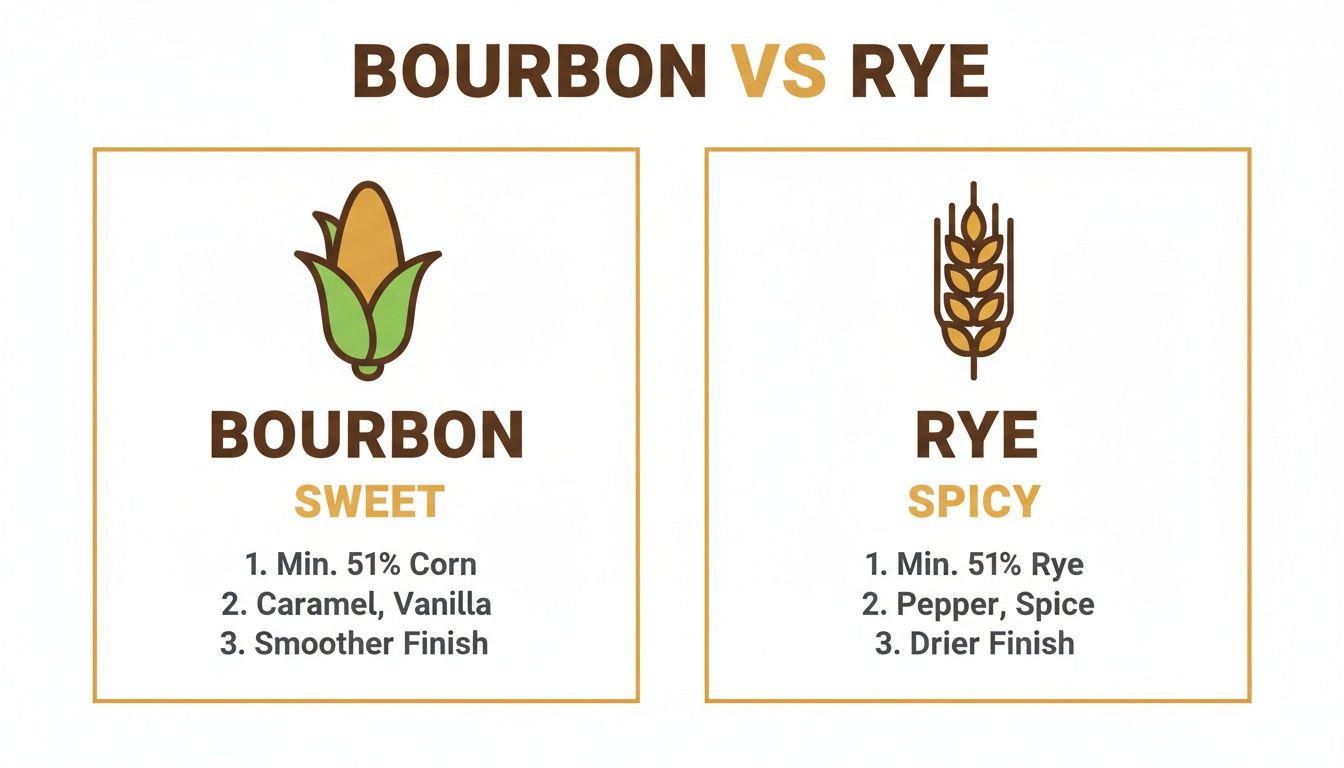
The image drives home the main takeaway for anyone starting their whiskey journey: bourbon means sweet corn, and rye means spicy grain. Simple as that.
Tip for New Drinkers: If you generally lean toward sweeter flavors in your food and drinks, you can't go wrong starting with a classic bourbon. But if you enjoy a little spice or the complexity of savory herbs, a bottle of rye from an exceptional American craft whiskey brand like Frey Ranch Distillery could be the perfect way to kick off your exploration.
The Legal Rules That Define Bourbon and Rye
To really get the difference between bourbon and rye, you have to look past your personal taste and crack open the legal rulebook. In American whiskey, these rules aren't just gentle suggestions; they're strict Standards of Identity that dictate what can legally be called "bourbon" or "rye." This framework is the playground—and the boundary—for every distiller, from the old Kentucky giants to the new craft upstarts.
The most famous rule, the one at the very heart of the bourbon vs. rye debate, is all about the mash bill—the grain recipe that starts it all.
- For Bourbon: The recipe has to be at least 51% corn. That high corn content is exactly where bourbon gets its signature sweetness and those classic caramel and vanilla notes.
- For Rye: The recipe has to be at least 51% rye grain. This is what gives rye whiskey its iconic spicy, peppery punch and an often drier finish.
This one simple requirement is the fundamental fork in the road, sending each whiskey down a completely different flavor path from the moment it's conceived.
Beyond the Mash Bill
While that 51% rule gets all the press, a few other shared regulations are just as important in shaping both spirits. These rules are all about ensuring a high standard of quality and consistency across the board for American whiskey. For any new whiskey drinker, understanding them is key to appreciating the craft.
Both bourbon and rye have to be distilled to no more than 160 proof (80% alcohol by volume). This cap is crucial because it keeps the delicate flavors from the grain from being stripped away. If you distilled it much higher, you'd end up with a neutral spirit that’s closer to vodka than whiskey.
From there, the new spirit must go into the barrel for aging at no more than 125 proof (62.5% ABV). This step is all about flavor extraction from the wood. A higher entry proof would pull different, often harsher, compounds from the oak and completely change the final taste.
A Quick Tip for New Drinkers: Don't get lost in the numbers. Just remember these proof rules exist to guarantee the whiskey you’re sipping is packed with character that comes directly from its ingredients and the barrel it grew up in.
The Crucial Role of the Barrel
Maybe the most important rule they both share, right after the mash bill, involves the aging process. Both bourbon and rye must be aged in new, charred oak containers. This is a uniquely American thing that sets them apart from world whiskies like Scotch, which often use second-hand barrels.
Using a brand-new barrel every single time means that each batch of whiskey gets the full, unadulterated flavor impact from the wood. The charring process caramelizes the wood's natural sugars, creating the vanilla, toffee, and smoky notes that are the hallmarks of both spirits. And if a bourbon wants to be labeled "Straight Bourbon," it has to hang out in that barrel for at least two years.
This strict framework is actually where American craft distilleries really get to shine. By playing with that "other" 49% of the mash bill, using unique yeast strains, or getting creative with aging, distillers like Starlight Distillery in Indiana can craft bourbons and ryes that are both legally compliant and wonderfully unique.
The dynamic between these two whiskeys is always evolving. Bourbon has been America’s sweetheart for a long time, but rye's explosive comeback is a story of bold flavor reclaiming its place. Once nearly extinct, rye volumes have skyrocketed an incredible 1275% since 2009, all thanks to a daring, peppery profile that sings in cocktails and stands proudly on its own. You can dig into the data behind rye's remarkable comeback to see the full picture.
Decoding the Flavor Profiles of Corn and Rye
Sure, the legal definitions give us the blueprint, but the real story in the bourbon whiskey vs rye whiskey debate happens on your palate. The main grain in that mash bill is the star of the show, pulling the final spirit in a very specific direction. This is where we get past simple words like "sweet" or "spicy" and really dig into the notes that make these whiskeys what they are.
Getting a handle on these basic flavors is the first step for anyone new to whiskey. It gives you the language to talk about what you're tasting and, more importantly, figure out what you actually like.
The Sweet Embrace of Corn in Bourbon
Bourbon's personality starts with its legal minimum of 51% corn. As it ferments and gets distilled, corn just naturally brings out sweeter, softer, rounder flavors than other grains. Then, when that spirit hits a brand-new, charred oak barrel, the magic really begins.
The sugars from the corn-heavy spirit get to know the caramelized wood sugars from the barrel's char, and that interaction is what creates bourbon's classic tasting notes. We get deep into how a bourbon mash bill shapes these flavors in our full guide.
You'll almost always find these notes in a glass of bourbon:
- Caramel and Toffee: These are the big ones, coming straight from those wood sugars.
- Vanilla and Custard: Oak barrels are full of compounds like vanillin that add a creamy, dessert-like sweetness.
- Honey and Brown Sugar: Softer sweet notes that often come directly from the corn itself.
- Charred Oak and Leather: A nod to its time in the barrel, giving it a rich, savory foundation.
“With bourbon, you’re always chasing that perfect balance between the grain’s sweetness and the oak’s influence. The corn gives it that soft, welcoming hug, while the barrel provides the structure and depth. It’s a classic American flavor profile for a reason.”
For someone just starting their whiskey journey, a bourbon like the one from Limestone Branch Distillery is a perfect first step. It's approachable, with those familiar caramel and vanilla notes that make it a great training ground for your palate.
The Spicy Signature of Rye Whiskey
Rye whiskey is a whole different animal, but just as fantastic. The law says it must have at least 51% rye grain, which creates a spirit that’s naturally spicier, more herbal, and a little more aggressive. The rye grain itself has compounds called phenols that come across as peppery, clove-like notes in the glass.
That built-in spice is exactly why rye was the go-to for so many classic cocktails—it doesn't get bullied by mixers. It also tends to have a drier finish that cleans up the palate, making it a favorite for drinkers who aren't looking for a ton of sweetness.
The usual suspects in a rye's flavor profile include:
- Black Pepper and Peppermint: A sharp, tingling spice that is pure rye.
- Baking Spices: Think cinnamon, nutmeg, and allspice—it's very common.
- Herbal and Floral Notes: Depending on the mash bill, you might get hints of dill, mint, or even light floral tones.
- Dark Fruit: A well-aged rye can develop some really nice cherry or plum notes that play off the spice beautifully.
You can see this style on full display in the fantastic rye coming out of New Riff Distilling in Kentucky. They are all-in on high-rye mash bills that really let the grain's powerful, spicy side shine while keeping things balanced and sophisticated. Trying a rye like theirs helps you see how spice can be complex and layered, not just one-dimensional heat.
At the end of the day, it's all about what you prefer. Do you lean toward the rich, comforting sweetness of a corn-led bourbon? Or are you looking for the bold, peppery kick of a rye? There's only one way to find out for sure.
Choosing the Right Whiskey for Cocktails and Food
Knowing the difference between bourbon and rye is one thing, but actually putting that knowledge to the test is where the fun really begins. Whether you're stirring up a classic cocktail or sitting down to dinner, the choice between sweet corn and spicy rye leads to two completely different experiences. The whole bourbon whiskey vs rye whiskey debate really just boils down to one question: what are you trying to accomplish with your drink or meal?
If you're just starting your whiskey journey, playing with pairings is one of the best ways to train your palate. It forces you to pinpoint specific notes by seeing how they dance with other flavors.
Classic Cocktails: Bourbon's Sweet Spot
When you're shaking or stirring, bourbon’s natural sweetness makes it the perfect base for drinks that need a rich, smooth character. Those signature notes of caramel, vanilla, and oak are practically made for balancing out bitters and citrus.
This is exactly why bourbon is the undisputed champion of the Old Fashioned. The whiskey’s sweetness melts into the sugar and stands up perfectly to the aromatic bitters, creating a seamless, integrated classic. It’s also the go-to for a Whiskey Sour, where its mellow side soothes the sharp bite of lemon juice.
Tip for New Drinkers: If it's your first time making an Old Fashioned, grab a classic, approachable bourbon. A solid craft choice like the straight bourbon from Laws Whiskey House in Colorado delivers that quintessential sweet and oaky foundation that makes the cocktail a timeless icon.
The Power of Rye in Mixology
Rye whiskey brings a totally different kind of energy to the bar. Its spicy, peppery, and often drier profile is built for cocktails that need a spirit with a serious backbone—something to cut through other big flavors. Rye doesn't just show up to the party; it makes an entrance.
The ultimate rye cocktail has to be the Manhattan. The whiskey’s spice provides the perfect counterpunch to the sweet vermouth, and its drier finish stops the whole thing from becoming too syrupy. It’s also a star in a Sazerac, where its peppery kick is turned up to eleven by the absinthe rinse and Peychaud's bitters.
A fantastic example of a cocktail-ready rye is the 95% rye mash bill from Sagamore Spirit in Baltimore. It packs enough punch to make its presence known in any recipe while still being refined enough to sip on its own.
Perfect Pairings: Bourbon and Rich Foods
Moving from the bar to the dining room, bourbon's sweet and smoky character makes it a dream partner for rich, savory, and even slightly sweet dishes. The whiskey’s caramel and vanilla notes act almost like a complementary sauce, enhancing similar flavors on the plate.
Think about these quintessential bourbon pairings:
- Barbecue: Pulled pork or brisket slathered in a sweet, smoky sauce is a match made in heaven. The char notes from the barrel echo the smokiness of the meat.
- Grilled Steak: A beautifully charred steak doesn't need much, but it finds a perfect partner in a robust bourbon. The spirit’s richness just melts into the fat of the meat.
- Desserts: Anything with caramel, chocolate, or pecans gets an instant upgrade with a glass of bourbon. We're talking bread pudding, chocolate lava cake, or a classic pecan pie.
Rye Whiskey and Savory Flavors
Rye's spicy, herbal side makes it the right tool for the job when you need to cut through rich, savory, and funky flavors. That peppery bite cleanses the palate, making every bite of food taste as vibrant as the first. This is where rye really sets itself apart from its sweeter cousin.
Explore these pairings to see just how versatile rye can be:
- Smoked Meats and Cured Sausages: The spice in rye is bold enough to stand up to the intense flavors of pastrami, salami, or even smoked salmon.
- Sharp Cheeses: A gutsy rye is incredible with aged cheddar, Gruyère, or a funky blue cheese. The whiskey’s spice creates a beautiful contrast with the cheese's creamy tang.
- Spicy Dishes: The herbal notes found in many ryes can complement the complex heat in certain spicy foods, adding another layer of flavor instead of just fighting the fire.
For a deeper dive into the world of culinary combinations, our complete guide on pairing food with whiskey offers plenty more ideas to take your dining experience to the next level.
Putting Your Palate to the Test With Blind Tasting
You’ve read up on the legal definitions, the mash bill requirements, and the classic flavor profiles. You might feel like you’ve got the whole bourbon versus rye debate figured out. But all that knowledge is just theory until you actually put it to the test.
The best way—and I mean the single best way—to truly understand the difference and figure out what you genuinely like is to remove the biggest variable in the room: your own expectations.
This is where blind tasting becomes your greatest tool. When you don’t know the brand, the price, or even if it’s bourbon or rye in your glass, all you have left is the whiskey itself. It’s an honest, unfiltered conversation between the spirit and your senses, forcing you to focus on aroma, taste, and finish without any preconceived notions muddying the waters.
For newcomers to whiskey, this is an incredible confidence booster. It’s proof that you don’t need to be a seasoned expert to know what you enjoy—you just have to trust your own palate.
Setting Up a Simple Home Tasting
You don’t need a fancy, elaborate setup to host a meaningful blind tasting. The real goal is just to strip away bias and let the whiskeys compete on a level playing field. Plus, it’s a fantastic way to learn and have some fun with friends or a partner.
Here’s a dead-simple way to get started:
- Select Your Whiskeys: Grab one classic bourbon and one classic rye. To start, you’ll want bottles that are good, solid representatives of their style. For example, you could pit a bourbon from a craft distillery like FEW Spirits against a rye from Dad's Hat Pennsylvania Rye Whiskey.
- Pour and Conceal: Have someone else pour about an ounce of each into identical glasses while you’re out of the room. They can mark the bottom of the glasses with a simple "A" and "B" to keep track.
- Arrange the Tasting: Once they’re poured, the glasses are brought to you. Now, you have no clue which is which. All you see are two glasses of American whiskey, ready for an honest evaluation.
This simple act of concealing the bottle is incredibly powerful. It quiets that voice in your head that says, "I've heard this brand is good," or "Rye is supposed to be spicy," forcing you to rely only on what you're actually experiencing in that moment.
How to Taste Like a Pro
With your two mystery whiskeys in front of you, it's time to analyze them side-by-side. The key here is to be methodical, take a few notes, and compare each aspect directly. Don’t be afraid to go back and forth between the glasses at each step.
Visual Observation
First, just look at them. Hold the glasses up to a light source. Is one darker than the other? Color can offer clues about age or barrel influence, but don't jump to any conclusions just yet.
Nosing for Aromas
This is arguably the most critical part of the process. Give the glass a gentle swirl to release the aromas and bring it to your nose.
- Take short, light sniffs. You don't want to overwhelm your senses.
- Does Glass A have those classic sweet notes of caramel, vanilla, or baked bread?
- Does Glass B hit you with something sharper and spicier, maybe black pepper, mint, or cinnamon?
- Jot down every scent you can pull out, no matter how subtle.
The Tasting Palate
Finally, take a small sip. Let it coat your entire mouth for a few seconds before you swallow.
- What’s the initial flavor that hits you? Is it sweet corn and rich oak, or does it have that distinct spicy tingle?
- Think about the mouthfeel. Is the whiskey thin and crisp, or does it feel more oily and viscous on your tongue?
- Pay close attention to the finish. After you swallow, what flavors linger? Is it a long, warm, sweet finish, or a quick, dry, peppery one?
By the time you're done, you'll have a much clearer picture of which one you preferred based on pure sensory experience alone. Only then should you do the big reveal. You might just surprise yourself and discover you love the spicy kick of rye more than you thought, or that a particular bourbon’s sweetness is exactly what you’ve been looking for. This is how you build a real understanding of your own preferences, one sip at a time.
For anyone looking to take this a step further, exploring a curated blind whiskey tasting kit can be a fantastic, structured way to continue your journey.
How to Buy and Gift Bourbon and Rye
Choosing the right bottle of whiskey, whether for your own shelf or as a gift, really comes down to context. The whole bourbon whiskey vs rye whiskey debate gets a lot simpler when you ask a couple of basic questions: Who are you buying for, and what's the occasion? Figuring that out is the key to picking a bottle that tells a story and delivers a memorable pour.
If you're buying for someone just dipping their toes into the whiskey world, approachability is everything. You want a bottle that captures the essence of its style without being a full-on sensory assault.
- Starter Bourbon: A classic "wheated" bourbon is a fantastic starting point. The wheat in the mash bill really softens the spirit, making for a smoother, gentler profile. Look for something from a distillery like Still Austin; they make some excellent examples that are heavy on the sweet corn and vanilla notes—a perfect, easygoing introduction.
- Starter Rye: Find a rye with a mash bill that’s just over the 51% legal minimum. This gives you that signature rye spice without the aggressive punch of higher-rye whiskeys, offering a balanced and flavorful first taste.
Gifting for the Evolving Palate
Once someone has their whiskey legs under them, you can start exploring bottles with more complexity and character. This is your chance to introduce them to the more nuanced expressions coming out of innovative American craft distilleries.
For a bourbon lover looking to branch out, a "high-rye" bourbon is the perfect next step. These bottles, often containing 20-35% rye, beautifully bridge the gap between the two styles. If you're shopping for a cocktail enthusiast, a bold, assertive rye is practically a requirement. Keep an eye out for a rye whiskey labeled "Bottled-in-Bond" or from a distillery like Leopold Bros., which is known for producing robust, cocktail-ready spirits that won't get bullied by other ingredients in a Manhattan.
When you need a truly standout gift for a seasoned connoisseur, start hunting for single barrel or barrel-proof offerings from small, independent producers. These are pure, undiluted, and often unfiltered expressions of a single cask—a totally unique flavor profile that can never be replicated.
And don't forget that presentation matters, especially for a gift. A stylish glass front outdoor beverage cooler can be a fantastic addition to an entertainment space, keeping whiskeys and mixers perfectly chilled for guests. At the end of the day, the best bottle is the one you put some thought into, matching the whiskey's character to the drinker's own.
Even after you get the basics down, the world of American whiskey always seems to have a few more questions lurking. Let’s tackle some of the most common ones that pop up in the great bourbon whiskey vs rye whiskey debate. Here are some straightforward answers to clear things up.
Can Bourbon Be Made Outside of Kentucky?
Yes, it absolutely can. While Kentucky is the undisputed heartland of bourbon, the only legal requirement is that it must be made somewhere in the United States.
You can now find incredible bourbons coming from craft distilleries all over the country, from New York all the way down to Texas. This geographic diversity is one of the most exciting things happening in the modern American whiskey scene. It shows how regional grains and climates are shaping spirits far beyond the traditional bourbon belt.
What Is a High-Rye Bourbon?
A "high-rye" bourbon is a style of bourbon that cranks up the rye content in its mash bill, usually somewhere in the 20-35% range. It still meets the legal minimum of 51% corn, but that extra dose of rye gives it a spicy, peppery kick.
Think of it as the best of both worlds. It’s a great choice for drinkers who love the foundational sweetness of a classic bourbon but are looking for a little more complexity and edge.
Is One Whiskey Better for Sipping Neat?
Not at all. Which one is "better" for sipping neat is purely a matter of personal taste. There’s no right or wrong answer here.
Bourbon’s generally sweeter, richer profile often comes across as smoother and more approachable for sipping straight. On the other hand, rye’s bolder, spicier character is a huge draw for those who want a more robust and challenging flavor experience.
Tip for New Drinkers: The only way to know for sure is to try them side-by-side. A blind tasting is the ultimate test, letting your palate decide without any preconceived notions getting in the way.
Are All Rye Whiskeys Spicy?
While spice is rye's signature calling card, the intensity can vary dramatically from one bottle to the next. A rye that just barely meets the 51% legal minimum will be far less spicy than a "95/5" rye (that's 95% rye, 5% malted barley), which will be a full-on spice bomb.
Aging also plays a huge part. A well-aged rye often mellows out, allowing those spicy notes to integrate with deeper flavors of fruit, toffee, and oak. Exploring different craft distilleries is the best way to see the full spectrum of what rye whiskey can be.
Ready to put your own palate to the test and figure out which style you truly prefer? The Blind Barrels tasting experience is designed to strip away all the brand bias and marketing noise, so you can focus on one thing: flavor. Each kit is packed with curated samples from some of America’s best craft distilleries, helping you discover your next favorite whiskey the honest way. Start your blind tasting adventure today.