

If you've ever wondered what makes one bourbon spicy and another soft and sweet, the answer almost always starts with the bourbon mash bill. Think of it as the bourbon’s unique DNA, or its foundational recipe.
It’s a lot like baking bread. The specific blend of flours you use determines whether you end up with a sweet brioche, a spicy rye, or a soft white loaf. The mash bill does the same for bourbon.
What a Bourbon Mash Bill Actually Is
At its heart, a mash bill is the mix of grains—corn, rye, wheat, and barley are the usual suspects—that a distiller cooks to kick off the whole whiskey-making process. This grain "soup," or mash, gets fermented, distilled, and then tucked away in barrels to age. It sounds simple, but the exact percentages of each grain have a huge impact on the final taste in your glass.
There's one rule in the world of bourbon that’s absolutely non-negotiable. To be called bourbon, the mash bill must contain at least 51% corn. This is the law of the land.
That corn is what gives bourbon its signature sweetness, laying down those familiar notes of vanilla, caramel, and a rich, full-bodied character that we all know and love. It's not just a tradition; it’s a legal requirement that defines the spirit. To dig deeper into these distinctions, check out our guide on what makes a whiskey a whiskey.
The Art of the Other 49 Percent
While corn provides that sweet backbone, the real magic happens in the remaining 49% of the recipe. This is where distillers—from small American craft producers to the big legacy distilleries—get to play and define their unique style.
The flexibility in the remaining 49% allows for a vast number of possible mash bill combinations—over 125,000 if only three grains are considered.
This smaller portion of "flavoring grains" is what creates the incredible diversity we see in the bourbon world. By tweaking the amounts of rye, wheat, and malted barley, a distiller can steer the final spirit in wildly different directions:
- Spicy and Bold: This profile comes from adding a healthy dose of rye to the mash bill.
- Soft and Gentle: This is achieved by swapping rye for wheat as the secondary grain.
- Perfectly Balanced: The classic approach often uses a modest amount of rye for a touch of complexity without overwhelming the corn's sweetness.
A congressional resolution from 1964 not only cemented bourbon's identity but also gave distillers a creative framework to innovate within. Every bourbon you’ve ever tasted, from the smoothest sippers to the spiciest drams, owes its character to this simple, yet powerful, grain recipe.
The Flavor Grains That Shape Your Bourbon
We’ve established that a bourbon mash bill is the spirit's core recipe, so now let's meet the key players. I like to think of the four main grains as a cast of characters, each bringing a distinct personality to the final performance in your glass. While corn has to be the star of the show, it's the supporting actors that decide if the bourbon is a spicy drama or a smooth, gentle story.
The art of distillation, especially in the American craft whiskey scene, really shines in how these grains are balanced. By tweaking the percentages, distillers can put their unique signature on a spirit, crafting something that is entirely their own.
The Sweet Foundation: Corn
Corn is the undisputed lead, legally required to make up at least 51% of the mash. It's the source of bourbon's signature sweetness, delivering those classic, comforting flavors of caramel, vanilla, and rich butterscotch. As a general rule, a higher corn content leads to a sweeter, more full-bodied whiskey.
For a fascinating example, look at what craft distilleries like Balcones Distilling in Texas do with their Baby Blue Corn Whisky. While it isn't technically a bourbon, it's made from 100% roasted blue corn, giving you a pure, unfiltered taste of corn's sweet, nutty, and toasty potential.
The Spicy Counterpart: Rye
If corn is the sweet hero, rye is the bold, spicy sidekick. When rye steps in as the secondary grain, it injects a completely different personality into the bourbon. You'll start to notice notes of black pepper, baking spices like cinnamon and clove, and sometimes even a hint of mint or dill.
Rye contributes a drier, more assertive finish that many seasoned whiskey drinkers have come to love. American craft brands such as Dad's Hat Pennsylvania Rye Whiskey showcase this grain's power, building on a regional history of robust, spicy spirits. Tucking rye into a bourbon mash bill adds a fantastic layer of complexity that beautifully balances the corn’s sweetness.
Tip for New Drinkers: If you find some bourbons too sharp or peppery for your taste, you might be sipping a high-rye mash bill. Trying a "wheated" bourbon next can be a great way to figure out what your palate prefers.
The Soft Alternative: Wheat
For a gentler, softer experience, distillers turn to wheat. When wheat takes rye's place as the secondary grain, it creates what we call a "wheated" bourbon. This style is often my go-to recommendation for folks new to whiskey because of its approachable and exceptionally smooth profile.
Wheat lends flavors of honey, fresh-baked bread, and a creamy, almost buttery mouthfeel. It has a way of smoothing out the rough edges, producing a bourbon with a mellow, sweeter finish. Wyoming Whiskey, a standout craft distillery, is a great example of a producer that champions a wheated mash bill. They create a bourbon that is incredibly smooth and rich with vanilla and caramel notes.
Want to go deeper? You can explore a full breakdown of how different grains make their mark in our complete bourbon grain bill guide.
The Unsung Hero: Malted Barley
Finally, we have malted barley. While it typically makes up the smallest portion of the mash bill, its role is absolutely critical. Malted barley contains natural enzymes that are essential for converting the starches from the other grains into the fermentable sugars that yeast can feast on.
Simply put, without barley, there's no fermentation, and without fermentation, there's no alcohol. But it's not just a workhorse; malted barley also contributes subtle flavors of chocolate, biscuit, and toasted nuts, adding a delicate depth to the final spirit.
Before we move on, here’s a quick cheat sheet. Think of this as your field guide to what each grain brings to the party.
Flavor Profiles of Common Bourbon Grains
| Grain | Primary Flavor Contribution | Common Tasting Notes | Mouthfeel |
|---|---|---|---|
| Corn | Sweetness | Caramel, vanilla, butterscotch, cornbread | Full-bodied, often oily or viscous |
| Rye | Spice | Black pepper, cinnamon, clove, mint, dill | Drier, sharper, sometimes crisp |
| Wheat | Softness & Sweetness | Honey, baked bread, toffee, dried fruit | Creamy, soft, smooth, buttery |
| Malted Barley | Nuttiness & Biscuity Notes | Toasted nuts, chocolate, biscuit, malt | Light, adds delicate texture |
Keep this table in mind as you taste. Trying to pick out these specific notes is a great way to start training your palate and demystifying what's in your glass.
How to Decode Common Mash Bill Styles
Alright, now that you’ve got the individual grains down, let's talk about how distillers put them together. You can think of these common recipes as the three main "genres" of bourbon you'll find on the shelf. Each style offers a totally different experience, and learning to spot them is the first step toward figuring out what you truly love.
What's really cool about American whiskey is the sheer creativity distillers bring to the table. From the iconic Kentucky giants to tiny craft operations, everyone puts their own unique fingerprint on these foundational recipes.
This infographic is a great visual for how it all comes together.
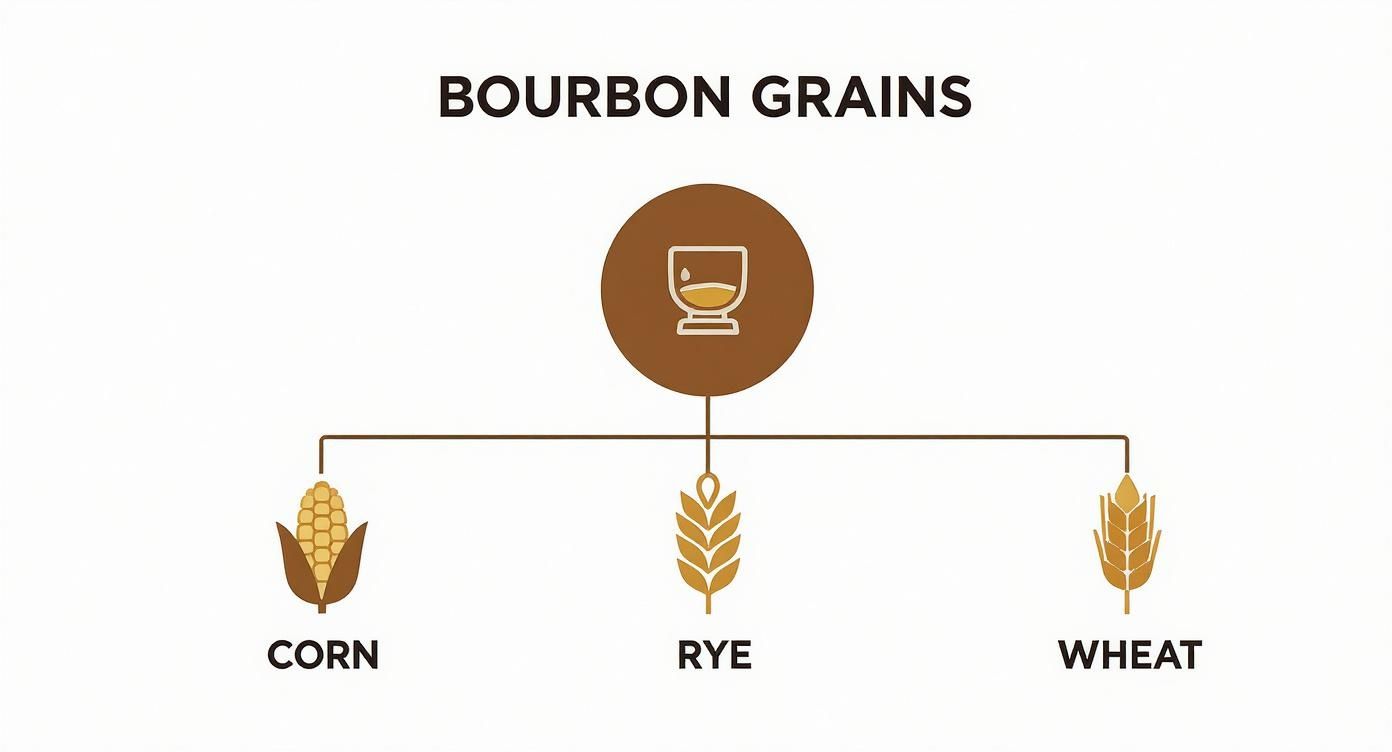
You can see how corn provides that mandatory sweet foundation, while rye and wheat are the "flavoring grains" that really define a bourbon's personality.
Traditional Low-Rye Bourbon
This is your classic, quintessential bourbon profile. A traditional mash bill keeps the rye content relatively low—usually somewhere between 8% and 14%. The whole point here is balance. The corn’s sweetness gets to be the star, with just enough rye to add a subtle layer of spice without taking over the show.
Expect to find notes of caramel, vanilla, and oak, with just a gentle hint of pepper or baking spice on the finish. It’s a versatile, crowd-pleasing style that pretty much everyone can enjoy.
- Iconic Example: Wild Turkey 101
- Craft Example: New Riff Distilling's Kentucky Straight Bourbon
High-Rye Bourbon
If you're someone who craves a bolder, more complex sip, then high-rye bourbon is where it's at. For these recipes, distillers crank up the rye content significantly, often landing between 15% and 35%. This creates a bourbon that is noticeably spicier, with a much more robust character and a drier finish.
Tip for New Drinkers: A high-rye bourbon has a distinct peppery kick. If you're already a fan of straight rye whiskey, this style of bourbon will feel excitingly familiar and is a fantastic gateway to the spicier side of the spirit.
Tasting notes often jump out with cinnamon, clove, mint, and a peppery zest that tingles on the tongue. This style has absolutely exploded in popularity, with sales of high-rye bourbons jumping by over 20% between 2018 and 2022. For a deeper dive, check out this great article on historical mash bill variations at ModernThirst.com.
- Iconic Example: Four Roses Single Barrel
- Craft Example: Frey Ranch Straight Bourbon Whiskey
Wheated Bourbon
If high-rye bourbon is the bold, spicy one, then wheated bourbon is its soft-spoken, gentle cousin. In this style, distillers completely swap out the rye for wheat, typically using 18% to 20% in the mash bill. That simple substitution completely transforms the bourbon’s character, making it exceptionally smooth and approachable.
Wheated bourbons are often the first recommendation for newcomers because they don't have that sharp, spicy bite you get from rye. Instead, you'll find softer, sweeter notes of honey, baked bread, and toffee, all wrapped up in a creamy, almost buttery mouthfeel and a mellow finish.
- Iconic Example: Maker's Mark
- Craft Example: Wilderness Trail Distillery's Wheated Bourbon
Connecting the Mash bill to Your Tasting Experience
This is where the rubber meets the road. Knowing the numbers on a mash bill is one thing, but actually connecting those percentages to the aromas, flavors, and feelings in your glass? That’s where the real magic happens.
Let's walk through a tasting, step-by-step, to see how that grain recipe truly shapes the entire sensory journey.
On the Nose: Sweetness and Spice
Before you even take a sip, the mash bill starts telling its story. Give your glass a gentle swirl, bring it to your nose, and take a slow inhale. What’s the first thing you notice?
Chances are, it’s a wave of sweetness. Think vanilla, rich caramel, or toasted brown sugar. That’s the corn talking. It lays down that comforting, sweet foundation you expect from a great bourbon.
Now, search for what’s layered on top. If you pick up sharp notes of baking spice, cracked black pepper, or a hint of mint, you're almost certainly nosing a high-rye bourbon. But if the aroma feels softer, more like fresh-baked bread, gentle honey, or even dried fruit, you're probably smelling the delicate influence of wheat.
On the Palate: How the Grains Feel and Taste
Time for that first sip. Let the whiskey roll over your tongue and pay attention to how it feels just as much as what it tastes like. The mash bill’s character truly comes alive right here.
A high-rye mash bill often delivers a signature spicy tingle that seems to dance right on the middle of your tongue. It’s a bright, zesty kick that’s hard to miss once you know what you’re looking for.
A wheated bourbon, however, offers a completely different ride. Instead of that peppery pop, wheat brings a rounder, creamier, and almost velvety texture. The mouthfeel is softer and fuller, carrying flavors of toffee, honey, or shortbread. It’s this smooth approachability that makes "wheaters" a favorite for many newcomers to whiskey.
To get a better handle on these flavors, a visual guide can make a world of difference. You can learn to map out these notes with our comprehensive bourbon flavor wheel, an indispensable tool for any tasting.
The Finish: A Lasting Impression
Finally, let’s talk about the finish—that lingering sensation after you swallow. The mash bill plays a huge part in how a bourbon says its final goodbye.
- High-Rye Finish: These bourbons tend to leave you with a long, warming, and spicy farewell. That peppery character often hangs around, leaving a pleasant heat in your chest.
- Wheated Finish: A wheated bourbon typically finishes much softer. The experience is less about the spice and more about a gentle, lingering sweetness that fades out smoothly and cleanly.
By breaking down your tasting into these three stages—nose, palate, and finish—you can start to reverse-engineer what's in your glass. This simple practice turns every sip from just a drink into a genuine discovery.
Putting Your New Knowledge Into Practice

Theory is one thing, but the absolute best way to really wrap your head around the impact of a bourbon mash bill is to taste the differences yourself. Setting up a simple side-by-side tasting at home is more than just fun—it's the single most effective way to train your palate.
The goal here isn’t to become an expert overnight. It’s all about actively experiencing how a few tweaks to a grain recipe can create dramatically different bourbons. This hands-on approach is what builds real confidence and helps you discover what you genuinely enjoy, one sip at a time.
How to Set Up Your Tasting
First things first, you'll want to grab three bourbons, with each one representing one of the core mash bill styles: traditional, high-rye, and wheated. Pour a small amount of each (about an ounce is perfect) into separate glasses. If you’ve got identical glassware, that's great for consistency, but don’t sweat it if you don't. Any glasses will work.
Tip for New Drinkers: Don't get hung up on getting everything perfect. The real magic happens when you compare them side-by-side. Tasting them in succession makes the unique character of each bourbon mash bill pop.
You can find killer options at any decent liquor store. Below are a few suggestions that mix some widely available classics with exciting American craft whiskeys that really let their mash bill’s character shine.
- Traditional (Low-Rye): You can’t go wrong with a bottle like Wild Turkey 101. For a craft-focused option, check out New Riff Distilling's Kentucky Straight Bourbon.
- High-Rye: Four Roses Single Barrel is a fantastic and easy-to-find choice. If you want to explore a craft alternative, Frey Ranch Straight Bourbon Whiskey from Nevada is a must-try.
- Wheated: Maker's Mark is the iconic wheater you can find just about anywhere. Looking for a craft expression? Wilderness Trail Distillery's Wheated Bourbon is a beautiful example of the style.
Taking Notes and Finding Flavors
Once your flight is poured, it’s tasting time. The key is to be intentional. Nose each one first, then take a small sip and let it coat your palate before you swallow. Think about the aroma, the primary tastes you're getting (sweet vs. spicy), and what the finish feels like.
To make this whole process easier and more organized, use a simple tasting grid. It helps you focus on specific characteristics and compare your notes directly. It's a method we swear by in our Blind Barrels tasting kits because it forces you to tune out the noise and focus purely on what's in the glass.
Beginner's Bourbon Tasting Note Template
Here’s a simple template to guide your tasting journey and help you connect the dots between the mash bill and the flavors you're experiencing.
| Bourbon Type (e.g., High-Rye) | Aroma (What do you smell?) | Taste (Sweet, Spicy, Fruity, etc.) | Finish (Long/Short, Warm/Smooth) |
|---|---|---|---|
| Traditional Bourbon | |||
| High-Rye Bourbon | |||
| Wheated Bourbon |
Just jot down whatever comes to mind—there are no wrong answers here! You’ll be surprised how quickly you can pick out the peppery kick of a high-rye from the soft, bready notes of a wheater. This simple exercise is the fastest way to bridge the gap between the concept of a mash bill and the real-world experience in your glass.
Your Bourbon Mash Bill Questions Answered
As you dive deeper into the world of bourbon, a few questions always seem to surface. It’s all part of the journey. Understanding the ins and outs of a mash bill takes time, so we’ve gathered some of the most common queries we hear to help you solidify what you’ve learned. Think of this as your go-to guide.
Does a Higher Corn Percentage Always Mean a Sweeter Bourbon?
For the most part, yes—more corn usually sets the stage for a sweeter bourbon. Corn is packed with natural sugars that, once distilled and aged, blossom into those classic caramel, vanilla, and butterscotch notes we all love. But the final sweetness is really a team effort.
The barrel itself plays a huge role here. A new oak barrel with a heavy char will caramelize the wood sugars inside the staves, which can seriously amplify the sweetness that started with the corn. So, while the mash bill is the recipe, the entire process—especially its time maturing in that barrel—shapes the whiskey you finally pour into your glass.
What Is a Four Grain Bourbon?
A four grain bourbon is pretty much what it says on the tin: a whiskey crafted from a mash bill containing all four of the classic grains—corn, rye, wheat, and malted barley. It’s a less common style, but it’s catching on, especially with American craft distillers who are always looking to build more complex and layered spirits.
By using both rye and wheat, a distiller can get the best of both worlds. They’re aiming for a perfect balance: the sweet foundation from the corn, the soft, bready character of wheat, and that signature peppery kick from rye. The result is often an incredibly nuanced bourbon with a remarkable depth of flavor, a true showcase of the distiller's skill.
Tip for New Drinkers: If you're curious about four grain bourbon, smaller, independent distilleries are the place to look. Brands like Laws Whiskey House in Colorado are doing fantastic work, pushing the boundaries and creating some truly exceptional four grain expressions.
Why Is Malted Barley in Almost Every Bourbon Mash Bill?
Malted barley’s primary job is more about chemistry than flavor, though it certainly adds its own subtle notes of chocolate or biscuit. Its real purpose is to kickstart fermentation. You see, the malting process activates natural enzymes within the barley grain.
These enzymes are the secret weapon, working to break down the starches from all the other grains (like corn and rye) into simple, fermentable sugars. Without those sugars, yeast would have nothing to eat to produce alcohol. So, even when it’s just a small part of the recipe, malted barley is the essential key that unlocks the potential of the entire mash bill.
Ready to put your newfound knowledge to the test and figure out which mash bill really speaks to you? There’s no better way to learn than by tasting, and Blind Barrels makes it an adventure. Our blind tasting kits strip away all the hype and bias, letting you focus purely on the whiskey in the glass as you explore incredible spirits from America's best craft distilleries. Find your next favorite bourbon at https://www.blindbarrels.com.