

When you stack Canadian whisky vs bourbon, the biggest divide comes down to a simple concept: rules versus freedom. Bourbon is an American icon, strictly defined by law—it must contain at least 51% corn and age in brand-new, charred oak barrels. This creates its signature bold, sweet character. Canadian whisky, on the other hand, operates with a lot more creative leeway, which typically results in a smoother, lighter, and often spicier dram. For newcomers, this often makes Canadian whisky a more gentle introduction to the world of spirits.
A Tale of Two North American Whiskies
At a quick glance, Canadian whisky and bourbon look like they should be close relatives. Both spring from North American grain fields and share a continent, but their personalities couldn't be more different, shaped by wildly different philosophies and legal guardrails.
You can think of bourbon as the meticulous architect, following a precise blueprint to build a classic, reliable structure every time. Canadian whisky is more like a master chef, thriving on the freedom to blend diverse ingredients into a unique and harmonious final dish.
This core contrast in how they're made is what gives each its distinct voice. One isn't better than the other; they just offer completely different journeys for your palate. Whether you gravitate toward the rich, oak-driven sweetness of a classic bourbon or the subtle, rye-forward spice of a Canadian whisky, understanding where they come from is the key to truly appreciating what's in your glass.
This chart breaks down the fundamental differences between these two iconic styles.
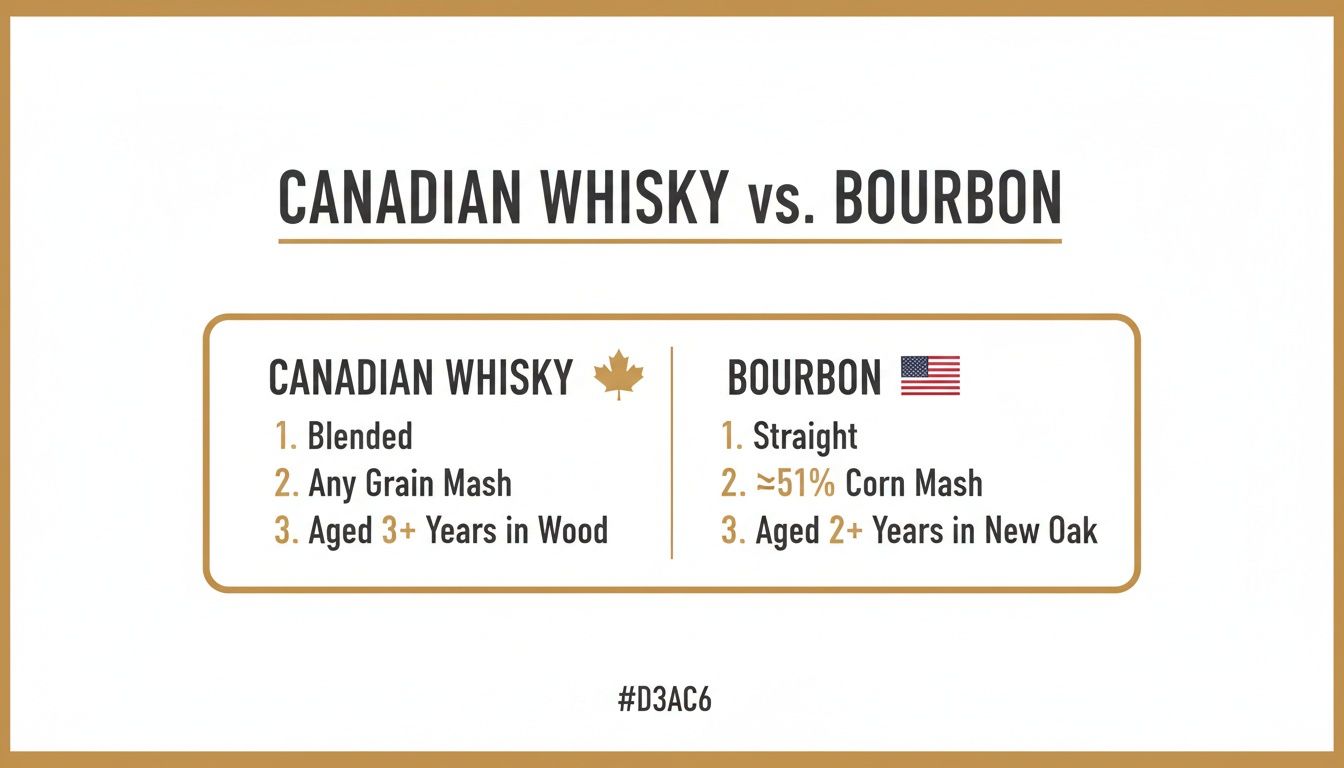
As you can see, the most significant distinctions are found in the grain requirements and the rules for barrel aging. These two factors are directly responsible for the flavors that end up in the bottle.
Key Differences at a Glance: Canadian Whisky vs Bourbon
For anyone just dipping their toes into the world of whiskey, getting a handle on these key distinctions can make those first tasting experiences much more rewarding. This quick-reference table sums up the fundamental differences.
| Attribute | Canadian Whisky | Bourbon |
|---|---|---|
| Primary Grain | No minimum requirement; often high in rye. | Must be at least 51% corn. |
| Aging Barrel | Aged a minimum of 3 years in new or used wooden barrels. | Must be aged in new, charred oak containers. |
| Flavor Profile | Typically lighter, smoother, and spicier. | Generally sweeter, fuller-bodied, with vanilla and caramel notes. |
| Additives | Caramel coloring and up to 9.09% other spirits/wine are permitted. | No additives allowed except water. |
Ultimately, American craft whiskey brands often get creative by pushing the boundaries within bourbon's strict framework. In contrast, Canadian producers leverage their flexibility to craft an incredible diversity of blends, showcasing the art of the possible.
Decoding the Legal Distinctions
A whiskey’s true character is born from the laws that govern it, and in the Canadian whisky vs bourbon showdown, the contrast couldn't be more dramatic. Bourbon, for its part, follows a strict, unyielding recipe dictated by United States law. It’s like a baker meticulously following a cherished family recipe—no deviations allowed.
This rigidity is bourbon’s greatest strength. The rules are absolute, ensuring a reliable quality and a familiar taste from one bottle to the next.
- Mash Bill: Must be made from at least 51% corn, which gives bourbon its signature sweetness.
- Aging: Has to be aged in new, charred oak containers. This step is crucial, infusing the spirit with those deep notes of vanilla, caramel, and spice.
- Distillation: Cannot be distilled higher than 160 proof (80% ABV).
- Additives: Nothing can be added at bottling except water to bring it to the right proof. No coloring, no flavoring.
Because of this precise legal structure, you know what you’re getting. Whether you're buying from a legendary distillery or a small American craft whiskey producer like Wyoming Whiskey or Laws Whiskey House, that foundational bourbon character will always be there.
The Canadian Approach: Flexibility and Blending
Canadian whisky, on the other hand, champions flexibility and the art of the blend. The regulations are far more open, with no mandated grain percentage. While rye is often a major player—lending that characteristic spicy kick—distillers are free to experiment. This freedom results in a massive spectrum of flavor profiles, from light and smooth to incredibly rich and complex.
Canadian law basically hands distillers a broad creative canvas. The ability to age in different barrel types—new or used—and to add up to 9.09% of other spirits or wine is a total game-changer. It allows for a nuanced layering of flavors that just isn't possible under bourbon's tight regulations.
This philosophical difference is easy to see in the market. American whiskey, with bourbon leading the charge, has seen solid growth, with sales jumping 4.5% in 2023. Meanwhile, sales for the top Canadian whisky brand saw a slight dip, pointing to some pretty different consumer trends.
Getting a handle on these nuances is key. The legal classifications directly influence what information shows up on official packaging, from custom-designed bottles to their beverage labels. For anyone new to whiskey, spotting these legal signposts on a bottle gives you an instant clue about the liquid inside, helping you find a profile you’re much more likely to enjoy.
Mapping the Flavor Profiles
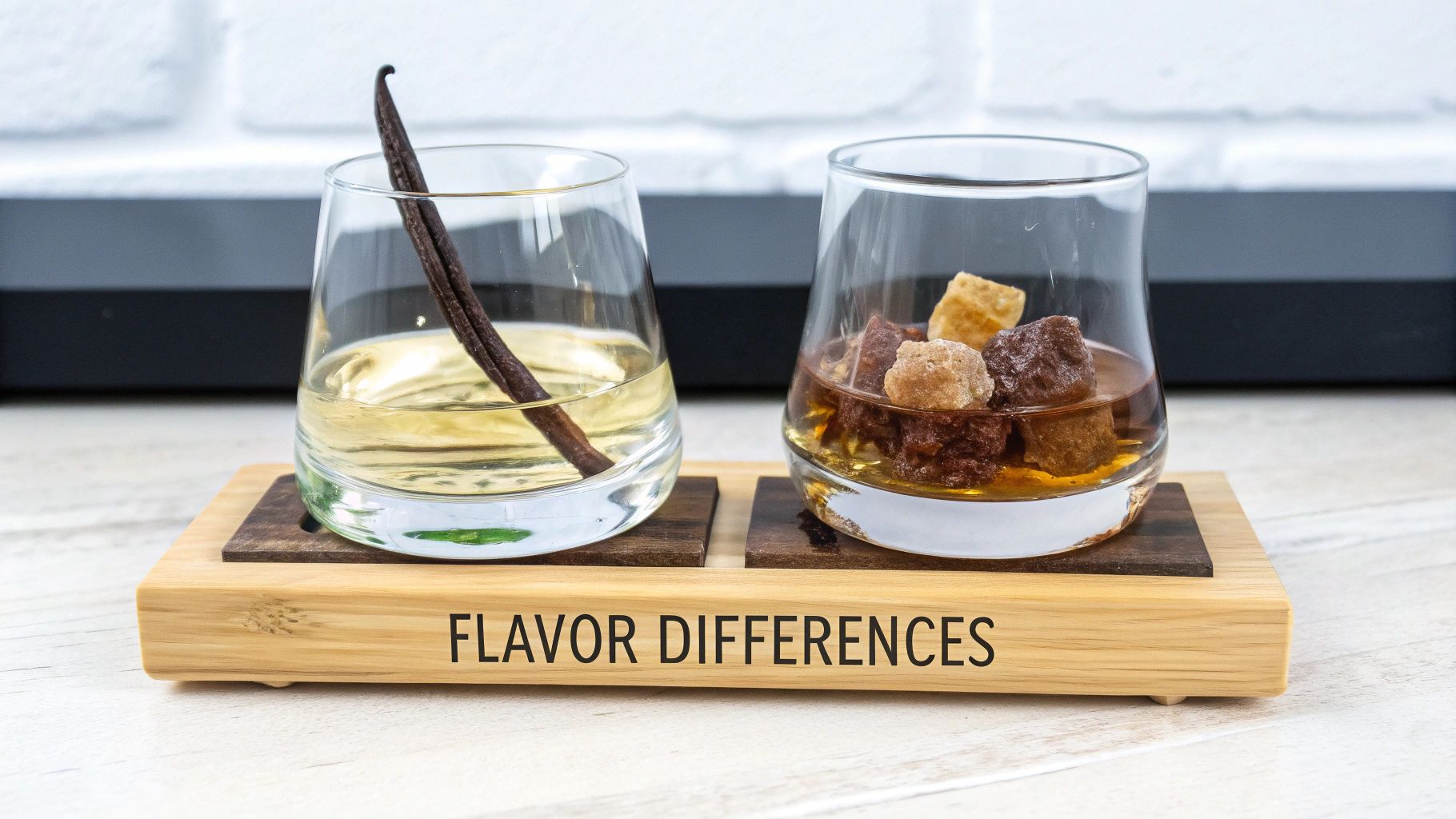
Alright, enough with the rulebooks. Let's get to what really matters: what happens when you pour these whiskies into a glass. This is where the legal definitions and production methods translate into distinct personalities, and where Canadian whisky and bourbon truly go their separate ways.
The sensory experience is everything, and these two North American spirits couldn't forge more different identities.
The Bold Sweetness of Bourbon
Bourbon's character is a direct pipeline from its strict production rules. You take a mash bill that’s heavy on the corn, age it in brand-new, heavily charred oak barrels, and the result is a consistently rich, full-bodied, and sweet flavor profile. It’s almost inevitable.
When you nose a glass of bourbon, you’re greeted by a classic, comforting set of aromas. Think of it as the comfort food of the whiskey world—it's warm, familiar, and satisfyingly bold.
- Dominant Notes: Vanilla, caramel, and brown sugar are the big three. These are pulled straight from the caramelized sugars created when the inside of that new oak barrel is charred.
- Underlying Tones: Beneath that sweet blanket, you’ll often find toasted nuts, baking spices like cinnamon and nutmeg, and a distinct oaky warmth that gives it structure.
The new charred oak barrel is bourbon’s secret weapon. It’s not just a container; it’s an aggressive flavor injector, rapidly infusing the spirit with its signature sweet and spicy character. This is precisely why even younger bourbons can taste so impressively rich and complex.
For newcomers, bourbon’s approachable sweetness makes it a fantastic gateway into the world of whiskey. Its robust profile also means it stands up beautifully in cocktails without getting lost. If you're new, a great tip is to start with a "wheated" bourbon, which uses wheat instead of rye as the secondary grain, creating an even softer and smoother taste.
The Smooth Spice of Canadian Whisky
In the Canadian whisky vs bourbon matchup, the Canadian contender almost always leans toward subtlety and smoothness. Distillers up north have the freedom to play with different grains and barrel types, which generally leads to a lighter, more delicate spirit.
More often than not, Canadian whisky is a showcase of the grain itself, especially rye. This brings a crisp, spicy character to the forefront that’s a world away from bourbon’s corn-driven sweetness.
Here are some common notes you might find:
- Primary Flavors: A gentle rye spice is common, often joined by hints of crisp green apple or a touch of maple or honey.
- Subtle Nuances: Look for notes of dried fruit, a light floral quality, and a delicate sweetness that whispers rather than shouts like bourbon's powerhouse caramel.
Of course, these are classic profiles, and the modern world of whiskey is anything but static. American craft distillers like Balcones in Texas or Westland in Seattle are constantly pushing boundaries, experimenting with unique grain combinations and innovative aging methods. You might find a bourbon with unexpected fruity notes or a surprisingly delicate finish, proving that these generalizations are just the start of your tasting adventure.
The Impact of Mash Bill and Maturation
To really get to the heart of the Canadian whisky vs bourbon debate, you have to look past the tasting notes on the bottle. The real story is in two key places: the mash bill (the grain recipe) and maturation (the aging process). These are the foundational steps where each spirit develops its unique personality, sending them down completely different paths.
Bourbon’s identity is locked in from the very beginning. By law, it must start with a mash bill of at least 51% corn, which gives it that classic, sweet foundation. The rest of the recipe, the ‘flavoring grains,’ is usually rye or wheat, and that's what decides if the bourbon will have a spicy kick or a softer, wheated profile. That corn-heavy recipe isn't a suggestion; it's the law, and it's the source of bourbon's signature sweetness.
Grains: The Building Blocks of Flavor
Canadian whisky production flips that entire concept on its head. Instead of mashing all the grains together, distillers often ferment and distill each grain—corn, rye, barley—completely on its own. Only after these individual spirits have been aged do they get masterfully blended together to hit a specific, consistent flavor profile. This method gives them incredible control to dial up the peppery rye or the creamy corn exactly as they see fit.
This technique of distilling grains separately and blending post-aging is a key differentiator. It allows Canadian blenders to act more like artists with a full palette of colors, whereas bourbon distillers must create their masterpiece from a single, pre-mixed canvas.
This fundamental difference in handling the grain is a massive deal. If you want to dive deeper into how corn, rye, and wheat interact in a single mash, our guide on the essentials of a bourbon grain bill breaks it all down.
Maturation: The Barrel Makes the Spirit
If the mash bill is the whiskey's soul, the barrel is its body. And this is where you'll find one of the biggest divides between these two styles. U.S. law is strict: bourbon must be aged in brand-new, charred oak barrels. There are no exceptions, and this rule has a huge impact on the final product. New barrels aggressively impart color, aroma, and flavor, quickly infusing the spirit with deep notes of vanilla, caramel, and toasted oak. It’s why even a younger bourbon can taste remarkably rich and mature.
Canadian whisky, on the other hand, operates with a lot more freedom. It has to be aged for at least three years in wooden barrels, but those barrels can be new or used. This flexibility opens up a whole universe of possibilities. A Canadian distiller might use:
- Used Bourbon Barrels: These give a much softer, gentler oak influence, along with some leftover bourbon sweetness.
- Wine or Port Casks: Finishing the whisky in these casks can layer in unique fruit and spice notes.
- New or Re-charred Barrels: These can be brought in to add a more powerful, robust character when needed.
This varied approach to maturation means Canadian whisky often has a more subtle wood influence and can develop layered complexities that simply aren't possible within bourbon's rigid framework. For someone new to whiskey, this often means Canadian whisky provides a smoother, more approachable starting point, while bourbon offers a much bolder, oak-forward introduction.
Choosing Your Whiskey for Cocktails and Sipping
This is where the rubber meets the road—where all the talk about mash bills and maturation finally lands in your glass. Getting a handle on the classic profiles of Canadian whisky and bourbon is your ticket to unlocking their best, whether you're shaking up a cocktail or pouring a dram to sip neat.
Bourbon for Bold Cocktails and Rich Sipping
Bourbon's sweet, full-bodied character makes it an absolute powerhouse in cocktails that need a strong spirit to stand up and be counted. It doesn't just show up to the party; it leads the conversation.
Think about classics like the Old Fashioned or a proper Whiskey Sour. Bourbon’s unmistakable notes of vanilla, caramel, and oak are assertive enough to go toe-to-toe with sugar, citrus, and bitters without ever getting lost in the mix. This is exactly why it’s become the go-to for so many iconic drinks. The global fascination with these cocktails has fueled its incredible growth; the bourbon market, valued at $8.2 billion in 2022, is projected to soar to $14.3 billion by 2032 as its popularity continues to boom worldwide. You can dive deeper into these market trends in this detailed bourbon market report.
When it comes to sipping, bourbon offers its own rich spectrum:
- High-Rye Bourbon: A spicier grain bill delivers a more complex, robust experience. It’s perfect for those who enjoy a whiskey with a bit of a kick.
- Wheated Bourbon: Swapping rye for wheat creates a softer, smoother, and often sweeter profile, making it exceptionally approachable for sipping straight.
Today, many American craft whiskey brands like Frey Ranch or New Riff are playing within these categories, turning out some truly unique bourbons that are fantastic for both sipping and elevating classic cocktails.
Canadian Whisky for Subtlety and Refreshment
When you're comparing Canadian whisky vs bourbon for mixed drinks, Canadian whisky plays a different game entirely. Its typically lighter body and smoother, often spicier profile make it the perfect partner for refreshing highballs. A simple rye and ginger, for instance, lets the whisky's crisp character shine through beautifully without being overshadowed.
A great tip for new drinkers: Start with a simple highball. Canadian whisky’s understated elegance supports other ingredients rather than overpowering them, making it ideal for more nuanced or delicate cocktails where balance is everything.
That approachable nature also makes it an excellent choice for sipping, especially if you find bourbon's oak-forward punch a bit too intense. A good Canadian rye offers a clean, spicy experience that is both satisfying and incredibly easy to drink.
For anyone new to the whiskey world, the best way to grasp these differences is to taste them. Mix up a classic Old Fashioned with bourbon and a simple highball with a Canadian rye. This easy side-by-side test will immediately show you how each spirit’s inherent profile is perfectly suited for different jobs.
How to Host a Blind Whiskey Tasting

Honestly, the single best way to figure out what you prefer between Canadian whisky and bourbon is to let your own palate be the judge. Hosting a blind tasting is a fantastic way to strip away all the noise—brand hype, fancy labels, and price-point expectations—and just focus on what's in the glass. It’s an eye-opening experience for seasoned enthusiasts and total newcomers alike.
The setup itself is pretty simple. The real goal is to see for yourself how those different production rules and grain choices actually translate into flavor.
Setting the Stage for Discovery
To make the comparison truly meaningful, you'll want to choose a diverse lineup. This lets you and your guests explore the full spectrum of what these whiskeys can be without getting overwhelmed.
Here’s a great starting point for your tasting flight:
- One Classic Bourbon: Grab a well-known bourbon that really embodies that quintessential sweet, oak-forward profile. Think of it as your baseline.
- One Craft American Whiskey: Find a bourbon from a smaller, independent distillery. Brands like Stellum or Wilderness Trail offer exciting expressions that show how modern artisans are innovating within the established rules.
- One Canadian Whisky: Pick up a classic Canadian rye. It will provide a clear contrast with its typically lighter, often spicier character.
Pour a one-ounce sample of each into identical, unmarked glasses for every person. This simple step is crucial; it ensures no one knows which whiskey is which, leveling the playing field completely.
A blind tasting isn't about being a professional critic. It's about personal discovery. The most important rule is to just pay attention to what you like and dislike without the influence of a fancy label or a high price tag.
The Tasting Process
Guide your guests through a simple, three-step evaluation for each sample. Encourage everyone to jot down their thoughts—no fancy terminology required. Just honest impressions.
- Nose (Aroma): Before taking a sip, swirl the whiskey gently and take a good sniff. What do you smell? Is it sweet like vanilla, fruity like apples, or spicy like cinnamon?
- Palate (Taste): Take a small sip and let it coat your tongue. Try to identify the main flavors. Does it hit you as sweet, smoky, spicy, or just really smooth?
- Finish (Aftertaste): After you swallow, notice the sensation that lingers. Is it a long, warming finish or a short, crisp one that disappears quickly?
This exercise demystifies the whole tasting process and helps you pinpoint the specific characteristics that really appeal to you. If you're looking to host your own event or simply broaden your palate, a professional whisky tasting experience can offer some incredible insights. For those looking to set up at home, you can find more tips on creating a perfect blind whiskey tasting kit to make the whole thing seamless.
Ultimately, this process makes you a more confident and informed whiskey drinker. You start buying what you actually like, not just what you're told to like.
Frequently Asked Questions
Diving into the worlds of Canadian whisky and bourbon can definitely stir up a few questions. Let's tackle some of the most common ones to help you navigate the shelf with a little more confidence.
Is Canadian Whisky the Same as Rye?
Not quite, though it's easy to see why people make the connection. Canadian whisky is very often called "rye," but that's more of a historical nickname than a legal requirement. Back in the day, Canadian distillers used a healthy amount of rye grain for its spicy, flavorful kick, and the name just stuck.
Today, Canadian law is famously flexible on this point. There’s no minimum grain percentage, so while many Canadian whiskies still lean heavily on that signature rye spice, they're almost always blends of various grains, including corn and barley, to achieve a specific flavor profile.
Which Is Better for New Whiskey Drinkers?
If you're just starting to explore the vast world of whiskey, Canadian whisky is often a fantastic entry point. Its profile is typically lighter, smoother, and generally less aggressive on the palate. It's an easier introduction than the often bold, oak-heavy character you find in many bourbons.
A great way to get your footing is to see how they behave in a simple cocktail. Try a Canadian whisky in a highball with ginger ale, and then mix a bourbon into an Old Fashioned. It's a perfect illustration of how each spirit's personality shines in different settings.
Can Bourbon Be Made in Canada?
That's a hard no. Bourbon is quintessentially American, and its identity is protected by U.S. law. To earn the name "bourbon," a whiskey must be made in the United States from a grain mixture that is at least 51% corn. It also has to be aged in brand new, charred oak containers.
These rules are non-negotiable and what give bourbon its distinct character. It’s a uniquely American spirit through and through.
Why Do Some People Prefer Bourbon over Canadian Whisky?
It all comes down to personal taste, really. The Canadian whisky vs bourbon debate is purely about what you enjoy in a glass. Folks who lean towards a sweeter, richer, and more full-bodied experience often find themselves reaching for bourbon.
Its trademark notes of vanilla, caramel, and toasted oak—a direct result of aging in those new charred barrels—deliver a consistently bold flavor that’s just as good neat as it is holding its own in a classic cocktail.
Ready to figure out what your palate prefers without being influenced by a label? The only way to know for sure is to taste. Blind Barrels sends you a curated blind whiskey tasting kit, so you can ditch the preconceptions and focus on what’s actually in the glass. It’s the best way to explore top-shelf American craft whiskey and find your next favorite based on pure flavor.
Start your tasting adventure at Blind Barrels.