

Ever wonder where whiskey gets those iconic vanilla, caramel, and spice notes? It’s not just the grain—it’s the charred oak cask. This simple yet powerful vessel is the unsung hero that transforms a raw, clear spirit into the complex, amber whiskey you love.
The Secret Ingredient in Every Glass of Whiskey
Many new whiskey drinkers think the grain—corn, rye, or barley—is the main source of flavor. And while the grain is definitely the starting point, the real magic happens inside the barrel. Think of the cask not just as a container, but as the most crucial ingredient in the entire recipe.
The whole process is a masterclass in chemistry and craft. When coopers hit the inside of a new oak barrel with open flames, they're kicking off a series of chemical reactions that create a flavor powerhouse. This one step is responsible for the lion's share of a whiskey's final character, setting the stage for everything that follows.
Why the Cask Is a Flavor Architect
The charred oak cask isn't just a vessel; it’s a full-blown flavor architect that shapes the entire whiskey market. That charring process caramelizes the wood’s natural sugars, eventually infusing whiskeys with up to 70% of their final flavor profile. We’re talking about notes of toasted coconut, rich tobacco, and warm baking spices, all of which vary depending on the char level and where the oak was grown.
Understanding this principle is your secret weapon for decoding tasting notes and truly appreciating what’s in your glass. For Blind Barrels members, recognizing these char-driven notes is the key to unlocking the story behind each spirit in your tasting kit. This foundation helps explain what makes whiskey, well, whiskey.
Tip for New Drinkers: The cask really does three main jobs: it subtracts harsh, unwanted notes from the young spirit, adds its own signature flavors like vanilla and spice, and interacts with oxygen to create new, complex compounds over time.
The Power of Wood Across Beverages
This focus on wood isn't unique to the world of whiskey. The influence of oak on flavor is a widely celebrated principle across the beverage industry. For instance, winemakers have been perfecting this for centuries; you can learn more about how winemakers harness oak's power to shape flavor.
This shared heritage of wood-aging just highlights how vital the cask truly is. Whether it’s a bold American single malt from a craft distillery or a rich Napa Cabernet, the barrel is where character is born.
How Fire Unlocks Flavor in Oak
Setting a barrel on fire might sound like a bad idea, but in the world of whiskey, it’s a stroke of genius. Think of it like making toast. A quick flash of heat brings out a gentle sweetness, but a longer burn creates a much darker, richer, more complex character. This is the exact principle behind the charred oak cask, where fire is the essential tool that unlocks a universe of flavor.
This controlled burn does more than just blacken the wood; it triggers a deep chemical transformation. It’s not just about creating a surface layer of charcoal. The intense heat breaks down complex compounds within the oak into simpler, tastier elements that the raw, unaged spirit can soak up over time. This magical dance between wood, fire, and spirit is where a whiskey truly finds its soul.
The journey from a fiery, aggressive new-make spirit to a smooth, complex whiskey is all thanks to the cask.
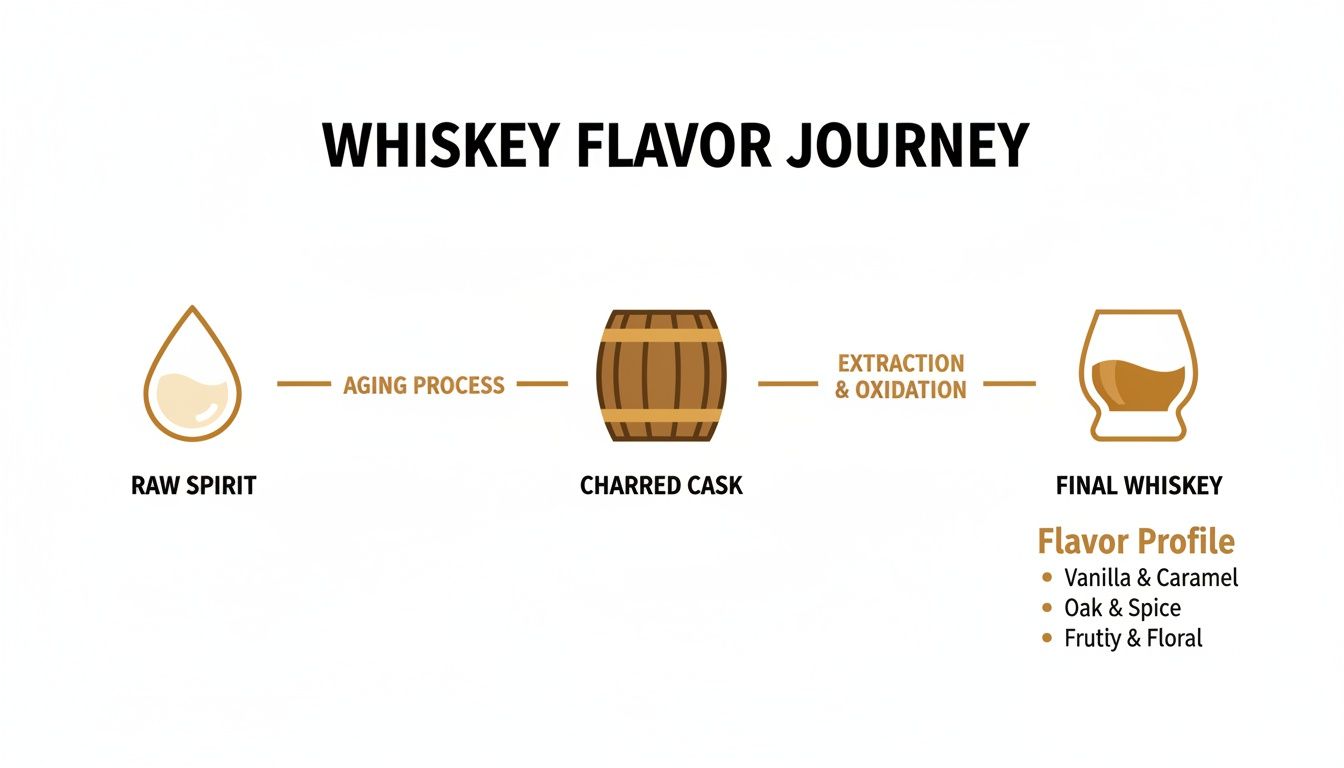
As you can see, the cask is so much more than a wooden container. It's an active ingredient, a filter, and a flavor engine all rolled into one.
The Different Levels of Char
Distillers and the coopers who build their barrels don't just have an on/off switch for char. They work with a carefully calibrated scale, usually from #1 to #4, to dial in very specific flavor profiles. Each number corresponds to a set amount of time the barrel’s interior is blasted with open flame, and each one creates a dramatically different result.
Coopers typically follow a well-established recipe for charring, though times can vary slightly. The table below breaks down the most common levels and the flavors they're known to create.
| Char Level | Typical Burn Time | Key Flavor Contributions | Commonly Used For |
|---|---|---|---|
| Char #1 | 15 seconds | Gentle sweetness, vanilla, light spice, toasted grain | Lighter whiskeys, letting the grain profile shine |
| Char #2 | 30 seconds | Enhanced caramel & vanilla, honey, light coffee | Versatile craft whiskeys, balanced flavor |
| Char #3 | 35 seconds | Rich toffee, baking spice, hint of smoke | The classic profile for many American bourbons |
| Char #4 | 55 seconds | Dark chocolate, espresso, molasses, deep smokiness | Bold, robust whiskeys with intense character |
This so-called "Alligator Char" (#4) gets its name because the intense, nearly minute-long burn causes the wood to crack and split into a coarse, shiny pattern that looks just like gator skin. This is the heaviest char, delivering the boldest flavors.
The Delicious Chemistry of a Charred Oak Cask
So, what’s really going on inside the wood when it meets the flame? It all comes down to breaking down three key components of oak.
First up is hemicellulose. These are complex wood sugars that, when heated, break down and caramelize. This is where those delicious notes of toffee, brown sugar, and butterscotch come from that make so many whiskeys irresistible.
Next is lignin, the natural polymer that holds the wood fibers together. When torched, lignin degrades into a whole host of aromatic compounds, but the most famous is vanillin—yes, the very same molecule that gives vanilla beans their signature scent and flavor. This is exactly why vanilla is one of the most common tasting notes in barrel-aged spirits.
Finally, there’s the charcoal layer itself. This "char" acts as a powerful natural filter. As the new-make spirit expands and contracts into the wood, the charcoal actively grabs and removes harsh sulfur compounds and other unwanted impurities. It literally smooths out the rough edges of the spirit, resulting in a much more mellow and refined final product. The science of maturation is a deep topic, and you can learn more about different aging barrels for whiskey in our other guides.
Charring transforms oak in a profound way: just 15-55 seconds over an open fire creates the black crust that unlocks a symphony of flavors. It contributes between 50-70% of a whiskey's final aroma and taste, making it the most important step in developing complexity.
The Difference Between Charred and Toasted Barrels
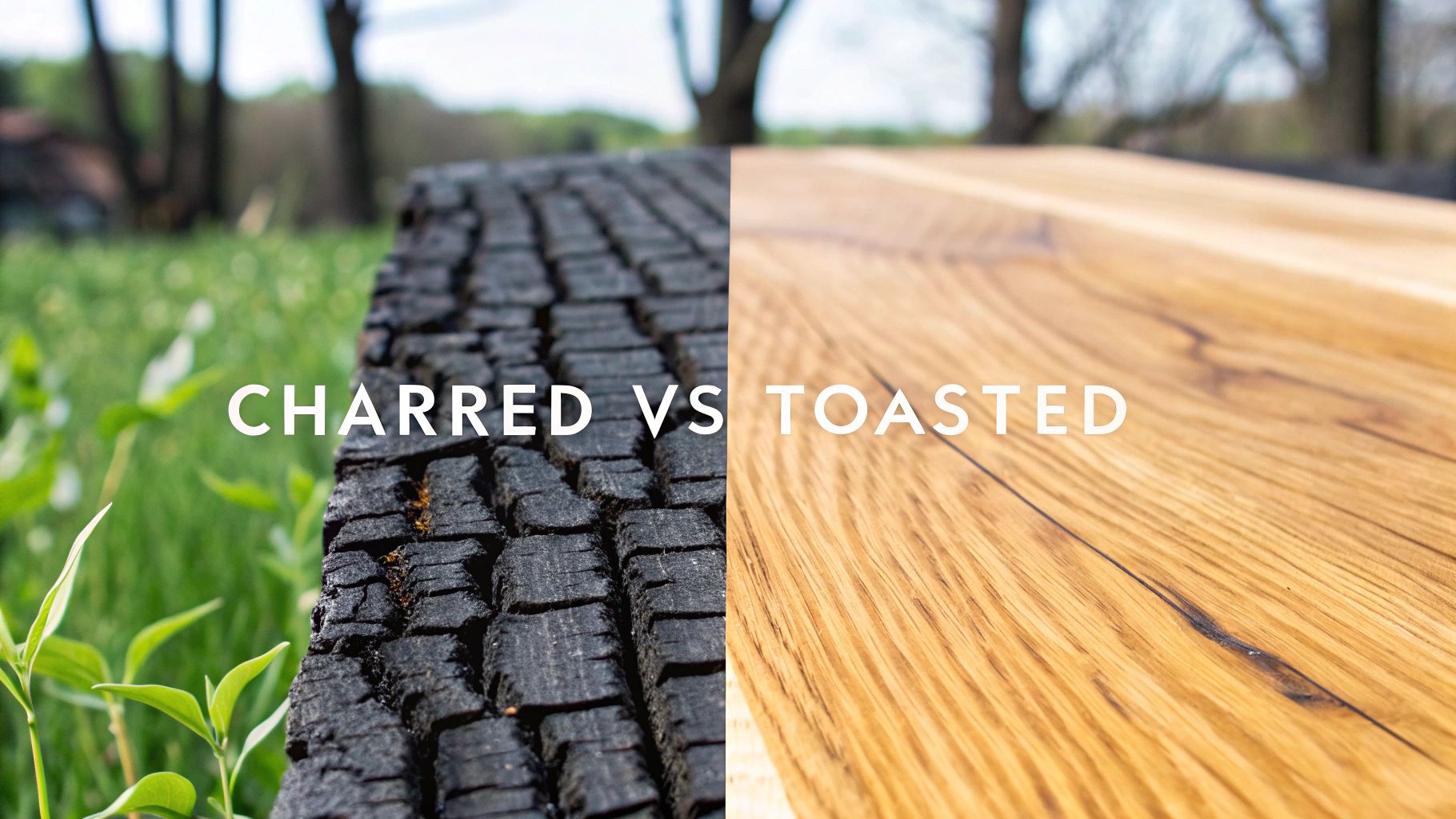
To a newcomer in the whiskey world, "charred" and "toasted" might sound like they're one and the same. After all, both involve putting fire to wood. But in reality, the processes are worlds apart, and the results they create inside a whiskey bottle are dramatically different. Getting a handle on this distinction is a huge step toward understanding why two whiskeys can taste so incredibly unique, even if they come from the same distillery.
I like to think of it like cooking a steak. A charred oak cask is like throwing that steak on a blazing hot grill. The idea is to hit it with intense, direct flame to create a thick, dark crust—the char—almost instantly. This deep layer of charcoal is a powerhouse inside the barrel, acting as a natural filter to smooth out the spirit while unlocking those big, bold, sweet flavors of vanilla, caramel, and a hint of smoke.
Toasting, on the other hand, is like slow-roasting that same steak in an oven. It’s a much gentler, longer application of heat that sinks deep into the wood. Instead of creating a thick layer of charcoal, this process gently coaxes out a whole different range of flavors—think baking spices, clove, cinnamon, and subtle nutty notes.
Why Distillers Choose One Over the Other
So, why pick one over the other? It all comes down to what the distiller wants the final spirit to be. If they're aiming for that classic, powerful bourbon profile loaded with vanilla and caramel, a heavily charred barrel is the perfect tool for the job. That char layer is fantastic at both adding flavor and mellowing out the raw, young whiskey.
But what if a distiller wants the grain character of their whiskey to be the star of the show? Or maybe they’re hunting for more delicate, spicy notes. In that case, a toasted barrel is the way to go. Toasting imparts its flavors more subtly, complementing the spirit without steamrolling it. It's an approach you'll often see when the goal is to preserve the unique voice of the mash bill.
Tip for New Drinkers: A great rule of thumb for your next tasting: If the notes are screaming vanilla, marshmallow, and caramel, you're almost certainly tasting the influence of a charred oak cask. If you're picking up more delicate hints of cinnamon, allspice, or clove, a toasted barrel was likely part of the equation.
The Best of Both Worlds: American Craft Innovation
This is where the real creativity of American craft whiskey makers comes into play. Many distillers aren't satisfied with just one tool in their toolbox. They’ll often combine both charring and toasting to build whiskeys with incredible layers of complexity, creating a signature style that really stands out from the crowd. Brands like FEW Spirits from Illinois or Westward Whiskey from Oregon are excellent examples of this innovative spirit.
A common technique is to use a hybrid barrel.
- Charred Staves: The long pieces of wood making up the body of the barrel are given a heavy char to get those classic sweet notes and filtering benefits.
- Toasted Heads: The flat, circular ends of the barrel are toasted to bring in those deeper, spicier, more nuanced flavors.
This clever combination lets the whiskey pull a whole spectrum of character from the wood, leading to a much more interesting and layered spirit. It’s a perfect showcase of how small producers are constantly experimenting to craft something truly special. For a deeper dive, you can explore the art and science of barrel charring and toasted barrels in American craft whiskey. This mastery over wood and fire is often what defines the incredible whiskeys you’ll discover from small, independent distilleries.
Why New and Used Barrels Create Different Whiskeys
The life of a charred oak cask is often a long one, and its history is everything when it comes to the flavor of the final spirit. Not all barrels are created equal, and whether a cask is brand new or on its second life completely changes the whiskey inside. For anyone serious about whiskey, understanding the difference between a new and a used barrel is one of the most important concepts to grasp.
This difference starts with American law. Bourbon, by legal definition, must be aged in a new charred oak cask. This single rule is the biggest reason why bourbons often burst with such powerful, oak-forward notes of vanilla, caramel, and spice. A fresh barrel is like a fully charged battery, ready to unleash its maximum flavor potential into the young spirit.
But what happens after that first use? The barrel’s story is far from over.
The Second Life of a Bourbon Barrel
Once a bourbon barrel has done its job, it can never be used to make bourbon again. These “used” barrels, however, are incredibly valuable and highly sought after by distillers across the globe. They’re packed up and shipped to Scotland for Scotch, to Ireland for Irish whiskey, and even find their way back home to American craft distilleries.
When a used barrel is filled for a second time, it’s known as a "first-fill" cask. It still has plenty of character to give, but it has already released its most aggressive, raw oak notes into the original bourbon.
The result is a much softer, more nuanced maturation. The barrel’s influence becomes less about domination and more about a gentle conversation with the spirit, allowing more subtle flavors from the grain and yeast to emerge.
This is a key reason why Scotch, often aged in ex-bourbon barrels, can taste so different from its American cousin, even when coming from a nearly identical type of cask.
New vs Used: A Flavor Comparison
To really get the impact, think of it like making tea. Using a fresh tea bag gives you a strong, bold, and potent cup. Using that same tea bag a second time results in a lighter, more delicate flavor. The core character is still there, but it's much more subtle. The same principle applies to new and used barrels.
| Barrel Type | Intensity of Oak Flavor | Key Flavor Contributions | Common Spirit Pairing |
|---|---|---|---|
| New Charred Oak Cask | High | Bold vanilla, intense caramel, sweet toffee, pronounced spice | Bourbon, American Rye |
| Used (First-Fill) Cask | Medium to Low | Mellow vanilla, honey, gentle fruit notes, soft spice, nutty undertones | Scotch, Irish Whiskey, Craft Whiskeys |
A Tip for New Whiskey Drinkers
This knowledge is a fantastic tool if you’re trying to figure out your palate. If you find the powerful oaky punch of many bourbons a bit overwhelming, you might fall in love with spirits aged in used barrels.
Many American craft whiskey brands, unbound by the strict laws of bourbon, masterfully use both new and used casks to create unique flavor profiles. They might age a whiskey in a new barrel to get that initial blast of flavor, then finish it in a used port or sherry cask to add layers of fruity complexity. Brands like Stranahan’s from Colorado or Balcones from Texas are perfect examples of how this creative cask management can lead to truly distinctive and memorable spirits.
Next time you're tasting, pay close attention to the intensity of the oak. Is it a bold, driving force, or a soft, supporting character? Answering that question can tell you a lot about the life and journey of the charred oak cask that held your whiskey.
How Craft Distillers Innovate with Charred Oak
For the big players, the charred oak cask is all about consistency. Year after year, they need their whiskey to taste exactly the same. But for American craft distillers, that same barrel is a blank canvas. It’s where the art happens.
These small producers often run on razor-thin margins. With barrel costs soaring, they have to be clever, resourceful, and downright bold to make a name for themselves. This economic pressure actually fuels an incredible spirit of hands-on experimentation, turning the humble barrel into their signature instrument. When you taste a whiskey from a small distillery, you’re often tasting the direct result of this inventive dance with wood and fire.
The Challenge of Rising Barrel Costs
The financial reality of a small operation is a huge driver of this creativity. For the more than 2,500 craft distilleries in the U.S.—many producing less than 10,000 proof gallons a year—every single dollar counts. A new charred oak barrel can now run anywhere from $250 to $400, a huge jump from just $180 a few years back. You can dig deeper into the rising costs in the oak barrel market and see how it’s squeezing producers.
This price hike forces distillers to be exceptionally smart with what is easily their most expensive asset.
Creative Cask Management in Action
Instead of seeing this as a roadblock, the best American craft whiskey makers use it as a launchpad. They can't compete with the big brands on volume, so they compete on character. Here’s how they do it:
- Custom Char Levels: While major brands lock into a standard char for consistency, craft distillers often work directly with cooperages to dream up custom profiles. They might ask for a very specific burn time or even a "zebra char"—alternating charred and uncharred staves—to dial in a one-of-a-kind flavor.
- Smaller Barrels, Bigger Flavors: You'll often see craft producers using smaller barrels, anywhere from 5 to 30 gallons instead of the industry-standard 53. This trick dramatically increases the wood-to-spirit ratio, letting the whiskey pull out color and character much faster. It's a key technique for helping a young whiskey taste mature beyond its years.
- Finishing in Unique Casks: After the initial aging in new charred oak, many distillers will move the spirit into a second, used barrel for a "finishing" period. These casks might have once held port, sherry, rum, or even stout beer, layering in incredible notes of fruit, spice, or roasted malt that you wouldn't get otherwise.
This hands-on, experimental mindset is the heart and soul of the craft whiskey movement. It’s a direct response to the challenge of standing apart in a crowded market, and the results are some of the most exciting spirits on the shelf today.
Brands like High West from Utah showcase this mastery perfectly, blending whiskeys from various sources and using unique cask finishes to create something entirely new. On the other hand, a distillery like Westland in Seattle focuses on local ingredients and innovative oak strategies to produce world-class American Single Malts.
For anyone new to whiskey, this innovation is a gift. It means there’s a massive world of flavor to explore beyond the mainstream. When you get a Blind Barrels tasting kit, you're not just sampling whiskey—you're getting a front-row seat to the creativity of America’s best small-batch producers.
How to Taste the Influence of the Cask
You've learned the science and seen the creativity; now it's time to put your palate to the test. Tasting the influence of a charred oak cask is one of the most rewarding skills any whiskey drinker can develop. It’s the moment you go from simply enjoying a drink to truly understanding its story.
This is your guide to connecting what’s in your glass to the life of the barrel it came from. Don't worry, this isn’t about having a "super palate." It’s really just about knowing what to look for. With a few key cues, you can start picking out the specific fingerprints that fire and wood leave behind on a spirit.
Your Step-by-Step Tasting Guide
For anyone new to tasting whiskey, the trick is to be methodical. Rushing the process is a surefire way to miss all the good stuff. The next time you pour a dram—especially if you're exploring a Blind Barrels tasting kit—follow these simple steps to sharpen your focus.
- Observe the Color: Before that first sip, hold your glass up to the light. Is the whiskey a pale straw or a deep, rich amber? A darker hue often points to a longer maturation period or the heavy hand of a new, deeply charred oak cask.
- Analyze the Aroma (Nosing): Give the whiskey a gentle swirl and bring the glass toward your nose with your mouth slightly open. Avoid taking a huge, sharp sniff. Instead, go for short, gentle "bunny sniffs" to pick up delicate aromas without getting blasted by alcohol vapor.
- Take Your First Sip: Let a small amount of the spirit coat your entire tongue. What are the first flavors you notice? Sweet? Spicy? A distinct oakiness?
- Explore the Finish: After you swallow, what flavors hang around? This is the finish. Is it short and crisp, or does it linger with notes of spice, worn leather, or rich tobacco?
Connecting Notes to the Charred Oak Cask
Now for the fun part: connecting what you're sensing directly to the barrel. The char level creates distinct "flavor families" that you can learn to spot. This is where you can really start to impress yourself (and maybe a few friends). For a cool parallel, you can explore how woody scents in fragrances are decoded to see how these characteristics are perceived elsewhere.
A great tip for beginners is to write everything down. Our Blind Barrels tasting mat is designed for exactly this purpose. Taking notes helps you remember and compare, which is the fastest way to build your palate's memory bank.
The goal isn't just to say, "I like this." It's to be able to explain why. Can you taste the sweet vanilla from a classic #3 char or the dark chocolate notes from a heavy #4 alligator char? That’s where the real satisfaction lies.
Blind Tasting Cues for Char Influence
Ready to play detective? This table is a quick reference guide to help you link common tasting notes back to the likely char level of the barrel. It’s a great cheat sheet for your next blind tasting.
| Tasting Note | Likely Associated with Light Char (#1-#2) | Likely Associated with Heavy Char (#3-#4) |
|---|---|---|
| Sweetness | Honey, light caramel, soft toffee | Dark caramel, molasses, burnt sugar |
| Fruit | Orchard fruits (apple, pear), citrus zest | Dark fruits (cherry, plum), dried fruits |
| Spice | Cinnamon, clove, gentle baking spices | Black pepper, robust spice, hints of smoke |
| Wood/Oak | Fresh sawdust, toasted bread, coconut | Charred wood, campfire smoke, espresso |
| Other Notes | Vanilla bean, almond, grassy undertones | Dark chocolate, leather, tobacco, licorice |
Remember, this is a guide, not a rulebook. Factors like age, spirit type, and climate all play a role. But as you practice, you'll find these patterns become more and more familiar.
Many American craft whiskey brands are absolute masters of the cask. When you taste a whiskey from a producer like Kings County Distillery in Brooklyn, you might notice those deep, rich caramel and vanilla notes that just scream classic new charred oak. These are the tell-tale signs of a distiller who knows exactly how to pull maximum sweetness from the wood. By training your palate to spot these specific cues, every glass becomes a far more engaging experience.
Unpacking a Few More Barrel Char Questions
Even after you’ve got a handle on the basics of barrel char, a few questions always seem to surface. Let's tackle some of the most common ones to really round out your whiskey know-how and make you a more confident taster.
Why Does Bourbon Have to Use New Charred Oak?
This is one of the absolute cornerstones of American whiskey law. The rule, officially put on the books in 1964, was all about creating consistency and carving out a unique identity for bourbon. By requiring a brand-new cask for every single batch, the law ensures the spirit gets the maximum possible impact from the wood.
It’s this fresh start that gives bourbon its classic, bold profile full of vanilla, caramel, and rich baking spice. This single regulation is a massive point of difference between bourbon and other world whiskeys, many of which get their character from casks that have already held other spirits. If you're new to whiskey, this is why bourbon is often such a great entry point—it’s a powerful, direct taste of what fresh, charred oak can do.
Can a Charred Oak Cask Be Reused?
Absolutely, just not for making bourbon again. Once a barrel has done its time aging bourbon, its life is far from over. These "ex-bourbon" barrels are hot commodities, shipped all over the world to age everything from Scotch and Irish whiskey to rum and even tequila.
These casks are also a favorite tool for American craft distillers. They might use them to finish a whiskey or age an entirely different spirit, adding unique and subtle layers of flavor that you can't get from a new barrel.
Does a Heavier Char Mean a Better Whiskey?
Not at all. A heavier char just means a different style of whiskey. A deep #4 "alligator char" is the perfect vessel for a big, brawny spirit, pulling out intense notes of smoke, dark chocolate, and sticky molasses. It’s a bold choice designed to create a bold flavor.
On the flip side, a lighter char lets the delicate flavors of the grain and the gentler oak spices shine through. There’s no "better" here; it all comes down to the distiller's vision. This is where you see the real artistry of producers like Frey Ranch and Southern Star, who masterfully pick the right casks to build their signature whiskeys.
Ready to put your newfound knowledge to the test? With Blind Barrels, you can explore how American craft distilleries use the charred oak cask to create unique and unforgettable whiskeys. Our blind tasting kits remove all bias, letting you discover your next favorite spirit based purely on what’s in the glass. Start your tasting adventure today at https://www.blindbarrels.com.