

Forget the old rulebook that says whiskey is a solo act. The best food pairing with whiskey doesn't just put two things on a table; it creates a memorable culinary conversation, elevating both the spirit and the dish. This isn't some secret handshake for connoisseurs, either—it's an exciting and totally accessible journey for anyone curious about flavor.
Your Next Flavor Adventure in Whiskey and Food
If you're just dipping your toes into the world of whiskey, you might think its bold character is destined to bulldoze any meal. That's an outdated myth we're happy to bust. The modern whiskey scene is a playground of taste, where the spirit acts as a dynamic partner to your favorite foods, not a loud competitor. Think of it less like a monologue and more like a great dialogue between two interesting characters.
This shift is being championed by a vibrant community of American craft distilleries. These folks are pushing boundaries, creating whiskeys with unique, nuanced flavor profiles that are practically begging to be paired with food. From small-batch bourbons from distilleries like Kentucky's New Riff to innovative single malts from Westland in Seattle, the sheer variety available today makes finding that perfect match easier and more fun than ever.
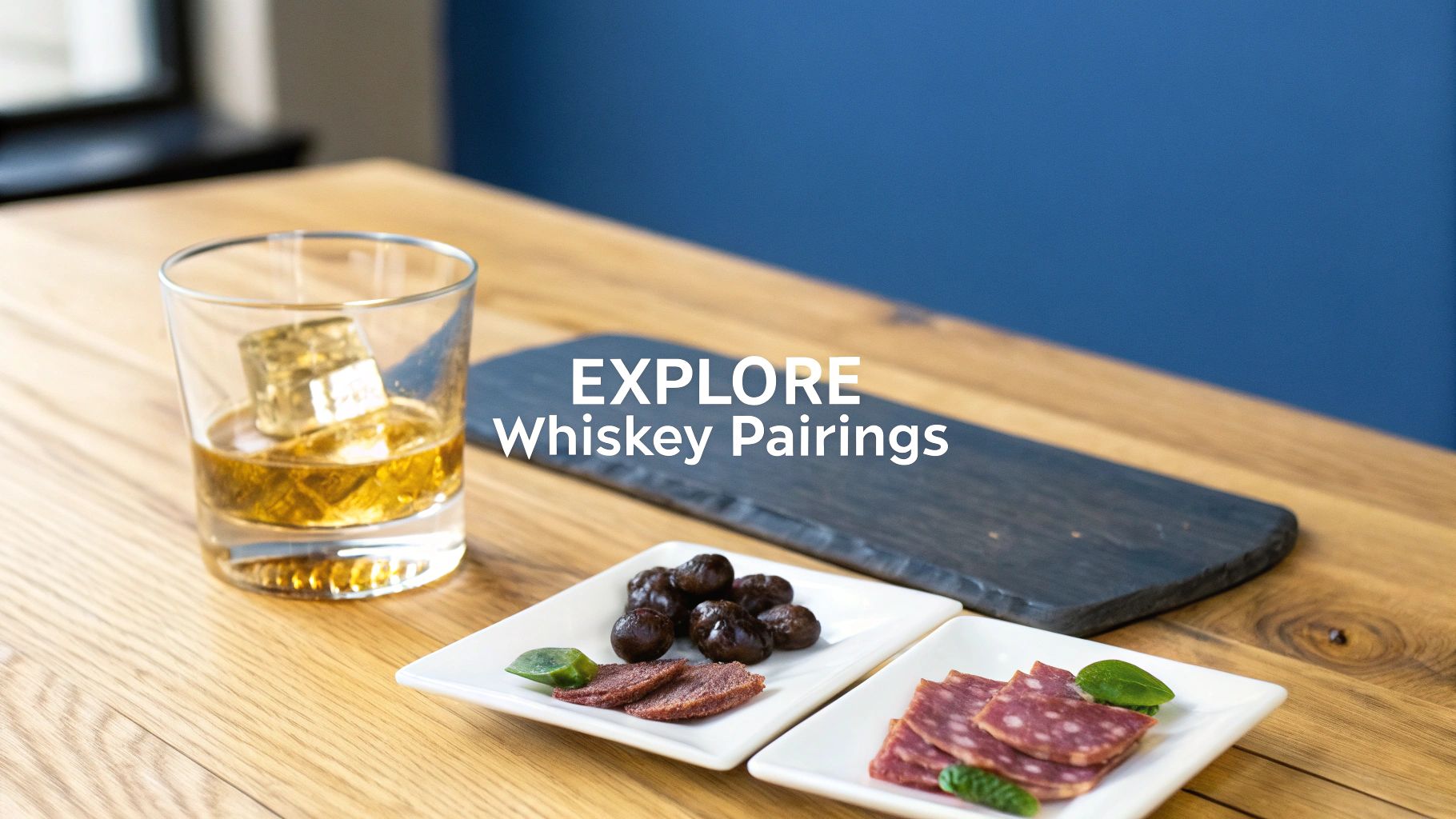
Why Try Pairing Whiskey with Food
For newcomers, the idea might still feel a bit intimidating, but the rewards are absolutely worth it. A great pairing can unlock hidden notes in both the whiskey and the food, creating a taste sensation that's far greater than the sum of its parts.
A well-chosen pairing doesn't just complement; it transforms. The smokiness in a whiskey can amplify the char on a grilled steak, or its inherent sweetness can cut right through the richness of a creamy cheese, cleansing the palate for the next incredible bite.
Consider this guide your official invitation to explore this delicious landscape. We'll give you the confidence to move beyond sipping whiskey on its own and start seeing it as a key player in your next great meal. Let's get this flavor adventure started.
Mastering the Core Principles of Pairing
Pairing whiskey with food isn’t about following a stuffy set of rules—far from it. Think of it more like DJing. You can either find two tracks with a similar vibe to create a smooth, seamless transition, or you can drop in a totally different beat to jolt the crowd and create a moment of pure energy.
That’s the essence of pairing in a nutshell: you either complement or contrast. Both approaches can lead to incredible results, but they take different routes to get there. Getting a handle on these two core strategies is the first real step for anyone looking to dive into the world of whiskey and food.
The Art of Complementing Flavors
Complementing is probably the most intuitive way to start. The idea here is simple: find similar flavors in both your whiskey and your food, and let them amplify each other. It's a strategy built on harmony, where similar notes join forces to create something bigger than the sum of their parts.
Picture this: a smoky, peat-forward American single malt alongside a perfectly grilled steak. The smokiness in the whiskey grabs onto the char from the grill, making both the spirit and the steak taste richer, deeper, and more intensely savory.
Here are a few classic complementary pairings to get you started:
- Sweet with Sweet: A classic Bourbon, loaded with notes of caramel and vanilla, is just begging to be paired with a decadent pecan pie or a creamy crème brûlée.
- Spicy with Spicy: A high-rye whiskey, maybe something from a craft distiller like Sagamore Spirit known for that peppery kick, can absolutely hold its own against a spicy barbecue or some blackened fish.
- Fruity with Fruity: Lighter whiskeys with crisp notes of apple or pear become even more delightful when enjoyed with a fruit tart or a cheese board loaded with fig jam.
The Power of Contrasting Flavors
Contrasting is where things get a bit more dynamic. This is all about using opposing flavors to create balance. One element will cut right through the other, cleansing your palate and making specific characteristics pop in both the food and the whiskey.
A fantastic example is pairing a sweet, rich Bourbon with a salty, funky blue cheese. The whiskey's sweetness beautifully tames the cheese’s aggressive saltiness. In return, the sharp, pungent character of the cheese makes the Bourbon's underlying oak and spice notes sing. It's this incredible push-and-pull that creates a truly unforgettable experience.
This same idea applies to texture and richness. A heavy, oily food like smoked salmon practically demands a whiskey that can slice through that fattiness. A crisp, clean rye whiskey is perfect for this job, acting almost like a palate cleanser that resets you for the next delicious bite.
If you want to get a better handle on the specific notes that make these pairings click, exploring a bourbon flavor wheel is a great next step. It breaks down all the common tastes and aromas, giving you a powerful framework to start experimenting with confidence.
A Flavor Map of American Craft Whiskey
To really nail food pairing with whiskey, you first have to understand the spirit itself. American craft whiskey isn’t just one thing; it's a sprawling landscape of different styles, each shaped by its unique grain recipe, the barrel it sleeps in, and the distiller's personal touch. Learning to spot these core profiles is like getting a map to a whole new world of delicious combinations.
The American craft scene gives us an incredible spectrum to play with. From the sweet, corn-heavy Bourbons of Kentucky to the spicy, assertive Ryes rooted in Pennsylvania tradition, every style brings something unique to the dinner table. This diversity is your secret weapon for creating memorable pairings.
The Sweet and Approachable Bourbon
Bourbon is often the first stop for new whiskey drinkers, and for good reason. It has to be made from at least 51% corn and aged in new charred oak barrels, which gives it that classic sweetness packed with notes of caramel, vanilla, and toasted wood. This makes it a fantastic and flexible pairing partner.
Think of Bourbon as the easygoing, friendly guest at your dinner party—it gets along with almost everything.
- Classic Pairing: Rich, smoky barbecue ribs. The whiskey’s sweetness slices right through the fat while complementing the tangy sauce.
- Cheese Choice: A sharp, aged cheddar. The saltiness of the cheese creates a beautiful contrast with the Bourbon’s caramel backbone.
- Dessert Match: Pecan pie is a no-brainer. The nutty, brown sugar flavors in the pie are in perfect harmony with the whiskey.
The Spicy and Complex Rye
Rye whiskey, which must contain at least 51% rye grain, is a whole different ballgame. It's known for that signature peppery spice, often layered with notes of dill, mint, and dark fruit. This bold, assertive profile means it can stand up to equally powerful foods.
Rye holds its own against strong flavors that would completely steamroll a more delicate spirit. It’s your go-to for cutting through richness and adding a spicy counterpunch to a meal.
Try pairing a craft rye with cured meats like pastrami or a funky, creamy blue cheese. The whiskey’s spice acts as a brilliant contrast, cleansing the palate with each sip. To learn more about the distilleries pushing the envelope, check out our guide to some great American craft spirits.
A Quick Pairing Cheat Sheet
To make things even easier, here’s a quick-reference guide to get you started. Think of it as a cheat sheet for matching some popular American craft styles with their ideal food partners.
American Craft Whiskey Pairing Cheat Sheet
| Whiskey Style | Primary Flavor Notes | Best Paired With |
|---|---|---|
| Bourbon | Caramel, Vanilla, Toasted Oak, Brown Sugar | BBQ, Aged Cheddar, Grilled Meats, Pecan Pie, Dark Chocolate |
| Rye Whiskey | Pepper, Baking Spices, Mint, Dark Fruit | Cured Meats, Smoked Fish, Blue Cheese, Spicy Dishes |
| American Single Malt | Varies widely; often Honey, Malt, Dried Fruit, Chocolate | Roasted Chicken, Mild Cheeses, Fruit Tarts, Smoked Salmon |
| Wheat Whiskey | Honey, Bread, Vanilla, Gentle Spice | Creamy Cheeses, Seafood, Light Pastries, Salads |
This table is just the beginning, of course. The real fun is in the experimenting, which is where the fundamental principles of pairing come into play.
Complement vs. Contrast: The Two Paths to Pairing Bliss
When you get down to it, there are two main strategies for pairing: complementing or contrasting flavors. The visual below breaks it down perfectly.
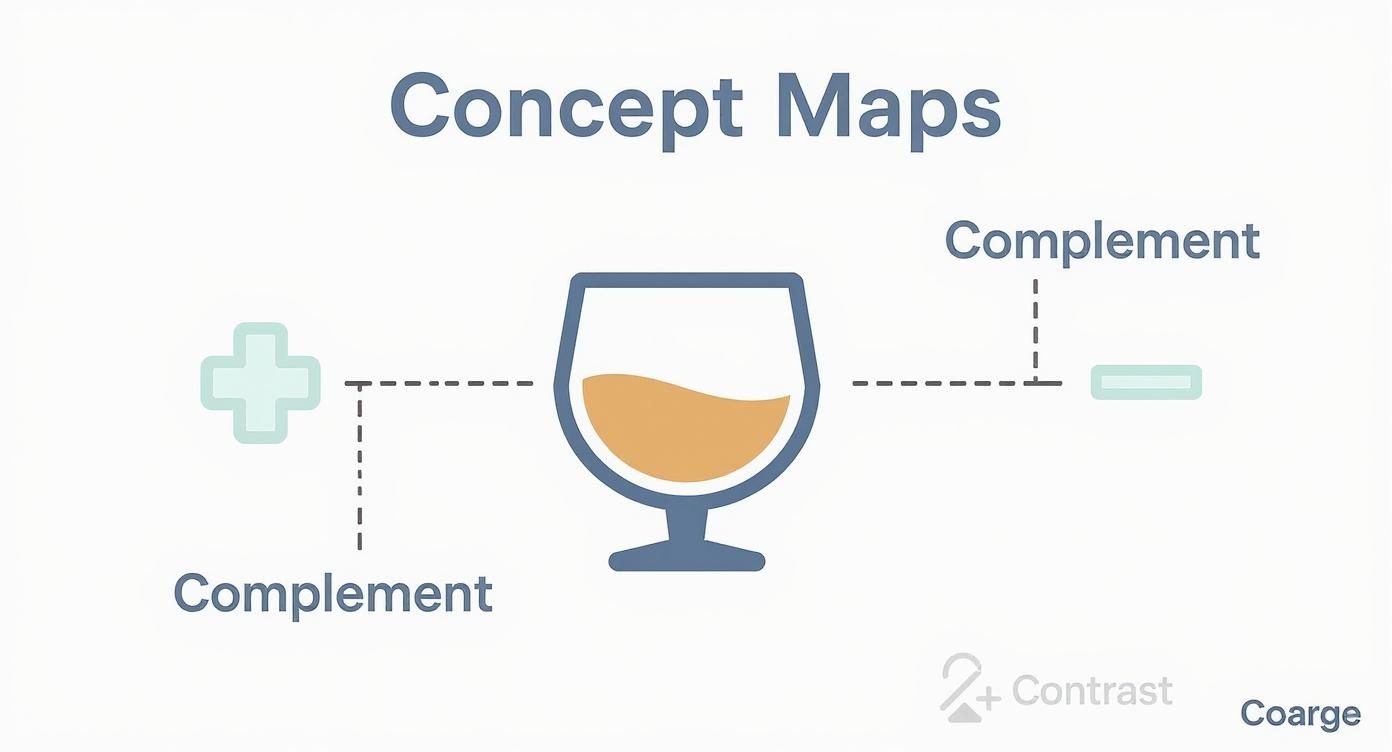
You can either match similar flavors (complement) to amplify them or use opposing ones (contrast) to create a sense of balance. It's a dynamic that has helped the flavored whiskey market explode—it's projected to hit USD 65.3 billion by 2035.
Because of its natural sweetness, Bourbon is a perfect canvas for flavor infusions, already claiming 33% of this market segment. This just opens up even more doors for creative and delicious pairings.
Building the Perfect Whiskey and Food Menu
Alright, you’ve got the principles down. Now it's time for the fun part: turning all that theory into a delicious reality. This is where we get our hands dirty and start building an actual menu, moving from abstract ideas to concrete, mouth-watering combinations you can put on the table tonight.
Consider this your field guide to creating some truly memorable food pairing with whiskey experiences, one course at a time.
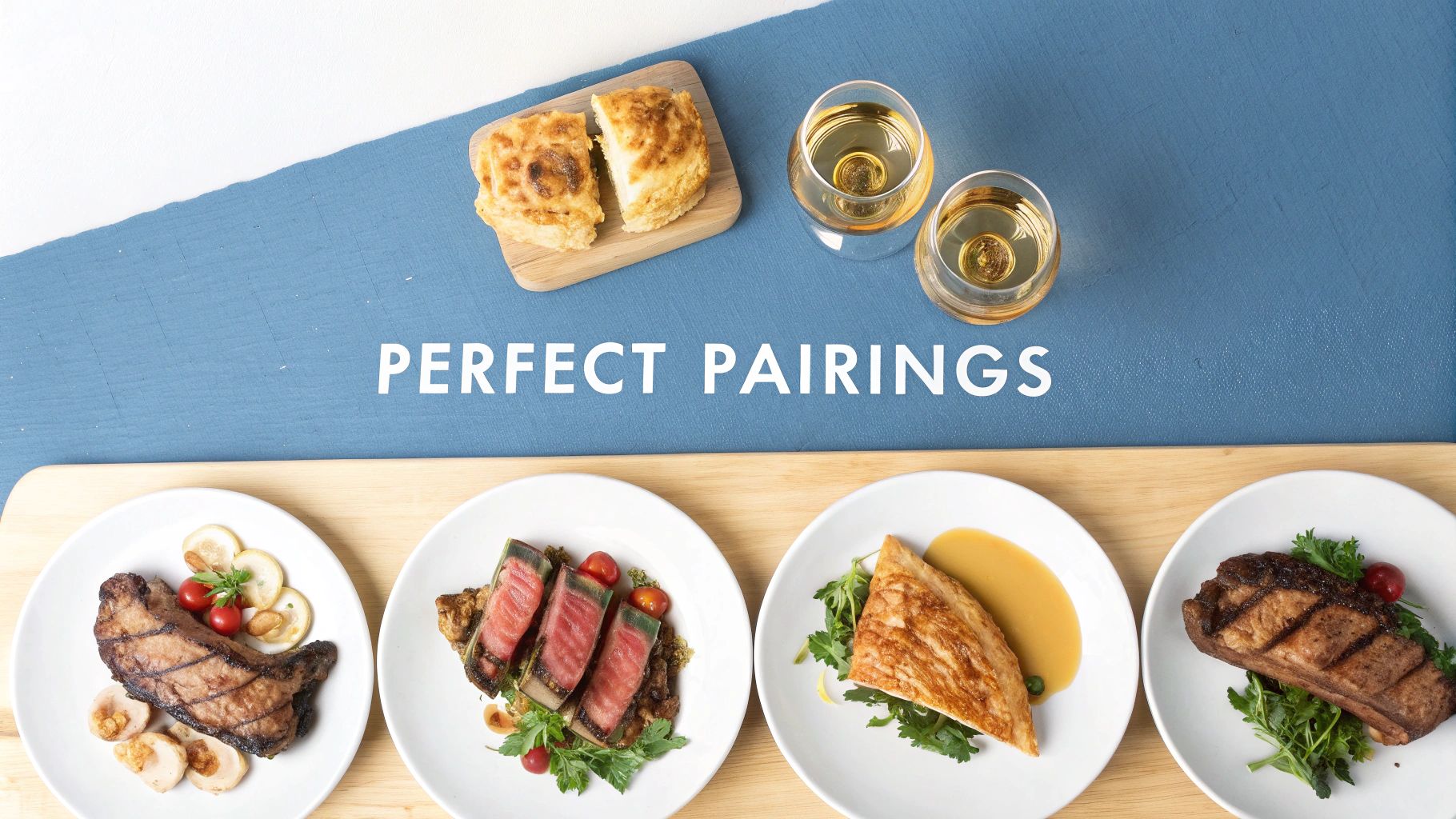
We're going to walk through some classic food categories and point you toward specific American craft whiskey styles that will make each dish sing. Think of this as building your pairing intuition, helping you see the possibilities in every meal.
For Rich Red Meats and BBQ
When you're dealing with hearty dishes like a grilled steak, smoked brisket, or a rack of slow-cooked ribs, you need a whiskey that won't get pushed around. These intense, savory flavors demand a spirit with a serious backbone—something that can either match that richness head-on or cut straight through it.
A classic high-rye Bourbon is just the tool for the job. Its underlying corn sweetness is a natural friend to the smoky char of the meat, while the spicy kick from the rye grain slices right through the fat. It’s a palate-cleansing combination that gets you ready for the next bite. For anyone new to whiskey pairing, this is a fantastic and forgiving place to start.
- The Pairing: Smoked brisket with a bold Bourbon from a distiller like Westward Whiskey.
- Why It Works: The Bourbon’s deep caramel and vanilla notes grab hold of the sweet and smoky flavors in the barbecue sauce. The result is a seamless, deeply satisfying match.
If you really want to lean into it, exploring different Bourbon BBQ flavored options can add another layer of fun to your pairings.
For Poultry and Pork
Lighter meats like roasted chicken or a juicy pork loin are a different kind of canvas. They don’t have the same overpowering flavors as a steak, which opens the door to more nuanced and delicate whiskey pairings.
An American Single Malt or a softer Wheated Bourbon can be a beautiful match here. These whiskeys tend to have gentler profiles, often with notes of honey, fruit, and malt that won't steamroll the subtle flavors of the meat. Imagine a bottle from Stranahan’s Colorado distillery next to a roasted chicken—the whiskey's distinct maltiness is the perfect complement to the savory herbs and crispy skin.
For Seafood and Lighter Fare
Pairing whiskey with seafood might sound a little out there, but trust me, it can be an absolute showstopper when you get it right. The trick is to steer clear of the heavy, oak-forward whiskeys that will completely overwhelm the delicate fish. You're looking for something crisp, clean, and vibrant.
A spicy Rye whiskey is an amazing choice, especially for oily fish like smoked salmon. The rye's peppery character cuts through the salmon's richness in much the same way a squeeze of fresh lemon would. It cleanses the palate and brightens everything up.
The secret to a successful seafood pairing is contrast. The whiskey should act as a refreshing counterpoint, lifting the dish rather than weighing it down.
For Cheeses and Desserts
Let's be honest, the after-dinner course is where whiskey truly gets to shine. The incredible variety of cheeses and desserts creates a playground of pairing possibilities.
- Cheeses: Your best friends here are the classic rules of complementing and contrasting. Try pairing a funky, assertive blue cheese with a spicy Rye for a powerful, exciting contrast. For a more harmonious match, you can't go wrong with a sharp, aged cheddar alongside a sweet, rich Bourbon from a brand like Frey Ranch.
- Desserts: Dark chocolate and whiskey are a match made in heaven, but it’s particularly good with a fruit-forward American Single Malt. For those classic spiced desserts like apple pie or sticky cinnamon rolls, a Bourbon with heavy notes of vanilla and baking spice will feel like a natural extension of the dessert itself.
How to Host a Whiskey Pairing at Home
Turning your home into the go-to spot for a memorable tasting night is way easier than you might think. Hosting your own food pairing with whiskey event isn't about being some certified expert; it’s about creating a fun, engaging, and delicious experience for your friends. Think of this as your simple blueprint to making sure your get-together is a smashing success.
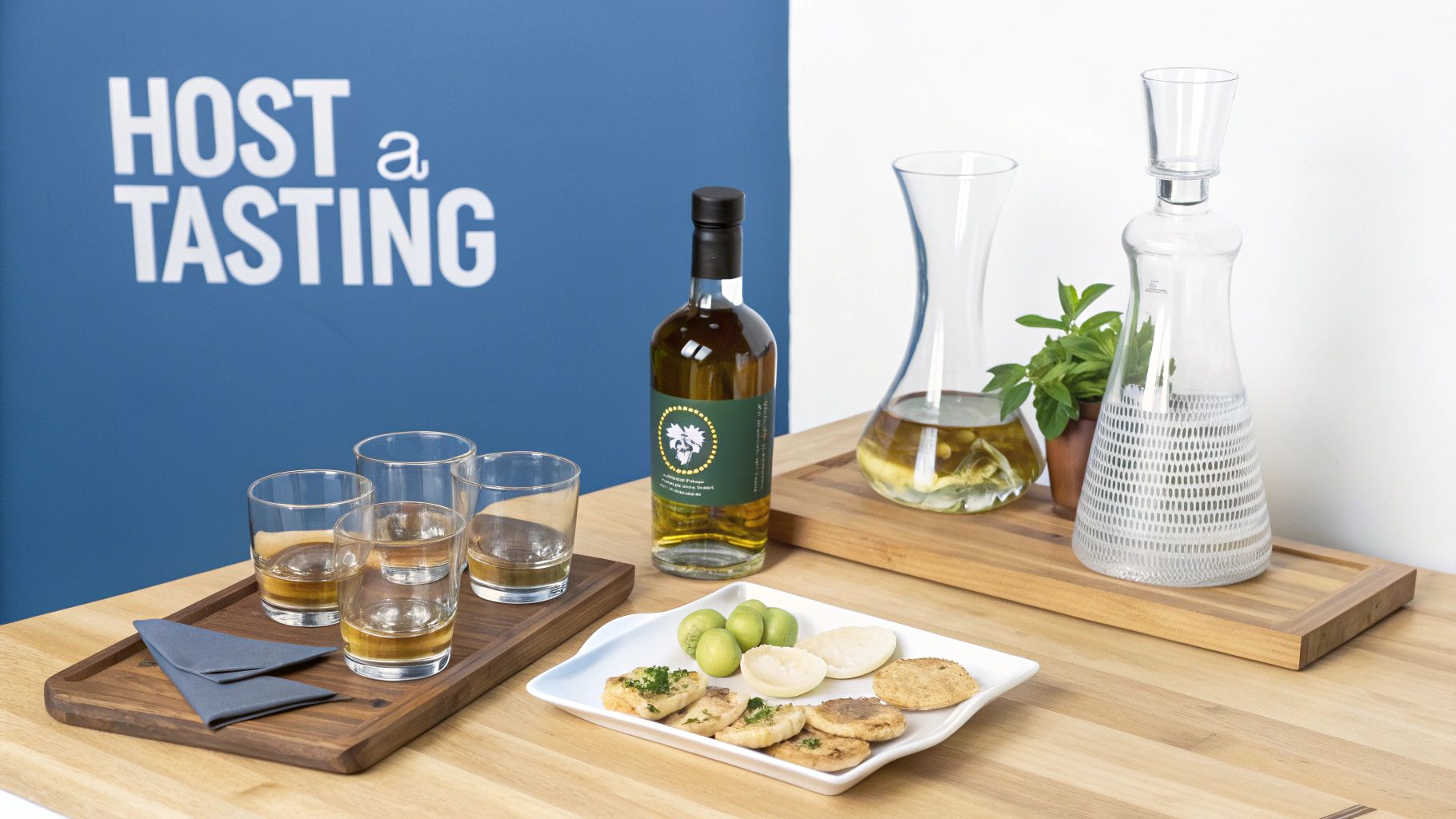
This kind of curated experience is getting incredibly popular. It’s not just you—the entire whiskey world is booming. The global market is projected to jump from USD 110.7 billion in 2024 to USD 318.3 billion by 2033. A huge part of that growth is driven by a renewed cocktail culture and a real hunger for unique tasting events, just like the one you're about to plan.
Setting the Stage for Success
First things first: pick a theme. A theme gives your night focus and makes choosing the whiskeys and food pairings a whole lot simpler. If your guests are newer to the whiskey scene, a theme like "A Tour of American Rye" or "Bourbon and Its Many Faces" is a fantastic and approachable place to start.
Once you’ve landed on a theme, select three to four diverse whiskeys that fit. For an American Rye night, you could grab a high-rye bourbon, a classic Pennsylvania-style rye, and maybe a modern craft rye with a unique barrel finish. The goal here is variety, not volume.
A great host has the right tools for the job. Make sure you have proper tasting glasses (like Glencairns), small plates for the food, and plenty of water. Water is absolutely key for cleansing the palate between pairings and for adding a single drop to the whiskey to open up its aromas. For new drinkers, this simple trick can soften the alcohol burn and make the flavors easier to identify.
Guiding Your Guests Through the Tasting
With your whiskeys lined up and small bites at the ready, it's time to lead the tasting. Don't just pour and serve—walk your guests through a simple, structured process for each pairing. This is what makes the experience interactive, educational, and fun.
Just follow these simple steps for each whiskey and food combination:
- Nose the Whiskey: Encourage everyone to give the glass a gentle swirl and take in the aromas. What are they picking up? Vanilla, baking spice, maybe some fruit?
- Take the First Sip: Have them take a small sip of the whiskey all by itself. This sets the baseline for its flavor profile. Newcomers, don't be afraid to add a drop of water here!
- Taste the Food: Next up, take a bite of the paired food item.
- The Final Sip: Now, go back for another sip of the whiskey. This is where the magic happens. Talk about how the flavors of both the food and the spirit have changed and evolved.
For a deeper dive into this process, be sure to check out our complete guide to whiskey tasting at home.
And while the focus is on the pairing, brushing up on a few general home party hosting tips can also help make sure your event runs smoothly from start to finish. Your real goal is to demystify the whole process and create a relaxed, fun atmosphere where everyone feels comfortable enough to explore and discover something new.
Common Whiskey Pairing Questions Answered
Even with all the principles and menus laid out, a few questions always seem to come up when you’re first diving into the world of food pairing with whiskey. Let's tackle some of the most common ones with straightforward answers to get you started on the right foot.
What Is the Best Whiskey for a Beginner to Start Pairing With?
If you're just starting out, you can't go wrong with a classic American Bourbon. It's the friendly handshake of the whiskey world. Its typical flavor profile—think caramel, vanilla, and a touch of gentle oak—is incredibly approachable and surprisingly versatile.
This is the kind of whiskey that plays well with a huge range of foods you probably already love. We're talking grilled meats, smoky barbecue, a good sharp cheddar, and desserts like pecan pie or a warm apple crumble. That inherent sweetness makes it far less intimidating than a peat-heavy Scotch or a fiery Rye, making it the perfect launchpad for your pairing journey. A great craft option to look for is a "wheated" bourbon, which uses wheat instead of rye for an even softer, smoother taste.
Can You Pair Whiskey With Spicy Food?
Absolutely. In fact, it can be an amazing combination when you get it right. The trick is to pick a whiskey that can go toe-to-toe with the heat without getting knocked out or starting a fight on your palate.
A high-rye bourbon or a straight rye whiskey is your best friend here. Their own peppery spice notes are a natural match for the heat in dishes like Nashville hot chicken or a spicy Thai curry. At the same time, the whiskey's underlying sweetness provides a welcome cooling effect. Just a word of caution: maybe steer clear of cask-strength options for this, as the high proof can crank the burn up to eleven.
Should I Drink Whiskey Neat or on the Rocks for Pairing?
For the best, most authentic tasting experience, always start by trying the whiskey neat. This is your baseline—it lets you get the full, unvarnished picture of the spirit's aroma and flavor before you introduce food.
Once you’ve taken that first impression, then it’s time to play. A few drops of water can sometimes "open up" a whiskey, coaxing out more subtle aromas and flavors. This is a pro-tip for new drinkers, as it can significantly tone down the alcohol's bite. If you like it chilled, go for a single large ice cube. It melts much slower, cooling the drink down without watering down the very flavors you’re trying to pair.
What Cheeses Pair Well With Whiskey?
Whiskey and cheese are one of those classic pairings that just works. It's a true dynamic duo. The secret is to match the intensity of the cheese to the boldness of the whiskey—you don't want one to overpower the other.
- For Bourbon: An aged cheddar or a nutty gouda is a perfect match for its sweet, oaky character.
- For Rye: The spiciness of rye is brilliant against a creamy, funky blue cheese. It's a contrast that sings.
- For American Single Malts: Try a soft, buttery brie or camembert to complement their often complex, nuanced profiles.
Ready to discover your next favorite American craft whiskey without bias? The Blind Barrels tasting kit removes the labels and lets your palate lead the way. Find hidden gems and unlock a new way to taste. Explore our subscription at https://www.blindbarrels.com.