

Welcome to the nuanced world of whiskey tasting. For newcomers and seasoned enthusiasts alike, what you sip between the whiskey is just as important as the dram itself. The right chaser can cleanse your palate, enhance subtle flavor notes, and transform a simple tasting into a memorable sensory journey. This guide moves beyond basic mixers to explore the professional's toolkit of good chasers for whiskey, focusing on how specific pairings can unlock new dimensions of flavor.
Whether you're a beginner learning to identify notes in an American craft whiskey or an expert hosting a blind tasting, these selections will help you appreciate every complex layer your whiskey has to offer. We'll delve into eight distinct options, from palate-cleansing classics like water and citrus to more adventurous pairings like candied bacon and dark chocolate.
This list provides actionable tips for new whiskey drinkers to set up a tasting experience that rivals those at the best distilleries, such as Wyoming Whiskey or Westward Whiskey. By understanding how a chaser interacts with the spirit, you'll learn to isolate and identify specific tasting notes, making it easier to discover your next favorite bottle without brand bias. Get ready to elevate your home bar and sip like a true connoisseur.
1. Water (Room Temperature or Chilled)
While many think of chasers as flavorful beverages, the most fundamental and respected chaser is simple water. Used by master distillers and professional tasters, water serves not to mask the whiskey's flavor but to enhance your ability to perceive it. It acts as a neutral palate cleanser, rinsing away lingering notes from a previous sip or sample, which allows you to approach the next taste with a clean slate.
This method is essential for anyone serious about understanding the nuances of a spirit, from a complex single malt Scotch to a bold American craft whiskey like Westland Distillery's Single Malt. By resetting your taste buds, water ensures that the tasting notes you identify are coming from the whiskey itself, not from the ghost of your last sip.
How to Use Water as a Palate Cleanser
To use water effectively as a chaser, precision matters. The goal is to cleanse, not dilute your next sip or numb your palate.
- Temperature is Key: Opt for room temperature water. Chilled or iced water can slightly numb your tongue and dull your taste receptors, making it harder to pick up subtle flavors like vanilla, oak, or caramel. This is a simple but critical tip for new whiskey drinkers.
- Sip, Don't Gulp: Take a small sip of water (about half an ounce) and swish it around your mouth to completely rinse your palate.
- Timing Matters: Use water between different whiskey expressions during a tasting, or between sips if you are drinking a particularly high-proof or complex spirit. This prevents flavor carryover and palate fatigue.
Pro-Tip for Beginners: If your tap water has a strong mineral or chlorine taste, it can interfere with the whiskey's profile. Consider using filtered or distilled water for the purest palate-cleansing experience.
Using water is one of the best habits a new whiskey drinker can develop. It’s a simple yet powerful tool for accurately exploring what’s in your glass. For a deeper dive into how water interacts specifically with American whiskey, you can learn more about adding water to bourbon and its effects. This practice solidifies water’s place as one of the truly good chasers for whiskey when your goal is sensory clarity.
2. Sparkling Water or Soda Water
A step up from still water, sparkling or soda water offers a more dynamic palate-cleansing experience. The gentle carbonation works to scrub your tongue, lifting away residual oils and flavors from the previous sip more effectively than still water might. This effervescence provides a light, crisp reset, preparing your taste buds to perceive the full spectrum of a whiskey’s profile with heightened sensitivity.
This method is popular in high-end whiskey bars and at distillery tastings, including those at American craft distilleries like Balcones Distilling, where a clean palate is essential for appreciating the subtle notes of their unique spirits. The bubbles provide a textural contrast that wakes up the senses, making the next sip of whiskey feel even more distinct and complex. It’s an excellent choice for those who find still water a bit too passive.
How to Use Sparkling Water as a Palate Cleanser
Using sparkling water correctly enhances its benefits without interfering with the whiskey. The key is managing the carbonation and temperature to your advantage.
- Choose Unflavored: Always opt for neutral, unflavored sparkling water or soda water. Brands like Perrier, Topo Chico, or premium mixers like Fever-Tree Soda Water are ideal because they don't introduce citrus or mineral flavors that could clash with the whiskey.
- Serve Chilled, Not Icy: A slight chill is refreshing and makes the carbonation crisper, but avoid serving it ice-cold. Overly cold temperatures can numb your palate, defeating the purpose of a sensory reset.
- Small, Intentional Sips: Pour a small amount (about one to two ounces) between different whiskeys. A quick sip and swish is all you need to scrub your palate and prepare it for the next dram.
Pro-Tip for Beginners: The level of carbonation matters. Highly efferverent options like Topo Chico provide a vigorous cleanse, which is great for high-proof or heavily peated whiskies. A softer bubble, like San Pellegrino, is better for more delicate spirits.
Using sparkling water is one of the more refined options for good chasers for whiskey, particularly when your goal is to dissect and appreciate every nuance in your glass. It elevates the tasting experience by adding a textural element that sharpens your focus and sensory perception.
3. Apple Slices or Apple Juice
A crisp, fresh apple slice is one of the most effective and flavorful palate cleansers for whiskey, especially American styles like bourbon and rye. The apple’s natural acidity, sweetness, and crisp texture work together to reset the taste buds while also complementing the spirit. Unlike many chasers that simply wash away flavor, apple acts as a flavor bridge, highlighting the inherent fruit, caramel, and oak notes in the whiskey.
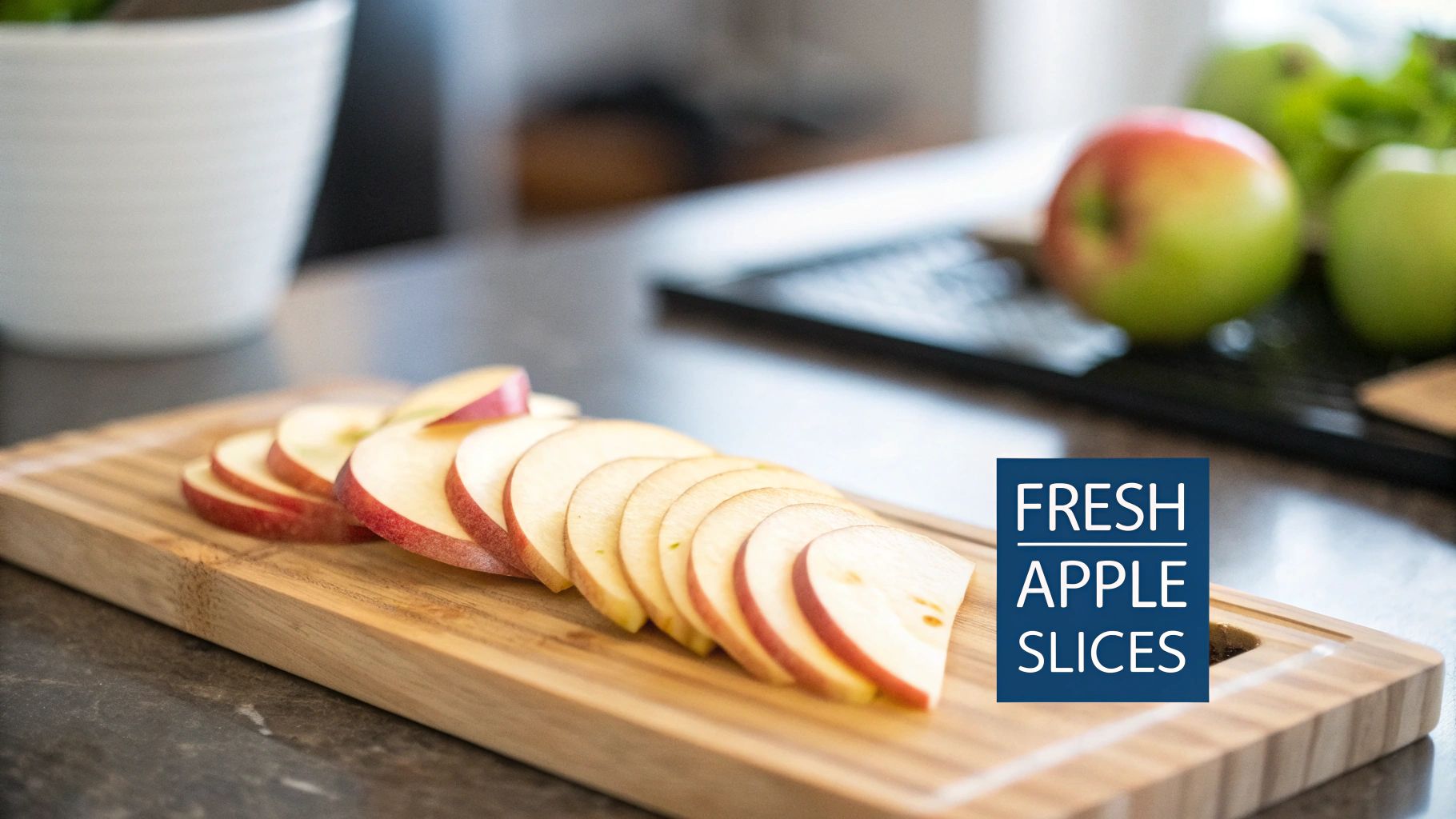
This method is popular at distilleries like Frey Ranch and Laws Whiskey House, where apples are used to enhance tasting experiences. The malic acid in apples effectively cuts through the richness and oils of the whiskey, preparing your palate for the next sip without introducing conflicting flavors. Whether you use a slice or a splash of pure juice, apple is an excellent tool for exploring whiskey’s complexity.
How to Use Apple as a Palate Cleanser
Using apple effectively requires selecting the right type and preparing it correctly to maximize its palate-cleansing benefits.
- Choose the Right Apple: A tart apple like a Granny Smith is ideal. Its high acidity provides a powerful palate reset. For a slightly sweeter experience that still offers a good balance, a Honeycrisp works well.
- Keep it Fresh: Slice the apple just before your tasting begins to prevent browning and preserve its crisp texture. Cut thin slices for easy handling between sips.
- Opt for Pure Juice: If you prefer juice, choose a 100% pure, unsweetened, and preferably fresh-pressed variety. Sugary, concentrated juices can coat the palate and interfere with the whiskey’s flavor profile.
Pro-Tip for Beginners: Try pairing apple slices with a flight of bourbons. Take a bite of a tart apple slice between samples to notice how it accentuates the vanilla, cinnamon, and baked fruit notes in each expression. This is an easy way to start training your palate.
Using apple slices or juice is one of the most accessible and enjoyable ways for new drinkers to appreciate the layers in a good whiskey. This makes apple one of the best and most popular good chasers for whiskey when you want to both cleanse and complement what's in your glass.
4. Dark Chocolate (70% Cacao or Higher)
Moving beyond liquid chasers, high-quality dark chocolate offers a sophisticated and decadent experience. Far from masking the spirit, a piece of rich, dark chocolate serves as an elegant palate cleanser and flavor enhancer. The tannins from the cocoa beans complement the tannins derived from the whiskey's oak barrel, while its inherent bitterness and subtle sweetness can highlight notes of vanilla, caramel, and spice in the spirit itself.
This pairing is a staple in professional tasting rooms and premium whiskey bars for a reason. It elevates the tasting into a sensory exploration, making it a perfect choice for anyone looking to appreciate the finer points of a complex American craft whiskey, such as a rye from High West Distillery with its spicy, fruity notes.
How to Use Dark Chocolate as a Chaser
To use dark chocolate effectively, the quality of the chocolate and the technique are paramount. The goal is to create a harmonious interaction between the chocolate and the whiskey.
- Select the Right Cacao Percentage: Aim for chocolate in the 70-85% cacao range. Anything lower can be too sweet, clashing with the whiskey, while anything higher might be overly bitter, overpowering subtle notes. Brands like Lindt Excellence 70% or Ghirardelli Intense Dark are excellent starting points.
- Methodical Tasting: Break off a small, thumbnail-sized piece. Let it melt slightly on your tongue to coat your palate with its rich flavors. Then, take a sip of your whiskey and notice how the flavors mingle and transform.
- Follow with Water: To fully reset your palate for the next whiskey, especially during a comparative tasting of different bourbons, follow the chocolate and whiskey with a small sip of room-temperature water.
Pro-Tip for Beginners: For a truly elevated experience, explore artisanal chocolate makers. Local chocolatiers often create bars with unique flavor profiles that can create stunning pairings with specific whiskeys, turning your tasting into a memorable event.
Using dark chocolate is one of the most enjoyable ways to explore whiskey's complexity. This practice confirms that some of the most good chasers for whiskey aren't liquids at all but carefully chosen food pairings that create a new dimension of flavor.
5. Candied Ginger or Fresh Ginger Chews
For those seeking a chaser that actively engages with whiskey's spicier notes, candied ginger offers a sophisticated and effective solution. This approach uses the natural, pungent heat of ginger to complement and highlight the peppery, warm characteristics found in many whiskeys, particularly rye. Instead of just resetting the palate, ginger interacts with the spirit, creating a dynamic tasting experience that cleanses with a distinctive bite.
The warming sensation from a piece of ginger harmonizes with the alcohol warmth of the whiskey, a technique often used in high-end rye whiskey tastings to amplify notes of cinnamon, clove, and allspice. This makes ginger a fantastic tool for exploring the complex spice profile of a spirit like Southern Star’s Paragon Single Barrel Straight Rye Whiskey, where its unique character can be fully appreciated. The ginger doesn’t mask the flavor; it sharpens your focus on it.
How to Use Ginger as a Palate Enhancer
Using ginger requires a different approach than a neutral chaser. The goal is to stimulate the palate and prepare it for the whiskey’s spice notes.
- Choose Your Ginger: Candied ginger offers a balance of sweetness and spice, while a fresh ginger chew (like Gin Gins) provides a more intense, fiery kick. Both are excellent choices.
- A Little Goes a Long Way: Start with a very small piece. Let it rest on your tongue for 10 to 15 seconds to allow its flavors to unfold before chewing and swallowing.
- Sequence for Success: For the best results, chew the ginger, take a small sip of water to rinse, and then take your sip of whiskey. This sequence prepares your palate to receive and analyze the whiskey’s spice without being overwhelmed.
Pro-Tip for Beginners: Source high-quality candied ginger from a specialty food store. Lower-quality versions can be overly sugary, which can mute the whiskey's profile rather than enhancing it. The quality of the ginger directly impacts the quality of the tasting experience.
Incorporating ginger is one of the more advanced yet rewarding habits for a whiskey enthusiast. It’s a purposeful choice that transforms the act of chasing from simple palate cleansing into an active part of the flavor discovery process, making it one of the most interesting and good chasers for whiskey available.
6. Smoked Almonds or Salted Nuts
While liquid chasers are common, a small, savory bite can be one of the most effective palate tools. Smoked or salted nuts, particularly almonds, serve as a textured chaser that enhances rather than overwhelms the whiskey. The savory, smoky, and salty notes naturally complement the oak, char, and spice profiles found in many bourbons and ryes, creating a harmonious pairing.
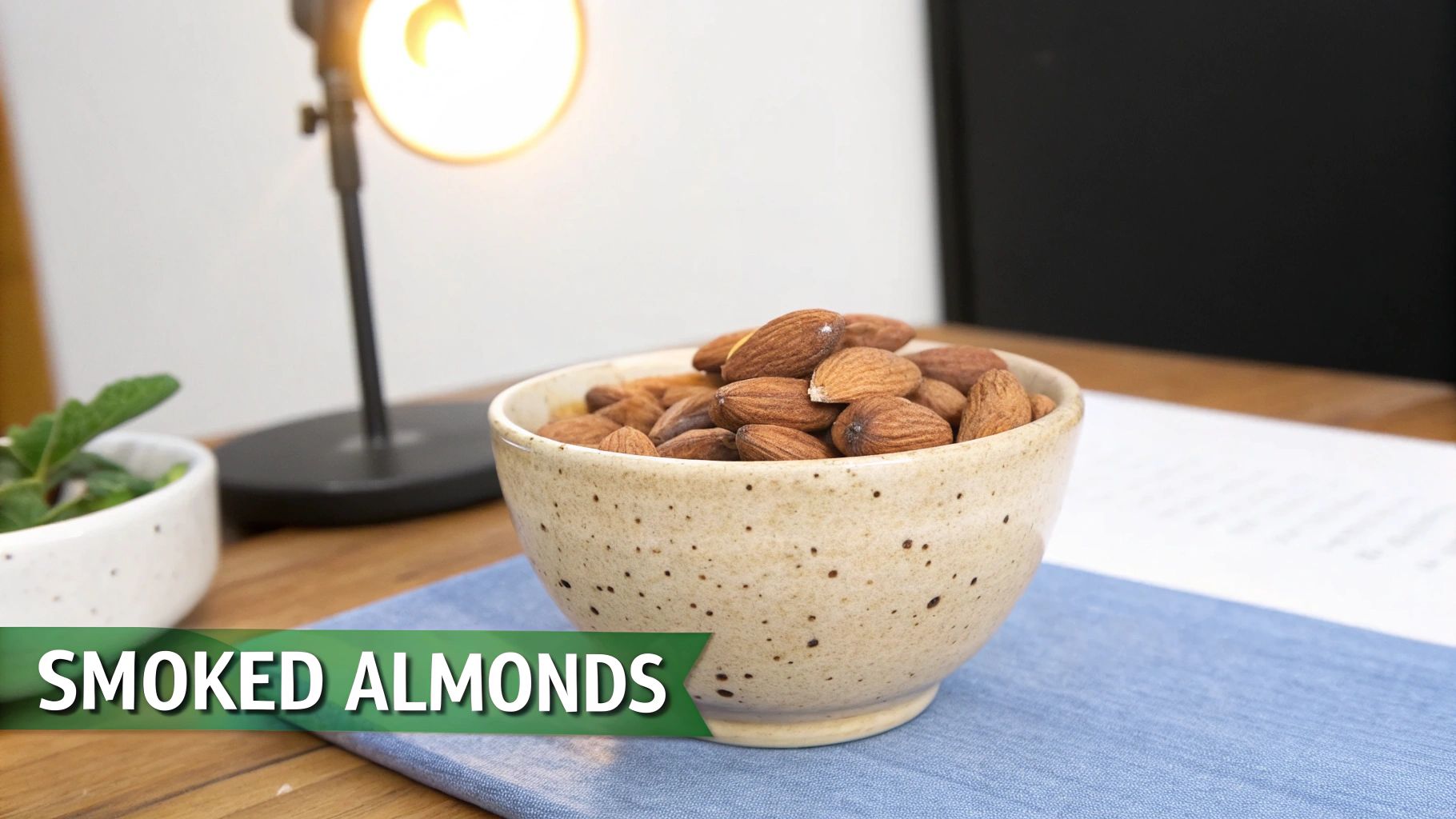
This practice is popular at American craft distillery tasting rooms, like those at Stranahan's in Colorado, which celebrate the robust character of their whiskeys. The natural oils in the nuts provide just enough fat to cleanse the palate of lingering tannins without coating your tongue, preparing you for the next sip. This makes smoked nuts one of the good chasers for whiskey when you want to add a complementary flavor dimension to your tasting experience. Beyond their palate-cleansing properties, some chasers like smoked almonds or salted nuts can also be considered delicious high-protein savory snacks.
How to Use Nuts as a Tasting Companion
To use nuts effectively, think of them as a "reset bite" that bridges sips or samples, especially when exploring a flight of different whiskeys.
- Choose the Right Nut: Smoked almonds are the classic choice, as their smokiness latches onto the charred oak notes in bourbon. Salted marcona almonds or smoked pecans also work beautifully.
- Portion Control is Crucial: You only need a few. Eat just two or three nuts between sips to get the desired palate-cleansing effect without filling up.
- Mind Your Flavors: Pair smoked nuts specifically with bourbons or peated Scotches to amplify their smoky qualities. For sweeter, less robust whiskeys, lightly salted nuts are a better choice.
Pro-Tip for Beginners: For a professional tasting setup, place a small bowl of nuts for each participant. After eating the nuts, take a small sip of water to fully rinse the palate before moving on to the next whiskey sample. This simple step makes a big difference.
Using a savory chaser like smoked almonds adds a sophisticated, tactile element to any whiskey tasting. It’s a simple technique used by professionals that any enthusiast can adopt at home to better appreciate the complex flavors in their glass.
7. Citrus (Lemon or Orange Slices/Wheels)
While not a beverage, citrus slices serve as a powerful and professional-grade palate cleanser. Master sommeliers and professional tasters often use a small piece of lemon or orange to reset their taste buds between vastly different spirits. The natural acidity and bright oils cut through lingering richness, effectively wiping the slate clean without introducing complex or sugary flavors.
This method is particularly useful for identifying and appreciating the delicate citrus and floral notes within a whiskey. A quick interaction with fresh lemon can prime your senses to better detect similar profiles in a lighter American craft whiskey, such as the subtle fruit notes in a well-aged light whiskey from a distillery like FEW Spirits or the bright zest in certain high-rye bourbons. It’s a sensory tool used to sharpen perception rather than mask flavor.
How to Use Citrus as a Palate Cleanser
Using citrus effectively requires a light touch to avoid overwhelming the whiskey's profile. The goal is to stimulate your palate, not drench it in acidity.
- Freshness is Crucial: Always use freshly cut citrus. Pre-cut slices can dry out or develop off-flavors. Cut thin wheels or wedges of lemon or orange just before your tasting begins.
- A Gentle Approach: Lightly suck on a small piece of the fruit's flesh for just a moment. Avoid consuming a large amount of juice, which can be too aggressive.
- Aroma First: For an aromatic reset, express the oils from a lemon peel over your glass before a sip. This adds a bright scent that highlights citrus notes in the whiskey without altering its taste.
- Timing and Pairing: Use citrus when transitioning between contrasting whiskey styles, like moving from a heavily peated Scotch to a sweeter bourbon. It is an excellent companion for lighter, more delicate whiskies where you want to accentuate bright, fresh notes.
Pro-Tip for Beginners: After using a citrus slice, take a small sip of room-temperature water to rinse away any residual acidity. This final step ensures your palate is perfectly neutral for the next whiskey you sample, making citrus one of the more technical but good chasers for whiskey when sensory analysis is your goal.
8. Candied Bacon or Savory Charcuterie Bites
Moving beyond traditional liquid chasers, savory and sweet bites like candied bacon or charcuterie offer a sophisticated and interactive tasting experience. This modern approach, popular in craft distillery tasting rooms, uses the principles of flavor pairing to either complement or contrast with the whiskey's profile. The interplay of salt, smoke, fat, and sugar can unlock hidden layers in a complex spirit, transforming a simple sip into a memorable culinary event.
This method is particularly effective for those looking to explore how food interacts with spirits, making it an excellent choice for a couples' tasting night or an at-home guided experience. The rich, savory notes of cured meats or the smoky-sweetness of candied bacon can echo the oak and char notes in a bold bourbon, such as Southern Star Straight Bourbon, creating a harmonious and elevated pairing that stands out as one of the truly good chasers for whiskey.
How to Use Savory Bites as a Whiskey Chaser
To use these food pairings effectively, the key is balance and intentionality. The goal is to enhance the whiskey, not overpower it.
- Portion Control is Crucial: Offer small, bite-sized portions. Think one-inch squares of candied bacon or a single, thinly-sliced piece of prosciutto. This ensures the food acts as a chaser or accent, not a full-blown meal.
- Serve at Room Temperature: Like whiskey, cured meats and bacon present their most complex flavors when not chilled. Serving them at room temperature allows their aromatic compounds and textures to shine.
- Pair Strategically: Match intense flavors with robust whiskeys. The smoky punch of hickory bacon or spicy chorizo is a fantastic companion for a high-proof or rye-forward whiskey. For expanded charcuterie pairing suggestions that can elevate your tasting, consider looking at this resource.
Pro-Tip for Beginners: Cleanse your palate with water after the food and before your next sip of whiskey. This removes any lingering fats or salts, allowing you to accurately assess the spirit on its own terms and preventing flavor contamination.
Incorporating savory bites is a fantastic way for new whiskey drinkers to train their palates to identify specific notes. By actively comparing the flavors in the food to those in the glass, you can sharpen your tasting skills. You can explore this sensory development further by learning the fundamentals of how to taste whiskey properly. This practice solidifies why carefully chosen food pairings are some of the best chasers for an immersive tasting.
8 Whiskey Chasers Compared
| Item | Implementation complexity | Resource requirements | Expected outcomes | Ideal use cases | Key advantages |
|---|---|---|---|---|---|
| Water (Room Temperature or Chilled) | Very low | Plain still water, glass, room temp | Neutral palate reset; accurate tasting; controlled dilution | Blind tastings, scoring, frequent resets | Non-interfering, universally available, recommended by professionals |
| Sparkling Water or Soda Water | Low | Bottled soda water chilled; unflavored | Stronger palate cleanse; palate stimulation from effervescence | Distillery tastings, when palate fatigue occurs, craft tastings | More cleansing than still water; adds sensory lift |
| Apple Slices or Apple Juice | Low | Fresh apples or 100% unsweetened juice; slice prep | Flavor bridge; highlights vanilla, caramel; adds acidity/sweetness | Bourbon/rye pairings, craft American whiskey tastings | Complementary natural flavors; enhances specific notes |
| Dark Chocolate (70% Cacao or Higher) | Medium | High-cacao chocolate, portioned pieces, water for cleansing | Enhances tannins and complexity; rich, lasting mouthfeel | Premium tastings; exploring complex flavors; select bourbons | Elevates experience; highlights depth without masking (if used sparingly) |
| Candied Ginger or Fresh Ginger Chews | Low–Medium | Candied or fresh ginger; small controlled portions | Emphasizes spice and warmth; strong palate stimulation | Rye whiskey tastings; identifying peppery/spicy notes | Highlights spice, boosts salivation, creates distinctive interactions |
| Smoked Almonds or Salted Nuts | Low | Smoked/salted nuts, small bowls; portion control | Enhances oak/smoke perception; adds textural contrast | Bourbon and smoky/peaty samples; tasting rooms | Savory complement; reinforces smoke/oak; engaging texture |
| Citrus (Lemon or Orange Slices/Wheels) | Low | Fresh citrus cut just before service; napkins to avoid drips | Bright, acidic cleanse; highlights citrus and floral notes | Lighter or delicate whiskeys; transitions between contrasting samples | Effective palate cleanser; accentuates bright notes; widely used |
| Candied Bacon or Savory Charcuterie Bites | Medium–High | Candied bacon or charcuterie, careful portioning, water to cleanse | Complex sweet/salty/smoky pairing; can coat palate if overused | Premium/adventurous tastings; high-proof bourbons; experience-focused events | Rich, memorable pairing; mirrors barrel-aged flavor compounds |
Start Your Own Whiskey Tasting Adventure
You've now explored a curated selection of some of the best chasers for whiskey, moving far beyond a simple shot-and-a-beer mentality. The journey from a splash of still water to the complex pairing of candied bacon reveals a fundamental truth: the right accompaniment doesn't just follow a sip of whiskey, it elevates it. By understanding how different flavors and textures interact with the spirit, you transform a simple drink into a sophisticated tasting experience.
This isn't just about finding something to wash down a strong spirit. It's about unlocking the hidden nuances within the glass. A crisp apple slice can slice through the richness of a wheated bourbon, revealing its softer, fruitier notes. A piece of dark chocolate can draw out the deep, oaky and cherry notes in an aged rye. These pairings are your tools for discovery, allowing you to deconstruct and appreciate the craftsmanship in every bottle, from a smoky Islay Scotch to a bold American single malt from a distillery like Southern Star.
Putting Your Palate to the Test
The true value of mastering these chasers lies in applying your knowledge. You're now equipped to move from passive drinking to active tasting. The next time you pour a dram, whether it's a familiar favorite or a new bottle from a craft producer like Frey Ranch, don't just drink it. Engage with it.
- Isolate the Flavors: Take a neat sip first. What do you taste? Vanilla, caramel, spice, smoke? This is your baseline.
- Introduce a Palate Cleanser: Follow with a sip of chilled water or a bite of an apple slice. Notice how it resets your senses, preparing you for the next taste.
- Experiment with Enhancers: Now, take another sip of whiskey and follow it with a piece of dark chocolate or a smoked almond. How does the flavor profile change? Does the chaser amplify certain notes or bring new ones to the forefront?
This methodical approach is the key to developing a more discerning palate. It helps you identify not just what you like, but why you like it. You'll start to recognize the signature characteristics of different grains, aging processes, and regional styles.
Key Takeaway for New Drinkers: Using chasers strategically is the bridge between simply drinking whiskey and truly tasting it. It’s an active exploration that sharpens your senses and deepens your appreciation for the spirit's complexity.
Ultimately, this guide is a launchpad for your own personal exploration. The "perfect" pairing is subjective; the most rewarding part is the process of discovery itself. Host a small tasting with friends, set up a few of the chasers we've discussed, and encourage everyone to share their observations. You'll find that these good chasers for whiskey are more than just accompaniments; they are conversation starters, educational tools, and the keys to a richer, more engaging whiskey adventure.
Ready to put your palate to the ultimate test and discover your next favorite spirit without bias? The blind tasting kits from Blind Barrels provide everything you need, delivering curated selections of exceptional American craft whiskeys directly to your door. Explore new distilleries and find what you truly love based on taste alone by visiting Blind Barrels.