

Rye is not objectively better than bourbon. Rye suits drinkers who want spice and dryness, and bourbon suits those who want sweetness and vanilla.
The most popular advice tells you to pick by that simple split, as if the grain on the label settles what's in the glass. It doesn't. Proof, age, and barrel treatment often push flavor harder than whether corn or rye leads the mash bill, and many drinkers discover that only after they've bought the wrong bottle for their palate.
That's why the question Is Rye Better Than Bourbon deserves a test, not a slogan. Learn the legal rules first, then taste both styles blind at matched strength and let your own notes decide.
Rye Versus Bourbon at a Glance
Both styles are American whiskeys built around a dominant grain, so you're comparing design choices, not a quality ranking. Use the specifications below to read any label before you buy, and treat the grain as a starting point rather than a verdict.
| Specification | Bourbon | Rye |
|---|---|---|
| Legal minimum grain | At least 51% corn | At least 51% rye |
| Permitted remaining grains | Rye, malted barley, wheat | Corn, malted barley, wheat |
| Maximum distilling proof | 160 proof (80% ABV) | 160 proof (80% ABV) |
| Maximum barrel entry proof | 125 proof | 125 proof |
| Minimum age for a straight label | 2 years | 2 years |
| Barrel rule | New charred oak | Used oak per TTB summary; many use new char, so check the label |
| Typical flavor direction | Sweet, round, vanilla-led | Dry, spicy, peppery |
One detail confuses new readers. The TTB text summarized for rye describes used oak containers, while many rye whiskeys still use new charred oak in practice. The label on the specific bottle tells you what you're tasting, not the category name alone.
Why the Question Keeps Coming Up
Rye led the American market before Prohibition, reaching 53% of sales in 1896 and 51% in 1902, then lost ground to bourbon after repeal in 1933, according to historical material on rye sales and Prohibition. That same material notes bourbon sales were roughly 98 times larger than rye sales in the 2006 comparison it cites.
That history explains the debate. Bourbon became the familiar default, while rye returned as the older style that many drinkers are encountering for the first time.
Read grain, proof, and age together. One line on a label can't predict the whole pour.
How Mash Bill, Yeast and Aging Shape Each Style
A mash bill is the grain recipe the distiller ferments and distills. Under the federal standards summarized by the Alcohol and Tobacco Tax and Trade Bureau, bourbon needs at least 51% corn and rye whiskey needs at least 51% rye, and both are distilled at no more than 80% alcohol by volume, or 160 proof.
The remaining grain matters because it bends the baseline. A bourbon can use rye for spice or wheat for softness, while a rye whiskey can add corn for sweetness or malted barley for texture. If you want the mechanics explained grain by grain, a guide to how a whiskey grain bill shapes flavor helps you read those percentages with more confidence.
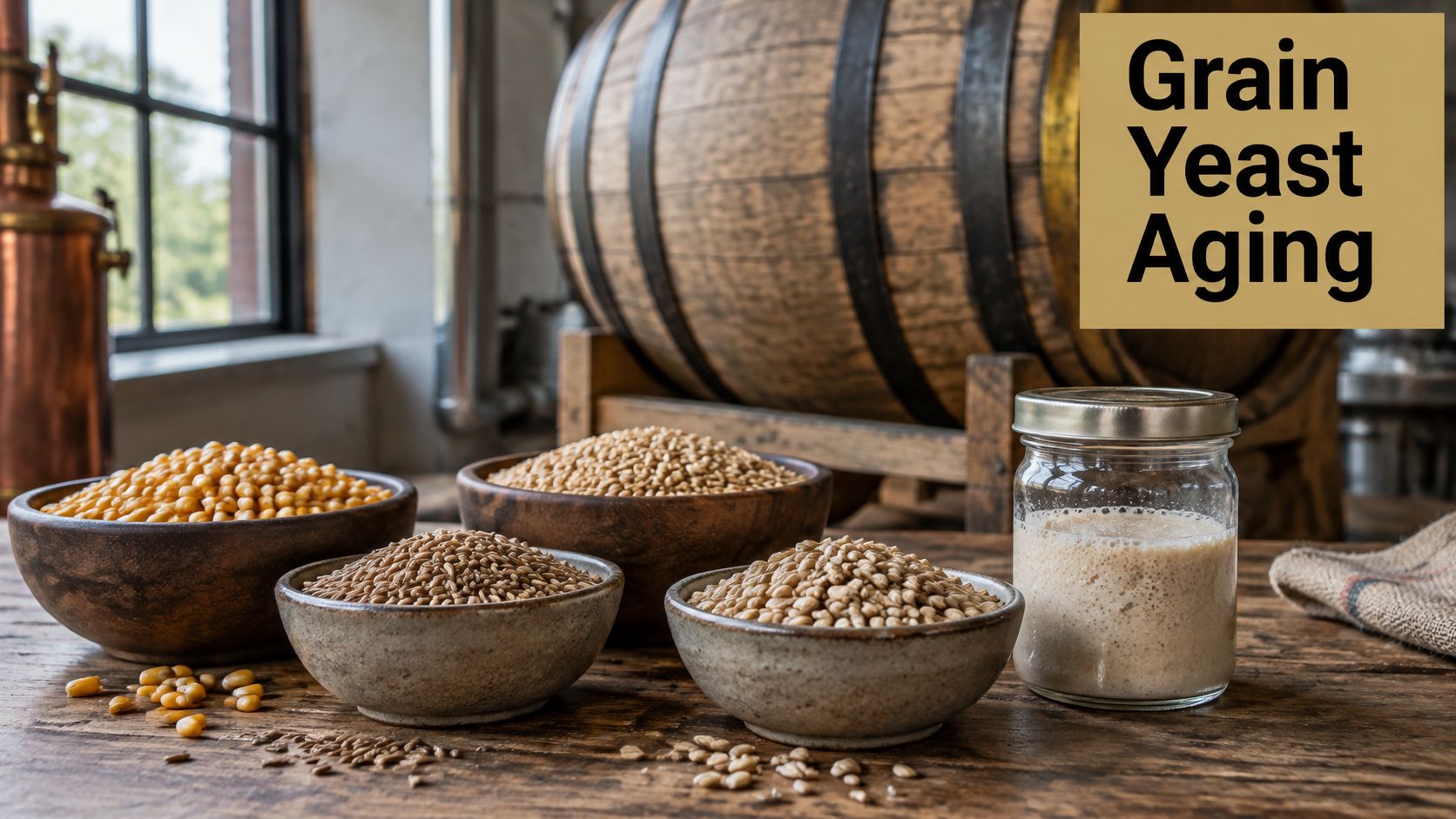
Grain Sets the Starting Point
Think of the 51% rule as a threshold, not a formula. A bourbon that's just over the corn minimum and carries a generous share of rye can taste noticeably spicier than a high-corn bourbon. A rye with meaningful corn in the rest of the mash can taste rounder than you expect.
American craft whiskey brands use that legal room deliberately. They experiment with locally distinctive grains and adjust sweetness, spice, and texture while staying inside the bourbon or rye identity, as described in guidance on how the 51% rule leaves room for craft recipes. That's useful for you as a buyer, because a small distillery that prints its grain choices gives you more to learn from than a label that only says bourbon or rye.
Yeast Changes What Grain Alone Can't Explain
No identity standard dictates which yeast a distiller must use, so yeast is a quiet source of difference. Strain choice and fermentation length shape fruity esters, spice, and overall lift before the spirit ever meets wood. Two distilleries can start with similar grain and still produce whiskeys that don't taste alike.
For a new drinker, the practical point is simple. If two bottles share a category but smell very different, yeast and fermentation may be part of the reason. Don't assume the grain line explains every aroma you find.
Aging Can Override the Grain Story
Bourbon is associated with storage in new, charred oak, which supplies vanilla, caramel, and toasted wood character as the spirit rests. Rye's TTB description specifies used oak containers, and used barrels generally mute wood extraction compared with new charred oak. Barrel entry strength, char level, maturation climate, and age then determine how much of that wood character reaches your glass.
- Mash bill line: Shows which grain leads and what supports it.
- Age statement: Shows how long oak had to influence the spirit.
- Barrel information: Shows whether wood was likely a major flavor source.
- Proof: Shows how concentrated everything will feel.
Read those four items together and you'll understand a bottle better than any one-word category can teach you.
Flavor and Aroma Differences Tasters Report
Tasters usually describe bourbon as sweeter and rounder and rye as drier and more peppery. Those are useful starting markers, not guarantees. The table below separates what people often report at each stage so you can check a real pour against it.
| Tasting stage | Bourbon markers | Rye markers |
|---|---|---|
| Aroma | Vanilla, caramel, toffee, baked fruit | Black pepper, mint, cut grass, citrus peel |
| Palate | Round, sweet, coating | Dry, lean, crisp, peppery |
| Finish | Lingering oak and sweetness | Short, spicy, drying |
| Research example | Bourbon with 20% rye: apple, vanilla, red wine | 70% rye whiskey: hay, grassy, vegetal, yeasty |
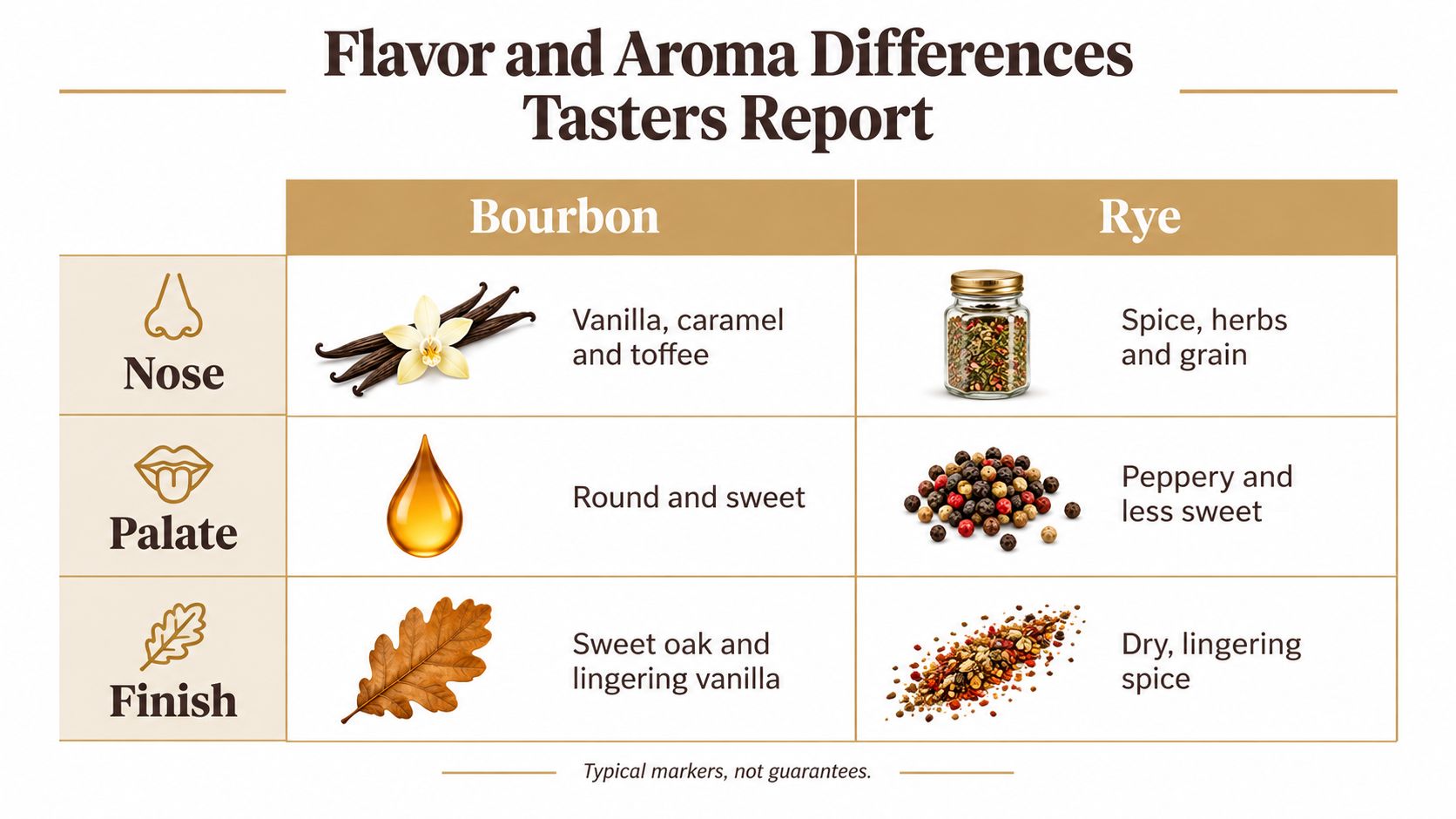
Move Through Nose, Palate, and Finish Separately
Start with aroma before you sip. Bourbon often gives vanilla and caramel first, while rye more often gives spice, herbs, or grain. Then judge the palate for shape, not just flavor names. Does the whiskey feel round and coating, or lean and crisp?
Finish is where many drinkers finally separate the two. Bourbon frequently leaves sweet oak behind, while rye often leaves dry spice. Write each stage down separately, because a whiskey can smell sweet and still finish dry.
What the Sensory Research Actually Shows
A consumer study found no significant relationship between mashbill and consumer categorization, with producer, age, and alcohol content more closely associated with perceived sensory differences, according to published sensory research on American bourbon and rye. That doesn't mean grain does nothing. It means grain doesn't act alone.
The research example in the table shows the spectrum clearly. As rye share rises, aromas can shift from apple and vanilla toward hay, grass, and vegetal notes. Barrel, proof, and age move along that same spectrum, which is why two bourbons can differ more from each other than a bourbon and a rye from the same producer.
Practical rule: Smell first, sip second, judge finish third. Don't call a whiskey spicy until you've checked all three stages.
For your own notes, mark which markers you found and which you expected to find. That gap between expectation and perception is where you learn whether grain is guiding your palate or the label is.
Proof, Age, Price and Health for Each Style
Proof changes a tasting more than grain for many beginners. A higher-proof whiskey feels hotter and more concentrated, which can hide the difference between sweetness and spice. Control proof first and the comparison gets fairer.
Beginner guidance identifies approximately 86 to 92 proof as a palatable starting range and notes that a 100-proof whiskey contains about 50% alcohol by volume, compared with the lower intensity of an 80-proof expression, in advice on using proof to choose an approachable whiskey. Pick a rye and a bourbon within a few proof points of each other so alcohol strength doesn't dominate.
Age Needs Matching Too
A straight whiskey must meet the age rule shown in the first table, and younger straight bottles must state their age. Extra time in oak can add wood character and soften some edges, but it doesn't affect sweetness and spice in identical ways. Compare bottles of similar age when you can, especially from craft distillers whose younger releases may taste more grain-forward.
Don't treat older as automatically better. Treat age as another variable that can explain why you liked one glass more than the other.
Price Doesn't Follow the Grain
Neither corn nor rye alone makes a bottle cheaper or more expensive. Price follows age, scarcity, barrel selection, production scale, and brand. A small American craft release may cost more because it's produced in limited quantity, not because its grain is superior.
- Compare proof and age first: Those two lines explain more of the price gap than category does.
- Check barrel details: Single barrel and special finish language often signals a premium.
- Ignore category as a value cue: Bourbon isn't the budget choice and rye isn't the premium choice by default.
Health Comes Down to Alcohol, Not Style
Neither style is healthier. What matters is proof and pour size, because a higher-proof pour contains more alcohol than the same volume at lower proof. Beginner guidance recommends about 1.5 ounces for a normal pour, or roughly 0.5 ounce per whiskey when tasting several expressions, in recommendations for small pours and adding water gradually.
New drinkers should keep pours small and add room-temperature water a few drops at a time if a whiskey feels too hot. You'll taste more, not less, when alcohol stops overwhelming your palate.
Which Style Works Best in Cocktails and Neat
Cocktails reward a different question than neat sipping does. You're not asking which whiskey tastes best alone. You're asking which base stands up to vermouth, citrus, sugar, mint, or bitters.
| Cocktail | Traditional base | Why the base works |
|---|---|---|
| Manhattan | Rye (classic) or bourbon | Rye spice cuts sweet vermouth |
| Sazerac | Rye | Peppery backbone for absinthe and bitters |
| Old Fashioned | Bourbon most common, rye also used | Bourbon adds caramel; rye tightens the drink |
| Mint Julep | Bourbon | Sweetness balances mint and sugar |
| Whiskey Sour | Bourbon most common | Caramel notes pair with citrus |
Why Those Pairings Work
Rye's dry spice gives a Manhattan structure because sweet vermouth would otherwise make the drink feel soft. In a Sazerac, that same peppery backbone holds its place beside absinthe and bitters. If you're building a home bar around mixed drinks, sorting through rye options suited to cocktails is more useful than chasing a bottle meant only for sipping.
Bourbon works differently. Its caramel and vanilla soften an Old Fashioned, support mint and sugar in a Julep, and sit comfortably with citrus in a sour. Neither base is wrong in an Old Fashioned. Bourbon makes it rounder, and rye makes it tighter and drier.
Test the Manhattan claim yourself. Make one with rye and one with bourbon at similar proof, keep every other ingredient identical, and taste them side by side. Most drinkers find the rye version reads drier and spicier, but your own result matters more than the tradition.
Neat Sipping Changes the Budget Logic
Mixing reduces the impact of subtle nuance, so a moderately priced bottle of either style is often enough for cocktails. Neat sipping exposes alcohol heat, oak, and finish, so it rewards bottles whose balance you already know you enjoy. Don't buy an expensive neat bottle based on cocktail performance alone.
If the recipe calls for spice and structure, reach for rye. If it calls for sweetness, mint, or citrus support, reach for bourbon.
That rule is a starting point for mixing. For drinking neat, it can't replace tasting both styles without anything added.
How to Run a Blind Tasting of Rye and Bourbon
A blind tasting answers can your palate identify the grain without labels. It also separates preference from expectation, which is the part most comparisons skip. You need two matched bottles, identical glasses, water, and a way to hide identities until you've finished your notes.
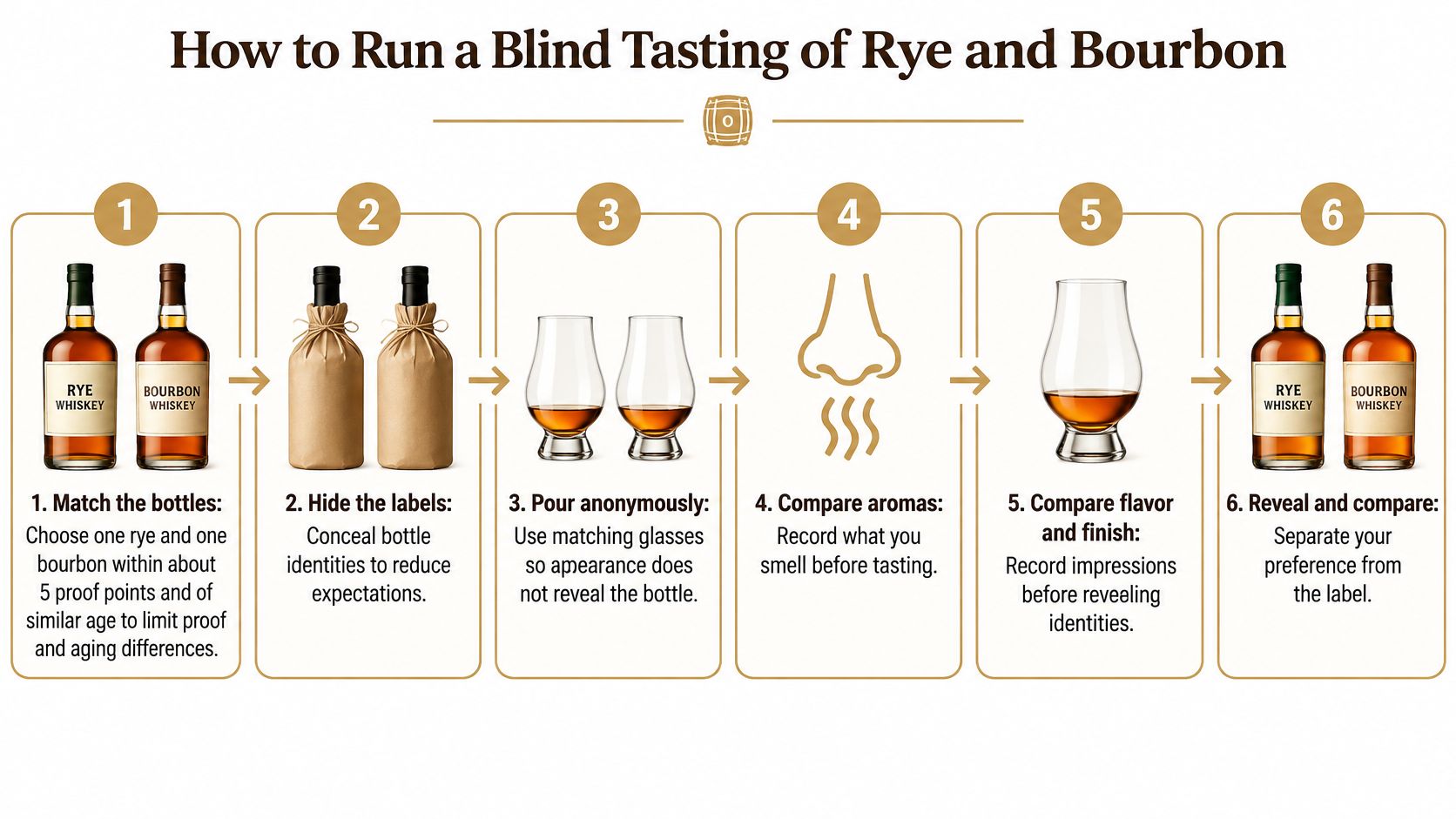
The Procedure
- Match the bottles: Choose one rye and one bourbon within about 5 proof points and of similar age, so proof and aging don't decide the result before grain can.
- Hide the labels: Cover the bottles or have someone else pour, because brand expectations can steer what you think you taste.
- Pour small and identical: Pour 0.5 ounce of each into matching glasses, keeping alcohol manageable and appearance consistent.
- Nose both first: Write aroma notes for each glass separately before you sip either one.
- Taste neat, then add water: Sip both neat, then add a few drops of room-temperature water to each, drop by drop, and note what changes.
- Record palate, finish, and confidence: Score your confidence from 1 to 5 separately from aroma so you can see where you felt certain and where you guessed.
- Guess, reveal, and repeat: Name which glass you think is rye, reveal the bottles, then repeat with a second pair before drawing a conclusion.
If you want a structured format for scoring, a whiskey blind taste test framework can help you keep aroma, palate, finish, and guessing separate. New drinkers benefit most from that separation because it stops one strong impression from rewriting all the others.
Why Blinding Matters
A Washington State University-led sensory study found average consumers did not consistently separate samples by mash bill and were more influenced by alcohol level, bottling age, and brand-related expectations, as summarized in the university's report on telling bourbon from rye. Related mash bill and aging research found profiles varied across 18 of 35 sensory attributes.
That result shouldn't discourage you. It tells you what to control. Matched proof, age, and maturation style give grain a fair chance to show itself.
How to Read Your Results
Consistent preference across two pairs signals a real style preference, even if your guesses weren't perfect. Random guesses suggest proof, age, or barrel character drove the difference more than grain did. Both outcomes are useful because both tell you what to buy next.
Confidence check: A correct guess at confidence 2 teaches you less than a wrong guess at confidence 5. The second result shows exactly which assumption misled you.
Matching Your Palate and Choosing Your Bottle
The verdict depends on your situation. Rye suits drinkers who value spice, dryness, and aromatic lift. Bourbon suits drinkers who want sweetness, vanilla, and roundness. Neither answer makes the other style a mistake.
Start From What You Already Like
If you love vanilla and toffee flavors in other drinks, start with a bourbon around the proof range you found comfortable in your blind test. If you prefer pepper, herbs, and dry finishes, start with a rye at a similar strength. Matching proof keeps the transition honest, so you're comparing flavor direction rather than alcohol intensity.
Cocktail habits point the way too. If you mostly make Manhattans or Sazeracs, taste a rye first and check whether its spice holds up in your usual recipe. If you mostly make Mint Juleps or whiskey sours, start with bourbon and see whether its sweetness supports those drinks the way you like.
Brand-new drinkers who want the smoothest entry often begin with bourbon. That's reasonable, but a matched blind pair teaches you more, because you might discover you prefer rye's dryness once the label stops warning you about spice.
Buy After the Pattern Appears
Wait until one or two blind pairs show a consistent preference, then buy a full bottle of the winning style at a proof you enjoyed. Check the mash bill and barrel information before you pay, and favor craft bottles from small American distilleries that list their grain choices clearly. You'll learn faster from transparent labels than from famous names.
- Sweetness seeker: Buy bourbon, then explore how secondary grain changes it.
- Spice seeker: Buy rye, then compare younger and older expressions.
- Still split: Keep one bottle of each and repeat the test with new pairs later.
Palates change as you gain experience, so treat your first winner as a current preference, not a permanent identity. Readers who want blind pairs selected for them can look at Blind Barrels, which sells curated blind whiskey selections from small American craft distilleries. Check the current offer before buying, since the method works the same with any two matched bottles you already own.
The answer to Is Rye Better Than Bourbon is the one your notes support once labels, price, and expectations are set aside.
Blind Barrels sends quarterly blind tasting kits with samples from small American craft distilleries, plus a tasting table for aroma, palate, and finish notes and a reveal that lets you score your guesses on age, proof, and whiskey type. It's a practical way to run the rye and bourbon test described above without buying full bottles first. Visit Blind Barrels to see the current kit and start tasting by palate, not by label.