

If you ask any whiskey maker what their most important ingredient is, you might be surprised by the answer. It’s not the grain, the yeast, or even the water. It’s the barrel.
Oak barrel aging is the single most transformative force in a whiskey's life. It's far more than just a wooden container for storage; it's an active participant that takes a raw, often harsh spirit and shapes it into the complex, amber liquid we know and love. Think of it as a process of addition, subtraction, and creation all happening at once.
The Magic Inside the Barrel
Let's start with the spirit right off the still. This unaged whiskey, often called "white dog" or new-make spirit, is clear, sharp, and frankly, not that pleasant to drink. It can have a raw, grainy bite and carry some funky sulfur notes left over from fermentation. This is where the barrel steps in to work its magic.
The best analogy for a new whiskey drinker is to think of the barrel as a very slow, very complex teabag and the spirit as hot water. Over months, and more often years, the wood slowly seeps color, aroma, and layers of flavor into the liquid. But it's not a one-way street. This is a dynamic, living process that fundamentally reworks the whiskey’s entire chemical makeup. Grasping this interaction is the key to understanding why two spirits can taste so wildly different.
A Three-Part Transformation
The incredible change that happens inside a barrel isn't one simple thing. It’s really a trio of powerful forces working together to mature and refine the spirit. Each one plays a vital role in crafting the final flavor profile.
- It Adds Flavor: The oak itself is a pantry full of delicious compounds. As the spirit soaks into the staves, it pulls out notes of vanilla, caramel, coconut, and baking spices. The type of oak and how it's treated before use determines which flavors get unlocked.
- It Removes Harshness: The inside of most whiskey barrels is charred, creating a layer of activated carbon. This layer acts like a natural charcoal filter, grabbing onto and removing those undesirable, aggressive elements like sulfur compounds, literally smoothing out the spirit’s rough edges.
- It Creates New Complexity: Barrels "breathe." As temperatures rise and fall, the spirit expands into the wood and contracts back out. This process pulls a tiny amount of oxygen into the barrel, which triggers slow oxidation and creates new flavor compounds called esters—the molecules responsible for many of the fruity and floral notes in a great whiskey.
The barrel isn't just a container; it's the most crucial ingredient after the spirit itself. Its job is to mature, mellow, and build character, turning a simple distillate into a masterpiece of flavor over time.
Distilleries across the country, like the acclaimed Stranahan’s in Colorado, have built their entire reputation on this principle. They know their unique high-altitude climate forces a more dramatic interaction between spirit and oak, which is essential for defining their American Single Malt's signature profile. Their obsessive focus on maturation proves just how powerful and versatile the humble oak barrel truly is. This guide will unpack exactly how that tool works its magic.
How Wood Chemistry Shapes Your Favorite Whiskey
Ever wonder why your favorite bourbon bursts with vanilla or why that rye whiskey has a dry, structured finish on your palate? The secret isn't just in the grain or the still—it's locked inside the chemistry of the oak barrel itself.
A barrel is so much more than a simple container. Think of it as a distiller's spice rack, an active ingredient that slowly works its magic on the spirit inside. To really get what's happening during maturation, you have to understand the wood's core building blocks.
Tip for new whiskey drinkers: Learning to spot the work of these compounds is the first real step toward building a confident palate. They're like the primary colors of flavor, blending together over time to create a masterpiece in the bottle.
Hemicellulose: The Source of Sweetness
First up, we have hemicellulose. When a cooper toasts or chars a new barrel, this compound breaks down into a whole range of wood sugars. It’s the reason so many aged spirits have that rich, sweet backbone we all love.
Hemicellulose is the source of those classic dessert-like notes:
- Caramel and Butterscotch: The rich, defining flavors in countless bourbons.
- Toffee and Praline: A deeper, nuttier sweetness often found in well-aged American whiskeys.
- Maple Syrup: A distinct, sugary note that can add incredible depth and complexity.
When you taste a whiskey from a craft distillery like Westland Distillery in Seattle, the sweet notes from hemicellulose have to beautifully complement the unique character of their grain. The barrel’s contribution is what elevates the spirit from a simple distillate into a complex, layered drink.
Lignin: The Vanilla and Spice Engine
Next is lignin, the complex polymer that essentially glues the wood’s cellulose fibers together. When it's heated, lignin becomes the primary source of one of whiskey’s most beloved flavors: vanilla.
This compound releases an aldehyde called vanillin—the exact same molecule found in actual vanilla beans. But lignin’s influence doesn't stop there. It also contributes a whole spectrum of subtle spice and floral notes, adding an aromatic complexity that makes a whiskey’s nose so inviting.
Tannins: The Structural Backbone
Finally, there are tannins, also known as phenolics. If you've ever sipped strong black tea or a bold red wine and felt that distinct drying sensation in your mouth, you've experienced tannins.
In whiskey, they provide structure, mouthfeel, and a crucial balancing bitterness that keeps the spirit from becoming cloyingly sweet. Tannins are also responsible for much of the color and have antioxidant properties that help a whiskey develop over the long haul. They add that pleasant astringency and notes of leather, tobacco, and dark chocolate that give a spirit its sophisticated, mature character.
To go even deeper on this incredible partnership, check out our full article on why wood is whiskey's best friend.
The table below breaks down how these crucial components translate directly to the flavors and aromas you find in your glass.
Decoding Oak's Flavor Contributions
| Oak Component | Primary Flavor Contribution | Secondary Notes |
|---|---|---|
| Hemicellulose | Caramel, Toffee, Butterscotch | Brown Sugar, Maple, Praline |
| Lignin | Vanilla, Vanillin | Clove, Smoke, Cinnamon, Floral |
| Tannins | Astringency, Dryness | Leather, Tobacco, Dark Chocolate, Tea |
It’s this trio of compounds that really forms the foundation of barrel-aged flavor.
The infographic below neatly sums up how all these chemical processes come together during maturation to transform a raw spirit.
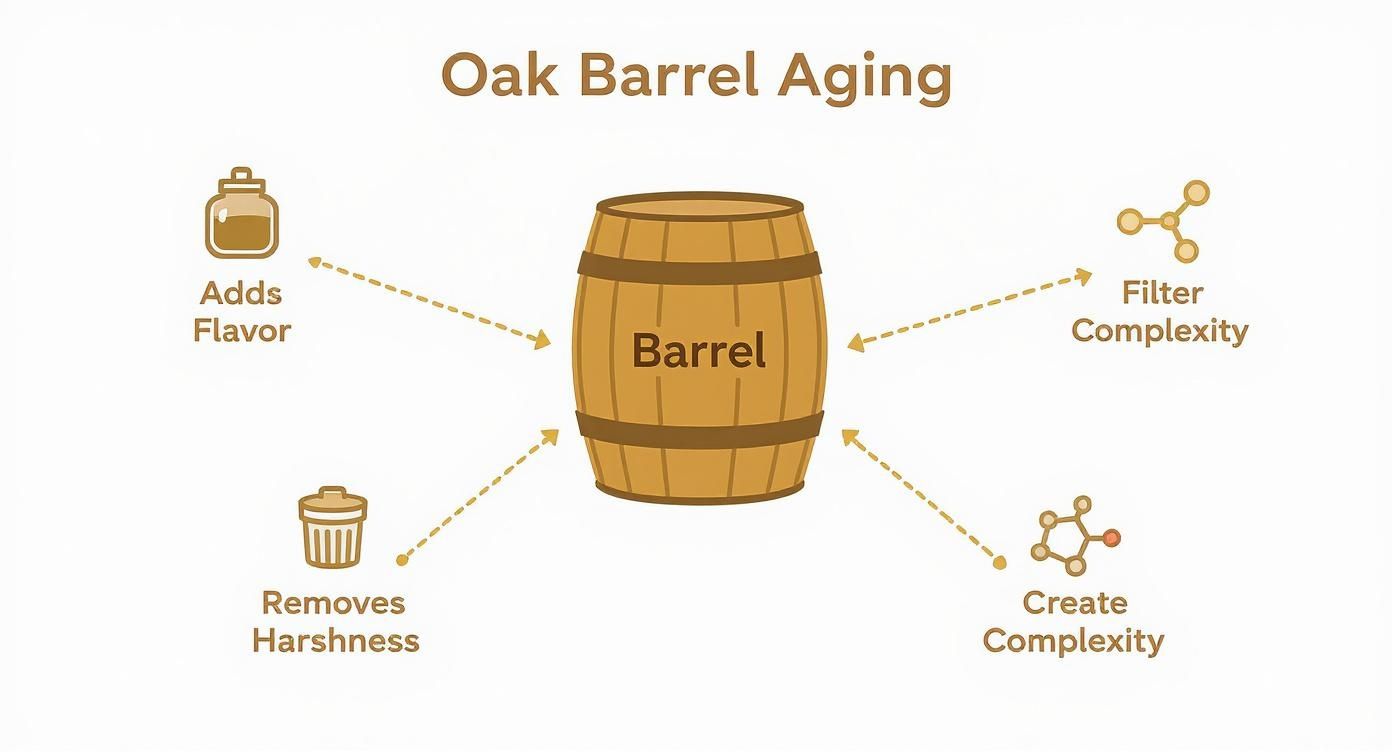
As you can see, the barrel is doing three jobs at once: adding flavor from its own chemistry, subtracting harsh flavors through its charcoal layer, and creating new complexity through slow interaction with oxygen.
The magic of oak barrel aging isn't just one action, but a symphony of them. It's the breakdown of hemicellulose for sweetness, the release of vanillin from lignin for aroma, and the contribution of tannins for structure—all working in concert.
By understanding these core components, you can start to deconstruct the flavors in your glass. The next time you take a sip, try to hunt for that hint of caramel or that whisper of vanilla. Recognizing where they come from will fundamentally change how you experience every whiskey you taste from here on out.
The Art of Toasting and Charring Barrels
Before a single drop of new-make spirit ever touches the inside of a barrel, that barrel goes through a trial by fire. This critical one-two punch of toasting and charring is how a cooper unlocks the wood's hidden potential, transforming a simple container into an active, flavor-making machine. New Drinker Tip: Getting a handle on this step is the key to understanding why a deep, rich bourbon tastes so wildly different from a rye aged in lightly treated oak.
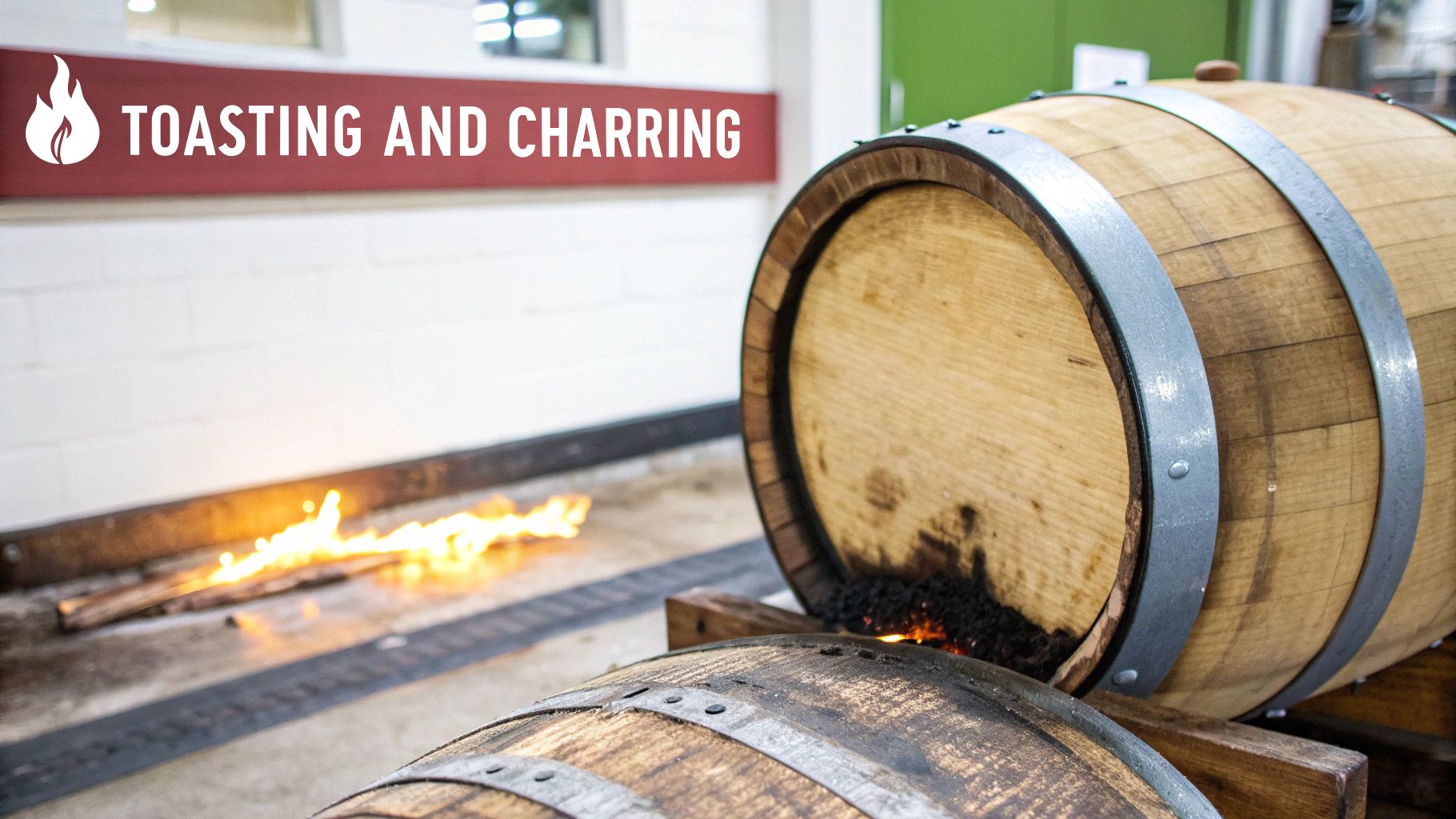
This whole process is a deliberate art form. It's a careful balance of gentle heat and intense flame, designed to set the stage for the years of maturation to come. Every decision a cooper makes here will show up directly in the final character of the whiskey in your glass.
Toasting: The Foundation of Flavor
Toasting is the slow and low part of the process. Think about what happens to a slice of bread in a toaster: as it heats up, the sugars inside begin to caramelize, creating those rich, warm, and comforting aromas we all know. It’s pretty much the same idea inside a barrel, just on a much bigger scale.
A cooper applies a low, consistent flame to the barrel’s interior, letting the heat slowly penetrate deep into the oak staves. This gentle cooking starts breaking down the wood’s complex carbohydrates (hemicellulose) into simpler, tastier sugars.
This process unlocks a whole spectrum of flavors we want in our whiskey:
- Vanilla and Baking Spice: The wood's lignin compound starts to release vanillin.
- Toffee and Caramel: Those caramelized wood sugars lay down a foundation of sweetness.
- Nutty and Coffee Notes: Deeper, longer toasts can develop more complex flavors like roasted almond or mocha.
Toasting essentially preps the wood, making all its delicious compounds available for the spirit to extract later.
Charring: The Power of Fire and Filtration
After the gentle toast comes the char—a much more dramatic and intense affair. This is where the barrel's interior gets blasted with a powerful open flame for a short, controlled burst of time. This incinerates the surface of the wood, creating a thick, black layer of charcoal.
This “char layer” does two incredibly important things. First, it acts as a natural charcoal filter. As the whiskey breathes in and out of the wood over the years, this layer strips away harsh sulfur compounds and other unwanted impurities, smoothing out the raw edges of the new spirit. To dig deeper into this, you can learn more about how barrel preparation affects whiskey taste in our dedicated article.
Second, the intense heat of charring creates cracks and fissures in the wood, opening up new pathways for the spirit to seep deeper and and interact with those toasted layers underneath.
A distiller's choice of char level is one of the most impactful decisions in the entire whiskey-making process. It dictates the intensity of filtration, the speed of maturation, and the boldness of the final flavor profile.
This process is so fundamental that it even has its own grading scale. It's not unlike the techniques used in barbecue; for a different perspective on how fire creates flavor, check out articles on mastering smoked wood for flavor.
Understanding Char Levels
Distillers are incredibly specific about the char level they want, as it directly shapes the final spirit. The scale typically runs from #1 to #4, with each number representing a different burn time and, consequently, a different flavor contribution.
- Char #1 (Light): A quick, 15-second burn. It imparts subtle notes of toasted oak and light caramel and is often used for spirits where you don't want the barrel to overpower the distillate.
- Char #2 (Medium): A slightly longer burn that starts to bring out more classic vanilla and spice notes while offering a good balance of filtration.
- Char #3 (Medium-Plus): This is a very common choice for many bourbons. It provides robust vanilla, deep caramel, and baking spice notes, along with excellent mellowing properties.
- Char #4 (Heavy): Known as the "alligator char" because the heat makes the wood crack and blister into a pattern that looks like gator skin. This deep, 55-second burn creates a powerful filter and imparts intense notes of dark chocolate, espresso, and smoke. It’s perfect for crafting bold, rich bourbons, a technique mastered by American craft brands like High West Distillery.
Tasting Tip: Paying attention to the influence of char is a fantastic way to build your palate. A bourbon from a heavily charred barrel will often have a much darker color and richer, smokier notes than one aged in a barrel with a light char. It’s one of the first big clues you can pick up on in a blind tasting.
Key Factors That Influence the Aging Process
Beyond the basic chemistry of wood and the magic of a good char, a handful of other variables can completely change a whiskey's path from raw spirit to finished product. These factors—barrel size, climate, time, and what came before—work together like a director, a script, and a stage, each shaping the final performance in your glass.
Getting a handle on these is a huge step for anyone looking to peel back the layers of flavor in their favorite dram. If wood chemistry and char levels are the ingredients, think of these next factors as the cooking instructions. Change one, and you’ve got a totally different dish. This is where distillers really show off their mastery of the oak barrel aging process.
Barrel Size: The Surface Area Equation
One of the biggest levers a distiller can pull to control maturation speed is the size of the barrel. It all comes down to the surface-area-to-volume ratio. A smaller barrel simply has more wood touching every drop of spirit than a larger one.
More contact means everything happens faster. Flavors get extracted more quickly, harsh compounds are filtered out sooner, and oxidation kicks into a higher gear. It's like brewing tea with two tea bags instead of one—you get a much stronger, darker brew in a fraction of the time.
- Small Barrels (5-30 gallons): You'll often see these used by American craft distillers like FEW Spirits in Illinois, who are trying to get a mature flavor profile without waiting for years. They can blast the spirit with intense oak and vanilla notes fast, but they have to be watched carefully to keep the whiskey from becoming a woody mess.
- Standard Barrels (53 gallons): This is the classic American Standard Barrel (ASB) that bourbon built its reputation on. It offers a time-tested balance, allowing for years of slow, complex flavor development without letting the oak take over.
Beginner's Tip: Knowing the barrel size can give you some great clues. If you taste a young craft whiskey with a deep color and a big, bold oak flavor, there's a good chance it spent its time in a smaller cask. You can dive deeper into the impact of barrel types and sizes on American craft whiskey in our detailed guide.
Previous Contents: A Legacy of Flavor
While bourbon has to be aged in brand new charred oak barrels, many other spirits—especially Scotch, Irish whiskey, and a growing number of American whiskeys—are matured in used barrels. This is where things get really interesting, because the barrel carries the "ghost" of whatever it held before.
Think of a cast-iron skillet you've used for years to cook bacon. No matter what you cook in it next, it’s going to have a little bit of that savory history in it. Barrels are no different. A cask that once held sherry will lend notes of dried fruit and nuts, while a port cask can add layers of red berries and dark chocolate. This is often called "finishing."
The growing demand for these specialty casks is a testament to the incredible flavors they can add. In fact, the global wine barrel market is booming, hitting USD 1.38 billion and projected to climb to USD 2.27 billion by 2033, all driven by our thirst for complex, oak-aged drinks.
The history of a barrel is written in its staves. Using a second-fill cask isn't about saving money; it's a deliberate choice to borrow the soul of a previous liquid and weave it into a new story.
Climate: The Unseen Hand of Maturation
Climate might be the most powerful, yet invisible, force in oak barrel aging. The temperature and humidity swings of a region dictate just how aggressively the spirit and the wood get to know each other.
Take Kentucky, with its scorching summers and cold winters. The whiskey there goes through dramatic cycles. In the summer heat, the liquid expands, pushing deep into the staves and pulling out tons of flavor. In the winter, it contracts, pulling all that good stuff back into the main body of the spirit. This constant push-and-pull leads to a fast, robust maturation that creates the bold character bourbon is famous for.
Now, contrast that with the cool, stable maritime climate of Scotland. The temperature swings are gentle, resulting in a much slower, more graceful aging process. The spirit breathes softly in the barrel, allowing subtle, nuanced flavors to develop over a decade or more.
A fantastic example of climate at work is Garrison Brothers Distillery in the blistering heat of Hye, Texas. Their whiskey ages at a ferocious pace, creating a dark, intense, and incredibly bold spirit in just a few years—a profile that might take over a decade to achieve in Scotland.
Time: Older Isn’t Always Better
A key tip for new whiskey drinkers: A bigger age statement on the bottle doesn't always mean it's a better whiskey. Time is a double-edged sword. While it’s absolutely essential for developing complexity, too much time in oak can leave you with an unbalanced, tannic, and overly woody dram.
The goal is always peak maturity—that sweet spot where the flavors from the grain, the yeast, and the barrel are all in perfect harmony. In a hot climate like Kentucky, a whiskey might hit its peak in just four to eight years. Push it much past that, and the bitter tannins from the wood can start to overwhelm everything else.
This is why a 15-year-old Kentucky bourbon is a rare and special find, while a 15-year-old Scotch is quite common. It’s all about the environment setting the pace and defining that perfect aging window.
Practical Tasting Tips for New Whiskey Drinkers
Alright, you've waded through the science of oak barrel aging. Now for the fun part: putting that knowledge to the test by actually tasting some whiskey.
Developing your palate is a journey, not a race. Learning to pick out the specific influences of the barrel is a huge milestone for any enthusiast. It's that "aha!" moment when you go from simply "liking" a whiskey to truly understanding why you like it.
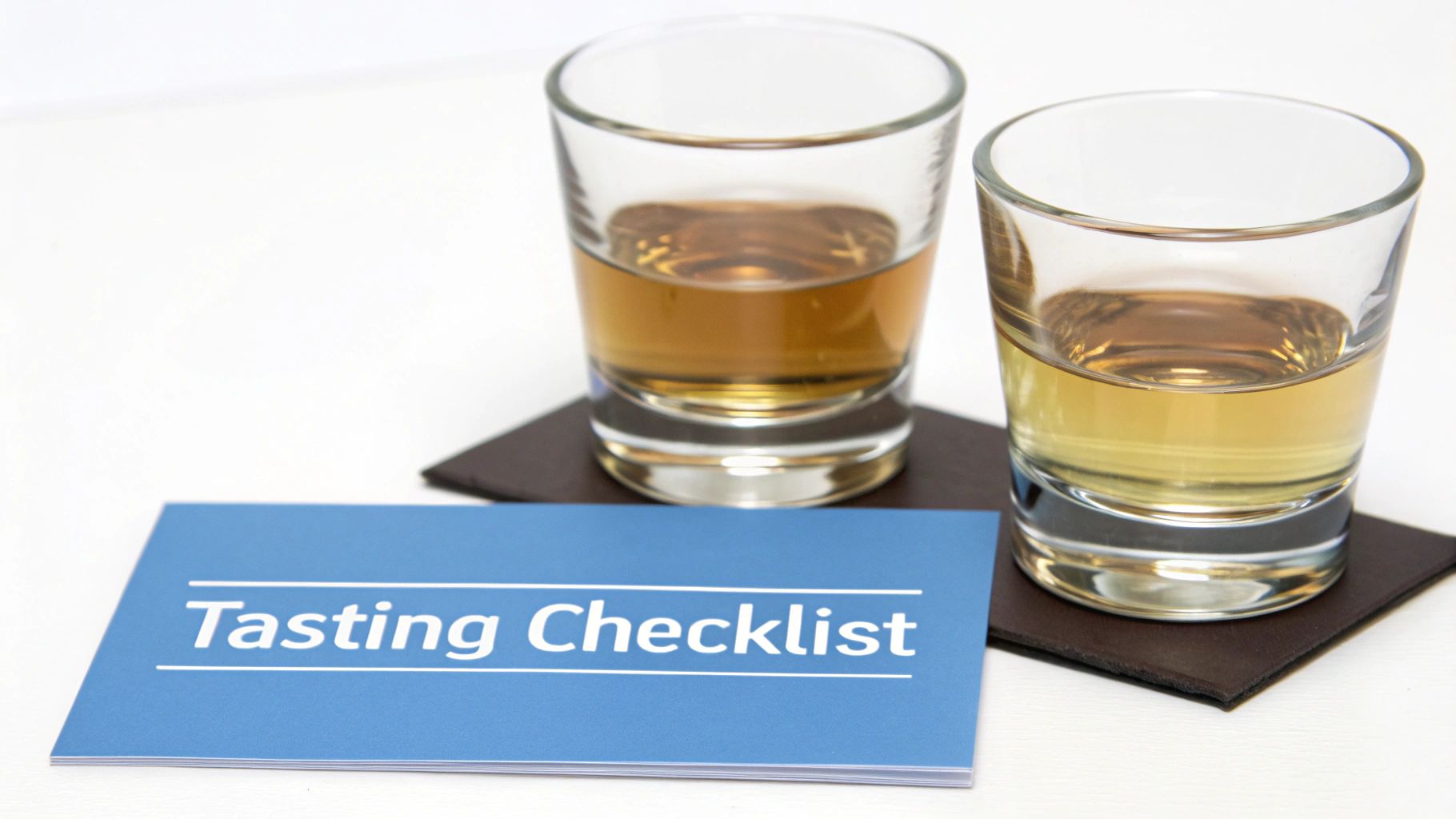
This isn't about becoming a professional overnight. It's about connecting what you've just learned to the sensory experience happening right there in your glass. With a little practice, you can train your senses to pick up the subtle clues the wood leaves behind.
A Simple Tasting Checklist
Don’t just throw it back. Use these steps to guide your senses and zero in on what the barrel brought to the party. Take your time with each one.
-
Check the Color: Hold your glass against a white background. Is it pale straw, bright gold, deep amber, or rich mahogany? A darker color often hints at more time in the barrel, a heavier char, or maturation in a smaller cask.
-
Nose for Key Aromas: Give the glass a gentle swirl to wake up the aromatic compounds. Take a soft sniff, keeping your mouth slightly open. Can you find that vanilla from the lignin? How about caramel and toffee from the hemicellulose? You might even pick up baking spices, coconut, or a hint of smoke, depending on how the barrel was treated.
-
Sip and Analyze the Palate: Take a small sip and let it roll across your tongue. Do those vanilla and caramel notes from the nose show up here? See if you can taste other barrel-driven flavors like dark chocolate or toasted nuts.
-
Feel the Finish: After you swallow, pay attention to the texture and the lingering sensation. This is where tannins make their presence known. Do you feel a pleasant, drying sensation on your tongue and gums? That structure is a direct gift from the oak, cutting through the spirit's sweetness and giving it backbone.
Putting Theory into Practice: A Side-by-Side Comparison
Hands down, the best way to feel the impact of different oak barrel aging strategies is to taste two contrasting American whiskeys side-by-side. It’s an eye-opening exercise for a new drinker that highlights how a distiller's choices can lead to dramatically different results.
For this experiment, we recommend grabbing two fantastic examples from the world of American craft whiskey:
- Whiskey A (A Lightly Aged Rye): Find something like Sagamore Spirit Rye. Typically aged for a shorter period in barrels with a medium char, the whole point here is to let the spicy rye grain character shine through, with the barrel offering subtle backup notes of vanilla and honey.
- Whiskey B (A Bold, Heavily Charred Bourbon): A classic choice here is Knob Creek Small Batch Bourbon. This whiskey is aged longer in barrels with a heavy #4 “alligator” char, and it is completely defined by its deep, powerful oak influence. You should find intense caramel, rich vanilla, and a smoky, robust finish.
Tasting these two whiskeys together is an incredible learning experience. It’s not about which one is "better," but about recognizing how the barrel can either be a supporting actor or the star of the show.
As you taste, notice the profound differences in color, aroma, and mouthfeel. The Sagamore will likely feel brighter and spicier on your palate. In contrast, the Knob Creek will be darker, sweeter, and much oakier. This direct comparison will instantly connect the concepts of char level and aging time to the flavors in your glass, giving you a real, practical skill you can use in any tasting from here on out.
Common Questions About Oak Barrel Aging
Diving into the world of whiskey can feel like learning a new language, and oak barrel aging is one of its most important dialects. As you start exploring different bottles and figuring out what you like, questions are bound to pop up. This section is here to give you clear, straightforward answers to some of the most common things we hear from new whiskey drinkers.
Think of these as your personal cheat sheet for understanding the finer points of maturation. Getting these common points of confusion cleared up is a huge step toward tasting whiskey with more confidence and curiosity.
What Is the Difference Between American and French Oak?
One of the first things you'll hear is that not all oak is the same. The two titans of the cooperage world, American and French oak, bring wildly different things to the table, mostly thanks to their unique wood chemistry and how dense they are. It’s like comparing two different types of coffee beans—both make coffee, but the final cup is a world apart.
American oak (Quercus alba) is a bit less dense and has a lot more of a compound called vanillin. When a spirit ages in it, this wood pumps out those bold, sweet, and powerful notes of vanilla, coconut, and dill that define so many American whiskeys. There's a reason it's mandatory for bourbon—it delivers that classic, rich sweetness everyone loves.
French oak (Quercus robur and Quercus petraea), on the other hand, has a much tighter grain and packs in more tannins. This means the flavor transfer is slower and more subtle. Instead of big, bold sweetness, it lends delicate notes of baking spice, cedar, and savory herbs. It also contributes a silky, refined mouthfeel that's highly prized in fine wines and premium aged spirits like Scotch.
Why Are Bourbon Barrels Only Used Once for Bourbon?
This is one of the most fundamental rules in American whiskey, and it’s actually written into law. To legally be called "straight bourbon," a whiskey must be aged in a new, charred oak container. And the key word there is new.
The very first time a spirit goes into a barrel is when the wood has the most to give. That initial aging cycle pulls out the most powerful and vibrant flavors—the richest caramel from the hemicellulose and the most intense vanilla from the lignin. If a distiller tried to refill that same barrel with a new batch of bourbon, the spirit would come out way weaker in both flavor and color, missing that robust character that makes bourbon, well, bourbon.
Used bourbon barrels aren't just thrown away; they get a celebrated second life. These casks are incredibly popular with distillers of Scotch, Irish whiskey, rum, and tequila, who snap them up to add a gentle sweetness and classic oak character to their own spirits.
Does an Older Whiskey Mean It's a Better Whiskey?
This is maybe the biggest myth in the entire whiskey world, and a point of confusion for many new drinkers. While age can definitely add complexity, older does not automatically mean better. Aging is a delicate balancing act, and the real goal is always peak maturity, not just the biggest number on the label.
Too much time in the barrel can create what people call a "wood bomb"—a spirit so hammered by bitter, astringent tannins from the oak that all the beautiful grain and fruity notes from distillation are completely wiped out. It’s like leaving a tea bag in your mug for too long; eventually, it just gets bitter.
The perfect aging window really depends on the climate, the size of the barrel, and the char level. A whiskey from a craft distillery like Balcones in hot Texas might hit its sweet spot in just a few years, while a Scotch resting in a cool Scottish warehouse might need well over a decade to get there. The true art is knowing exactly when to pull that whiskey out.
What Is a Finished Whiskey?
A "finished" whiskey is a spirit that gets a second round of aging in a different type of cask. It's a creative move that lets distillers add extra layers of flavor and complexity that you wouldn't get otherwise.
Here’s how it usually works: a whiskey spends most of its life aging in its primary barrel (for bourbon, this is always new charred oak). Then, it’s moved into a cask that used to hold something else—like sherry, port, rum, or even wine—for a final finishing period that can last from a few months to a couple of years.
This secondary maturation lets the whiskey pick up some of the "ghost" flavors left behind by the barrel’s old resident. For example:
- Sherry Cask Finish: Often adds notes of dried fruit, nuts, and baking spice.
- Port Cask Finish: Can bring in flavors of red berries, plum, and dark chocolate.
- Rum Cask Finish: May lend notes of tropical fruit and rich molasses.
Finishing is a huge trend among American craft distilleries like Angel's Envy, which is famous for its port-finished bourbon. It gives them a way to innovate and create some truly unique flavor profiles that really stand out on the shelf. For new drinkers, trying a finished whiskey is an awesome way to experience the direct impact different barrels can have on a spirit.
Ready to put your palate to the test and discover the nuances of oak barrel aging for yourself? At Blind Barrels, we send you quarterly tasting kits featuring incredible American craft whiskeys, allowing you to explore new flavors without bias. Start your blind tasting journey with Blind Barrels today!