

Pairing whisky with food transforms a routine meal into a discovery of flavor. Matching a honeyed bourbon with salty, charred ribs, for example, teases out layers in both glass and plate you’d never notice on their own.
Why Whisky And Food Is Your Next Flavor Adventure
Long gone is the idea of whisky as a solo after-dinner indulgence. It’s claiming its place at the table, proving just as versatile as any fine wine.
For newcomers, matching drams to dishes can feel imposing. Yet there are no hard rules—only invitations to learn what delights you. Begin by tuning your palate—our guide on how to taste whiskey shows how to spot those core notes that anchor any great pairing.
The Rise Of A Delicious Trend
This movement has leapt from niche hobby to mainstream dining ritual. Chef-curated whisky flights now complement tasting menus from coast to coast. Underpinning the momentum, the global whisky market is set to reach USD 318.3 billion by 2032.
- Trust Your Palate: Personal preference reigns supreme. If a match tastes right to you, that’s your pairing win.
- Begin With Basics: No need for lavish feasts. A solid American craft bourbon alongside a square of 70% dark chocolate can be revelatory.
- Seek Small-Batch Gems: Independent American distillers often play with unique grains and barrels—prime candidates for adventurous combos.
With a spirit of curiosity, you can turn any meal into an unexpected sensory journey. It isn’t about credentials—it’s about exploration and the joy of pairing flavors that resonate.
Decoding Whisky Flavors for Perfect Pairings
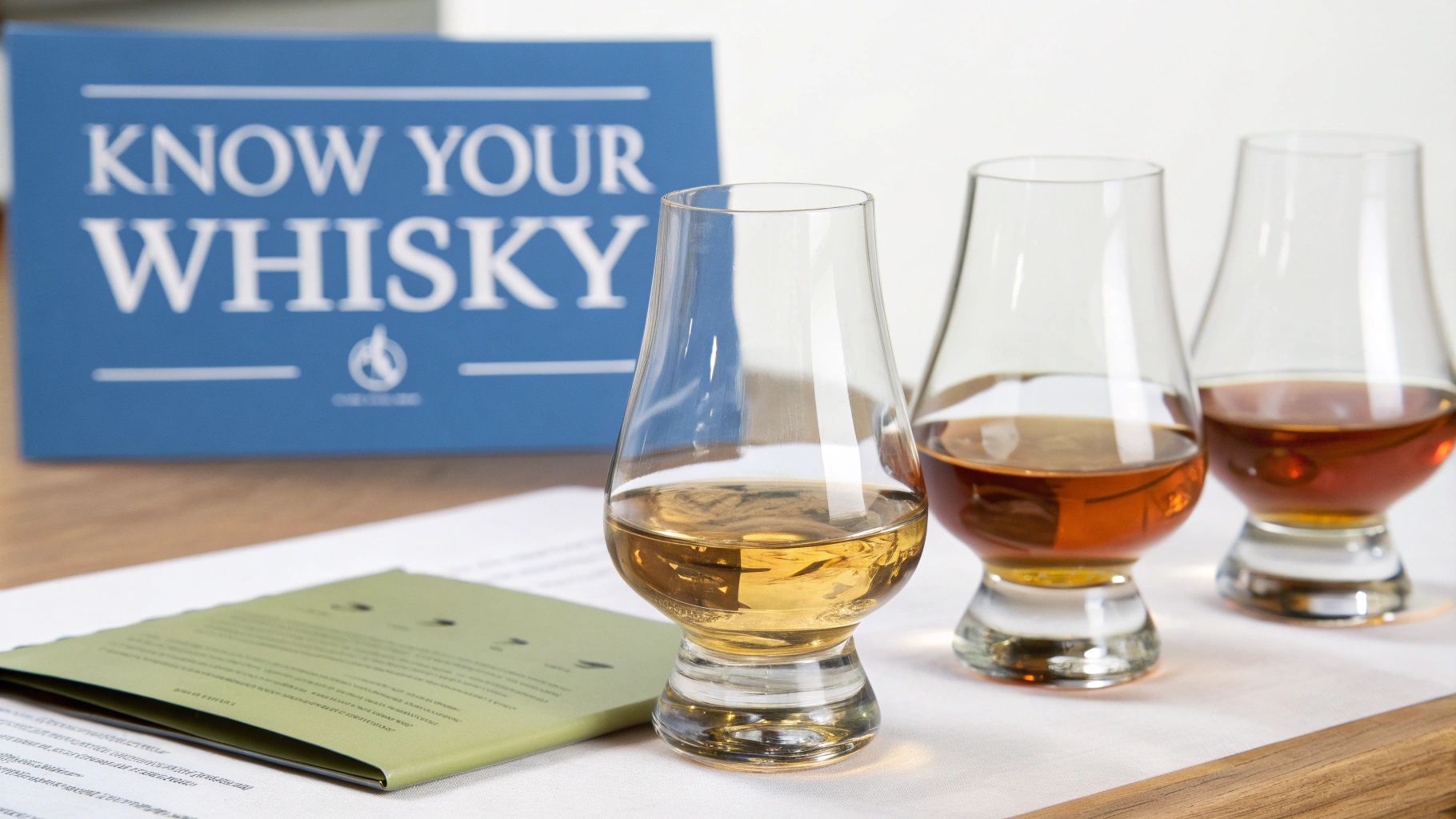
Before you can nail a great pairing, you have to learn the language of the spirit in your glass. Every whiskey tells a story through its aroma and taste, a spectrum that runs from sweet and fruity all the way to smoky and spicy. Identifying these dominant notes is the key to unlocking an amazing match with food.
Think of it like being a flavor detective. You need to know your whiskey's personality before you can find its perfect accomplice. Is it bold and intense, or light and subtle? This initial tasting step is the foundation for every great pairing you’ll ever make.
Identifying the Main Flavor Camps
Most American craft whiskeys fall into a few key flavor profiles. Being able to spot them gives you a massive head start. Don't worry about picking out every single subtle note—that comes with time. For now, just focus on the main character of the spirit.
- Sweet & Rich: This is classic bourbon territory, defined by notes of caramel, vanilla, honey, and toasted oak. The sweetness comes from a corn-heavy mash bill and maturation in new, charred oak barrels.
- Spicy & Bold: Welcome to the world of rye whiskey. Here, you'll find pronounced notes of black pepper, baking spices like cinnamon and clove, and sometimes a hint of mint or dill.
- Fruity & Floral: Lighter American whiskeys, including some single malts and wheat whiskeys, can offer notes of apple, pear, citrus, and delicate floral hints.
- Smoky & Earthy: While more common in Scotch, some American craft distillers use smoked grains to create whiskeys with campfire, tobacco, and peaty notes.
Of course, to really get a handle on this, you need to first understand how to properly taste whiskey and pull out those complex flavor notes. This is hands-down the most important skill for pairing whiskey with food.
American Craft Whiskeys as Examples
Let’s put these profiles into a real-world context with some American craft examples. A bourbon from a farm-to-bottle distillery like Frey Ranch will be overflowing with rich caramel and vanilla, making it a "Sweet & Rich" powerhouse.
On the other hand, a pour of a craft rye from a brand like St. George Spirits is going to hit you with that signature "Spicy & Bold" kick, bringing unmistakable notes of cinnamon and anise. Learning these characteristics gets a lot easier when you have a visual aid; a detailed bourbon flavor wheel can help you pinpoint specific notes with much greater accuracy.
The goal isn't to be a professional taster overnight. It's about building confidence. With each sip, you'll become better at recognizing whether your whisky leans sweet, spicy, or smoky, which is all you need to start making delicious pairings.
Once you can confidently place a whiskey into one of these general categories, you’re more than ready to start experimenting with food. It’s the difference between guessing and making an intentional, creative choice.
Quick Guide to American Whiskey Styles and Flavors
To simplify things even further, here's a quick cheat sheet for some popular American whiskey styles. Think of this as your starting point for connecting what's in the bottle to what's on the plate.
| Whiskey Style | Common Flavor Notes | Great For Pairing With... |
|---|---|---|
| Bourbon | Caramel, vanilla, oak, brown sugar, baking spices | Grilled meats, sharp cheeses, dark chocolate, pecan pie |
| Rye Whiskey | Black pepper, cinnamon, dill, mint, dried fruit | Cured meats (charcuterie), smoked salmon, spicy dishes |
| American Single Malt | Cereal grains, honey, apple, pear, light smoke | Seafood, creamy cheeses, fruit-based desserts |
| Wheat Whiskey | Honey, bread, vanilla, gentle spice, floral notes | Lighter fare like chicken, salads, mild cheeses, pastries |
This table isn't an exhaustive list, but it's a solid foundation. Use it to guide your initial experiments, and don't be afraid to branch out once you get a feel for what you like.
Mastering the Art of Complement and Contrast
When you’re figuring out how to pair whisky with food, it really boils down to two core ideas: complementing and contrasting. Think of these less as rigid rules and more as starting points for your creative culinary adventures. Getting a feel for how they work is your ticket to unlocking some truly killer flavor combinations.
The first, and maybe most obvious, approach is complementing. This is all about finding harmony. You’re essentially looking for flavors in the whisky that are already present in the food. It's a "like with like" strategy that amplifies a shared taste, creating a smooth, cohesive experience that feels intentional.
Then there's contrasting, which is all about creating an exciting push-and-pull. With this method, you use a specific note in the whisky to cut through or balance an opposite flavor in the dish. This creates a fantastic interplay that can cleanse the palate and make both the food and the whisky pop.
The Power of Complementary Pairings
A complementary pairing is usually the easiest place to start, especially if you're new to this. It’s about finding that common ground. Got a whisky with big, bold caramel and vanilla notes? It only makes sense to pair it with something that shares that sweet, rich character.
Let's look at a real-world example from the American craft scene. Say you're enjoying a glass of Frey Ranch Straight Bourbon Whiskey from Nevada. This bourbon is just beautiful, with loads of honey, vanilla, and crème brûlée notes.
- The Food Match: A warm slice of apple or pecan pie.
- Why It Works: The bourbon's natural sweetness and baking spice notes are a perfect echo of the flavors baked right into the dessert. They don’t fight for attention; they fuse together, making the pie taste richer and the bourbon feel even more decadent.
This is a great way to build some confidence and get a feel for how flavors can build on one another.
Creating Balance with Contrasting Flavors
While complementing is about harmony, contrasting is where the real fun begins. This is your chance to get a little more adventurous. The whole idea is to use the whisky’s personality to offset a dominant flavor in the food, so neither one steamrolls your taste buds.
Picture a bold, peppery American rye whiskey, something like Southern Star Standard High Rye Bourbon. It brings the heat with notes of black pepper and cinnamon—that classic spicy kick you get from a high-rye mash bill.
- The Food Match: Something creamy and rich, like a triple-cream brie or a fatty piece of smoked salmon.
- Why It Works: The aggressive spice and higher proof of the rye slice right through the richness of the cheese or the fat of the fish. It acts as a palate cleanser, keeping the food from feeling too heavy and letting the subtle flavors of both shine through.
Tip for New Drinkers: It's not just about flavor; think about the 'weight' or intensity of both the whisky and the food. A delicate, light whisky will get completely bulldozed by a heavy, smoked brisket. On the flip side, a powerful, high-proof bourbon can easily drown out a light salad. The goal is to match intensity for a truly balanced pairing.
Ultimately, getting comfortable with both complementing and contrasting gives you a full toolkit to play with. Start with simple, complementary pairings to train your palate on how flavors align. Once you've got the hang of it, start experimenting with contrast to discover just how delicious opposites can be.
Your Go-To Pairings for Every Whiskey Style
Think of light, floral American craft whiskies as the perfect companion for fresh seafood. Their delicate citrus and honeysuckle aromas have this incredible ability to lift a dish, making the flavors pop without ever stealing the show.
For instance, grab a bottle of Westward American Single Malt. Its bright apple and melon notes are just stunning next to a platter of raw oysters. Or, if ceviche is on the menu, something like Bernheim Original Wheat Whiskey can echo those herbal, citrusy notes perfectly.
- Oysters with an Oregon Single Malt bring out the briny, oceanic flavors while highlighting the whisky's subtle fruitiness.
- Ceviche finds a partner in wheat whiskeys, which play up the fresh herbs and citrus.
- Sushi rolls just feel cleaner and more vibrant when you have an unpeated single malt by their side.
When you're working with these elegant whiskies, remember that gentle preparations and plating are your best friends.
“A light single malt is like a whisper next to your ceviche.”
- Sarah Lee, Whiskey Blogger
Rich Bourbons and Barbecue
Now, let's talk about the classics. Dense, sweet bourbons and smoky barbecue are a match made in heaven. The bourbon's backbone of caramel, vanilla, and brown sugar is exactly what you need to stand up to those bold, tangy sauces and charred meats.
A pour of New Riff Single Barrel Bourbon, for example, blends beautifully with a pile of pulled pork. And if you've got glazed ribs, the spice-forward character of a good bourbon like Four Roses Single Barrel is just dynamite.
- Match the Sweetness: Those bold sauces will pull out the oaky vanilla notes from the bourbon.
- Balance the Heat: The baking spice notes you find in many bourbons are fantastic for soothing a spicy dry rub.
- Enhance the Texture: The fat from a slice of brisket can beautifully soften a higher-proof bourbon, making it feel silky smooth.
Bourbon’s sweetness and smoky ribs are like old friends that just click.
Smoky Whiskies and Grilled Meats
If you love the flavor of the grill, then smoky whiskies are for you. They create this amazing echo effect with charred flavors, bringing their own campfire and tobacco aromas that just mingle perfectly with grilled steaks and chops.
A peated American whiskey, like Westland Peated Single Malt, has enough oomph to cut right through the richness of a juicy ribeye. And something like Corsair Triple Smoke, which uses smoked malt, is an incredible way to mirror the char on barbecued chicken.
- A ribeye steak drenched in herb butter will heighten the peaty warmth of the whisky.
- Grilled lamb chops seasoned with rosemary will bring out those delicate campfire nuances.
- Smoked chicken wings are a no-brainer; they just amplify the sweet, smoky notes from the malt.
| Whiskey Style | Food Pairing | Why It Works |
|---|---|---|
| Floral | Oysters | Citrus brightness lifts brine |
| Bourbon | Ribs | Sweet oak balances smoky sauce |
| Peated | Ribeye | Campfire notes echo char |
Below is a great little infographic that breaks down how complementary and contrasting techniques really work for these pairings.

This visual shows the Complement strategies on the left and Contrast tactics on the right, which really helps clarify the logic behind each match.
Tips for New Whiskey Drinkers
The best advice I can give is to start simple. There are so many incredible American craft whiskies out there to explore. If you want to get a handle on smokiness, it’s worth taking a moment to learn more about peaty Scotch whisky to understand its distinct profile.
And as you dive into specific styles, think about how classic pairings—like bold Bourbon BBQ flavors—can really elevate the entire experience.
My recommendation? Just experiment with one style and one dish at a time. This focused approach is the fastest way to figure out which flavors really resonate with your palate.
It also helps to keep a few notes on each pairing session. Over time, you’ll build a personal flavor map that will guide all your future tastings.
Perfect Cheeses and Whiskey Matches
Creamy, soft cheeses are fantastic for cutting through the intensity of high-proof rye and spicy bourbons.
- Aged cheddar and bourbon: The sharpness of the cheese really makes the bourbon's vanilla notes sing.
- Brie and a floral malt: The cheese's soft, buttery texture is a great way to accentuate the whisky's fruity aromas.
On the other hand, hard sheep's milk cheeses bring a savory depth that pairs incredibly well with smoky whiskies.
- Manchego with a peated whiskey: The nuttiness of the cheese is a beautiful complement to those campfire hints.
A cheese board can be your best friend during a whiskey tasting.
With these ideas in your back pocket, you can start building confidence and creating some truly memorable tasting experiences.
When To Serve Each Pairing
Don't forget the small details, because temperature and even the shape of your glass can make a huge difference. Light malts are often best when served slightly chilled. Bold bourbons, however, show their best side at room temperature. And for those smoky whiskies, a Glencairn glass is a must to really capture all those complex aromas.
- Serve fresh oysters on crushed ice with your malts at around 50°F.
- Let your bourbon rest on the counter for 10 minutes before pouring.
- Warm up a smoky whiskey by simply holding the glass in your palm for a few moments.
Getting the serving right heightens the flavors and makes every pairing feel more intentional and special.
Most importantly, enjoy the journey and trust your own palate. Let me know what your favorite pairings are in the comments below
Exploring Adventurous and Regional Pairings
Once you've nailed the basics, the real fun begins. This is where you get to move beyond the classic combinations and start exploring how regional cuisines and adventurous flavors can create some truly memorable tasting experiences. The world of whisky is always expanding, and so are the possibilities on your plate.
This global appreciation is sparking a whole new wave of culinary creativity. You’re seeing whisky pairings become a staple in upscale dining, especially in North America, which surprisingly holds a 34.1% share of the global market. This trend is only getting bigger with the boom in whiskey tourism—a market expected to hit $36.30 billion by 2030—as distilleries lean into showcasing local foods alongside their spirits. You can learn more about these exciting industry trends and see how they are shaping what ends up in our glasses and on our plates.
Tapping into Global Flavors
Thinking globally opens up a whole new playbook. Take the delicate, nuanced character of many Japanese whiskies, for instance. They are a fantastic partner for something clean like sushi or sashimi. The whisky's crisp finish and subtle hints of fruit and smoke elevate the fresh taste of the fish without overpowering it.
On the other end of the spectrum, consider the bold spices you find in Indian or Thai food. A spicy American rye whiskey can absolutely stand up to the heat of a curry. Its peppery notes cut right through the richness of coconut milk while complementing spices like cardamom and ginger. It's a fantastic contrast that cleanses the palate with every sip.
Your local restaurant's menu is a map of potential pairings. Don't be afraid to bring a flask of a trusted American craft whiskey and see how it interacts with different regional dishes.
Let Your Local Cuisine Be Your Guide
You don’t have to look far for inspiration. Often, the best pairings are hiding right in your own backyard. The old winemaking concept of terroir—the idea that food and drink from the same region naturally go together—is a powerful guide here. It's a principle that American craft distilleries are embracing with real enthusiasm.
- Pacific Northwest: Distilleries in Washington and Oregon are producing some incredible American Single Malts. Try pairing a dram with local smoked salmon or a foraged mushroom risotto. You'll connect with the earthy, coastal flavors that define the region.
- The Southwest: Bold Texas whiskeys, known for their robust oak and spice from aging in the heat, are a perfect match for smoky, chili-infused Tex-Mex. Think brisket tacos or rich enchiladas.
- The Midwest: America's "bread basket" produces some fantastic wheat and rye whiskeys. Pair a soft, sweet wheated bourbon from an Ohio or Illinois distillery with regional comfort foods like a pork tenderloin sandwich or a slice of sugar cream pie.
By focusing on what's local, you’re not just creating a delicious pairing; you’re telling a story about a place. At the end of the day, trust your own palate and start experimenting with the ingredients and spirits that define your home turf.
Common Questions About Pairing Whisky with Food
Diving into the world of whisky and food pairings is exciting, but it’s natural to have a few questions pop up, especially when you're just getting your feet wet. Let's tackle some of the most common ones I hear—getting these sorted will help you pair with confidence.
Do I Need Expensive Whisky for Good Pairings?
Absolutely not. The real goal here is to find a whisky that has a clear flavor profile that will either complement or contrast with your food. Price has very little to do with it.
Honestly, some of the most accessible American craft whiskeys and classic bourbons are superstars when it comes to pairing. A versatile, straightforward bourbon can often create a far more memorable match than a super-complex, pricey single malt that just ends up clashing with everything on the plate.
Can I Use Ice or Water in My Whisky?
Yes, and you absolutely should experiment to figure out what works for you. Adding just a few drops of water can "open up" a whisky, taming the alcohol burn and letting the more subtle aromas and flavors come forward. This often makes it much more food-friendly.
If you like your whisky chilled, go for a single large ice cube or sphere. It melts much slower, cooling the spirit down without turning it into a watery mess. The key is moderation—you don't want to dilute or chill the whisky so much that you numb the very flavors you’re trying to pair.
Beginner's Tip: The biggest mistake new enthusiasts make is overpowering a delicate dish with a flavor-bomb whisky. Always aim to match the intensity of the spirit to the intensity of the food for a balanced and enjoyable experience.
What Are Some Easy First-Time Pairings?
If you're looking for a can't-miss first attempt, I always suggest starting with a classic bourbon and a piece of high-quality dark chocolate. The sweet caramel and vanilla notes in the bourbon are just fantastic with the rich, slightly bitter chocolate. Another dead-simple winner is that same bourbon with a sharp, aged cheddar.
Feeling a bit more adventurous? Try a spicy rye whiskey with some smoked salmon. That peppery kick from the rye cuts straight through the richness of the fish, creating a perfect, refreshing contrast. It’s a classic for a reason.
Ready to discover your next favorite American craft whiskey without brand bias? The Blind Barrels tasting experience lets your palate lead the way. Explore unique spirits from small-batch distilleries with our curated blind tasting kits.