

You've spent an hour behind the bar. Someone wants less sugar, someone else needs ice, and your friends are waiting while you search for the citrus press. You're hosting a party, but you haven't joined it.
Making party cocktails in a pitcher removes that bottleneck. Guests get a balanced drink without waiting for you to measure every pour. You get to explain the whiskey, point out the garnishes, and return to the conversation.
Batching does change the work. Water becomes an ingredient rather than an accidental contribution from melting ice. Citrus needs a same-day schedule, carbonation needs a last-minute finish, and the pitcher needs enough headroom for stirring. For larger gatherings, the glass dispenser advice from Monopack can help you choose a serving vessel, although pulpy fruit and mint are better kept away from narrow spigots.
- Choose the introduction: Bourbon brings caramel, vanilla, grain, and oak. Rye gives guests a useful contrast through spice and a drier impression.
- Measure the serving: A long, fruity drink isn't necessarily lower in alcohol than a short, spirit-forward pour.
- Separate chilling from dilution: Refrigerate the batch, then use fresh serving ice rather than letting a pitcher of cubes melt throughout the party.
These eight recipes include measured batches, serving variations, and alcohol-free paths where they work. Each also includes a blind comparison so newcomers can discover what the whiskey contributes.
1. Kentucky Punch Pitcher with American Bourbon
For a Derby-season backyard gathering or bridal shower, bourbon punch offers the easiest introduction. Black tea gives the drink structure, lemon keeps it lively, and sugar rounds out the bourbon without burying it.
The communal format has deep roots: the history of punch) traces the drink to the Indian subcontinent and its arrival in England through East India Company employees during the late seventeenth century. A bourbon version keeps that shared-serving spirit without pretending the recipe is fixed.
Build a Tea-Based Batch
For eight servings, combine 12 ounces bourbon, 16 ounces strong brewed black tea, 4 ounces fresh lemon juice, and 4 ounces simple syrup. Throughout these recipes, simple syrup means equal parts sugar and water, stirred until dissolved and cooled.
Brew the tea strongly without extending the steep until it turns bitter. Cool it completely, combine the ingredients, and refrigerate covered; add the lemon a few hours before service.
- Bourbon choice: Start with Frey Ranch Straight Bourbon or Southern Star Paragon Straight Bourbon. Taste for the vanilla, caramel, and grain notes you want to preserve.
- Serving plan: Pour over fresh ice. For a punch-bowl presentation, use a large ice ring and reduce added dilution elsewhere.
- Variation: Add orange juice for a rounder drink, or sparkling water in each glass for a lighter impression.
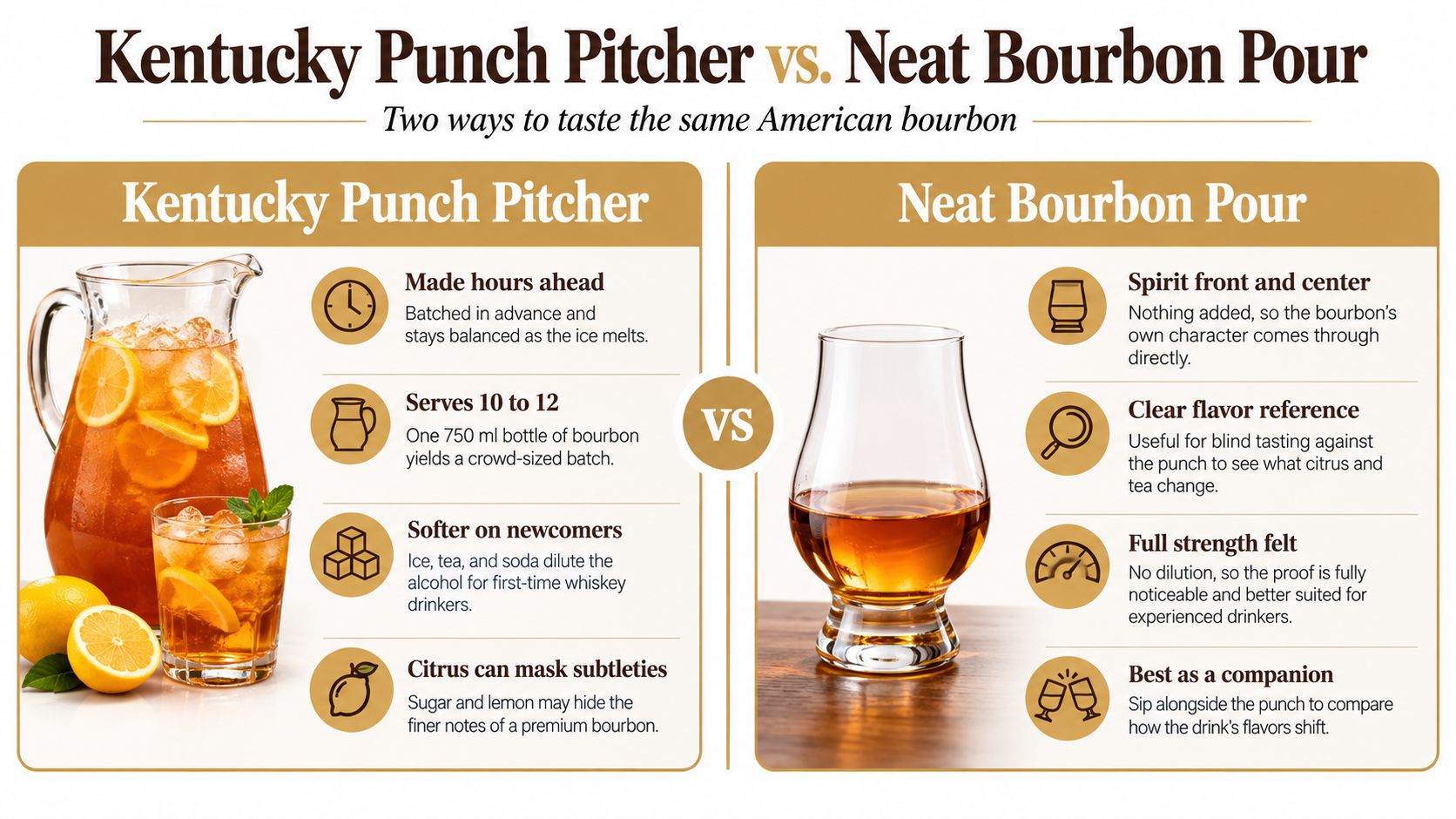
Label the bottle proof, measured serving size, and ingredients. Don't confuse the bourbon's proof with the finished punch's alcohol content.
Blind-tasting tip: Hide the bottle and compare a small neat sample with the punch. New drinkers can start with half a serving over ice, noticing which grain and oak flavors survive the tea. For an alcohol-free pitcher, replace bourbon with additional tea and finish with orange peel and soda.
2. Batched Bourbon Old Fashioned
A Batched Bourbon Old Fashioned keeps bourbon in the foreground. Choose it for a whiskey-focused dinner or a speakeasy-style party when you want efficient service without masking the spirit.
This drink has little room to hide imbalance. Too much syrup blurs differences between bourbons; too little dilution leaves the drink hot and tight.
For eight servings, combine 16 ounces bourbon, 2 ounces simple syrup, 16 dashes aromatic bitters, and 2 ounces filtered water. Chill the batch, then taste it over the same large cubes you plan to serve. Stirred-style batches commonly use a dilution benchmark of approximately 15–20%, though serving ice changes the final result, according to Sommelier Education Authority.
Preserve the Bourbon's Character
Try New Riff Kentucky Straight Bourbon for grain and spice, or compare it with a wheated bourbon such as Garrison Brothers Small Batch. Wheated bourbon is not automatically sweeter, and higher-rye bourbon is not automatically softer. Taste the bottles rather than assuming their flavor.
Practical rule: Measure the dilution water, or stir with ice and strain. Don't use both full dilution methods on the same batch.
Refrigerate the covered, juice-free batch overnight if convenient. Store orange peels separately in a covered container. Express a peel over each glass and serve over fresh large ice.
- Beginner adjustment: Offer smaller pours instead of adding more syrup to the pitcher. This lets new whiskey drinkers try bourbon without changing the batch's balance.
- Blind comparison: Set out coded samples, then make identical miniature Old Fashioneds with different bourbons. Compare aroma, sweetness, and finish to hear what each whiskey contributes.
A nonalcoholic whiskey alternative can follow the same serving ritual, but adjust its sweetness separately. Use alcohol-free bitters if the drink must contain no alcohol.
3. Batched Bourbon Whiskey Sour Pitcher
A sour is the most welcoming choice for guests who find neat bourbon intense. Lemon brightens the drink, syrup controls the sharpness, and bourbon supplies the richer middle.
It works especially well at a barbecue or brunch, where a heavy, spirit-forward cocktail can feel out of place. Don't make it so sweet that guests can't distinguish the whiskey from lemonade.
Balance Before You Multiply
For eight servings, combine 12 ounces bourbon, 6 ounces freshly squeezed lemon juice, 4 ounces simple syrup, and 3 ounces cold filtered water. Shake a small proportional test serving with ice before committing the full batch.
Try Frey Ranch Straight Bourbon, then use the guide to choosing bourbon for a whiskey sour to compare alternatives. A corn-forward flavor profile works well, but taste matters more than assumptions about the mash bill.
- Prep schedule: Combine bourbon and syrup the day before. Squeeze and add lemon within a few hours of serving, then refrigerate covered in glass or stainless steel.
- Foam option: Keep egg white out of the communal pitcher. Shake individual portions with pasteurized egg white, or use aquafaba for an egg-free alternative.
- Fast service: Skip foam entirely when you want guests to pour their own drinks.
Foam gives a silky texture, but it adds work at precisely the point batching is supposed to remove it. A cold, foam-free sour is the better choice for a busy host.
Blind-tasting tip: Taste a tiny coded neat sample, then its matching sour. Notice whether lemon shortens the oak finish or makes vanilla more obvious.
For an alcohol-free version, use strong cooled black tea in place of bourbon, then rebalance the lemon and syrup. Don't add the full syrup measure automatically.
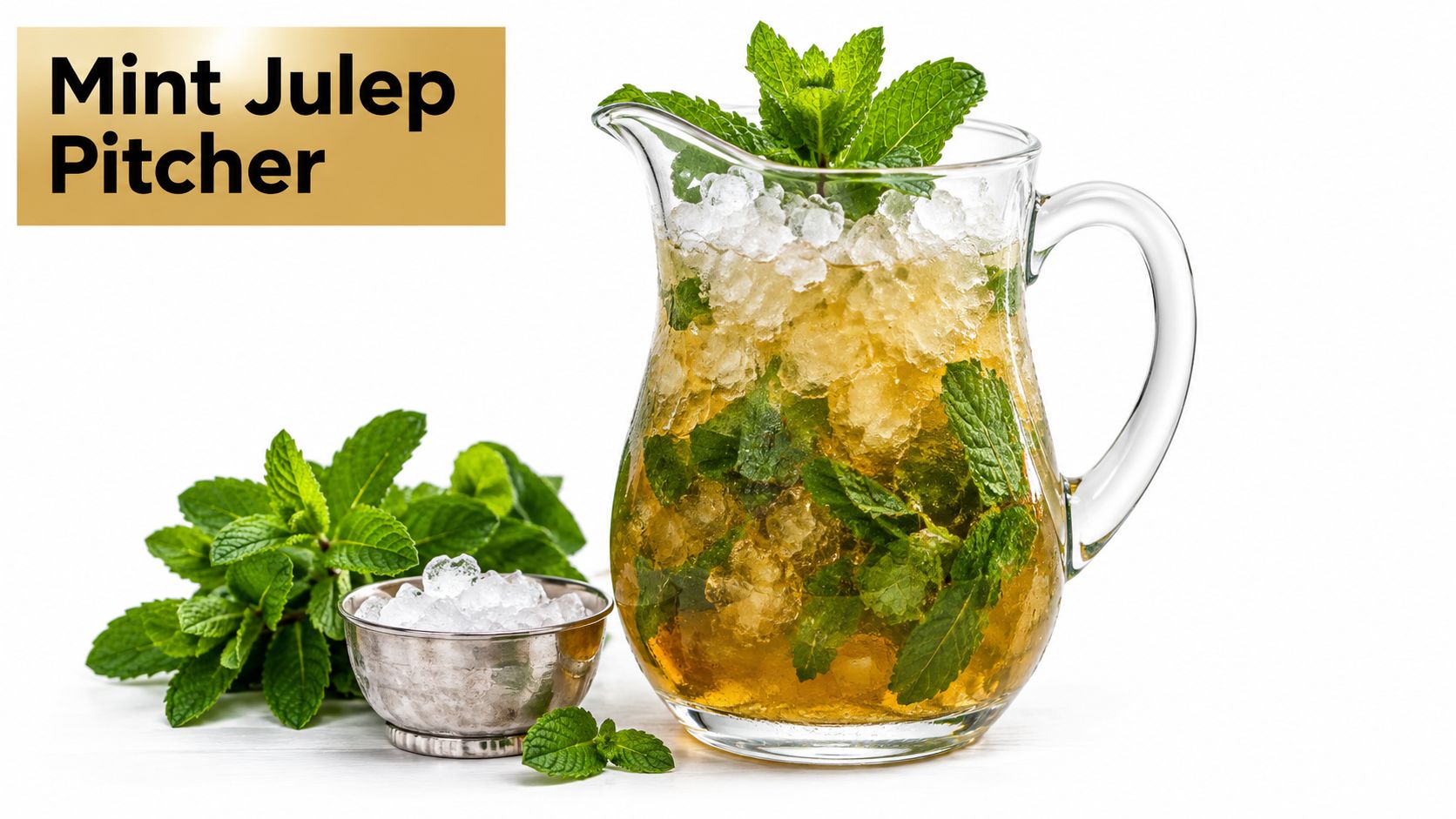
4. Mint Julep Pitcher with Craft Bourbon
The julep looks gentle because it's frosty and fragrant. It's still a bourbon-forward drink, so give newcomers a small serving and plenty of crushed ice.
For a Kentucky Derby watch party, batch the bourbon and mint syrup rather than filling a pitcher with crushed ice. The traditional silver cup is attractive, but a sturdy chilled glass works just as well.
Infuse the Syrup, Not the Whole Pitcher
For eight servings, combine 16 ounces bourbon with 3 ounces mint simple syrup. Make the syrup by steeping a generous handful of fresh mint in warm simple syrup for 10 to 15 minutes, then strain and cool.
Southern Star Paragon Straight Bourbon makes a useful candidate for this style. Taste it first, then decide whether its grain and oak need slightly more or less syrup.
- Cold storage: Refrigerate the covered base overnight. During service, nestle the pitcher in an ice bath rather than adding crushed ice to it.
- Glass assembly: Fill each glass with crushed ice, add the measured cocktail, stir, and mound more ice on top.
- Mint handling: Clap garnish sprigs gently between your hands. Don't pulverize leaves into the batch, where they become bitter debris.
Mint and sugar soften bourbon's impression. They don't reduce the alcohol you poured.
Blind-tasting tip: Compare a small neat pour with the finished julep without showing the bottle. Ask whether the mint changes perceived sweetness or only changes the aroma.
For an alcohol-free companion, combine mint syrup with chilled black tea and serve over crushed ice with the same generous mint garnish. Keep it in a clearly separate pitcher.
5. Peach Bourbon Iced Tea Pitcher
Peach tea is the casual patio option for guests who wouldn't normally order whiskey. The trade-off is visibility: too much nectar makes the bourbon difficult to identify.
Choose unsweetened tea and control the sweetness yourself. For a poolside gathering, keep the serving pitcher shaded and chilled rather than leaving fruit and tea warming on a table.
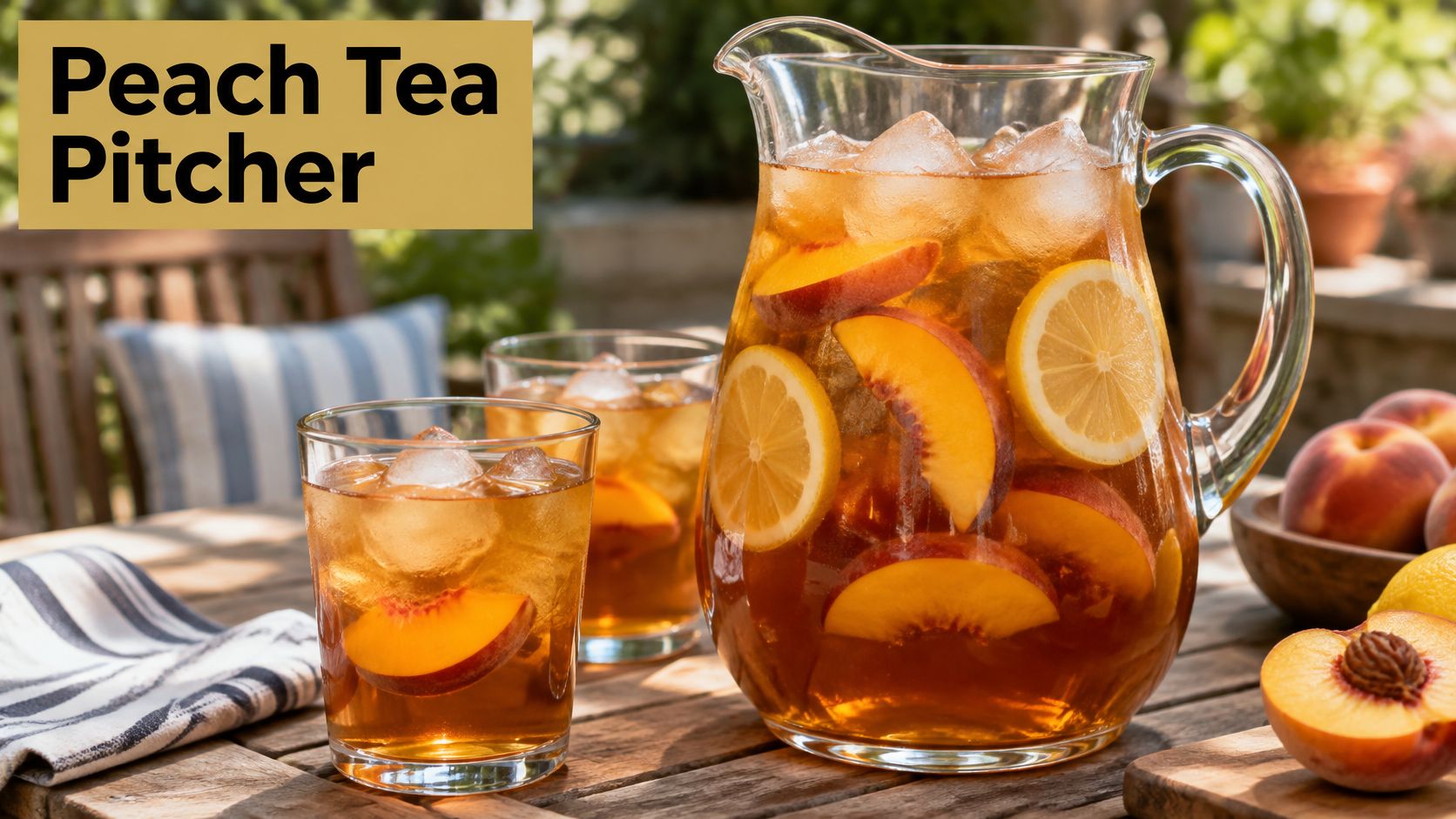
For eight servings, mix 12 ounces bourbon, 20 ounces chilled strong black tea, 8 ounces peach nectar, and 3 ounces fresh lemon juice. Taste cold before adding syrup; nectar varies enough that automatic sweetening often spoils the balance.
Keep Fruit From Hiding the Whiskey
Garrison Brothers Small Batch is worth comparing with Frey Ranch Straight Bourbon here. Look for the bottle whose vanilla, grain, or fruit character remains identifiable after mixing.
For a fresher variation, muddle ripe peaches separately, press through a fine sieve, and replace the nectar with the strained juice. Loose peach pulp settles and makes the final glasses different from the first.
- Storage: Brew and refrigerate the tea ahead. Combine the fruit and lemon on the day of service, keep covered and cold, and stir before pouring.
- Serving: Pour over fresh ice and garnish with peach slices added at service.
- Equipment: If guests want straws, compare paper straws for different drinks, especially when using thicker fruit preparations.
Blind-tasting tip: Split the tea mixture between coded miniature pitchers and add different bourbons at the same ratio. Compare the finish, not just the first sweet sip.
For the alcohol-free batch, replace bourbon with additional tea. Keep the peach, lemon, glassware, and garnish consistent so it feels like an equal choice.
6. Batched Rye Manhattan Pitcher
A Manhattan is the next step for guests who enjoyed bourbon and want a clearer contrast. Rye often brings a spicier, drier impression, while sweet vermouth adds herbal complexity.
At a holiday cocktail party, it's quick to pour and easy to keep consistent. It's also unforgiving of tired vermouth or heavy-handed bitters.
Measure the Water and Respect the Vermouth
For eight servings, combine 16 ounces rye whiskey, 8 ounces sweet vermouth, 16 dashes aromatic bitters, and 4 ounces filtered water. Refrigerate until thoroughly cold, then taste a measured sample before serving.
New Riff Kentucky Straight Rye and Dad's Hat Pennsylvania Rye are useful craft bottles to compare. The guide to rye whiskey for cocktails can help narrow the choice without assuming every rye has the same spice profile.
- Dilution alternative: Stir the undiluted ingredients with ice, strain, and measure the finished volume. Don't also add the recipe's full water measure.
- Vermouth care: Use a freshly opened or properly refrigerated bottle. Refrigerate the finished batch covered and make it close to the gathering.
- Serving choice: Pour into chilled glasses, or use large ice cubes and expect the drink to soften as guests sip.
For someone new to whiskey, replace rye with bourbon if the spice feels too assertive. A wheated bourbon version is a genuine variation, not a lesser Manhattan.
Blind-tasting tip: Make matching rye and bourbon Manhattans with identical vermouth and bitters. Hide the bottle identities and compare spice, sweetness, and the lingering finish.
A zero-proof version requires both alcohol-free whiskey and vermouth alternatives, plus suitable bitters. Treat that as a separate recipe and rebalance it rather than promising an exact substitute.
7. Whiskey Ginger Batch with Craft Bourbon
Ginger beer can rescue a timid whiskey drinker's first highball. It can also overwhelm a good bourbon, so choose a dry, spicy mixer rather than the sweetest bottle on the shelf.
This is the easy option for backyard parties and tailgates. Batch the still ingredients first, then decide whether guests will finish individual glasses or share a pitcher that will empty immediately.
For eight servings, refrigerate 12 ounces bourbon with 4 ounces fresh lime juice. At service, add 32 ounces cold ginger beer and stir gently, or divide the base between glasses and top each with ginger beer.
Add the Bubbles Last
Try Southern Star Paragon Straight Bourbon or Frey Ranch Straight Bourbon. Look for vanilla and grain that remain noticeable beneath ginger, rather than choosing a bottle solely because it tastes soft neat.
The guide to mixers for bourbon whiskey offers useful comparisons if ginger isn't your guests' preference.
Service shortcut: A small pitcher finished with ginger beer works for immediate pouring. For a long party, keep the bubbles in their bottles until each glass is ready.
- Storage: Refrigerate bourbon and lime covered on the day of service. Keep ginger beer unopened and cold.
- Beginner variation: Reduce bourbon in an individual glass and increase ginger beer. Extra mixer changes concentration, not the alcohol already poured.
- Alcohol-free path: Use alcohol-free ginger beer, lime, and a splash of chilled tea, with the same lime garnish.
Blind-tasting tip: Compare a small coded neat sample with its matching highball. Notice whether ginger echoes the whiskey's spice or completely covers it.
Serve over fresh ice. Don't repeatedly top up a partly empty pitcher, because you'll lose track of both the ratio and the servings.
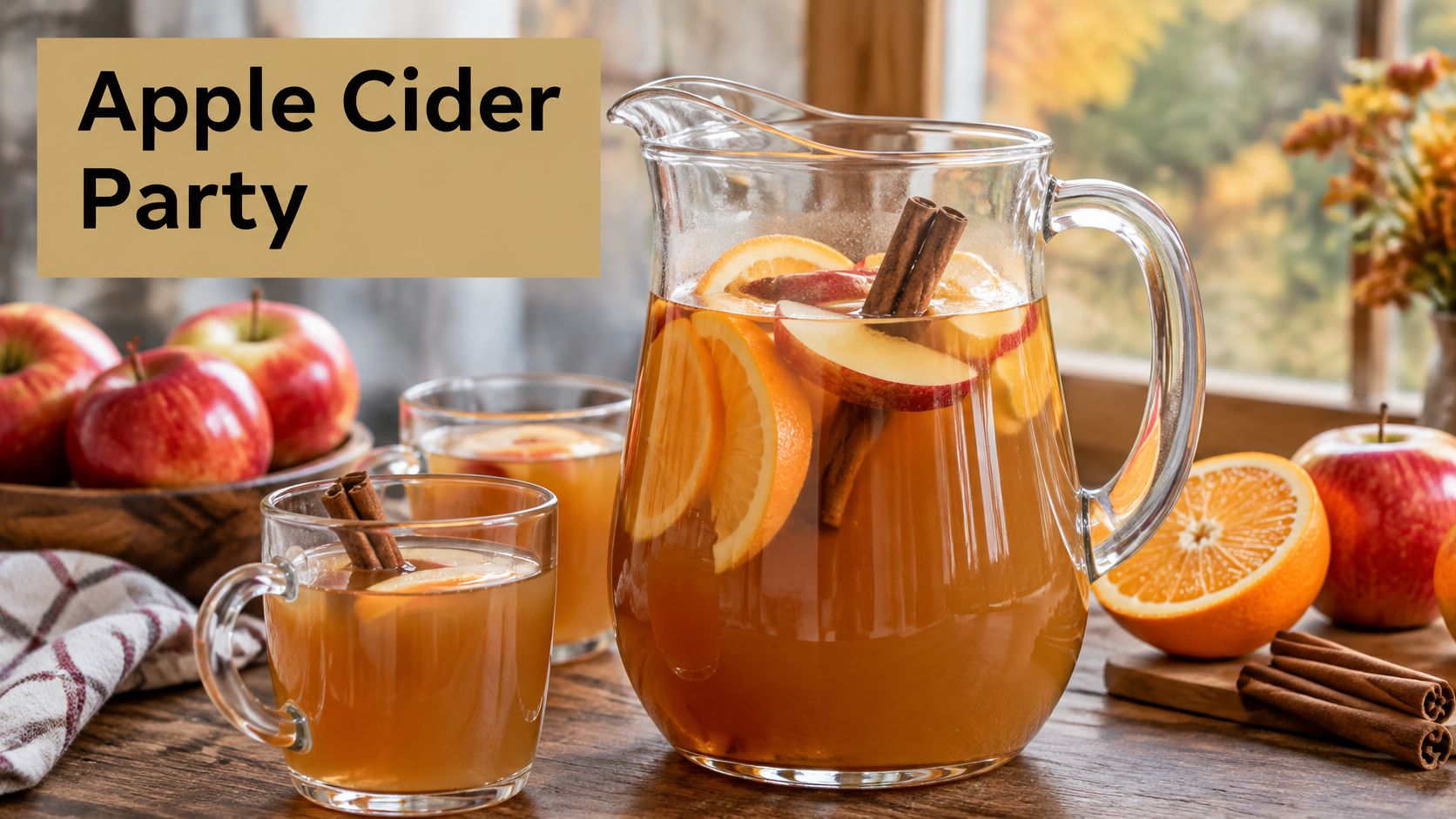
8. Spiced Apple Bourbon Cider Pitcher
Apple cider makes bourbon approachable for guests who prefer sweet, aromatic flavors. At a fall gathering or holiday open house, the apple and baking spice give newcomers familiar aromas before they encounter the whiskey.
The main risk is over-spicing. Cinnamon should support the bourbon, not make every bottle taste like the same seasonal candle.
Choose Cold Service or Gentle Warmth
For eight servings, use 12 ounces bourbon, 32 ounces apple cider, 2 cinnamon sticks, and broad strips of orange peel. Choose a bourbon with lighter oak and clear vanilla character; compare Southern Star Paragon with another craft bourbon before committing.
For warm service, heat the cider, cinnamon, and orange gently for 30 minutes. Remove the spices, add bourbon just before serving, and transfer to a heat-safe vessel or slow cooker set to warm.
- Don't boil: Boiling changes the aroma and makes the batch harder to serve comfortably. It doesn't give you a reliable alcohol-free drink.
- Cold variation: Chill the infused cider completely before adding bourbon. Refrigerate covered and pour over fresh ice.
- Storage: Prepare the spiced cider ahead, cool promptly, and refrigerate separately from the bourbon until service.
For a cozy alternative to a toddy, use mugs and garnish with orange slices. Keep cinnamon sticks decorative rather than leaving a growing collection to steep throughout the gathering.
Blind-tasting tip: Compare the same coded bourbon neat and in cider. Ask which aromas become more obvious, particularly vanilla, apple-like fruit, and toasted oak.
Reserve some spiced cider before adding whiskey for the alcohol-free pitcher. Use matching mugs and distinct labels so guests can choose without asking.
How the Eight Party Pitcher Cocktails Compare at a Glance
Use the per-serving ratios to compare whiskey strength, mixer, and style. The figures below follow each batch recipe, so you can scale the drinks and judge what the bourbon or rye contributes. For blind tasting, taste a small pour before adding the garnish or serving ice.
| Item | Base Spirit | Typical Ratio per Serving | Serving Style | Best For |
|---|---|---|---|---|
| Kentucky Punch Pitcher with American Bourbon | Bourbon | 1.5 oz bourbon per serving | Cold over ice in a punch bowl or pitcher | Crowds and make-ahead gatherings |
| Batched Bourbon Old Fashioned | Bourbon | 2 oz bourbon; about 3/8 oz water, plus syrup and bitters | Chilled over a large ice cube with orange peel | Spirit-forward bourbon tasting |
| Batched Bourbon Whiskey Sour Pitcher | Bourbon | 1.5 oz bourbon, 3/4 oz lemon juice, 1/2 oz simple syrup | Over ice or served in a coupe | Warm-weather parties and newcomers |
| Mint Julep Pitcher with Craft Bourbon | Bourbon | 2 oz bourbon; about 3/8 oz mint syrup | Very cold over crushed ice with mint | Derby parties and festive gatherings |
| Peach Bourbon Iced Tea Pitcher | Bourbon | 1 part bourbon to 3 parts tea and fruit mixer | Over ice with lemon or peach slices | Casual summer parties and beginners |
| Batched Rye Manhattan Pitcher | Rye whiskey | 2 oz rye, 1 oz sweet vermouth, 2 dashes bitters | Chilled, served up or over a large cube | Elegant gatherings and rye fans |
| Whiskey Ginger Batch with Craft Bourbon | Bourbon | 1.5 oz bourbon, with ginger beer and lime | Over ice in a tall glass or pitcher | Casual parties and mixed crowds |
| Spiced Apple Bourbon Cider Pitcher | Bourbon | 1.5 oz bourbon per 4 oz cider | Chilled over ice or served warm | Fall gatherings and holiday parties |
Longer mixers soften the whiskey's presence, while spirit-forward serves make its flavor easier to assess. To compare bourbon or rye fairly, taste each batch before adding ice to the glass, then taste it in its intended serving style.
Pour, Chill, and Test Your Palate Before the Guests Arrive
The best party setup isn't the one with the most recipes. It's the one you can serve accurately while spending time with your guests. Choose a bourbon-forward pitcher, such as an Old Fashioned, and a longer option, such as peach tea or whiskey ginger.
Decide what “lighter” means before you label anything. A drink can taste lighter because of tea, fruit, ice, or carbonation while still containing a substantial whiskey pour. If you want less alcohol per serving, reduce the measured spirit rather than relying on extra mixer.
Finish the Prep Before Service
- The day before: Batch spirit and syrup where the recipe allows. Brew tea, prepare spiced cider, and refrigerate covered components separately.
- On the day: Add fresh citrus, strain fruit, check vermouth, and taste each recipe cold. Use a measuring jug rather than estimating from the pitcher's height.
- At serving time: Add fresh ice to glasses and carbonation to drinks that are ready to pour. Set out a measured ladle or mark the serving size clearly.
- For inclusive hosting: Put the alcohol-free pitcher out at the same time, with equally good glassware and garnishes. Keep its utensils separate.
- For consistent flavor: Stir still batches before pouring, replace small serving pitchers from refrigerated reserves, and don't mix fresh batch into old melting ice.
Dilution deserves its own rehearsal. Serious Eats' batching guidance notes that batches served over ice usually need less added water, about 10–15%, because the serving ice continues to melt. That's a starting point, not permission to ignore tea, cider, or other water-rich ingredients already in your recipe.
Before the party, run a small blind tasting with two bourbons. Use matching glasses, hide the bottle identities, and make miniature versions of the same cocktail at identical ratios. Guests may notice more difference than they expect when brand recognition isn't steering the comparison.
Start with aroma, take a small sip, and compare the finish before discussing preferences. There's no need to identify every grain or guess an expensive bottle correctly. The useful question is which whiskey you prefer in the drink you're serving.
A quarterly blind tasting kit can make that comparison a repeatable habit. Keep notes on which bourbons remain distinctive in citrus, which work with mint, and which you prefer without mixers. You'll build a practical buying guide based on your own palate rather than choosing every party bottle by its label.
Blind Barrels offers a quarterly blind whiskey tasting subscription featuring small American craft distilleries, with a tasting table for recording aroma, flavor, and finish before revealing the samples. Use those comparisons to choose the bourbon or rye for your next pitcher, then visit Blind Barrels to turn party prep into a shared tasting experience.