

The most popular advice about pot still bourbon is also the most misleading: if a bottle says “pot still,” it must be better. It doesn't. A pot still is a production choice, not a quality certificate. It can help a distiller preserve a fuller, more characterful spirit, but the final bourbon also depends on the mash bill, fermentation, barrel entry proof, maturation, and the cuts made during distillation.
That distinction matters most with American craft whiskey. Small distillers often choose equipment that gives them hands-on control, even when it produces less spirit and demands more labor. The result can be memorable, rich, and distinctive, but it still deserves to be judged in the glass rather than accepted on reputation alone.
Rethinking the Pot Still Bourbon Myth
A pot still bourbon isn't automatically superior to bourbon made with a column still. It's better understood as a different expression of the distiller's priorities. The pot still favors batch control and the retention of more flavor compounds, while the column still favors continuous operation, consistency, and volume.
That difference reflects bourbon's industrial history. Pot still bourbon is a minority tradition in a category that moved toward more efficient continuous stills after the 1820s. Aeneas Coffey patented an improved continuous still in 1828, and bourbon history sources describe how that technology shifted American whiskey production toward higher-volume, lower-cost distillation. By the post-Prohibition era, most Kentucky bourbon was being produced in large facilities with tall column stills rather than copper pots, as discussed in this historical account of bourbon production.
A method, not a medal
That history explains why pot still bourbon often feels special today. It stands apart from the dominant industrial model, particularly in major bourbon-producing markets such as Kentucky and Tennessee, where scale and consistency became central to production. But rarity and quality aren't interchangeable.
A distiller can make excellent bourbon with a column still, just as a pot still can produce spirit that feels unbalanced, overly heavy, or poorly integrated. The still shapes the starting point. It doesn't decide the entire journey.
The useful question isn't “Is pot still better?” It's “What did this distiller do with the character the pot still created?”
For a beginner, that mindset prevents two common mistakes. First, you won't dismiss a column-distilled bourbon because it tastes cleaner or lighter. Second, you won't excuse flaws in a pot-distilled bourbon because the label sounds traditional.
Pot still bourbon is often chosen for a rich, heritage-driven style. It tends to suit drinkers who enjoy weight and texture, especially in small American craft whiskey releases. Treat that identity as an invitation to explore, not a promise that every bottle will suit your palate.
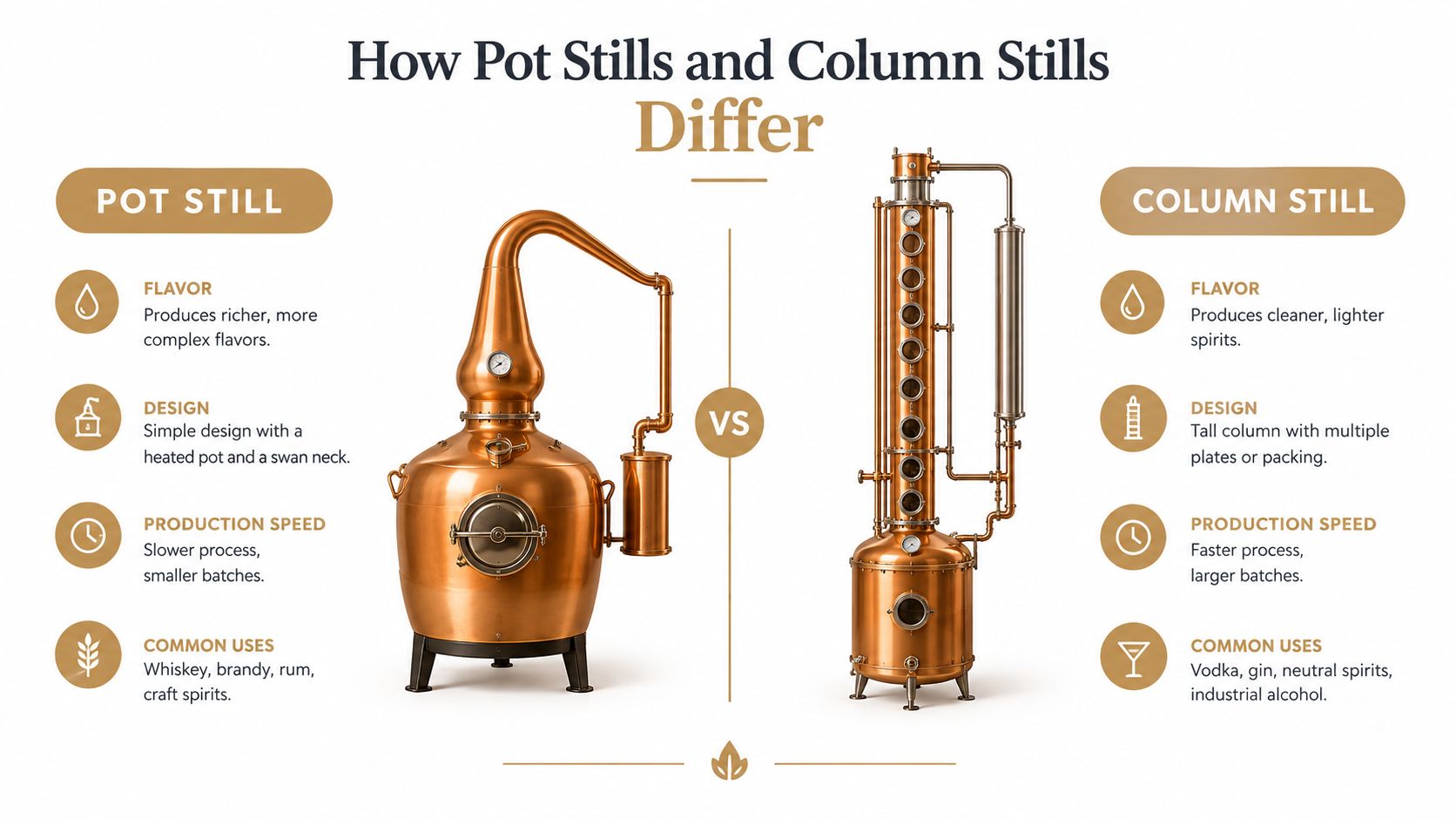
How Pot Stills and Column Stills Differ
The easiest way to understand the difference is to compare two kitchens. A pot still is like a cook preparing one careful meal in a cast-iron skillet, tasting and adjusting each batch. A column still is closer to a commercial kitchen line that keeps ingredients moving through a tall series of stages with much greater efficiency.
A traditional pot still is charged with fermented mash. The distiller heats that mash, alcohol vapor rises through the still's lyne arm or swan neck, and the vapor condenses back into liquid in a separate condenser. After the run, the still is emptied, cleaned, and refilled.
That repeated cycle makes pot distillation batch-based. The distiller handles one charge at a time rather than feeding mash through a continuous system. The process is slower, but it creates opportunities to observe the spirit and decide where one portion ends and another begins.
Why the cuts matter
As the distillate comes off the still, distillers separate it into heads, hearts, and tails. The hearts are generally the desired middle portion, while heads and tails contain different concentrations of compounds that may be too sharp, oily, vegetal, or otherwise unsuitable in excess.
Batch distillation lets the distiller make those cuts with close attention to the liquid's aroma, strength, and character. A column still also allows separation, but its design supports a continuous flow and repeated vapor-liquid contact inside the column. That makes it easier to reach a cleaner, higher-strength spirit at scale.
Pot stills commonly produce a lower-strength distillate on a single pass, often around 60% to 80% ABV, according to this explanation of column and pot distillation. Many producers therefore use two or more runs. The first distillation creates low wines, and a later spirit run separates the hearts with greater precision.
| Production feature | Pot still | Column still |
|---|---|---|
| Operating style | Batch by batch | Continuous flow |
| Main advantage | Hands-on cut control | Efficiency and consistency |
| Typical spirit character | Fuller and more expressive | Often cleaner and lighter |
| Common setting | Small craft distilleries | Large-scale bourbon facilities |
The comparison isn't a verdict. It's a map. If you want a deeper side-by-side explanation of the equipment and output, this guide to pot still versus column still bourbon provides useful context.
The Flavor Impact of Batch Distillation
A pot still can leave more of the spirit's supporting flavor compounds in place. These compounds are called congeners, a broad term for minor components that contribute aroma, taste, and mouthfeel. Pot-distilled spirits are often described as fuller-bodied and more flavorful because batch distillation can carry more congeners, as explained in this overview of pot still bourbon.
That doesn't mean every congener improves bourbon. Some contribute desirable fruit, spice, or texture. Others can create roughness, sulfur, bitterness, or an overly vegetal quality if the distiller doesn't manage the cuts carefully. The skill lies in retaining character without allowing unwanted notes to dominate.
What fuller means in the glass
A fuller spirit usually announces itself through texture before flavor. Instead of feeling thin or quick across the tongue, it may seem rounder, weightier, or more viscous. The finish can linger with concentrated impressions of cooked fruit, baking spice, toasted grain, or sweet oak.
Tasting notes often associated with a richer pot-distilled style include:
- Fruit character: Stone fruit, dried fruit, and cooked fruit impressions may feel more pronounced.
- Spice: Baking spices can sit alongside the grain rather than appearing only at the finish.
- Mouthfeel: The whiskey may feel oily, coating, or dense compared with a lighter spirit.
- Aromatic depth: Additional congeners can create more layers between the first nose and the final sip.
These are tendencies, not guarantees. A distiller can make a pot still spirit that drinks cleanly, and a column-distilled bourbon can develop considerable richness through its mash bill and barrel program.
Copper does more than look traditional
Copper contact also has a technical role. During distillation, copper can help manage sulfur compounds, which may otherwise create unwanted aromas. In lab-scale bourbon production, a copper pot still is used for the first distillation to create low wines, followed by a second spirit run to collect the hearts. That two-stage approach gives the producer more control over what enters the barrel, as described in this peer-reviewed study of bourbon production.
The tasting lesson is simple. When you notice a heavy, fruity, or oily profile, the pot still may be part of the explanation. It isn't the whole explanation. The distiller's cut decisions determine which compounds survive, and maturation determines how those compounds interact with oak over time.
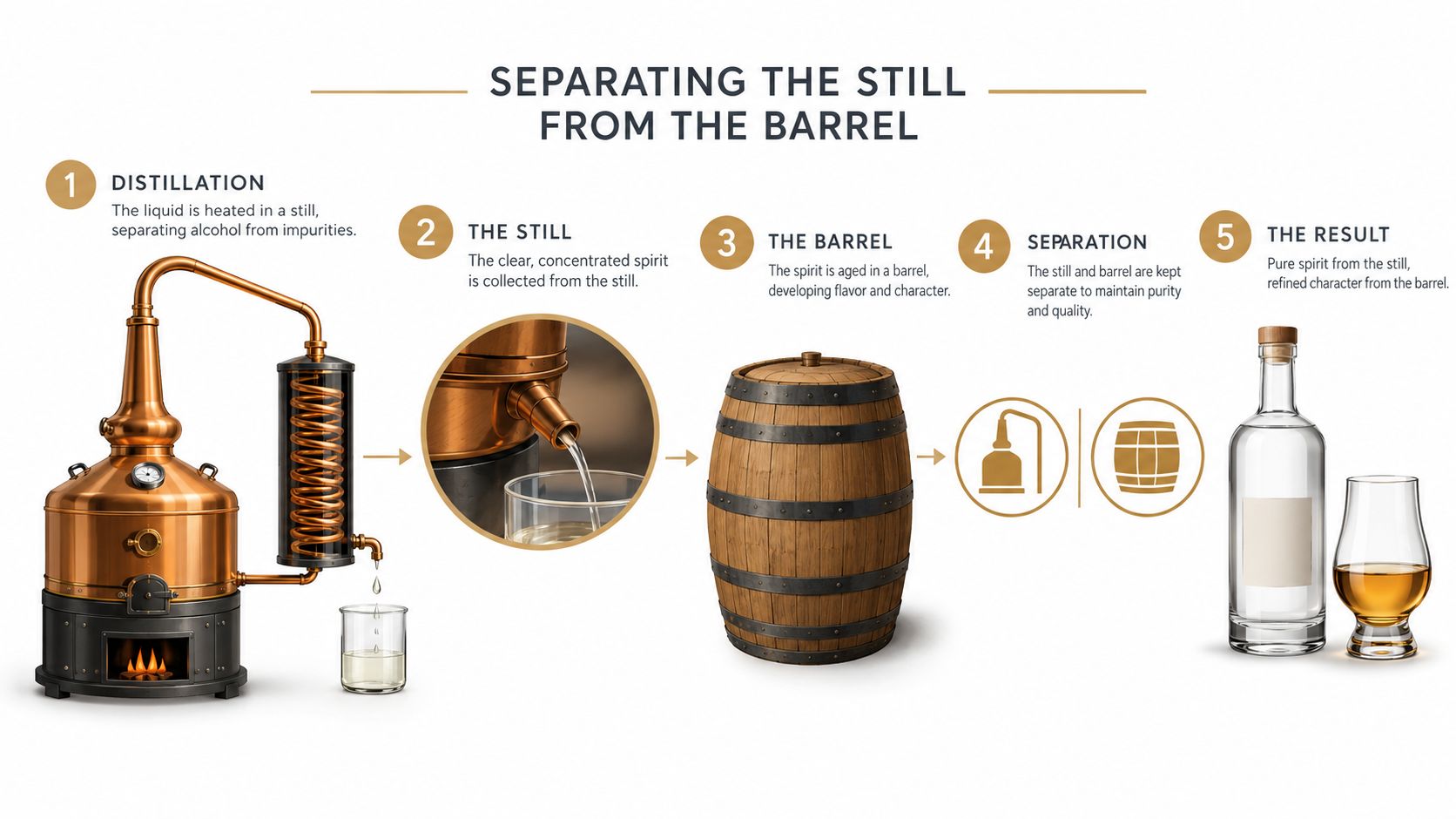
Separating the Still from the Barrel
A still produces new make spirit. A barrel turns that spirit into bourbon. Confusing those two stages leads drinkers to over-attribute every vanilla, caramel, spice, or oak note to the pot.
Bourbon must be made in the United States, contain at least 51% corn, be distilled to no more than 160 proof, enter new charred oak at no more than 125 proof, and be bottled at 80 proof or higher, according to this beginner guide to bourbon's legal requirements. Within those rules, distillers still have considerable room to make decisions.
Four choices that can reshape the profile
Mash bill comes first. Corn supplies bourbon's required foundation, but the other grains influence the spirit's structure. More rye can bring pepper and lift. Wheat can create a softer impression. Malted grain contributes its own fermentable and aromatic qualities. The pot still doesn't erase those differences.
Fermentation sets the raw material. Yeast selection, fermentation conditions, and the distiller's handling of the mash affect the flavors available for distillation. A careful pot still run can preserve those notes, but it can't create a profile that the fermentation never produced.
Barrel entry proof changes the starting balance. The strength at which spirit enters new charred oak affects how alcohol, water, and wood interact during maturation. Two otherwise similar pot-distilled spirits can move in different directions if the distiller chooses different entry strengths.
Maturation supplies the architecture. Oak contributes sweetness, spice, color, and tannin. Warehouse conditions and time shape how the spirit absorbs and releases those compounds. For a practical look at how wood develops whiskey, explore this guide to aging barrels for whiskey.
Most coverage treats pot still bourbon as a flavor guarantee, but the bourbon's final profile is heavily driven by mash bill, barrel entry proof, and maturation, alongside the still type, as this bourbon production guide explains. That's why the best comparison is between bourbons with similar age and entry proof, rather than treating “pot still” as an isolated flavor prediction.
American Craft Distillers Leading the Way
The American craft whiskey movement has made pot still bourbon easier to encounter, especially from smaller independent distilleries. These producers often don't have the same need to keep a large, continuous operation running at maximum throughput. A pot still gives them a more hands-on production rhythm and a way to build an identity around texture, flavor retention, and visible craftsmanship.
The economics are less romantic. Pot stills must be charged, heated, emptied, cleaned, and charged again. Each run asks people to monitor the spirit and make decisions about the cuts. Compared with a column still, the process is lower-yield and more labor-intensive, which makes it a difficult choice for a producer focused on high-volume consistency. This analysis of pot still bourbon production explains why the method often aligns with smaller-scale output rather than automatically indicating superior quality.
Why craft producers accept the tradeoff
A small distiller may choose a pot still because the equipment matches the brand's intended style. The producer might want a spirit with more weight, more visible batch variation, or greater control over the hearts. Those goals can make sense even when the process is slower.
The tradeoff also affects availability. A distillery producing in batches may have less whiskey to release, and a hands-on process can require more labor at several stages. That can place pot-still bourbon in a premium or limited-release context, but a higher price or scarcer bottle still doesn't prove better liquid.
Willett offers a well-known modern example of how the method can become part of a brand's identity. Willett Pot Still Reserve debuted in 2008, and the expression was later associated with an in-house copper pot still after the distillery's 2012 rebuild, according to this industry guide to bourbon distillation. The example shows how a pot still can support a heritage-driven, premium position while remaining distinct from the high-volume model.
For a new drinker, the practical takeaway is to separate three ideas:
- Small scale: The distillery may produce in batches.
- Production effort: The method may require more attention and labor.
- Quality: The whiskey still needs balance, clean distillation, and satisfying maturation.
Those qualities can overlap, but they aren't the same thing.
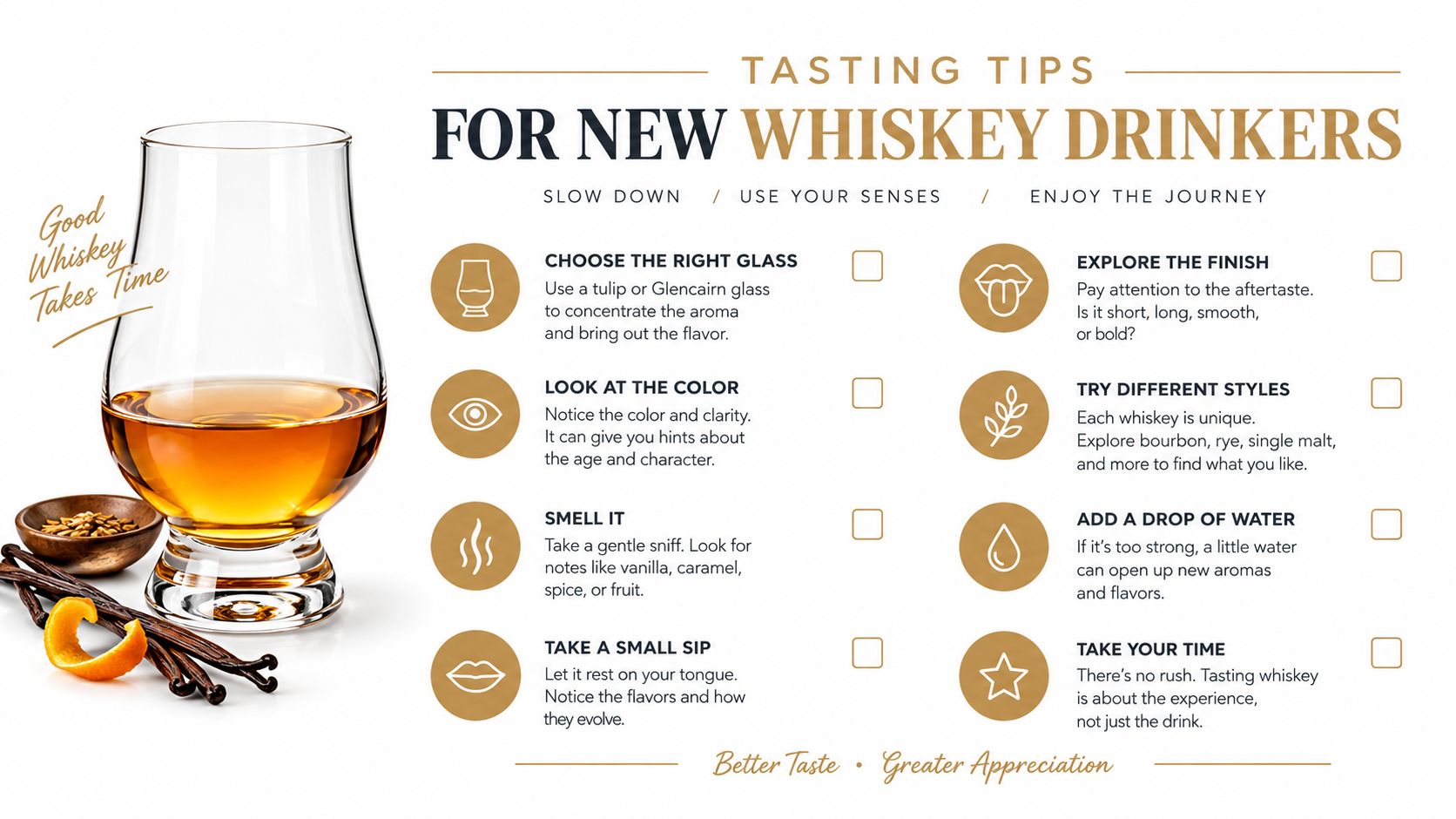
Tasting Tips for New Whiskey Drinkers
A pot still bourbon can feel intense if your reference point is a light, mainstream bourbon. Start by giving your palate time to adjust. The goal isn't to prove that you can drink a strong whiskey neat. The goal is to find the point at which the whiskey's aromas and flavors become clear.
A calm first pour
Choose a tulip-shaped whiskey glass if you have one, or use a small rocks glass. Pour enough to cover the bottom, then leave it alone briefly. Look at the color, but don't treat a darker appearance as proof of age or quality. Oak and maturation decisions influence color, and color alone can't tell you whether the whiskey is balanced.
Bring the glass to your nose carefully. Start with the rim held away from your face, then take a closer smell. A rich pot-distilled bourbon may offer fruit, grain, spice, sweet oak, or heavier earthy notes. If the alcohol feels sharp, wait and try again rather than inhaling deeply.
Practical rule: Taste the whiskey at its bottled strength first, then change one variable at a time.
Sip, dilute, compare
Mainstream beginner guidance recommends starting low and slow, with 80 to 90 proof bourbon often considered more approachable. Experienced tasters may evaluate flavors at 30% ABV or lower, as described in this guide to drinking bourbon for beginners.
Take a small sip and let it move across your tongue. Notice the first impression, the middle palate, and the finish. Don't chase every tasting note. Begin with broad observations such as sweet, spicy, fruity, dry, oily, hot, or light.
Then add a few drops of water. Water can reduce the perception of alcohol and reveal aromas hidden behind proof. Try ice if you prefer a colder, softer drink, but remember that cooling can mute some aromas. The best choice is the one that helps you enjoy and understand the pour.
For a more structured approach, use this step-by-step whiskey tasting guide. Write down what you notice before reading the distillery's tasting notes. Your own reaction is useful data, even when it doesn't match the label.
Building Your Craft Whiskey Palate
A good craft whiskey palate doesn't memorize which still is fashionable. It learns to recognize relationships. Pot still bourbon may bring a rounder texture and more retained congeners, but the mash bill determines the grain framework, the cuts determine what reaches the barrel, and maturation shapes the finished balance.
Compare bottles with a purpose. Put a pot-distilled bourbon beside a column-distilled bourbon with a similar age and entry proof when that information is available. Taste both without looking at the labels, then note which one gives you more fruit, spice, sweetness, texture, or oak. You may prefer the heavier profile, or you may discover that a cleaner bourbon lets you identify the grain and barrel more easily.
Blind tasting is especially useful because bottle shape, price, reputation, and distillery history can influence expectation before the whiskey reaches your tongue. A structured tasting table can help you record aroma, palate, finish, perceived proof, and overall balance without turning the exercise into a test of expertise.
The most reliable conclusion is also the least glamorous: pot still bourbon is a production choice with flavor consequences, not a guarantee of premium quality. Judge the spirit by how well its richness, alcohol, oak, and finish work together.
Blind Barrels offers quarterly blind whiskey tasting kits with four samples from small American craft distilleries, tasting guidance, a reveal accessed through a QR code, and a game that lets you guess details such as age, proof, and whiskey type. That format gives you a practical way to test whether you prefer pot-distilled character or enjoy the story attached to it.
Visit Blind Barrels to explore blind tastings built around small American craft distilleries and compare whiskey without brand or price bias. Pour slowly, record what you taste, and let your palate decide whether pot still bourbon earns a place in your glass.