

Let's get one thing straight right away. The big difference between rye vs bourbon vs whiskey is simple: Bourbon is sweet, rye is spicy, and "whiskey" is the parent category for both.
Think of it this way: all bourbon and all rye are types of whiskey, but not all whiskey is bourbon or rye. This is the perfect starting point for anyone looking to dive into the amazing world of American spirits. For new drinkers, the best tip is to start with this simple idea and let your palate guide you from there.
Your Guide to American Whiskey Differences
Walking down the whiskey aisle can feel like a pop quiz you didn't study for. Labels are covered in terms like "straight," "small batch," and "mash bill." But the most important distinction, the one that truly shapes what’s in the bottle, is the primary grain. The grain is the spirit's DNA—it sets the core flavor profile long before a barrel ever gets to work its magic.
The two heavyweights in American whiskey are, without a doubt, bourbon and rye. They have distinct legal definitions and production histories that have shaped their journey. By U.S. law, bourbon must be made from a mash bill of at least 51% corn. This is what gives it that characteristically sweet, full-bodied profile we all know.
On the other side of the ring, rye whiskey must contain at least 51% rye, leading to a spicier, drier, and often crisper taste. Fun fact: rye was actually America's go-to whiskey for a long time. But Prohibition absolutely decimated its production, paving the way for bourbon's sweeter profile and easier-to-source grain to take over in the 20th century. You can actually find some fascinating data on these historical shifts in whiskey industry analysis on gminsights.com.
Key Differences at a Glance
The recent explosion of American craft distilleries has brought incredible innovation to these old-school categories. Many of the craft producers we feature at Blind Barrels, like the celebrated craft brand New Riff Distilling, are experimenting with grain ratios to create something totally new. You might see a "high-rye" bourbon, for example, which could have 20-35% rye in the mash bill just to add a spicy kick to that classic corn sweetness. Getting a handle on these foundational differences is your first step to finding the perfect pour.
For a new whiskey drinker, the easiest way to remember the difference is to associate bourbon with caramel and vanilla, and rye with black pepper and baking spice. This simple association is a great guide for your first few tastings.
To make things even clearer as we dive deeper into production, flavor, and cocktails, here’s a quick breakdown of how these iconic spirits stack up.
Quick Comparison: Rye vs. Bourbon vs. Other Whiskey
This table gives you a high-level look at the main differentiators. Think of it as your cheat sheet for understanding the core identity of each spirit before you even take a sip.
| Attribute | Bourbon | Rye | Whiskey (General) |
|---|---|---|---|
| Primary Grain | At least 51% corn | At least 51% rye | Varies (corn, rye, barley, wheat, etc.) |
| Dominant Flavor | Sweet, caramel, vanilla | Spicy, peppery, herbal | Highly variable by type and region |
| Mouthfeel | Often fuller, rounder, smoother | Often crisper, drier, sharper | Ranges from light to full-bodied |
| Aging Container | New, charred oak containers | New, charred oak containers | Can be new or used barrels (e.g., Scotch) |
As you can see, bourbon and rye have very specific rules they must follow in the U.S., while the broader "whiskey" category is much more of a wild card, with rules that change dramatically depending on where it's made.
Understanding the Legal Rules for Bourbon and Rye
It’s not just the main ingredient that separates bourbon and rye in the sprawling whiskey universe. What truly defines them are the strict legal guardrails that have shaped American distilling for generations.
Think of these regulations less as limitations and more as a guarantee of quality—a nod to our shared heritage. For anyone new to whiskey, learning to read a label is the first real step toward finding a bottle you’ll love. These rules are your Rosetta Stone.
When it comes to the rye vs. bourbon debate, bourbon’s legal identity is easily the most famous. Distillers, from the old Kentucky giants to nimble craft producers like Laws Whiskey House in Colorado, all have to follow a precise formula to earn that name on their label.
The Bourbon Blueprint
The federal standards for bourbon are crystal clear and non-negotiable. This isn't a list of suggestions; it's the law of the land, ensuring a consistent foundation for this iconic American spirit.
- Made in the USA: Kentucky might be its spiritual home, but bourbon can be made anywhere in the United States, from the hills of Texas to the heart of New York.
- Mash Bill Minimum: The grain recipe must contain at least 51% corn. This is where bourbon gets its signature sweetness and full-bodied character.
- New Charred Oak Containers: It absolutely must be aged in a brand-new, charred oak container. This rule is a big one. The interaction with that fresh, charred wood is responsible for the lion's share of bourbon’s color and its classic notes of vanilla, caramel, and baking spice.
- Distillation Proof: The spirit can't be distilled to a proof higher than 160 (80% ABV).
- Barrel Entry Proof: When it goes into the barrel for aging, the proof can't be any higher than 125 (62.5% ABV).
- Bottling Proof: Finally, it has to be bottled at a minimum of 80 proof (40% ABV).
This rigid framework means every bottle labeled "bourbon" has met a very specific standard. That other 49% of the mash bill is where distillers really get to play, often using wheat for a softer, gentler profile or adding more rye for an extra spicy kick.
The Rye Whiskey Regulations
Rye whiskey follows a nearly identical playbook, but with one crucial swap that completely changes its personality. That one little tweak in the primary grain is what makes drinking rye such a different experience from sipping bourbon.
Many of America's best craft brands, like High West out in Utah or Sagamore Spirit in Maryland, have built their entire reputation on perfecting this spicier American spirit.
The legal requirements for American rye whiskey are almost the same as bourbon's when it comes to aging containers and proof points. The one foundational difference is this:
The mash bill must consist of at least 51% rye grain. This heavy concentration of rye is what gives the whiskey its hallmark spicy, peppery, and sometimes fruity or herbal notes.
This single distinction creates a fundamentally different spirit. While bourbon leans sweet and mellow, rye hits you with a drier, spicier, and often more assertive flavor. You can dive deeper into this matchup in our guide on the difference between bourbon and rye.
Deciphering the "Straight" Truth
You’ll often see the word "Straight" on a label—think "Straight Bourbon Whiskey" or "Straight Rye Whiskey." This isn't just marketing fluff; it's a legal designation that signals an even higher commitment to aging and purity.
To be called "Straight," the whiskey has to meet all the base requirements for its category plus be aged for a minimum of two years. If it’s aged for less than four years, the distiller has to print the age statement right on the label.
More importantly, "Straight" whiskey can't have any added coloring, flavoring, or other spirits. It's the pure, unadulterated expression of grain, barrel, and time. For new drinkers, buying a "Straight" whiskey is a great tip for ensuring you're getting a quality, unadulterated product.
How Production Methods Shape Flavor
The legal rulebook sets the stage, but the real story of flavor begins inside the distillery. From the specific grains chosen to the final moments in a barrel, every decision a distiller makes is a deliberate brushstroke on the final masterpiece. This is where science meets art, transforming simple raw ingredients into the complex spirits we know and love.
It all starts with the mash bill—the whiskey's foundational recipe of grains. This choice has the single greatest impact on the spirit's core personality, creating the fundamental split in the rye vs. bourbon debate.
The Power of the Mash Bill
A bourbon mash bill, with its legally required 51% minimum corn content, is built for sweetness. Corn is packed with starches that convert to sugar during cooking and fermentation, leading to a spirit with a naturally sweet, full-bodied character. That corn base is exactly what gives bourbon its classic notes of caramel, vanilla, and baked goods.
Rye whiskey, on the other hand, must contain at least 51% rye. This grain imparts a distinctively spicy, peppery, and sometimes herbal or fruity character. The result is a whiskey that’s typically drier, crisper, and far more assertive than its corn-based cousin.
A tip for new whiskey drinkers is to think of the mash bill like a blueprint for a house. Bourbon’s corn-heavy plan calls for a comfortable, sweet, and rounded structure, while rye’s plan specifies a sharper, spicier design with more pronounced edges.
Of course, American craft distillers are constantly experimenting with that remaining 49% of the mash bill. Many bourbon makers, like those at Stellum Spirits, add a higher percentage of rye to create a "high-rye bourbon," which balances corn sweetness with a spicy kick. Conversely, a "wheated bourbon" swaps rye for wheat, producing a much softer, gentler, and almost bready sweetness.
Fermentation and Distillation
Once the grains are cooked into a mash, yeast gets to work. This is where sugars become alcohol, but it's also a critical flavor-creation step. Different yeast strains produce different chemical compounds called esters, which are responsible for many of the fruity and floral notes in whiskey.
Some craft distilleries, such as Frey Ranch Distillery in Nevada, use proprietary yeast strains cultivated right on their farm to create a truly unique flavor profile that can't be replicated anywhere else.
Following fermentation, the "distiller's beer" is distilled, a process that concentrates the alcohol and refines the spirit. The type of still used—whether a traditional pot still or a more modern column still—also shapes the final product's body and character. You can explore the differences in our deep dive on the art of whiskey distillation.
The Magic of Maturation
For both bourbon and rye, the final and most transformative step is maturation. By law, both must be aged in new, charred oak containers. This isn’t just about storage; it's an active process where the barrel imparts a huge amount of flavor and all of the spirit's color.
The interaction between the raw spirit and the charred wood is where the magic happens. The charring of the barrel caramelizes sugars in the wood, creating a layer that acts as a natural filter while releasing delicious compounds into the liquid.
- Char Level: Distillers can choose different char levels, from a light toast to a deep "alligator char." A heavier char generally leads to more intense notes of vanilla, caramel, and smoke.
- Warehouse Climate: The location and climate of the warehouse (the rickhouse) play a massive role. In the variable temperatures of Kentucky, barrels on the hotter top floors expand and contract more, accelerating aging and creating bolder, oak-forward whiskeys.
- Barrel Placement: A barrel aged on the top floor of a rickhouse will taste remarkably different from one aged on the cooler bottom floor after the same number of years. This is why "single barrel" offerings can vary so dramatically.
This aging process softens the raw spirit, integrates flavors, and adds incredible layers of complexity. Notes of vanilla, toffee, baking spice, and coconut all come directly from the oak barrel, turning a clear, harsh liquid into the amber spirit we recognize as bourbon or rye.
A Guided Tasting of Bourbon and Rye Profiles
Now that we’ve covered the rules and production methods, it’s time for the best part—actually tasting the stuff. Understanding the fundamental differences between bourbon and rye isn't an academic exercise; it's about training your palate to appreciate what makes each one special.
This isn't a showdown to decide which is "better." It's about recognizing what makes each spirit unique and figuring out which one you’re in the mood for, whether you're settling in for the night or mixing a cocktail.
The Classic Bourbon Profile
Thanks to its corn-heavy mash bill and its time spent in new charred oak barrels, bourbon is all about approachable sweetness and rich character. When you pour a glass of bourbon, you’re usually signing up for a warm, comforting, and full-bodied experience.
Think of bourbon as the whiskey equivalent of a warm, decadent dessert. Its flavor profile is often packed with notes that feel familiar and inviting.
- Common Aromas: You can expect sweet scents of caramel, vanilla bean, brown sugar, and toasted oak. You might also catch hints of baked apple, cherry, or even a little orange zest.
- Typical Flavors: The taste usually follows the nose. Look for deep flavors of toffee, butterscotch, cinnamon, and nutmeg, all layered on that sweet corn base.
- Mouthfeel and Finish: Bourbon typically feels richer and rounder on the palate—what some call a more viscous mouthfeel. The finish is often long, warm, and sweet, leaving you with a lingering taste of caramel and gentle spice.
The Signature Rye Profile
If bourbon is a warm dessert, then rye is its zesty, herbaceous, and spicy counterpart. The rye grain brings a totally different kind of energy, creating a whiskey that is often described as bold, crisp, and assertive.
Rye’s signature spice provides a fantastic counterpoint to the sweetness found in so many other whiskeys. It's a favorite for drinkers who enjoy a more dynamic and even challenging sip.
- Common Aromas: Nosing a rye usually brings sharper, spicier scents to the forefront. Think black pepper, dill, mint, and baking spices like clove and allspice. Sometimes you'll find underlying notes of dried fruit or freshly cut grass.
- Typical Flavors: The palate is where rye really makes its presence known. You’ll often get a burst of peppery spice right up front, which then gives way to notes of mint, dark chocolate, and sometimes even a hint of tobacco or leather.
- Mouthfeel and Finish: Rye whiskey generally has a crisper, drier, and less oily mouthfeel compared to bourbon. The finish is often spicy and clean, sometimes leaving a pleasant tingling sensation that fades slowly.
For new whiskey drinkers, a great way to start is by tasting a classic bourbon and a classic rye side-by-side. This direct comparison is the fastest way to train your palate to spot the core differences in aroma, flavor, and finish.
Tasting Notes at a Glance: Bourbon vs. Rye
Here’s a quick guide to help you distinguish the classic profiles of bourbon and rye. As you taste more, you'll find whiskeys that defy these norms, but this is a fantastic starting point for identifying the influence of corn versus rye grains.
| Sensory Element | Bourbon (Corn-Forward) | Rye (Rye-Forward) |
|---|---|---|
| Aroma | Caramel, vanilla, toasted oak, brown sugar, baked fruits | Black pepper, mint, dill, baking spices (clove), fresh grass |
| Flavor | Toffee, butterscotch, sweet corn, cinnamon, nutmeg | Peppery spice, mint, dark chocolate, tobacco, dried fruit |
| Mouthfeel | Rich, round, viscous, full-bodied | Crisp, dry, less oily, sharp |
| Finish | Long, warm, sweet, lingering caramel | Spicy, clean, tingling, sometimes dry |
Ultimately, this table is just a map. The real fun is in the exploration itself—discovering how a high-rye bourbon or a barely-legal rye can blur these lines and surprise you.
A Step-By-Step Tasting Method
To really get to know these spirits, you need a bit of a process. This simple, four-step method helps you break down the experience and pinpoint the specific notes in your glass. If you want to go deeper, check out our complete guide on how to taste whiskey.
- Observe the Color: Hold the glass up to a light source. The color, which can range from pale gold to deep amber, comes entirely from the barrel and can give you clues about its age.
- Nose for Aromas: Swirl the whiskey gently and bring the glass toward your nose. Inhaling with your mouth slightly open helps you avoid getting hit with pure alcohol vapor. What do you smell first?
- Sip to Identify Flavors: Take a small sip and let it move across your tongue. Try to notice the flavors that hit you right away, how they change in the middle, and the overall character.
- Analyze the Finish: After you swallow, pay attention to what’s left behind. Is the sensation long or short? Is it warming or spicy? Sweet or dry? That lingering impression is the finish.
American Craft Brands to Try
To put all this knowledge into practice, here are two fantastic examples from the American craft scene that beautifully represent their categories.
- Benchmark Bourbon: Frey Ranch Straight Bourbon Whiskey. This is a true "farm-to-glass" bourbon from Nevada, made with grains grown on the distillery's own property. It hits all the classic notes of caramel, vanilla, and citrus with a wonderfully smooth, rounded finish—a perfect example of a modern craft bourbon.
- Benchmark Rye: Sagamore Spirit Signature Rye Whiskey. Hailing from Maryland, this rye is a perfect benchmark for the style. It delivers that signature peppery spice right away, balanced by notes of cinnamon, clove, and a touch of honey that showcases rye’s crisp, flavorful character.
Choosing the Right Whiskey for Cocktails or Sipping
Knowing the theory behind the rye vs. bourbon debate is one thing, but putting that knowledge into practice is where the real fun begins. The spirit you choose can completely transform a drink, turning a good cocktail into a great one or setting the tone for a quiet evening of sipping. It’s all about matching the whiskey’s personality to the occasion.
The whiskey world is in the middle of a massive shift, with a huge focus on craft production. In 2024, the U.S. whiskey market pulled in $13.3 billion, with bourbon and rye leading the charge. Bourbon still commands over 70% of American whiskey sales, but rye’s share is a fast-growing 15%, thanks in large part to its essential role in cocktail culture. You can get a deeper dive into how consumer tastes are shaping whiskey trends on arbre-a-biere.fr.
Rye Whiskey: The Cocktail Workhorse
Rye’s spicy, assertive, and often drier profile makes it a mixologist's dream. That peppery backbone is exactly what allows it to stand up to other bold ingredients, like sweet vermouth or bitters, without getting lost in the mix. This is why rye is the traditional—and many would argue, superior—choice for spirit-forward cocktails.
- Manhattan: This is the quintessential rye cocktail. The whiskey's spice creates a beautiful tension with the sweet vermouth for a complex, sophisticated drink.
- Old Fashioned: While often made with bourbon today, a rye Old Fashioned is a different beast entirely. The rye cuts through the sugar and bitters, giving you a crisper, spicier, and less sweet version of the classic.
- Sazerac: This New Orleans classic practically demands rye. The whiskey’s herbal and peppery notes are the perfect match for the absinthe and Peychaud's bitters.
For new whiskey drinkers venturing into home bartending, a quality rye is one of the most versatile bottles you can own. Its ability to add complexity and balance makes it a foundational spirit for countless classic recipes.
An excellent American craft example is Stellum Rye from Stellum Spirits. It delivers that classic rye spice but layers it with notes of fruit and anise that can make a cocktail incredibly dynamic.
Bourbon: For Sipping and Softer Cocktails
Bourbon’s sweeter, smoother, and rounder profile makes it an ideal candidate for sipping neat or on the rocks. Those familiar notes of caramel, vanilla, and toasted oak are comforting and easy to approach, requiring nothing extra to be enjoyed. When it does find its way into a cocktail shaker, it brings a gentler, sweeter character to the party.
Bourbon works best in drinks where its inherent sweetness is a feature, not a bug.
- Whiskey Sour: Bourbon's smooth character tames the tartness of the lemon juice, creating a perfectly balanced and easy-drinking sour.
- Mint Julep: This Kentucky Derby staple is built around bourbon for a reason. The sweet whiskey is the perfect partner for bright, fresh mint.
- Boulevardier: As a sweeter cousin to the Negroni, a bourbon-based Boulevardier is a rounder, more approachable alternative to a version made with rye.
For an exceptionally smooth sipper, look for a wheated bourbon. A fantastic craft option is Larceny Small Batch from Heaven Hill Distillery, which uses wheat as its secondary grain for a noticeably softer, gentler profile.
Making the Right Choice for You
At the end of the day, deciding between bourbon and rye often comes down to your personal taste. This visual guide can help you connect your palate to the right style of American whiskey.
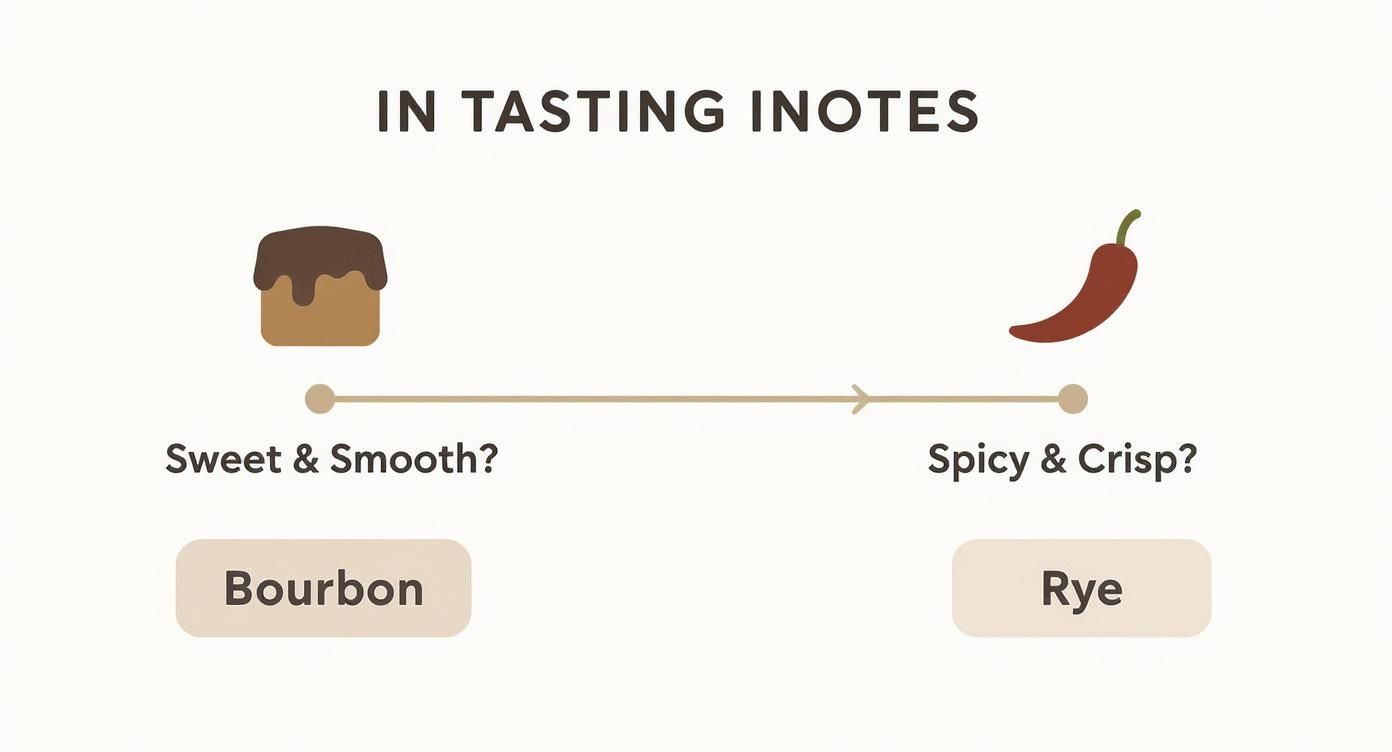
This decision tree simplifies the core distinction: if you're drawn to sweet and smooth flavors like caramel and vanilla, bourbon is your likely match. If you lean toward spicy and crisp notes, you're probably on Team Rye.
Creative Crossovers and Tips for New Drinkers
Of course, the rules are never set in stone. One of the best ways to really understand the nuances between these whiskeys is to experiment.
- Try a High-Rye Bourbon: Want an Old Fashioned with a bit more complexity but not the full-on spice of a pure rye? Use a high-rye bourbon. Four Roses Small Batch is widely available and a perfect choice for bridging that gap beautifully.
- Ice Matters: When sipping neat, a single large ice cube is your best friend. It melts slower than smaller cubes, chilling your whiskey with minimal dilution and preserving the flavor the distiller intended.
- Start with a Lower Proof: If you're new to sipping whiskey straight, don't jump into the deep end with barrel-proof expressions. Start with something bottled between 80 and 95 proof to get your palate used to the spirit without overwhelming it.
Ultimately, the best whiskey is the one you enjoy drinking, however you choose to drink it. Use these guidelines as a starting point, and let your own delicious experiments begin.
Common Questions We Hear All the Time
As you dive deeper into the world of American spirits, you're bound to have questions. The whole rye vs. bourbon vs. whiskey debate can feel a little tangled at first, but the answers are usually pretty straightforward once you get the hang of the basics we’ve covered.
This is the stuff that always comes up during tastings—the kind of questions that can turn a simple pour into a real learning moment. Think of this as your go-to guide for settling those friendly arguments and feeling more confident in what you’re sipping.
Does All Bourbon Have to Come from Kentucky?
This is probably the biggest myth in the whiskey world. While Kentucky is without a doubt the historic heartland of bourbon, the answer is a hard no.
The law simply states that to be called bourbon, it has to be made in the United States. That's it. There are no other geographical strings attached. You can find incredible bourbon being made all over the country, from Texas to New York, where craft distillers are honoring tradition while putting their own local spin on things.
Take craft brands like FEW Spirits out of Illinois or Kings County Distillery in New York. They’re making award-winning bourbons that can proudly go toe-to-toe with their Kentucky cousins. So, even though about 95% of the world's bourbon still comes from the Bluegrass State, it’s a truly American spirit, not just a Kentuckian one.
So, Is Rye or Bourbon Better?
That’s like asking if you prefer a spicy chili or a rich chocolate cake. There’s no right answer. It all comes down to your personal taste and what you’re in the mood for. There's no such thing as a "better" whiskey, only the whiskey that's better for you at that moment.
- Looking to mix up a spicy, spirit-forward cocktail like a classic Manhattan? Rye is usually the go-to. Its peppery kick is perfect for cutting through the sweetness of the vermouth.
- Want something smooth to sip neat or over a big ice cube? It's tough to beat bourbon's signature sweetness and comforting notes of caramel and vanilla.
- Just starting your whiskey journey? A lot of people find bourbon’s rounder, sweeter profile a bit more welcoming than rye’s assertive spice.
The only way to really answer this question for yourself is to taste them side-by-side. Your preference might even shift from one day to the next. Tonight you might be craving the warm hug of a bourbon, and tomorrow you might want the invigorating spice of a rye.
What’s the Difference Between Whiskey and Scotch?
This question gets right back to that core idea: "whiskey" is the big umbrella category. Scotch is just a specific type of whisky (they drop the "e" in Scotland) that has its own strict rulebook, just like bourbon and rye.
When you break it down, the comparison really comes down to three things:
- Geography: Scotch has to be made, distilled, and aged completely in Scotland. No exceptions.
- Primary Grain: For most Scotch, the star of the show is malted barley. While other grains can be used, malted barley is the heart of the spirit.
- Aging: Scotch must be aged for at least three years in oak casks. Unlike bourbon, these barrels can be used—and most of the time, they are. In fact, many of them once held American bourbon!
The flavor of Scotch can swing wildly depending on the region, from the intensely smoky and peaty whiskies of Islay to the lighter, fruitier spirits from Speyside. That signature smoky flavor many people associate with Scotch comes from using peat (decomposed plant matter) to dry the barley—a note you'll almost never find in bourbon or rye.
What About Irish Whiskey?
You guessed it—Irish whiskey is another category with its own unique passport and set of rules. As the name suggests, it has to be made on the island of Ireland.
Like its Scottish neighbor, it has to be aged for a minimum of three years. But a few key differences in how it's made give it a personality all its own.
- Distillation: Traditionally, Irish whiskey is triple-distilled. Most Scotch and American whiskeys are typically double-distilled. That extra step tends to create a spirit that’s lighter, smoother, and more delicate.
- Grain & Peat: While a few Irish whiskeys use peat, it's nowhere near as common as in Scotland. The mash bill often includes both malted and unmalted barley, which can lend a crisp, almost spicy character that's different from many single malt Scotches.
For newcomers, Irish whiskey is often a fantastic starting point. Its reputation for smoothness is well-earned, and its approachable flavors of honey, fruit, and gentle spice make it incredibly easy to enjoy.
The best way to truly wrap your head around the differences between rye, bourbon, and the wider world of whiskey is to taste them without any preconceived notions. Blind Barrels was created for this exact purpose. Our blind tasting experience strips away brand bias and lets your own palate be the judge. Each quarterly kit delivers four samples from amazing American craft distilleries, a tasting guide, and the chance to find your next favorite bottle based purely on what you enjoy.