

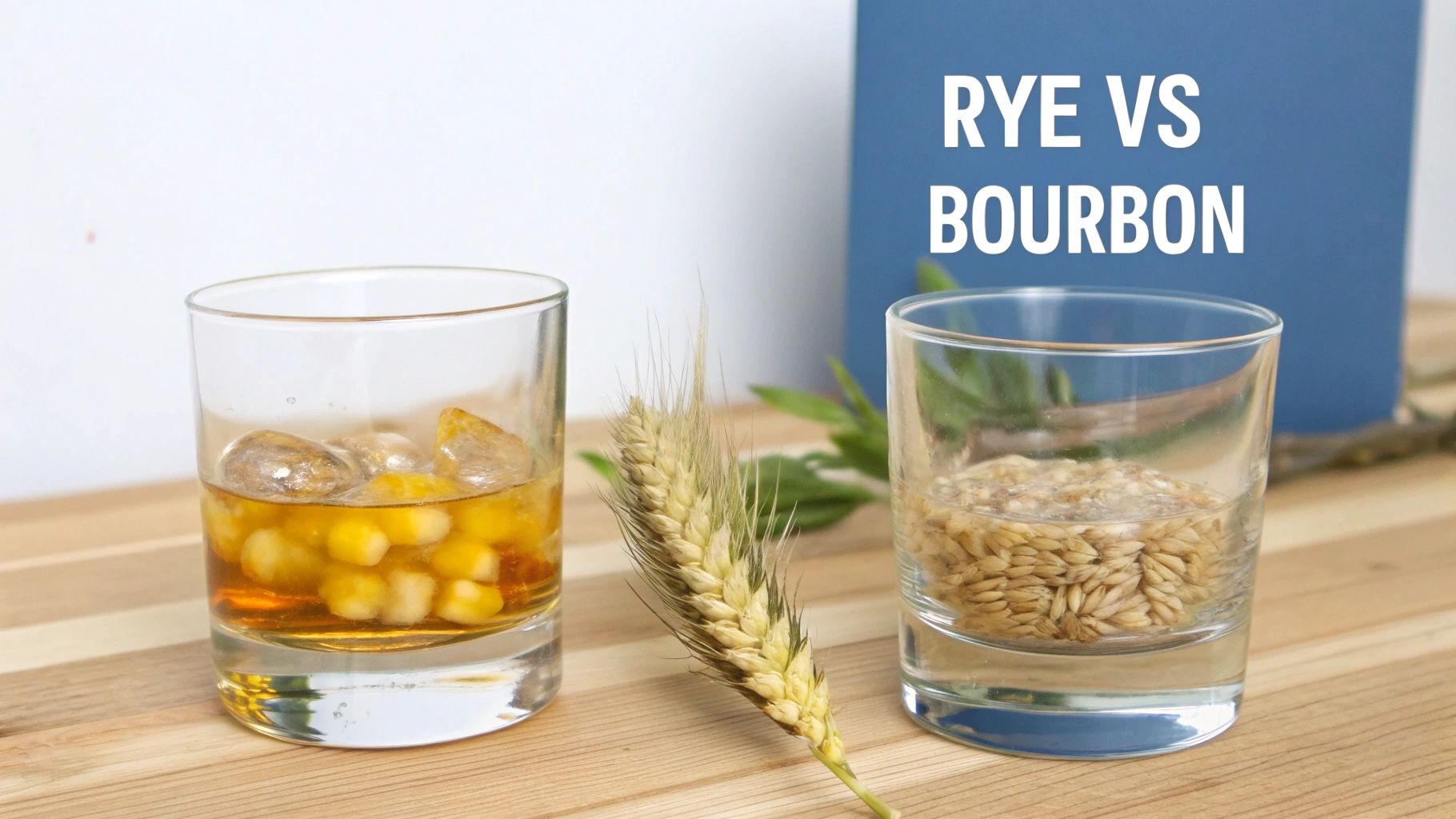
Let’s settle the rye whiskey vs bourbon whiskey debate once and for all. If you're just getting into whiskey, the answer is pretty straightforward: bourbon must be made from at least 51% corn, which gives it a sweeter, more approachable profile full of caramel and vanilla. Rye, on the other hand, starts with at least 51% rye grain, leading to a spicier, more herbaceous character.
Demystifying Two Icons of American Whiskey
At first glance, bourbon and rye look like close cousins in the American whiskey family—and they are. Both are distilled in a similar fashion and, by law, must be aged in new, charred oak barrels. But the main grain in their recipe, what we call the mash bill, is what truly defines their soul and creates two completely different drinking experiences.
Think of it like comparing two kinds of bread: one made from sweet corn flour, the other from spicy rye flour. That one core ingredient changes absolutely everything.
For anyone new to whiskey, getting a handle on this grain difference is the first real step to navigating a spirits shelf with confidence. It’s the key that unlocks why one whiskey feels warm and mellow, while another hits you with a peppery, vibrant kick. To dig even deeper into the fundamental differences between bourbon and whiskey, including all the nitty-gritty legal definitions and production methods, a comprehensive guide can be a game-changer.
Key Differences at a Glance
This foundational knowledge is what lets you truly appreciate how craft distilleries are creating such unique whiskeys today. You have brands like High West Distillery in Utah, famous for their masterfully blended ryes, while distillers like New Riff in Kentucky are constantly pushing the boundaries of what a high-rye bourbon can be. The real beauty is in all the details that follow that simple grain rule.
Tip for New Drinkers: If you tend to like sweeter things like caramel corn or vanilla, start with a classic bourbon. But if you’re drawn to spicier notes like black pepper or baking spices, a good rye whiskey will probably be right up your alley.
To make things even clearer, here’s a quick rundown of the main distinctions to keep in mind.
Rye vs Bourbon At a Glance
The table below offers a simple, side-by-side look at the core attributes that define each of these classic American whiskeys.
| Attribute | Bourbon Whiskey | Rye Whiskey |
|---|---|---|
| Primary Grain | Must be at least 51% corn | Must be at least 51% rye |
| Primary Flavor | Sweet, smooth, rounded | Spicy, peppery, bold |
| Common Notes | Caramel, vanilla, oak, dark fruit | Baking spices, black pepper, dill, mint |
| Typical Mouthfeel | Often fuller, richer, and creamier | Often crisper, drier, and sharper |
While the mash bill sets the stage, these flavor and texture differences are what you'll actually notice in the glass. Keep this chart handy, and you'll start picking out the nuances in no time.
Diving Into the Rules and Production Realities
When you get down to it, the main difference between rye and bourbon seems simple: the 51% rule. While that’s the big headline, the real magic happens in the wiggle room distillers find within a nearly identical set of government regulations. Understanding this shared playbook is key to appreciating how two such different whiskeys can come from such a similar starting point.
On paper, the chasm between the two is just that one mash bill requirement. Bourbon needs a minimum of 51% corn to get its signature sweetness, while rye needs at least 51% rye grain for its characteristic spicy punch. Almost everything else is the same, from the maximum distillation proof (160) to the mandate for aging in new, charred oak barrels at no more than 125 proof.
This strict, shared framework forces distillers to get creative in the margins, and that’s where things get interesting.
The Mash Bill Beyond 51 Percent
The true personality of a whiskey is often found in the other 49% of the mash bill. This is the space where distillers add their “flavoring grains”—malted barley for enzymatic conversion, wheat for a softer profile, or even a dose of the opposing grain to add complexity.
It's here that the lines between rye and bourbon start to blur in the best possible way. This flexibility is what many modern craft distillers are using to push the boundaries.
- High-Rye Bourbon: A bourbon that hits its 51% corn minimum but then uses a hefty amount of rye (often 20-35%) as the secondary grain. The result is a bourbon with a distinctly spicy backbone.
- "Barely Legal" Rye: A rye whiskey that just clears the 51% rye hurdle and fills most of the remaining recipe with corn. This gives you a much sweeter, softer rye that’s a far cry from its spicier cousins.
Tip for New Drinkers: If you're a bourbon fan curious about rye, look for a "barely legal" style from craft brands like Pinhook or Old Forester. The higher corn content gives them a familiar sweetness that makes the peppery spice of the rye feel much more welcoming.
How Distillers Shape the Final Spirit
Beyond the grain recipe, a handful of subtle decisions during production can completely transform the final whiskey. Distillers masterfully pull these levers to either tame or accentuate the natural character of their mash bill, further defining the rye whiskey vs bourbon whiskey experience. For a deeper look at how these recipes are built, check out our complete guide to the bourbon mash bill.
These production choices make a huge difference:
- Yeast Strains: Many distilleries guard their proprietary yeast strains like gold. These tiny workhorses can produce a huge range of esters, creating fruity, floral, or even earthy notes long before the spirit sees the inside of a barrel.
- Distillation Proof: The law says you can distill up to 160 proof, but distillers can choose to run their stills much lower. A lower "off-the-still" proof means more flavor compounds (and water) from the mash make it into the barrel, often leading to a richer, oilier whiskey.
- Barrel Char Level: Before being filled, every new oak barrel is toasted and charred. A light char might lend delicate vanilla notes, while a heavy #4 "alligator" char can unleash intense smoke, dark chocolate, and espresso flavors into the spirit.
Take a craft distillery like Frey Ranch in Nevada. They grow all their own grains, giving them total "grain-to-glass" control. They can create a rye that expresses the unique character of their land, maybe pairing a specific yeast with a medium char barrel to perfectly highlight the spicy, earthy notes of their estate-grown grain. This level of detail is how they produce such a distinctive spirit while playing by the exact same rules as a massive Kentucky bourbon distillery.
Decoding Rye and Bourbon Flavor Profiles
Going past the simple "sweet versus spicy" shorthand is where the real fun begins in the rye whiskey vs bourbon whiskey debate. When you train your palate to pick out the specific notes in each pour, you graduate from a casual drinker to a confident taster. It’s a skill that lets you truly appreciate the distiller’s art and figure out exactly what you love in a glass.
The fundamental flavor difference comes right from the primary grain. Corn, the soul of bourbon, is naturally packed with sugars that caramelize during distillation and aging, creating that classic sweet profile we all know. Rye grain, on the other hand, contains entirely different flavor compounds that show up as the spicy, herbal, and sometimes fruity notes that define rye whiskey.
But don't forget the secondary grains in the mash bill—they play a huge role, too. These supporting actors can either crank up the volume on the primary grain's character or add a surprising layer of contrast, making every bottle its own unique experience.
The Classic Bourbon Palate: Sweet and Nuanced
A great bourbon often feels like a warm, comforting hug in a glass. That sensation comes straight from the corn, which lays down a rich sweetness that serves as the perfect canvas for all the amazing flavors soaked up from the new charred oak barrels.
The most common notes you'll find are:
- Caramel and Toffee: This is the quintessential bourbon note, born from the beautiful marriage of sugars from the corn and the wood.
- Vanilla and Crème Brûlée: Vanillin, a compound found in oak, is responsible for this familiar creamy sweetness.
- Oak and Char: A good bourbon always has a solid backbone of toasted wood, which can range from a gentle spice to a deep, smoky char.
- Dark Fruits: Many bourbons also develop notes of cherry, fig, or raisin, especially with a little more time resting in the barrel.
Tip for New Drinkers: If you're just getting into bourbon, grab a bottle of a classic like Buffalo Trace or Elijah Craig Small Batch. They perfectly showcase these foundational sweet notes without being overwhelming, making them a fantastic benchmark for your palate.
The secondary grain dramatically steers this classic profile. For instance, some bourbons swap out rye for wheat, creating a sub-category known as "wheaters." Craft brands like W.L. Weller and Maker's Mark are famous for this style, where the wheat brings a much softer, gentler sweetness and a bready, almost creamy texture to the party.
The Dynamic Rye Profile: Spicy and Complex
Rye whiskey takes you on a completely different sensory journey, one that’s often sharper, bolder, and more herbaceous. The rye grain itself is responsible for this energetic character, delivering a profile that can be both intensely spicy and surprisingly delicate. For a visual guide to the spectrum of notes you might encounter, our bourbon flavor wheel provides a great starting point for training your senses.
Key flavors to look for in rye include:
- Black Pepper and Baking Spices: This is rye’s signature calling card. Notes of clove, cinnamon, and nutmeg are almost always present.
- Mint and Dill: These fresh, herbal notes really pop in ryes with a very high rye content (95-100%), like those from craft distiller Sagamore Spirit.
- Dark Fruit and Floral Notes: Don’t be surprised to find hints of plum, dried orange peel, or even a floral touch, which add a sophisticated layer to the experience.
Craft Distillers and Flavor Innovation
The American craft distillery scene is where the lines between bourbon and rye truly get exciting. Freed from the pressures of mass production, these smaller producers are experimenting with unique grains, yeast strains, and aging techniques to create whiskeys that defy simple categorization.
A fantastic example is High West Distillery in Utah, a brand celebrated for its masterful blending of different rye whiskeys. Their iconic "A Midwinter Night's Dram" finishes rye in port barrels, layering luscious notes of fig and spiced plum right on top of the whiskey’s peppery base.
Likewise, a distillery like New Riff in Kentucky produces a "high-rye" bourbon that is intentionally bold and spicy. By using a mash bill with a hefty dose of rye (around 30%), they create a bourbon that speaks directly to rye lovers, offering a perfect bridge between the two styles. These craft expressions are a testament to how distillers are unlocking the full flavor potential of their grains, offering a delicious and ever-expanding world for whiskey drinkers to explore.
How to Master a Blind Tasting Challenge
Putting your knowledge to the test without the influence of a label is hands-down the best way to build real tasting confidence. A blind tasting forces you to rely entirely on your senses to solve the puzzle in the glass, stripping away any preconceived notions from the bottle's reputation or price tag. While the rye whiskey vs bourbon whiskey distinction seems pretty clear on paper, it's amazing how often even seasoned drinkers get tripped up when tasting blind.
Don’t get discouraged if it feels tough at first. Studies have even shown that experts struggle with blind identification, which just proves this is a skill you develop over time, not some innate talent. The goal isn’t perfection right out of the gate; it's about learning to isolate specific clues in the aroma, taste, and texture to make a more educated guess.
The whole process trains your brain to connect sensory inputs—that whiff of clove, the feel of an oily texture—to their source, whether it's the grain bill, the barrel, or the distillation method. With a little structure, you can turn a fun guessing game into a seriously powerful tool for sharpening your palate.
Your Step-by-Step Guide to Tasting Blind
To get started, all you really need is one bourbon and one rye. Pour them into identical glasses so you can’t tell which is which. For an even better experience, think about using a dedicated blind whiskey tasting kit. It gives you a structured way to take notes and makes the final reveal that much more satisfying.
Now, tackle each glass with this four-step process:
- Analyze the Nose (Aroma): Before taking a sip, give the whiskey a gentle swirl and take a few short sniffs. Is your first impression sweet and inviting, with notes of caramel, vanilla, or fresh-baked bread? That’s a huge clue pointing toward bourbon. Or is it sharper, more assertive, with hints of black pepper, baking spices, or even fresh herbs like mint and dill? Those are classic rye calling cards.
- Evaluate the Palate (Initial Taste): Take a small sip and let it wash over your tongue. Zero in on that very first flavor that hits you. Bourbon often leads with a rounded, upfront sweetness from the corn—think corn pudding or crème brûlée—before the oaky notes join the party. Rye, on the other hand, usually announces its presence with a zesty, peppery spice that makes the tip of your tongue tingle right away.
- Assess the Mouthfeel (Texture): Pay close attention to how the whiskey feels in your mouth. Is it rich, oily, and almost creamy, with a full-bodied weight to it? That texture is often linked to bourbon, especially "wheaters." Or does it feel lighter, crisper, and drier on your palate? That leaner, more structured mouthfeel is very characteristic of many rye whiskeys.
- Judge the Finish (Aftertaste): After you swallow, what flavors are left behind? Bourbon’s finish is typically long and warm, fading out with lingering notes of sweet oak, toasted sugar, and dark fruit. A rye finish tends to be spicier and more herbaceous, often leaving a pleasant, lingering tingle of cinnamon or black pepper.
Putting It All Together
Once you've run both whiskeys through these steps, it's time to make your call. Try not to get hung up on a single clue; look at the entire picture. A whiskey might have a sweet nose but a spicy finish, which could mean you've got a high-rye bourbon on your hands.
This infographic breaks down the primary decision point based on your palate's initial reaction.
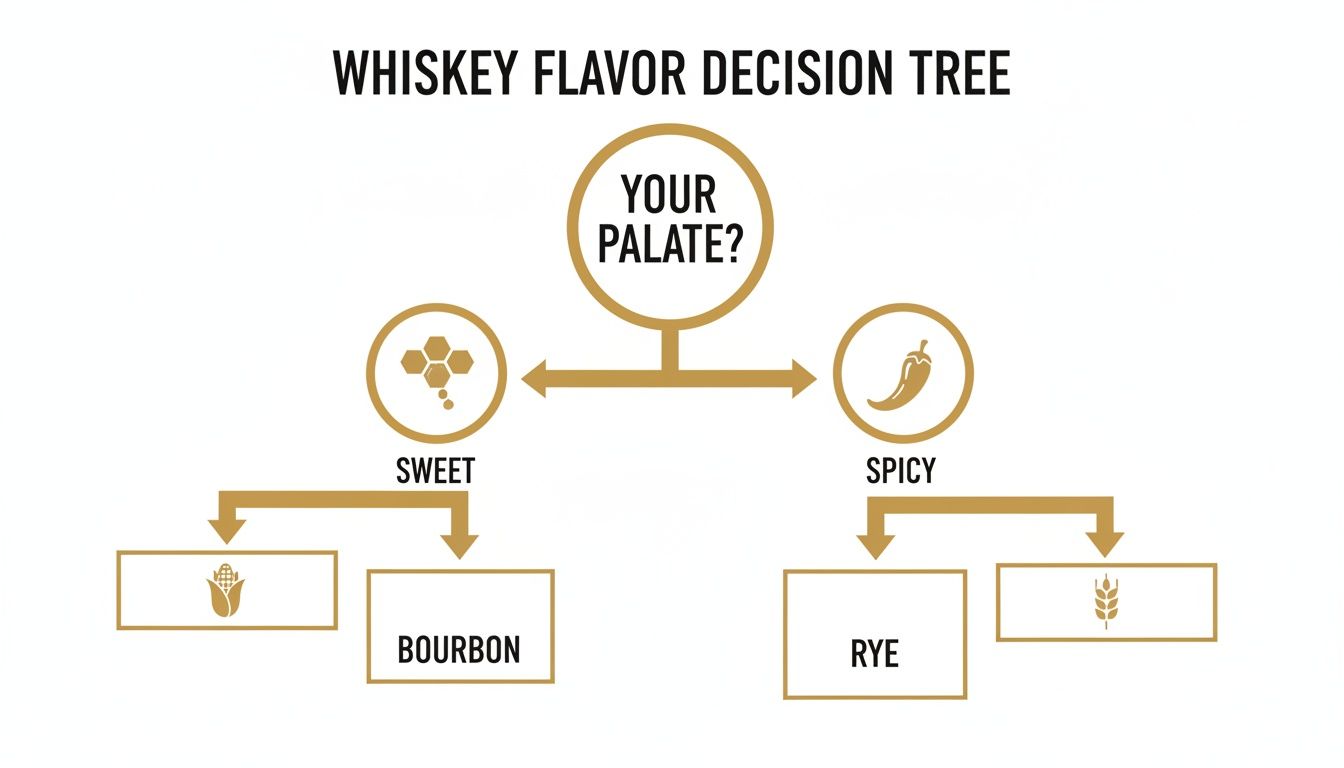
As the decision tree shows, an immediate sense of sweetness is the classic path to bourbon, while that spicy first impression is the tell-tale sign of a rye.
Tip for New Drinkers: Host a tasting with friends and toss in a "gateway" whiskey like a high-rye bourbon from craft distiller New Riff or a softer, corn-heavy rye like Pikesville. These bottles are perfect because they intentionally blur the lines, sparking great conversations and helping everyone learn to pick out those subtler secondary grain notes.
Ultimately, mastering a blind tasting is all about practice and paying attention. Every single time you compare rye and bourbon side-by-side without knowing which is which, you're building a sensory library in your mind that will make you a more perceptive and confident whiskey drinker.
Choosing the Right Whiskey for Classic Cocktails
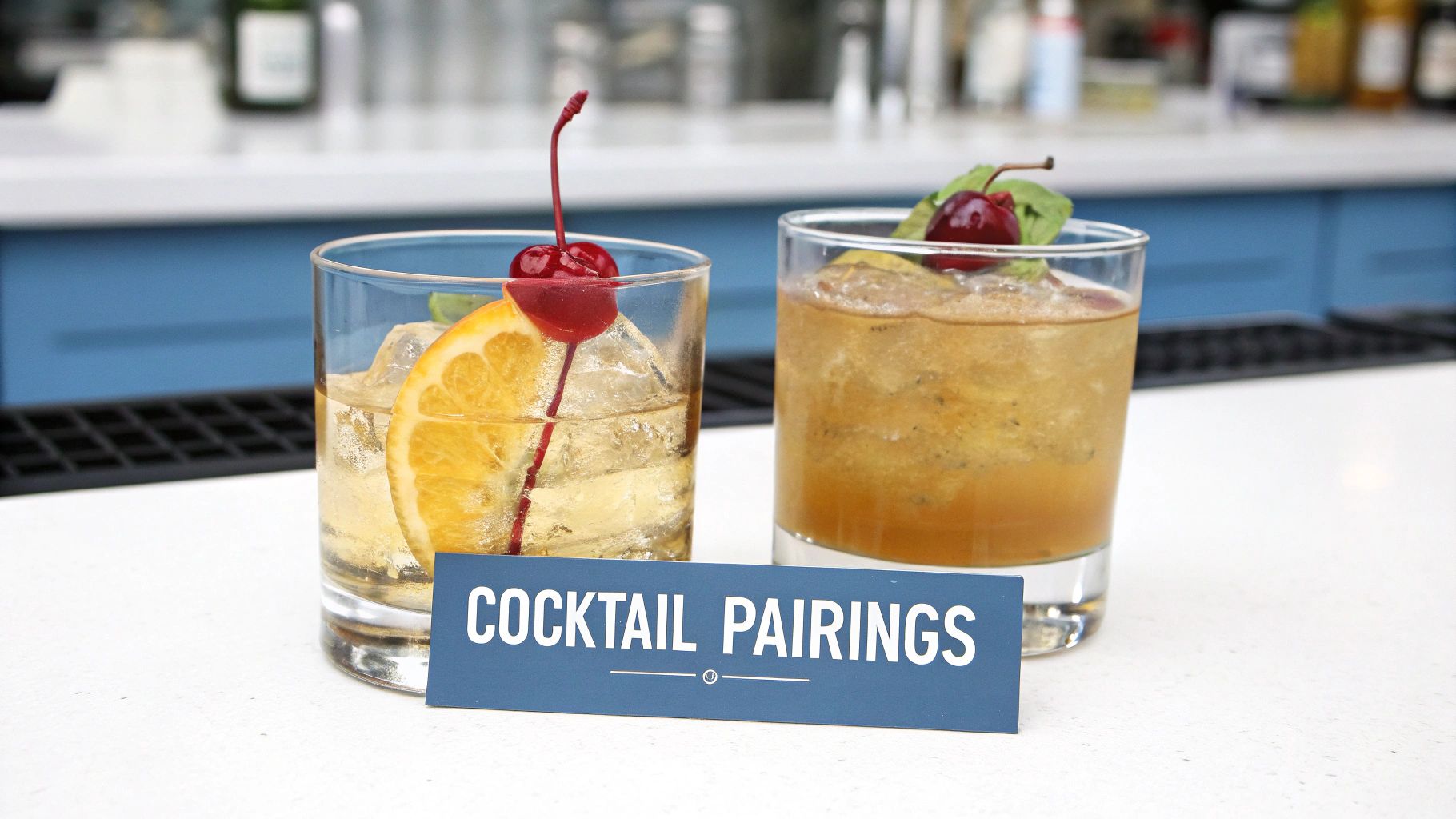
Sure, sipping a whiskey neat is a great way to get to know its subtle side. But a whiskey’s true character often comes alive in a well-crafted cocktail, where the spirit has to stand up and be counted.
The choice between rye and bourbon isn’t just a matter of preference; it fundamentally changes a drink's entire balance and structure. In fact, the whole rye whiskey vs bourbon whiskey debate is probably most relevant right behind the bar.
Historically, rye was the backbone of many classic whiskey cocktails. Its assertive, spicy profile was the perfect counterpunch to potent mixers like sweet vermouth. Rye doesn't just hang out in a cocktail; it makes its presence known with a peppery bite that cuts through sweetness and adds a complex, almost herbal foundation.
Bourbon, on the other hand, brings a much smoother and sweeter vibe. Its classic notes of caramel, vanilla, and oak lay down a rich, rounded base that plays beautifully with citrus and sugar, resulting in a more mellow and approachable drink.
Rye's Reign in Classic Cocktails
When a cocktail needs a spirit with some swagger to balance other strong ingredients, rye is almost always the answer. Its drier, spicier nature keeps the final drink from tipping over into cloying sweetness.
Take the quintessential Manhattan. That mix of sweet vermouth and aromatic bitters demands a whiskey with enough backbone to not get lost in the shuffle. A high-rye option provides that necessary peppery spice to create a perfectly sophisticated, balanced drink. A great craft rye to try here would be from a producer like Sagamore Spirit.
The same goes for a Sazerac. This New Orleans classic, with its absinthe rinse and Peychaud's bitters, really relies on rye’s spicy punch to deliver its iconic flavor. It just doesn't hit the same with a softer whiskey.
Tip for New Drinkers: To really feel rye's impact, make two Old Fashioneds side-by-side. Use a classic bourbon for one and a 95% rye whiskey for the other. The rye version will be noticeably spicier, drier, and more complex on the palate.
Bourbon's Role in Sweeter, Smoother Drinks
When you’re aiming for a smooth, rich, and comforting cocktail, bourbon is the undisputed champ. Its corn-based sweetness is the perfect partner for simple recipes that let the whiskey’s own flavors do the talking.
The Old Fashioned is a perfect example. While historically made with rye, many modern drinkers prefer the gentle sweetness of a bourbon-based version. The whiskey’s caramel and vanilla notes just melt into the sugar and bitters.
A Whiskey Sour made with bourbon is another timeless classic. The bourbon’s sweetness perfectly tempers the tartness of the lemon juice, creating a harmonious and refreshing drink that is much softer than its rye-based cousin.
Simple Food Pairing Tips
Pairing whiskey with food can seem intimidating, but a few simple guidelines can really elevate your experience. The key is to match the intensity of the whiskey with the food.
-
Bourbon Pairings: Its sweet profile works beautifully with rich, savory, and sweet foods. Try it with barbecued ribs, aged cheddar, or a decadent dessert like pecan pie or dark chocolate.
-
Rye Pairings: The spicy, bold character of rye stands up well to strongly flavored foods. It’s a perfect match for charcuterie boards with cured meats like salami, smoked salmon, or a sharp, tangy blue cheese.
Of course, beyond the whiskey itself, the presentation can enhance the entire ritual. A quality decanter drinkware set can be a worthwhile addition for any serious home bar.
The Resurgence of Rye and the Bourbon Boom
To really appreciate the spirit in your glass, it helps to understand its story. While bourbon has long held the title of "America's Native Spirit," rye whiskey's path has been much more of a rollercoaster. It’s a true comeback story, a journey from a nearly forgotten spirit to a modern craft darling.
Before Prohibition, rye was the undisputed king of the American bar. But the nationwide ban on alcohol hit rye distillers especially hard. When the stills were fired back up after repeal, American tastes had drifted toward lighter spirits. For decades, rye languished in obscurity, completely overshadowed by bourbon's steady, unwavering popularity.
Rye's Remarkable Comeback
Then, the turn of the 21st century happened. A cocktail renaissance bloomed, and with it came the rise of the American craft distilling movement—the perfect storm for rye's revival. Bartenders started digging into classic, pre-Prohibition recipes, realizing the missing ingredient was rye's assertive spice. At the same time, a new wave of drinkers began looking for bigger, bolder flavors.
The renewed interest created an absolute explosion in demand. Between 2009 and 2020, global production of rye whiskey shot up by an unbelievable 1,275%. This incredible growth was fueled by craft distillers who embraced the magic that comes from a mash bill of at least 51% rye. You can dive deeper into this fascinating trend by exploring the story of rye's "ryevolution".
Tip for New Drinkers: A fantastic way to taste this history is by exploring craft rye. Keep an eye out for bottles from distillers like WhistlePig in Vermont or Sagamore Spirit in Maryland. These guys are true pioneers of the modern rye movement, producing whiskeys that show off the full spectrum of rye's spicy, herbal, and fruity potential.
Bourbon's Unwavering Boom
While rye was mounting its comeback, bourbon was in the middle of its own global boom. Long a beloved staple in the U.S., bourbon's appeal went international, cementing its place as a pillar of American culture and craftsmanship. For bourbon, this wasn't a rediscovery; it was an amplification of its long-held identity, driven by its approachable sweetness and deep heritage.
Pioneering craft distilleries have been crucial in pushing both categories forward. Brands like Frey Ranch in Nevada, which actually grows its own grains, and Southern Star in North Carolina are creating truly distinct expressions of both bourbon and rye. They aren't just making whiskey—they're telling a story of place, grain, and innovation that ensures the future of American whiskey is just as exciting as its past.
Common Questions About Rye and Bourbon
As you dive deeper into American whiskey, the nuances between rye and bourbon start to really stand out. It's a journey filled with questions, and getting clear answers can make all the difference when you're exploring new bottles.
Let's tackle some of the most common questions head-on. Think of this as your quick-reference guide for settling a friendly debate or just brushing up on the details before your next whiskey tasting.
Is Rye Whiskey Spicier Than Bourbon?
Yes, almost always. The signature spicy kick in rye whiskey comes directly from the rye grain itself, which is packed with notes of black pepper, cinnamon, and baking spices. If you find a whiskey with a really high rye content in its mash bill, you might even pick up herbal notes like mint or dill.
Bourbon, on the other hand, pulls its primary flavors from its corn-heavy mash bill. Corn brings a sweetness that shows up as caramel, vanilla, and fruit, creating a much rounder, smoother profile. While some high-rye bourbons have a bit of a spicy finish, they rarely match the bold, peppery character that defines a classic rye whiskey.
Tip for New Drinkers: A great way to think about it is to consider your food preferences. If you're someone who enjoys spicy dishes with a bit of a kick, you'll probably love the assertive profile of rye. If you lean more toward sweet treats, a classic bourbon is a perfect starting point.
Can Bourbon Be Made Outside of Kentucky?
Absolutely. This is one of the biggest misconceptions in the entire whiskey world. While Kentucky is undeniably the historic heartland of bourbon, the spirit is legally defined as a distinctive product of the United States. This means bourbon can be produced anywhere in the U.S.—from Texas to New York—as long as the distillery follows the strict federal rules.
These rules are non-negotiable and include:
- A mash bill of at least 51% corn.
- Aging in new, charred oak containers.
- Distilling to no more than 160 proof and entering the barrel at no more than 125 proof.
American craft distilleries are doing a fantastic job of proving this. Distilleries like Frey Ranch in Nevada and Southern Star in North Carolina are making some truly exceptional bourbons that honor the tradition while showcasing their own unique regional character.
Which Is Better for an Old Fashioned?
Honestly, this one comes down to what you're in the mood for. There's no single "better" option—it's all about personal preference.
A bourbon Old Fashioned is going to be smoother and richer. The whiskey’s natural caramel and vanilla notes play perfectly with the cocktail's sugar and bitters, creating a sweeter, more mellow drink.
A rye Old Fashioned, however, will be spicier and more robust. The rye's peppery bite provides a fantastic contrast to the sweetness, resulting in a drier, more complex cocktail. Fun fact: many classic cocktails, including the Old Fashioned, were originally made with rye, so trying it both ways is like tasting a little piece of history.
Ready to put your palate to the test and discover your next favorite craft whiskey? With Blind Barrels, you can remove brand bias and let your taste buds lead the way. Our quarterly blind tasting kits feature incredible selections from America's best small distilleries, complete with everything you need to host a fun, educational tasting experience right at home.