

When you dive into the world of whiskey, the Scotch vs Irish whiskey debate is one of the first you'll encounter. At its heart, the difference is pretty straightforward. Scotch is almost always double-distilled from 100% malted barley, giving it a characteristically robust, and often smoky, flavor profile. Irish whiskey, on the other hand, is famous for its smoothness, a result of being triple-distilled and frequently using a mix of both malted and unmalted barley.
If you're trying to wrap your head around it, think of Scotch as the bold, complex sibling, while Irish whiskey is often lighter, fruitier, and more immediately approachable. For new whiskey drinkers, starting with an Irish whiskey can be a great way to ease into the category.
Your Essential Guide to Scotch and Irish Whiskey
Welcome to one of the oldest rivalries in the spirits world. For anyone new to whiskey, those "Scotch" and "Irish" labels can feel a bit intimidating, but figuring out what makes each unique is your first step toward finding a style you truly love. The best way to get started is with a simple breakdown of what sets them apart.
While both spirits spring from a shared Celtic heritage, their paths split dramatically over the centuries. Those historical forks in the road led directly to the distinct spirits we get to enjoy today. This guide is here to make both categories feel less like a mystery and more like an invitation, helping you figure out if your palate leans toward the peaty complexity of Scotland or the gentle, smooth character of Ireland.
Scotch vs Irish Whiskey At a Glance
To cut right to the chase, this quick table hits the main characteristics you can generally expect from each style. It's a great starting point for beginners.
| Attribute | Scotch Whisky | Irish Whiskey |
|---|---|---|
| Primary Grain | 100% Malted Barley | Malted & Unmalted Barley |
| Distillation | Typically Double-Distilled | Typically Triple-Distilled |
| Peat/Smoke | Often Peated (Smoky) | Almost Never Peated (Smooth) |
| General Flavor | Robust, Smoky, Complex | Smooth, Fruity, Light |
| Aging Law | Minimum 3 Years in Oak | Minimum 3 Years in Wood |
This table gives you the basics, but the real-world scale of these two industries tells another part of the story.
The historical split is mirrored in the sheer size of their modern industries. Scotland's whisky scene is a giant, boasting over 130 working distilleries. Ireland's industry is much smaller, with around 40 distilleries, a direct result of historical setbacks in the early 20th century that nearly wiped it out. If you're curious about the numbers, you can learn more about the market dynamics of Scotch and Irish whiskey.
Today, the exciting American craft whiskey movement is pulling inspiration from both of these rich traditions. You'll find U.S. distilleries like St. George Spirits in California creating incredible new styles that blur the old lines—maybe using peated malt like a classic Scotch or employing triple distillation in the Irish fashion. It's a fantastic time for whiskey lovers, with a new generation of drinkers getting to explore innovative flavors that bridge this historic divide.
Understanding How History Shaped Each Spirit
The stories of Scotch and Irish whiskey are tangled together, kicking off from a shared Celtic heritage. Both spirits can thank ancient monastic traditions for the art of distillation, which first took hold centuries ago. For a long time, their paths were almost identical, but history had other plans. A mix of major world events, taxes, and new technology eventually carved out the distinct styles we argue about in the Scotch vs. Irish whiskey debate today.
Back in the 19th century, Irish whiskey was the undisputed champion of the spirits world, with a global market in a chokehold. Its reputation for being exceptionally smooth and high-quality was second to none. But the 20th century was brutal. A series of devastating blows—the Irish War of Independence, a crippling trade war with Britain, and the final nail in the coffin, American Prohibition—brought the entire industry to its knees. What was once a global powerhouse had shrunk to just a few struggling distilleries by the mid-1900s.
The Diverging Paths of Production
As Ireland’s whiskey fortunes nosedived, Scotland’s industry managed to weather the storm much more effectively. Scottish producers were much quicker to embrace the new continuous column still, a move that allowed for the efficient, large-scale production of grain whisky for their blends. This knack for adaptation helped them swoop in and fill the void left by their Irish cousins, cementing their place on the world stage.
Taxation also played a massive role in shaping these spirits. Centuries ago, a tax on malted barley in Ireland pushed distillers to get creative to cut costs. Their solution? They started adding unmalted barley to their mash. This practical, money-saving decision accidentally created an entirely new style of whiskey—Single Pot Still. It’s known for a signature spicy and creamy character that remains a hallmark of Irish whiskey.
Tip for New Drinkers: If you love Irish whiskey and want to understand its unique character, seek out a bottle labeled "Single Pot Still." It's a style you won't find anywhere else and perfectly showcases that creamy, spicy profile that makes Irish whiskey so special.
A Modern Renaissance
Today, Irish whiskey is in the middle of a stunning comeback. After decades of being on life support, the industry has roared back to life with incredible energy. New distilleries are popping up, and it's reclaiming its rightful place in bars across the globe. This isn't just about dusting off old traditions; it’s driven by fresh innovation and a world that’s rediscovered its love for Ireland's approachable, smooth style.
The numbers really paint the picture of this revival. In 2010, global sales of Irish whiskey hovered around 60 million bottles. Fast forward to January 2020, and that figure exploded to 144 million bottles—a jaw-dropping 140% jump in just ten years. This incredible momentum has experts betting that Irish whiskey could even outsell Scotch in the U.S. by 2030, something that hasn't happened since before Prohibition. You can dive into the full sales forecast and learn more about Irish whiskey's impressive growth. Understanding this history is key for any new whiskey drinker who wants to know the story behind what’s in their glass.
From Grain to Glass: Deconstructing the Production Process
The soul of a whiskey is forged in the fire of production. Every choice, from the specific grains in the mash to the number of times the spirit kisses a copper still, dramatically alters the final liquid in your glass. To really get the difference between Scotch and Irish whiskey, you have to follow the journey from the field to the bottle.
It all starts with the grain. For a Scotch to be called a single malt, it must be made from 100% malted barley—no exceptions. Ireland, on the other hand, boasts its own unique style called Single Pot Still, which famously uses a mix of both malted and unmalted barley. This tradition, originally a clever way to dodge a British tax on malt, is now the very thing that gives this style its signature spicy, almost creamy texture.
This infographic paints a vivid picture of Irish whiskey's rollercoaster history—from global domination to near extinction and its incredible comeback today.
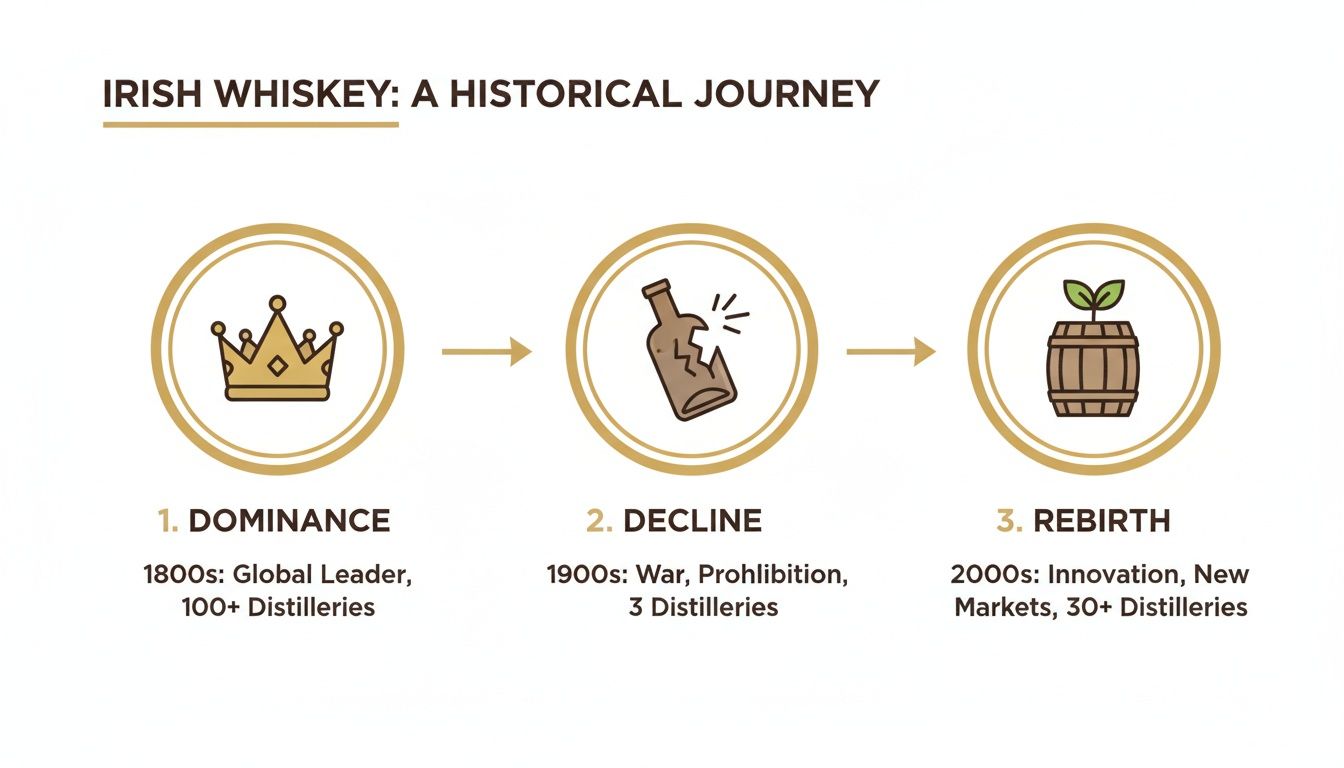
You can see just how close the world came to losing this entire category, which makes its modern resurgence all the more exciting for us whiskey lovers.
Malting and the Mighty Influence of Peat
The next major step is malting, where barley is tricked into sprouting before being dried out with heat. This is where one of the most famous divides between the two spirits appears.
- Scotch: Many Scottish distilleries, especially those dotting the island of Islay, dry their malted barley over smoldering peat fires. This is what infuses the whiskey with those intense smoky, medicinal, and sometimes briny notes that many people instantly associate with Scotch.
- Irish Whiskey: The Irish almost universally opt for a different route, drying their barley with clean, hot air from enclosed kilns. By avoiding peat smoke entirely, they protect the delicate, sweet flavors of the grain, which helps create that famously smooth and approachable character.
Tip for New Drinkers: While peated Scotch is legendary, don't assume all Scotch is smoky. If you're hesitant about the smoke, look for a bottle from the Speyside region. These are often fruity and floral, offering a much gentler introduction to the world of Scotch.
The Art of Distillation
Distillation is the magic that transforms the beer-like "wash" into a pure, high-proof spirit. How many times that wash is distilled is a fundamental difference between Scotch and Irish whiskey and has a massive impact on the final taste.
Scotch is almost always double-distilled in classic copper pot stills. This method leaves in more of the heavier flavor compounds and oils, which translates to a spirit with more body, richness, and complexity.
On the flip side, Irish whiskey is famous for its signature triple-distillation. That extra trip through the still helps strip out more of the heavier elements, resulting in a spirit that is noticeably lighter, cleaner, and smoother on the palate. The shape and size of the still matter immensely, too—if you want to dive deeper, you can learn more about the differences between pot and column stills in our detailed guide.
Strict Rules for Aging and Maturation
Both nations have iron-clad laws governing how their national spirit must be aged, though there are subtle but important differences.
- Scotch: By law, it must be aged in oak casks for a minimum of three years within Scotland.
- Irish Whiskey: Similarly, it must be aged in wooden casks for at least three years on the island of Ireland.
That small tweak from "oak" to "wooden" in Irish law technically allows for a bit more experimentation, but in reality, oak is the wood of choice for both. The real character comes from what those barrels held before—most often ex-bourbon barrels from the U.S. or sherry butts from Spain. These casks contribute essential flavors like vanilla, caramel, and dried fruit that are absolutely crucial to the finished product. American craft producers, such as Westland Distillery in Seattle, are now borrowing and innovating on these traditions, often using unique local oak to add a new dimension to their whiskeys.
We've walked through the history and production methods, but let's be honest—it all comes down to what's in the glass. When you're weighing Scotch vs Irish whiskey, you're really exploring two distinct, incredibly diverse worlds of flavor. The real question is: do you lean toward bold, smoky complexity or a smooth, gentle sweetness?
For newcomers, Scotch can feel like navigating a wild and varied landscape. At one extreme, you have the whiskies from Islay, legendary for their powerful, smoky punch. These spirits are packed with notes of peat smoke, sea salt, and even a medicinal quality that many enthusiasts, myself included, have come to adore. If you're curious about that signature smokiness, you can learn more about what makes peaty Scotch so distinctive in our guide.
Flip the coin, and you'll land in Speyside, a region in Scotland known for producing whiskies that are often light, fruity, and floral. Here, you'll discover notes of apple, pear, honey, and vanilla, frequently enriched by aging in sherry casks. It’s a far more approachable starting point than its brawny Islay cousin.
The Signature Smoothness of Irish Whiskey
Irish whiskey, as a whole, is practically defined by its trademark smoothness. That character is a direct result of triple distillation and the general lack of peat, which creates a gentler, more accessible flavor profile right from the first sip.
Common tasting notes often include honey, vanilla, and light orchard fruits like green apple and pear. The use of unmalted barley in single pot still styles adds a uniquely spicy, almost creamy texture with hints of black pepper and toasted grains. It's this combination of mellow fruitiness and subtle spice that makes it so exceptionally easy to drink.
The core difference for a beginner's palate is often the texture and initial impact. Irish whiskey tends to be softer and rounder, while even unpeated Scotch often has a weightier, more robust mouthfeel.
American Craft Distillers Blurring the Lines
This is where things get really interesting. The modern American craft whiskey scene is gleefully blurring these traditional lines. Distillers across the U.S. are drawing inspiration from both Scotland and Ireland to create entirely new expressions.
You might stumble upon an American single malt from a distillery like Westland in Seattle that uses local peat for a Pacific Northwest twist on Islay smoke. Or you could discover a triple-distilled whiskey from a brand like Westward Whiskey in Oregon that captures the smoothness of Irish tradition but with the bold character of American oak. These producers aren't bound by centuries of rules, giving them the freedom to experiment and craft unique spirits for a new generation of drinkers.
Typical Flavor Profiles Scotch vs Irish Whiskey
To make it even clearer, here’s a table breaking down the general flavors you can expect. Think of this as a handy field guide for your next trip to the liquor store or when you're trying to decode a blind tasting.
| Whiskey Type/Region | Common Aromas | Dominant Flavors | Typical Finish |
|---|---|---|---|
| Islay Scotch | Campfire Smoke, Iodine, Brine | Peat, Sea Salt, Smoked Meats | Long, Smoky, Dry |
| Speyside Scotch | Green Apple, Honey, Floral | Orchard Fruits, Vanilla, Malt | Medium, Sweet, Oaky |
| Irish Single Malt | Fresh Fruit, Vanilla, Hay | Honey, Apple, Citrus | Smooth, Clean, Gentle |
| Irish Pot Still | Baking Spice, Toasted Oak | Creamy Vanilla, Black Pepper | Spicy, Lingering, Rich |
While this table offers a great starting point, remember that the world of whiskey is full of exceptions. The best way to truly understand the difference is to taste them side-by-side, which is where the real fun begins.
Enjoying Whiskey in Cocktails and Food Pairings
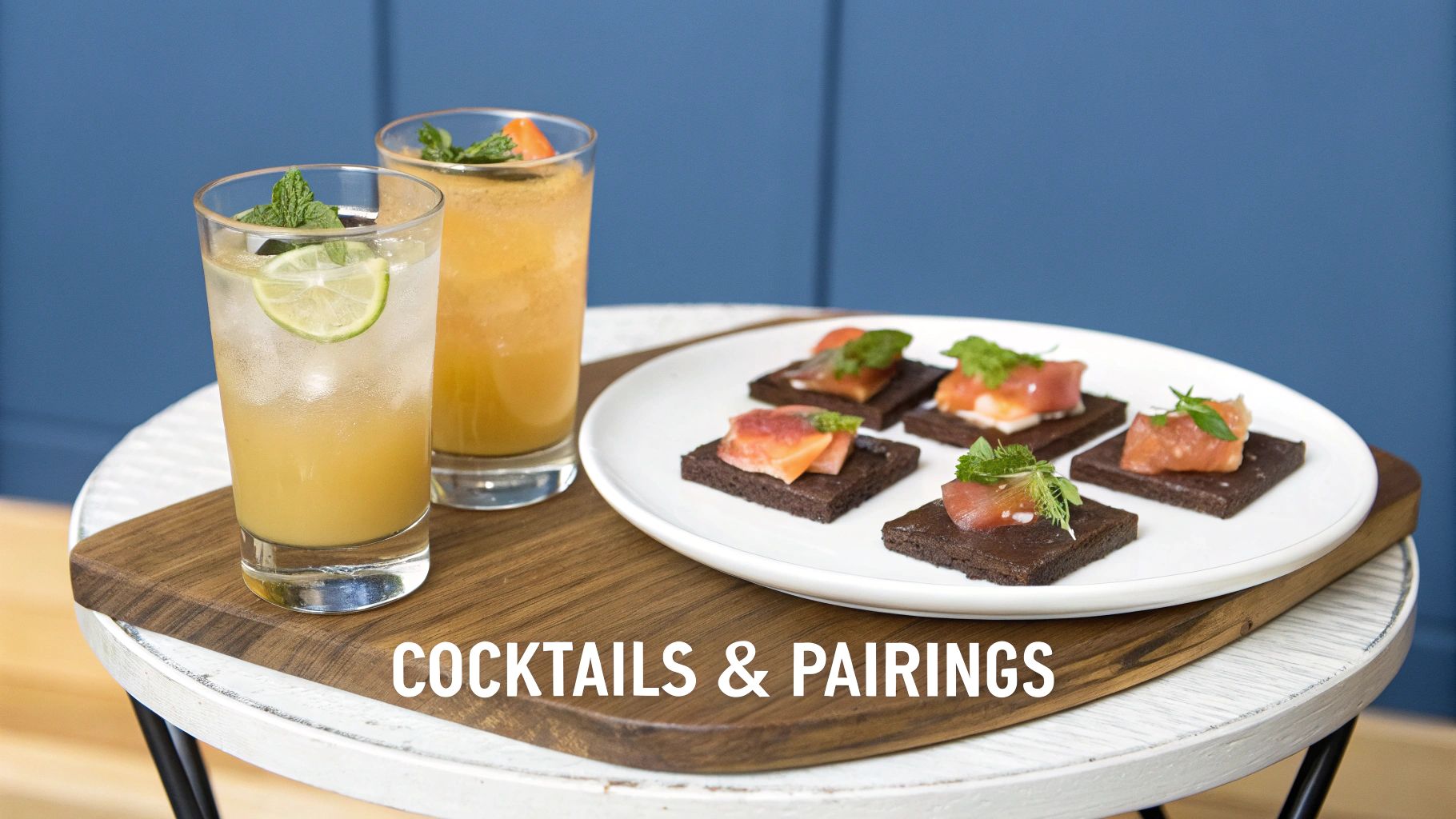
There’s a whole world of whiskey beyond pouring it neat. For anyone just starting their journey, exploring cocktails and food pairings is the perfect on-ramp to appreciating the finer points of the scotch v irish whiskey debate without feeling overwhelmed. The right mix or the perfect bite can unlock a spirit's best qualities.
Cocktails: Playing to Strengths
Irish whiskey’s trademark smoothness and bright, fruity character make it a fantastic team player in cocktails. It thrives in simple, refreshing drinks that let its delicate nature do the talking.
- The Irish Mule: A lively mix of Irish whiskey, ginger beer, and a squeeze of lime. It’s crisp, ridiculously easy to make, and plays up the whiskey’s subtle spice.
- The Classic Irish Coffee: The ultimate after-dinner treat, this iconic drink combines hot coffee, brown sugar, and Irish whiskey under a thick layer of fresh cream.
Scotch cocktails, on the other hand, tend to lean into its bolder, more complex personality. A smoky Islay Scotch, for instance, can bring an incredible depth to a drink that you just can’t get from anything else.
- The Penicillin: This modern classic is a masterclass in balance. It uses a blended Scotch as its base, shaken with lemon juice and a honey-ginger syrup, then finished with a float of peaty single malt for that incredible smoky aroma.
- The Rob Roy: Think of it as a Manhattan that took a trip to Scotland. It uses sweet vermouth and bitters to stand up to the whisky’s robust maltiness.
Simple Pairings to Elevate Your Tasting
Pairing whiskey with food doesn't need to be some stuffy, complicated affair. The real goal is to find flavors that complement the spirit in your glass, rather than competing with it.
Irish whiskey’s lighter profile gets along beautifully with more delicate foods. Try it with something like smoked salmon and cream cheese or a mild cheddar. You’ll be surprised how its subtle fruitiness just pops.
Tip for New Drinkers: For a pairing that will absolutely blow you away, try a peaty Islay Scotch with a good piece of dark chocolate. The intense smoke of the whisky slices right through the richness of the chocolate, creating a perfectly balanced and unforgettable tasting experience.
This push-and-pull of contrast and complement is where the real fun is. It's not just about Irish and Scotch, either. American craft distilleries are making whiskeys that are perfect for pairing. A lighter, grain-forward single malt from a distillery like Frey Ranch could be fantastic with grilled chicken, bridging that gap between Irish and Scotch traditions.
For anyone new to whiskey, the key is simply to experiment. Start with these simple ideas, trust your own palate, and you’ll quickly build the confidence to discover what works for you.
Finding Your Preference with a Blind Tasting
So, how do you truly settle the great scotch v irish whiskey debate for yourself, without getting distracted by a famous label or a hefty price tag? The best answer is a blind tasting. It’s where your own palate gets to be the final judge. This is hands-down the most effective way to cut through all the marketing noise and reputation, letting you focus only on the aromas and flavors actually in your glass.
Stripping away that brand bias is everything. You might just find out your favorite isn't that expensive, age-stated Scotch you thought you loved, but maybe a surprisingly complex Irish single pot still. The process builds some serious confidence and helps you get to know your own preferences on a much deeper level.
Trust Your Own Palate
A blind tasting transforms whiskey exploration from a guessing game into a genuinely fun and educational experience. Instead of just taking a critic's word for it, you get to form your own opinions, firsthand. This is the whole idea behind services that put together curated blind tasting experiences for you.
The image below gives you a peek at how a blind tasting kit lays out the whiskey samples anonymously, which is key for an unbiased review.
This setup guarantees your judgment is based purely on the spirit itself, not on any ideas you had before you took a sip.
Putting together your own tasting is pretty straightforward. You just need a few different whiskeys, some identical glasses, and a clever way to hide the bottles from view. You can even get a complete blind whiskey tasting kit to make the whole process a breeze.
Tip for New Drinkers: The magic of a blind tasting is the element of surprise. So many drinkers discover they actually lean toward a smooth, triple-distilled Irish whiskey over a heavily peated Scotch, or that a younger, experimental American craft whiskey outshines a traditional one. It's the ultimate way to let your taste buds take the lead.
When you embrace this approach, you move beyond simply picking a bottle off the shelf. You start to truly understand the craft behind the spirit, which empowers you to find whiskeys you will genuinely love for years to come.
A Few Final Pointers
Diving into the world of Scotch vs. Irish whiskey can stir up a few questions, especially when you're just starting to explore. Let's clear up a few common ones.
Is Scotch Better Than Irish Whiskey?
Honestly, neither is "better"—it's all about what you prefer. Think of it like this: Scotch is often the choice for those who crave bold, complex, and sometimes smoky flavors. On the other hand, Irish whiskey usually wins over drinkers who are looking for something smoother, lighter, and more immediately welcoming.
The only real way to know is to taste them for yourself. You might find yourself in the mood for a peaty Islay Scotch one night and a gentle, triple-distilled Irish single malt the next. Your palate is the only judge that matters.
What’s a Good Starter Whiskey?
If you're new to the game, Irish whiskey is a fantastic place to start. Its trademark smoothness and general lack of intimidating peat smoke make it an easy entry point. You can't go wrong with classics like Jameson or Bushmills to get a feel for the style.
Curious about Scotch? Dip your toes in with a Speyside single malt. Something like Glenfiddich 12 offers a fruity, unpeated profile that’s incredibly approachable and shows you what the category has to offer beyond the smoke.
As you get more comfortable, don't sleep on American craft whiskeys. Many distillers, like the folks at Westward Whiskey, draw inspiration from both Scottish and Irish traditions. Their spirits can be a fantastic bridge between the two styles, helping you really zero in on the specific notes and textures you love most.
Why the Different Spellings: Whisky vs. Whiskey?
The great "e" debate! The difference between "whisky" (Scotland) and "whiskey" (Ireland and America) boils down to history and a bit of national pride. Back in the 19th century, Irish distillers added the "e" to make their product stand out from their Scottish competition.
While it's a solid rule of thumb, it's not set in stone. The only surefire way to know where your dram comes from is to check the label.
Ready to figure out what you really like, without the fancy labels and marketing hype getting in the way? Blind Barrels sends you curated blind tasting kits filled with incredible American craft whiskeys, so your palate can do the talking. Let your taste be the guide and discover your next favorite bottle.