

When you get down to it, the big differences between Scotch, Bourbon, and Rye boil down to three things: where it's made, what it's made from, and how it's aged. Scotch hails from Scotland and is built on malted barley, giving it an incredible range of flavors from smoky and peaty to light and floral. Bourbon, on the other hand, is America’s native spirit. It has to be made from at least 51% corn and aged in brand-new charred oak barrels, which is where those signature sweet caramel and vanilla notes come from. Rye, another American classic, must contain at least 51% rye grain, leading to its distinctively spicy and peppery kick.
Your Guide to Understanding Scotch, Bourbon, and Rye
Stepping into the world of whiskey can feel like learning a new language, with terms like Scotch, Bourbon, and Rye thrown around. Each spirit tells a unique story, shaped by centuries of tradition, strict legal rules, and the specific grains that go into the bottle. This guide is here to help you navigate it all, starting with a clear look at what makes these three iconic whiskeys so different.
Our aim is to pull back the curtain on these spirits, giving you the confidence to pick a new bottle, whether it’s from a small American craft distillery like St. Augustine Distillery in Florida or a legendary Scottish producer. If you're new to whiskey, getting a handle on these foundational differences is the first step to figuring out what you really love.
The icons below give you a quick visual on the core identities of Scotch, Bourbon, and Rye, highlighting the ingredients and origins that define them.
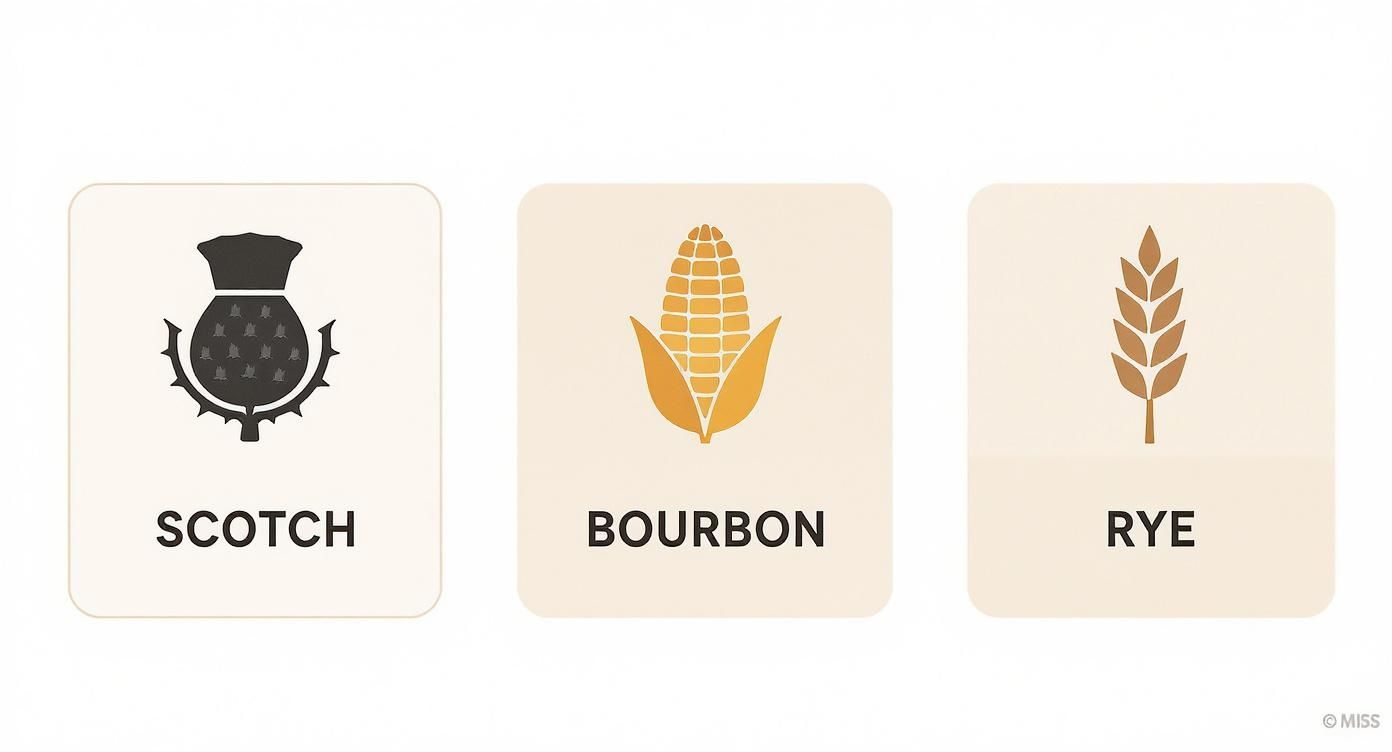
It’s a simple but effective summary: the thistle for Scotland, corn for Bourbon, and rye grain for Rye whiskey. Each one is central to that spirit's identity.
A Quick Comparison
The American whiskey scene, especially for bourbon and rye, is absolutely booming. The market was valued at around $14.1 billion in 2025 and is on track to hit a staggering $46.6 billion by 2035. This explosion is fueled by a real hunger for premium and craft whiskeys that offer something unique. Bourbon is a massive part of that, making up 28.5% of the demand and cementing its place as a truly American spirit. For a deeper dive into these numbers, you can check out the full report from Future Market Insights.
Tip for new drinkers: A helpful way to think about it is: Bourbon is often sweet, Rye is typically spicy, and Scotch offers the widest spectrum of flavors, from light and fruity to rich and smoky.
To make the distinctions even clearer, the table below breaks down their core characteristics. Think of it as a quick cheat sheet for grasping the essentials before we get into the nitty-gritty of the rules, flavors, and history behind each one.
Scotch vs Bourbon vs Rye At a Glance
| Characteristic | Scotch | Bourbon | Rye |
|---|---|---|---|
| Country of Origin | Scotland | United States | United States (primarily) |
| Primary Grain | Malted Barley | At least 51% Corn | At least 51% Rye |
| Typical Flavor | Smoky, peaty, floral, fruity | Sweet, caramel, vanilla, oak | Spicy, peppery, herbal, fruit |
| Aging Barrel | Used Oak Casks | New Charred Oak Barrels | New Charred Oak Barrels |
This table gives you a solid foundation. Now, let’s explore what these differences actually mean for the whiskey in your glass.
Comparing the Rules of Whiskey Production
The unique character of any whiskey is locked in by a strict set of legal definitions and production rules. These aren't just gentle suggestions; they dictate everything from the grain in the field to the type of barrel used for aging. It’s why a bourbon from Kentucky has a fundamental connection to one from a craft distillery in Texas, like Garrison Brothers.
Understanding these regulations is the key to appreciating what makes Scotch, Bourbon, and Rye so distinct. They're the DNA of the spirit, explaining why bourbon leans sweet, why rye hits you with that signature spice, and how Scotch can offer such an incredible spectrum of flavor.
The American Rules: Bourbon and Rye
Bourbon is often called “America’s Native Spirit,” and a clear set of laws ensures it stays distinctly American. For a spirit to legally wear the bourbon label, these rules are non-negotiable.
- Mash Bill: The grain recipe must be at least 51% corn. That sweetness you associate with bourbon? It comes directly from this high corn content.
- Aging: It has to be aged in brand-new, charred oak containers. This is a big one, as all that new wood is responsible for the classic vanilla, caramel, and toffee notes.
- Distillation Proof: Can’t be distilled higher than 160 proof (80% ABV).
- Barrel Entry Proof: Must go into the barrel at no more than 125 proof (62.5% ABV).
- Location: It absolutely must be made in the United States.
Rye whiskey plays by a very similar rulebook, but one crucial grain swap changes the entire game. This is where the core difference in the scotch vs bourbon vs rye debate really comes alive for American whiskeys.
Tip for new drinkers: The key takeaway is simple: the 51% grain rule is the foundation of flavor. Corn brings sweetness to Bourbon, while rye grain brings a bold, peppery spice to Rye whiskey.
As you might guess, Rye must be made with a mash bill of at least 51% rye grain. It shares the same requirements as bourbon for aging in new charred oak and follows the same proofing laws. While historically the drink of choice in the Northeastern U.S., rye has staged a major comeback, thanks in part to the cocktail renaissance and fantastic craft producers like Catoctin Creek in Virginia. Its spicier profile is the perfect backbone for classic drinks.
The Scottish Standard: Scotch Whisky
Across the pond, Scotch whisky operates under its own tight set of laws, laid out in the Scotch Whisky Regulations of 2009. These rules don’t just protect a centuries-old tradition; they ensure a standard of quality that’s respected around the globe.
The production process for Scotch is highly controlled:
- Location: It must be produced, distilled, and matured entirely in Scotland. No exceptions.
- Ingredients: Can only be made from water, malted barley, and other whole cereal grains.
- Aging: Must be aged in oak casks for a minimum of three years. Unlike bourbon, these casks are almost always used, having previously held spirits like bourbon or sherry, which adds incredible layers of complexity.
- Additives: Nothing can be added except water and plain caramel coloring.
For a newcomer, the distillation method is a point of real difference. Scotch often uses pot stills, which create a richer, more character-filled spirit. To get a better feel for this, you can explore our guide on the art of whiskey distillation. It’s a sharp contrast to the column stills often used for bourbon and rye.
Interestingly, American craft distilleries like FEW Spirits in Illinois or Westward in Oregon are now using these varied techniques, creating exciting new American single malts that are beautifully blurring those traditional lines.
Decoding the Flavor Profiles: A Tasting Journey
This is where all those legal definitions and production methods finally hit the glass. The journey from grain to barrel writes a unique story in every whiskey, and understanding these flavor profiles is your map to navigating the vast world of spirits and finding what you truly love.
In the classic Scotch vs. Bourbon vs. Rye showdown, Bourbon often feels like the most welcoming starting point for newcomers. Its corn-heavy recipe and time spent in brand-new charred oak barrels create a spirit that’s fundamentally sweet and full-bodied.
Bourbon: The Sweet All-American
Lift a glass of Bourbon, and you’ll almost always find inviting aromas of caramel, vanilla, and honey. That first sip usually follows through with those same notes, often backed by toasted oak, baking spices like cinnamon, and maybe a little dark fruit. It's a profile that just feels warm and familiar.
A fantastic example from the craft world that nails this profile is Laws Four Grain Straight Bourbon from Colorado. They use a unique mash bill of corn, wheat, rye, and barley, which layers in some beautiful complexity over that classic Bourbon sweetness. It’s a perfect showcase of how craft producers are putting their own signature on America’s native spirit.
Tip for new drinkers: The key differentiator is this: Bourbon leads with sweetness (caramel, vanilla), while Rye counters with spice (pepper, dill). This fundamental contrast is the first major fork in the road on your whiskey-tasting journey.
That approachable sweetness makes Bourbon a great place to start, but it’s just one side of the story. Our next stop introduces a completely different personality, one defined by spice and a crisper finish.
Rye: The Spicy Contender
If Bourbon is a warm hug, Rye is a firm, confident handshake. That mandatory 51% rye grain is no joke—it brings a peppery, spicy kick that you can’t miss. The aroma often leans more herbal and grassy, with hints of dill, mint, or even fresh-baked rye bread.
On the palate, that initial spice is undeniable—think black pepper or cloves. This is often followed by subtler fruit notes like green apple or pear and a characteristically drier finish than its corn-based cousin. A fantastic craft example is Sagamore Spirit Signature Rye from Maryland, which blends two different rye mash bills to create a spirit that’s both smooth and packed with that classic rye spice.
Scotch: A World of Flavor
Scotch whisky throws the biggest curveball, offering the most diverse range of flavors of the three. It’s impossible to pin down to a single profile because its character is so deeply tied to its specific region in Scotland and whether peat was used to dry the malted barley.
- Speyside: Known for light, sweet, and fruity whiskies with notes of apple, honey, and vanilla. Think of them as elegant and approachable.
- Islay: Famous for its heavily peated malts, which deliver powerful smoky, medicinal, and briny maritime flavors. This is a love-it-or-hate-it style that commands attention.
- Highlands: This large region produces a wide variety of styles, from rich and sweet to floral and smoky.
- Lowlands: Traditionally produces softer, lighter-bodied whiskies with grassy and delicate floral notes.
This incredible diversity means there’s a Scotch for nearly every preference. If you want to dive deep into a specific style, an immersive Macallan Whisky Experience with Cheese Pairing can be a fantastic way to explore its nuances.
Ultimately, the best way to understand these differences is to taste them for yourself. For a structured approach, check out our guide on how to taste whiskey, which breaks down the process of nosing and sipping like a pro.
How to Best Enjoy Each Whiskey Type
Knowing the rules and flavor profiles of Scotch, Bourbon, and Rye is one thing, but learning how to best enjoy them is where the real fun starts. The right approach can take a good whiskey and make it truly great, unlocking subtle aromas and flavors you might otherwise miss.
Whether you're a seasoned pro or just kicking off your whiskey journey, a little guidance can completely change your tasting experience.

The whole "scotch vs bourbon vs rye" debate isn't about finding a single winner. It's about figuring out which one is best for a particular moment, a specific mood, or a certain cocktail.
Sipping Neat: The Purest Experience
For anyone new to whiskey, tasting a spirit neat—no ice, no mixers—is the most direct way to get to know its true character. This is how you appreciate the full spectrum of aromas and flavors created during distillation and aging. It’s the spirit in its most honest form.
Here are a few tips to get the most out of a neat pour:
- Pick the Right Glass: A Glencairn or tulip-shaped glass is your best friend here. Its curved design funnels the aromas right to your nose, making it much easier to pick up the subtleties before you even take a sip.
- Start with Your Nose: Give the whiskey a gentle swirl and bring it up to your nose. Take short, light inhales. This helps you catch the initial scents without getting blasted by alcohol vapor.
- Take a Small Sip: Let that first tiny sip coat your tongue and get your palate used to the proof. The sips that follow will reveal much more complexity.
- Add a Drop of Water: If a whiskey feels a little too hot or intense, adding just a single drop of room-temperature water can open it up beautifully. It softens the alcohol burn and can release entirely new layers of flavor and aroma.
This simple, focused method is the bedrock for building your palate and figuring out what you genuinely like.
Classic Cocktails Built for Each Spirit
While sipping whiskey neat is a fantastic education, cocktails are where its versatility really gets to shine. Certain classic recipes feel like they were tailor-made to highlight the distinct personalities of Bourbon, Rye, or Scotch.
Tip for new drinkers: The secret to a great whiskey cocktail is balance. The spirit should always be the star of the show. Everything else is just a supporting actor there to complement—not hide—its core flavors.
For instance, the Manhattan is practically synonymous with Rye. The whiskey’s bold, peppery spice is the perfect counterpunch to the sweet vermouth, creating a drink that’s assertive and beautifully balanced. A solid American craft option like FEW Spirits Rye Whiskey from Illinois brings exactly the right spicy backbone for this classic.
On the flip side, the Old Fashioned is Bourbon’s territory. The spirit's natural sweetness and notes of caramel and vanilla just melt into the sugar and bitters. The result is a smooth, rich, and timelessly popular cocktail.
While less common, Scotch cocktails are seriously compelling. A modern classic like the Penicillin uses a blend of a lighter Speyside Scotch with a float of smoky Islay Scotch. Add some ginger and honey, and you get a complex, layered drink that hits smoky, sweet, and spicy notes all at once.
To make things clearer, here’s how some of the most iconic cocktails match up with their traditional whiskey base.
| Cocktail | Primary Whiskey | Flavor Rationale |
|---|---|---|
| Old Fashioned | Bourbon | Bourbon's inherent sweetness from corn complements the sugar and bitters, creating a smooth, rich profile. |
| Manhattan | Rye | Rye's spicy, peppery character cuts through the sweet vermouth, resulting in a balanced, assertive cocktail. |
| Whiskey Sour | Bourbon or Rye | Bourbon makes it sweeter and rounder; Rye gives it a spicier kick. It's a matter of personal preference. |
| Sazerac | Rye | The traditional choice. Rye's spice works beautifully with the Peychaud's bitters and absinthe rinse. |
| Penicillin | Blended Scotch & Islay Scotch | A lighter blended Scotch forms the base, while a smoky Islay float adds aromatic complexity and depth. |
| Rob Roy | Scotch | Essentially a Manhattan made with Scotch. The maltiness of the Scotch creates a richer, more complex profile. |
Choosing the right whiskey isn't just about following a recipe; it's about understanding why that spirit works best and how it shapes the final drink.
Pairing Whiskey with Food
Finally, don't sleep on pairing whiskey with your meals. Just like wine, the right spirit can elevate a dish and create a truly memorable experience.
- Bourbon: That sweetness and rich body make it a natural fit for savory, hearty foods. Think barbecue ribs, pulled pork, or even desserts like a decadent pecan pie or bread pudding.
- Rye: The spicy, assertive profile of rye is brilliant with cured meats and sharp cheeses. It stands up perfectly to a charcuterie board loaded with spicy salami and aged cheddar.
- Scotch: The sheer diversity of Scotch means endless pairing possibilities. A light, floral Speyside can be delicate enough for seafood, while a powerful, smoky Islay is an incredible partner for a grilled steak or a piece of rich, dark chocolate.
Your Practical Guide to Finding What You Really Like
Reading about the differences is one thing, but the real magic happens in the glass. Honestly, the single best way to figure out your personal taste is to get rid of all the noise. A blind tasting strips away the fancy label, the intimidating price tag, or what your buddy told you to like, letting you focus purely on the liquid itself.
You don't need to be a certified expert to host a simple blind tasting at home. It's actually a fun, eye-opening way to compare these spirits side-by-side, and it's the fastest way for newcomers to confidently figure out what profiles they genuinely enjoy.
Setting Up a Simple At-Home Blind Tasting
Forget the complicated setups. You only need a few basic things to get started. The point here is to make whiskey approachable, not another chore.
- Pick Your Whiskeys: Grab one bottle from each category. For a good first run, find an accessible American craft Bourbon, a solid Rye, and a classic, non-peated Scotch. This will give you a perfect spectrum of flavors to explore.
- Grab Your Gear: You’ll want identical glasses for each whiskey so there are no visual tells. Number them on the bottom with a marker or use little stickers. Also have a pen, paper for notes, and a glass of water for rinsing your palate between sips.
- Pour and Prepare: This is where a friend comes in handy. Have them pour about an ounce of each whiskey into the numbered glasses while you’re out of the room. This way, you truly have no idea which is which.
Once you’re all set, you're ready to dive in and really understand the whole Scotch vs. Bourbon vs. Rye debate for yourself.
How to Taste Like You Know What You're Doing
Now for the fun part. Take your time with each sample, moving through it systematically. Thinking about appearance, aroma, and taste will help you pinpoint exactly what you like or dislike about each one.
- Appearance: Hold the glass up to the light. Is the color more like pale straw, a rich amber, or a deep mahogany? Give the whiskey a swirl and watch the "legs" or "tears" run down the side of the glass. Thicker, slower legs can sometimes point to a higher proof or an older spirit.
- Aroma (Nosing): Bring the glass to your nose, but don't stick it all the way in. Take gentle sniffs with your mouth slightly open. What do you smell first? Is it sweet, like caramel (a classic Bourbon note)? Spicy, like black pepper (hello, Rye)? Or maybe fruity and malty (a hallmark of many Scotches)?
- Palate (Tasting): Take a small sip and let it roll around, coating your entire mouth. Pay attention to the first flavors that hit, how they change in the middle, and the lingering taste, which we call the finish. Does it stick around with a pleasant warmth, or is it short and clean?
Tip for new drinkers: The goal isn’t to guess which is which. It's to pay attention to your own reactions. Jot down whatever comes to mind—there are no wrong answers. These notes will become your personal flavor map, guiding you the next time you're standing in front of a wall of whiskey.
Great Starter Bottles from American Craft Distilleries
Walking into a liquor store can be overwhelming, especially when you realize just how big the whiskey world is. The global market hit an estimated $72.7 billion in 2024, with Scotch leading the pack at nearly $26.9 billion in revenue alone. That growth means incredible variety, which makes finding your personal favorites more important than ever. You can discover more insights about the global whiskey market and its trends here.
To get you started, here are a few accessible recommendations from some fantastic American craft distilleries:
- For Bourbon: Check out FEW Spirits Straight Bourbon from Illinois. It has that classic sweet corn backbone but with a nice kick of rye spice, making it a perfectly balanced introduction to the category.
- For Rye: You can't go wrong with High West Double Rye! from Utah. It’s a smart blend of two different rye whiskeys that delivers that signature peppery spice along with hints of honey and herbs. It’s a wonderful example of what makes rye so exciting.
- For an American Take on Scotch: While it's not technically Scotch, an American Single Malt like Westland's American Oak from Washington is an excellent comparison point. It's made from 100% malted barley and really showcases those fruity, malty notes without any peat, giving you a great feel for the style.
This simple exercise will do more than just help you compare Scotch, Bourbon, and Rye—it will teach you to trust your own palate. Before you know it, you'll go from being a passive drinker to a confident whiskey explorer.
Common Questions About Scotch, Bourbon, and Rye
As you dive deeper into the world of whiskey, it’s natural for questions to pop up, especially when sorting out the key differences between Scotch, Bourbon, and Rye. We’re here to tackle some of the most common points of confusion with clear, straightforward answers. Consider this a quick-hitter recap to solidify everything you've learned so far.

Can Scotch Be Made In America?
In a word: no. It's a definitive, legally protected rule. For a whisky to earn the name "Scotch," it must be produced, distilled, and aged in Scotland for at least three years in oak barrels. Think of it like Champagne from France or Tequila from Mexico—it's a protected geographical indication.
That being said, American craft distillers are creating phenomenal whiskies using the same key ingredient: 100% malted barley. These are known as American Single Malts, and they're carving out their own unique identity. Distilleries like Westland in Washington and Westward in Oregon are producing incredible spirits that give a nod to tradition while being distinctly American.
Is One Whiskey Better For Beginners?
Many people starting their whiskey journey find Bourbon the easiest entry point. Its corn-heavy recipe and aging in new charred oak barrels give it a naturally sweet, smooth profile full of familiar notes like vanilla, caramel, and honey. That inherent sweetness can feel less jarring than the peppery kick of Rye or the intense smoke of certain Scotches.
But here's the thing: your palate is your own. Some newcomers are instantly drawn to the bold spice of a classic Rye, while others might fall for a light, fruity, unpeated Speyside Scotch. The "best" whiskey for a beginner is simply the one you most enjoy drinking.
Tip for new drinkers: Your palate is unique. Don't let someone else tell you what you should like. The best advice for any new whiskey drinker is to taste widely and trust your own instincts. An approachable Bourbon is a great start, but don't be afraid to explore.
What Does The Mash Bill Mean?
The mash bill is just the whiskey's grain recipe. It’s the foundational blueprint that dictates the spirit’s core flavor profile, and the percentage of each grain makes a massive difference in the final taste.
- To be legally called Bourbon, the mash bill needs at least 51% corn.
- To be legally called Rye, it must contain at least 51% rye grain.
Distillers use the remaining 49% to get creative. They often add malted barley for its enzymes that help with fermentation or wheat to introduce a softer, sweeter character. A "wheated bourbon" like those from Maker's Mark, for example, uses wheat as the secondary grain instead of rye, resulting in a much gentler spirit.
Are All Scotches Smoky?
This is easily one of the biggest myths in the whiskey world. While some of the most iconic Scotches—especially those from the island of Islay—are famous for their powerful peat smoke, that style is just one piece of Scotland's diverse whisky puzzle.
Regions like Speyside and the Lowlands are known for producing light, floral, and fruity whiskies with no smoke whatsoever. These Scotches often carry notes of apple, honey, and vanilla, making them incredibly elegant. The smoke comes from peat, a fuel used to dry malted barley in certain regions, but it's a stylistic choice, not a universal requirement. If you’ve been avoiding Scotch because you don't like smoke, you've been missing out on a huge world of flavor.
Frequently Asked Questions
As we wrap up, here are a few more common questions that tend to pop up.
| Question | Answer |
|---|---|
| What's the main flavor difference between Bourbon and Rye? | Bourbon is typically sweeter with notes of caramel and vanilla due to its 51% corn minimum. Rye is generally spicier, with flavors of black pepper, baking spices, and mint from its 51% rye grain minimum. |
| Why is Scotch spelled "whisky" without the "e"? | The spelling difference is historical and regional. Scotland, Canada, and Japan use "whisky," while the United States and Ireland use "whiskey." It's a quick way to identify the spirit's country of origin. |
| Can you use Scotch, Bourbon, and Rye interchangeably in cocktails? | While you can substitute them, it will dramatically change the drink's profile. A Manhattan made with sweet Bourbon will be very different from one made with spicy Rye. It's best to stick to the recipe or experiment with purpose. |
Hopefully, these answers clear up any lingering confusion and give you more confidence as you explore.
The only way to truly understand the nuanced differences between Scotch, Bourbon, and Rye is to taste them for yourself without bias. Blind Barrels makes this discovery process fun and educational with our quarterly blind whiskey tasting subscription. We feature top-shelf spirits from America's best small craft distilleries, letting your palate lead the way.