

You spot a square whisky glass on a polished bar cart, perhaps in a gift set beside a bottle of American craft whiskey. It looks heavier, sharper, and more deliberate than the familiar round rocks glass. The obvious question follows: is the square shape only decoration, or does it change the way whiskey tastes?
The honest answer is both. Square whisky glasses make a strong style statement, feel stable in the hand, and work especially well for cocktails and presentation. Their broad, straight-sided openings can also let aromas disperse faster than they would in a tapered tasting glass. This guide will help you understand the difference without turning your next pour into a chemistry lesson.
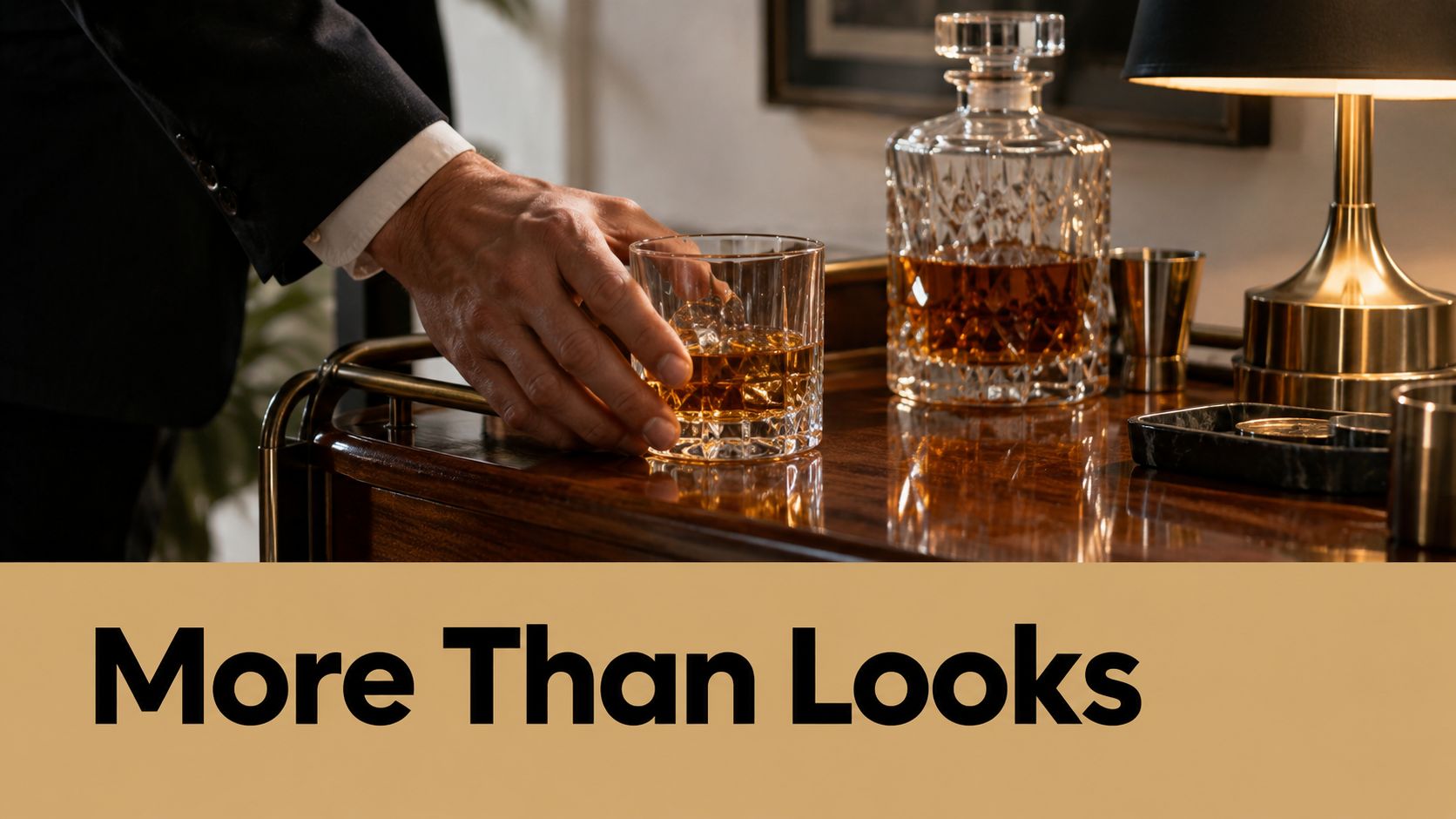
You'll learn how to recognize the design, what it does to aroma and alcohol perception, when it makes sense to use one, and how to taste confidently even if you're new to whiskey. If you're also exploring how drinks fit into a broader hosting ritual, you might enjoy taking time to browse Clos Pegase wines for another perspective on thoughtful presentation.
Introduction to Square Whisky Glasses and Why They Catch Your Eye
A square glass catches attention because it breaks a familiar rule. Most whiskey drinkers expect a round rocks glass, with curved walls, a broad rim, and a thick base. A square lowball replaces that soft outline with flat faces and visible corners, making the drink look more architectural.
That difference matters before the whiskey reaches your lips. Guests notice the silhouette, the way amber liquid sits against straight walls, and the firm footprint on a table. A square glass can make a simple pour feel designed rather than merely served.
A modern look with an old drinking tradition
The square form is modern in spirit, but the low tumbler belongs to a much older family of drinking vessels. The modern whiskey tumbler evolved from earlier Scottish vessels, especially the quaich. By the 18th century, pressed-glass production helped replace older hand-finished forms with cheaper, mass-produced tumblers. Early rounded-bottom glasses could tip over, so flat-bottomed versions eventually became common.
The Metropolitan Museum of Art describes a major milestone in this era at New York's Crystal Palace Exhibition in 1853, where the New England Glass Company displayed 130 pieces of one design, including tumblers. That example shows how standardized drinking glass designs were already being produced for a broad market, rather than crafted only as individual objects. The Met's record of the glassware offers useful historical context.
A square whisky glass therefore isn't a completely separate drinking idea. It's a contemporary interpretation of the low tumbler, shaped for visual identity, tactile appeal, and flexible serving.
What this guide will help you decide
Think of the choice as similar to choosing shoes. A polished dress shoe may look right for an evening out, while a walking shoe may support you better over distance. Neither is universally superior. The right glass depends on whether you care most about nosing, cocktails, stability, gifting, or presentation.
A square glass may be exactly right for an Old Fashioned at a dinner party or a neat pour where the setting matters. A tapered tulip or Glencairn-style glass will usually serve you better when you're trying to detect delicate fruit, vanilla, oak, or floral notes.
By the end, you won't need to choose based on appearance alone. You'll know when square whisky glasses fit your sipping style, and when a narrower glass will make a blind tasting easier.
What Makes a Square Whisky Glass Different
Start with the glass you already know. A traditional rocks glass is short and wide, with a circular rim and curved walls. A square whisky glass keeps the same low, sturdy idea but changes the outline from a porthole to a picture frame.
That visual analogy helps. A porthole guides your eye smoothly around a circle. A picture frame gives you distinct edges and corners. In the hand, those flat sides can create a more deliberate grip, while the corners add a sharper tactile signal.
Look at the base first
A genuine square lowball usually has a flat bottom, often paired with a substantial base. The flat footprint helps the glass sit securely on a table. Some designs use a thick base that adds weight and gives bartenders room to build spirit-forward cocktails directly in the vessel.
Next, inspect the walls. They may be thick and substantial, or relatively thin with a more refined profile. Thickness affects the feel of the glass, the way it absorbs warmth from your hand, and how resilient it feels during ordinary handling.
The corners deserve attention. Rounded glass forms distribute physical and thermal stress more evenly. Square geometry creates sharper corners where stress can concentrate, so manufacturers need careful molding, uniform wall thickness, and controlled annealing to reduce weak points during filling, transport, and use. This specialty glassware overview discusses the manufacturing considerations behind shaped liquor glass.
Don't confuse a square glass with a square bottle
Square bottles and square drinking glasses belong to related presentation worlds, but they don't share exactly the same design history. Square bottle engineering became associated with stacking and transport, while the tumbler tradition developed around drinking comfort, stability, and production efficiency.
One industry history source notes that square bottles could fit up to 25% more tightly in shipping space, and dates Johnnie Walker's square bottle rollout to 1860. This history of square liquor bottles helps explain why the bottle became a stronger branding tool than the square glass itself.
For a practical guide to the wider family of whiskey vessels, see this explanation of whisky glass names and shapes.
When you're shopping, ask three simple questions: Does the glass sit flat? Are the corners comfortable rather than harsh? Does the opening suit the way you plan to drink? Those answers reveal more than the word “premium” on the packaging.
How Shape Changes Aroma Taste and Overall Enjoyment
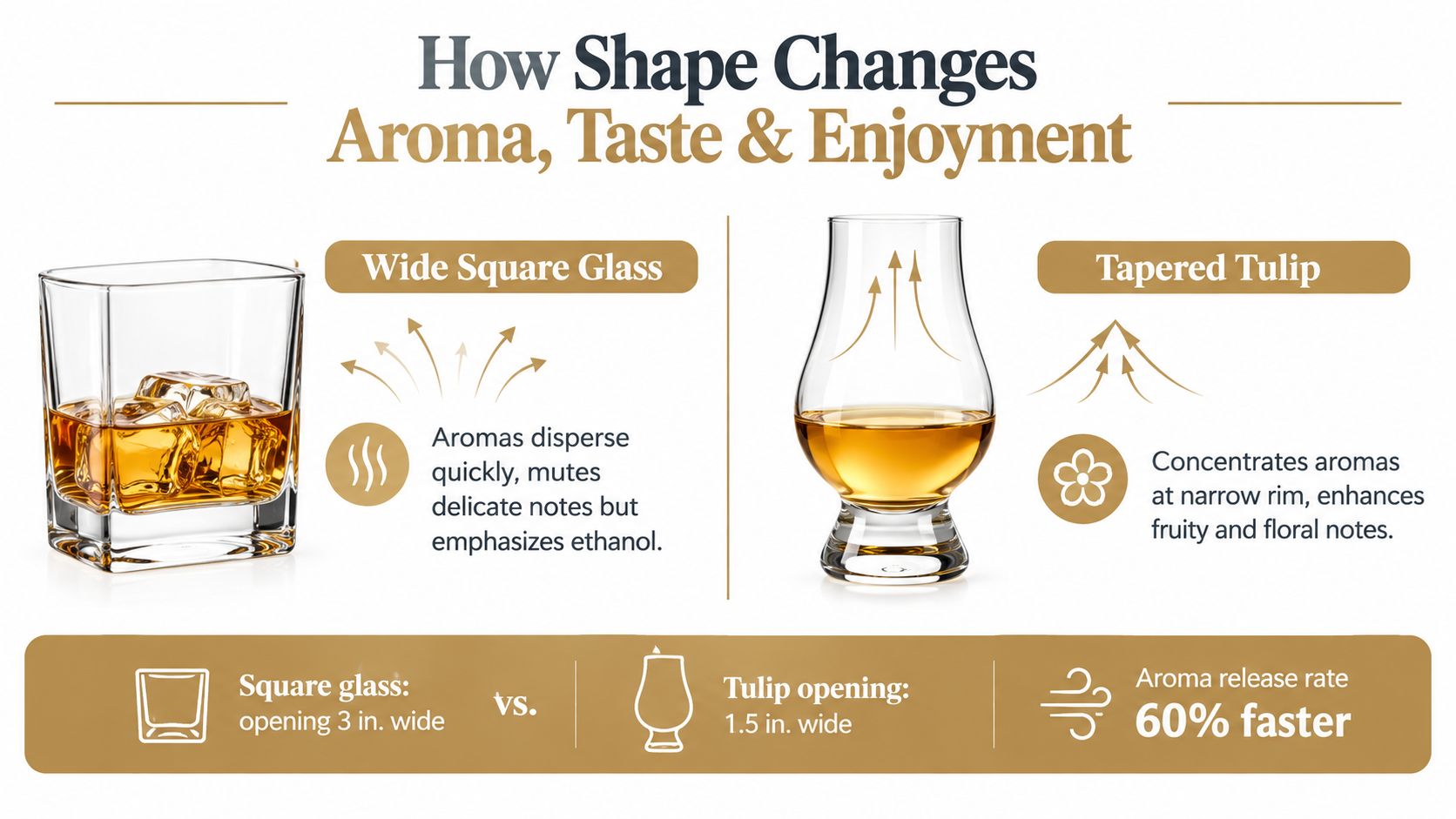
The most important trade-off is at the rim. A wide, straight-sided square glass gives volatile aroma compounds plenty of room to spread into the air. A tapered vessel narrows toward the top, gathering more of those vapors near your nose.
That difference becomes noticeable during a slow pour. In a square glass, you may smell a quick burst of alcohol followed by broader, less concentrated notes. In a tulip or Glencairn-style glass, the narrower opening can direct aromas upward, making it easier to identify layers such as vanilla, dried fruit, toasted oak, or floral character.
Experts cited in tasting-oriented coverage generally find that straight-sided glasses produce a weaker aroma profile because they don't concentrate the headspace as effectively as tulip-shaped vessels. This comparison of glass shapes and taste explains why the shape at the top can influence what reaches your nose.
What you may notice in a real pour
Suppose you pour an American bourbon neat into a square lowball. The broad opening may make the whiskey feel open and immediately accessible, but the first sniff can also bring forward ethanol. If you move the glass close to your face and inhale, the alcohol may dominate before subtler notes have a chance to appear.
A tapered glass changes the order of events. It gathers the headspace, so gentle sniffs can reveal a more focused sequence of aromas. That doesn't mean the whiskey itself has changed. Your glass has changed the way aroma travels from the liquid to your senses.
Practical rule: Choose square for the setting and tapered for the nose when sensory detail matters most.
Square whisky glasses still have real strengths. Their flat sides look polished in photographs, their broad footprint feels secure on a table, and their geometry can make a cocktail appear more substantial. They're often excellent for an Old Fashioned, whiskey on ice, or a social pour where guests value the whole presentation rather than a formal aroma analysis.
Use a simple tasting routine
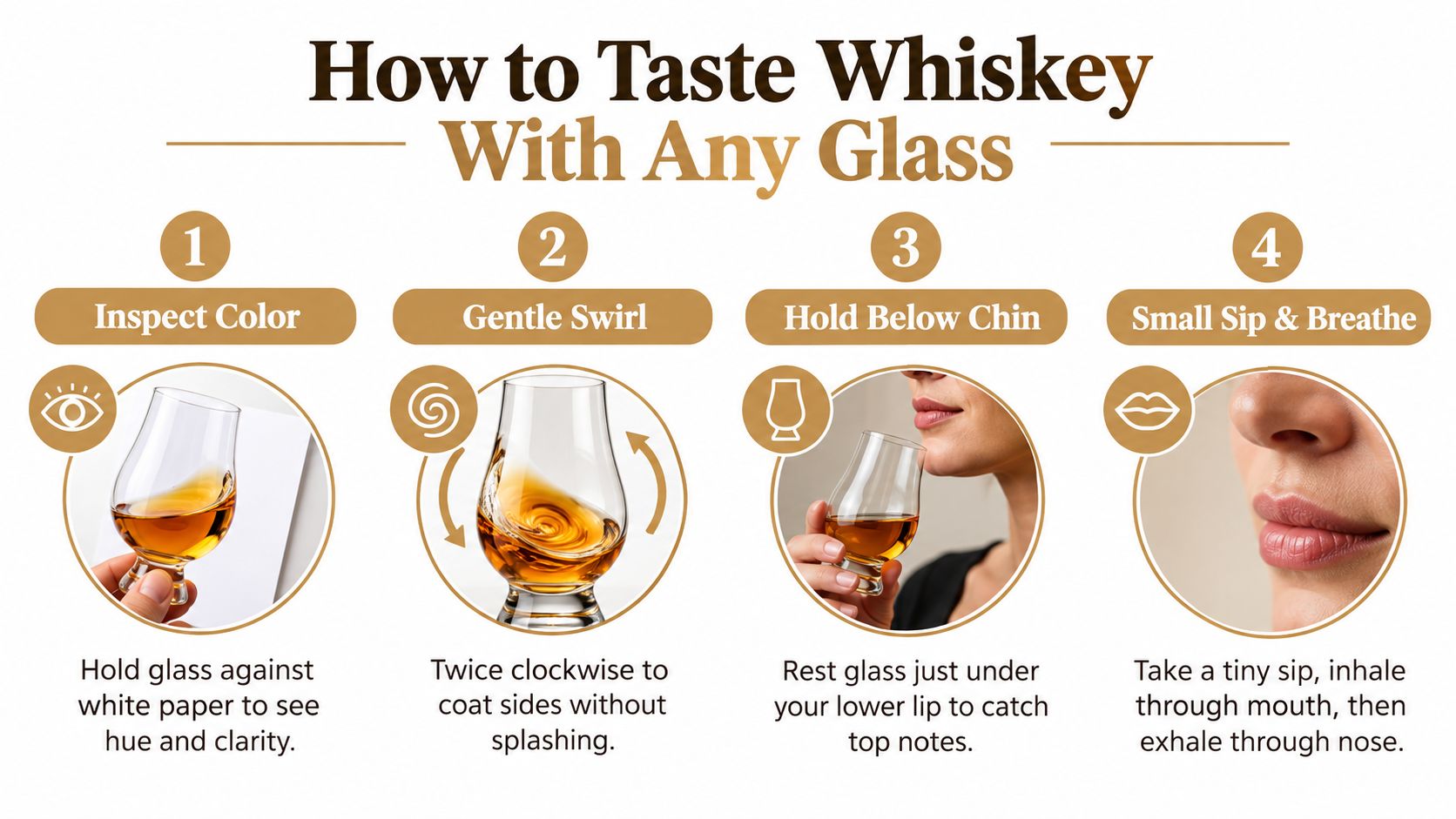
You can compensate for a less aroma-focused shape by slowing down. Inspect the color, swirl gently, smell without burying your nose in the glass, then take a tiny sip and pay attention to the finish.
Glass shape influences spirits in the same broad way that beer glasses affect flavor through aroma concentration, drinking position, and the path liquid takes to your mouth. The vessel doesn't replace the drink, but it can steer your attention toward certain parts of the experience.
Square Versus Traditional Glassware Pros Cons and Best Uses
A square lowball, a round rocks glass, and a tapered nosing glass can all serve whiskey well, but they solve different problems. The square option prioritizes visual impact and a firm table presence. The round rocks glass offers familiar comfort and broad versatility. The tapered glass gives the clearest advantage when you're concentrating on aroma.
The best choice depends on the occasion, not on a universal ranking.
A quick comparison
| Use Case | Best Glass Shape | Why It Works |
|---|---|---|
| Neat whiskey for formal nosing | Tapered tulip or Glencairn style | Concentrates aromas near the rim |
| Whiskey on a large ice cube | Square or round rocks glass | Offers a stable, wide base and room for ice |
| Old Fashioned | Square or round lowball | Supports muddling, stirring, and a substantial presentation |
| Whiskey cocktail with a mixer | Lowball for short serves, highball for long serves | Matches the drink's volume and ice structure |
| Gift set or modern home bar | Square lowball | Creates a distinctive visual identity |
| Blind tasting focused on aroma | Tapered glass | Reduces the distraction of a broad opening |
| Everyday hosting | Round rocks glass | Feels familiar and adapts to many pours |
Where square designs stand out
Square whisky glasses work especially well when the drink is part of the room's design. Straight faces create clean reflections, logos or etching look crisp, and the flat base can feel reassuring when guests are moving around a crowded table.
They're also useful for spirit-forward cocktails. An Old Fashioned benefits from a low, stable vessel with enough room for ice and stirring. The square silhouette adds a contemporary edge without forcing the drink into a tall cocktail glass.
Handling requires more attention. Sharp corners can feel less natural than curved walls, particularly for someone with smaller hands. The same corners can also become vulnerable points if the glass is knocked against a sink or stored where pieces touch.
The round glass remains a strong default
A round rocks glass is often easier to grip because the hand can wrap around a continuous curve. Its familiar shape also suits neat pours, ice, and classic cocktails without making the vessel itself the center of attention.
The tapered glass has a narrower job, but it performs that job clearly. If you're comparing whiskey samples, evaluating a new bottle, or trying to distinguish fruit from alcohol heat, its aroma-focused profile is usually the more useful choice.
How to Taste Whiskey Like a Beginner Using Any Glass
A square glass won't prevent you from learning whiskey. It rewards a gentler method. You don't need specialized vocabulary or a trained palate. You need a repeatable sequence that gives your senses time to adjust.
Use the same order each time so you can compare pours fairly.
Start with sight
Hold the glass against a light background and inspect the whiskey's color and clarity. Look for pale gold, deeper amber, or copper tones, but don't treat color as a guarantee of flavor. Sight gives you an opening observation, not a final judgment.
Next, swirl gently. A small movement coats the sides and releases aroma without splashing whiskey into the air. If you're using a square glass, rotate it carefully rather than making a large circular motion, because the corners can interrupt the flow.
Smell without overwhelming yourself
Hold the rim just below your nose instead of pushing your nose deep into the glass. Take gentle sniffs with your mouth slightly open. This reduces the chance that alcohol fumes will overwhelm your first impression, a common problem for beginners.
Try to describe what you notice in ordinary language. “Sweet,” “woody,” “spicy,” “fruity,” and “sharp” are useful starting points. You don't need to identify a precise fruit or baking spice to taste well.
Take a tiny sip
Let the whiskey touch your tongue briefly, then swallow and notice what remains. The finish may feel warm, dry, sweet, peppery, smoky, or short. A small sip gives you more control than taking a large mouthful, especially with a higher-proof pour.
After tasting neat, add a few drops of water and try again. Compare the two versions rather than assuming water is always an improvement. It may soften the alcohol sensation or reveal a different aroma, but your preference is the point.
For a blind tasting: Record your first impression before discussing the bottle, brand, or price.
Water also helps reset your palate between samples. If you're tasting several pours, take small sips of water and pause before moving to the next glass. This keeps one intense whiskey from dominating your judgment.
For a fuller beginner routine, use this guide to learn how to taste whiskey. The same mechanics work in a square lowball, a round rocks glass, or a tapered tasting vessel.
The goal isn't to perform expertise. It's to notice what changes when you slow down, sip less, and separate aroma from taste and finish.
Why Square Glasses Pair So Well With American Craft Whiskey
American craft whiskey has created a strong audience for discovery, gifting, and home tasting. In 2024, more than 30 million 9-liter cases of American whiskey were sold in the United States, generating nearly $5.2 billion in revenue for distillers, according to the Distilled Spirits Council's American whiskey fact sheet. The same source reports that sales were up 125.9% since 2003.
That scale helps explain why whiskey culture now includes more than bottles. Enthusiasts collect glassware, build tasting stations, host blind flights, and look for gifts that make a new label feel like an occasion. A square glass fits naturally into that visual language because it looks intentional beside a distinctive bottle.
Presentation without pretending it improves aroma
Small distilleries often rely on identity. Label design, bottle shape, tasting-room details, and serving rituals help drinkers remember what they tried. A square lowball supports that identity at home, especially when the pour is part of a shared evening rather than a formal sensory evaluation.
Consider a couple tasting two unfamiliar American whiskeys without seeing the labels. The square glasses make the table feel special, while the blind format keeps branding from deciding the result before the first sip. Once the tasting ends, the glass can continue serving cocktails or pours on ice.
That's the useful distinction. The square shape can enhance the ritual of discovery without claiming superior nosing performance. If aroma comparison is the main event, switch to a tapered glass. If the experience includes conversation, food, photographs, and presentation, square may be the more satisfying choice.
A natural match for gifting and shared tasting
American craft whiskey fans often enjoy the story around a bottle, but they also want practical barware. A square glass feels more distinctive than a generic tumbler in a gift box, and its shape can complement modern home bars without looking overly formal.
For a closer look at the category and its makers, explore this guide to American craft whiskey. The key is to pair the vessel with the moment. Use square to frame the occasion, and use tapered glassware when you want the clearest aromatic read.
Choosing Caring For and Enjoying Your Square Whisky Glasses
Buy square whisky glasses with your hand as much as your eye. Check whether the corners feel comfortable, whether the base sits firmly, and whether the rim is smooth. A striking shape won't compensate for an awkward grip or an edge that makes every sip feel forced.
Weight can signal solidity, but heavier isn't automatically better. Look for a balanced base, consistent walls, and enough room for the drinks you serve. If you enjoy Old Fashioneds or whiskey on ice, a lowball with a stable footprint makes sense. If neat tasting is your priority, add a tapered glass rather than asking the square one to do every job.
Everyday care protects the corners
Hand washing gives you more control around sharp edges and reduces the chance of contact with other dishes. Use mild soap, rinse thoroughly, and dry with a soft cloth. Avoid sudden temperature changes, such as pouring very hot water into a chilled glass, because thermal stress can damage glassware.
Store square glasses with space between them. Don't force corners together in a crowded cabinet, and place them where they won't fall against a hard sink or countertop. Rounded shapes distribute stress more evenly, while square forms need extra care around their corners.
Geometry can also influence how people drink. Research reported by ScienceDaily found that participants drank 60% slower from a straight glass than from a curved glass. The report on glass shape and drinking behavior suggests that shape affects use and perception, not only appearance.
A practical home bar doesn't need one universal glass. Keep square lowballs for cocktails, ice, hosting, and presentation, then add a tapered nosing glass for blind tastings and detailed aroma work. That mixed setup respects what each shape does well.
Blind Barrels offers quarterly blind whiskey tasting kits with four samples from small American craft distilleries, a tasting table for aroma, taste, and finish notes, and a QR code that reveals the bottles and purchase options. Visit Blind Barrels to explore a structured way to compare whiskey without brand or price bias, then choose square or tapered glassware based on the part of the experience you value most.