

What makes a rye whiskey the “best” choice if you can't find it, can't justify the price, or wouldn't enjoy drinking it in the way you prefer? Most top rye whiskey lists answer a different question. They chase rare releases, impressive age statements, and high tasting scores, while everyday buyers need to know which bottle works in a Manhattan, which one rewards a slow pour, and which one offers genuine value.
Rye deserves a more practical approach. The category has moved from historic dominance to near-disappearance and then back into serious relevance, so today's shelves contain everything from accessible mixing bottles to highly allocated, barrel-strength releases. The right choice depends on proof, flavor, availability, price, and occasion, not prestige alone.
Rethinking What Makes Rye Whiskey Great
A higher price can buy concentration, age, scarcity, or a more elaborate production story. It doesn't automatically buy a better drink for your palate. A powerful, oak-heavy rye may be fascinating neat but clumsy in a cocktail, while a moderately priced bottle with firm spice and enough structure can make a better Manhattan every night of the week.
That distinction matters because rye's modern success has produced a split market. Bottles above $75 have been growing at a 9.2% CAGR, compared with 4.1% for standard offerings, according to market coverage of rye whiskey premiumization. Premium releases attract attention, but standard ryes still serve the people mixing drinks, sharing pours, and learning the category.
Rye's history makes the prestige-first approach even less useful. In the early 1800s, Pennsylvania was a major distilling center, and in 1810 it reportedly shipped 6.5 million gallons of rye whiskey, while Kentucky produced about 2.2 million gallons. The category later declined sharply after Prohibition, reaching about 150,000 nine-liter cases in 2006, compared with 14.7 million bourbon cases. Those figures are documented in Decanter's history of rye whiskey.
Judge the bottle by the job
I use four questions before calling any rye “top” quality:
- How will you drink it? Cocktails need balance and definition. Neat pours can justify more proof, age, and complexity.
- What flavor do you want? Rye can lean toward mint, dill, grass, baking spice, dried fruit, vanilla, or dark oak.
- Can you replace the bottle? A one-time release may be enjoyable, but it's a poor everyday recommendation if the next purchase is impossible.
- Does the price match the experience? A rare bottle should offer something beyond branding, such as unusual maturation, exceptional structure, or distinctive provenance.
For food pairing, the same practical thinking applies. A rye with bread, spice, and gentle sweetness can work beautifully beside a rich meal, much like choosing the right resources from Just Cook It helps when you're building a sourdough routine around flavor and texture rather than appearance alone.
Practical rule: The best rye is the bottle that performs reliably in the way you actually drink whiskey.
Top Rye Whiskeys Compared by Real Use Cases
Which rye deserves a place on your shelf depends on how you drink it. The bottles below cover distinct jobs, from high-proof sipping and water experiments to mature pours and craft-focused exploration. This approach favors accessibility, value, and use case over prestige or narrow score differences.
| Whiskey | Proof | Age | Primary Profile | Best For |
|---|---|---|---|---|
| Thomas H. Handy Sazerac 2016 | 128.8 proof | NAS | Concentrated spice and power | Slow sipping and dilution experiments |
| WhistlePig 15 Year Estate Oak | 92.6 proof | 15 years | Mature oak, depth, and layered spice | Quiet sipping |
| Boone County 8 Year Founder's Reserve | 100 proof | 8 years | Structured, mature rye character | Neat pours and special occasions |
| Frey Ranch rye selection | Release-specific | Release-specific | Grain-forward craft character | Curious drinkers and provenance-focused exploration |
Thomas H. Handy Sazerac 2016 earned 9.3/10 in an independent blind-rating source. A BevTest 2026 review gave 96 points to WhistlePig 15 Year Estate Oak and 95 points to Boone County 8 Year Founder's Reserve. Those close results make scores useful for narrowing a list, not for deciding your purchase. A score cannot tell you whether a bottle suits your budget, cocktail habits, or tolerance for heavy oak.
Match the whiskey to the glass
Thomas H. Handy is built for drinkers who enjoy intensity and are comfortable adding water. Its proof can dominate a delicate cocktail, and it is a demanding first rye for a newcomer. Pour a small measure, taste it neat, then add water gradually to see how the spice and fruit develop.
WhistlePig 15 Year Estate Oak fits a quiet, contemplative pour. Extended maturation brings pronounced oak, depth, and layered spice, but age does not guarantee balance. Let it sit in the glass before deciding whether the wood adds complexity or covers the rye.
Boone County 8 Year Founder's Reserve offers a practical middle ground for someone seeking age-stated maturity without automatically choosing the oldest bottle available. Its structure works best neat or with a small splash of water. Use it for a special pour rather than high-volume mixing, where its character and cost are less useful.
Frey Ranch serves a different purpose. Release details vary, so confirm the current bottle before buying, especially if proof matters to you. The distillery suits drinkers interested in grain-to-glass identity and regional craft production, rather than a standardized flagship profile. Distiller's craft rye roundup offers a useful starting point for comparing Frey Ranch with Wigle, 291 Distillery, Hotaling & Co., Black Button, and Southern Star.
Choose the bottle that fits the pour you will make.
The History and Legal Standards That Shape Modern Rye
Rye's identity starts with a legal floor, not a flavor promise. American rye whiskey must contain at least 51% rye grain in its mash bill, and it must be distilled to no more than 80% ABV. If it carries the label straight rye whiskey, it must spend at least 2 years in charred new oak and enter the barrel at no more than 62.5% ABV, according to this beginner's guide to American whiskey standards.
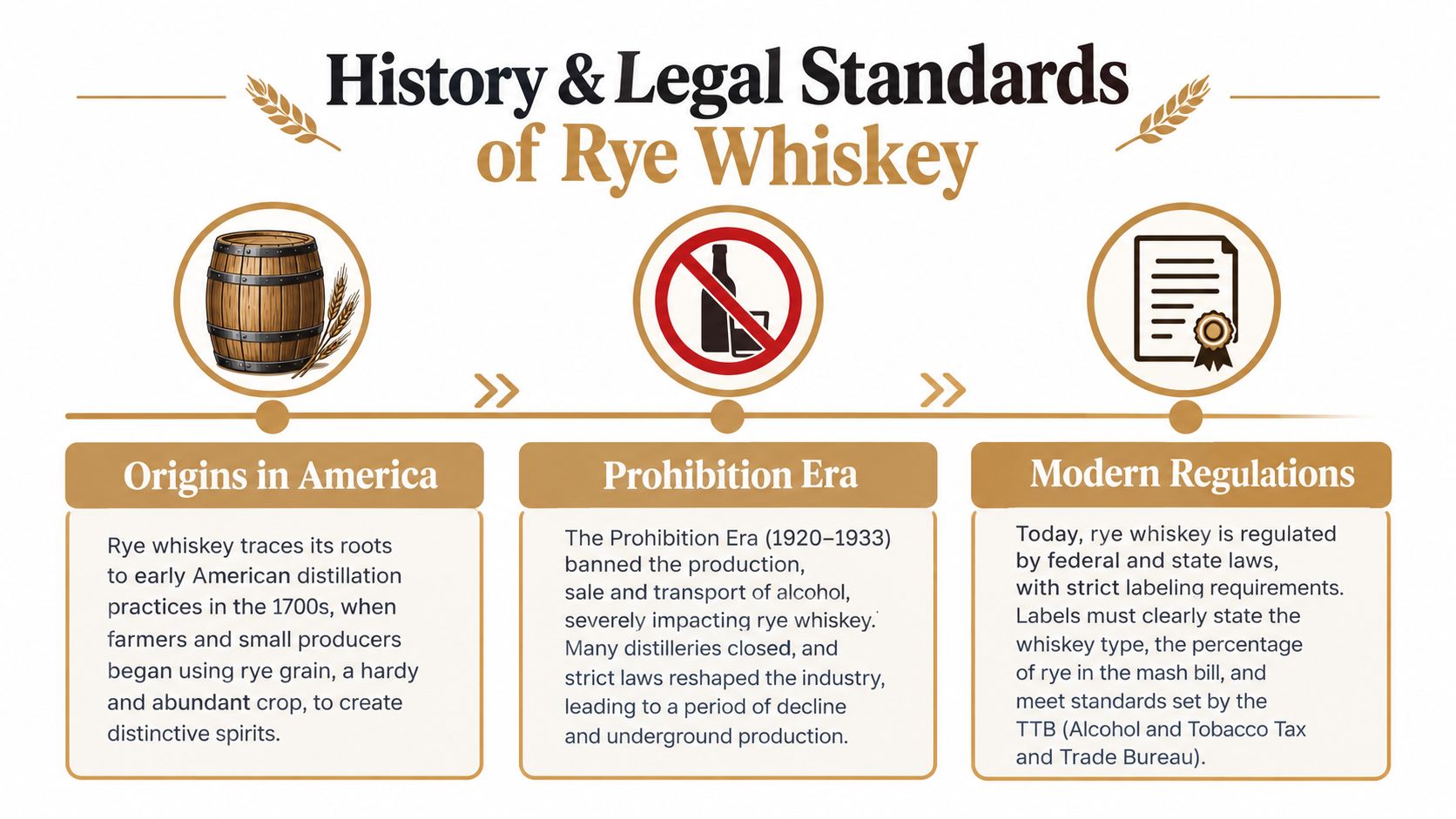
Those rules establish a category, but they don't determine whether a bottle tastes minty, fruity, dry, sweet, or aggressively herbal. Distillers still control the recipe, fermentation, distillation, barrel selection, warehouse position, and bottling proof. Two legal ryes can feel completely unrelated in a tasting.
From national staple to modern revival
Rye was central to early American distilling by the late 1700s. George Washington's Mount Vernon distillery was producing almost 11,000 gallons annually in the 1790s, and Pennsylvania's output in 1810 substantially exceeded Kentucky's. The history of rye as an American whiskey shows why the category's regional roots matter when you compare modern producers.
After Prohibition, rye lost ground and remained marginal for decades. U.S. sales later rose from roughly 150,000 cases in 2006 to around 1.4 million cases by 2020 and about 1.6 million by 2022, depending on the reporting year, as documented in a rye whiskey timeline from VinePair. The rebound brought heritage brands back into view and gave craft distillers room to reinterpret the category.
That history changes how I read a label. A rye made with transparent grain sourcing, local water, or a distinctive maturation program isn't merely adding marketing language. It may be documenting choices that affect texture, spice, oak, and scarcity. Provenance matters most when the producer explains what it changes in the glass.
What Actually Creates Different Rye Flavor Profiles
Rye flavor starts before the barrel. The grain percentage, fermentation, distillation strength, entry proof, oak, and final bottling proof all shape the result. The legal minimum is 51% rye, but a distiller can build a mash bill that pushes the grain character much further, producing a sharper, more herbal profile than a softer recipe with more corn or malted grain.
Proof then changes how those flavors arrive. The industry median barrel-entry proof has been reported at 115 proof, or 57.5% ABV, and higher entry proof affects the extraction of vanillin, eugenol, and other oak-derived compounds. This technical overview of rye whiskey explains why barrel-entry proof can influence finish intensity and the balance between spice and wood.
Four variables to watch
Mash bill composition sets the foundation. More rye often brings pepper, mint, grass, and grain, but “more rye” doesn't mean “more quality.” A high-rye recipe can be thrilling in a Sazerac and too angular for someone expecting bourbon-like caramel.
Bottling proof controls intensity at the moment of drinking. Higher proof can carry more flavor and texture, but it also magnifies alcohol heat. Lower-proof rye may be easier in a cocktail, especially when the drink already contains assertive bitters or vermouth.
Age and barrel condition determine how the spirit develops. New charred oak contributes vanilla, caramel, toast, spice, and tannin. Time can integrate those elements, but extended aging can also push a rye toward dry wood. The best older ryes preserve grain energy beneath the oak.
Distillery technique creates the signature. Charcoal mellowing, barrel location, toasted wood, finishing barrels, and blending decisions can all redirect the profile. That's why one distillery's rye may taste bright and grassy while another's leans toward dark fruit and baking spice.
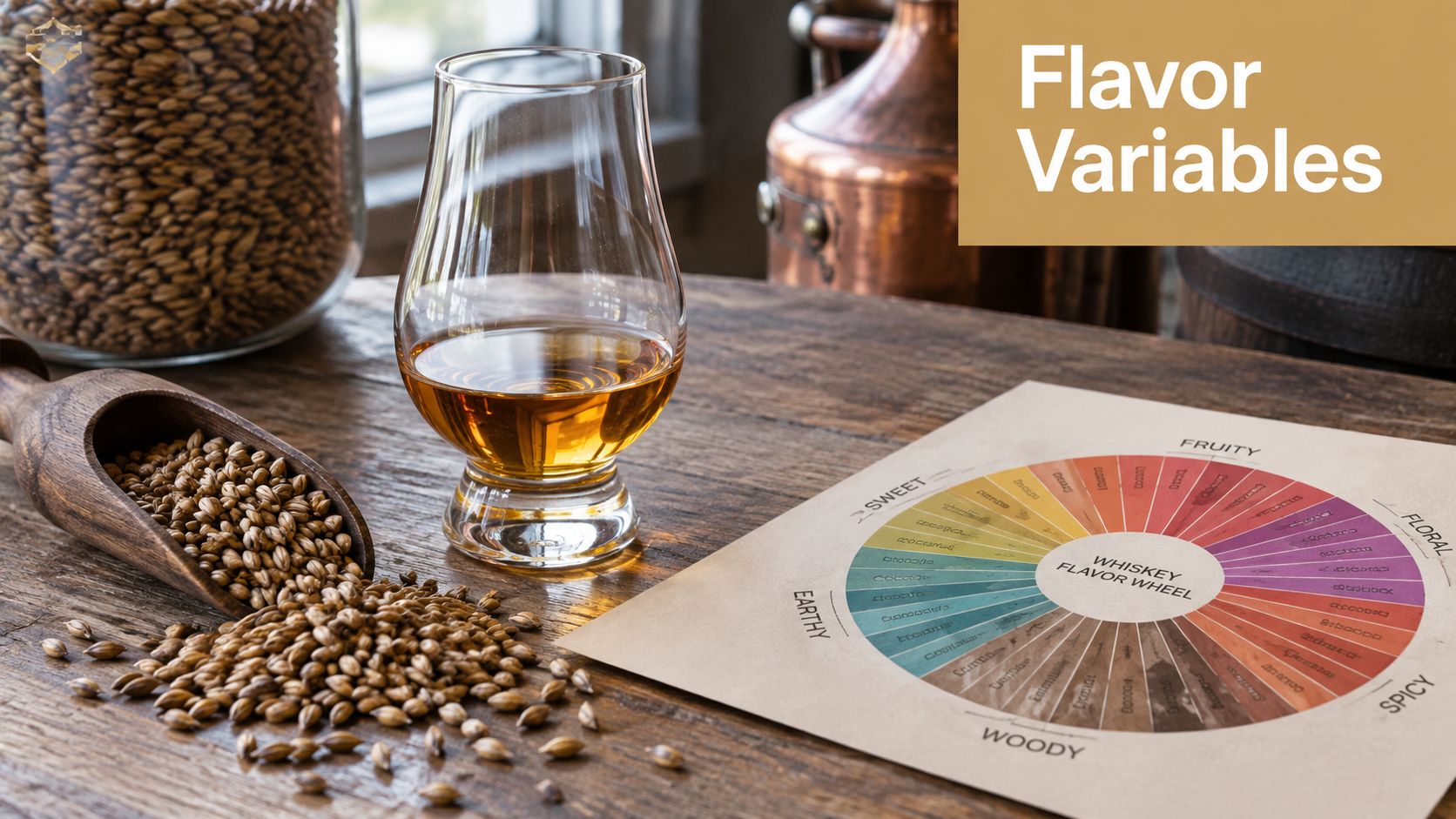
For a useful tasting vocabulary, this guide to whiskey flavor profiles helps turn impressions into observations. Note the nose first, then texture, mid-palate flavor, and finish. Don't force a note because a label suggests it.
Craft Distilleries Redefining American Rye
Large brands still dominate shelf visibility, but craft distilleries often make the most revealing comparisons. Their releases may vary by batch, grain source, barrel environment, or local production decisions, so they can show how much room exists inside the legal definition of rye whiskey.
Frey Ranch is a particularly useful name for drinkers interested in estate-grain identity. Southern Star brings another perspective to the American craft conversation, while Wigle connects rye with regional heritage and experimentation. 291 Distillery, Hotaling & Co., and Black Button also appear in editorial craft rye recommendations, giving curious drinkers a broader map than the usual handful of national labels.
What blind tasting reveals
Brand recognition changes expectations before the whiskey reaches your palate. A familiar label can make oak seem more refined, a high price can make heat seem more meaningful, and an unfamiliar bottle can be dismissed before its finish develops.
Blind tasting removes that shortcut. It doesn't make your judgment perfectly objective, but it forces you to describe what's present: mint, dill, fruit, char, grain, vanilla, tannin, sweetness, or alcohol heat. You can then decide whether those traits suit your preferences.
A simple home comparison works well:
- Pour two ryes into identical glasses and label them with letters.
- Taste them first without water, then with a few drops added to each.
- Record aroma, texture, dominant flavor, finish, and whether you'd use the whiskey in a cocktail.
- Reveal the bottles only after you've chosen a favorite.
Blind tasting earns its place because it tests the whiskey, not the story printed on the bottle.
The craft category also rewards patience. A small producer may not have the same distribution as a major brand, and a release may not be identical from one batch to another. That's a trade-off, not a flaw. If you care about repeatability, buy a widely distributed standard. If you care about discovery, craft rye offers more opportunities to find a profile that doesn't resemble the category stereotype.
How Beginners Should Start Their Rye Journey
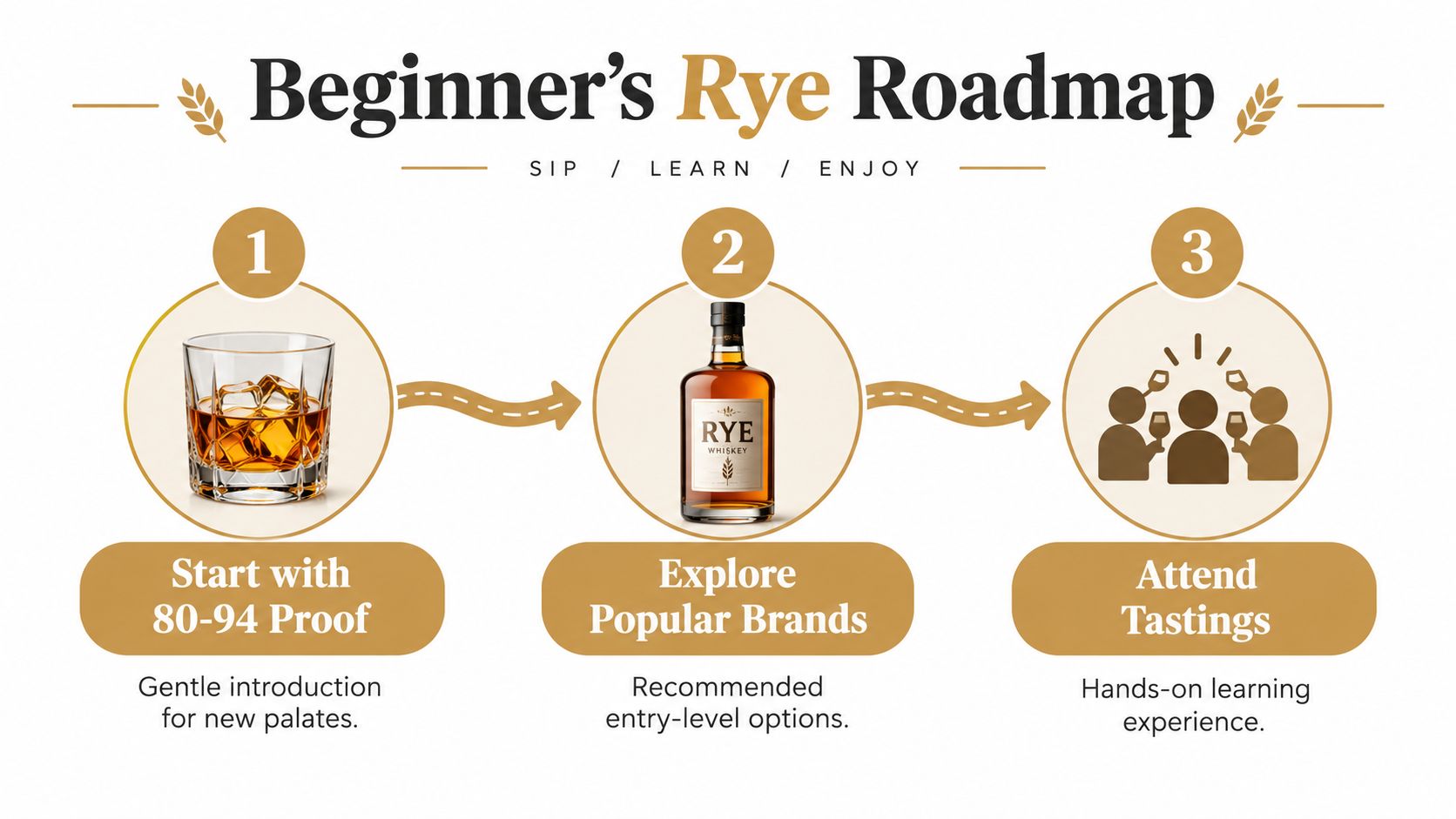
Start gently. Guides for new drinkers commonly recommend the 80 to 94 proof range as a more approachable entry point than barrel-proof whiskey, and this beginner-focused rye guide also recommends using a little water or trying rye in a cocktail before drinking it neat.
A low-pressure starting method
Choose a bottle in that proof range with a clear rye identity but without an extreme age statement or barrel-strength bottling. Pour a small amount into a tulip-shaped glass, rocks glass, or whatever you already own. Proper glassware can help concentrate aroma, but it shouldn't become a barrier to enjoying whiskey.
Taste it in three stages:
- Neat first: Take a small sip and let it coat your mouth. Notice whether the spice feels peppery, minty, grassy, or warm.
- With water next: Add a few drops, swirl, and wait briefly. Water can soften alcohol heat and expose fruit, grain, or oak.
- In a cocktail: Try a Manhattan, Old Fashioned, or Sazerac-style drink. Bitters, vermouth, sugar, and dilution reveal whether the rye has enough structure to hold its place.
Mistakes that slow beginners down
Don't expect rye to taste like bourbon. Bourbon often leads with corn sweetness, while rye can be drier, spicier, more herbal, or more savory. That difference isn't a defect, and it may take several pours before your palate identifies what it enjoys.
Don't judge quality by price alone. Expensive rye can be too oaky, too hot, or too unusual for your taste, while an accessible bottle may deliver exactly what your cocktail needs. Also, don't start with the hottest bottle on the shelf to prove that you're serious. Proof is a tool, not a badge.
Write down the bottle, proof, serving method, and one flavor you noticed. Over time, those notes will tell you more about your preferences than a string of point scores.
Why Blind Tasting Changes Everything About Rye Appreciation
Rye becomes easier to understand when you stop asking whether a bottle is famous and start asking what your palate detects. A blind tasting puts that question first. Without the brand, price, and age statement in view, you're more likely to notice structure, texture, balance, and finish on their own terms.
That approach is especially useful with American craft rye. Smaller producers often make decisions about grain sourcing, barrel selection, proof, and maturation that differ from the formulas used by larger brands. The result may be uneven across releases, but it can also be distinctive. Craft whiskey gives you more chances to encounter an unusual grain profile, a different oak signature, or a style built for sipping rather than just holding up in a cocktail.
Build a tasting that teaches you something
You don't need a bar full of equipment. Use identical glasses, still water, plain crackers, paper, and enough privacy around the bottles that labels don't influence the first impression. Keep the pour sizes modest, and taste from lighter, lower-proof whiskey toward more intense samples.
A useful tasting sheet asks:
- Aroma: What appears before the first sip?
- Texture: Is the whiskey thin, oily, drying, or coating?
- Flavor: Which note leads, grain, fruit, spice, oak, or sweetness?
- Finish: Does the flavor fade cleanly, turn bitter, or remain warm and herbal?
- Use case: Would you sip it neat, add water, or mix it?
This practical guide to blind whiskey tasting offers a framework for making the exercise social as well as analytical. Couples, friends, and whiskey groups can compare notes before revealing the bottles, then discuss why their preferences differed.
Blind Barrels is one option for that format. Its quarterly subscription sends four blind samples from small American craft distilleries, includes a tasting table for aroma, tasting, and finish notes, and uses a QR code to reveal the samples and provide access to full bottles at a discounted price. The kits also include a guessing game for age, proof, and whiskey type, turning tasting into a repeatable way to test and develop your palate.
The lasting benefit isn't memorizing labels. It's learning that you prefer a dry, minty rye to a heavily oaked one, or that a high-proof pour becomes excellent after dilution. Once you know those preferences, your next purchase becomes a considered choice rather than a reaction to scarcity or hype.
Blind Barrels delivers quarterly blind whiskey tasting kits with four high-end samples from small American craft distilleries, tasting guidance, reveal details, and a palate-scoring game. Visit Blind Barrels to explore a structured way to taste craft rye without brand and price bias.