

Fireball Cinnamon Whisky is a Canadian whisky-based flavored spirit bottled at 33% ABV, or 66 proof. Its cinnamon-sweet profile makes it feel softer and easier to mix than many standard whiskies.
You may have met it in a crowded bar, where someone orders a round of bright red shots, or in a liquor store while trying to choose a first whiskey. The label says whisky, but the flavor doesn't resemble a traditional, unflavored bourbon or rye. That difference creates the central question behind what is Fireball: is it whiskey, a liqueur, a schnapps-style spirit, or something else?
The most useful answer is that Fireball is a flavored spirit built on a Canadian whisky base. It belongs in the whiskey conversation, but it isn't meant to deliver the same tasting experience as a straight, unflavored whiskey. Understanding that distinction makes Fireball a useful starting point for learning about proof, sweetness, aroma, and eventually the more layered profiles of American craft whiskey.
The Origins and Rise of Cinnamon Whisky
A first encounter often happens at a bar. One person orders a familiar whiskey neat, another asks for a cinnamon shot, and Fireball arrives as the unmistakable middle ground. It has a whisky foundation, but its identity comes from cinnamon sweetness and a deliberately approachable drinking style.
Fireball originated in Canada in the mid-1980s, as part of a flavored schnapps line developed by Seagram. Sazerac acquired the brand rights in 1989, and the product later took on its modern name, Fireball Cinnamon Whisky, in 2007. That rebrand gave the spirit a clearer identity and helped launch the marketing approach associated with its later U.S. expansion. The historical account is documented in this overview of Fireball's origins and growth.
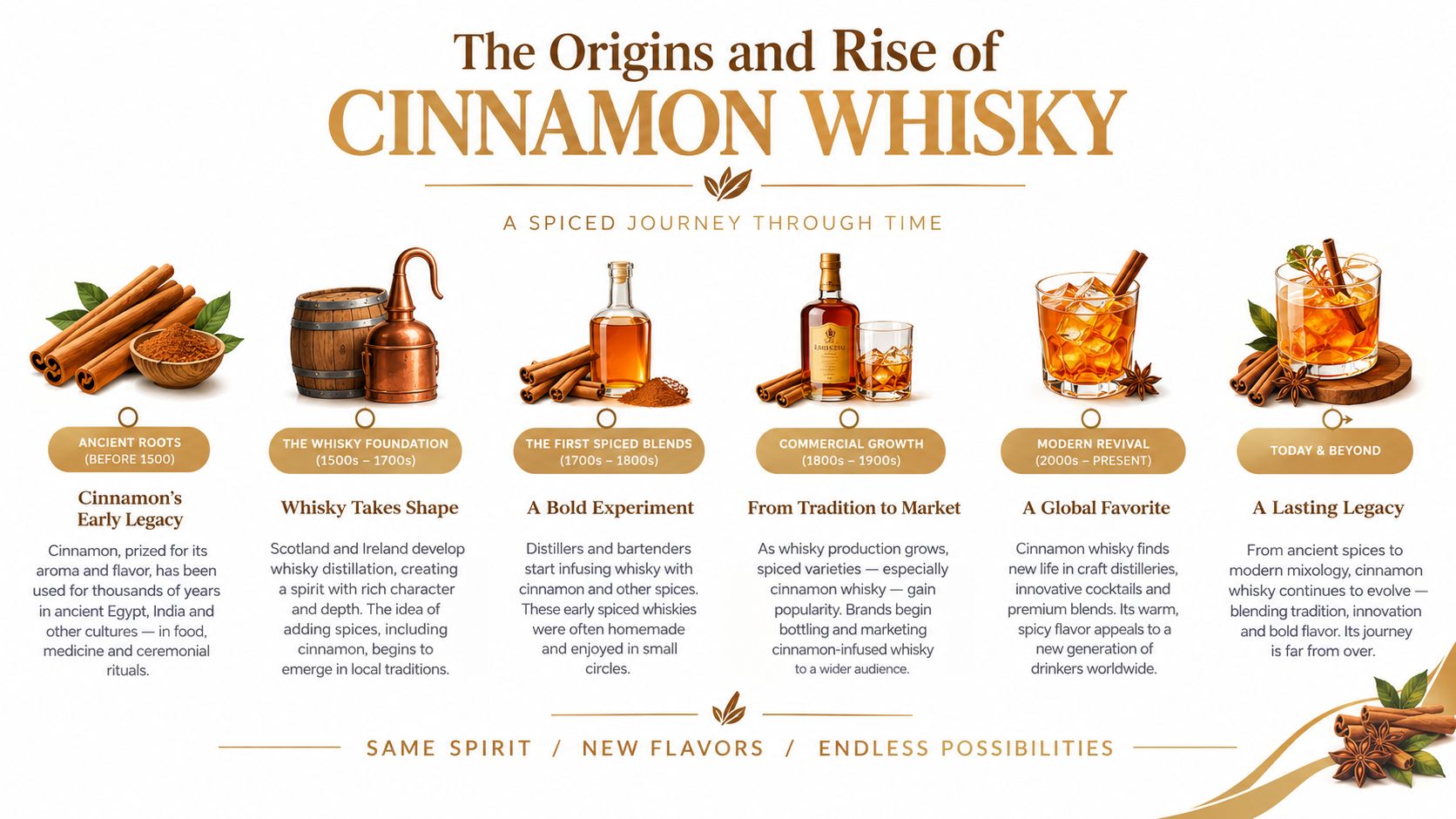
From flavored schnapps to a bar staple
The important category lesson is simple. Traditional whiskey gets much of its character from fermented grain, distillation, wood aging, and the choices made by a distiller. Fireball adds a strong flavor direction on top of its whisky base, so cinnamon becomes the first thing most drinkers notice.
That formula helped it reach people who might find a standard whiskey too hot, dry, smoky, or oak-driven. It also made the product easy to recognize in a busy bar. A beginner doesn't need to identify a specific grain or barrel note to understand the experience. The cinnamon arrives immediately.
Its U.S. rise was unusually rapid. Independent coverage records sales increasing from $1.9 million in 2011 to $863.5 million in 2014, showing how quickly Fireball moved from a niche flavored spirit into a mainstream whiskey-adjacent brand. VinePair's Fireball guide provides that sales history and broader brand context.
For readers interested in how cinnamon-flavored whiskey fits into the wider category, this guide to cinnamon-flavored whiskey offers useful background. Fireball's success doesn't make it a traditional craft whiskey, but it does make it an effective entry point for asking better questions about what sits in the glass.
Understanding Proof and the Taste Profile
Proof tells you how much alcohol a spirit contains, while flavor determines how that alcohol feels. Fireball is bottled at 66 proof, equal to 33% ABV, as confirmed by the brand's official FAQ. Standard whiskies are commonly bottled at 40% ABV or higher, so Fireball contains materially less ethanol than those traditional pours.
That difference matters on the palate. Ethanol contributes heat and burn, especially when a drinker takes a larger sip or isn't accustomed to spirits. A lower concentration generally creates less perceived burn, giving the cinnamon and sweetness more room to lead the experience.
Why the sweetness feels smooth
Fireball's cinnamon-sweet profile increases its apparent smoothness. That doesn't mean the alcohol has disappeared. It means the sweetness and flavoring compete with the sharper sensations associated with ethanol, making the spirit feel more accessible to many beginners.
The result works particularly well in shots and highball-style serves. In a shot, the concentrated cinnamon character arrives quickly. In a taller mixed drink, the flavor remains noticeable while the other ingredients stretch the drink and change its balance. You can explore broader explanations of proof through this plain-language guide to proof in whiskey.
Practical rule: Lower proof can make a spirit easier to approach, but “smooth” doesn't mean alcohol-free. Taste slowly and keep track of how much you're drinking.
Fireball compared with standard whiskey
A standard unflavored whiskey may show grain, vanilla, caramel, oak, pepper, fruit, or smoke. Fireball's cinnamon-sweet profile tends to dominate those underlying distinctions. That's not a flaw. It's a design choice aimed at creating a consistent, immediately recognizable flavor.
Readers who want additional drink-category vocabulary can browse the liquor tag on Pep Tea, which provides a broader resource for understanding spirits and mixed drinks. The key takeaway is that Fireball's lower proof and strong flavor work together. One reduces the alcohol bite, while the other supplies a clear, sweet identity.
Separating Ingredient Facts from Fiction
Fireball's ingredient history has been distorted online, especially through the long-lived “antifreeze” rumor. The accurate explanation requires separating a historical European compliance issue from claims about contamination or a U.S. health recall.
Coverage of the 2014 Nordic recall describes a problem involving propylene glycol levels in a North American formula shipped to Europe. The concern centered on whether that formulation complied with local rules. It wasn't a U.S. health recall, and the event doesn't support the sensational claim that Fireball was contaminated with antifreeze. ABC News' report on the European recall provides the relevant regulatory context.
Why the rumor keeps returning
Propylene glycol is a compound that has appeared in discussions about flavor formulations, and the word “antifreeze” creates an alarming association. But a chemical name alone doesn't tell you whether a particular product is safe, legal, or present at a regulated level. Formula, concentration, labeling, and jurisdiction all matter.
The Nordic episode also illustrates why readers shouldn't treat every bottle sold under the same brand name as identical in every market. Beverage rules differ by country, and labels may reflect local requirements. A historical recall involving a specific shipment doesn't automatically describe the current product everywhere.
A better way to read safety claims
Before accepting a viral claim, ask three questions:
- What product and formula did the report describe? A North American formula shipped to Europe isn't automatically the same as every current bottle.
- What action did regulators take? A regional compliance recall isn't the same thing as a U.S. health recall.
- What does the current label say? Ingredient and labeling rules can vary by jurisdiction, so check the bottle available where you live.
For a broader foundation, this explanation of what whiskey is made from helps distinguish the base spirit from added flavor components. The responsible answer to “Is Fireball antifreeze?” is no, not in the simplistic sense suggested by the rumor. The responsible answer to questions about current ingredients is to consult the product label and local regulatory information rather than rely on recycled social media claims.
Essential Tasting Mechanics for Beginners
Fireball can serve as a gentle training glass because its cinnamon character is easy to recognize and its lower proof is less intimidating than a hotter whiskey. Beginners still benefit from tasting it with attention instead of treating the pour as something to swallow without observation.
Start with a modest 25 to 35 ml sample, a range recommended in practical whisky tasting guidance from Whisky Centurion. Use a tulip-shaped glass if you have one, though any clean glass will work. You don't need expensive equipment. You need enough space to smell the spirit without placing your nose directly into the alcohol.
Five simple steps
- Look first. Observe the color and how the liquid moves around the glass. Fireball's appearance won't reveal every flavor, but visual attention slows the tasting down and gives you a starting point.
- Swirl gently. A small movement can release aromas, but aggressive swirling may push alcohol vapors toward your nose. Keep the motion controlled.
- Smell in short sniffs. Whisky guides recommend short sniffs rather than burying your nose in the glass. Try smelling with your mouth slightly open, then identify the most obvious notes. With Fireball, cinnamon and sweetness will likely arrive before subtler impressions.
- Sip small. Let a small amount coat your palate rather than taking a large mouthful. Notice the order of sensations: sweetness, cinnamon heat, alcohol warmth, and the way the flavor fades.
- Evaluate the finish. Ask how long the cinnamon and sweetness remain. A short finish, a warming finish, or a lingering sweet finish can all be useful observations.
Use water as a learning tool
If the spirit feels sharp, add water one drop at a time. That approach preserves the original tasting experience and lets you notice whether the aroma opens or the palate becomes softer. Don't add so much that you lose the character you're trying to understand.
Beginner advice often favors lower-proof whiskey first and recommends tasting before drinking more, while cautioning against starting with strongly flavored or smoky pours that can overwhelm the palate. Montana Whiskey Co.’s tips for new whiskey drinkers supports that gradual approach.
The best first tasting isn't a performance. It's a repeatable way to notice what your senses are telling you.
Stepping Up to American Craft Whiskey
Fireball offers clarity, but its clarity comes from a powerful cinnamon identity. Small-batch American craft whiskey usually asks you to look in more than one direction at once. You might notice grain sweetness, toasted wood, vanilla, dried fruit, pepper, herbal notes, or a long finish shaped by the barrel.
That contrast makes Fireball useful as a reference point. Taste it, then try an unflavored bourbon or rye and ask which sensations came from the spirit itself. With Fireball, cinnamon and sweetness lead. With craft whiskey, the distiller's grain choices, fermentation, distillation, barrel selection, aging, and possible barrel finishing create a more layered profile.
Engineered flavor and authentic variation
“Engineered” doesn't have to mean inferior. It means the producer has designed the flavor experience to be direct and consistent. That approach suits shots, casual mixed drinks, and drinkers who want a recognizable cinnamon profile every time.
Craft producers often pursue a different goal. They may highlight regional grain, distinctive yeast behavior, pot still or column distillation choices, maturation conditions, and individual barrel character. The result can be less immediately obvious than Fireball, but it rewards patience. A sip may change as it warms in the glass or as you revisit it with water.
A simple comparison helps:
| Fireball | American craft whiskey |
|---|---|
| Cinnamon-sweet flavor leads | Grain and barrel character lead |
| Lower-proof, flavored spirit | Often unflavored whiskey with its own production identity |
| Designed for quick recognition and mixing | Designed for sipping and sensory exploration |
| Consistent profile is central | Batch and barrel variation can be part of the appeal |
Try a craft bourbon beside a craft rye rather than assuming all American whiskey tastes alike. Bourbon may emphasize sweet grain and oak, while rye can bring pepper and spice. The point isn't to declare a winner. It's to discover whether you prefer a bold flavor accent or the evolving character of an unadulterated whiskey.
Training Your Palate Without Brand Bias
A label can influence a tasting before the liquid reaches your tongue. A familiar brand may create expectations, while a high price can make a drinker search for flavors that aren't present. Blind tasting removes those signals and gives your senses a cleaner assignment.
The method is straightforward. Pour several samples into identical glasses, cover or remove the labels, and taste them in a calm setting. Write down aroma, palate, finish, perceived sweetness, heat, and texture before revealing what you drank.
Turn tasting into a useful game
A blind tasting becomes more educational when you make predictions first. You might guess which sample has the highest proof, which is bourbon or rye, or which seems older. Don't treat the guesses as a test of intelligence. They're a way to compare your first impression with the facts revealed later.
Use a simple table:
| Before the reveal | After the reveal |
|---|---|
| Aroma notes | Actual whiskey type |
| Perceived heat | Actual proof |
| Sweetness and texture | Distillery and bottle information |
| Finish length | Age or maturation details, when provided |
Fireball can remain part of the exercise as a recognizable flavored baseline, but it shouldn't be the only reference point. Place it beside unflavored American craft pours and notice whether the cinnamon profile helps you identify intensity or takes over your attention.
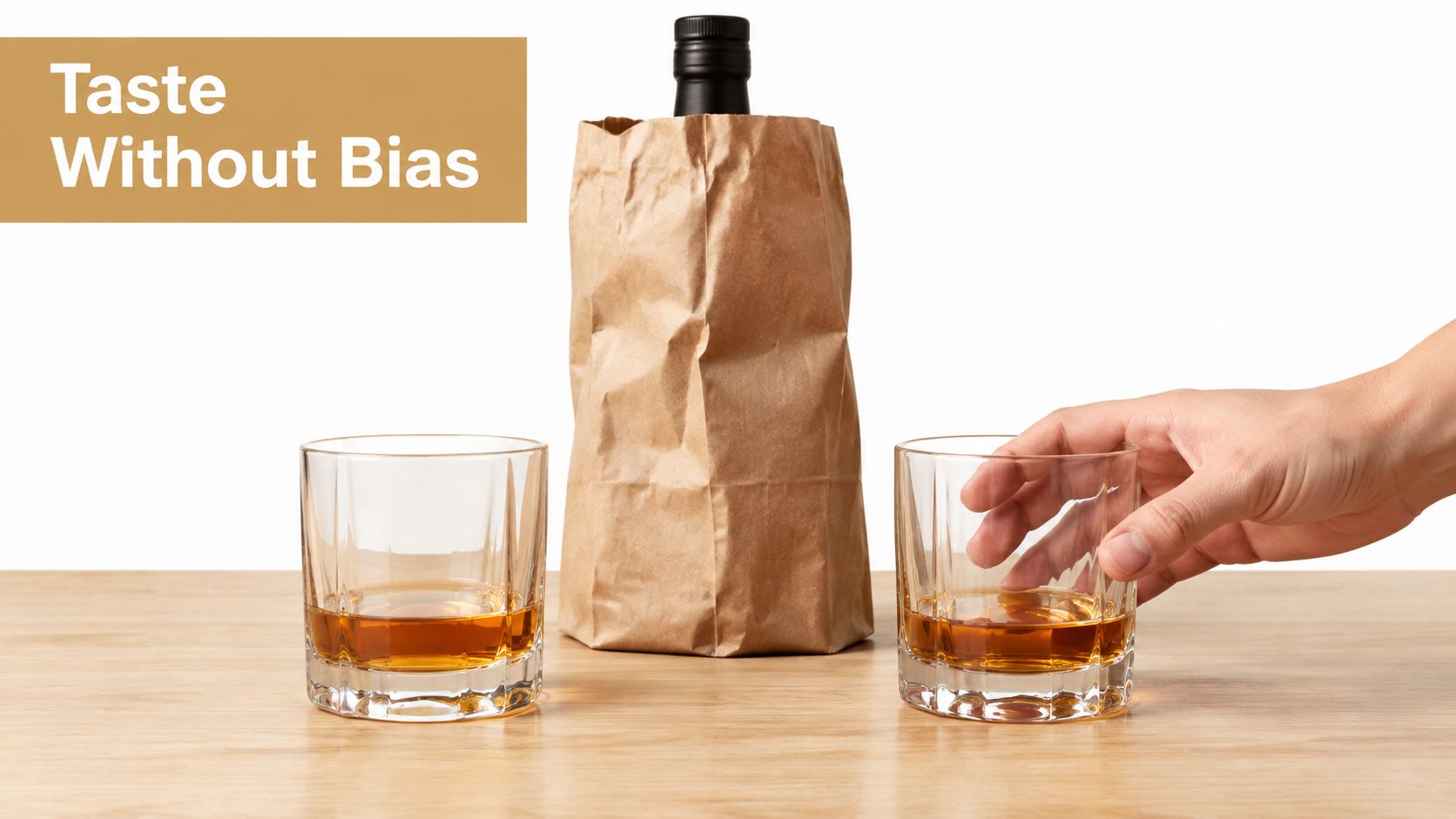
The most valuable result is personal. You may learn that you prefer rye spice, a sweet bourbon profile, a softer lower-proof pour, or a whiskey with a long oak finish. Those preferences matter more than repeating someone else's ranking.
Blind tasting also works well with a partner or small group. Compare notes before discussing answers, then revisit each glass after the reveal. Over time, that practice can turn a casual Fireball drinker into a more confident whiskey enthusiast who understands both flavored spirits and the craft behind unadulterated American whiskey.
Blind Barrels makes that next step approachable with quarterly blind tasting kits featuring four samples from small American craft distilleries, a tasting table for aroma, palate, and finish notes, and a game that lets you guess age, proof, and whiskey type. Visit Blind Barrels to turn your curiosity about Fireball and craft whiskey into a guided tasting experience you can share.