

Here’s the simple truth: all bourbon is whiskey, but not all whiskey is bourbon.
Think of it like Champagne. Champagne is a specific type of sparkling wine that has to come from a particular region in France and follow a strict set of rules. Bourbon is the same way—it's a legally protected style of American whiskey, defined by its own non-negotiable standards. Getting this one concept down is your first real step into a much bigger world of flavor.
Bourbon vs. Whiskey: The Fundamental Rules
The whiskey world can feel a little complicated at first, but the line between bourbon and the rest of the whiskey category is drawn by a few key legal requirements. While "whiskey" is just a broad term for any spirit distilled from fermented grain and aged in wooden barrels, bourbon wears the title of "America's Native Spirit" for a reason. These regulations are in place to guarantee a consistent foundation of quality and flavor that truly sets it apart.
For anyone new to whiskey, these rules are the pillars of your education. They dictate everything from the specific grains in the recipe to the exact type of barrel used for aging. If a distiller breaks even one of these rules, they simply can't call their product bourbon.
This is also what makes exploring the American craft scene so fascinating. Distillers like Westward Whiskey in Oregon or Laws Whiskey House in Colorado build upon these traditions, adding their own regional character while honoring the spirit of the law.
For a whiskey to earn the bourbon label, it must be a "distinctive product of the United States," a designation fiercely protected by federal law. This isn't just a marketing term; it's a guarantee of a specific production process.
Comparing Bourbon and Whiskey
To help lay it all out, let's look at the core differences. The chart below breaks down the legal requirements for bourbon against the much more flexible rules for the general whiskey category.
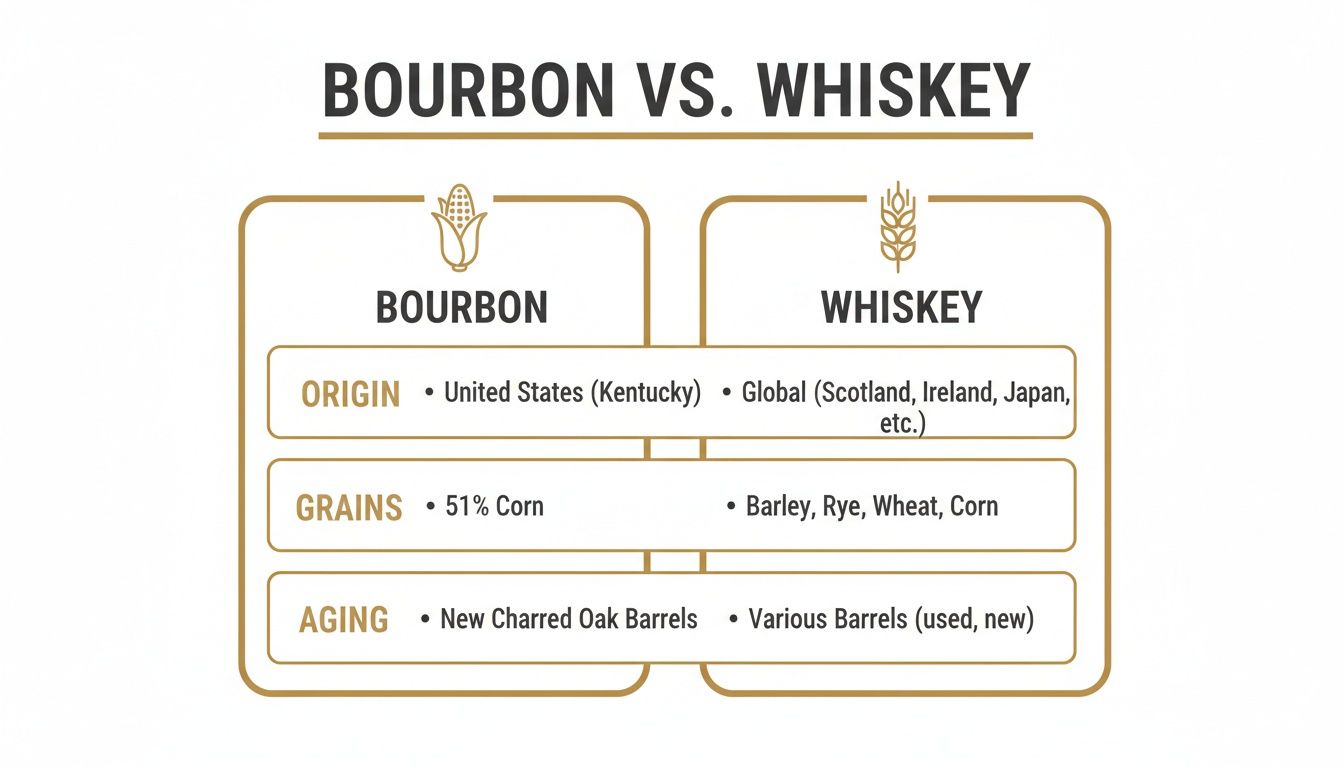
As the graphic shows, bourbon's identity is directly tied to its corn-heavy recipe and the mandatory use of new, charred oak barrels. These two rules are the primary source of its signature sweetness and rich character. To dive deeper into the broader definition, check out our guide that explores what makes a whiskey a whiskey.
Bourbon vs Whiskey At a Glance
Here’s a quick-reference table that boils down the key legal and production differences between bourbon and the wider world of whiskey. It’s a handy way to see just how specific the rules for "America's Native Spirit" really are.
| Requirement | Bourbon (Specific Rules) | Whiskey (General Rules) |
|---|---|---|
| Origin | Must be made in the USA | Produced worldwide |
| Grain Mash Bill | Must be at least 51% corn | Varies (barley, rye, wheat, etc.) |
| Aging Barrels | Must be aged in new, charred oak barrels | Can be aged in new or used barrels |
| Proof Limits | Distilled ≤ 160 proof; Barreled ≤ 125 proof | Rules vary significantly by country and style |
Ultimately, these aren't just arbitrary lines in the sand. They are the guardrails that have shaped bourbon into the iconic, flavorful spirit we know today.
Decoding the Legal Rules of Bourbon Production
If you really want to get to the heart of what separates bourbon from the wider world of whiskey, you have to look at the rulebook. While "whiskey" is a massive category, bourbon is a legally protected spirit. It has a strict, non-negotiable set of laws defining its production from the grain all the way to the glass.
These rules are exactly why it’s officially called "America's Native Spirit." This isn't just about tradition; it's federal law. Each regulation directly shapes the final flavor, creating that consistent foundation of sweetness and oak that bourbon is famous for. If a distiller breaks even one of these rules, they can't legally call their spirit bourbon. It gets a different label, like "American Whiskey."
The Mash Bill Foundation
It all begins with the recipe, known in the whiskey world as the mash bill. The absolute bedrock rule is that a bourbon's mash bill must contain at least 51% corn. This single requirement is the source of bourbon's signature sweetness, immediately setting it apart from spicier rye whiskeys or the malty notes of Scotch.
The other 49% of the mash bill is where distillers get to play and create their own unique flavor profiles. These "secondary" grains usually include rye for a pop of spice, wheat for a softer and sweeter character, or malted barley for those classic nutty, biscuit-like notes. You can dive deeper into how this works in our guide on what defines a bourbon mash bill.
While many world whiskeys offer incredible flexibility in their grain recipes, bourbon's mandatory corn base is the foundation of its identity. This ensures every bourbon shares a common thread of sweetness, making it a fantastic and approachable starting point for new whiskey drinkers.
Distillation and Barreling Proofs
After the mash ferments, it's time for distillation. U.S. law is very clear here: bourbon cannot be distilled to a proof higher than 160 (80% ABV). This lower distillation proof is key because it makes sure more of the flavorful compounds, or congeners, from the fermented mash carry over into the spirit.
Next, the unaged spirit—what distillers affectionately call "white dog"—is ready for the barrel. And you guessed it, there's another strict limit. It must enter the barrel at no higher than 125 proof (62.5% ABV). This rule is crucial for managing the interaction between the spirit and the wood, preventing an aggressive, overly woody flavor from overpowering the whiskey as it ages.
The New Charred Oak Barrel Mandate
Perhaps the most important rule of all for bourbon is how it's aged. Bourbon has to be aged in new, charred oak containers. No exceptions, and no reused barrels allowed. This is a massive point of difference from other whiskeys, like Scotch or Irish, which often use old bourbon barrels or sherry casks to mature their spirits.
This rule is precisely why you see so many used bourbon barrels being shipped off to Scotland, Ireland, and the Caribbean for other distilleries to use. But for bourbon, that fresh char on a brand-new barrel is non-negotiable. It’s responsible for imparting all of the spirit's rich color and a huge portion of its iconic vanilla, caramel, and toffee flavors.
How Production Rules Shape the Flavor Profile
The legal hoops a distiller must jump through to call their spirit "bourbon" aren't just red tape. Think of them as a recipe, a set of direct instructions for creating its signature taste. Every single rule translates into a distinct sensory experience, transforming raw grain into the rich, complex spirit that fills your glass. Getting a handle on this connection is the key to really appreciating what makes bourbon, well, bourbon.
It all kicks off with the mash bill, which legally must be at least 51% corn. Corn is packed with natural sugars, and once fermented and distilled, it creates a spirit that’s inherently sweeter and smoother than one built on barley or rye. This corn-driven sweetness is the backbone of every single bourbon you'll ever taste.
The Magic of New Charred Oak
The second make-or-break flavor component comes from the aging process. The mandate to use brand-new, charred American oak barrels is, without a doubt, the most impactful rule in the book. The moment that raw, clear spirit hits the freshly charred wood, a beautiful transformation begins.
Charring the inside of a barrel isn't just for show; the intense heat caramelizes the natural wood sugars locked in the staves. As the bourbon ages—expanding into the wood in the summer heat and contracting in the winter—it pulls these sugars and other compounds out.
This constant conversation between spirit and new, charred oak is where bourbon gets its classic notes of vanilla, caramel, toffee, and baking spices like cinnamon and nutmeg. Take away this rule, and bourbon as we know it simply wouldn't exist.
A World of Flavor Differences
To really grasp bourbon’s unique profile, it helps to see how it stacks up against other world whiskeys. Each one offers a completely different journey, perfectly showcasing how a few production rules can create a totally unique identity.
- Compared to Scotch: An Islay Scotch often hits you with a blast of peat smoke, iodine, and salty brine—a world away from bourbon's sweetness.
- Compared to Irish Whiskey: Typically triple-distilled and aged in used barrels, Irish whiskey is much lighter and smoother, with crisp notes of green apple and honey.
- Compared to Rye Whiskey: American rye, needing at least 51% rye grain, is bourbon's spicy cousin. It delivers a bold, peppery kick with hints of mint and dill that stands in sharp contrast to bourbon’s rounded character.
Tips for New Whiskey Drinkers
If you're just starting out, picking out all these flavors can feel a little intimidating. Here’s a simple tip: don't rush it.
Pour a small amount and just let it sit for a minute. Gently nose the glass and try to find one familiar scent. Does it smell sweet like caramel corn? A little spicy like cinnamon? Then, take a tiny sip and let it coat your tongue. Focus first on that initial sweetness from the corn before you go searching for the vanilla and oak that pop up on the finish. Learning to taste is a skill, and every glass is a chance to practice and figure out what you truly enjoy.
Bourbon's Boom and the Rise of American Craft Whiskey
When people ask about the difference between bourbon and whiskey, the conversation usually sticks to production rules and flavor profiles. But there's another major factor at play: bourbon's absolute cultural and economic dominance in the American spirits market. This isn't just a drink; it's a booming industry that has, in turn, fueled an incredible wave of craft distillers.
The numbers don't lie. By 2021, American whiskey sales had climbed to 29.7 million cases, pulling in a massive $4.6 billion in revenue. What’s even more telling is the thirst for quality. The super-premium category exploded by a staggering 137% in just five years, proving that drinkers are actively seeking out high-quality, flavorful spirits. You can dig deeper into these numbers with revenue insights from the Distilled Spirits Council.
The Craft Whiskey Revolution
This surge in popularity has opened the door for a new generation of American distillers. While the legacy producers in Kentucky still largely define the category, craft distilleries are popping up everywhere from Nevada to Texas, bringing fresh eyes to traditional bourbon making. They aren't just making copies; they're innovating within bourbon’s legal framework.
These smaller producers are all about unique grains, local terroir, and hands-on methods that the big guys simply can't replicate.
- Take Frey Ranch Distillery in Nevada. They're a true "farm-to-glass" operation, growing every grain for their mash bills on their own land. That gives them an incredible level of control over the final product and creates a bourbon with a genuine sense of place.
- Then there's New Riff Distilling in Kentucky. While in bourbon's heartland, they operate with a craft mindset, focusing on Bottled-in-Bond expressions and unique mash bills that push the boundaries of tradition.
The rise of American craft whiskey gives drinkers more choice than ever before. It proves that while the rules of bourbon are rigid, the possibilities for flavor are nearly endless, driven by passionate distillers who are redefining what America’s Native Spirit can be.
Finding Your Next Favorite Craft Bourbon
For someone new to whiskey, this ever-expanding world can feel a little overwhelming. How do you find these hidden gems when the shelves are crowded with big-name brands and their massive marketing budgets? The answer is simple: trust your palate, not the label.
This is exactly where a blind tasting comes in. When you remove all the preconceived notions tied to brand recognition, price, or even bottle design, you let your senses be the only judge. A blind tasting is the perfect tool for discovering those high-quality, lesser-known producers you might otherwise walk right past. It puts a small, innovative distillery like Frey Ranch on a level playing field with an industry giant.
This approach is, without a doubt, the fastest way to learn what you genuinely enjoy. It forces you to focus purely on the aroma, taste, and finish in the glass. It helps you pinpoint the specific characteristics—be it sweet corn, spicy rye, or soft wheat—that you really prefer. In a market this full of incredible variety, letting your taste buds lead the way is the most authentic path to finding your perfect pour.
How to Conduct a Blind Whiskey Tasting at Home
The single best way to really grasp the difference between bourbon and whiskey is to taste them side-by-side, free of any brand bias. Running a blind tasting at home is a fun, eye-opening experience that strips away all the marketing and fancy labels, forcing you to focus on what’s actually in the glass. Honestly, it’s the quickest way to sharpen your palate and figure out what you truly enjoy.
Setting one up is incredibly simple. All you need are a few different whiskeys, identical glasses for each pour, and some good company if you want to make an evening of it. Just be sure to label the bottom of each glass with a number or letter before you pour so you can keep everything straight.
Preparing Your Whiskey Flight
For a classic comparison that really drills down on the core differences, I recommend picking three distinct styles. This kind of lineup gives your palate a broad range of flavors to explore and contrast.
- A Classic Bourbon: Start with a reliable, corn-forward bourbon. This will serve as your baseline for sweetness, full of those hallmark caramel and vanilla notes. A great American craft option here would be something from Still Austin in Texas.
- A Spicy Rye Whiskey: Next, pour a rye. This will give you a sharp, peppery contrast to the bourbon’s softer, rounder profile. Look for a bottle from Sagamore Spirit out of Maryland for a fantastic craft example.
- An American Single Malt: For a third choice, find an American Single Malt from a distillery like Westland in Seattle. This introduces a completely different flavor profile rooted in barley, showcasing the incredible diversity within American craft whiskey itself.
Pour just a small amount—about a half-ounce to an ounce—of each into its designated glass. For the full experience, have someone else pour them so you’re tasting completely blind, too.
Evaluating Like a Pro Step-by-Step
Once your flight is ready, it's time to put your senses to work. Follow this simple four-step process for each sample, taking your time to jot down impressions before moving on to the next.
- Appearance: First, hold the glass up to the light. What color do you see? Is it light gold, deep amber, or a rich mahogany? Give the whiskey a gentle swirl and watch the "legs" that run down the side of the glass.
- Nose (Aroma): Bring the glass to your nose and inhale gently with your mouth slightly open. What do you smell? Can you pick up the sweet corn from the bourbon? The bold spice from the rye?
- Palate (Taste): Take a small sip and let it coat your entire tongue. Is it sweet, spicy, smoky, or fruity? Try to nail down specific flavors, like vanilla, black pepper, or dark chocolate.
- Finish: After you swallow, pay attention to the lingering taste. Does it have a long, warming finish or is it short and crisp? Do you notice that peppery spice from the rye sticking around?
A blind tasting isn't about getting it "right." It's about training your palate to identify specific notes and, most importantly, discovering your personal preferences without the influence of a famous label.
For a more guided experience, you can always explore tools designed just for this. Our guide on using a blind whiskey tasting kit offers even more tips to elevate your home tasting. This is, without a doubt, the ultimate way to learn firsthand what makes each style so unique.
Exploring the Geography of American Whiskey
It’s one of the most common bits of whiskey trivia you’ll hear: bourbon has to be made in Kentucky. Except, that’s not quite true. While bourbon can legally be produced anywhere in the United States, this myth took hold for a very good reason. Kentucky is, without a doubt, the spiritual home of bourbon.
The state’s history is deeply intertwined with the spirit, but it’s the unique natural resources that really cemented its reputation. Kentucky’s water, naturally filtered through limestone, is famously iron-free—a perfect canvas for fermentation and distillation that helps create bourbon’s clean, crisp character.
This heritage has built a production engine unlike any other. Even without a legal geographic requirement, a staggering 95% of the world's bourbon still comes from the Bluegrass State. The growth has been explosive, with the number of distilleries jumping by 250% in just the last ten years. Projections show that by 2025, Kentucky will be aging 16.1 million barrels of bourbon. That’s more than three barrels for every person living there. You can learn more about Kentucky's massive bourbon industry impact to see the full picture.
The American Craft Whiskey Map
For all of Kentucky's dominance, the American whiskey map is getting a lot more interesting. A vibrant craft distilling movement is spreading across the country, with incredible producers putting their own regional stamp on bourbon and American whiskey.
The sheer scale of Kentucky's aging barrel inventory creates opportunities for smaller, creative producers in other states. They can offer distinct craft whiskeys that stand out by focusing on local grains and innovative aging techniques.
What does this mean for whiskey drinkers? It means there's a whole world of flavor to discover beyond the traditional Kentucky profile. Distilleries like Wyoming Whiskey in, you guessed it, Wyoming, or Laws Whiskey House in Colorado are making incredible bourbons with their own distinct character. They're living proof that great bourbon knows no state lines.
Exploring these craft distilleries is one of the best ways to understand the full spectrum of what American whiskey can be. It's a chance to taste how local grains, climate, and a distiller's unique vision can shape a spirit.
Common Questions About Bourbon and Whiskey
As you dive deeper into the world of American spirits, a few questions seem to always surface. Let's tackle some of the most common ones to clear up the confusion and help you feel more confident in your whiskey knowledge.
Is Jack Daniel's a Bourbon?
This is probably the most-asked question in the whiskey world. While Jack Daniel's technically checks all the legal boxes for bourbon, the distillery itself insists on the label of Tennessee Whiskey.
The key difference is an extra step they take called the Lincoln County Process. Before the new spirit goes into the barrel, it’s filtered through a deep bed of sugar maple charcoal. This extra step, required by Tennessee law for any spirit labeled "Tennessee Whiskey," is what gives Jack its signature mellow character. So, while it could be called a bourbon, it's more precise to call it what it is: a Tennessee Whiskey.
What Does "Straight Bourbon" Mean?
When you see the word "straight" on a bourbon label, it’s a mark of quality and transparency. It’s a legal guarantee that the whiskey has been aged for at least two years in new, charred oak barrels.
If that bourbon is aged for less than four years, the distiller has to state the age on the bottle. More importantly, nothing can be added to straight bourbon—no coloring, no flavoring, no other spirits. It's the pure, unadulterated expression of the grain, the barrel, and time.
For anyone new to whiskey, this is a fantastic term to look for. "Straight bourbon" is your assurance that you're getting a product that meets a higher standard of both aging and purity. It's a great starting point when exploring craft brands like St. Augustine Distillery or FEW Spirits.
Does Bourbon Have to Be Made in Kentucky?
Absolutely not. This is a classic piece of whiskey mythology. It's true that Kentucky is the historic heartland of bourbon, and an incredible 95% of the world's supply still comes from the Bluegrass State.
But legally, bourbon can be made anywhere in the United States. As long as a producer follows the federal rules—at least 51% corn, new charred oak barrels, specific proof points, etc.—they can proudly call their product bourbon. We're seeing fantastic craft bourbons emerge from all corners of the country, from Balcones in Texas to King's County Distillery in New York, proving great whiskey truly knows no borders.
Ready to put your palate to the test and truly understand the nuances between bourbon and other American whiskeys? The Blind Barrels tasting experience is designed to strip away brand bias and let you focus on what's actually in the glass. Explore our curated selections of top-shelf craft whiskeys and start your own journey of discovery.