

Let's get one thing straight right from the jump: all Scotch and Bourbon are types of whiskey, but they are absolutely not the same thing.
The real difference boils down to four key factors: where it's made, what grains are in the mash, how it's aged, and the kind of barrel it rests in. These aren't just nerdy details for distillers—they're the very soul of the spirit, and the reason a smoky Scotch and a sweet Bourbon deliver such wildly different experiences.
Scotch vs Bourbon Key Differences At A Glance
Stepping into the world of whiskey can feel a little overwhelming at first, but figuring out the core distinctions between the big players is actually pretty simple. Scotch and Bourbon are two giants of the whiskey world, each with a unique identity locked in by strict legal definitions and time-honored traditions.
These rules dictate everything from the mash bill to the maturation process, directly shaping the distinct flavors you discover in the bottle. For anyone new to whiskey, focusing on these foundational differences is the fastest way to map out your own palate. The classic sweetness in most bourbons? That comes from a mash bill high in corn, aged in brand-new, charred oak barrels. It's a profile that many incredible American craft whiskey brands, like Frey Ranch Distillery, have perfected.
This graphic really nails the essential distinctions between Scotch, Bourbon, and the wider whiskey family.
As you can see, geography and grain are the two biggest forks in the road that send these spirits on their separate journeys. To break it down even further, check out the quick comparison table below.
And if you really want to get into the weeds on American spirits, you can learn more about the key differences between Bourbon and whiskey in our detailed guide.
Scotch vs Bourbon vs Whiskey Quick Comparison
This table offers a bird's-eye view of what sets these iconic spirits apart. Think of it as your cheat sheet for your next blind tasting or trip to the liquor store.
| Whiskey Type | Country of Origin | Primary Grain(s) | Aging Requirement | Common Flavor Profile |
|---|---|---|---|---|
| Scotch | Scotland | Malted Barley | Min. 3 years in oak casks | Smoky, peaty, earthy, floral |
| Bourbon | United States | Min. 51% Corn | Min. 2 years in new, charred oak for "Straight" | Sweet, vanilla, caramel, oak |
| Irish Whiskey | Ireland | Malted & Unmalted Barley | Min. 3 years in wooden casks | Smooth, light, vanilla, fruity |
| Rye Whiskey | United States/Canada | Min. 51% Rye (U.S.) | Min. 2 years in new, charred oak for "Straight" | Spicy, peppery, herbal, bold |
From the smoky peat of a Scotch to the spicy bite of a Rye, it’s clear that while they all fall under the "whiskey" umbrella, each style has carved out its own unmistakable identity.
So, What Exactly Is Whiskey?
Before we can really get into what makes a glass of Scotch so different from a Bourbon, we need to zoom out a bit. At its most basic, whiskey is a distilled alcoholic beverage made from a fermented mash of grain. That's the simple starting point for an unbelievably diverse family of spirits you can find all over the globe.
The whole process is a beautiful mix of agriculture and artistry. It all kicks off with grains—barley, corn, rye, wheat, you name it. These get milled and cooked to break down starches into sugars. Yeast gets added, fermentation begins, and what you end up with is a simple, beer-like liquid often called a "wash." Distill that wash, and you concentrate the alcohol while capturing all those essential grain flavors.
But the real transformation, the thing that turns a raw spirit into the whiskey we know and love, happens next.
The Crucial Role of Wood and Time
Right after distillation, this clear liquid—sometimes called "new make" or "white dog"—has none of the rich color or deep character we associate with whiskey. That all comes from years spent aging inside wooden barrels, almost always oak.
Every single detail of this aging process shapes the final dram. We're talking about the type of oak, where it grew, whether the barrel is brand new or has held other spirits before, and even the climate of the warehouse it’s stored in. For a deeper dive into these fundamentals, our guide on what makes a whiskey a whiskey breaks down these steps in much more detail.
For anyone new to whiskey, just remember this: the barrel is as much an ingredient as the grain itself. A new, charred oak barrel will give you those big, bold notes of vanilla and caramel. A used barrel, on the other hand, lends much more subtle and nuanced flavors.
This dance between spirit and wood is where the magic happens, creating the vast spectrum of profiles we get to explore. You see this mastery at work with American craft producers, like the distillers at Westward Whiskey in Oregon, who expertly fine-tune these variables to create distinctive single malts that are a world away from their Scottish cousins.
From Japanese single malts and Irish pot still to Canadian rye, every style follows this basic blueprint. But each one introduces its own strict rules about grains, distillation, and aging. It’s these regional fingerprints that give us such an incredible breadth of flavor—and they’re exactly what make the difference between Scotch and Bourbon so profound.
The Story and Rules of Scotch Whisky
Scotch whisky is more than just a spirit—it's a national treasure, woven so deeply into Scotland's identity that its production is fiercely protected by law. For a bottle to earn the name "Scotch," the whisky must be distilled and matured entirely within Scotland for at least three years in oak casks. That’s not a friendly suggestion; it’s a legal mandate that guarantees every bottle meets a baseline of quality and heritage.
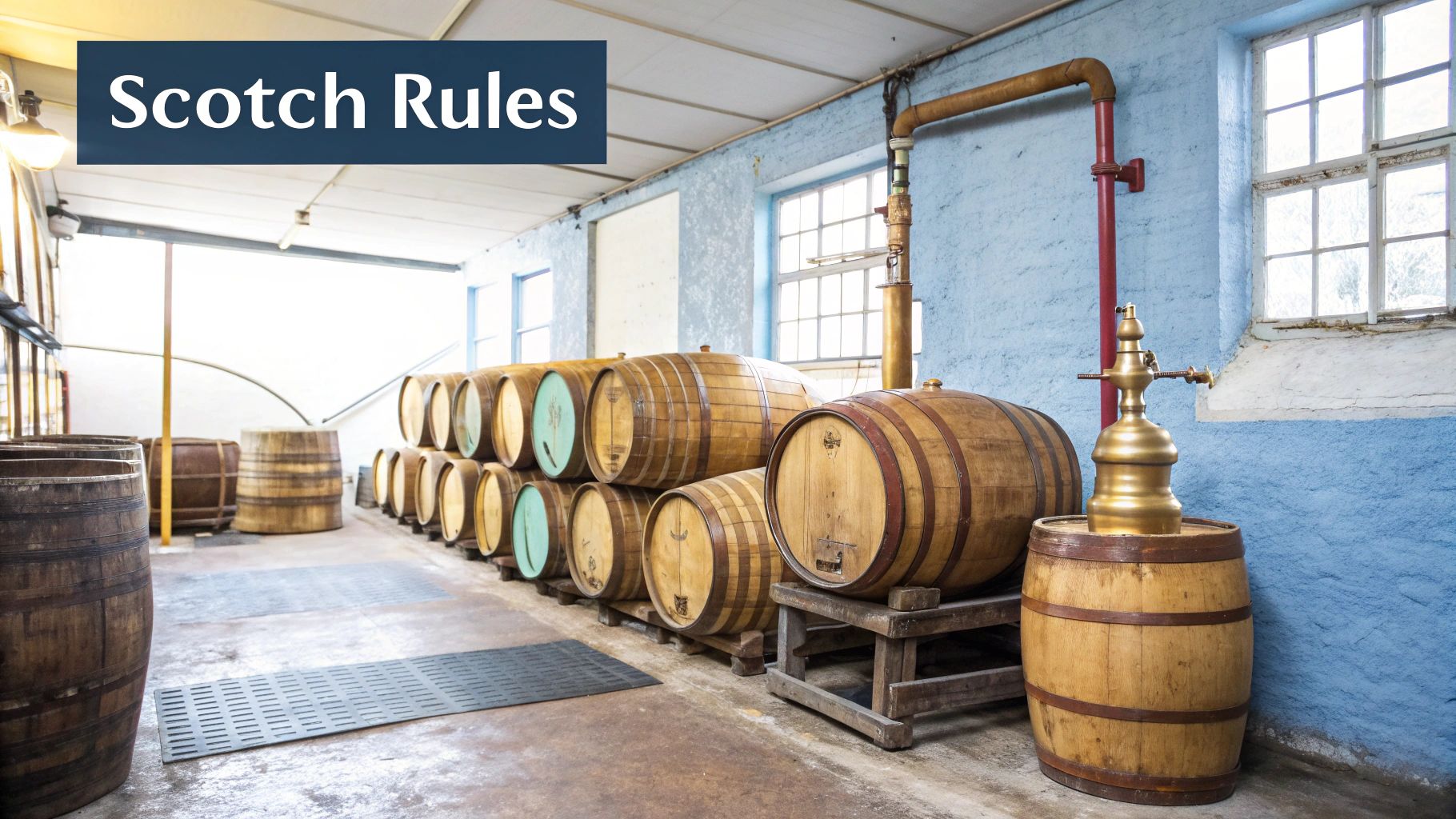
The heart and soul of most Scotch is malted barley, a grain that gives distillers a rich, complex canvas to work with. But what about that iconic smoky, earthy, and sometimes medicinal character many people associate with Scotch? That comes from peat. During the malting process, some distilleries dry their barley over fires fueled by this dense local turf, infusing the grain with those signature phenolic compounds.
Decoding Scotch Labels and Regions
Walking down the Scotch aisle can be intimidating, but understanding a few key terms on the label will tell you exactly what’s inside the bottle.
- Single Malt Scotch Whisky: This means the whisky comes from just one distillery ("single") and is made from 100% malted barley ("malt"). It doesn't mean it's from a single barrel.
- Single Grain Scotch Whisky: Also from a single distillery, but this style can be made from malted barley mixed with other grains like wheat or corn.
- Blended Scotch Whisky: This is a combination of one or more single malts with one or more single grains. It’s the most common type of Scotch sold around the world.
For a new whiskey drinker, the distinction between a smoky Islay single malt and a lighter Speyside blend is night and day. Don't be afraid to ask for a recommendation at a good bar; starting with a more approachable, unpeated expression can be a great entry point.
These categories create an incredible spectrum of flavors, which are further defined by Scotland’s distinct whisky-producing regions. The heavily peated and maritime drams from Islay are a world away from the delicate, fruity malts of Speyside—geography plays a huge role in how a Scotch tastes.
The Global Scale of Scotch Production
The classic image of a tiny, rustic distillery doesn't quite capture the massive scale of modern Scotch production. The Scottish whisky industry is a global powerhouse with over 125 distilleries and a mind-boggling annual distillation capacity.
That capacity keeps growing, driven by the spirit’s unwavering international appeal. In 2024, Scotch exports hit about £5.4 billion, with roughly 1.4 billion bottles shipped to markets across the globe, cementing its status as a premier global spirit. If you're curious, you can discover more about the scale of modern Scotch whisky and see how distilleries are expanding to meet demand.
This impressive output means that whether you're enjoying a dram in Tokyo or Topeka, you're tasting a spirit crafted under some of the strictest production laws anywhere. Every sip tells a story of Scottish terroir, time-honored tradition, and meticulous craftsmanship.
Understanding Bourbon: America's Native Spirit
While Scotch is a product of Scottish law and tradition, Bourbon is unequivocally American. It's not just whiskey made in the USA; it's legally designated as a "distinctive product of the United States." This comes with its own strict, non-negotiable set of rules that give Bourbon its unique character and separate it from every other whiskey on the planet.
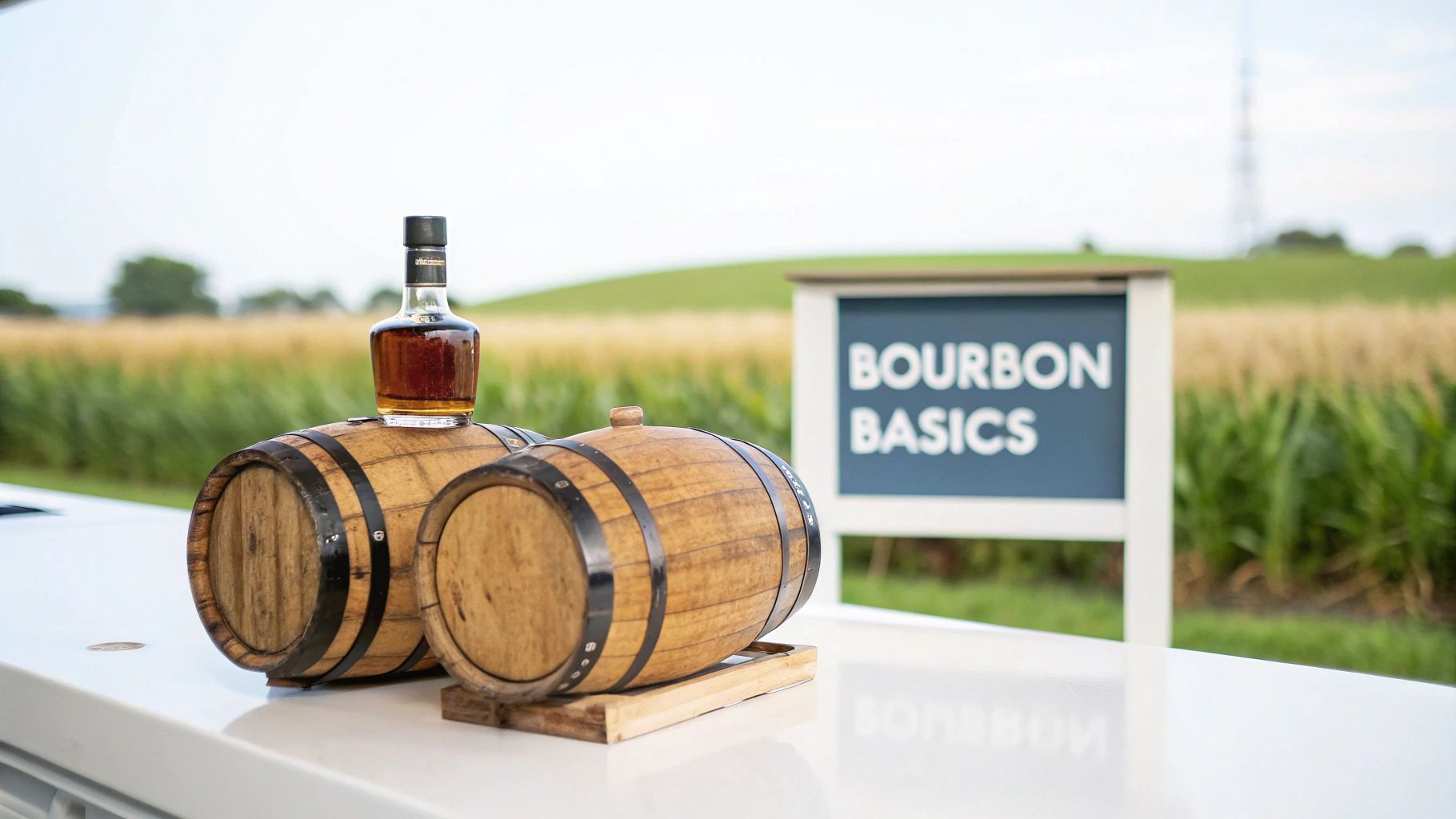
At its heart, Bourbon is a corn-driven whiskey. The mash bill—the grain recipe—must contain at least 51% corn. This high corn content is the foundation of Bourbon’s signature sweetness, laying down those classic notes of caramel, vanilla, and honey. The rest of the grains, typically rye, wheat, or malted barley, are known as "flavoring grains" and are used to add layers of spice or a softer, bread-like quality.
This fundamental reliance on corn creates a stark contrast with the malted barley of Scotch, making the two spirits pretty easy to tell apart, even for a newcomer.
The Power of New Charred Oak
If there's one rule that truly defines Bourbon's flavor, it's the aging requirement. Bourbon must be aged in new, charred oak barrels. This is a huge departure from Scotch, which often uses barrels that have previously held sherry, port, or even Bourbon itself. For American distillers, it's a fresh, virgin barrel for every single batch.
This isn't just a technicality; it's everything. A brand-new barrel imparts a massive amount of flavor and color in a surprisingly short time. The charring process caramelizes the wood sugars and creates a layer of active charcoal that filters the spirit while unleashing compounds that give Bourbon its deep amber color and rich notes of toasted oak, vanilla, and spice.
For anyone new to whiskey, remember this simple tip: If you taste big, sweet vanilla and caramel notes, you're likely drinking a Bourbon. That flavor comes directly from the potent combination of a high-corn mash bill and aging in a freshly charred oak barrel.
This mandatory use of new oak is what shapes the Bourbon profile so powerfully.
American Craft Brands Redefining Tradition
Kentucky may be the historic heartland of Bourbon, but the American whiskey scene is exploding with talent from coast to coast. A new generation of distillers is honoring the core tenets of Bourbon while pushing the boundaries of what American whiskey can be. These craft producers are masters of their local terroir, often using things like heirloom corn varieties or unique aging climates to create something new.
A fantastic example is Balcones Distilling down in Waco, Texas. They're known for using unique grains like roasted blue corn, which gives their whiskey a nutty, toasty complexity you just won't find in a traditional Kentucky Bourbon. Their approach shows how regional influences can create a truly memorable spirit while still playing within the foundational rules of American whiskey.
The growth of Bourbon has become a massive economic engine, especially in its home state. By 2018, an incredible 95% of all Bourbon was produced in Kentucky, where over 8.1 million barrels were aging—that’s almost two barrels for every person living in the state. This boom speaks to the spirit's enduring appeal at home and abroad. You can learn more about the history of Bourbon whiskey and its deep roots in American culture.
The Tasting Experience: Bourbon vs. Scotch
Right, so you've navigated the legal thickets and production details. Now for the fun part: pouring a dram. The real difference between Scotch and Bourbon isn't just a matter for textbooks; it’s a full-on sensory experience that tells the story of each spirit’s journey from the field to your glass. For anyone new to whiskey, this is where the magic happens—learning to pick out those core flavors.
Bourbon is almost always your sweeter, more approachable friend at the party. That’s thanks to its legally required high-corn mash bill and its time spent in brand-new, charred oak barrels. You can pretty much count on a rush of vanilla, caramel, toffee, and a nice toasty oakiness. Sometimes, depending on the other grains in the mix, you'll get a spicy bite from rye or a softer, gentler note from wheat.
Scotch, on the other hand, is a whole different beast. The flavor map is vast and incredibly varied. You’ll find some expressions, especially from the Speyside region, that are light, fruity, and sweet, but a huge part of the Scotch world is defined by earthy, savory, and smoky character. This is particularly true for whiskies hailing from Islay, where peat smoke is used to dry the barley, creating an explosion of campfire, iodine, sea salt, and even smoked meat.
Finding Your Preferred Style
So, how do you choose? It’s a delicious experiment. A good rule of thumb for newcomers is to think about the other flavors you already love in food and drink.
- Got a sweet tooth? If you're a fan of things like caramel corn, crème brûlée, or even sweet pipe tobacco, you’ll probably feel right at home with the friendly, inviting profile of a classic Bourbon.
- Prefer things savory and complex? Do you enjoy smoked foods, a rich dark coffee, or other earthy flavors? You might just fall in love with the bold, often challenging character of a peated Scotch.
Of course, these are just starting points. A fantastic way to explore the middle ground is to check out what some of the innovative American craft whiskey brands are doing. Take Westland Distillery in Seattle, for example. They're making American Single Malts that beautifully bridge the Scotch and Bourbon worlds, marrying the barley-forward style of Scotland with the powerful influence of new American oak.
Honestly, the best advice is to just taste without any preconceived notions. Let your own palate—not the label on the bottle—tell you what you truly enjoy. A blind tasting is the ultimate way to figure out if you lean toward Bourbon’s sweetness or Scotch’s complexity without letting the marketing get in your head.
Behind the Bottle: The Economic Forces at Play
Beyond what's in your glass, the global markets for Scotch and Bourbon are worlds apart. These economic pressures can have a real impact on what you find on the shelf and how much you pay for it. Scotch is a colossal global export, a true titan of the spirits world. Bourbon, while its international star is rising fast, has historically been a more American-centric affair.
These different dynamics bring their own unique challenges and opportunities. The global market for Scotch whisky was valued around $38.67 billion in 2025, with projections showing significant growth. Bourbon, meanwhile, is facing a curious problem born from its own success. A recent production boom, driven by incredible demand, means Kentucky’s distillers are now staring down a potential barrel surplus, with hundreds of thousands of extra casks predicted by 2028. For a deeper dive into the numbers, you can explore this analysis of bourbon and scotch price dynamics.
How to Begin Your Whiskey Tasting Journey
Jumping into the world of whiskey doesn't require a master's degree in distillation, just an open mind and a curious palate. The absolute best way to really understand the difference between Scotch, Bourbon, and other whiskies is to simply taste them side-by-side. Forget about any stuffy rules you've heard and just focus on what you enjoy.
The first step is learning how to taste. It’s a pretty straightforward process that gets multiple senses involved, giving you the full picture of the spirit in your glass. A great place to start is our detailed guide that explains how to taste whiskey like an expert, which covers everything from the right glassware to picking out specific notes. A structured approach like this helps you get past just "sweet" or "smoky."
Finding Your First Bottles
To kick things off, you don’t need to grab the most expensive bottles on the shelf. Instead, start with some accessible classics that are perfect representatives of their respective styles.
- For Bourbon: Try something like Maker's Mark. It’s a wheated bourbon, which makes it softer and sweeter—a really friendly introduction to the category's signature caramel and vanilla notes.
- For Scotch: Pick up a bottle of Glenfiddich 12. This Speyside single malt is unpeated, offering a profile of orchard fruits like apple and pear. It's a gentle entry into the world of Scotch without any overwhelming smoke.
Trying these two will immediately show you the core differences in flavor that geography and grain create. From there, you can start exploring American craft whiskey brands like High West Distillery, which has a whole range of unique Bourbons and Ryes that showcase some really creative blending and finishing techniques.
A whiskey flight at a knowledgeable bar is one of the most effective ways to learn. It lets you sample several different styles in small portions, helping you quickly figure out which profiles you gravitate toward without having to commit to a full bottle.
The Great Water and Ice Debate
So, should you add water or ice? The short answer is: it’s your whiskey, so drink it however you like.
That said, a few drops of water can be a powerful tool. It can tone down the alcohol's intensity and "open up" subtle aromas and flavors that were hiding before. Ice, on the other hand, chills the spirit and mutes some of its complexity. That might be perfect on a hot day, but it’s less than ideal for a focused tasting. My advice? Start neat, then add a drop or two of water and see how the experience changes for you.
Common Whiskey Questions, Answered
As you dive deeper into the world of whiskey, a few questions always seem to surface. It’s part of the journey. Let’s tackle some of the most common ones that pop up when people start comparing Scotch, Bourbon, and everything in between.
Is Jack Daniel's a Bourbon?
Here’s a fun one that sparks endless debate. While Jack Daniel's technically meets every single legal requirement to be labeled a bourbon, they choose not to. Instead, they proudly call it Tennessee Whiskey.
The difference maker is their signature Lincoln County Process. Before the new spirit even touches a barrel, it's slowly dripped through 10 feet of sugar maple charcoal. This extra step is all about mellowing the spirit, creating that distinct smoothness the distillery believes sets it apart from its Kentucky cousins.
What Does "Single Malt" Actually Mean?
This term is probably one of the most misunderstood in all of whiskey. "Single Malt" refers to a Scotch whisky that comes from a single distillery and is made from 100% malted barley. That's it.
A lot of people think "single" means it's from a single barrel, but that's not the case. It simply signifies the spirit is the unblended product of one distillery's unique process, not a mix of whiskies from different locations.
Want a real eye-opener? Try a single malt from an innovative American craft brand like Westland Distillery. It shows you how a 100% barley mash bill tastes wildly different when aged in new American oak barrels instead of the used casks required in Scotland.
Which Whiskey Is Better for Cocktails?
Honestly, both are fantastic in cocktails, but they bring completely different things to the party. Think of them as two different tools for two different jobs.
Bourbon's natural sweetness and classic notes of caramel, vanilla, and oak make it the go-to foundation for timeless drinks like an Old Fashioned or a Whiskey Sour. It's the comforting, familiar backbone.
Scotch, on the other hand, brings complexity. A smoky, peated Islay Scotch can transform a drink, lending a medicinal, briny character that's absolutely essential for cocktails like the Penicillin or a smoky Rob Roy. It’s less of a base and more of a powerful character actor.
Ready to find your next favorite American craft whiskey? At Blind Barrels, we believe the best way to learn is by tasting. Our blind tasting subscription cuts through the marketing and hype, letting your palate lead the way to incredible spirits you won't find on just any shelf. Explore our whiskey tasting kits and start your adventure today.