

Let's get one thing straight right off the bat: All bourbon is whiskey, but not all whiskey is bourbon.
It’s the classic rectangle-is-a-square situation. Think of "whiskey" as the massive family tree of spirits, and bourbon is a very specific, legally-protected branch with deep American roots. Your preference often boils down to a simple choice: do you lean toward bourbon's signature sweetness, or are you looking to explore the vast, diverse world of flavors that the entire whiskey category has to offer? For a new drinker, starting with this basic distinction is the first step toward finding your perfect pour.
Understanding The Core Difference
The whole bourbon vs. whiskey conversation can feel a bit overwhelming, but the distinction is actually pretty clear-cut. Whiskey is the parent category, a huge umbrella covering any spirit distilled from a fermented mash of grains—like corn, barley, rye, or wheat—and then aged in wooden barrels. This global family is massive, including everything from Scotch and Irish whiskey to Japanese whisky and Canadian rye.
Bourbon, on the other hand, is a uniquely American whiskey with a strict rulebook that gives it a consistent identity. To earn the name "bourbon," a spirit has to follow a precise recipe and production process laid out by U.S. law. This ensures every bottle shares a common DNA, which usually means a sweeter, fuller-bodied profile packed with notes of vanilla, caramel, and oak.
If you want to see how other styles like rye stack up, you can check out our detailed guide on the differences between whiskey, bourbon, and rye.
This infographic helps visualize how bourbon fits into the bigger picture.
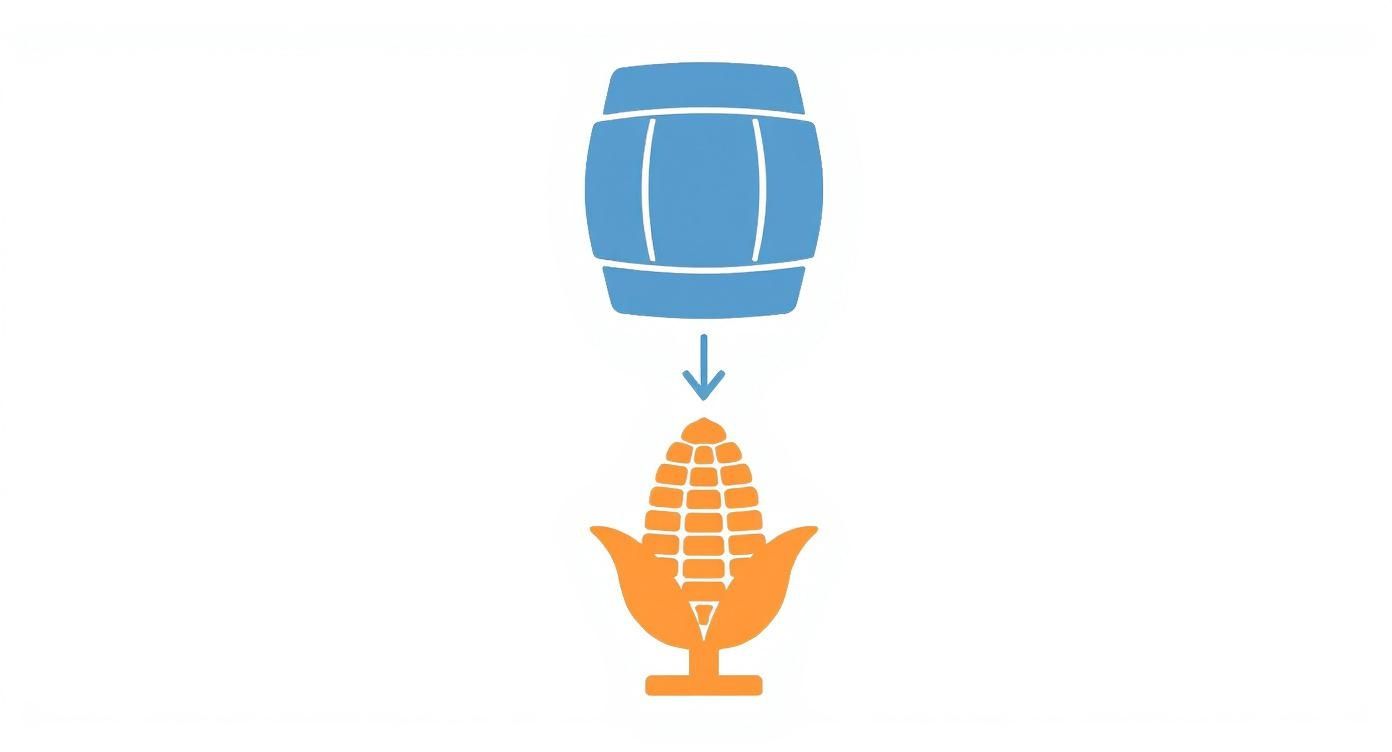
As you can see, whiskey is the overarching category, with bourbon sitting comfortably as one of its most famous sub-types, defined by its corn-based recipe.
Quick Guide Bourbon vs General Whiskey
For anyone just starting their whiskey journey, getting a handle on the legal and production differences is the key to finding what you really like. This table breaks down the essentials at a glance.
| Attribute | Bourbon (Specific Type) | Whiskey (Broad Category) |
|---|---|---|
| Primary Grain | Must be at least 51% corn | Can be any grain (barley, rye, wheat, corn) |
| Aging Container | Must be aged in new, charred oak containers | Can be aged in new or used barrels, charred or uncharred |
| Origin | Must be made in the United States | Can be made anywhere in the world |
| Distillation Proof | Cannot be distilled higher than 160 proof (80% ABV) | Rules vary widely by country and style |
| Barrel Entry Proof | Must enter the barrel at no more than 125 proof (62.5% ABV) | Rules vary widely by country and style |
This simple breakdown shows just how specific the rules for bourbon are compared to the wider world of whiskey. These regulations aren't just red tape; they are the very reason bourbon tastes the way it does.
The non-negotiable requirement to use new, charred oak barrels is arguably the single biggest factor behind bourbon's signature flavor. This step is what imparts that deep color and those rich notes of caramel and vanilla that whiskies aged in used barrels often just can't replicate. It's a game-changer for anyone starting their tasting journey.
The Legal Rules That Define Bourbon
Bourbon's unmistakable flavor profile isn't some happy accident. It's the direct result of a strict set of laws that govern exactly how it's made. Back in 1964, the U.S. Congress officially declared bourbon a "distinctive product of the United States," cementing its place as America's Native Spirit and putting these non-negotiable rules into law.
These regulations are the very DNA of bourbon, guaranteeing that every bottle, no matter the brand, shares a fundamental character. For anyone just getting into whiskey, understanding these rules is the key that unlocks why bourbon tastes the way it does.
The Corn-Driven Mash Bill
Everything starts with the grain recipe, what distillers call the mash bill. The first and most important rule is that bourbon must be made from a mash containing at least 51% corn. This single requirement is the main reason for bourbon’s signature sweetness and richer body, lending those classic notes of caramel and vanilla.
The other 49% of the mash bill is where distillers get to play and create their unique flavor profiles.
- Rye is a popular choice, bringing a spicy, peppery kick with hints of baking spice.
- Wheat offers a softer, gentler alternative, resulting in sweet, bready, and honey-like flavors.
- Malted Barley is almost always in the mix, as its natural enzymes are crucial for converting the grain starches into fermentable sugars.
This flexibility is why the bourbon world is so diverse. For a deeper dive into how these grains shape the spirit, you can check out our complete guide to the different types of whiskey and bourbon here.
New Charred Oak and Proofing Laws
Once the grain spirit—called "white dog"—is distilled, it has to be aged in a very particular way. This is probably the single most important rule separating bourbon from most other whiskies. Bourbon must be aged in new, charred oak containers. That's right, a barrel can only be used once to age bourbon.
This "one and done" rule forces the spirit to pull all of its color and a huge chunk of its flavor from the fresh, caramelized wood sugars created during the charring process. This is where those deep amber colors and rich notes of toffee, caramel, and vanilla truly come from. In contrast, spirits like Scotch and Irish whiskey are often aged in used barrels (frequently ex-bourbon barrels!), which imparts a much different, often subtler character.
Tip for new drinkers: The legal framework for bourbon is a masterclass in flavor engineering. The corn provides the sweet foundation, the new charred oak provides the rich vanilla and caramel complexity, and the proofing limits ensure the final spirit is balanced and not overly diluted.
On top of that, strict proofing regulations are in place to protect the spirit's integrity from start to finish.
- Distillation can't exceed 160 proof (80% ABV).
- The spirit must enter the barrel at no more than 125 proof (62.5% ABV).
- It must be bottled at a minimum of 80 proof (40% ABV).
These limits ensure the authentic flavors from the grain and barrel aren't stripped away by high-proof distillation or watered down too much before bottling.
Made in the USA
Finally, there's one simple rule that anchors bourbon's identity: it has to be produced in the United States. While Kentucky produces about 95% of the world's bourbon, there's no law saying it has to be made there. Fantastic bourbons are now being crafted all across the country, from New York to Texas. A rising star in this space is Westward Whiskey from Oregon, which applies the meticulous ethos of craft brewing to create exceptional American Single Malt.
This is a huge point of difference from other whiskies that are tied to a specific country. Scotch must come from Scotland, and Irish whiskey from Ireland. Bourbon, however, is a proudly American product, no matter which state it calls home.
How Bourbon and Whiskey Are Made
The real magic in the bourbon vs. whiskey debate happens on the journey from a humble grain to the complex spirit in your glass. While every whiskey follows a similar script—grain, water, yeast, and time—it's the small, deliberate choices made along the way that create such wildly different results.
It all starts with the mash bill, the grain recipe that lays the groundwork for the whiskey’s final flavor. This is the first major fork in the road. For bourbon, the law demands a recipe of at least 51% corn, which is where the spirit gets its signature sweetness and full-bodied character. The other grains, like spicy rye or soft wheat, are there to add layers of complexity.
Other whiskeys begin from completely different places. Scotch whisky, for example, is built around malted barley, a grain that can contribute anything from light, fruity notes to rich, biscuity flavors. Many other American whiskeys put rye in the spotlight, delivering a bold, peppery kick that's a world away from bourbon's corn-driven sweetness.
From Fermentation to Distillation
Once the grains are cooked to release their sugars, yeast is added to kick off fermentation. This process turns the sugary liquid (called "wort") into a low-alcohol "distiller's beer," and it’s where many of the foundational fruit and floral notes are born.
Next up is distillation, where the alcohol is separated and concentrated. The type of still used here has a massive impact on the final spirit. Most large-scale bourbon distilleries rely on efficient column stills to create a consistent product. On the other hand, many craft producers prefer traditional pot stills, which tend to produce a richer, more character-driven distillate. To get a better handle on how the machinery shapes the spirit, you can check out our complete guide on pot stills versus column stills in whiskey distillation.
The grain is the soul, but the barrel is the heart. For bourbon, the law dictates that the heart must be a new, charred American oak barrel. This single rule is the most significant factor in creating bourbon's signature vanilla, caramel, and baking spice flavors.
This strict barrel requirement is a major point of departure from other global whiskies. Scotch and Irish whiskeys, for instance, are most often aged in used barrels. The fact that ex-bourbon barrels are so widely used in Scotland is a testament to just how much flavor they still have to give. By using a recycled cask, distillers can achieve a more subtle oak influence, letting the spirit's grain-forward character take center stage.
The Art of Maturation and Craft Innovation
Aging, or maturation, is where the clear, unaged spirit—often called "white dog"—is transformed into the amber whiskey we all know and love. Inside the barrel, the spirit expands and contracts with the seasons, seeping in and out of the charred wood. This constant interaction adds color, mellows out any harshness, and builds incredible layers of flavor.
While bourbon must stick to new charred oak, the American craft whiskey scene has become a playground for experimentation. Distillers are constantly pushing the boundaries of what’s possible while still honoring the core traditions.
Tips for New Drinkers Exploring Craft Brands:
- Look for unique grains: Many craft distillers are playing with alternative grains like quinoa, millet, or smoked barley to create truly one-of-a-kind flavor profiles.
- Pay attention to finishing: Some producers will age their bourbon in the traditional new oak barrel and then "finish" it for a short time in a different type of cask—like a port or sherry barrel—to add extra layers of flavor.
- Don't be afraid of younger spirits: Craft distilleries often release younger whiskeys that are a fantastic showcase of the pure character of their grain and distillation process.
A great example of this creative energy is Corsair Artisan Distillery in Tennessee. They’ve become known for their bold experiments with unconventional grains and smoking methods, producing everything from a quinoa whiskey to one made with triple-smoked malted barley. Distillers like Corsair prove that the fundamental rules of whiskey making are really just a launchpad for incredible creativity, giving us an ever-expanding world of new flavors to explore.
Decoding the Flavors You Taste
Knowing the rules and production methods is one thing, but connecting that knowledge to the actual flavors swirling in your glass is where the real fun begins. This is where the fundamental differences between bourbon and whiskey truly come alive. Bourbon's signature profile is a direct result of its corn-heavy recipe and its mandatory nap in a brand-new, charred oak barrel.
That specific combination reliably produces a spirit that is rich, sweet, and wonderfully approachable. You'll almost always find deep caramel, smooth vanilla, and warm baking spices like cinnamon and nutmeg. These are the classic notes that make bourbon a favorite for both newcomers and seasoned drinkers alike.
The Global Spectrum of Whiskey Flavors
Once you step outside the world of bourbon, the flavor map expands dramatically. Every major whiskey style offers a completely distinct experience, shaped by its unique grain, distillation method, and maturation process.
-
Smoky Scotch: Head to the Scottish island of Islay, and you’ll find whiskies defined by their bold, smoky character. This comes from drying the barley over a peat fire, which imparts powerful notes of bonfire, iodine, and sea brine. An Islay Scotch is a world away from a sweet bourbon.
-
Fruity Irish Whiskey: Irish whiskey is often triple-distilled, a process that creates a lighter, exceptionally smooth spirit. The flavor profile leans fruit-forward, with notes of green apple, pear, and honey that make it incredibly easy to drink.
-
Spicy Rye Whiskey: As bourbon's closest American cousin, rye offers a familiar yet distinctly different profile. Made with at least 51% rye grain, it delivers a peppery, spicy kick with notes of black pepper, mint, and even dill that cut straight through any sweetness.
Tip for new drinkers: Your palate is your most honest guide. Forget the price tag and the fancy label for a moment. The best way to understand the difference between bourbon and whiskey is to taste them side-by-side and let your senses decide what you truly enjoy.
How to Taste Whiskey Like a Pro
Tasting whiskey is so much more than just taking a sip; it’s a three-part sensory experience. For anyone new to whiskey, simply slowing down the process can reveal a surprising depth of flavor in any spirit.
-
Nosing the Spirit: Before you taste, give the whiskey a gentle swirl in the glass. Bring it to your nose and take a soft sniff with your mouth slightly open—this clever trick prevents the alcohol vapor from overwhelming your senses. Try to identify the primary aromas. Is it sweet like caramel, fruity like apples, or spicy like cinnamon?
-
Taking the First Sip: Take a small sip and let it coat your tongue. This initial taste, sometimes called the "Kentucky Chew," acclimates your palate to the alcohol. Don't try to analyze it too much; just let your mouth get used to the proof.
-
Analyzing the Journey: Now, take a second, more deliberate sip. Pay attention to the complete flavor journey from the moment it hits your tongue to long after you've swallowed.
- The Beginning (The Attack): What are the very first flavors you notice on the tip of your tongue? This is often where sweetness or fruitiness makes its first appearance.
- The Middle (The Palate): As the whiskey moves across your tongue, what other notes emerge? This is where the body of the spirit reveals itself—think oak, spice, or smoke.
- The Finish: After you swallow, what flavors linger? Is it a short, clean finish, or does it hang around with a long, warm, and spicy glow? A long finish is often the sign of a well-made, complex whiskey.
For a more hands-on way to refine your palate and really dig into these nuances, consider an immersive event like a Macallan Whisky Experience with Cheese Pairing.
Accessible Bottles to Start Your Journey
The best way to learn is by doing. Here are a few widely available and affordable bottles that perfectly represent the classic profiles of their categories, making them ideal for conducting your own bourbon vs. whiskey tasting at home.
- For Classic Bourbon: Try Elijah Craig Small Batch. It perfectly showcases the sweet vanilla, caramel, and rich oak notes that define Kentucky bourbon.
- For Peated Scotch: Grab a bottle of Ardbeg 10 Year Old. It’s a fantastic introduction to the smoky, peaty style of Islay Scotch without being overwhelmingly intense.
- For Smooth Irish Whiskey: Redbreast 12 Year Old is a benchmark for Irish whiskey, offering beautiful notes of fruit, spice, and toasted wood in a remarkably smooth package.
- For Peppery Rye: Pick up High West Double Rye!. It’s a bold and spicy rye that clearly demonstrates how different a whiskey can be with a simple change in the primary grain.
The Rise of American Craft Whiskey
The bourbon versus whiskey conversation isn't just a technical one; it's the story of a category that has absolutely exploded with growth and creativity. We're in the middle of a genuine American craft whiskey movement. Bourbon is no longer just a southern staple—it has become a global phenomenon, leading a charge that has captured the attention of enthusiasts worldwide and put distillers of all sizes squarely in the spotlight.
This surge is largely driven by a clear shift toward premiumization. Drinkers are moving beyond the familiar, mass-market bottles and actively seeking out higher-quality, unique expressions like single barrel and small-batch bottlings. They want a spirit with a real story. This trend has fueled some incredible market growth, with American bourbon sales hitting a record $5.3 billion in 2024. Globally, the market is projected to swell from $8.29 billion to $8.85 billion in just one year. For a deeper dive into this expansion, check out the bourbon industry insights from Wooden Cork.
The Craft Distillery Boom
At the very heart of this movement are the thousands of craft distilleries that have sprung up across the United States. These smaller, often family-run operations have become the innovation hubs of the whiskey world. They're pushing the boundaries of what traditional bourbon and American whiskey can be, all while respecting the heritage that defines them.
You see them experimenting with everything—heirloom corn varieties, alternative grains, unique aging techniques, and novel barrel finishes. A great example is a brand like Frey Ranch Distillery out in Nevada. They are celebrated for their "farm-to-glass" approach, growing all their own grains to create a spirit with a true sense of place. This intense focus on local ingredients and meticulous craftsmanship offers a compelling alternative to the larger, more established names in the industry.
"The beauty of the craft movement is that it's built on passion. These distillers aren't just making a product; they're sharing a piece of their local identity and creative vision in every bottle, giving drinkers a direct connection to the person behind the spirit."
Distillery Tourism and Brand Connection
That personal connection is only getting stronger with the rise of distillery tourism. Visiting a distillery is no longer just a quick tour; it’s an immersive experience. You get to meet the distillers, walk through the rickhouses, and taste the whiskey right where it’s made. That firsthand experience builds a powerful sense of community and brand loyalty.
For anyone new to whiskey, visiting a local craft distillery is one of the best ways to deepen your understanding and appreciation. It’s your chance to ask questions and see the entire process up close.
Tips for Your First Distillery Visit:
- Ask about the mash bill: Inquire about the specific grain percentages to understand the foundation of their flavor.
- Sample the 'white dog': Many distilleries offer a taste of the unaged spirit, giving you a pure sense of the distillate's character before the barrel works its magic.
- Inquire about barrel entry proof: Ask how the proof they barrel at influences the final product's flavor profile.
This kind of direct engagement transforms the act of drinking whiskey from a simple purchase into a personal journey, connecting you to the very heart of the American craft spirit revival.
Choosing Your First Whiskey Bottle
Walking into a good liquor store for the first time can feel a little overwhelming. Walls of bottles, endless options—it’s easy to feel lost. But here’s the secret: picking your first bottle is a lot simpler than it looks. The trick is to think about the flavors you already love in your everyday life.
Do you have a sweet tooth? If you enjoy desserts with rich caramel or vanilla, a classic bourbon is your perfect starting point. The corn-heavy mash bill and the time spent in new charred oak barrels practically guarantee those warm, inviting flavors. If you’re someone who likes a bit of a kick, maybe from black pepper or spicy foods, you’ll probably find yourself right at home with a rye-forward whiskey.
Recommendations Based on Your Palate
To cut through the noise, let’s match some common flavor preferences with a few specific, easy-to-find bottles. This isn’t about guesswork; it’s about setting you up for a great first pour.
-
For Sweet & Smooth: You can't go wrong with a "wheated" bourbon. These swap out the spicier rye grain for softer wheat, creating a much gentler profile. Maker's Mark is the perfect example here, full of caramel, vanilla, and a touch of baked bread.
-
For Rich & Spicy: If you want more complexity and a bit of a peppery kick, a high-rye bourbon is the answer. Old Grand-Dad Bonded is a fantastic choice, delivering robust notes of cinnamon, black pepper, and brown sugar that beautifully balance sweet and spice.
-
For Light & Fruity: Think bourbon might be a little too bold to start? Give Irish whiskey a try. It's often triple-distilled for an incredibly smooth finish. A bottle of Jameson is a great introduction, offering light notes of green apple, honey, and a hint of floral character that make it exceptionally easy to sip.
For something a bit different from the American craft scene, check out Laws Whiskey House Four Grain Straight Bourbon. This Colorado distillery uses a unique recipe of wheat, corn, rye, and barley. The result is a wonderfully complex yet smooth bourbon that really shows you what’s possible when different grains come together.
A good bottle of whiskey doesn't have to be expensive. Many of the most respected and award-winning bourbons are surprisingly affordable, often falling in the $25 to $40 range. This sweet spot is where you'll find incredible value and classic flavor profiles that have defined American whiskey for generations. You don’t need to spend a fortune to get a high-quality, authentic experience.
For those just starting out, it helps to see a few options laid out side-by-side. Think of this table as a simple guide to help you find a great first bottle based on flavors you already know and enjoy.
Starter Whiskey Recommendations by Flavor Profile
| If You Like... | Try This Bourbon | Try This Other Whiskey Style |
|---|---|---|
| Sweet & Oaky (Caramel, Vanilla, Toffee) | Buffalo Trace | Redbreast 12 Year (Irish) |
| Spicy & Bold (Cinnamon, Black Pepper) | Wild Turkey 101 | Rittenhouse Rye |
| Light & Fruity (Apples, Pears, Honey) | Four Roses Small Batch | Glenmorangie 10 Year (Scotch) |
| Smoky & Rich (Campfire, BBQ, Dark Chocolate) | Balcones Texas "1" Single Malt | High West Campfire |
This is just a starting point, of course. The best part about whiskey is the journey of discovering what you like. Don't be afraid to branch out once you find a profile you connect with.
How to Read a Whiskey Label
Once you're standing in that aisle, the bottle's label is your best friend. Learning to decode a few key terms will tell you a massive amount about what's waiting for you inside.
Tip for new drinkers: A whiskey label is more than just marketing; it's a legal document that provides a roadmap to the spirit's character. Terms like 'Straight Bourbon' and 'Single Barrel' are not just fancy words—they are government-regulated promises of quality and production style.
Here are the most important phrases to look for:
-
Straight Bourbon Whiskey: This is a sign of a quality, unadulterated product. It means the whiskey meets all the legal requirements for bourbon, has been aged for at least two years, and has zero added colorings or flavorings. If it’s aged less than four years, the label has to say so.
-
Small Batch: This term isn’t actually legally defined, which surprises a lot of people. Generally, it means the whiskey is a blend from a select, limited number of barrels. The master distiller is aiming to create a very specific and consistent flavor profile that represents the best of what the distillery can produce.
-
Single Barrel: This one is exactly what it sounds like—the entire bottle came from just one individual barrel. Since no two oak barrels are identical, every single barrel bottle is a completely unique, one-of-a-kind experience. You can expect slight, and sometimes significant, variations in flavor, aroma, and even color from one barrel to the next.
Common Bourbon Questions, Answered
As you get deeper into the world of bourbon and whiskey, you'll find a few questions that always seem to surface. Getting these details straight is the final step in turning curiosity into confidence, whether you're navigating the whiskey aisle or just talking shop with friends.
Let's clear up some of the most common queries we hear from folks just starting their journey.
Is Jack Daniel's a Bourbon?
This is probably the number one question we get. And the answer is... sort of. While Jack Daniel's Tennessee Whiskey technically ticks all the legal boxes to be called a bourbon, they add one extra, non-negotiable step to their process.
Before the new spirit ever touches a barrel, it's slowly filtered through ten feet of sugar maple charcoal. This signature technique, known as the Lincoln County Process, is what gives Jack Daniel's its distinctive character. Because of this unique charcoal mellowing, the distillery chooses to label it as Tennessee Whiskey—a legally recognized category all its own. So, while it's a very close cousin to bourbon, that extra step puts it in its own lane.
What Is the Best Way for a Beginner to Drink Bourbon?
Honestly, the best way is however you enjoy it most. There are no gatekeepers here. But if you're looking for a good starting point to really understand the spirit, try sipping it neat in a proper tasting glass, like a Glencairn. This will help you capture all the aromas before you even take a sip.
If drinking it straight feels a little intense at first, that's perfectly normal. Here are a few ways to ease into it:
- Add a Few Drops of Water: A little splash can do wonders. It lowers the proof just enough to soften the alcoholic punch and can unlock a whole new layer of subtle flavors and aromas.
- Use a Large Ice Cube: Forget a glass full of small cubes that melt instantly. A single large cube or sphere will chill your bourbon perfectly with minimal dilution, making it smoother and more approachable without watering it down.
- Start with a Cocktail: There's no shame in starting with the classics. An Old Fashioned or a Whiskey Sour are fantastic introductions to bourbon. They use the whiskey's profile as a foundation and build upon it, letting you appreciate its character in a more balanced, familiar format.
Does Bourbon Have to Be Made in Kentucky?
This is a classic myth, and it's an easy one to fall for. After all, an estimated 95% of the world's bourbon is made in the Bluegrass State, so the association is strong. The truth, however, is that bourbon is an American product, not just a Kentuckian one.
The only geographical requirement for bourbon is that it must be produced in the United States. As long as a distiller follows the rules—at least 51% corn, aged in new charred oak barrels, etc.—they can make bourbon anywhere from New York to California.
Today, you can find incredible bourbon being made all across the country. Craft distilleries like Laws Whiskey House in Colorado and Garrison Brothers Distillery in Texas are proving that world-class bourbon has a home far beyond Kentucky's borders. They're crafting top-tier spirits that showcase just how diverse "America's Native Spirit" can be.
Ready to put your newfound knowledge to the test and discover your next favorite American craft whiskey? At Blind Barrels, we take the guesswork out of finding incredible spirits. Our blind tasting subscription sends you curated samples from the best small distilleries in the country, letting you decide what you truly love without brand bias. Start your tasting adventure today at https://www.blindbarrels.com.