

You're standing in a liquor aisle with a gift deadline approaching. One bottle has a beautiful label, another comes in a pink box, and a third promises an elegant drinking experience through a novelty decanter. You reach for the most gift-like option, then hesitate because you still don't know whether she drinks bourbon neat, mixes rye into cocktails, collects Japanese whisky, or has never tasted whiskey at all.
That hesitation comes from asking the wrong question. The right whiskey gift for a woman isn't the bottle that looks feminine. It's the gift that fits her experience level, drinking style, and occasion. Once you make those three decisions, the label, color scheme, and decorative packaging matter far less.
Why Buying Whiskey Gifts for Women Feels Harder Than It Should
Most buyers stall because whiskey marketing encourages them to shop visually. Flowers, blush colors, cursive lettering, and jewelry-style decanters suggest “gift for her,” but they reveal almost nothing about the liquid inside. A bottle can look polished and still be too smoky for a new drinker, too delicate for a bourbon enthusiast, or completely redundant for someone with a crowded home bar.
I've watched buyers reject an excellent American craft bourbon because the label felt too traditional, then choose a sweeter novelty bottle that didn't match the recipient's taste. That's backwards. A whiskey gift succeeds in the glass, not on the gift table.
Start with the recipient, not the shelf
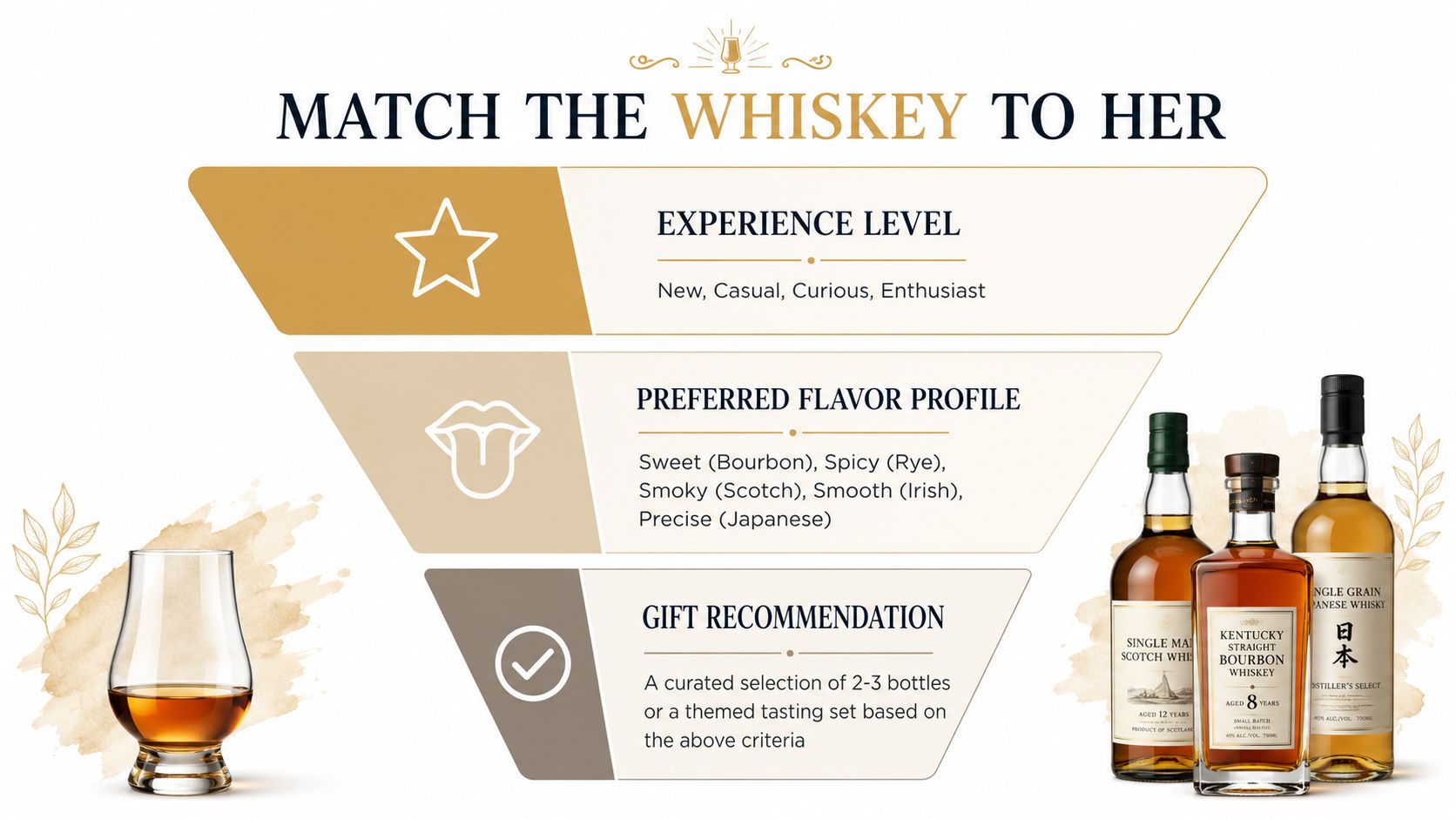
Before you compare bottles, answer three questions:
- Experience: Is she new to whiskey, a casual drinker, curious about tasting, or already an enthusiast?
- Style: Does she prefer bourbon sweetness, rye spice, Scotch smoke, Irish smoothness, Japanese precision, or cocktails?
- Occasion: Is this a birthday, hostess gift, holiday present, anniversary, or milestone?
Those answers narrow the field quickly. A curious beginner may enjoy several small pours and clear tasting guidance more than a single expensive bottle. A committed bourbon drinker may want a particular American craft expression. A cocktail fan may appreciate a reliable base spirit paired with a recipe card, while a collector may want something she hasn't already found herself.
The strongest whiskey gifts for women therefore feel personal without relying on gendered decoration. A well-chosen tasting format can communicate thoughtfulness because it gives her room to explore. A handwritten note can explain why you selected those profiles, which makes even a modest gift feel deliberate.
Practical rule: If you can't describe how she usually drinks whiskey, don't guess from the packaging. Choose a format that lets her discover what she likes.
The rest of the decision becomes much easier once you stop trying to find a “woman's whiskey” and start matching a real drinker to a useful experience.
Who You're Actually Buying For and Why It Matters
Women aren't a niche side audience in whiskey. Multiple independent reports place women at roughly 30% to 40% of whiskey drinkers in major English-speaking markets, compared with about 15% in the 1990s. One industry summary describes participation rising from about 15% in the 1990s, to near 30% by 2019, and approaching 40% by 2021 in its reviewed markets, as outlined in Atod Magazine's overview of women in whiskey.
Category-level purchasing data tells the same story. MRI-Simmons figures cited by that overview put women at 36.5% of bourbon sales, 37.6% of Irish whiskey sales, 39.1% of Canadian whisky sales, 38.5% of blended whiskey and rye sales, and 29.8% of Scotch sales. Those figures make one point clear: products marketed to women can respond to existing demand. They don't need to manufacture interest.
Historical context makes the outdated male-only image even less useful. An NPR report on women and the whiskey renaissance describes women's share of whiskey drinkers moving from about 15% in the 1990s, to around 37% by 2014, and about 40% by 2021 in the cited account. The same source notes that women were responsible for up to 70% of alcohol purchasing decisions in the home, which matters because the gift buyer and the person who drinks the whiskey may be different people.
Place her in a real recipient profile
- The neat sipper cares about aroma, texture, finish, and the pleasure of a slow pour.
- The cocktail fan wants a whiskey that performs in an Old Fashioned, Manhattan, or seasonal drink.
- The bourbon loyalist may already know which mash bills, proofs, and distilleries she prefers.
- The wine drinker exploring spirits may respond well to guided comparisons, cask influence, and tasting vocabulary.
- The collector likely values a distinctive expression, provenance, or access more than decorative presentation.
A useful guide to women in whiskey reinforces the practical conclusion: don't treat female buyers or drinkers as an afterthought. Treat them as varied whiskey consumers with their own preferences, habits, and standards.
Matching the Gift to Her Whiskey Experience and Style
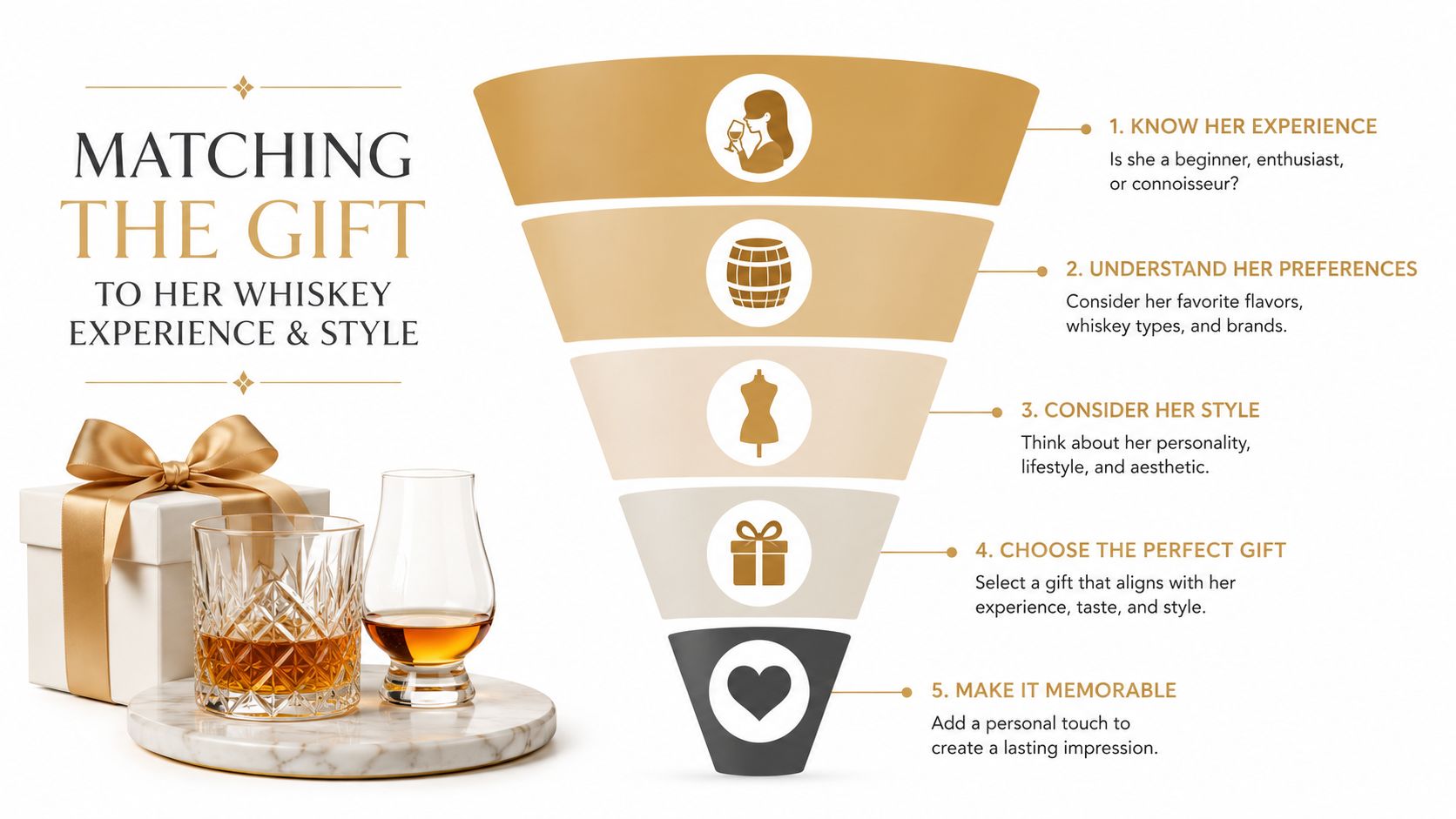
Use a three-part triage before you shop. It takes only a few minutes and prevents most bad purchases.
First, identify her experience level
New drinkers need a low-pressure introduction. Look for approachable samples, simple tasting notes, and a format that doesn't make one bottle feel like a test. A guided tasting experience usually beats a costly full-size bottle when you're unsure whether she enjoys whiskey neat.
Casual sippers may know what they like but haven't explored much beyond it. A curated set can show how bourbon, rye, Scotch, or Irish whiskey differ without demanding specialist knowledge.
Curious drinkers are ideal candidates for comparative tasting. They're often more interested in learning why two whiskeys smell or finish differently than in receiving another familiar label.
Enthusiasts deserve specificity. Consider an American craft distillery expression, a vertical tasting built around one producer, or a bottle selected for a known preference. Don't buy a random premium bottle and assume the price will carry the gift.
Then identify her drinking style
- Bourbon: Choose profiles with sweetness, vanilla, caramel, and oak character.
- Rye: Look for pepper, baking spice, and a more assertive finish.
- Scotch: Ask whether she enjoys coastal smoke, peat, fruit, or sherry-cask richness.
- Irish whiskey: A softer, lighter style may suit someone who prefers a gentle introduction.
- Japanese whisky: Precision, balance, and restrained complexity may appeal to a detail-oriented drinker.
- Cocktails: Prioritize a versatile base spirit and include a recipe card or garnish idea.
The research-backed sensory guidance is useful here. Technical aroma research shows substantial overlap between individuals, and aroma contributes far more to whiskey perception than taste alone, according to American Icon Spirits' discussion of whiskey tasting science. A tasting set that compares proof, grain bill, and cask finish can teach more than a single bottle.
Finally, match the occasion
A hostess gift should be easy to share. A birthday present can be more exploratory. A milestone calls for personalization or a memorable tasting ritual. For a partner, plan a shared tasting night rather than handing over a bottle with no context.
For example, if she drinks wine, enjoys hosting, and is curious about bourbon, choose a guided American craft whiskey tasting set, add dark chocolate, and write a note inviting her to compare aroma before tasting. That decision tree is far more reliable than choosing a pink label.
Bottles, Accessories, and Experiences Compared
There are three sensible gift lanes: the bottle, the accessory, and the experience. Each works in a different situation, and none deserves to be treated as the automatic answer.
A bottle offers the clearest reveal. It's familiar, substantial, and easy to wrap. It works especially well when you know her preferred category or distillery. The weakness is obvious, though. She may already own it, dislike the profile, or feel no connection to a bottle chosen without tasting notes.
Accessories have visual impact. Glencairn glasses, a quality decanter, whiskey stones, a mixing spoon, or a bar tray can add structure to an emerging home bar. They're less effective when the recipient doesn't entertain, already owns proper glassware, or prefers cocktails that require different tools.
Experiences create discovery and shared memories. They're especially useful when taste is uncertain, because the recipient can compare several expressions rather than being locked into one. The tradeoff is presentation. You'll need to explain what the experience involves and make the gift feel tangible at the moment she opens it.
| Category | Best For | Strengths | Weaknesses |
|---|---|---|---|
| Bottles | Known preferences, collectors, milestone gifts | Familiar, substantial, easy to display | Can duplicate her shelf or miss her palate |
| Accessories | Home-bar builders and hosts | Reusable, attractive, supports a drinking ritual | Often decorative and underused without the right setup |
| Experiences | New drinkers, couples, curious enthusiasts | Encourages discovery, conversation, and repeat engagement | Requires explanation and thoughtful presentation |
A bottle becomes stronger when you pair it with context. Add tasting notes, a suitable glass, or a food pairing instead of relying on the label to do all the work. Accessories become stronger when they solve a real habit, such as hosting or aroma-focused sipping.
For more ideas on combining spirits with presentation and useful components, browse this whiskey gift set guide. My default recommendation is simple: choose a bottle when you know the taste, an accessory when you know the ritual, and an experience when you want to create discovery.
Why a Blind Tasting Subscription Stands Out
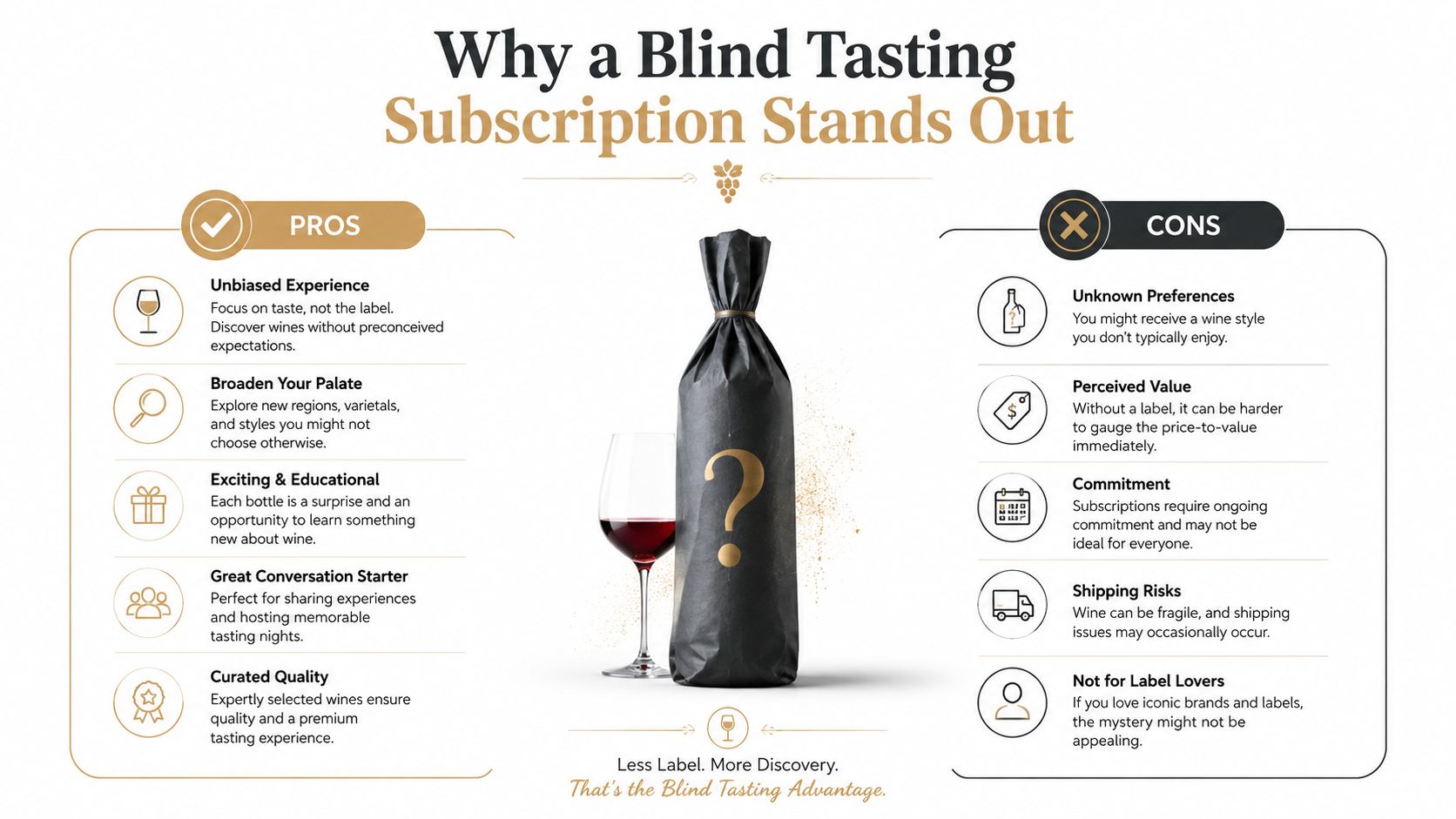
For most recipients, a blind tasting subscription is the smartest default because it removes the pressure of choosing one perfect bottle. The recipient tastes first and sees the label later. That changes the experience from passive drinking into comparison, prediction, and conversation.
Blind tasting also strips away brand and price expectations. A familiar name can influence what someone thinks they should taste, while a hidden sample encourages attention to aroma, texture, proof, grain character, and finish. That makes the gift particularly effective for new drinkers, couples, and curious enthusiasts who want guidance without a lecture.
It turns one present into a ritual
A single bottle may create one exciting opening moment, then sit on a shelf. A subscription creates recurring occasions to taste, discuss, and learn. Couples can compare impressions. Friends can turn the samples into a small gathering. A recipient who's still developing her preferences gets multiple chances to discover whether she favors bourbon richness, rye spice, smoky Scotch, or another style.
That format also handles uncertainty better than a large bottle. You don't need to pretend you know her exact palate. You're giving her a structured way to find it.
What a strong kit should include
Look for sealed samples, clear tasting instructions, reveal information, and a way to record impressions. A useful kit should help a beginner describe what she notices while giving an experienced drinker enough structure to make comparisons meaningful.
Blind Barrels offers quarterly blind whiskey tastings featuring four samples from small American craft distilleries, with a tasting table for aroma, tasting, and finish notes. Its format also includes a QR-based reveal, bottle-purchase access, and a game that asks participants to guess age, proof, and whiskey type before receiving a palate score.
For gift buyers, that combination solves the hardest part of whiskey gifting. You can give her an activity, education, and discovery without guessing which full-size bottle belongs on her shelf. The monthly whiskey subscription information can help you understand how recurring tasting gifts differ from a one-time bottle purchase.
Presentation, Personalization, and Pairing Ideas
A good whiskey gift becomes memorable through the details surrounding it. You don't need elaborate decoration. You need a clear reason for the choice and a presentation that feels considered.
Start with the note. Write two or three sentences explaining what you noticed about her drinking style and why the gift suits it. “You always ask what makes two bourbons taste different, so I chose something you can compare” says more than a generic card ever will.
Personal touches that earn their place
- Engraved glassware: Useful for someone who hosts or is building a home bar.
- A custom label: Appropriate for birthdays, anniversaries, and milestone celebrations.
- Handwritten tasting notes: Particularly helpful for a newcomer or wine drinker.
- A planned tasting night: Add a date, playlist, snacks, and a simple order for sampling.
- A flight guide: Give her space to record aroma, palate, finish, and personal preference.
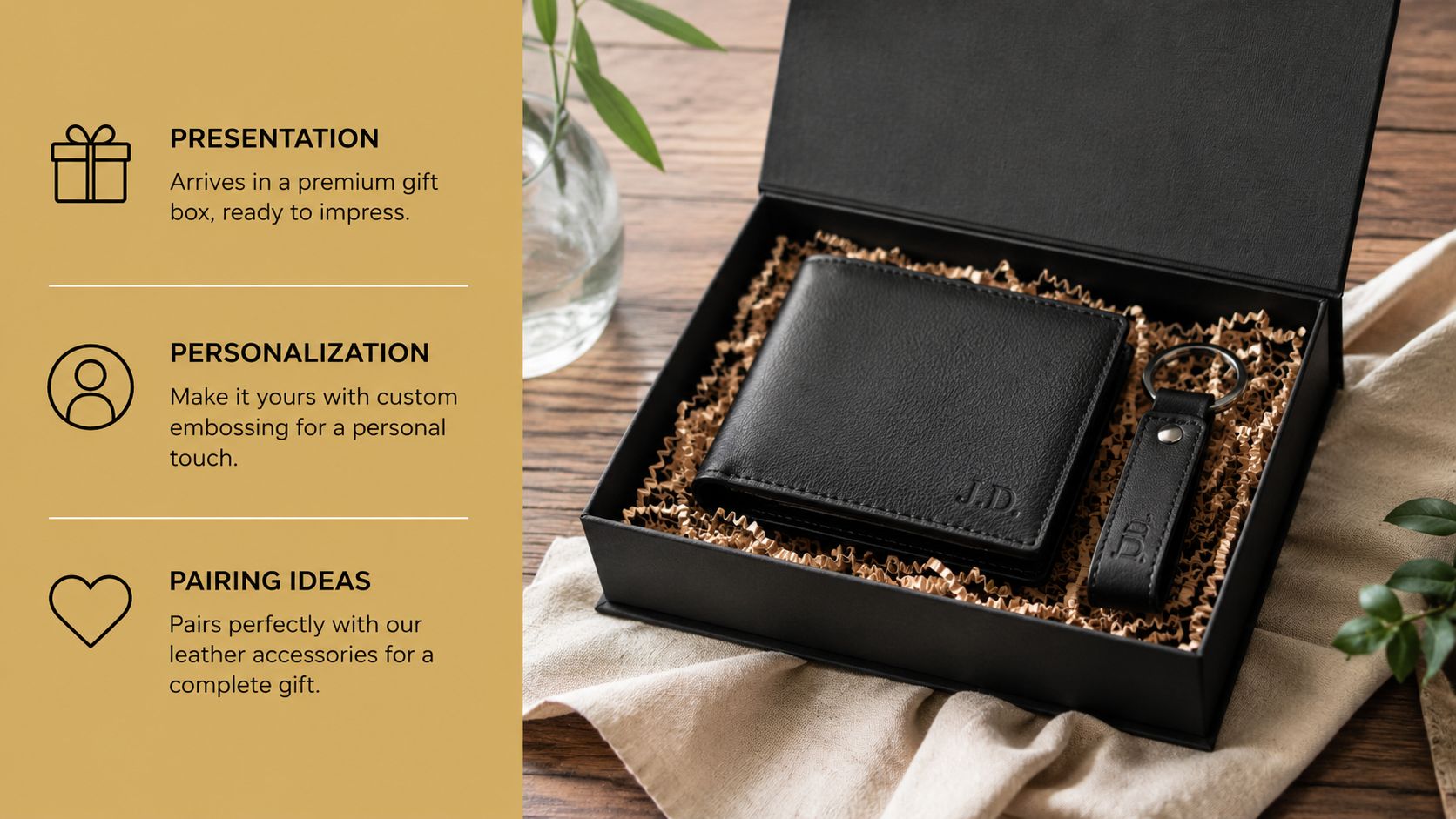
The wrapping should support the gift instead of overpowering it. A wooden box, fabric wrap, or kraft box tied with twine usually feels more polished than loud branded packaging. If you're giving samples, arrange them in tasting order and include a small card explaining when to reveal each identity.
Pair food with the whiskey's character, not with stereotypes. Dark chocolate works naturally with bourbon's richer sweetness. Smoked almonds suit rye's spice. Dried apricots complement the fruit and richness associated with sherry-casked Scotch. A soft cheese board makes a gentle partner for Irish whiskey.
You can also pair the gift with a ritual. Set out water for dilution, suitable glasses, plain crackers, and a notebook. Ask her to smell each pour before tasting, then compare reactions without correcting her. The point isn't to prove expertise. It's to make the gift feel like an invitation.
Mistakes to Avoid and Misconceptions to Ignore
Buying whiskey by gender is the fastest route to a bland, mismatched gift. Skip bottles selected for pink labels, sugary branding, or decorative shapes. In the Courier Journal's blind-tasting coverage, women often chose higher-proof and more complex whiskies in the reported tasting context. Use that finding to reject stereotypes, not to assume every woman wants intense whiskey.
Her experience, drinking style, and occasion give you better guidance than gender. If you do not know those details, a blind tasting subscription is safer than committing her to one bottle. It gives her room to discover preferences and makes the gift an activity rather than a guess.
Replace these defaults
- Pink packaging: Start with the flavor profile. Color may appeal to her, but it cannot show whether the whiskey suits her palate.
- Flower-shaped bottles: Treat unusual design as decoration, not proof of quality or fit.
- Jewelry-style decanters: Choose one only for someone who entertains or is building a home bar.
- A premium bottle for a novice: Add context, samples, or a guided format so the gift feels inviting rather than intimidating.
- An expensive neat-sipping expression for a mixer: Match the spirit to her routine, especially if she usually adds cola or makes cocktails.
- Whiskey stones as an automatic add-on: Water, ice, glass shape, and dilution preferences all affect the pour. Give the accessory only when it supports her ritual.
The strongest default is simple: if her preferences are clear, buy specifically. If they are uncertain, choose an experience that lets her compare styles before settling on a bottle. A blind tasting subscription also avoids the assumption that women need a narrower, sweeter, or softer whiskey range.
Choose for the person, the occasion, and the way she drinks.
Putting It All Together Before You Buy
Run this checklist before checkout:
- Confirm her experience tier. New, casual, curious, or enthusiast?
- Identify her drinking style. Neat, on the rocks, mixed, or exploratory?
- Pin the occasion. Is the gift meant to be shared, displayed, learned from, or enjoyed privately?
- Set the budget. Spend on fit and context before decorative extras.
- Choose the lane. Bottle, accessory, or experience?
- Test your confidence. If you can't name her favorite category or bottle, a blind tasting format covers more ground than a single purchase.
- Finish the presentation. Add a note card, suitable wrapping, glassware when useful, and tasting guidance.
Use quick branching rules. Choose a starter tasting kit for a newcomer. Choose a curated bottle for a connoisseur whose preferences you know. Choose a subscription for someone curious, social, or difficult to shop for because her taste is still uncertain. A cocktail drinker gets a versatile base spirit and recipe card. A wine drinker gets comparative pours and aroma guidance. A collector gets specificity, not generic luxury language.
For broader inspiration beyond spirits, a curated luxury gift guide can help you pair the whiskey experience with another thoughtful item without turning the present into a random bundle.
The final test is simple. Can you explain why this gift suits her? If your answer is only “the bottle looked feminine,” keep shopping. If you can connect the gift to her palate, experience, and occasion, you're close.
Before sending it, write a note that names the reason for your choice, wrap it in a wooden, fabric, or kraft presentation, and include a tasting card or pairing suggestion. Those details make the gift feel chosen rather than grabbed.
Blind Barrels offers a quarterly blind whiskey tasting experience with four samples from small American craft distilleries, guided tasting notes, reveal information, and a palate game. If you want whiskey gifts for women to feel like discovery rather than a risky bottle guess, visit Blind Barrels and choose a tasting gift that gives her something to explore.