

You're probably in the same spot most whiskey gift buyers land in. You know the recipient likes whiskey. You might even know they talk about bourbon, rye, or Scotch with some conviction. But you don't know what they enjoy enough to open twice, pour for friends, or buy again.
That's why a whiskey subscription gift beats a single prestige bottle most of the time. A fancy label can impress for ten seconds and miss the palate completely. A well-chosen subscription gives them room to discover what they like, and if it uses blind tasting, it removes the usual baggage around price, hype, and brand reputation.
Why a Whiskey Subscription Makes a Memorable Gift
A bottle is one moment. A subscription is a series of moments.
That difference matters more than people think. In premium whiskey, gifting intent already drives a meaningful share of buying behavior. One 2025 market report valued the global super-premium whiskey market at $12.8 billion and projected it to reach $24.6 billion by 2034 at a 7.5% CAGR, while noting that about 42% of super-premium whiskey purchases in key markets including the U.S., U.K., South Korea, and Singapore were driven by gifting intent. The same report found single malt held 38.4% share in 2025, which tells you buyers still care about exploration and discoverability, not just ownership of a bottle (super-premium whiskey market report).
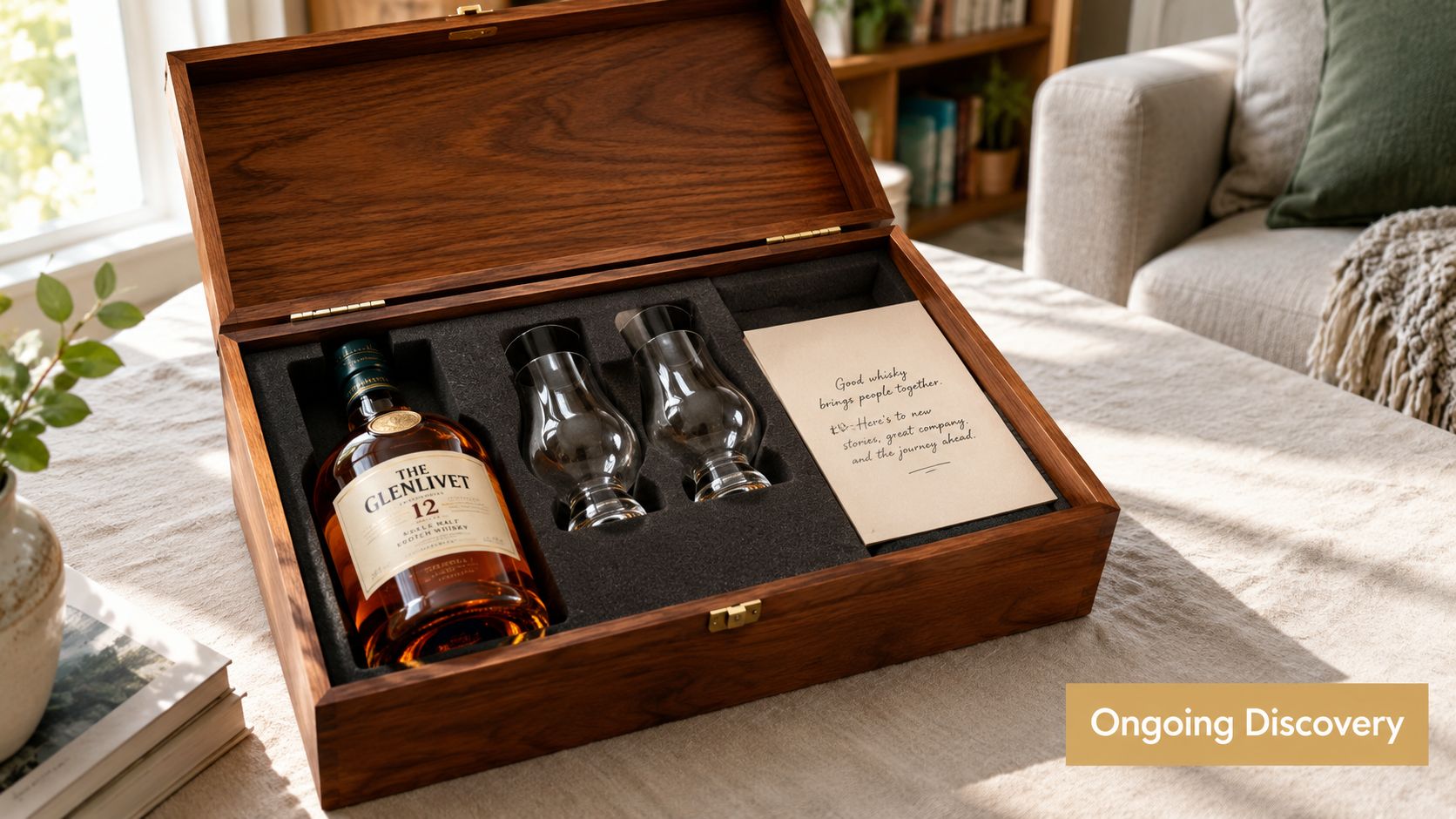
The real gifting problem is unknown taste
Most buyers aren't choosing between “good whiskey” and “bad whiskey.” They're choosing under uncertainty.
Maybe your brother-in-law likes wheated bourbon but not peppery rye. Maybe your partner loves smoky pours on cold nights and hates them in blind comparison. Maybe your client orders old fashioneds at restaurants but has never sat down and compared pours side by side. A subscription handles that uncertainty better because it turns the gift into discovery.
Practical rule: If you don't know their exact bottle preference, don't pretend you do. Give range, structure, and reveal.
Blind tasting makes this even stronger. When the recipient tastes sample A, B, C, and D without seeing the labels first, they stop chasing prestige and start paying attention to aroma, texture, finish, and proof. That's where a memorable gift lives.
Why curated kits land better than random bottles
I've seen people light up more from four thoughtful samples than from one expensive bottle they feel obligated to admire. The reason is simple. Good kits create participation. They ask the recipient to guess, compare, rank, and talk.
That's also why American craft whiskey works so well in this format. There are enough small producers making interesting whiskey that discovery feels fresh instead of repetitive. If you want a quick view of how gift-focused club formats differ, this roundup of monthly whiskey clubs for gifts is a useful starting point.
A memorable whiskey subscription gift doesn't just say, “I bought you whiskey.” It says, “I bought you an experience you can open, taste, and talk about.”
Know Your Recipient Before You Buy
A whiskey gift goes sideways fast when you buy for status instead of taste. The smart move is to buy for how they drink, and whether the format will still work if you guessed wrong on style.
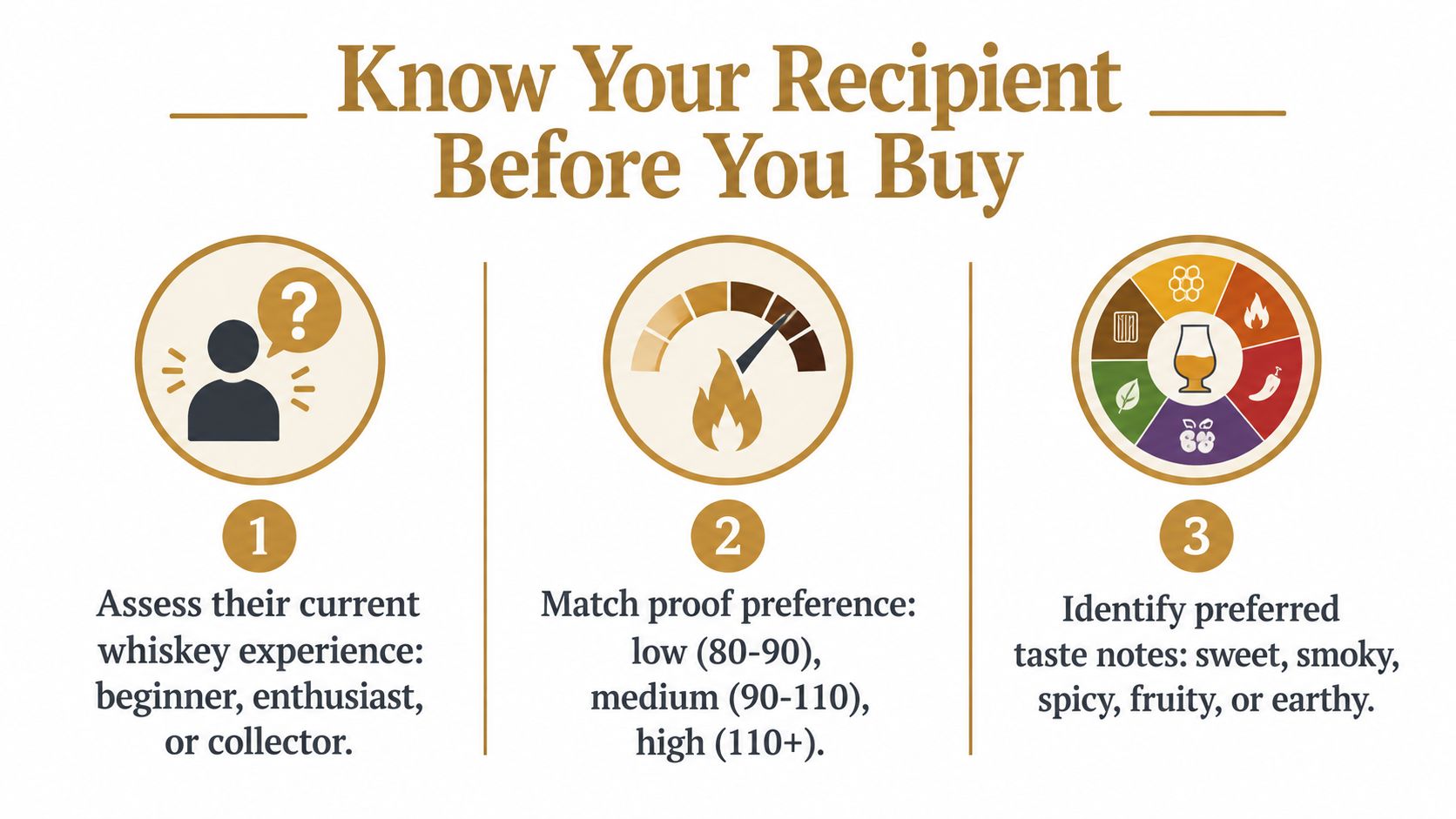
Match the subscription to how they explore whiskey
Use three simple recipient types. Beginner, enthusiast, or collector. That one call usually tells you whether to send guided samples, broader blind tastings, or a story-driven club with rarer picks.
A beginner wants confidence. Give them lower-pressure pours, clear tasting notes, and a format that teaches without turning the gift into a test. A sample-based subscription works better than a full bottle here because one intense bottle can sit unopened for months.
An enthusiast wants contrast. They enjoy comparing mash bills, cask influence, proof, and finish. Blind tasting is especially strong for this group because it shifts attention away from label reputation and toward what they like in the glass.
A collector still needs the same basic respect for palate. Plenty of collectors enjoy unusual producers and limited releases, but many also like blind formats because prestige stops influencing the result. That makes your gift safer when you know they love whiskey but you do not know their exact lane.
Read the clues they already give you
You do not need a formal interview. A few habits usually tell you enough.
- What they pour on a normal night: everyday, lower-proof bottles point to comfort and repeatability
- What they say about whiskey: “smooth” usually means easygoing, “interesting” usually means curious
- What they order out: neat pours suggest range, cocktails suggest they may want more guidance
- How they host: people who like sharing bottles usually enjoy sample kits they can compare with friends
One detail matters more than buyers expect. If you do not know their favorite flavor profile, choose a gift built for discovery, not a single prestige statement bottle. Blind tasting protects you from a bad guess.
If you cannot name their favorite distillery, name their style. Easygoing, adventurous, or serious is enough.
My practical recommendation
Here's the version I use after gifting a lot of whiskey.
- For beginners, send a guided sample subscription with clear notes and approachable proof.
- For enthusiasts, send a blind tasting subscription with variety across styles.
- For collectors, send a curated experience with distinct producers, strong backstory, and enough range to surprise them.
That approach also helps with delivery risk. Sample-focused subscriptions are often easier to gift to someone whose exact taste is unknown because they do not trap the whole gift inside one bottle decision. You still need to confirm shipping rules before checkout, but the format choice starts here.
If you want to compare whiskey against other experience gifts first, Firacard thoughtful gift recommendations is a useful shortlist. For recipients with unclear taste, guided tasting usually beats bottle prestige.
How to Compare Subscription Options and Budget Smartly
Don't judge a whiskey subscription gift by bottle count alone. That's how people overspend on the wrong thing.
A smart comparison starts with format. Monthly clubs create a steady drip of surprise. Quarterly clubs feel more substantial and easier to enjoy without backlog. Sample kits are better for unknown palates. Full-bottle clubs are better when you already know the recipient likes the club's taste profile.
What actually creates value
The whiskey itself matters, but the extras often determine whether the gift gets used or forgotten.
A strong subscription usually includes some mix of tasting notes, producer background, reveal tools, reorder access, or a shared activity. If the recipient has to do all the interpretive work alone, the gift turns into homework. If the kit gives them a tasting table, a QR reveal, or a scoring game, it becomes an event.
One example in this lane is a yearly whiskey subscription format built around repeated tasting rather than simple bottle accumulation. That distinction matters. A gift people participate in beats a gift they just display.
Compare format before you compare price
Use this table the way you'd use a gift shortlist. Match the format to the person first, then decide what you're comfortable spending.
| Whiskey Subscription Gift Options Compared by Recipient and Budget | |||
|---|---|---|---|
| Format | Best For | What You Get | Budget Signal |
| Guided sample kit | Beginners | Small pours, tasting notes, low-pressure discovery | Strong value when you don't know their palate |
| Blind tasting subscription | Enthusiasts, couples, groups | Numbered samples, scorecards, reveal flow, comparison fun | Pays off when experience matters more than volume |
| Craft-focused subscription | Curious drinkers who want new producers | Often feature American craft whiskey brands, distillery stories, varied styles | Better than prestige buying if they like discovery |
| Full-bottle monthly club | People with known preferences | One featured bottle on a regular cadence | Worth it only if the club's curation fits their taste |
| Premium rarity club | Collectors | Harder-to-find bottles or limited selections | Highest risk if you're guessing |
Don't pay prestige pricing for a beginner gift
Buyers often go wrong. They spend up because they're nervous.
That instinct is understandable, but it often backfires. A newcomer usually gets more joy from a clear, guided lineup than from one intense bottle they feel unqualified to evaluate. An enthusiast often gets more joy from side-by-side variation than from a single famous label. A collector may appreciate rarity, but only if the format respects their knowledge.
The broader category supports this gift logic. One industry forecast estimated the United States whiskey market at $18.29 billion in 2025 and projected growth to $27.23 billion by 2034, equal to a 4.32% CAGR from 2026 to 2034. Another study put the global whiskey market at $72.3 billion in 2024 and forecast $123.2 billion by 2033, a 6.1% CAGR (U.S. and global whiskey market outlook). The category is big enough that you don't need to force the gift into prestige theater. There are plenty of good paths.
My budget opinion
If you know the recipient's favorite bottle, buy the bottle.
If you don't, buy a whiskey subscription gift that gives them comparison, context, and a chance to discover what they'd buy for themselves later. That's money spent with purpose.
Shipping Legality and Delivery Details That Make or Break the Gift
This is the part buyers ignore until the order fails.
A rare bottle that can't be shipped legally is a bad gift. A modestly priced subscription that arrives on time, gets signed for properly, and clears local rules is the better gift every time.
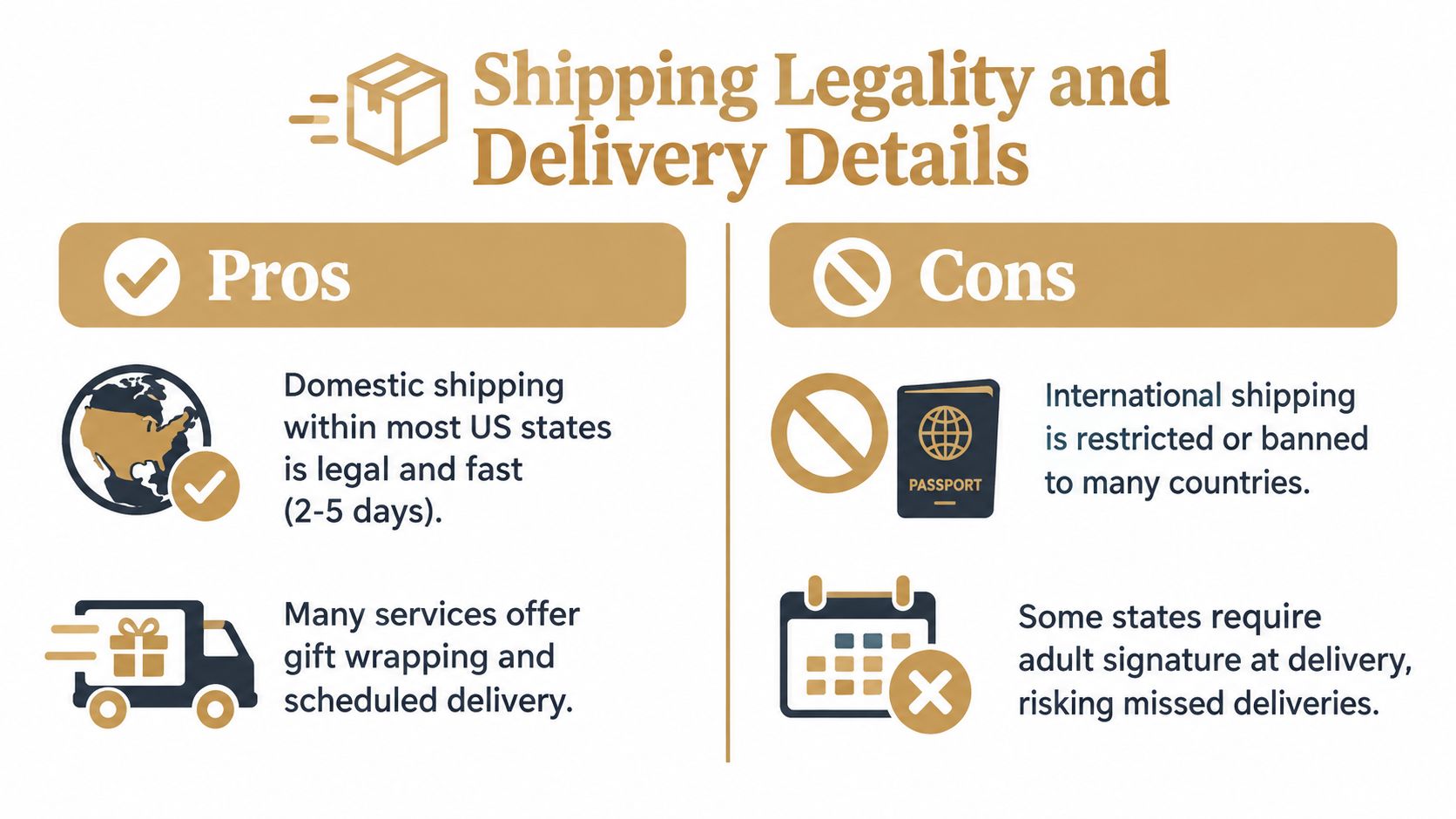
The first rule is simple
Consumers can't just box up alcohol and ship it themselves through standard channels. FedEx states that consumers cannot ship alcohol and that alcohol gifts must be shipped through a licensed retailer or winery operating under an approved alcohol-shipping agreement. UK customs rules also note that duties and import VAT can apply to alcohol gifts, and spirits above 24% ABV are prohibited in international mail (FedEx alcohol shipping rules).
That means your decision starts with deliverability, not romance.
My pre-checkout routine
Before you buy any whiskey subscription gift, check these points in this order:
- Seller status: Make sure the company or retailer is licensed to ship alcohol where the recipient lives.
- State or region restrictions: Some products ship broadly, others don't. Read the shipping page, not just the product description.
- Adult signature requirement: If the recipient works long hours or lives in a building with strict package handling, this matters.
- Gift timing: Holiday windows create pressure fast. Don't wait until the last minute and assume spirits shipping works like socks or books.
- Address quality: Apartment numbers, gate codes, and name mismatches cause preventable failure.
Buy the gift that can get delivered cleanly. Legal, age-verified, and on time beats ambitious and undeliverable.
If you're comparing options, a practical guide to liquor gifts delivery details can help you think through signature requirements and recipient logistics before checkout.
Holiday gifting raises the stakes
Alcohol gifting is already a high-intent category. In a 2023 survey, 85.9% of respondents said they bought alcohol for a holiday-related event or to give as a gift, and 60.6% specifically bought alcohol to give as a gift (holiday alcohol gifting survey). That should change how you buy.
Don't browse casually in peak season. Order early, choose sellers with clear delivery language, and send something the recipient can realistically receive. I'd rather gift a legally simple domestic whiskey experience than gamble on a cross-border bottle that gets stalled, taxed, or rejected.
Personalizing and Presenting Your Whiskey Subscription Gift
They open the box, see a shipping insert, and set it on the counter. Or they open it, find a clear tasting plan, and text you that night. Presentation decides which one happens.
If you do not know their exact palate, personalize the experience instead of pretending you know their dream bottle. Blind tasting is the smart move. It removes label bias, gives newer drinkers a clear way in, and turns an unknown preference into part of the fun.
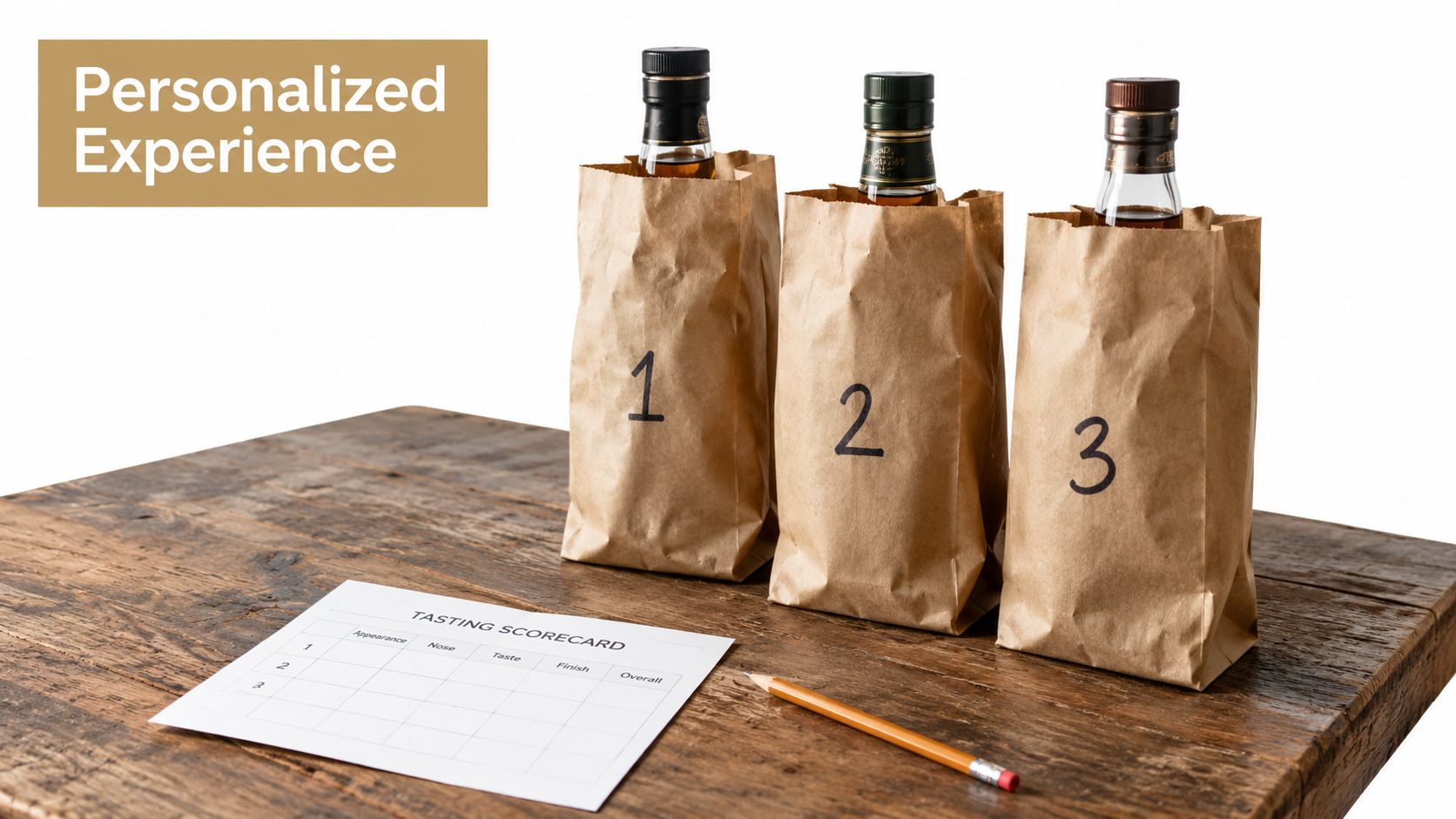
Set up the first tasting properly
A structured blind tasting works better than a casual pour-and-guess night. One spirits evaluation protocol recommends identical glasses, coded samples, controlled conditions, and a scorecard that separates appearance, aroma, palate, finish, and overall impression (blind spirits evaluation protocol).
You do not need lab conditions at home. You do need consistency.
- Use matching glasses: Keep one pour from looking more premium before anyone tastes it.
- Pour the same amount in each glass: A beginner whiskey tasting guide recommends identical 1-ounce pours for side-by-side comparison (beginner whiskey tasting guide).
- Hide the labels: Numbered sleeves, paper bags, or simple tags keep the focus on what is in the glass.
- Give them a scorecard: Favorite, surprise, easiest sip, and one note on the finish is enough for most recipients.
Good presentation removes pressure. That matters more than fancy packaging.
Help new drinkers enjoy the first pour
Many recipients like whiskey but have never compared pours side by side. Give them a simple script in your note. Start with the nose. Take a small sip. Wait a few seconds. Go back for a second sip before making any call.
If the whiskey drinks hot, tell them to add a few drops of water and taste again. That keeps the session approachable without turning it into homework.
Keep the first tasting light and social. The goal is a clear favorite, not a perfect tasting note.
Small touches that feel personal
The best add-ons are useful. A short card that says, “Taste these blind, rank them, then reveal,” gives the gift a beginning, middle, and end. Numbered wraps or Bottle Neck Tags make sample bottles look intentional instead of improvised.
You can also set a reveal order. Start with the easiest pour, move to the boldest, and save the full details for the end. That pacing helps beginners and keeps confident drinkers engaged.
If you are considering a sample-first gift, Blind Barrels is one factual example of that format. It sends quarterly blind whiskey tasting kits with four blind samples from American craft distilleries, plus a tasting table, QR-based reveal, and a guessing game around age, proof, and whiskey type.
That structure is what recipients remember. The bottle matters less than the moment you built around the first pour.
Your Confident Gifting Plan From Purchase to First Pour
A good whiskey gift doesn't ask you to be a mind reader. It asks you to make three solid decisions in the right order.
First, profile the recipient. Beginner, enthusiast, or collector. Don't buy to impress yourself. Buy to match how they drink.
The clean checklist I'd use every time
- Choose by palate uncertainty: If you don't know their exact preferences, pick a sample-based or blind format.
- Match intensity to experience: Newer drinkers usually do better with approachable proof and clear guidance.
- Check shipping before checkout: Licensed seller, legal destination, adult signature, and realistic timing.
- Add one personal layer: A note, reveal card, shared tasting date, or simple score sheet.
- Give them a first step: Tell them how to pour, compare, and decide what they liked.
What people remember
Recipients rarely remember the invoice total. They remember whether the gift felt thoughtful and easy to enjoy.
That's why I keep coming back to blind tasting and deliverability. Blind tasting solves the unknown palate problem. Deliverability solves the world problem. Together, they make a whiskey subscription gift more reliable than chasing label prestige and hoping for the best.
If you want the short version, buy the gift that can arrive legally, fit the recipient's drinking style, and create a first pour they'll want to talk about afterward. That's the one they remember.
If you want a whiskey gift built around discovery instead of guesswork, Blind Barrels offers quarterly blind tasting kits featuring small American craft distilleries, with sample reveals and bottle-purchase follow-up built into the experience. It's a practical fit when you want to give someone whiskey they can compare, learn from, and enjoy without needing to know their exact favorite bottle upfront.