

When you get right down to it, the great whiskey vs. bourbon taste debate really hinges on one key ingredient: corn.
It's a simple but crucial distinction. Since all bourbon is whiskey but not all whiskey is bourbon, that legally required, corn-heavy recipe gives bourbon its signature sweet, full-bodied flavor profile, loaded with notes of vanilla and caramel. Other whiskeys? They represent a much wider, more unpredictable spectrum of tastes—everything from smoky and peaty to spicy and herbal.
American craft whiskey brands such as Balcones, Westland, and Bardstown Bourbon Company are reimagining these profiles with innovative mash bills and cask finishes.
Tip for New Drinkers: Start with a craft distillery favorite—something like Balcones Baby Blue Single Malt or Westland American Single Malt, known for their approachable yet distinctive flavors.
Unraveling the Primary Taste Differences
Walking down the whiskey aisle for the first time can be a bit overwhelming. You’re faced with a wall of bottles labeled "whiskey," "bourbon," "rye," and "Scotch," and it’s totally natural to wonder what actually separates them once they're in your glass. The secret isn't just about where they're from; it's a specific set of rules governing ingredients and aging that directly shapes every sip.
Bourbon has to play by a strict set of American laws. Its mash bill—the grain recipe—must contain at least 51% corn, a rule that fundamentally creates its sweeter, fuller-bodied character compared to the broader whiskey world. This corn-forward base is what coaxes out those classic vanilla, caramel, and toffee notes during aging. It’s a stark contrast to the often peatier, maltier profiles of Scotch or the sharp, spicy notes of a good rye.
These specs, which have been US law since 1964, are precisely why so many people find bourbon to be smoother and sweeter. It's this legal framework that gives bourbon a reliable flavor foundation that newcomers can count on. If you want to get deeper into the production rules, check out our guide on the key differences in bourbon and whiskey.
Bourbon vs Whiskey Core Sensory Snapshot
To make things a little easier, we've put together a quick snapshot. Think of this as a cheat sheet for your palate, showing how the rules of production translate directly into what you taste.
| Key Factor | Bourbon Profile | General Whiskey Profile |
|---|---|---|
| Primary Grain | Corn (at least 51%) | Varies (Barley, Rye, Wheat, etc.) |
| Dominant Flavor | Sweet (Vanilla, Caramel, Toffee) | Diverse (Spicy, Smoky, Fruity, Malty) |
| Mouthfeel | Often fuller-bodied, smoother | Ranges from light to full-bodied |
| Aging Barrel | New, Charred Oak Barrels | Can use new or used barrels |
This table really clarifies how a few production requirements create two very different sensory experiences.
A Tip for New Drinkers: If you have a sweet tooth, bourbon is the perfect gateway into the world of whiskey. Its dependable notes of caramel and vanilla make it incredibly approachable, whether you're drinking it neat or mixing it into a classic Old Fashioned. Consider trying a small-batch bourbon from a craft distillery, like Frey Ranch or Bardstown Bourbon Company’s Fusion Series, to really see how recipe tweaks impact flavor.
Having this foundational knowledge really helps demystify the choices on the shelf. While American craft whiskey brands are constantly innovating and pushing boundaries—creating high-rye bourbons or unique single malts—understanding these basics gives you the confidence to explore. You start to recognize why a bourbon from a distillery like Frey Ranch might taste different from a rye-forward whiskey, even if both are proudly American-made.
How Production Rules Create Flavor Profiles
That satisfying sweetness you find in a glass of bourbon isn't some happy accident. It's the direct result of a legal blueprint that dictates every single step of its creation. Once you understand these rules, it’s like learning a secret code on the bottle's label, letting you anticipate the taste before you even pour a dram.
At the very heart of bourbon's flavor is its grain recipe, or what we call the mash bill. The law is clear: it must contain at least 51% corn. This high corn content is the main source of bourbon's signature sweetness, giving it a full-bodied texture with notes that often bring to mind sweet corn, caramel, and vanilla. If you want to dive deeper into how different grains shape the final spirit, you can explore the nuances of a bourbon mash bill in our guide.
But the grain is only where the story begins.
The Power of New Charred Oak
The second non-negotiable rule for bourbon is that it must be aged in new, charred American oak barrels. This is where a massive portion of its flavor develops. Think of a brand-new barrel as a powerful flavor engine, just waiting to impart intense character into the spirit.
When that clear, un-aged whiskey (often called "white dog") goes into the barrel, the real magic starts. The charring of the wood caramelizes its natural sugars, creating a layer that acts as both a filter and a primary flavor source.
- Vanilla & Caramel: This process unlocks compounds in the wood, like vanillin, which directly infuses the spirit with those rich vanilla notes. The caramelized wood sugars contribute the deep caramel and toffee flavors we love.
- Oak & Spice: The new wood also imparts a distinct oakiness and subtle baking spices like cinnamon and nutmeg, giving bourbon its characteristic warmth and complexity.
Tip for New Drinkers: Look for small-batch releases from craft distilleries—they often over-char barrels or use special toast levels to extract more intense wood flavors.
This infographic breaks down how different primary grains create distinct branches within the wider whiskey family.
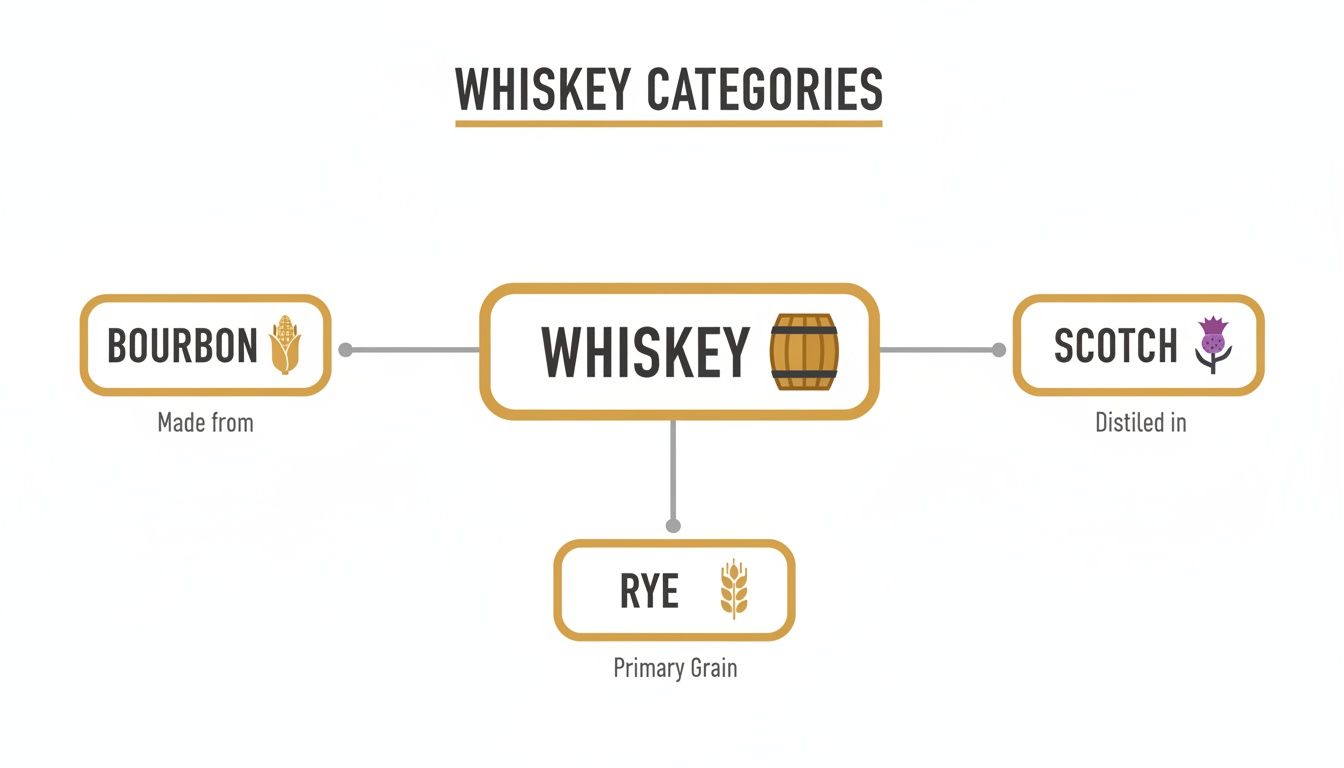
You can see how bourbon's reliance on corn immediately sets its flavor path apart from the barley-driven profile of Scotch or the spicy character of rye.
How Other Whiskeys Build Their Taste
Bourbon’s strict production framework stands in sharp contrast to the flexibility other whiskey categories enjoy, which naturally leads to a much broader spectrum of tastes. The rules aren't looser; they're just different—designed to create entirely unique sensory experiences.
Scotch Whisky:
Scotch production often revolves around malted barley, a grain that gives it an earthy, cereal, and sometimes biscuity flavor. What's more, distillers can age Scotch in used barrels—often ex-bourbon or ex-sherry casks. These casks impart softer, more nuanced flavors from their previous contents rather than the intense, raw character of new oak.
Rye Whiskey:
American rye whiskey follows a similar path to bourbon but simply swaps the dominant grain. It must contain at least 51% rye, a grain known for creating a spicy, peppery, and sometimes herbal or even minty flavor profile. While it's also aged in new charred oak, the rye grain's powerful character cuts through, resulting in a drier, spicier spirit. Craft examples like Balcones Texas Rye and High West Rendezvous Rye showcase this vividly.
By understanding these fundamental production differences, you can move beyond just picking a bottle and start making truly informed decisions. You’ll be able to look at a label, see "wheated bourbon," and know to expect a softer, gentler sweetness. Or you can grab a rye and anticipate a bold, spicy adventure—all thanks to the rules that shape the spirit from grain to glass.
A Sensory Tour of Common Tasting Notes
Knowing the rules of production gives you a great roadmap, but the real fun starts when you translate that knowledge into what's actually in your glass. Exploring the difference between whiskey and bourbon is a journey of discovery, and this sensory tour will help you pinpoint the signature notes of America's native spirit and its cousins from around the globe.
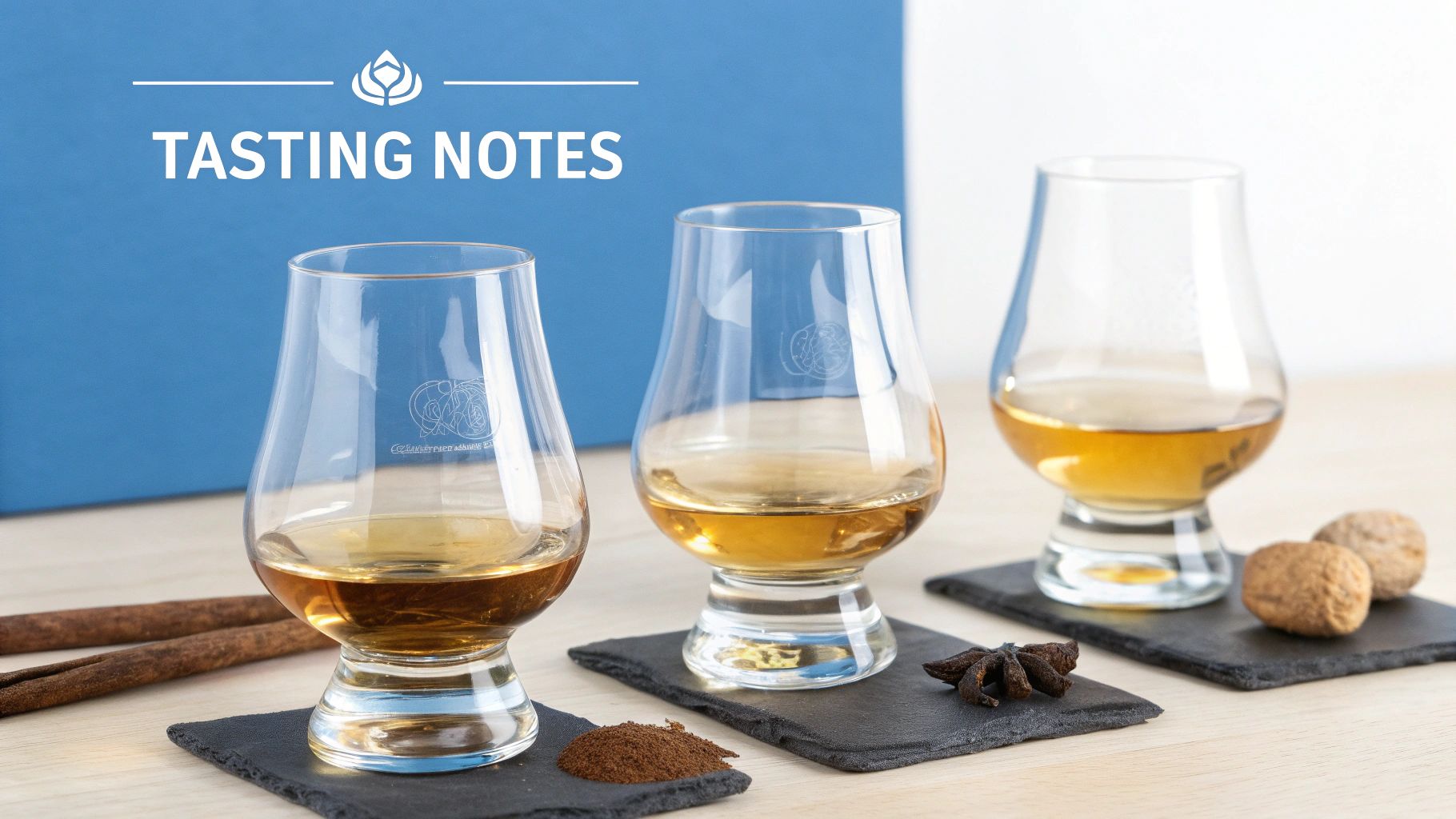
Let's kick things off with bourbon. Its corn-heavy mash bill and time in new charred oak barrels come together to create a distinct and inviting profile that’s often a perfect starting point for new drinkers.
Decoding the Classic Bourbon Profile
When you lift a glass of bourbon to your nose, you’re usually met with a wave of sweetness. But this isn't just one note; it's a complex harmony of flavors all working in concert. Learning to pick them apart is the first step in really developing your palate.
The primary notes you'll find are a direct result of the corn and that fresh barrel. These are the big, foundational flavors that define the spirit.
- Caramel & Toffee: These are the quintessential bourbon notes, born from the caramelized wood sugars in the charred oak. They’re what give bourbon that rich, almost dessert-like sweetness.
- Vanilla: During the charring process, a wood compound called vanillin is unlocked, infusing the bourbon with a creamy, smooth vanilla character.
- Oak & Char: You'll also taste the wood itself—a pleasant, slightly drying note of toasted oak and maybe a hint of smokiness from the char.
Beyond these core flavors, a good bourbon offers up secondary notes that build depth. You’ll often find hints of baking spices like cinnamon and nutmeg, or dark fruits such as cherry and fig.
New Drinker Tip: Swirl gently and sniff at different heights to detect layered aromas. This method helps when sampling craft bourbons like Bardstown Bourbon Company’s Fusion Series or a small-batch release from Frey Ranch.
Exploring the Broader Whiskey World
Once you venture beyond bourbon, the flavor map expands dramatically. Different grains, climates, and aging techniques create wildly different experiences, each with its own signature. Grasping these key differences is essential to appreciating the full spectrum of whiskey.
The Peppery Spice of Rye Whiskey
If bourbon is sweet and friendly, rye whiskey is its spicy American cousin. Made with at least 51% rye grain, its flavor profile is sharper, drier, and much more assertive.
- Signature Notes: Expect a distinct kick of black pepper, mint, and baking spices like clove and allspice.
- Craft Example: To see how these grains play together, look for a "high-rye" bourbon. An excellent example comes from Laws Whiskey House, whose Four Grain Straight Bourbon uses corn, wheat, rye, and barley. This creates a spirit that beautifully bridges the gap, offering bourbon's classic sweetness upfront with rye's signature spice on the finish.
The Smoky Peat of Islay Scotch
Scotch from the Isle of Islay is legendary for its powerful, smoky character, which comes from drying the malted barley over smoldering peat fires. It's an intense and unforgettable flavor profile.
- Signature Notes: The dominant notes are campfire smoke, iodine, and a salty, maritime brine. Underneath all that, you might find subtle hints of citrus or vanilla trying to peek through.
- Palate Experience: This can be a challenging profile, but it's incredibly rewarding. It’s the polar opposite of a sweet, gentle bourbon and really showcases the incredible diversity within the whiskey world.
The Light Fruitiness of Irish Whiskey
Often triple-distilled for an exceptionally smooth texture, Irish whiskey delivers a lighter, more delicate tasting experience. It’s an incredibly approachable style for anyone who finds bourbon too heavy or Scotch too smoky.
- Signature Notes: Look for bright, fresh notes of green apple, pear, and honey, often with a subtle floral or grassy undertone.
- Key Differentiator: The lack of heavy char and peat allows the gentle, malty grain character and fruity esters from fermentation to shine. The result is a clean, crisp finish.
By tasting these styles side-by-side, the "whiskey vs bourbon taste" question starts to answer itself. You begin to see that each spirit tells the story of where it came from—from the cornfields of Kentucky to the peat bogs of Scotland. Learning to read those stories with your palate is one of the greatest rewards of being a whiskey drinker.
Does The Label Tell The Whole Flavor Story
The neat lines on a bottle—“straight bourbon” or “Kentucky rye”—give us a starting point. They promise a base level of sweetness from corn or a peppery kick from rye, plus the toasty kiss of new charred oak. Yet, once you dive into the world of American craft whiskey, you quickly realize that those legal definitions are just the tip of the iceberg.
In reality, a distiller’s personal touch often overshadows the category rules. Every choice in the process—no matter how small—leaves a lasting imprint, nudging the whiskey-versus-bourbon conversation into far richer territory.
The Distillery’s Signature Palate
Think of each distillery as having its own fingerprint, a flavor signature that threads through every bottle they make. These subtle nuances come down to a handful of critical decisions:
- Yeast Strain: Some producers cling to a single, decades-old yeast culture, coaxing out distinct fruity or spicy esters. Four Roses, for instance, juggles two mash bills and five proprietary yeast strains to craft ten unique recipes.
- Fermentation Time: A short ferment can keep things clean and straightforward. Extend it, and you unlock layers of tropical fruit, stone fruit, or even faint herbal notes.
- Distillation Cuts: Where the master distiller draws the line between heads, hearts, and tails shapes both mouthfeel and purity. Those razor-sharp cuts can mean the difference between velvet and rough edges.
- Barrel Entry Proof: Dropping your new make into barrels at 115 proof versus 125 proof changes how aggressively the whiskey leaches color, tannins, and vanillin from the wood.
Together, these choices become the distillery’s calling card. You might spot a Westland single malt or a Balcones release in a blind lineup faster than you could tag its legal category.
Trusting Your Palate Over The Label
It turns out this isn’t just whiskey lore—science backs it up. In a fascinating blind-smell study from Drexel University, tasters consistently grouped drams by brand character rather than by spirit type.
When participants smelled whiskeys blind, they tended to group them by brand rather than by spirit type (bourbon vs. rye). The brand’s distinctive “house flavor,” alcohol content, and age often guided perception more than the legal mashbill. In these blind tests, a mere 10–15% of participants could consistently separate whiskeys by type.
That finding is liberating. It means you’re already equipped to explore beyond label definitions. Next time you taste, focus less on “Is this bourbon?” and more on “What traits make this whiskey unmistakably theirs?” You might find that an American craft house—say, Balcones—draws you in with a robust, grain-heavy style, regardless of whether you’re sipping their single malt or small-batch bourbon. Your palate is picking up on the distillery’s true signature.
Ultimately, the label tells you what it must by law. But your senses? They reveal the spirit’s real soul. So let your nose and tastebuds lead the way—and discover the unique craftsmanship hidden in every sip.
How to Host Your Own Blind Tasting
Reading about the differences between whiskey and bourbon is one thing, but discovering them firsthand? That’s where the real fun begins. Hosting a blind tasting is the single best way to strip away brand bias and let your palate be the judge. It’s an engaging, educational experience that actively trains you to pick up on the core differences in the whiskey vs bourbon taste debate.
This guide gives you a simple, step-by-step approach for beginners to host a fun and insightful tasting right at home. You don't need to be an expert to lead one—just a few good bottles and an open mind.
Step 1: Selecting Your Whiskey Flight
The key to a successful tasting is a well-chosen flight. You want bottles that are different enough to showcase distinct profiles but not so extreme that they overwhelm a new palate. For a great foundational tasting, we recommend a trio that covers the core styles.
- A Classic Bourbon: Start with an approachable, corn-forward bourbon. Buffalo Trace is a fantastic choice, known for its balanced notes of caramel, vanilla, and a gentle hint of spice.
- A Spicy High-Rye Whiskey: Next, grab something with a bold, peppery character to create a clear contrast. An American craft whiskey like High West Double Rye! is perfect here, as its blend of rye whiskeys really delivers that signature spice and herbal complexity.
- An Approachable Irish Whiskey: To round out the flight, include a lighter, fruit-forward option. A classic Irish whiskey offers a completely different sensory experience, showcasing delicate notes of green apple and honey.
This selection provides a brilliant spectrum of flavors, letting you directly compare bourbon’s sweetness, rye’s spice, and the gentle fruitiness of another popular whiskey style.
Step 2: Setting the Stage
With your bottles selected, it's time to set up your tasting environment. Proper preparation ensures everyone can focus on the whiskey without distractions. For a broader look at organizing an event, this comprehensive event planning guide can help ensure your tasting runs smoothly.
Essentials for Your Tasting Table:
- Glassware: The right glasses are a game-changer. Glencairn glasses are the ideal choice because their tulip shape concentrates aromas, making it much easier to pick up subtle notes. If you don't have any, small wine glasses will work in a pinch.
- Palate Cleansers: Have plenty of room-temperature water available for sipping between whiskeys. Unsalted crackers or plain bread are also excellent for resetting your palate.
- Tasting Mats & Pens: Provide a simple sheet for notes. You can create columns for Appearance, Nose, Palate, and Finish for each sample. This helps guide the tasting and encourages guests to think critically about what they're experiencing.
A Tip for New Drinkers: Pour small samples—just a half-ounce to one ounce is plenty. The goal is to taste and analyze, not to over-imbibe. This keeps everyone’s palate sharp throughout the flight.
Step 3: Guiding the Tasting Experience
Once everyone is settled, it's time to pour. The best way to do this is to have a friend pour the samples out of sight so even the host can participate blind. Just label the bottoms of the glasses or the tasting mat with A, B, and C.
A Simple Tasting Method:
- Look: Hold the glass up to the light. Note the color—is it pale straw, rich amber, or deep mahogany?
- Smell: Gently swirl the glass to release the aromas. Take a light sniff with your mouth slightly open. What do you smell first? Sweet vanilla? Spicy pepper? Fresh fruit?
- Taste: Take a small sip and let it coat your tongue. Try to identify the initial flavors. Is it sweet like caramel, spicy like cinnamon, or fruity like apples?
- Finish: Swallow and pay attention to the lingering taste. Is it a long, warming finish or a short, crisp one?
Encourage everyone to share their thoughts and write down their notes for each sample. The magic really happens during the discussion when people start comparing what they detected. After everyone has tasted and guessed, the big reveal is always a rewarding moment.
For those who want to take the guesswork out of setup, a well-curated blind whiskey tasting kit can provide everything you need for a perfect event.
How to Serve and Pair Your Glass
Finding your perfect whiskey is just the start of the journey. Learning how to serve and pair it is where the real magic happens. The right technique can either hide or highlight the subtle character in your glass, turning a good pour into a truly memorable one.
How you choose to drink your whiskey has a massive impact on the tasting experience. Each method is designed to do something specific—concentrate the flavors, dilute the proof, or open up the spirit’s complex aromas. For anyone new to whiskey, playing around with these simple approaches is the best way to discover what you really love.
Neat, Water, or Rocks: What's the Difference?
Your first decision after pouring a dram is a critical one. There's no single "right" way to drink whiskey, but each choice delivers a completely different sensory experience.
-
Neat: This is whiskey in its purest form—served at room temperature with absolutely nothing added. It's the best way to experience the spirit exactly as the distiller intended. This method is perfect for lower-proof, complex bourbons where you want to savor every delicate note of caramel and oak without any interference.
-
With Water: A few drops of water can be a game-changer, especially for high-proof or cask-strength whiskeys. Water lowers the alcohol by volume (ABV), which dials back the alcoholic "burn" and allows more subtle aromatic compounds to come forward. A spicy craft rye, for example, might suddenly reveal hidden floral or fruit notes with just a tiny splash.
-
On the Rocks: While it’s a popular choice, adding ice chills the whiskey significantly. This can numb your taste buds and mute some of the more delicate flavors. Still, on a warm day or with a bold, straightforward bourbon, a single, large, slow-melting ice cube can make for a perfectly refreshing sipper.
Pro Tip: Start by tasting your whiskey neat. Then, add a single drop of water, swirl, and taste again. Repeat the process. You'll be amazed at how the flavor profile shifts and evolves right there in your glass.
Perfect Pairings to Elevate Your Glass
Much like wine, whiskey can be paired brilliantly with food to create an incredible tasting experience. The secret is to find foods that either complement the whiskey's profile or provide a delicious contrast.
Bourbon’s natural sweetness and rich notes of caramel and vanilla make it a fantastic partner for big, savory flavors. Its full body has no problem standing up to even the richest dishes.
- Bourbon Pairings: Think classic American comfort food. The sweetness in bourbon cuts right through the richness of barbecue ribs or smoked brisket. Its vanilla and caramel notes also make it a dream pairing for desserts like pecan pie, a piece of high-quality dark chocolate, or even a sharp cheddar cheese.
Spicy rye whiskey, with its signature peppery and herbal bite, shines in classic cocktails and pairs with a whole different set of foods.
- Rye Pairings: That assertive spice is what makes rye the traditional backbone of a proper Manhattan or a Sazerac. When it comes to food, it’s beautiful with smoked meats, charcuterie boards, or a rich, creamy pâté where its spicy character provides a welcome and balancing contrast.
Once you get the hang of these simple serving and pairing tips, you can turn your home bar into a place of constant, delicious discovery.
Common Questions About Bourbon and Whiskey
As you get deeper into the world of whiskey, a few questions always seem to pop up. Let's tackle some of the most common ones to clear up any confusion and get you tasting like a pro.
Is Bourbon Smoother Than Other Whiskeys?
It’s a common perception, and for good reason. Many people find bourbon “smoother” because its required corn-heavy mashbill gives it a naturally sweet, full-bodied character. That, combined with aging in brand-new charred oak barrels, layers in those soft vanilla and caramel notes that can really round off the spirit’s edges.
But here's the thing: smoothness is entirely subjective. A delicate, triple-distilled Irish whiskey can be incredibly gentle on the palate, and I've had some older Scotch whiskies that are as mellow as they come. It really depends on the specific bottle and your own taste.
Tip for New Drinkers: If you're curious, compare Buffalo Trace to a craft release from Bardstown Bourbon Company or Frey Ranch to see how smoothness varies by distillery.
Can I Use Bourbon and Whiskey Interchangeably in Cocktails?
You can, but just know that you're going to get a completely different drink. It's not a simple one-for-one swap. If you make a Whiskey Sour with bourbon, for example, it’ll be noticeably richer, sweeter, and more robust.
Now, if you use a rye whiskey in that same cocktail, you’ll be introducing a spicy, peppery kick that makes for a drier, more assertive drink. Neither is wrong, they're just different experiences.
A Tip for New Drinkers: The best way to learn the difference is to taste it. Mix up two Old Fashioneds side-by-side, one with bourbon and one with rye. That direct comparison will teach you more about their impact on a cocktail than any article ever could.
What Are Good Starter Bottles for a Beginner?
To really build your palate, you want to start with spirits that are classic, approachable examples of their style. You can’t go wrong with these.
- For Bourbon: Grab a bottle of Buffalo Trace. It’s the quintessential example of a balanced, sweet, and easy-drinking bourbon.
- For Rye Whiskey: Rittenhouse Rye is a perfect starting point. It gives you that signature rye spice without being aggressive or overwhelming.
- For American Craft: To see where modern distillers are taking things, look for something from a distillery like High West, Laws Whiskey House, Frey Ranch, or Bardstown Bourbon Company. They often create fascinating whiskeys that beautifully bridge the gap between traditional styles.
Ready to put your palate to the test and discover incredible American craft whiskeys without brand bias? The Blind Barrels subscription sends you four curated, top-shelf samples quarterly in a blind tasting format. It's the most exciting way to find your next favorite bottle based purely on taste. Start your blind tasting journey today!