

You're standing in a liquor-store aisle, looking at a row of whiskey bottles that seem to share the same clean, bright presentation. One says Dewar's White Label. Another comes from a small American craft distillery with a nearly blank cream label. A third uses white paper, dark lettering, and a polished bottle that looks expensive. Are they connected, or is “white label” a visual choice?
That confusion is understandable. Whiskey with white label can mean a specific product name, a packaging style, or a shopper's shorthand for any whiskey presented in white. The label may suggest minimalism, approachability, or premium restraint, but it doesn't tell you the whiskey's grain recipe, age, proof, or flavor by itself.
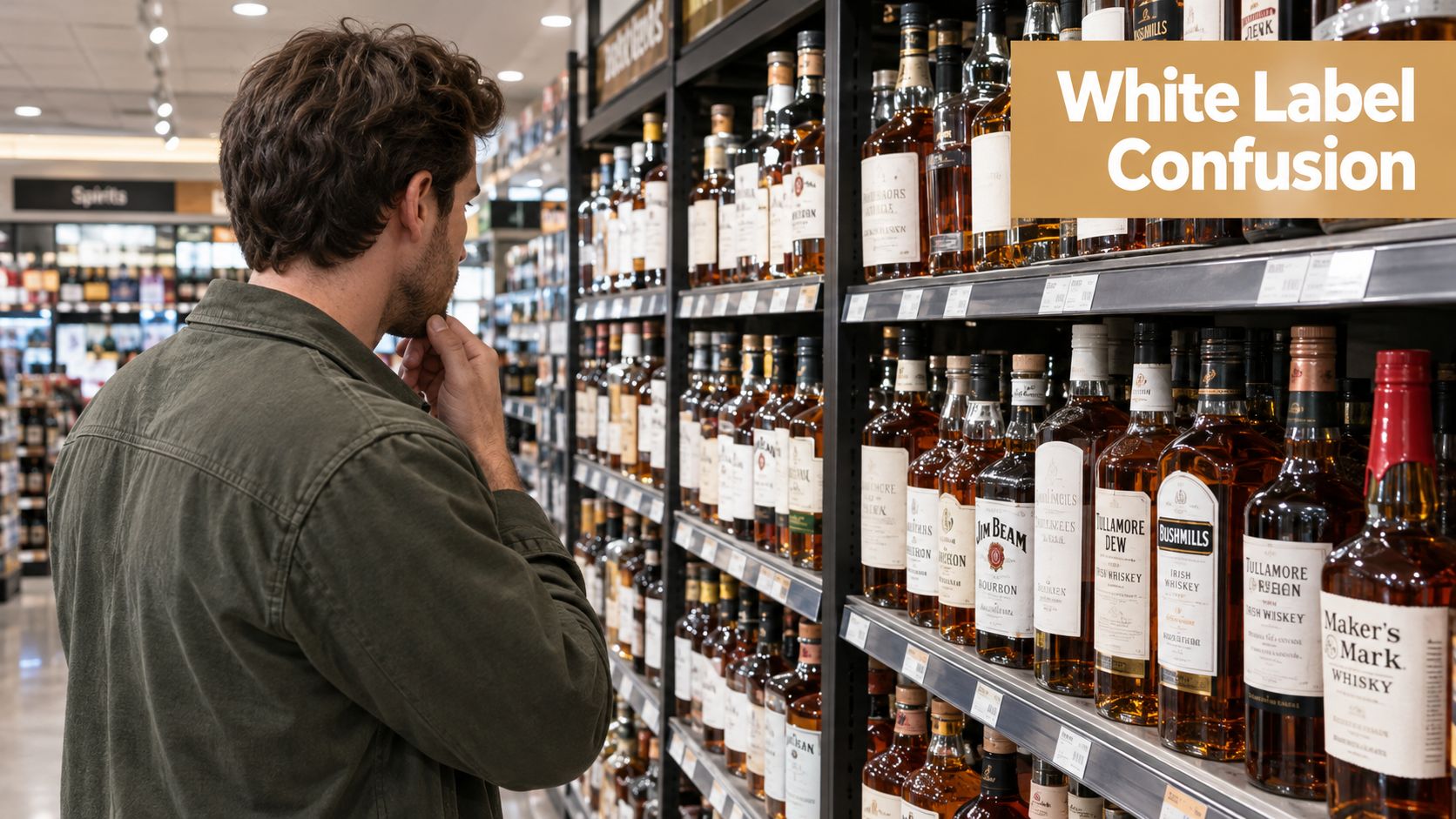
This guide separates the brand name from the color, explains why white packaging affects expectations, introduces famous Scotch examples, and gives you a practical way to read any bottle before buying it. Once you know which details matter, you can treat the white label as an invitation to investigate, not a promise about what's in the glass.
Introduction to Whiskey With White Label Confusion
A shopper searching for “whiskey with white label” may be trying to remember a bottle seen at a bar, identify a familiar Scotch, or find a modern whiskey with a clean-looking package. Those are three different needs hiding inside one phrase. The first clue is whether White Label appears as part of the product's official name or whether the bottle merely uses white as its main design color.
That distinction matters because packaging works quickly. In a crowded spirits aisle, a white label can make a bottle look calm and uncomplicated beside darker, busier designs. It may feel modern, export-friendly, or carefully restrained. None of those impressions confirms the whiskey's character, and white doesn't automatically mean light, young, smooth, or inexpensive.
The useful question isn't “What flavor does white mean?” It's “What does the rest of the label tell me?”
You'll find this phrase attached to established blended Scotch brands, especially Dewar's White Label, but you'll also see white paper and white backgrounds on American craft whiskey bottles. A small distillery may choose that look to create shelf contrast, highlight typography, or communicate a minimalist identity. The same visual signal can therefore appear on products with very different production stories.
The term also gets muddled with industry language. In broader packaging conversations, “white label” can describe an existing product sold under another brand's presentation, while “private label” can carry a different commercial meaning. For a useful comparison of those business terms outside whiskey, see this explanation of labeling choices for incense retailers. For whiskey shoppers, however, the immediate task is simpler. Separate the name, the design, and the liquid.
What White Label Really Means in Whiskey Branding
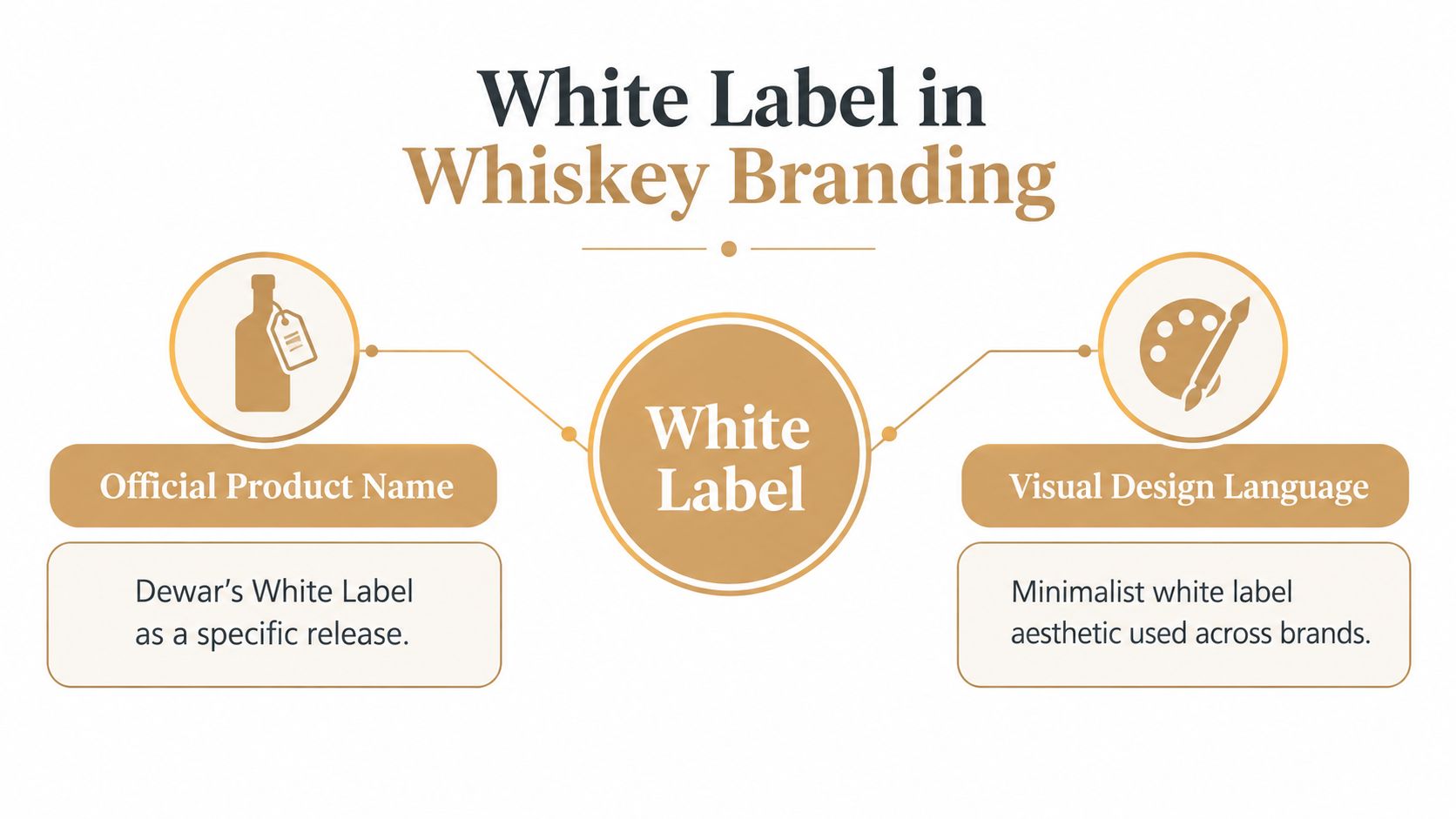
A bottle can carry a famous name and still use white as a design choice. White Label may identify a particular release, while a white label may express a brand's visual personality. The difference is similar to clothing: a sewn-in tag identifies the maker, while the shirt's color communicates style without revealing its fabric, fit, or durability.
Two meanings hiding on the shelf
The first meaning is an official product name. Dewar's White Label is a specific blended Scotch whisky, not a general name for every bottle with a white front label. The Dewar's White Label FAQ discusses that named release, while a shopper may be asking about white packaging more broadly.
The second meaning is visual branding. A distillery might print its name on white stock, place a crest on a white field, or pair a pale label with a clear bottle. That design can suggest simplicity, cleanliness, modern craft, or premium restraint. It says more about the brand's presentation than the liquid inside. A white label does not identify bourbon, rye, blended Scotch, single malt Scotch, or another whiskey category. For a closer guide to reading bourbon whiskey labels, check the category and required bottle details rather than relying on color.
What white label does not tell you
White is not an age statement or proof indication. It cannot tell you whether the whiskey came from a large blending house or a small American craft distillery, and it does not guarantee a gentle palate.
The phrase can also cause confusion outside the shelf. In packaging discussions, “white label” may describe an existing product sold under another brand's presentation, while “private label” can have a different commercial meaning. This comparison of labeling choices for incense retailers explains those business terms in another industry. For whiskey shoppers, separate the name, the design, and the liquid.
Read the bottle in this order:
- Product name: Is “White Label” part of the official name?
- Whiskey category: Does it identify bourbon, rye, Scotch, or another style?
- Producer details: Which distillery, blender, or bottler stands behind it?
- Age and proof: Are those details printed clearly?
- Blend language: Does it describe a blend, a single malt, or another composition?
A restrained white design can make a bottle stand out and create a premium impression. Treat it as a starting clue, not a flavor forecast.
How Label Color Shapes What You Expect to Taste
Color matters because shoppers make fast decisions. In a busy alcohol aisle, people can't fully study every bottle, so they use visual shortcuts such as shape, typography, illustrations, and label color. Packaging commentary has argued that color functions as a rapid signifier in complicated categories, while discussions of label psychology often connect white with simplicity, purity, and minimal presentation. VinePair's discussion of wineries moving away from color-coded labels explores why those visual signals deserve more attention than they usually receive.
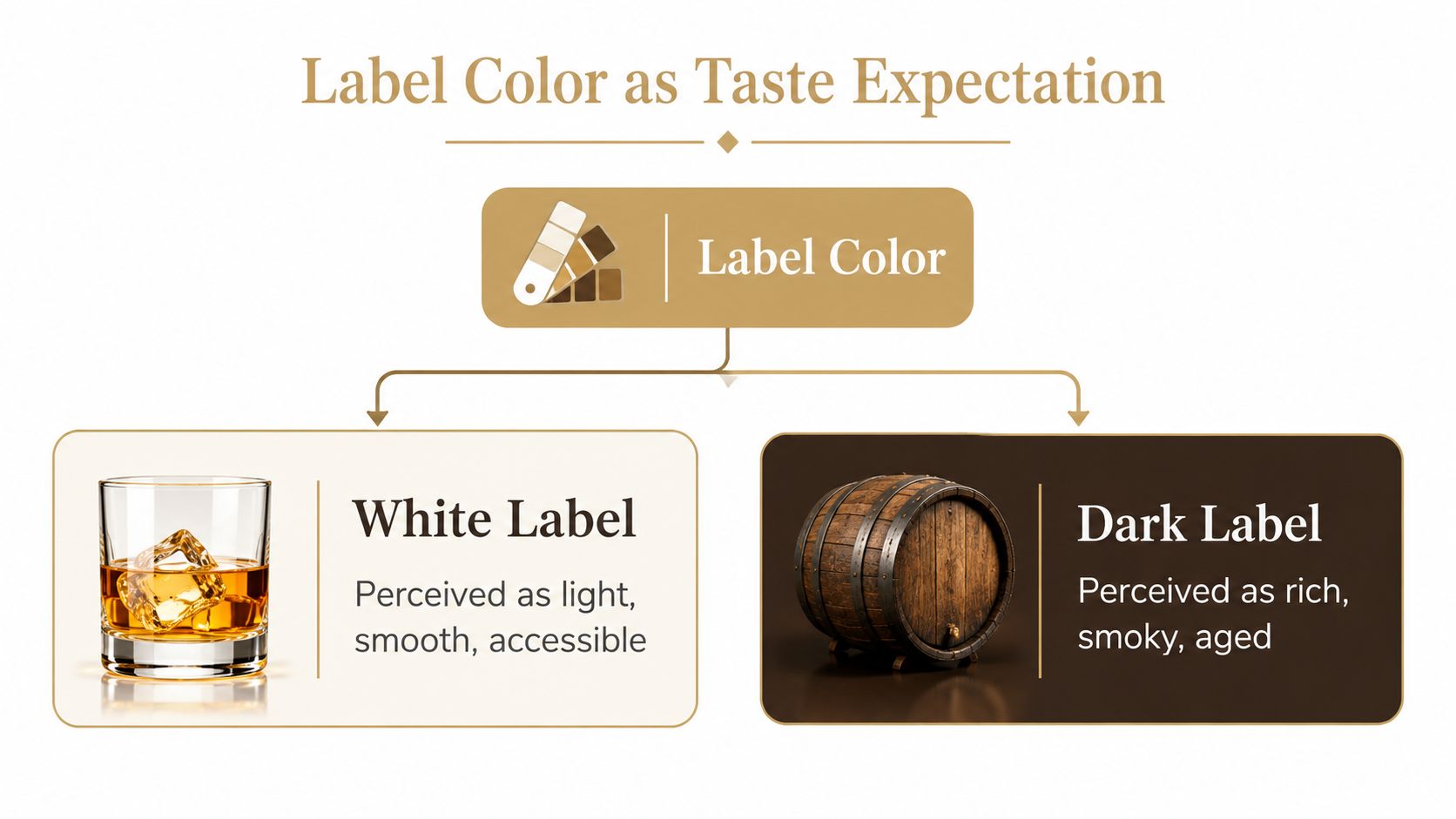
White tends to create a particular kind of expectation. A pale label with generous empty space may suggest cleanliness, accessibility, and premium restraint. The bottle can look less intimidating than one covered in ornate artwork, while still appearing deliberate and expensive. That impression may lead a shopper to expect a whiskey that's polished or easy to approach.
Expectation is not evidence
A white label might make you anticipate a lighter or smoother pour, but color doesn't control the grain bill, maturation, blending, or proof. A richly flavored whiskey can wear a minimalist white label, and an approachable whiskey can arrive in a dark, dramatic package. The design influences the first mental picture, not the liquid itself.
That distinction matters most for beginners. If you expect softness before tasting, you may notice sweetness and overlook spice. If you expect boldness from a dark package, alcohol heat or oak may seem more prominent. Packaging can shape attention, so a fair tasting starts by acknowledging the cue and then setting it aside.
White across different markets
The same design can communicate different things to different shoppers. In one market, white may feel modern and export-friendly. In another, it may suggest value, simplicity, or an everyday blend. American craft brands often use it to distinguish a bottle through clean typography and a handmade-feeling label, while a global Scotch brand may use it as part of a long-established product identity.
Before you buy, ask yourself what you're reacting to. Is it the name, the bottle shape, the paper, the typography, or the expectation of flavor? Then verify the liquid with the bottle's factual details. After purchase, use this practical guide to how to taste whiskey and compare your first impression with the label's visual promise.
Famous Whiskeys With White Labels You Will Recognize
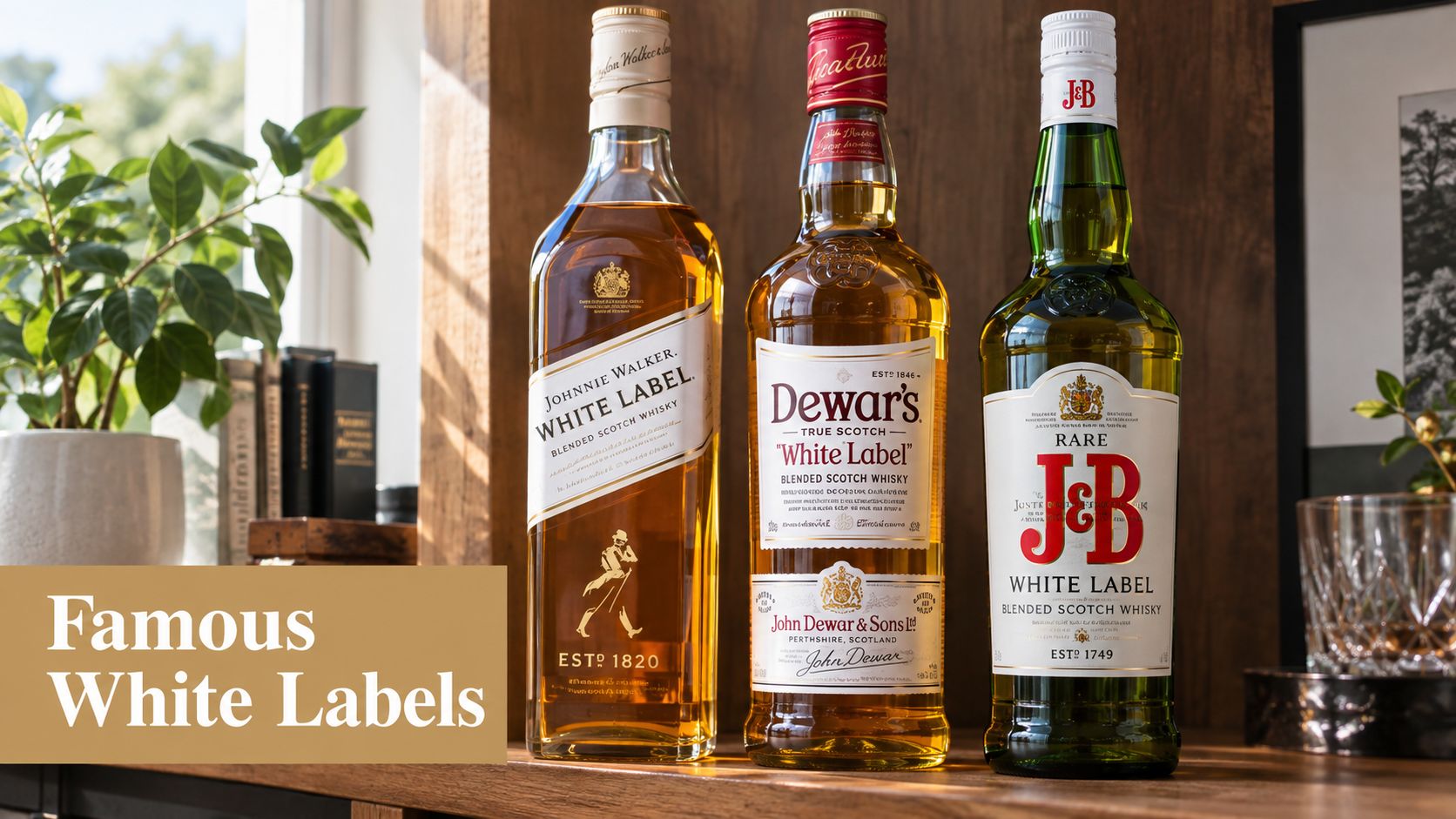
The history of white-label whiskey begins with a famous color system rather than with minimalist craft packaging. Johnnie Walker formally introduced its first color-coded lineup in 1909, using labels consumers already recognized. White Label identified the youngest blend, Red Label the mid-tier expression, and Black Label the premium blend, according to The Whiskey Wash's history of Johnnie Walker White Label.
At that launch, the labels also carried age distinctions. White Label carried a 6-year age statement, Red Label was aged 9 to 10 years, and Black Label was 12 years, as reported by the same historical source. Those details show how early twentieth-century Scotch branding used color to communicate hierarchy, maturity, and price positioning.
Heritage Scotch and named releases
Johnnie Walker's historic White Label is important because it proves the phrase wasn't invented for today's design-conscious distilleries. The color once formed part of a structured lineup, where shoppers could use the label to understand the brand's intended quality tier.
Dewar's White Label offers another familiar example of White Label as a product name. Here, the words identify a particular blended Scotch rather than merely describing the paper or ink. That's why a shopper who asks for a whiskey with white label may be looking for Dewar's, even if the original question began with a visual memory.
American craft and modern minimalism
American craft whiskey adds a different layer. Smaller distilleries often choose white or pale labels because the design feels uncluttered and distinctive. The bottle may use a simple wordmark, a restrained illustration, or a small amount of color to keep attention on the producer's identity. In that context, white usually signals brand character, not a standardized whiskey tier.
Look at the bottle's category and production language before assuming two white-label whiskeys belong together. One may be a blended Scotch with a long heritage, while another may be an American bourbon or rye made by a small distillery. They share a visual strategy, not necessarily a recipe, maturation profile, or drinking experience.
How to Identify Any Whiskey From Its White Label
Start at the front, but don't stop at the color. A reliable bottle check moves from broad identity to measurable details, then from the label to the glass.
Read the bottle in a fixed order
- Identify the whiskey type. Look for terms such as bourbon, rye, blended Scotch, or single malt Scotch. This gives you a useful category before you think about flavor.
- Check the alcohol content. Proof and alcohol by volume help you anticipate intensity and compare bottles more fairly. Don't let a pale label substitute for this information.
- Find the age statement. For whiskey, U.S. rules require domestic or foreign whiskey aged less than 4 years to carry an age statement, and a blend's stated age must reflect the youngest whiskey in the bottle, according to the applicable federal standard. Age isn't a complete quality score, but it gives you useful context.
- Read the producer details. Note the distillery, blender, bottler, location, and any statement about the source of the spirit. These details tell you more than a color palette can.
- Look for blending disclosures. In U.S. distilled-spirits labeling, a product using neutral spirits in blending must disclose the percentage of neutral spirits and the source commodity from which they were distilled, as described in the federal labeling regulation. That information helps distinguish branding from production method.
Take the bottle into the glass
A 2023 beginner guide recommends examining the bottle for whiskey type, alcohol content, and tasting notes, then swirling the glass to observe color and “legs.” It also recommends tilting the glass horizontally and nosing near the lower rim, a practical way to explore aroma without forcing your nose deep into the glass. See the full beginner's guide to drinking whiskey for that approach.
Taste neat first if you're comfortable. Take a small sip, let it move across your palate, and wait for the finish before deciding what you think. If the alcohol feels sharp, add a few drops of water and taste again. Write down one aroma, one flavor, and one finish note. You don't need professional vocabulary. “Sweet,” “spicy,” “dry,” “oaky,” or “warm” are useful observations.
Practical rule: Read the facts before the design, then taste before deciding whether the label's personality matches the whiskey.
Finding Your Favorite White Label Whiskey With Confidence
A white label is a starting point, not a verdict. It may lead you toward a named Scotch release, a familiar blended whisky, or an American craft bottle whose designer wanted a quiet, modern presentation. Your job is to separate what the package suggests from what the whiskey delivers.
That approach is especially useful with American craft spirits. In 2024, craft spirits held 7.5% of U.S. value share, while their volume share was 4.5%, compared with 4.6% in 2023 and 4.9% in 2022, according to the American Craft Spirits Association's data project. Those figures place craft spirits in a meaningful but relatively small part of the market, where discovery, differentiation, and education matter.
Build a personal comparison habit
Choose white-label bottles from different backgrounds rather than assuming they'll taste alike. Compare a named blended Scotch with a white-label bourbon or rye from a small American producer. Record the category, proof, age statement, aroma, first sip, and finish. Then ask whether the white design made you expect something that the liquid confirmed or contradicted.
You can also explore a broader range through this guide to different brands of whiskey. The point isn't to memorize every label. It's to develop a reliable habit of looking beyond the front panel.
Some people enjoy extending that discovery habit to other drinks and communities, including a wine club for music lovers. Whatever you taste, the same principle applies. Let the label inform your choice, but let your palate make the final call.
Try a blind comparison with a friend. Pour two samples without showing the bottles, taste them using the same glass, and reveal the identities afterward. You may find that your favorite white-label whiskey isn't the one that looked most refined on the shelf. That surprise is part of learning.
Blind Barrels offers quarterly blind whiskey tasting kits featuring four samples from small American craft distilleries, with tasting tables, reveal details, bottle access, and a game that lets you guess age, proof, and whiskey type. Visit Blind Barrels to turn white-label curiosity into a guided, social tasting experience where your palate gets the first vote.