

Forget everything you’ve been told about whisky being a solo act, reserved only for sipping by a fire. The truth is, jumping into whisky and food pairing is one of the most rewarding and surprisingly simple flavor adventures you can have. This isn’t some exclusive club for the experts; it’s a fun experiment just waiting to unfold in your own kitchen, especially for new whiskey drinkers.
Why Whisky and Food Pairing Is Your Next Flavor Adventure
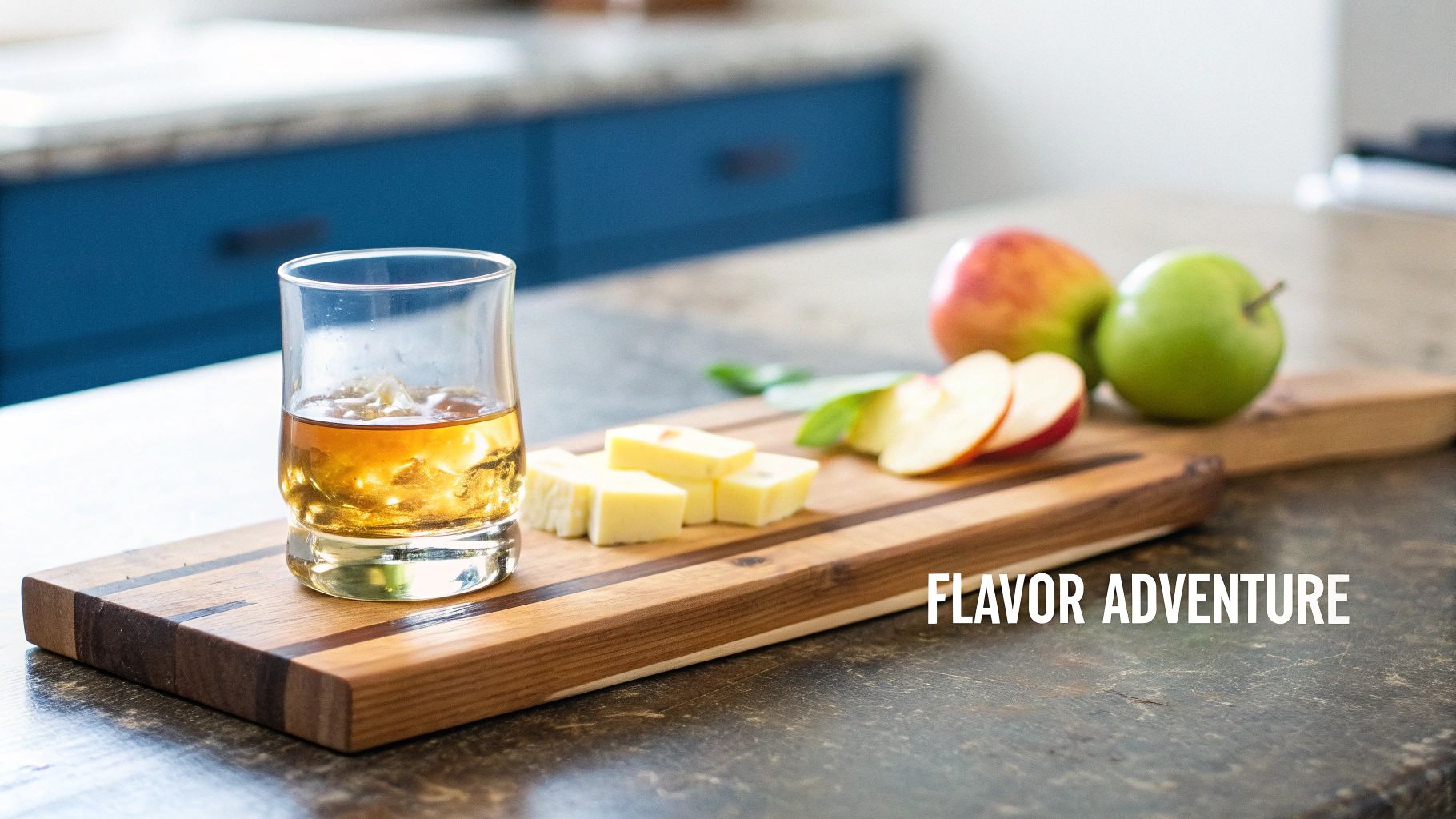
If you’ve ever had a great wine and cheese night, you already get the basic idea. The right combination can unlock entirely new dimensions in both the drink and the dish, creating a taste experience far greater than the sum of its parts. This guide is here to pull back the curtain on the whole process, turning what seems like a stuffy art form into a practical, enjoyable skill for any enthusiast.
We’re going to be focusing on the incredible variety coming out of American craft distilleries, which are producing whiskies that are absolutely perfect for pairing. From the bold spice of a rye from a brand like High West to the gentle sweetness of a wheated bourbon from Laws Whiskey House, there’s a whole world of flavor just waiting to meet your favorite foods.
Making Pairing Accessible for Everyone
For a lot of newcomers, the world of whisky can feel a bit intimidating. Our goal here isn't to make you memorize a rigid set of rules, but to build your confidence and help you trust your own palate. We'll walk through a few simple, foundational principles you can start using immediately, whether you’re matching a dram with a simple appetizer or a decadent dessert. Think of it as your practical toolkit for flavor discovery.
This isn’t just a niche interest anymore; it's a full-blown culinary movement. In fact, the flavored whiskey market, which often leans heavily on pairing potential, is projected to swell to USD 105.18 billion by 2032. This explosion is being fueled by creative bartenders and caterers who are crafting bespoke menus that increase trial rates among newcomers by 15%. You can explore more about the growing whiskey market on custommarketinsights.com.
Tip for New Drinkers: The best pairings aren't dictated by experts; they're discovered by you. The secret is to stay curious, experiment without fear, and pay attention to what your taste buds are telling you.
Ultimately, this guide is about one thing: helping you unlock amazing taste combinations you never thought possible. By the time we’re done, you'll have the know-how to create your own memorable whisky and food moments.
The Three Simple Rules of Flavor Pairing
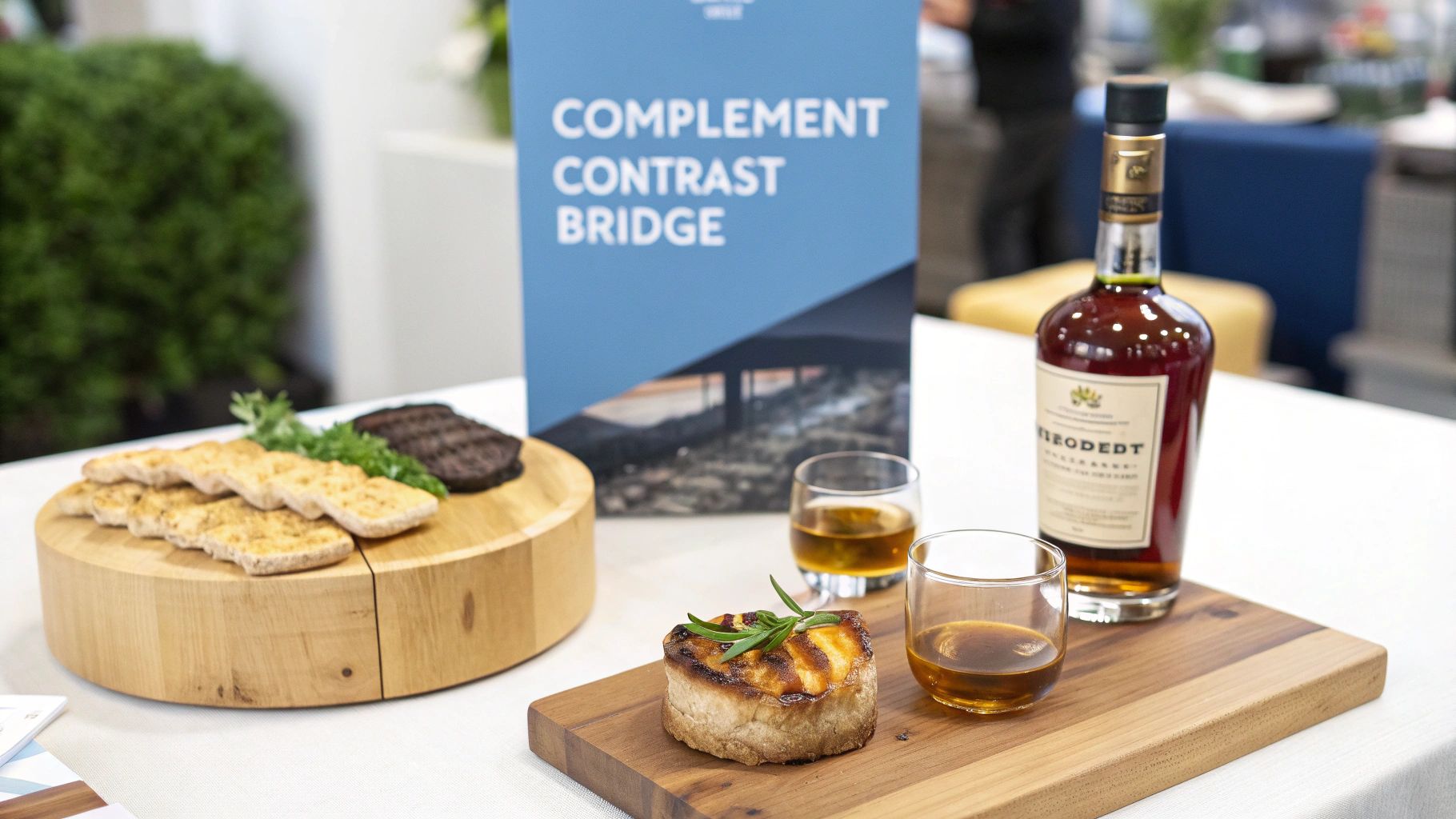
Diving into the world of whisky and food pairing can seem intimidating, almost like learning a new language. But what if I told you it all boils down to just three simple concepts? Forget the complex charts and rigid doctrines. Truly great pairings happen when you understand how flavors can either complement, contrast, or bridge one another.
Once you get a feel for these ideas, you’ll have a reliable toolkit for creating incredible combinations on your own. Think of these less as hard-and-fast rules and more as guideposts for your own experiments. It's all about trusting your palate and discovering what you enjoy, turning every tasting into a personal adventure.
To make these concepts even clearer, here’s a quick rundown of the three pillars of whisky pairing.
The Three Pillars of Whisky Pairing
| Pairing Principle | Core Concept | Beginner-Friendly Example |
|---|---|---|
| Complement | Finding similar flavors that amplify each other. "Like with like." | A smoky, peated American Single Malt with grilled BBQ ribs. |
| Contrast | Using opposing flavors to balance and cleanse the palate. "Opposites attract." | A spicy rye whiskey with a rich, creamy cheese. |
| Bridge | Connecting a shared, subtle flavor note in both the food and the whisky. | A caramel-heavy bourbon with a crème brûlée. |
With this framework in mind, let's explore how to put each of these principles into practice.
Rule 1: Complementing Flavors
The most straightforward path to a great pairing is finding flavors that are already in the same ballpark. This is the complementary approach, where the food and whisky share similar characteristics, and tasting them together makes both shine brighter. It’s like a duet where two voices are in perfect harmony, making the song feel richer and more complete.
Take a classic smoky, peated whisky, for instance. Pairing it with smoky BBQ ribs is a home run. The char and smoke from the grill grab onto the peat in the spirit, creating a deep, resonant flavor experience that just makes sense. The whole point is to build intensity by layering similar notes.
A fantastic place for beginners to start is by matching a sweet, vanilla-forward bourbon with a dessert that shares those cozy notes. Imagine a classic bourbon from a craft distillery like Wyoming Whiskey. Paired with a warm slice of apple pie and a scoop of vanilla ice cream, the bourbon’s caramel and vanilla notes will meld beautifully with the sweet, baked goodness of the dessert.
Rule 2: Contrasting Flavors
While complementing is about finding harmony in similarity, the contrasting approach creates magic through opposition. Here, you’re looking for a whisky and a food with opposing profiles that can cut through, cleanse, or balance each other in an exciting way. Think of it as a dynamic conversation between two totally different, yet equally compelling, personalities.
This technique is a lifesaver when you're dealing with rich, fatty, or intensely flavorful foods. The right whisky can act as a counterbalance, preventing any single element from completely taking over your palate.
A successful contrasting pairing strikes a perfect equilibrium. The whisky doesn’t steamroll the food, and the food doesn’t erase the whisky. Instead, their differences highlight the best in each other.
A brilliant example is pairing a spicy, high-rye American whiskey with a creamy, decadent cheese. The sharp, peppery bite of a rye, like one from Sagamore Spirit, will slice right through the fat and richness of a blue cheese or a gooey brie. This contrast hits the reset button on your palate with every sip, making each bite of cheese taste as amazing as the first.
Rule 3: Bridging Flavors
Finally, we have the most nuanced of the three principles: bridging. This is where you find a single, specific flavor note—often a subtle one—that exists in both the whisky and the food, creating a "bridge" that links them together. It’s less about the main event and more about finding that one secret, shared ingredient that makes the pairing click.
This technique demands a bit more attention to detail, but it can create some of the most memorable pairings you'll ever have. You’re searching for that "aha!" moment when you pinpoint a subtle connection that ties the whole experience together.
Here’s an easy way to try this out:
- Identify a note: Take a sip of bourbon and hunt for secondary notes like toasted nuts or dark fruit. Many American craft whiskeys, like those from Frey Ranch Distillery, are packed with these complex layers.
- Find its match: Now, find a food that features that same element. A salad with toasted pecans or a dessert with a dark cherry sauce would create that perfect flavor bridge.
- Taste the connection: Notice how that single shared note makes the entire pairing feel deliberate and harmonious.
A classic example is a bourbon with heavy caramel and toffee notes paired with a crème brûlée. The burnt sugar crust on the dessert is the ideal bridge to the sweet, oak-driven character of the spirit, elevating both beyond what they could be on their own.
How to Decode the Flavors in Your Glass
Before you can even think about pairing whisky with food, you’ve got to know what you’re working with. It's like being a chef who doesn't understand their ingredients—it’s a recipe for disaster. The same idea applies here. To find that perfect food match, you first have to get good at picking out the core flavors swirling around in your glass.
This isn't about becoming a certified spirits judge overnight. It's about building a practical "flavor vocabulary" that gives you the confidence to make smart pairing choices. Let's walk through the main styles of American craft whiskey to see how the journey from grain to glass creates such an incredible variety of tastes.
The Sweet Side of Bourbon
Bourbon is often the entry point for folks new to whiskey, and for good reason. It’s America’s native spirit, made from a mash bill of at least 51% corn and aged in new, charred oak barrels, giving it a signature, approachable sweetness. The corn lays down a sugary foundation, but it's that charred oak barrel that really does the heavy lifting, layering in those classic flavors we all know and love.
When you take a sip of a good bourbon, especially one from a distillery that obsesses over quality, here are the main notes you should be looking for:
- Sweet Staples: Vanilla, caramel, and toffee are the big three. Think liquid crème brûlée or a perfectly melted caramel candy.
- Fruity Undertones: You might pick up hints of cherry, baked apple, or a little orange zest, which adds a nice layer of brightness.
- Oak and Spice: Toasted oak, cinnamon, and nutmeg often show up to round out the profile, giving it depth and a warm, lingering finish.
A great example is a bourbon from Westward Whiskey out in Oregon, where the focus on high-quality grain builds a seriously rich and flavorful base. Getting a handle on these sweet and spicy notes is your first step to pairing bourbon with everything from a hearty beef stew to a decadent chocolate dessert.
The Spicy Character of Rye
If bourbon is a warm hug, rye whiskey is a firm, confident handshake. It’s bourbon’s spicier, drier cousin, made with at least 51% rye grain. That rye grain is what gives it that signature peppery, zesty profile, making it a fantastic choice for cutting through rich foods.
When you're tasting a rye, your palate will pick up a whole different set of cues. Be on the lookout for that distinct kick that really sets it apart from the pack.
A good rye whiskey should feel vibrant and energetic on your palate. Its spice isn't just about heat; it's about a complex profile that can run the gamut from black pepper to baking spices.
Tasting notes you'll commonly find in rye include:
- Dominant Spice: The first thing you'll likely notice is a sharp, pleasant kick of black pepper or piquant baking spices like clove and allspice.
- Herbal and Floral Notes: Don’t be surprised to find hints of mint, dill, or even dried grass, which add a cool, earthy complexity.
- Subtle Fruit: Underneath all that spice, you can often find notes of green apple or pear.
A well-made rye, like the ones coming out of New Riff Distilling, is perfect for slicing through the fat of cured meats or standing up to the bold flavors of a sharp cheddar cheese. For a deeper dive on picking out these nuances, check out our guide on how to taste whiskey like a pro.
The Nuanced World of American Single Malt
While bourbon and rye are defined by what grain they use, American Single Malt is all about process and creativity. This style is made from 100% malted barley at a single distillery, a framework that allows for immense diversity. The final flavor can swing wildly depending on the type of barley, the fermentation, and especially the barrels used for maturation.
Tasting an American Single Malt is an exploration. You’ll find some that are light and fruity, while others are deep, rich, and chocolaty. Look for notes like toasted nuts, dark chocolate, coffee, and a whole spectrum of fruit, from berries to stone fruit. Distilleries like Balcones Distilling in Texas are true pioneers of this style, creating bold, unique whiskies that pair beautifully with everything from a grilled steak to a plate of artisanal cheese.
With this foundation, you're no longer just drinking whiskey; you're decoding it. And that skill is the key that unlocks a world of incredible food pairings, turning a simple meal into an unforgettable experience.
Hosting Your First Whisky and Food Pairing
Alright, you’ve got the principles down. You know the difference between complementing and contrasting. Now for the best part: putting that knowledge into action.
Hosting your first whisky and food pairing isn't some high-brow affair that needs a professional setup. Far from it. This is an experiment you can run right at your kitchen table. The real goal here is to create a structured tasting that takes the guesswork out of it and helps you build a "palate memory" for what truly works.
Don't worry about getting it perfect on the first try. This is all about being methodical, paying attention to what you're sensing, and discovering those magical combinations that light up your taste buds. A simple, repeatable process is your best friend for building confidence and turning a casual night in into an unforgettable experience.
A Five Step Blueprint for Success
To get things rolling, just follow this simple five-step framework. This approach is designed to help you appreciate each element on its own before you bring them together. It’s a fantastic way to train your palate to pick up on the subtleties.
-
Isolate the Whisky's Character First: Before any food touches your lips, spend some quality time with the whisky. Give it a good nosing, then take a small sip. What are its defining characteristics? Is it on the sweeter side, like a bourbon from Frey Ranch Distillery, or does it have the spicy kick of a classic American rye?
-
Understand the Food's Primary Flavors: Now, taste the food pairing by itself. Is its dominant personality salty, sweet, fatty, or acidic? Try to pinpoint its main flavors and textures. For instance, is that cheese creamy and rich, or is it sharp and crumbly?
-
Re-taste the Whisky to Prime Your Palate: Head back to the whisky for another small sip. This simple step is crucial—it brings the whisky's profile right back to the front of your mind just before you introduce the food.
-
Experience Them Together: Time for the moment of truth. Take a bite of the food, chew it just a bit, and then take another sip of whisky while the food is still on your palate. This is where the magic (or the mismatch) happens.
-
Reflect and Record: So, what happened? Did the whisky elevate the food? Did an entirely new flavor pop up out of nowhere? Or did one completely steamroll the other? Jot down a few quick notes on a tasting mat or in a notebook.
This structured process is leaps and bounds more effective than just winging it. If you want more tips on getting your setup just right, check out our guide for conducting a whiskey tasting at home.
Setting the Stage for Discovery
You really don’t need much to create the right environment for a tasting. A simple tasting mat can make a world of difference—even a piece of paper with columns for "Whisky Notes," "Food Notes," and "Pairing Notes" will do the trick. It forces you to actively think about what you're tasting and helps you remember your favorite pairings for next time.
This hands-on approach is becoming more and more common. As cocktail culture continues its resurgence, whisky has cemented its place as a cornerstone of modern dining. The whiskey market in North America is on track to hit USD 110.7 billion, and since 2020, bartenders have reported a 40% increase in using flavored whiskies in drinks designed to pair with food. It’s a clear sign of just how versatile this spirit has become. Discover more insights about the flavored whiskey market on techsciresearch.com.
Tip for New Drinkers: The best way to learn is by doing. Every pairing, whether a perfect match or a total miss, teaches you something valuable about your own palate and the intricate dance of flavors.
If you're looking to turn a casual tasting into a more organized event with friends, that same structure is still key. And if your ambitions grow beyond just a casual get-together, learning how to start a supper club can give you a great roadmap for taking things to the next level. It's an awesome way to share the fun, learn from everyone's different perspectives, and make the discovery a communal celebration.
Perfect Pairings for American Craft Whiskey
Theory is great, but this is where the real fun begins. Now that we’ve covered the core principles, let's roll up our sleeves and explore some can't-miss combinations that truly shine with the diverse world of American craft whiskey. Think of these as a solid starting point for your own experiments, covering both savory small plates and decadent desserts.
The key is to always circle back to the 'why' behind each pairing. Every suggestion connects back to complementing, contrasting, or bridging flavors. It’s how you turn a simple snack into a genuinely memorable tasting experience.
To get a feel for the process, this simple map outlines the journey.
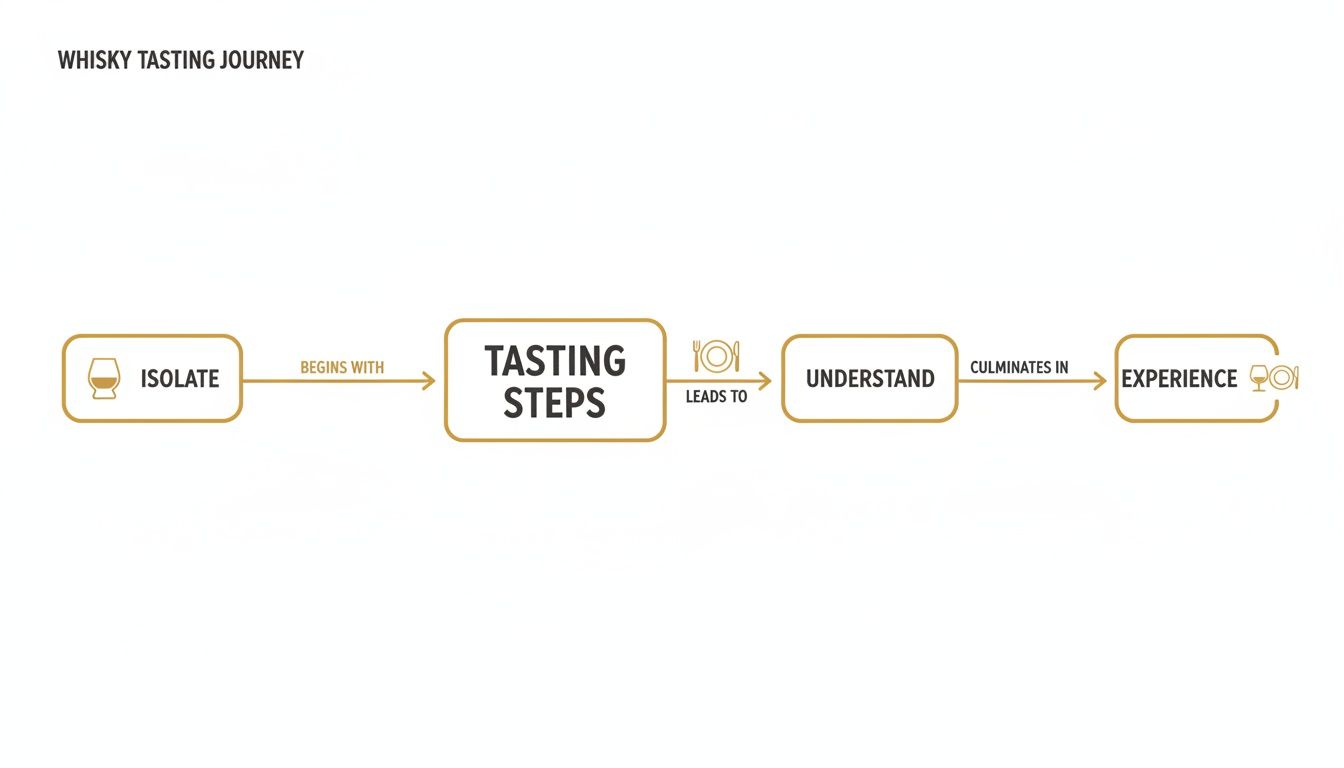
This flow—Isolate, Understand, and Experience—is all about appreciating each piece on its own before discovering the magic they create together.
Appetizer Pairings for Bold American Whiskeys
Starting a tasting with the right appetizer can set the tone for the entire evening. With their robust and varied profiles, American craft whiskeys offer some fantastic opportunities for savory bites.
-
High-Rye Bourbon with Aged Cheddar & Apple: A bourbon with a healthy dose of rye brings a delightful spicy kick to the spirit's natural sweetness. This profile is a perfect match for a sharp, aged cheddar. The whiskey’s spice contrasts beautifully with the cheese's creamy richness, while its caramel notes complement the cheese’s nutty side. Add a crisp apple slice to cleanse the palate and introduce a bright, fruity bridge between the two.
-
Spicy Rye Whiskey with Smoked Almonds: This is a classic for a reason—it’s a masterclass in complementary pairing. The peppery, zesty character of a true American rye finds its perfect partner in spicy smoked almonds. The nuttiness echoes the grain in the whiskey, while the smoke and spice amplify each other, creating a powerful and deeply satisfying combination.
When getting started, the best pairings are often the most direct. Don't overthink it. Try matching a bold whiskey with a bold flavor, or a sweet whiskey with a sweet dish, and just see what happens.
And don’t forget the classics! Flavors like Bourbon BBQ are a natural fit, often echoing the whiskey's own rich notes. The smoky, sweet, and tangy profile harmonizes perfectly with the oak and caramel found in most bourbons.
Dessert Pairings for a Sweet Finish
Whiskey and dessert can be an absolute showstopper. The right spirit elevates a sweet treat from simply good to unforgettable, creating the perfect end to any meal.
-
Wheated Bourbon with Peach Cobbler: Wheated bourbons are known for their softer, smoother, and sweeter profile, often carrying notes of honey, butterscotch, and fresh-baked bread. This makes them an ideal companion for a warm peach cobbler. The bourbon’s gentle sweetness complements the baked fruit and buttery crust without ever threatening to overpower it.
-
American Single Malt with Dark Chocolate: The growing category of American Single Malt offers incredible complexity, frequently featuring notes of dark fruit, coffee, and cocoa. A high-quality dark chocolate (70% cacao or higher) creates a stunning contrast. The chocolate’s bitterness cuts right through the whiskey's malt sweetness, while its rich cocoa character builds a beautiful bridge to the darker, roasty flavors in the spirit.
The world of whiskey pairing is always expanding, largely driven by curious drinkers like us. Flavored whiskey, for instance, is projected to become a USD 49.34 billion market by 2030. Honey-flavored variants, which already command a 34.83% share, are especially popular in the U.S. for their versatility. A whiskey with honeyed notes, for example, is a knockout with salted caramel chocolates. It’s a perfect example of how the bold proofs of American craft whiskies are ideal for everything from smoky BBQ to creative cocktails.
These are just a few ideas to get you started. Use them as a launchpad, trust your own palate, and never be afraid to try something new. The most rewarding discoveries are almost always the ones you make yourself.
Sharpen Your Palate with a Blind Tasting Game
Let's be honest, the best way to really understand flavor is to get your own biases out of the way. Labels, price tags, and those romantic distillery stories are all part of the fun, but they absolutely color what you think you're supposed to be tasting. A blind tasting game is the ultimate training ground for mastering whisky and food pairing because it forces you to trust one thing and one thing only: your own senses.
When the labels are off the table, all that brand loyalty and expectation vanishes. You’re left with just the spirit in the glass, pushing you to figure out what it's truly all about. This practice builds you into a more intuitive, confident taster—and that's the real secret to finding pairings that genuinely click for you, not just the ones the experts tell you to like.
How a Blind Tasting Game Works
Setting up a blind tasting at home is surprisingly simple and a fantastic way to spend an evening, especially with a few friends. The goal isn't necessarily to nail a whiskey's distillery and age statement; it's about starting a conversation about what you're all actually tasting and seeing how that plays with different foods. It turns a regular get-together into something far more engaging and memorable.
You can always pull a few bottles from your own shelf, but using a curated kit makes the whole process seamless. These kits often bring in unique bottles from distilleries you might never have discovered on your own, adding a whole other layer of exploration to the night. For anyone just starting their whiskey journey, it’s a perfect way to try a bunch of different profiles without having to buy a full bottle of each.
A blind tasting isn't a test; it's an exploration. It gives you permission to be wrong and the freedom to discover what you genuinely enjoy, creating a much stronger foundation for your food pairing journey.
The process basically turns sensory analysis into a fun, interactive game. As you and your friends start comparing notes, you'll be amazed at the different things people pick up from the same glass. One person might find baked apple in an American craft whiskey, while someone else gets hit with cinnamon and oak. Neither of you is wrong—you’re just interpreting it differently. That shared discovery is where the real learning happens.
Uncovering Authentic Pairings
The real magic starts when you bring food into the mix. Without knowing if you’re sipping a famous brand or a small-batch gem, your pairing choices become so much more genuine. You might just find out that a little-known rye from a small American distillery is the absolute perfect partner for your favorite sharp cheddar—a match you might have completely overlooked otherwise.
Here’s a simple game you can try:
- Pour the Samples: Serve three to four different whiskies without telling anyone what they are.
- Taste Solo: Have everyone taste each sample on its own and jot down a few quick thoughts.
- Introduce One Food: Bring out a single food item, like a piece of dark chocolate or some smoked almonds.
- Pair and Discuss: Everyone tries the food with each whiskey and then votes on which pairing they think is the best.
- The Big Reveal: Finally, unveil the whiskies and talk about why certain pairings worked so well.
This simple exercise does wonders for sharpening your palate and building a powerful mental library of flavor combinations. For a few more ideas on putting together your own event, check out our guide on using a blind whiskey tasting kit to create an unforgettable experience.
Your Whisky and Food Pairing Questions, Answered
As you start experimenting, you're bound to have some questions. It’s all part of the fun. Let’s tackle some of the most common ones we hear from folks just getting their feet wet.
What's the Easiest Whisky to Start Pairing With?
If you’re just starting out, you can’t go wrong with a classic American Bourbon. It's probably the most forgiving and versatile partner you’ll find for food.
Bourbon’s natural sweetness—full of caramel, vanilla, and soft oak notes—plays incredibly well with a huge range of dishes. You can pour it alongside anything from smoky BBQ and grilled steaks to a slice of apple pie, and it just works. Its balanced profile is the perfect canvas for learning how to complement or contrast flavors without getting overwhelmed. Think of it as an easy win to build your pairing confidence.
A Quick Tip for Beginners: Don't hesitate to add a few drops of water to your whisky, especially when you're pairing it. This little trick can tame the alcoholic heat and coax out some of the quieter, more subtle flavors, making it much easier to find those delicious connections with your food.
Does the Proof of the Whisky Really Matter for Pairing?
Absolutely. The proof, or ABV (alcohol by volume), is a game-changer. High-proof and cask-strength whiskies pack a much bigger punch in both flavor and alcoholic heat.
While that intensity can easily steamroll delicate foods, it’s exactly what you need to stand up to rich, fatty, or powerfully flavored dishes. Imagine a bold, cask-strength American single malt from a distillery like Westland Distillery. That kind of power can slice right through the richness of a marbled ribeye or hold its own against a funky blue cheese. For lighter fare, a standard-proof whisky (around 40-46% ABV) is usually the smarter move to keep everything in balance.
Can I Actually Pair Whisky with a Full Multi-Course Meal?
You sure can! A full whisky-paired dinner is an incredible experience when done right. The secret is to think about progression, moving from lighter to heavier whisky styles as the meal goes on.
You might kick things off with a delicate, fruity American Single Malt alongside an appetizer salad. For the main course—say, a hearty pork roast—you could bring in a spicier, more robust Rye. To finish, a rich, cask-finished Bourbon is a perfect match for a decadent chocolate dessert. Just be sure to drink plenty of water between courses to keep your palate fresh and, of course, stay hydrated.
Ready to stop guessing and start discovering your next favorite American craft whiskey? The Blind Barrels tasting experience is designed to let your palate be the judge, cutting through brand hype and bias. Each kit is a curated adventure, helping you sharpen your senses and find those perfect pairings with total confidence.
Explore the world of blind tasting at https://www.blindbarrels.com.