

You've found a whisky gift guide, opened three shopping tabs, and somehow they're all showing the same decanters, rocks glasses, and engraved flasks. A bottle seems like the safe choice until you remember the recipient may already own it, or may not even like that style of whisky.
The better question isn't “Which bottle costs enough?” It's “What would make this person enjoy whisky more?” Their experience level, palate, and plans for sharing a gift matter more than the price tag. For many people, a guided tasting or a well-chosen tool will be more personal than another impressive-looking bottle.
Why the Best Whisky Gift Is Not Always a Bottle
A familiar gift-buying trap goes like this: you search for whisky drinker gifts, scroll through polished gift boxes, and assume a more expensive bottle will feel more thoughtful. But the bottle may duplicate one on the recipient's shelf, or land on a flavor they don't enjoy. A peaty whisky can delight an enthusiast and disappoint someone who prefers soft, sweet pours.
A gift should fit the person's whisky journey, not just the spirit category. A curious beginner may want a relaxed way to learn how to taste. A collector with a full bar might prefer a discovery experience, a useful tasting tool, or a chance to share a flight with friends. For someone who mostly mixes cocktails, a bottle selected for their favorite drink can make more sense than a rare single malt chosen for its label.
There's a broader reason to consider experiences. Beverage-industry coverage has reported that 82% of Americans prefer experiences over physical gifts, alongside growing attention to experience-led premium spirits and at-home entertaining (Beverage Industry's spirits gifting coverage). That doesn't mean every whisky lover wants an event instead of an object. It does mean the buyer should think beyond what can sit on a shelf.
My rule: Buy another bottle only when you know the recipient's taste or have a good reason to think they'll enjoy discovering something new.
Start with the person, then choose the format. Would they enjoy learning to identify aroma and flavor? Do they like hosting? Are they drawn to independent producers and unfamiliar styles? Or do they want a beautiful, practical glass they'll reach for every week?
Those answers lead to better whisky drinker gifts than a price-first search. A good present makes the recipient feel understood. Sometimes that's a bottle; often, it's a reason to pour, pay attention, and share the experience.
How Whisky Fits Into America's Gift Habits
Whisky isn't an obscure present chosen only by dedicated collectors. Alcohol already has a familiar place in American holiday gifting, family celebrations, and entertaining, and whisky ranks among the spirits consumers commonly favor.
Numerator reported that 64% of U.S. households purchased alcohol during November and December, spending an average of $102 on alcohol across those two months. Among 1,100 surveyed consumers who had made holiday alcohol purchases, 85.9% said their purchase was for a holiday-related event or gift. Within that group, 82.3% bought alcohol for consumption at a holiday event, and 60.6% purchased alcohol as a gift (Numerator's holiday spirits findings).
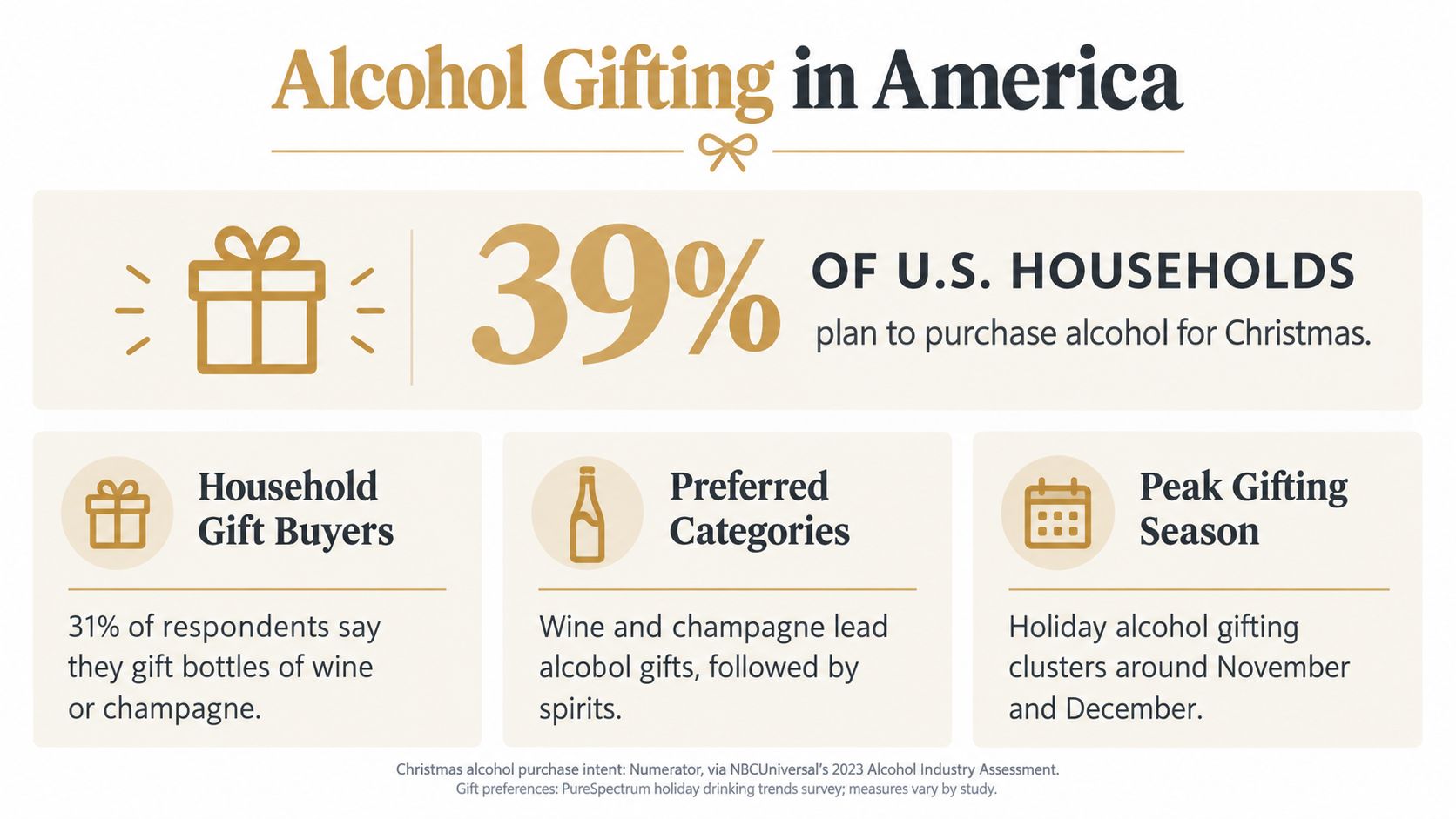
Those figures point to more than a shopping habit. Alcohol gifts often accompany a shared event, a family gathering, or a host's invitation. Numerator found that alcohol was most commonly given to family members, and nearly one in four surveyed buyers also gave it to a party host. So a whisky gift can be picked for someone to enjoy alone, opened with relatives, or brought along as a gesture of thanks.
Whisky has broad appeal, but taste still matters
In a 2024 Quantilope survey of more than 500 U.S. consumers comparing vodka, rum, tequila, whiskey, and cognac, whiskey was the second-most preferred category overall. 22% named it as their favorite, behind vodka at more than 25%. The survey also found a strong association between whiskey and gift-giving motivations, alongside cognac (Quantilope's alcohol preferences survey).
That makes whisky a credible choice for a range of occasions, not a gamble reserved for specialists. But broad appeal doesn't erase individual preferences. Choose a style the recipient already enjoys when you know it, or make the gift about exploration when you don't.
The Four Main Types of Whisky Gifts Explained
There are four useful ways to think about whisky gifts: experiences, glassware and accessories, preservation tools, and bottles. Each can work beautifully. Each can also miss the mark when the buyer chooses for appearance or price instead of use.
| Whisky Gift Type | Best For | Watch Out For |
|---|---|---|
| Experience | Beginners, curious drinkers, couples, and groups | A tasting can feel intimidating if it lacks simple guidance |
| Glassware and accessories | Someone who enjoys a regular tasting ritual or needs a practical tool | A wide-rim tumbler isn't ideal for someone focused on aroma |
| Preservation and storage | A drinker with several open bottles or a slow, deliberate tasting habit | Decorative stoppers won't solve poor storage conditions |
| Bottle | Someone whose palate you know, or a milestone worth marking | They may already own it, or dislike its style |
Experiences create a reason to pour
A tasting flight, guided event, or discovery kit gives the recipient something to do, not just something to unwrap. It's especially useful when you don't know exactly which bottle they'd choose. The common mistake is picking an experience that's too technical for a beginner or too predictable for an experienced drinker. Match the format to their curiosity and comfort level.
Glassware should serve the way they drink
A tulip-shaped nosing glass supports aroma-focused tasting, while a tumbler suits a relaxed pour or cocktail. Don't assume the most elaborate set is the most useful. If you're comparing options, this guide to whiskey gift sets can help you think through what a set should include.
Preservation gear is a practical choice
Small airtight amber bottles and sensible storage suit someone who opens bottles gradually. A gift that includes bottles and labels can help them keep track of what they've transferred and when. The frequent mistake is buying a handsome accessory without considering whether it solves a real storage problem.
A bottle is still a good gift in the right hands
A bottle makes sense when you know the recipient's taste, have a trusted recommendation, or want to celebrate with a particular producer or style. It's less reliable as a blind guess for someone whose bar is already full. Treat the four categories as a menu, not a ranking, and pick the one that fits the person.
Experience Gifts That Put the Focus on the Palate
A guided blind tasting turns a whisky gift into an activity. Instead of judging a bottle by its label, the recipient can focus on aroma, flavor, and finish, then discover what was in the glass afterward. For someone who already owns plenty of whisky, that shift from collecting to exploring can make the gift feel fresh.
Give the tasting a clear structure
Blind Barrels is one option for a recipient who'd enjoy a guided format. Each quarterly kit includes four blind samples featuring small American craft distilleries, a tasting table for aroma, tasting, and finish notes, and a QR code that reveals each sample's distillery, age, and proof. The reveal also gives members direct access to purchase full bottles at a discounted price. A guessing game lets tasters estimate the age, proof, and whiskey type, then score how accurate their palate was.
That format works for beginners because it offers a repeatable way to pay attention. Serious Eats recommends approaching a whisky glass gradually: start near the position equivalent to 12 o'clock, move down toward six, and avoid pushing your nose deep into the glass, which can quickly cause nose blindness (Serious Eats' whisky glass and tasting guide). A worksheet gives those observations somewhere to go. The reveal lets the drinker compare a first impression with the sample's details.
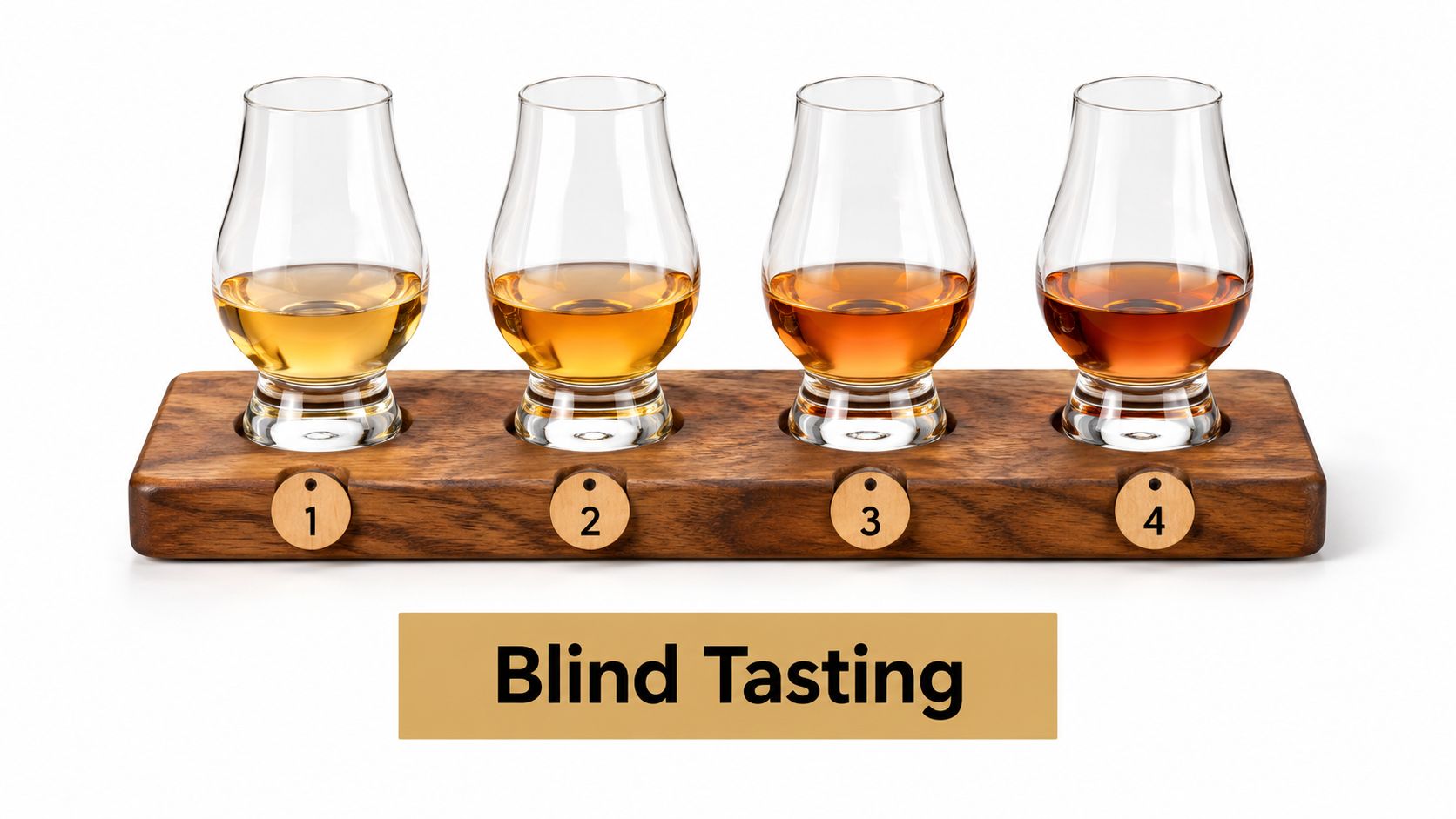
Other experience gifts work for different schedules and tastes. A local distillery tour suits someone who likes production stories and seeing how a spirit is made. Virtual tastings can bring a host and a group together from different homes, while a curated flight kit lets the recipient set the pace and invite friends over. If you're searching for more ways to give someone an activity instead of another object, browse these unique experience gift ideas.
A useful tasting gift makes it easy to begin, gives people something to compare, and leaves room for conversation.
That's why experiences suit couples, hosts, and groups. A couple can taste side by side and compare notes. A host can open the kit for guests. A group can turn the reveal into a guessing game. The gift doesn't depend on everyone having expert vocabulary; it just needs to give them a reason to pay attention together.
Matching the Gift to the Recipient's Whisky Journey
The easiest way to choose a whisky gift is to picture the person using it. Think about what they already own, how they drink, and what they seem curious about. You don't need a formal profile. A few honest observations can point you toward the right category.
The curious beginner
They've started ordering whisky or keeping a bottle at home, but they don't yet know which styles they like. Skip the rare, high-proof bottle that expects them to know what they're tasting. A guided flight or a pair of tulip-shaped glasses is a better fit because it makes exploration less intimidating. If you're sharing a tasting, let them approach the glass slowly and describe what they notice in their own words.
The seasoned collector
Their shelves are organized, and they have opinions about regions, distilleries, and releases. Don't assume they need another prestige bottle. A tasting experience with unfamiliar producers gives them a chance to explore beyond their usual rotation. If they enjoy collecting tasting notes, pair the experience with a journal or a tool they'll use rather than a decorative accessory they may never take out of its box.
The cocktail-focused drinker
They reach for whisky when making an Old Fashioned or another favorite cocktail. Choose a bottle that suits that use if you know their preferences, or give them practical glassware and a clear-ice tool if their bar setup could use it. A nosing glass may be less compelling if they mainly want a good mixing glass and an easy evening drink.
The adventurous enthusiast
They enjoy trying unfamiliar bottles and swapping impressions with friends. This is the natural audience for a blind tasting that features independent American producers. For a host, a shared flight can be more engaging than handing over a bottle with no occasion to open it.
The same principle applies to non-whisky gifts: match the present to the person's interests and the way they use it. If you're also shopping for someone who values well-made accessories, personalized leather watch cases offer a similarly personal approach to choosing something useful rather than generic.
Why American Craft Whiskey Deserves Its Own Lane
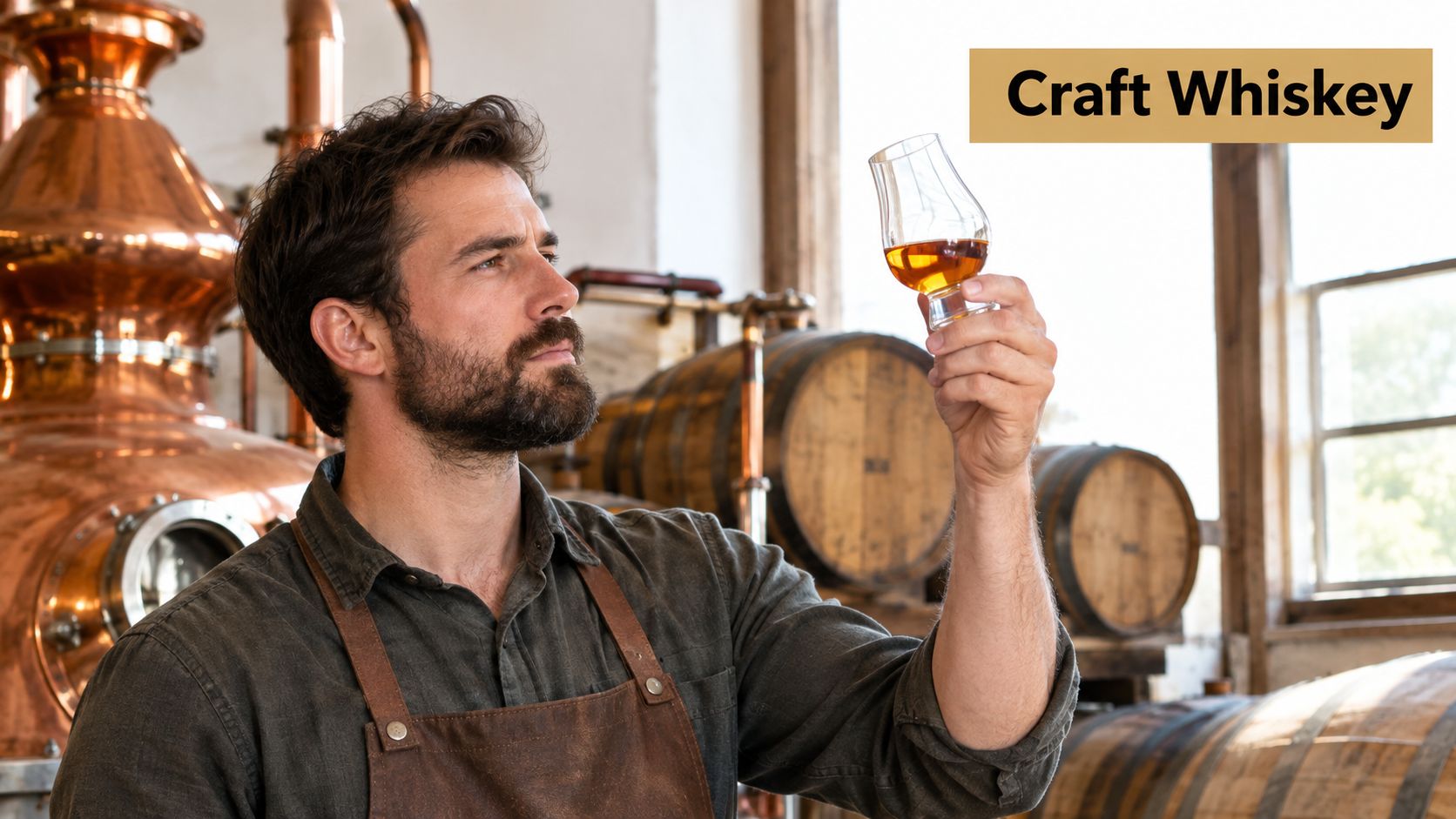
American craft whiskey deserves more than a passing mention as a substitute for a famous national brand. The American Craft Spirits Association defines a craft distillery as an independently owned producer making fewer than 750,000 proof gallons annually. That definition gives the word “craft” a concrete basis, rather than treating it as a vague synonym for premium or small-batch.
The U.S. craft-distilling sector has expanded substantially. The number of American craft distilleries grew from about 600 in 2013 to roughly 3,000 in 2024. Craft spirits represented about 7.5% of total U.S. spirits value in 2023, generating approximately $7.8 billion in sales (Whisky Advocate on craft distilling and American whiskey). Craft isn't a novelty category with nothing behind it. It gives gift buyers access to independent producers, regional styles, and bottles a recipient may not have tried.
A bottle can connect a palate to a place
Independent production can make a gift feel more specific. Instead of choosing a bottle because the label is familiar, you can choose one for its regional character, the producer's approach, or the story behind the distillery. That's especially effective when the recipient likes learning where a whisky comes from, not just how it tastes.
The local connection has a tangible dimension, too. New York's 2020 economic-impact study reported $4.4 billion in total economic output from the state's distilled-spirits industry, including $3.2 billion benefiting New York directly. The statewide craft-distilling industry supported 11,540 full-time jobs and generated $962.2 million in wages and benefits (The Whiskey Wash's coverage of New York spirits and craft distilling).
A craft bottle can therefore give someone a new taste to explore and a connection to a particular producer or place. For more on what makes the category distinct, read about American craft whiskey. It's a strong choice for the drinker who values discovery and for the buyer who wants the gift to have a story beyond brand recognition.
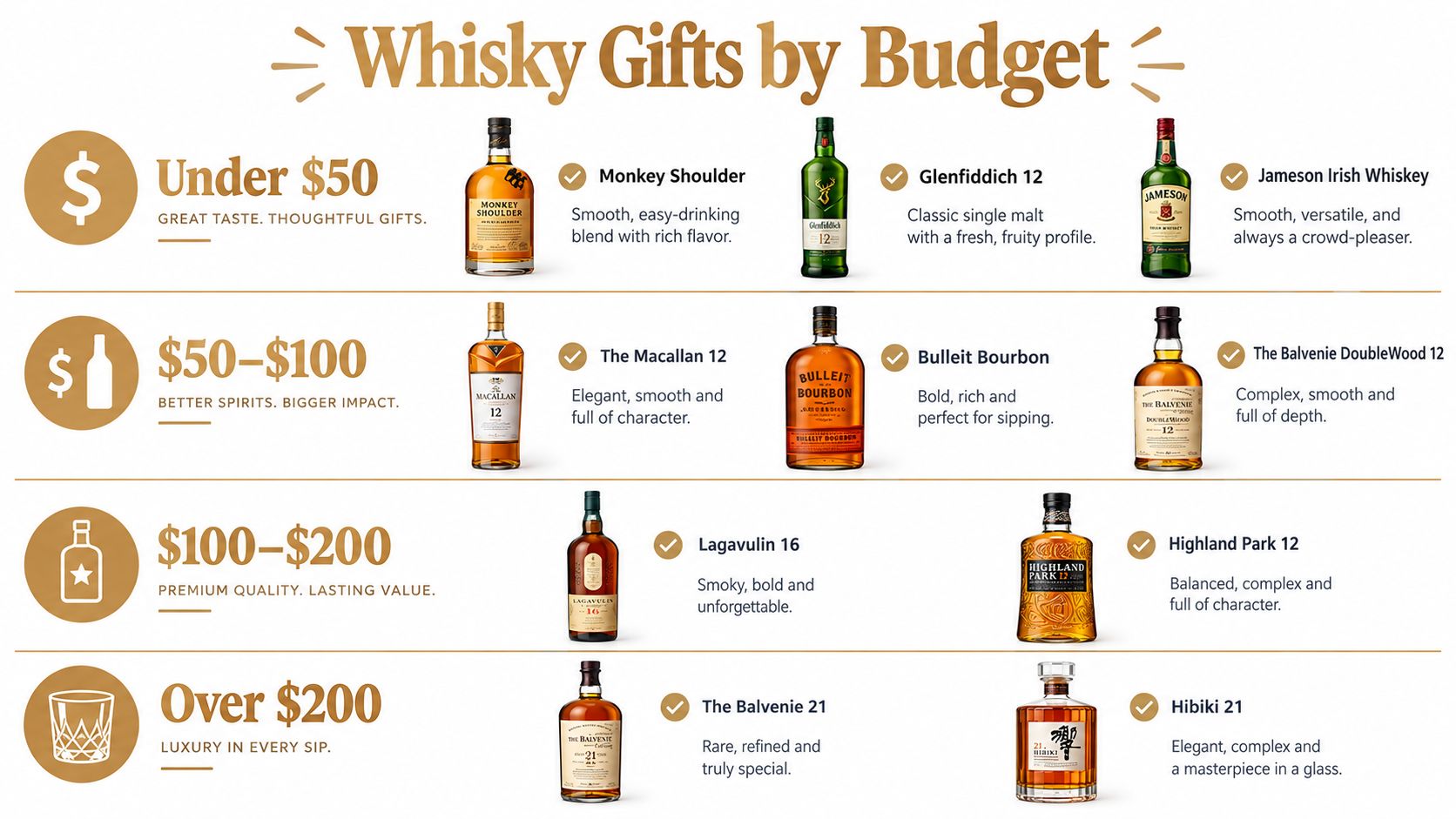
Price-Tiered Picks From Under $50 to Over $200
Set your budget, then choose a gift category that fits the recipient. A modest present can still be thoughtful when it solves a real need or gives the person a new way to taste. A high price won't rescue a gift that ignores what they enjoy.
Under $50
Choose a useful tasting tool or small experience. A quality tulip-shaped glass, a tasting journal, or an entry-level guided flight can suit a beginner, a host, or a friend who wants to try something new without committing to a full bottle. In comparative sensory testing, tapered whisky glasses were associated with lower perceived ethanol burn and stronger impressions of fruit, floral character, and balance (the comparative glass-vessel aroma study). That's a good reason to pick a well-designed tasting glass over a random bottle at the same price when aroma matters to the recipient.
$50–$100
Lean toward a curated tasting kit or a well-chosen craft bottle. This range works for a birthday, a thank-you, or a host gift when you want the present to feel considered but not extravagant. A flight kit is safer if you don't know their preferred style. Choose a single bottle when you do, and make sure it suits how they drink whisky.
$100–$200
Buy a more complete discovery experience or a distinctive bottle. This tier can fit an anniversary, a retirement, or a milestone celebration. Consider a tasting experience for someone who values learning and sharing, or a craft whiskey from a producer they haven't explored. If they already have plenty of bottles, prioritize the experience.
Over $200
Reserve this tier for a known preference or a special outing. A premium bottle makes a strong gift when you know the recipient's taste and can explain why you picked it. A full distillery experience may be more memorable for someone who enjoys travel, production stories, and tasting with company. Don't spend more just to make a gift feel important; spend more when the recipient will appreciate the specific choice.
If you're coordinating a group present, an EasyRegistry gift amount calculator can help contributors settle on a comfortable shared amount. Before ordering a bottle or booking an experience, check shipping availability and state restrictions, then leave enough time for delivery. Good presentation helps, but the clearest sign of thought is choosing something the recipient will use or enjoy.
Blind Barrels offers guided blind tastings featuring small American craft distilleries, with samples, tasting notes, QR-code reveals, and a palate-scoring game. If you want a whisky gift that invites discovery and gives the recipient something to share, visit Blind Barrels and explore its gift options.