

Pairing food with whisky is all about matching the spirit's complex flavors with foods that either complement or contrast them, creating a tasting experience that’s greater than the sum of its parts. The real magic happens when the whisky and the dish elevate one another, unlocking new layers of aroma and taste you’d never find by enjoying them on their own.
Why Whisky and Food Belong Together
Let's get one thing straight: the old-fashioned idea that whisky is only for sipping by itself after dinner is long gone. Today, pairing whisky with food is a celebrated culinary art, and a new generation of enthusiasts is diving in headfirst, exploring flavor in a way that’s both exciting and approachable. The right pairing can turn a simple meal into something truly memorable.
This isn’t just some passing trend; it’s a genuine shift in how we enjoy spirits. The global flavored whiskey market is on track to jump from USD 37.41 billion in 2025 to a staggering USD 49.34 billion by 2030, all thanks to people looking for more dynamic dining experiences. This movement has also brought a more diverse crowd to the table, with women now making up 37% of whiskey drinkers. You can get a closer look at the numbers in this industry report.
For Blind Barrels subscribers, this means every quarterly kit is a fresh opportunity for a food-pairing adventure. The blind tasting format is perfect for this, letting you sharpen your palate and discover what truly works without any preconceived brand bias.
The Rise of American Craft Whiskey in Pairings
American craft whiskey is really at the heart of this pairing revolution. Craft distillers are playing with unique grains, innovative aging techniques, and bold flavor profiles that make their spirits incredibly versatile. From the spicy kick of a high-rye bourbon from a brand like High West to the delicate floral notes of an American single malt, the variety is just immense.
This diversity is what makes American craft whiskey so great for beginners. You don't need to be an expert to get started. The core idea couldn't be simpler: just trust your own taste.
The best whisky and food pairing is the one you enjoy the most. There are guidelines, of course, but there are no rigid rules. The real goal is to experiment, have fun, and find the combinations that light up your palate.
Getting Started Is Easier Than You Think
You can kick off your pairing journey with things you probably already have in your kitchen. Think about matching a classic bourbon with a piece of rich dark chocolate, or a spicy rye with a sharp slice of aged cheddar. These simple matchups are a fantastic way to grasp the basic principles of how flavors play off each other.
If you’re still on the fence, here are a few reasons why now is the perfect time to start exploring:
- It’s approachable: You don’t need pricey bottles or gourmet ingredients to begin.
- It’s educational: Pairing helps you pinpoint specific notes in both the whisky and the food, making you a more mindful and skilled taster.
- It’s social: Hosting a pairing night is a fun, engaging way to connect with friends over a shared tasting experience.
How to Properly Taste Whisky and Food
So, you're ready to dive into your first real whisky and food pairing? Fantastic. The whole point is to create a third, totally new flavor experience that’s greater than the sum of its parts. Forget about stuffy rules for a minute—this is all about trusting your senses and figuring out what you actually enjoy. It’s a simple process, really, and one that anyone can get the hang of.
First things first, let’s isolate the whisky. Pour a little into a proper glass, give it a gentle swirl, and get your nose in there. What are you picking up? Take a slow inhale. Are you getting sweet notes like caramel, something spicy like cinnamon, or maybe a wisp of campfire smoke? This isn't just for show; nosing the whisky primes your palate for what’s coming.
Now, take a small sip. Let it roll over your tongue and really pay attention to its essential character. Maybe a rich, oaky flavor from a craft bourbon comes through. Or perhaps it’s the peppery bite of a rye that hits you first. Don’t rush this. That initial taste is your baseline, the foundation for the entire pairing. If you’re just getting started, our guide on how to taste whiskey breaks it all down.
The Art of the Combined Sip
Okay, it's time to bring in the food. Take a bite, chew it thoughtfully, and let those flavors develop on their own. Notice the texture and the main tastes. Is it salty, fatty, sweet, or sharp?
This visual guide perfectly captures the simple, three-step dance of a great pairing.
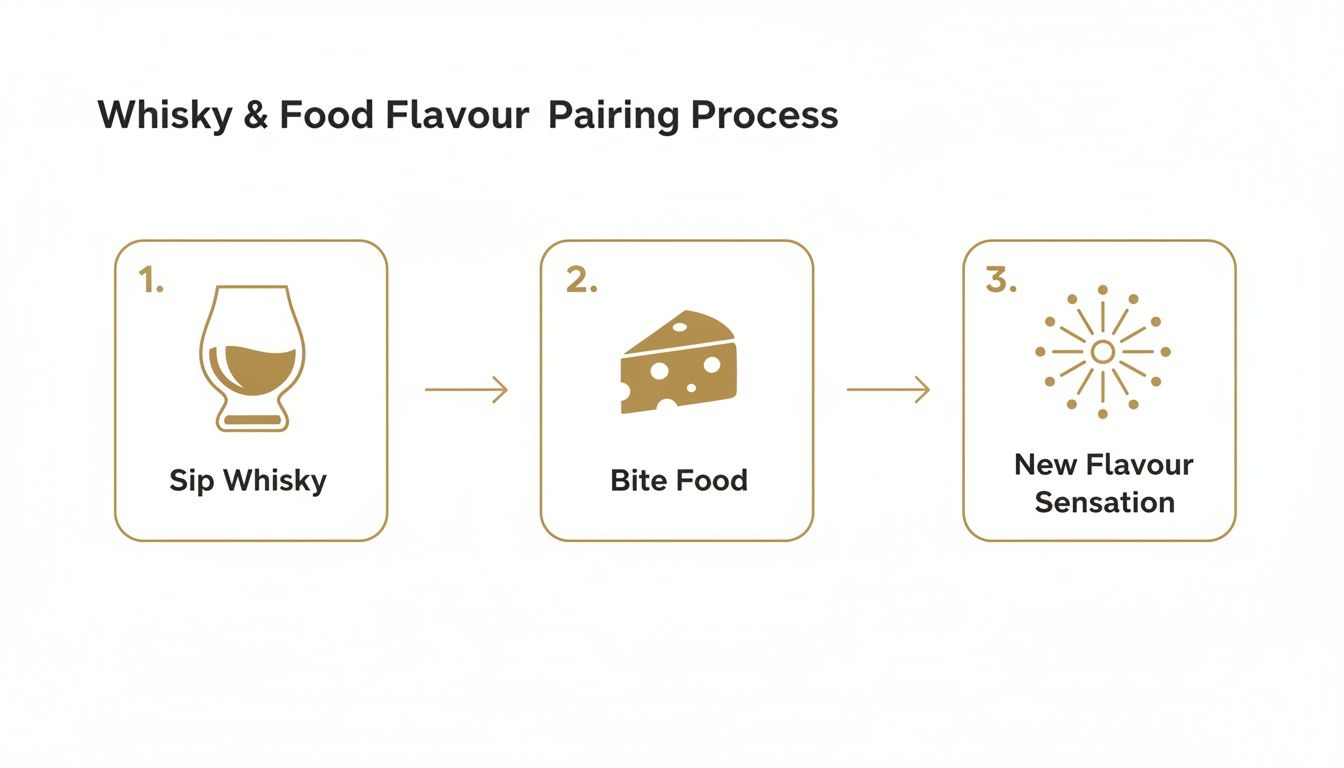
As the infographic shows, the magic really happens when the whisky and food come together to create something entirely new. While you still have the food on your palate, take another small sip of the whisky. This is the moment of truth.
What to Notice in Your Pairing
As everything mingles, ask yourself a few key questions. Do the whisky and food harmonize, creating a smooth, well-rounded taste? Or is there an exciting contrast, like a spicy rye slicing through the richness of a creamy cheese?
The key is to notice the interaction. A successful pairing means neither the whisky nor the food steamrolls the other. Instead, they should elevate each other, unlocking hidden notes of fruit, spice, or smoke that you didn't notice before.
To get the most out of these complex interactions, it’s helpful to have a basic grasp of what a flavor profile is and how to spot its components. This simple, mindful approach turns tasting from something you just do into an active, engaging experience that will sharpen your palate and build your confidence in no time.
Alright, theory is one thing, but the real fun starts when you actually put whisky and food on the same table. To take this whole pairing concept from abstract to actionable, let's look at some real-world ideas based on the common flavor profiles you'll find in American craft whiskey.
Think of these not as strict rules, but as a launchpad for your own delicious experiments.
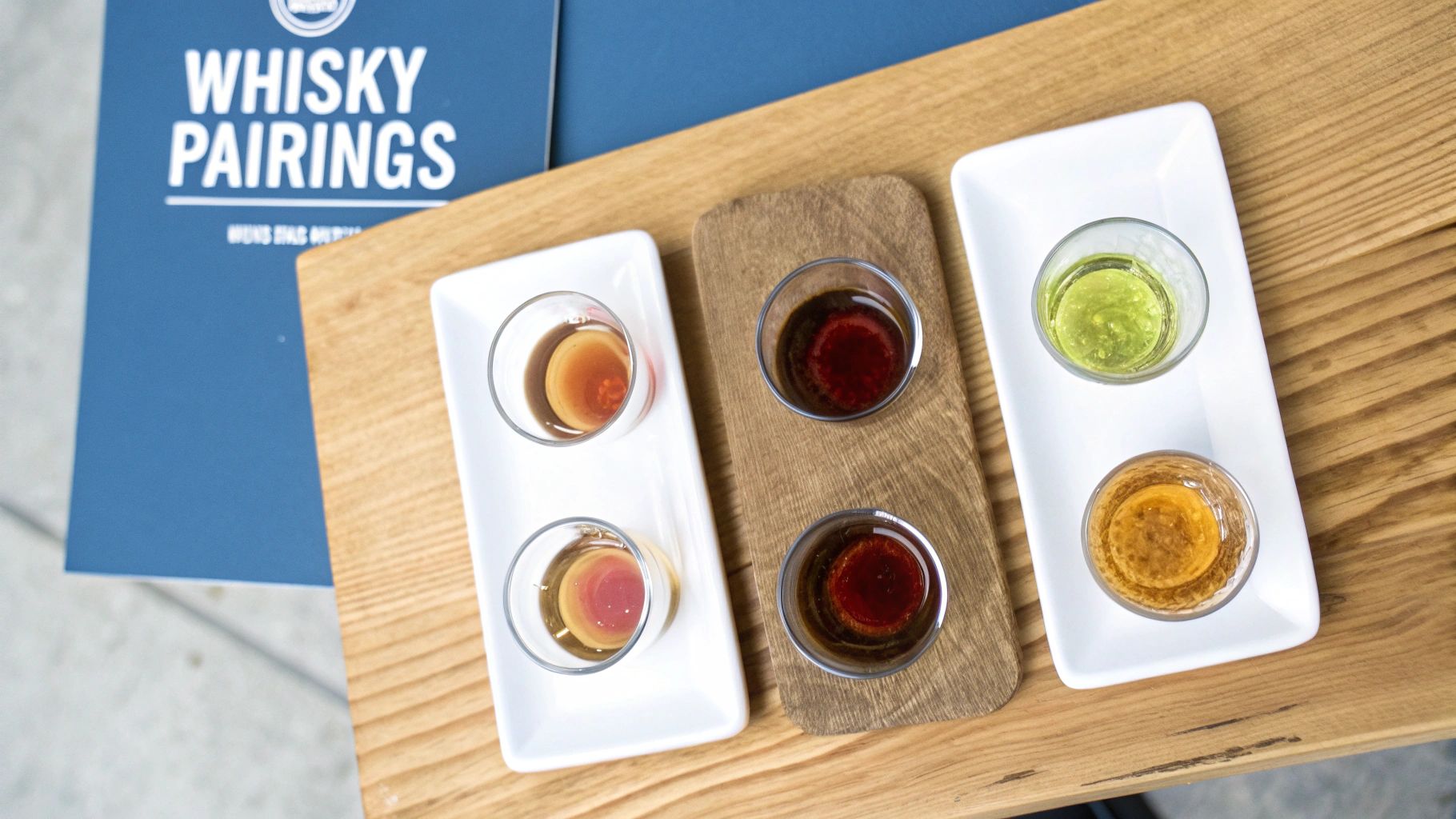
I'll walk you through four key categories that cover a huge spectrum of what today's small distilleries are bottling. These examples are meant to be practical, giving you a solid starting point whether you're planning a full dinner or just grabbing a quick snack.
Light And Floral Whiskies
These are the delicate, elegant members of the whiskey family. You’ll often find these notes of honey, green apple, vanilla, and fresh flowers in American single malts or lighter bourbons. Their subtlety is their strength, which means you need to pair them with foods that won't steamroll their character.
- Cheese: Stick with soft, creamy cheeses. A good Brie or a nutty Gruyère provides a beautiful, gentle backdrop that lets the whisky's floral notes sing.
- Meals: Seafood is a fantastic direction. Think grilled scallops, simple sushi, or a baked fish with a squeeze of lemon. The clean, bright flavors of the dish will complement the whisky, not compete with it.
- Snacks: Keep it simple. A handful of unsalted almonds or a few slices of a crisp pear is all you need for a perfect, understated partner.
Fruity And Spicy Whiskies
This is where many high-rye bourbons and, of course, rye whiskeys really shine. They come at you with big notes of cherry, orange peel, cinnamon, and black pepper. Because these spirits have a bolder backbone, they can stand up to more robust flavors, making them incredibly versatile.
A spicy rye from a craft distillery, for example, often has a peppery kick that creates a stunning contrast with the rich bitterness of high-cocoa dark chocolate. It’s a classic pairing for a reason—each sip and bite reveals new layers of complexity.
Try matching these whiskies with cured meats like prosciutto or salami. The salt and fat cut right through the spice, creating a beautiful equilibrium. For something more substantial, you can't go wrong with slow-cooked pulled pork; the sweetness of a good barbecue sauce harmonizes perfectly with the fruity notes in a bourbon.
Rich And Complex Whiskies
Now we're getting into the deep end. These are often the well-aged or specially finished whiskies, maybe ones that have spent time in old sherry or port casks. They deliver profound flavors of dark fruit, old leather, toffee, and deep oak. Their complexity practically begs for pairings with equally rich and savory dishes.
- Complementary Pairing: A classic beef stew or a perfectly grilled steak works wonders here. The savory, umami notes in the meat are a perfect match for the whisky's deep, oaky character.
- Contrasting Pairing: To go the other way, grab a sharp, aged cheddar. Its tangy bite provides a fantastic counterpoint that cuts through the whisky's richness, cleansing the palate with each bite.
This category really highlights how much whisky's role at the dinner table has grown. The global whiskey market is projected to hit an incredible USD 318.3 billion by 2033, and its growth in North America is tied directly to the rise of home mixology and food pairing trends. Data shows that 55% of consumers have experimented with pairings at home, discovering how a craft bourbon's sweet corn notes can create an incredible glaze for ribs or tacos. You can dive deeper into these trends in this insightful report on the whiskey market.
Bold And Smoky Whiskies
While still more common in Scotland, a growing number of American craft distillers are creating exceptional smoky whiskies, often using smoked grains. These spirits are intense, hitting you with notes of campfire, bacon, and even brine. They absolutely demand foods that can hold their own.
Smoked salmon is a natural fit; its oily texture and smoky flavor echo the notes in the whisky beautifully. For a truly bold move, pair a smoky spirit with a funky blue cheese. The strong, salty tang of the cheese goes toe-to-toe with the smoke, creating an intense and unforgettable experience.
If you're just dipping your toes into this style, be sure to check out our detailed breakdown of the different types of whiskey and bourbon to find your perfect match.
Whisky And Food Pairing Cheat Sheet
Feeling a little overwhelmed? No worries. Here’s a quick-reference table to help you get started. Use it as a guide, but remember the best part of this is discovering what you like.
| Whisky Profile | Complementary Pairings | Contrasting Pairings |
|---|---|---|
| Light & Floral | Grilled Fish, Scallops, Sushi, Brie, Pears, Almonds | Fresh Goat Cheese, Lightly Pickled Vegetables |
| Fruity & Spicy | Pulled Pork, Cured Meats, Apple Pie, Cinnamon Buns | Dark Chocolate (70%+ cacao), Creamy Gorgonzola |
| Rich & Complex | Grilled Steak, Beef Stew, Sticky Toffee Pudding | Sharp Aged Cheddar, Stilton Cheese, Salted Caramels |
| Bold & Smoky | Smoked Salmon, Oysters, BBQ Ribs, Dark Chocolate | Blue Cheese (Roquefort), Charred Citrus, Pickled Ginger |
This cheat sheet is your jumping-off point. The beauty of pairing is in the experimentation, so don't be afraid to try something that sounds a little wild—it might just be your next favorite combination.
How to Host a Whisky Pairing Night
There's something special about sharing a great whisky and food pairing with friends. Throwing a tasting night at home is a fantastic way to explore new flavors in a comfortable, relaxed setting—and you definitely don’t need to be a seasoned expert to pull off a memorable evening. The whole point is to have fun and see what everyone likes.
A little planning goes a long way. First, think about the tasting order. The golden rule here is to go from the lightest-bodied whisky to the boldest and smokiest. This simple progression ensures a powerhouse peaty Scotch doesn't completely blow out your palate before you get to a more delicate spirit. You might start with a softer American single malt, for instance, and build your way up to a high-rye bourbon or a cask-strength pour.

Setting the Stage for Tasting
When you're pouring, remember that less is more. Stick to 0.5 to 0.75-ounce pours for each whisky. It's plenty for everyone to properly nose and taste without getting overwhelmed too quickly. And don't forget to have lots of water on hand for cleansing palates between pairings.
For the food, aim for simplicity and quality. You don't need to cook a multi-course feast. Approachable, crowd-pleasing bites are usually the biggest hit:
- Artisanal Cheese Board: Offer a mix of textures and flavors. A sharp aged cheddar, a creamy brie, and a tangy blue cheese are always a great trio.
- Charcuterie: Sliced prosciutto or salami brings a salty, fatty element that plays incredibly well with spicier whiskies.
- High-Quality Dark Chocolate: A bar with 70% cacao or higher is a classic partner for those rich, deep bourbons.
- Spiced Nuts: A bowl of toasted pecans or almonds with a hint of spice is perfect for complementing the oaky notes found in so many whiskies.
A smooth, enjoyable experience comes down to presentation and flow. For some great inspiration on arranging your spread, check out these outdoor buffet table ideas that are easily adapted for an indoor setup, making sure your food is both accessible and beautifully displayed.
Make It a Blind Tasting
Ready to take the night to another level? Try a blind tasting. This is my favorite way to host because it completely removes any preconceived notions or brand bias, forcing everyone to rely purely on their senses. Just pour the whiskies into identical glasses and number them. It's a simple tweak that immediately shifts the conversation to what's actually in the glass, leading to some truly fun and surprising discoveries.
Whisky pairing may have trailed wine for years, but with the flavored segment booming at an 8.89% CAGR, flavor experimentation is at an all-time high. In the U.S., bourbon's recent 7.01% consumption spike is often tied to its natural synergy with food like barbecue. This is exactly why our at-home whiskey tasting guide champions an unbiased, blind approach.
For our Blind Barrels members, this is the perfect opportunity to break out those quarterly samples and discover firsthand how a high-proof bourbon from a tiny distillery you've never heard of pairs with spiced nuts or jerky. It’s all about the experience.
Common Pairing Mistakes to Avoid
Look, every expert was once a beginner. Diving into the world of whisky and food pairing definitely comes with a learning curve, so don't sweat it if things don't click perfectly the first time.
Think of these common pitfalls not as hard-and-fast rules, but as friendly guardrails. Getting these small details right can make a massive difference between a pairing that sings and one that falls flat.
One of the most frequent missteps? Overpowering a delicate whisky. Just imagine pouring a light, floral American single malt—something with those gentle notes of honey and green apple—and then serving it alongside a fiery curry or a plate of spicy buffalo wings. The aggressive heat will completely steamroll the subtle flavors of the spirit. You'll be left wondering what it even tasted like.
Mismatching Intensity Levels
The core principle here is simple: match intensity with intensity. If you've got a dish with bold, assertive flavors, you need a whisky that can stand up for itself without getting lost in the shuffle.
-
The Fix: Instead of that light single malt with a spicy dish, reach for a high-proof or cask-strength bourbon. American craft distilleries like Few Spirits or Stranahan's often produce robust whiskies with rich caramel and oak notes that can go toe-to-toe with big flavors, creating a dynamic and balanced experience.
-
Pro-Tip: If you’re unsure where to start, grab a versatile, mid-proof bourbon (90-100 proof). It has enough character to handle a wide range of foods without being completely overwhelming.
Pouring Too Generously
This one is easy to do. It feels generous to fill a tumbler, but when you're tasting, a heavy pour makes it really difficult to appreciate the nuances of multiple pairings. It’s a fast track to palate fatigue, where all the flavors just start to blur together.
The goal of a tasting isn't to finish a full drink with every course. It's to have just enough to explore how the flavors interact—especially when you're still building your palate.
For a tasting flight, a 0.5 to 0.75-ounce pour is the sweet spot. This gives you enough for a few sips—one to get a baseline before the food, and a few more to taste alongside it—ensuring your senses stay sharp through the whole meal.
Forgetting Temperature Matters
Finally, don't overlook the temperature of your whisky. Serving a spirit straight from a cold cabinet or, even worse, over-chilling it with too much ice can completely mute its complex aromas and flavors. Cold temperatures suppress the volatile compounds that create the whisky's signature scent and taste.
The ideal serving temperature is usually room temperature, right around 60-65°F (15-18°C). This allows the spirit to open up and reveal its full spectrum of notes. If you really prefer a slight chill, use a single large ice cube or a whisky stone to cool it down gently without a ton of dilution.
A Few Common Questions About Whisky Pairing
As you start your journey into whisky and food pairing, you're bound to have some questions. That's a good thing! It means you're curious and on the right track. Getting a handle on a few common queries can give you the confidence to start experimenting and discover what really clicks for you.
Here are a few of the questions we hear most often, along with some practical advice to get you started.
Can I Pair Whisky With Dessert?
Absolutely! In fact, dessert can be one of the most surprising and rewarding pairings you can make. The key is to match the intensity of the spirit to the richness of the dessert. You don't want a delicate, floral whisky getting steamrolled by a heavy chocolate cake.
Richer, sweeter American craft whiskies are a fantastic place to start.
- For Chocolate: Try a bourbon finished in sherry casks or a bold wheated bourbon with those deep caramel notes. They're phenomenal with something like a chocolate lava cake or a dense brownie.
- For Fruit & Spice: A fruit-forward American single malt or a classic rye can be a beautiful match for an apple crumble or a slice of pecan pie. The spice in the whisky will echo the cinnamon and nutmeg in the dessert, creating a perfect harmony.
The goal is always balance. A lighter dessert calls for a more delicate whisky, while a powerhouse chocolate bomb needs a spirit that can stand up to it.
What’s the Best Cheese to Pair With Whisky?
This is a fun one because there’s no single "best" cheese. That's what makes the exploration so great! Different cheeses will pull out entirely different notes from the same dram. Putting together a small cheese board is one of the quickest ways for a new whisky drinker to understand how salty, creamy, and funky notes can play with a spirit.
For a great starting point, give these classic combinations a shot:
- Aged Cheddar: Its signature sharpness and saltiness cut right through the rich, sweet notes of many bourbons and ryes. It's a fantastic contrast that cleanses the palate between sips.
- Blue Cheese: The intense, creamy funk of a good Stilton or Gorgonzola is an incredible partner for a smoky, peated whisky. It's a bold pairing where both the cheese and the whisky are big enough to hold their own.
- Softer Cheeses: For lighter, more floral craft whiskies, try something like a nutty Gruyère or a creamy Brie. These cheeses provide a gentle backdrop that lets the whisky's more subtle flavors really shine through.
Does the Tasting Order of Whisky and Food Matter?
Yes, it makes a huge difference. To really get what’s happening between the whisky and the food, you need to establish a baseline for each. Following a simple sequence allows the flavors to truly mingle on your palate, creating something entirely new.
The best way to do it? Taste the whisky first to appreciate its character on its own. Then, take a bite of food. Before you swallow, take another small sip of the whisky. This "combined sip" is where the magic happens.
This little trick ensures you’re not just tasting whisky then food. You're creating a third, unified flavor experience right there in the moment.
How Can I Start Pairing on a Budget?
You don't need to break the bank with top-shelf bottles to learn the ropes of pairing. Not at all. The goal is simply to understand how flavors interact, and you can do that with perfectly accessible and affordable whiskies.
Start with a versatile American craft whiskey. A solid, mid-range bourbon or rye from a distillery like Frey Ranch or Southern Star is a great workhorse that will pair well with all sorts of things you probably already have at home.
Just raid your own pantry! You can have an amazing and inexpensive learning experience with simple items.
- A square of dark chocolate (70% cocoa or higher)
- A handful of salted almonds or pecans
- A slice of aged cheddar from the grocery store
These basic pairings are perfect for seeing firsthand how sweet, salty, fatty, and smoky flavors can complement or contrast with a good dram.
Ready to discover your next favorite American craft distillery without brand bias? The Blind Barrels blind tasting experience is the perfect way to sharpen your palate and find hidden gems you truly love. Each kit is a new adventure in flavor. Explore our whiskey tasting kits today!