

Ever get frustrated watching a perfect pour of your favorite craft whiskey get watered down by melting ice? That’s exactly why whisky stones exist: to gently cool your drink without the dilution, preserving the complex notes and aromas the distiller worked so hard to create. For anyone who puts flavor first, they’re an essential tool.
The Undiluted Truth About Chilling Whiskey
If you're just getting into whiskey, you might be wondering what the big deal is about a little water. Well, imagine a distiller spending years perfecting a spirit, only to have its intricate character washed out in seconds. That’s the problem whisky stones solve. They offer a pure, unadulterated chilling experience, letting you enjoy your drink exactly as the maker intended.
This is especially critical when you're sipping on the nuanced profiles found in so many American craft whiskeys. Distillers from places like Balcones in Texas or High West in Utah pour their hearts into every single bottle, and preserving that character is what the tasting experience is all about.
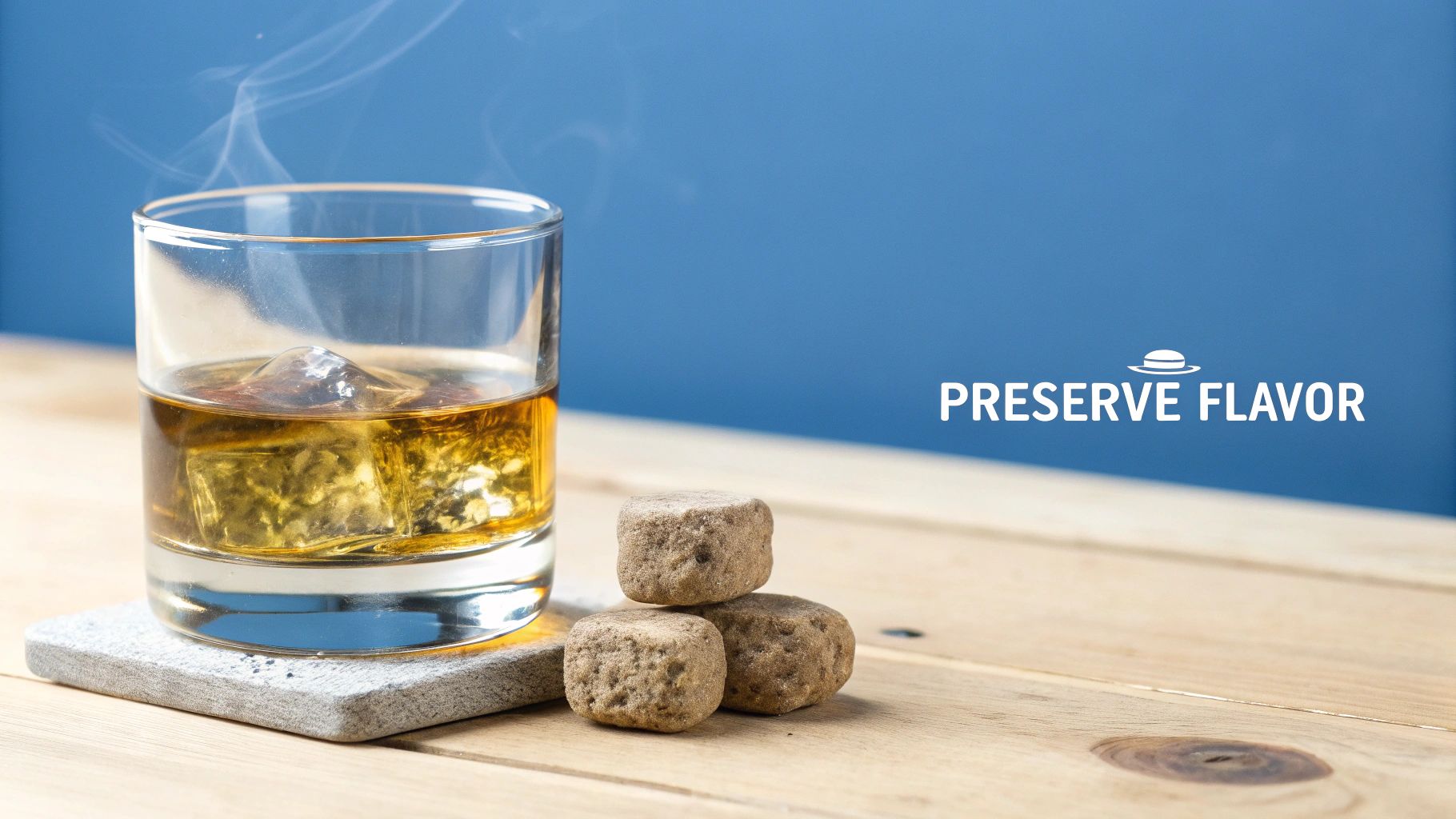
Why Flavor Integrity Matters
It helps to think of whisky stones not as a replacement for ice, but as a different tool for a different job. Their goal isn't to make your drink ice-cold; it's to take the sharp edge off a room-temperature spirit. That subtle drop in temperature can make higher-proof whiskeys a bit more approachable without silencing their delicate notes.
This approach is catching on, especially in markets where sipping premium whiskey is becoming a real ritual. Here in the U.S., you see whisky stones as part of a larger movement toward authenticity and keeping the flavor pure.
The magic of a great whiskey is in its complexity—the subtle hints of oak, vanilla, or spice. Whisky stones protect that complexity, ensuring your last sip is just as flavorful as your first.
This dedication to preserving flavor runs deep in the whiskey world, touching on everything from chilling methods to production techniques. To see another side of how distillers protect flavor, check out our guide on chill-filtering vs non-chill-filtering whiskeys. By choosing the right tools for your glass, you’re taking control of your tasting experience.
Preparing and Using Your Whisky Stones Correctly
Getting the most out of your whisky stones is pretty simple, but a few small details really do make all the difference. Nailing the technique ensures every pour is perfectly chilled without messing with the spirit's true character.
First things first: preparation. Pop your whisky stones into their velvet pouch and stick them in the freezer for at least four hours. That little pouch isn't just for looks—it keeps the stones from soaking up any weird freezer smells from last night's dinner. Nobody wants their whiskey tasting faintly of garlic.
The Art of the Pour
When you're ready for a dram, the order of operations is key. Gently slide two or three stones into your empty glass. Whatever you do, don't drop them into a full glass. That's a surefire way to chip or even crack your favorite glassware.
With the stones settled at the bottom, pour your whiskey right over them. This approach lets the spirit cool down more evenly as it washes over the chilled surfaces—a much more graceful process than plopping a cold object into a full glass of liquid.
A little tip for anyone new to whiskey: give the stones about five minutes to do their thing. This isn't about getting an instant, ice-cold shock. It’s a slow, gentle chill designed to take the edge off the alcohol's heat. This simple trick makes tasting higher-proof spirits much less intimidating.
This kind of subtle cooling is perfect for exploring the complex flavors of American craft whiskeys. Think about it: if you're sipping a nuanced single malt from a distillery like Westland in Seattle or a rich, pot-stilled bourbon from Stranahan's in Colorado, the last thing you want is to mute their character with extreme cold.
Stones bring the temperature down just enough to soften that alcoholic bite, letting all those beautiful notes of caramel, oak, or fruit step forward. It’s the ideal way to make a cask-strength or high-proof whiskey more approachable without any dilution, letting you appreciate the distiller's craft from the first sip to the last.
Whisky Stones Versus Ice in The Great Dilution Debate
When you pour a drink, you're hit with a choice that can split the whiskey community right down the middle: do you reach for ice or stones? Each has a totally different effect on your drink's temperature, dilution, and ultimately, its flavor. The real question isn't which one is better, but which one is right for the specific whiskey sitting in your glass.
Ice is the undisputed king of cold. It’ll drop the temperature of your drink quickly and dramatically, which can be incredibly refreshing on a warm day.
But that powerful chill comes at a cost—dilution. As the ice melts, water seeps into your whiskey, slowly lowering the proof and changing its carefully crafted flavor profile.
Now, this isn't always a bad thing. For someone new to whiskey, or when you're sipping a high-proof, cask-strength bourbon from an American craft distillery like Frey Ranch, a little water can be your best friend. It helps tame that intense alcohol burn, unlocking deeper notes of caramel and spice that might otherwise stay hidden. To really get into the weeds on how water changes your pour, you can explore the science behind adding water to bourbon in our detailed guide.
Preserving Purity with Zero Dilution
Whisky stones, on the other hand, are playing a whole different ballgame. Their job is simple: provide a gentle, steady chill without adding a single drop of water.
This is perfect when you’re enjoying a more delicate single malt or an older, complex rye whiskey where you want to keep the spirit’s integrity intact from the first sip to the last. Using whisky stones ensures that your final taste is just as potent and flavorful as the first.
Think of it this way: ice is for transforming a drink, while stones are for preserving it. One is an active ingredient, the other is a silent partner.
This quick visual guide breaks down the core steps for using your stones to get that perfect, undiluted chill.
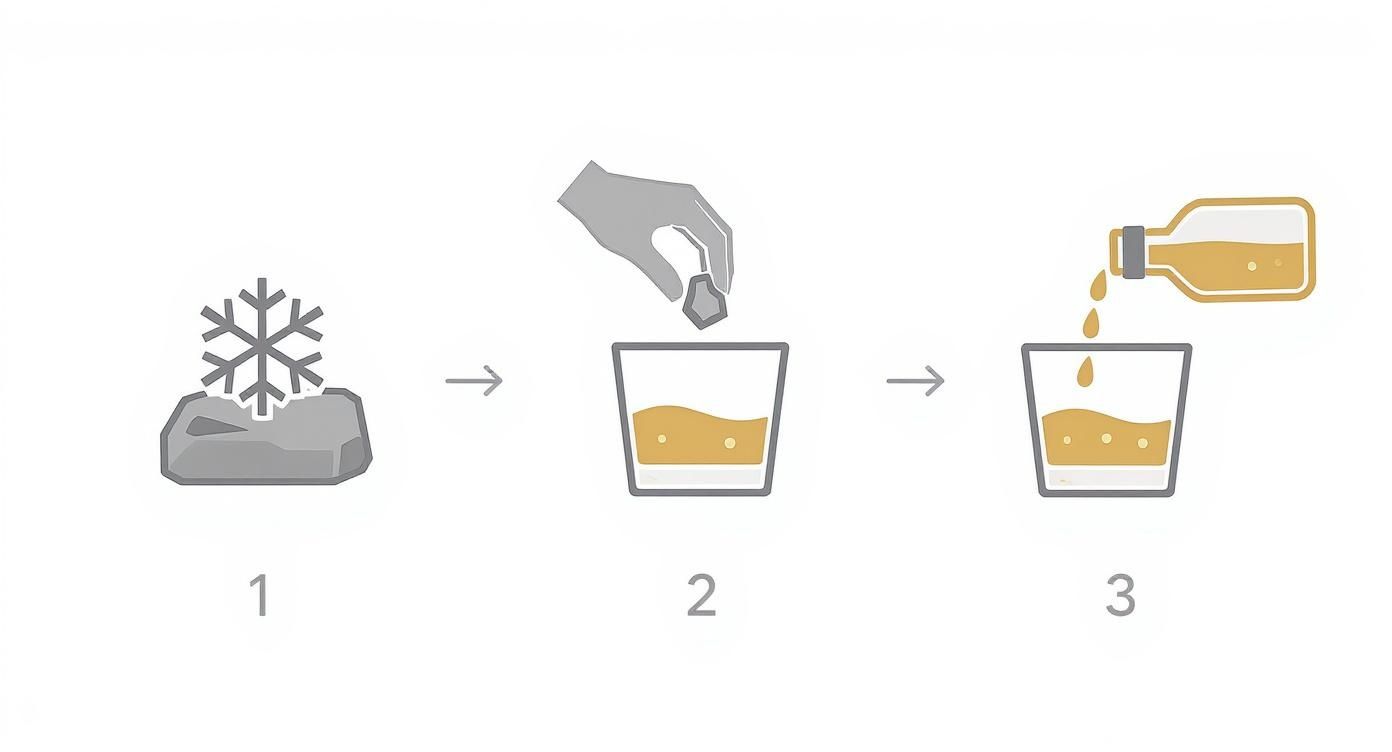
As you can see, the process is all about simplicity: freeze the stones, place them in the glass first, and then pour the whiskey over them for an even chill. The real takeaway here is that using whisky stones properly is a deliberate, gentle process designed to enhance, not overpower, the spirit. It’s all about control.
Proper Care for a Lifetime of Perfect Pours
Your whisky stones are built to last a lifetime, but like any good tool, a little care goes a long way. Keeping them in top shape is simple and ensures every dram you pour tastes exactly as the distiller intended.
When you're finished with your drink, cleaning is a breeze. Just give the stones a quick rinse under some warm water. That’s really all it takes to wash away any lingering whiskey. One thing to remember: avoid soap entirely. This is especially true for porous materials like soapstone, which can actually absorb soapy scents and ruin the delicate notes of your next pour.
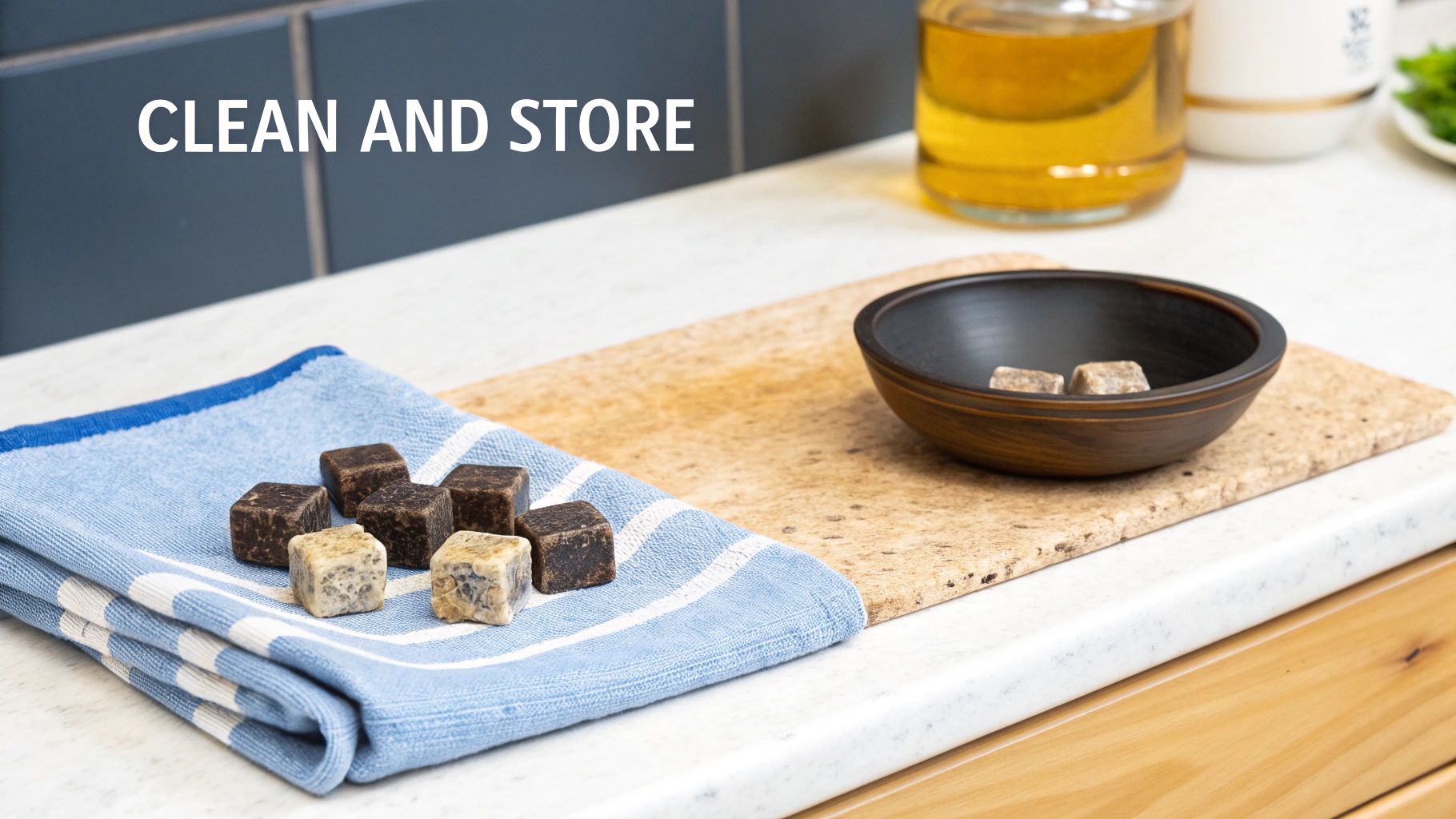
Storing for the Perfect Chill
After a good rinse, let the stones air dry completely. Don't rush this part—trapping any moisture before they go back in the freezer can cause unwanted frost to build up.
Once they’re bone dry, pop them back into their storage pouch and get them back in the freezer. That’s it. This quick routine keeps them clean, frost-free, and always ready for action.
This non-diluting chill is precisely why whisky stones have become a preferred method for enjoying premium spirits. As the appreciation for high-end expressions grows, so does the desire to experience them purely. With markets for premium spirits like Scotch whiskey now representing a dominant share of global consumption, preserving the integrity of the spirit is more important than ever. You can learn more about these global whiskey market trends.
Following these simple steps ensures your stones are always ready for your next perfectly chilled, undiluted dram.
When to Use Whisky Stones in a Tasting
This is a question I see pop up all the time, especially from folks who are getting more serious about their tasting journey. The short answer? It really depends on what you're trying to get out of the experience. Are you aiming to dissect a spirit like a pro, or are you just kicking back with a great pour and good company?
For a formal, analytical tasting, your goal is to evaluate the whiskey in its purest form. Just about any expert will tell you the same thing: taste it neat, at room temperature. Tossing in stones would alter the temperature, which can easily mute some of the more delicate aromas and flavors the distiller worked so hard to create. You need that unadulterated baseline to truly understand what's in your glass.
Finding the Right Occasion
But let's be honest, not every pour is a formal analysis. The rules change for a casual tasting at home, and this is where whisky stones really find their moment. They're especially handy when you're diving into some of the higher-proof American craft whiskeys.
A slight chill can take the edge off the alcohol's heat, allowing those underlying notes of caramel, spice, or fruit to step forward without any dilution from melting ice. It just makes the whole experience a bit more approachable and enjoyable. If you’re planning a fun get-together, our guide on hosting an at-home whiskey tasting has some great tips to help you set the perfect stage.
The growing popularity of whisky stones really goes hand-in-hand with the trend of premiumization in the spirits world. The global whisky market has seen massive growth, much of it driven by premium and craft segments that encourage unique rituals to elevate the tasting experience. You can discover more about these market trends and see just how much consumer habits are shifting.
Here's a simple rule of thumb I live by: For serious analysis, go neat. For casual enjoyment with friends, use stones if that’s how you like your whiskey. If you're new to whiskey, don't be afraid to experiment. Your palate is the only one that matters.
Ultimately, how and when you use whisky stones is a personal call. They give you control over your tasting, letting you gently cool down a fiery cask-strength bourbon or simply enjoy an old favorite with a pleasant chill.
Answering Your Whisky Stone Questions
Even after you get the basics down, a few questions always seem to pop up when people first start using whisky stones. Let's run through the most common ones so you have everything you need for that perfectly chilled, undiluted dram.
Think of this as your go-to guide for mastering the finer points, especially if you're just starting to explore the amazing world of American craft spirits.
How Cold Do Whisky Stones Actually Get?
Whisky stones are all about a gentle chill, not a deep freeze. You can expect them to lower your drink's temperature by about 10-15°F (5-8°C). They aren't going to make your whiskey ice-cold like a cocktail shaker full of ice would.
Their real job is to take the edge off a room-temperature spirit, making it a bit more refreshing without "shocking" the delicate flavors that extreme cold can easily kill. This is perfect for a complex American craft whiskey like a rye from Sagamore Spirit, where you want to appreciate every single note the distiller worked so hard to create.
Are Stainless Steel or Natural Stone Better?
Honestly, this one really just comes down to your personal preference. Soapstone and granite are the classic choices; they're non-porous and offer a very slow, subtle chill. Stainless steel stones, on the other hand, often contain a non-toxic gel that helps them get colder and stay cold longer.
Here's a helpful tip for new whiskey drinkers: If you want a minimal, natural chill for sipping a delicate spirit, go with traditional stone. If you prefer a colder drink with zero dilution for a bolder, higher-proof bourbon, stainless steel is an excellent choice.
Can Whisky Stones Damage My Glassware?
There’s a small risk of chipping delicate crystal if you aren't careful. The trick is to gently place or slide the stones into an empty glass first, and then pour the whiskey over them. Dropping them from a height into a glass that's already full is just asking for trouble.
Most quality stones are tumbled smooth with rounded edges, but being gentle is the real key to protecting your favorite glassware.
How Many Whisky Stones Should I Use?
For a standard 2 oz (60ml) pour of whiskey in a typical tumbler, two to three stones is the sweet spot. Just one won't have enough surface area to cool the liquid effectively. Throwing too many in there can overcrowd the glass and might chill the drink more than you intended.
Start with three, see how you like it, and adjust from there based on the temperature you prefer and the size of your glass. Finding your perfect number is all part of the fun of the tasting journey.
Ready to discover your next favorite American craft whiskey without bias? Blind Barrels sends you curated blind tasting kits from the nation's best small-batch distilleries. It's the perfect way to let your palate lead the way.