

It really is that simple: 'whiskey' (with an 'e') is the spelling you'll see from the United States and Ireland. On the other hand, 'whisky' (no 'e') hails from Scotland, Canada, and Japan. This tiny difference is your first clue to the spirit’s origin and the long-standing traditions that shaped it.
Your Guide to the Whisky vs Whiskey Spelling Debate
That single letter—the "e"—is more than just a regional quirk; it represents centuries of history, distinct geography, and specific production methods. Think of it as a signpost. It hints at the spirit’s birthplace, but the real story is told through the ingredients, distillation, and aging processes that follow strict regional rules.
For newcomers, this can feel a bit confusing, but it’s actually a great starting point. See "whisky" on a label? You might be in for the smoky notes of a classic Scotch or the smooth character of a Canadian blend. If it says "whiskey," you're likely stepping into the world of sweeter American Bourbons or the uniquely gentle Irish spirits. If you're new to the spirit, starting with the accessible flavors of American whiskey is often a great first step.
This split dates back to the 19th century when Irish and American distillers added the 'e' to set their products apart from their Scottish rivals. Fast forward to today, and the global appetite for both is massive. The industry hit USD 70.88 billion in 2024 and is projected to climb to an incredible USD 148.64 billion by 2035, thanks in large part to the booming demand for premium craft spirits.
A Quick Guide to Global Whiskey Spellings
To make it easy, here's a quick breakdown of which spelling you'll find where. It's the simplest way to know, at a glance, what part of the world your bottle comes from.
| Spelling | Primary Countries of Origin |
|---|---|
| Whiskey | United States, Ireland |
| Whisky | Scotland, Canada, Japan |
While the spelling is a great first hint, the most important thing is what's inside the bottle.
The spelling doesn't change the flavor, but it tells you which rulebook the distillers followed. Understanding this is the first step in decoding the spirit's unique character.
Ultimately, whether you're pouring a whisky or a whiskey, the journey of discovery is what it's all about. Learning the fundamentals of what makes a whiskey a whiskey is the key to truly appreciating the craft in your glass. This guide will walk you through the key differences, from production to flavor, so you can feel confident picking out your next bottle.
Diving Into Global Production Styles and Rules
Sure, the "whisky vs whiskey" spelling is a fun bit of trivia, but the real soul of the spirit comes from the rules of production. These aren't just gentle suggestions; they're legally binding regulations that dictate everything from the grain in the mash to the proof it's distilled at and the exact type of barrel it has to sleep in. These laws are what give Scotch, Bourbon, and other global styles their unmistakable identities.
This map gives you a great visual breakdown of the origin story behind the spelling divide.
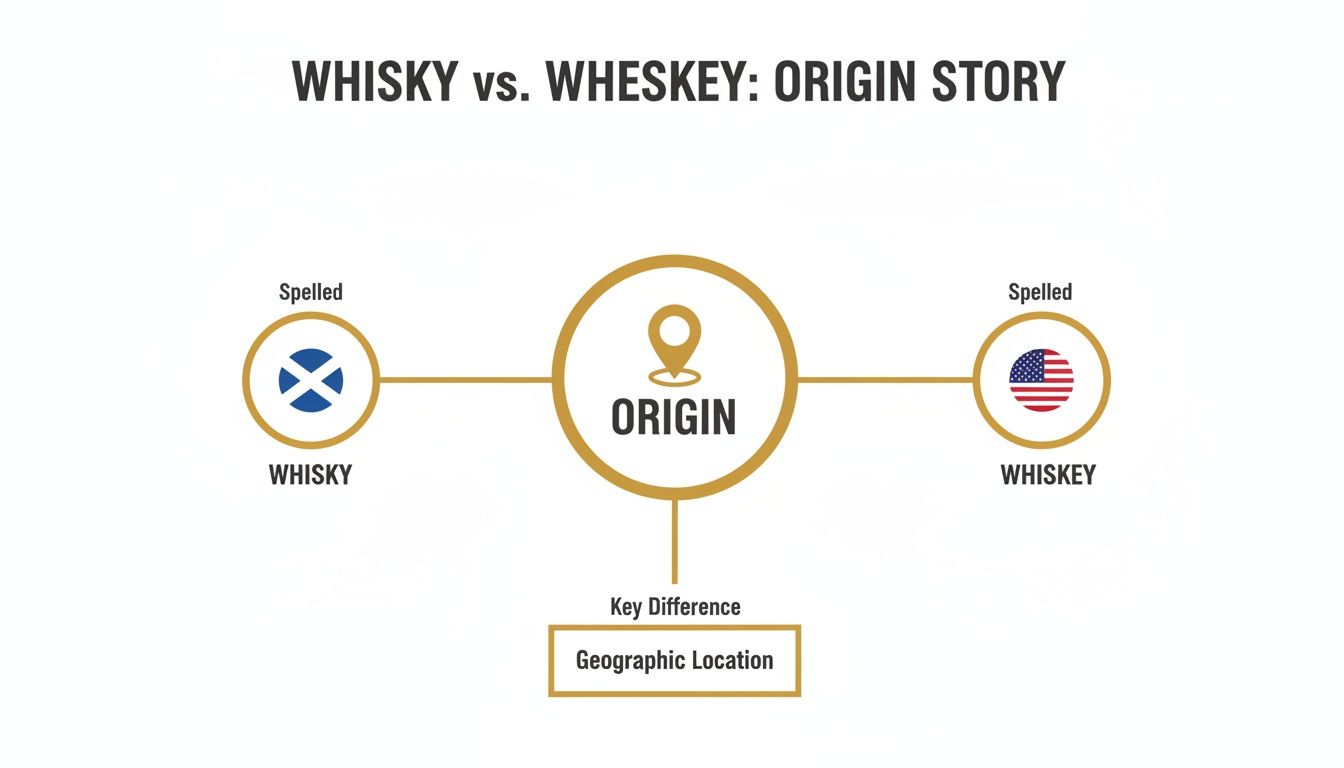
You can clearly see the geographical split, with Scotland pioneering the "whisky" spelling while the United States largely adopted the "whiskey" version.
American Whiskey: The Rules of Bourbon and Rye
Here in the States, whiskey making is governed by a pretty strict set of federal standards. For a spirit to earn the name Bourbon, it has to check some very specific, non-negotiable boxes:
- The grain recipe, or mash bill, must contain at least 51% corn.
- It must be aged in new, charred oak containers. This is a big one.
- Distillation can't exceed 160 proof (80% ABV).
- It has to go into the barrel for aging at no more than 125 proof (62.5% ABV).
That heavy reliance on corn and brand-new charred oak is exactly why Bourbon develops its signature sweet character, bursting with notes of caramel, vanilla, and baking spice.
Rye whiskey plays by similar rules, but with one key swap: the mash bill has to be at least 51% rye grain. Just changing that one main ingredient completely flips the script. The result is a spirit known for being spicier, with peppery and often fruit-forward notes. Today, American craft distilleries are breathing new life into old rye recipes, with brands like Laws Whiskey House in Colorado creating some truly bold and complex whiskeys that give Bourbon a run for its money.
Scotch Whisky: Traditions from Across the Pond
Head over the Atlantic, and you'll find Scotland’s rules are just as rigorous, but they shape a totally different kind of spirit. To be legally called Scotch Whisky, a spirit must:
- Be made from water and malted barley (though other whole grains are permitted).
- Spend a minimum of three years aging in oak casks.
- Be distilled and matured entirely within Scotland.
That famous smoky, "peaty" flavor you hear about with some Scotches? That comes from an old practice of drying the malted barley over peat-fueled fires, which is especially common in regions like Islay. But don't think all Scotch is a smoke bomb; styles from areas like Speyside or the Highlands are often light, fruity, and floral.
Key Takeaway: The single biggest difference between making Bourbon and Scotch is the barrel. Bourbon law demands new charred oak barrels every time. Scotch makers, on the other hand, almost exclusively use used barrels—often ones that previously held American Bourbon or Spanish Sherry. This is the secret to why Bourbon pulls so much deep color and flavor directly from the wood.
The type of still used also plays a massive role in the final texture and flavor. To really get into the weeds on this essential part of the process, you can learn more about the differences between a pot still vs column still and see how each one shapes the spirit.
Irish Whiskey and Other Global Styles
Irish Whiskey is famous for its smoothness, a quality many chalk up to its common practice of triple distillation. While Scotch is typically distilled twice, that third trip through the still in Ireland helps create a lighter, more delicate spirit with really bright fruity and floral notes. If you're curious about how regional flavors influence whiskey styles, exploring Irish culinary journeys can offer a fascinating perspective.
Of course, the story doesn't end there. Canadian and Japanese whiskies follow their own distinct paths. Canadian whisky often showcases a masterful art of blending, while Japanese whisky is celebrated for its meticulous attention to detail and balance, borrowing heavily from Scottish traditions. Each country's unique rules and philosophies craft a one-of-a-kind expression, making the world of whisky and whiskey an endlessly fascinating landscape to explore.
A Comparative Guide to Whiskey Flavor Profiles
This is where the real fun begins. Forget the spelling bee and the production laws for a moment—the “whisky vs whiskey” debate truly comes alive in the glass. All those details about ingredients, distillation, and barrel types directly create the symphony of aromas and flavors you're about to experience. Learning to pick them out is the key to finding what you genuinely love.
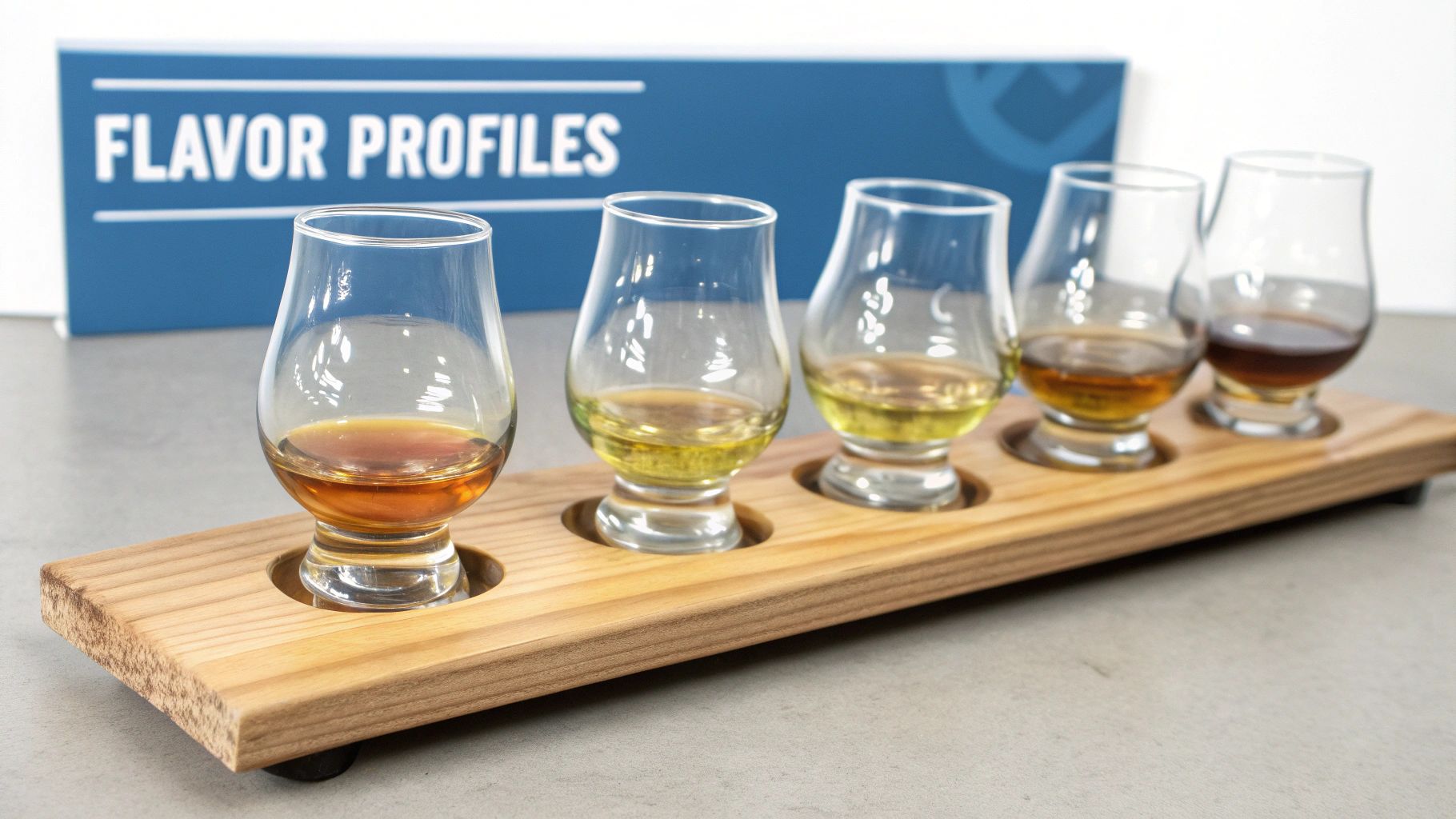
This sensory journey is steeped in history. While the term 'whisky' goes way back to 1494 tax records in Scotland for 'aqua vitae' (water of life), the 'whiskey' we know today was largely defined by U.S. bourbon standards in 1964. Now, these traditions are part of a massive global industry valued at USD 61.5 billion in 2024 and projected to hit USD 71.9 billion by 2028. That growth is fueled by people like us, hungry for premium craft spirits. As you explore these tastes, you're tapping into a rich, expanding world, a fact backed up by reports on the state of the whiskey market.
American Whiskey: Sweetness and Spice
American whiskey is often a fantastic gateway for new drinkers because of its bold, easy-to-love flavors.
- Bourbon: With its corn-heavy mash bill and time spent in new charred oak barrels, Bourbon is famously sweet. You can expect a rush of caramel, vanilla, brown sugar, and toasted oak. American craft distillers like Frey Ranch Distillery in Nevada are known for showcasing these classic notes with incredible depth.
- Rye Whiskey: When you swap that corn for rye, the whole profile flips. Rye brings a signature peppery spice, often with fascinating hints of dill, mint, and dark fruit. It’s much drier and punchier than Bourbon, which is why it’s the backbone of classic cocktails like the Manhattan.
Tip for New Drinkers: A great way to understand the impact of the main grain is to try a Bourbon and a Rye side-by-side. You'll immediately notice the sweet, round notes of the corn in the Bourbon versus the spicy, sharp character of the rye. It’s a simple comparison that teaches you a ton about your own preferences.
Scotch Whisky: Smoke and Fruit
Scotch offers one of the widest flavor spectrums out there, running from light and floral all the way to intensely smoky.
- Speyside & Highland Whisky: Whiskies from these regions are generally smooth, fruity, and very approachable. Be on the lookout for notes of apple, pear, honey, and delicate floral hints.
- Islay Whisky: Ah, Islay. This is the home of that iconic peat smoke. Islay whiskies are famous for their powerful smoky, medicinal, and maritime flavors—often described as tasting like a campfire on the beach.
Irish and Japanese Styles
Beyond the big two, other global styles have their own stories to tell. Irish whiskey is typically triple-distilled, creating an exceptionally smooth and light-bodied spirit with notes of green apple, citrus, and a gentle grain sweetness.
Japanese whisky, on the other hand, was inspired by Scottish methods but has become a masterclass in balance and precision. The flavors can vary wildly, but many are known for their delicate complexity, featuring notes of light oak, subtle fruit, and just a hint of smoke or spice.
To help you navigate these global styles, here's a quick cheat sheet on what to expect from each.
Flavor Profile Showdown: Whisky vs Whiskey
| Whiskey Type | Common Aromas | Typical Flavors | Finish |
|---|---|---|---|
| Bourbon | Caramel, vanilla, oak | Brown sugar, baking spices, toffee | Warm, sweet, lingering |
| Rye Whiskey | Pepper, spice, mint, dill | Spicy black pepper, dark fruit, herbal | Drier, spicier, often shorter |
| Scotch (Speyside) | Orchard fruits, honey, floral | Apple, pear, vanilla, malt | Smooth, gentle, elegant |
| Scotch (Islay) | Peat smoke, iodine, brine | Campfire, seaweed, medicinal | Long, smoky, briny |
| Irish Whiskey | Green apple, citrus, floral | Honey, vanilla, light grain | Clean, crisp, exceptionally smooth |
| Japanese Whisky | Subtle oak, florals, soft fruit | Mizunara oak, pear, honey, hint of smoke | Balanced, clean, complex |
Ultimately, each style tells a story. Learning to read their unique flavors is easily the most rewarding part of the journey.
So, How Do You Pick Your Next Bottle?
Let’s be honest, walking into a good liquor store can be a little intimidating. That wall of glass, with hundreds of labels all vying for your attention? It’s a lot. But picking a great bottle is actually much easier than it looks. It really just boils down to knowing what you like and what you're in the mood for.
Are you mixing up a classic cocktail? An American Bourbon is your best friend here. Its deep caramel and vanilla notes, born from aging in new charred oak, are the soul of a perfect Old Fashioned. But if you’re looking for something to sip neat, maybe with a single rock, the smooth, gentle character of a triple-distilled Irish whiskey is incredibly approachable.
And for those times you want something with a bit more… personality? An Islay Scotch is a whole experience. That iconic peaty, smoky profile is an adventure for your taste buds and always gets a conversation going.
Learning to Read the Label
Once you've got a style in mind, the bottle's label is your treasure map. It’s not there to confuse you; it's telling you the whiskey’s story. A few key terms, especially in the world of American craft whiskey, can tell you everything you need to know.
Get familiar with these, and you'll feel like a pro in no time:
- Single Barrel: This is a big one. It means every single drop in that bottle came from one, individual cask. No two barrels are ever truly the same, so each single barrel bottling is a unique snapshot in time, a distinct expression of that whiskey's journey.
- Cask Strength (or Barrel Proof): This is whiskey in its purest form. It’s bottled at the exact same proof it was when it came out of the barrel—no water added. It’s a powerful, intense, and incredibly flavorful experience. For beginners, it's best to add a few drops of water to open up the flavors and tame the alcohol.
- Small Batch: While there's no strict legal definition, this term generally means the whiskey is a blend from a select, limited number of barrels. The master distiller is aiming for a very specific, consistent, and high-quality flavor profile.
The Most Important Judge: Your Own Palate
Recommendations are great, but the end goal is always to find what you genuinely enjoy. This is where American craft distilleries are really changing the game. So many of them are playing with unique grains, interesting aging techniques, and creative mash bills, producing spirits that absolutely push the boundaries.
Don't just chase the big, familiar brand names, especially when you're starting out. Some of the most incredible whiskeys are coming from smaller producers who pour their hearts into the craft. Distilleries like Frey Ranch in Nevada or Southern Star in North Carolina are making whiskeys with so much character they can easily stand up to—and often blow away—the established giants.
If you’re new to this, my best advice is to find a local whiskey bar and order a tasting flight. It’s the perfect way to try different styles side-by-side without committing to a whole bottle. Just pay attention to what grabs you. Is it the sweetness of a Bourbon? The spice of a Rye? The mellow finish of an Irish whiskey? Answering that simple question is the first real step on an amazing journey.
Discovering Your Palate with Blind Tasting
So you’ve read up on the rules and heard about all the different flavor profiles. Now what? The absolute best way to settle the “whisky vs. whiskey” debate for yourself is to throw all your expectations out the window. That’s where blind tasting comes in—it’s your secret weapon.
When you strip away the fancy labels, the impressive age statements, and the intimidating price tags, you’re left with the only thing that actually matters: the spirit in your glass. This is how you let your senses take control. You can finally focus on those subtle notes we’ve been talking about—is that the sweet vanilla from a Bourbon’s new charred oak? The peppery kick of a Rye? Or the unmistakable briny smoke from an Islay Scotch? It’s the most honest way to figure out what you really like.
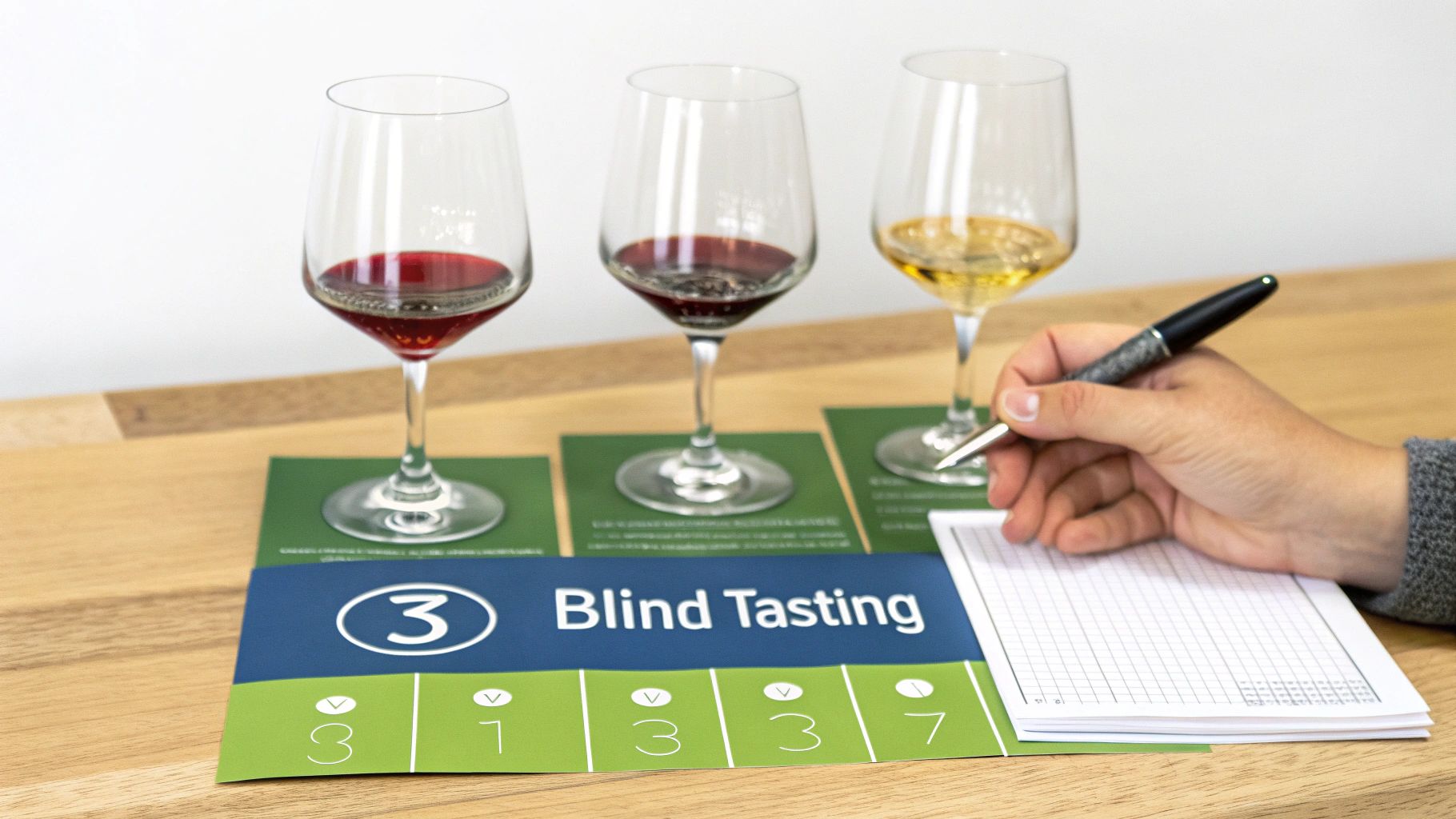
This kind of personal discovery is happening during a massive global boom. The whiskey market hit a staggering USD 65.62 billion in 2024 and is projected to climb to nearly USD 114.69 billion by 2033. All that growth means there are more craft distilleries and unique bottles hitting the shelves than ever before, making blind tasting an essential (and fun) way to navigate it all. You can get the full story from this whiskey market analysis.
How to Conduct a Simple Blind Tasting at Home
You don't need a professional setup to give this a try. A few glasses and some willing spirits are all it takes to start sharpening your senses.
- Gather Your Samples: Grab three or four different whiskeys. For a good contrast, try picking from different categories, like a classic Bourbon, a spicy Rye, and a peated Scotch.
- Pour and Conceal: Pour a small measure of each into identical glasses. Get a friend to label the bottoms so you’re truly flying blind.
- Taste Systematically: Work your way through the samples one by one. Jot down a few notes on the aroma, the first sip, how it feels in your mouth, and what kind of finish it leaves behind.
- The Big Reveal: After you’ve made your notes, check the labels. The results might just surprise you. It’s amazing what you pick when you’re not influenced by a familiar name.
Blind tasting is the great equalizer. It forces you to trust your own senses, not the marketing hype. It’s the purest way to connect with the spirit and discover what truly resonates with you.
An Easier Way to Explore
Putting together a tasting is a blast, but tracking down unique samples from small-batch producers can be a real challenge. That's where a curated experience like Blind Barrels completely changes the game. We handle the hard part for you, sourcing exceptional spirits from some of America's best craft distilleries.
Each Blind Barrels kit comes with four top-shelf samples, all completely incognito. We even include a tasting table to help guide your notes. It’s a fun, educational, and genuinely personal way to explore. You get to guess the proof, age, and style before scanning the QR code to get the full story on each one.
It’s the perfect way to build your confidence and continue your whiskey journey. For a closer look at how it works, check out our guide to setting up a blind whiskey tasting kit.
Common Questions About Whisky and Whiskey
Stepping into the world of spirits always kicks up a few questions, especially when you're trying to wrap your head around the whole whisky vs. whiskey thing. Let's tackle some of the most common points of confusion to build up your confidence for that next tasting adventure. Think of these as quick, practical answers for anyone ready to dive in.
Does the 'E' in Whiskey Actually Change the Flavor?
Let’s get this one out of the way immediately: the spelling has zero impact on what you taste in the glass. An 'e' doesn't add notes of caramel any more than leaving it out adds a touch of smoke.
Whether it’s spelled with or without an ‘e’ is purely a nod to regional tradition, telling you where the spirit was born. The real flavor drivers—those delicious differences between sweet and spicy, smoky and smooth—come from legally defined ingredients, unique distillation methods, and specific aging rules. A Bourbon tastes sweet because it’s made with a corn-heavy mashbill and aged in new charred oak barrels, not because it’s spelled “whiskey.”
Which Type of Whiskey Is Best for Beginners?
For someone just starting their journey, jumping straight into a heavily peated Islay Scotch can feel like a trial by fire. It’s usually a better idea to start with something a bit more approachable and easy on the palate.
A triple-distilled Irish Whiskey is a fantastic starting point. It’s known for being light, clean, and often has a pleasant fruity character. Another great option is a wheated Bourbon, which offers a much softer, sweeter profile than its rye-forward cousins, making it incredibly welcoming. Many American craft brands, like Southern Star Spirits, are making exceptionally smooth wheated Bourbons perfect for new drinkers. Trying these spirits in classic cocktails is another great way to get familiar. To really see how they shine, you can explore essential cocktail recipes that highlight their unique profiles.
Is One Spelling More Correct Than the Other?
Nope. Neither spelling is more “correct.” Both are historically and geographically accurate. Using 'whisky' when talking about a spirit from Scotland or 'whiskey' for one from the United States simply shows you understand and respect the spirit's heritage.
Beginner's Tip: When you're at a bar or store, don't worry about getting the spelling "wrong." Just ask for what you're curious about! Ask the bartender for "a smooth bourbon" or "a spicy rye" and let them guide you. It's the fastest way to learn.
Think of it as a sign of respect for tradition. This simple distinction enriches the story of each bottle, connecting it back to a specific place and a unique set of rules. The spelling is just the preface; the real story unfolds with every sip, revealing a character shaped by grain, water, wood, and time.
Ready to put your palate to the test and discover which styles you truly love? Blind Barrels offers the perfect way to explore the exciting world of American craft whiskey without bias. Our curated blind tasting kits let you focus purely on flavor, helping you find your next favorite bottle based on what's in the glass, not what's on the label. Start your tasting adventure today at https://www.blindbarrels.com.