

Let's get one thing straight right away: all rye is whiskey, but not all whiskey is rye. It’s the first, most important rule for new whiskey drinkers to remember. Whiskey is the massive, overarching category for any spirit made from a fermented grain mash. Rye is just one specific, delicious member of that family.
Understanding the Whiskey Family Tree
Thinking about the world of whiskey can be a bit overwhelming at first, but a simple analogy helps. Imagine "whiskey" is a huge family name, like "Jones." Within the Jones clan, you've got all sorts of relatives: Bourbon, Scotch, Irish whiskey, and of course, Rye. They're all part of the same family, but each has its own rules, traditions, and personality that make it unique. You can dive deeper into what makes a whiskey a whiskey in our detailed guide.
Rye's personality is legendary—it’s the bold, spicy one in the family. That signature character comes straight from the rye grain itself, which delivers those classic peppery, piquant, and sometimes even minty or dried fruit notes. This makes it a world apart from its most famous American cousin, bourbon, which gets its sweeter, fuller-bodied profile of caramel and vanilla from its corn-heavy recipe.
For anyone just starting their whiskey journey, grasping this fundamental difference in grain is the first real step to training your palate.
Rye vs. Whiskey at a Glance
Knowing the core differences helps you anticipate what you'll find in the glass. While "whiskey" is a gigantic category with countless global styles, we can draw some pretty clear lines between American rye and the broader definition.
For a quick reference, here’s a breakdown of the key distinctions between Rye Whiskey and the general Whiskey category.
Rye Whiskey vs Whiskey Key Distinctions
| Characteristic | Rye Whiskey (Specific Type) | Whiskey (General Category) |
|---|---|---|
| Primary Grain | Must be at least 51% rye grain in the mash bill (in the U.S.). | Can be made from any grain, including corn, barley, wheat, or rye. |
| Typical Flavor | Spicy, peppery, and often described as drier with notes of baking spices. | Varies widely from sweet (corn-based bourbon) to smoky (peat-smoked Scotch). |
| Origin | Considered America's original whiskey style, with deep historical roots. | Global origins, with distinct traditions in Scotland, Ireland, Japan, and the U.S. |
| Cocktail Use | Its bold flavor stands up well in classic cocktails like the Manhattan or Old Fashioned. | Varies by type; some are ideal for sipping, while others are better for mixing. |
The key takeaway here is that the grain recipe, what distillers call the mash bill, is the legal and flavorful dividing line. If a spirit meets that 51% rye requirement (along with a few other rules), it officially earns its title as rye whiskey.
This legal framework is what gives distilleries—especially the American craft brands we love to feature—the room to get creative. You have producers like the Maryland-based Sagamore Spirit making classic, approachable ryes that are phenomenal in cocktails. Then you have distilleries like Frey Ranch in Nevada, which crafts powerful, estate-grown ryes that put the raw complexity of the grain front and center.
Once you understand this distinction, a whole new world of tasting opens up.
Understanding the Production: From Grain to Glass
Every whiskey's unique character starts with its ingredients. The journey from a simple grain to the complex spirit in your glass is where the real magic happens, and even tiny changes along the way create the vast spectrum of flavors we all love. For rye whiskey, this entire process is about leaning into the bold, spicy nature of its star grain.
This chart breaks down the journey from fermented grains to the final whiskey, showing how rye fits into the broader whiskey family.
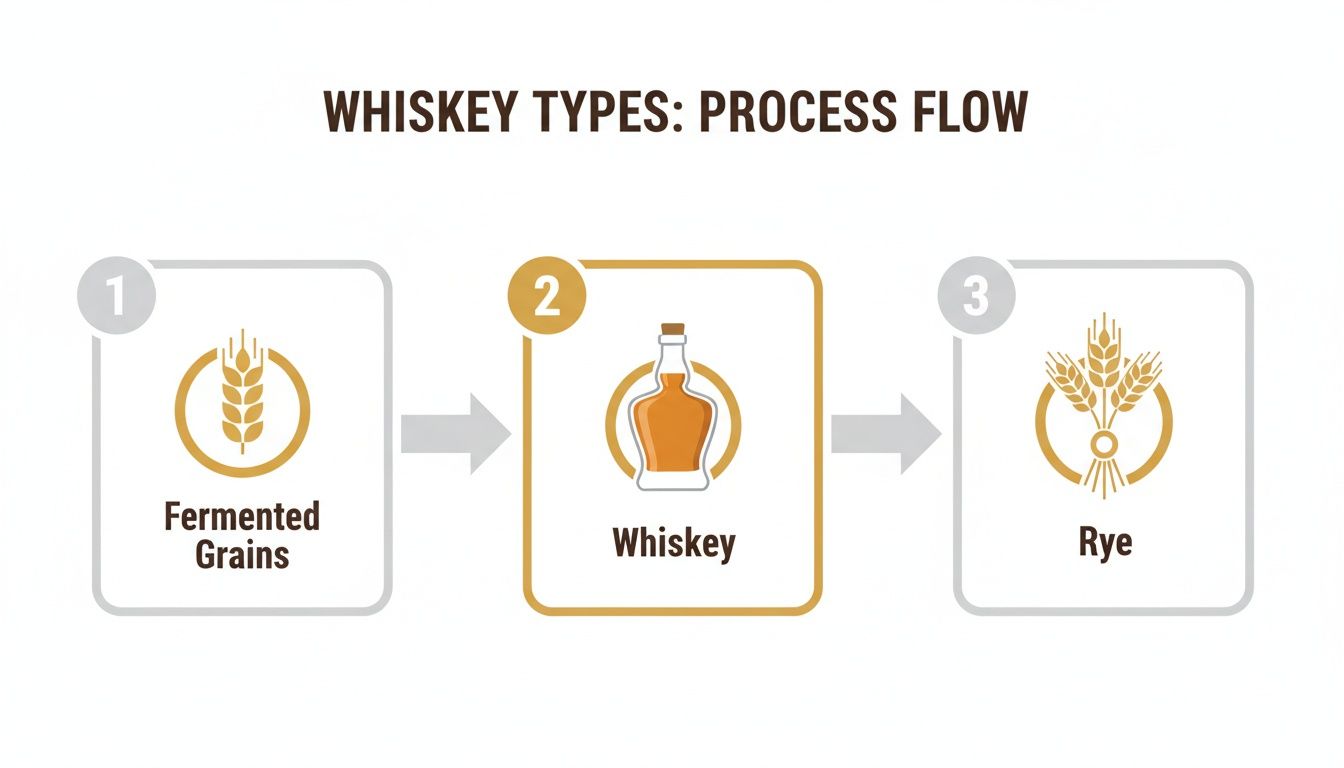
As you can see, all rye is whiskey, but its specific production path sends it toward a completely different flavor destination.
The Critical Role of the Mash Bill
The heart and soul of any American whiskey is its mash bill—that’s just the distiller's grain recipe. This recipe is the single most important factor that shapes the final taste. By law, for a spirit to be called an American Rye Whiskey, its mash bill has to contain at least 51% rye grain.
This rule guarantees that the spicy, peppery, and sometimes fruity notes of the rye grain are the main event. The other 49% is usually a mix of other grains, like corn for a touch of sweetness or malted barley for its enzymes that get fermentation going.
Compare that to its famous cousin, bourbon, which legally must have at least 51% corn. This is precisely why bourbon often has that sweeter, caramel and vanilla-forward profile, while rye leans into a drier, spicier character. If you're just starting to explore whiskey, learning to spot this grain-driven difference is a fantastic first step for your palate.
Tip for New Drinkers: The 51% rule isn't just a legal hoop to jump through; it's the foundational decision that dictates whether a whiskey will be sweet and mellow or bold and spicy. It's the distiller's first and most powerful tool for crafting a specific sensory experience.
Fermentation and Distillation Nuances
Once the mash is cooked, yeast is added to kick off fermentation, converting all those sugars into alcohol. This is a crucial stage where American craft distillers really get to flex their creative muscles. Their choice of yeast strain and how long they let it ferment can either tame rye’s aggressive spice or crank it up to eleven.
For instance, a distiller might use a yeast that creates fruity esters to balance out the rye’s peppery bite. After fermentation, the distillation process refines the alcohol. Many craft producers prefer pot stills, which tend to hold onto more of the grain’s original character, resulting in a richer, more robust spirit. To dig deeper into the grains that form the foundation of these spirits, you can explore what whiskey is made from in our comprehensive guide.
Maturation in Charred Oak
After distillation, the new, unaged spirit—often called "white dog"—is put into barrels to mature. For American Rye Whiskey, this means aging in new, charred oak barrels. This step is absolutely non-negotiable and is where a huge portion of the final flavor is born.
The char on the inside of the barrel acts like a filter, stripping out harsh compounds while layering in delicious flavors from the wood. As the whiskey ages, it pulls out notes of:
- Vanilla: From vanillin compounds naturally present in oak.
- Caramel and Toffee: From the wood sugars that get caramelized during the charring process.
- Baking Spices: Think cinnamon and clove, which beautifully complement the rye grain's inherent spice.
Many small-batch American distillers love to experiment with different char levels. A heavy #4 "alligator" char can impart intense smoky and sweet flavors, while a lighter char lets more of the delicate grain character come through. This is another area where craft brands like Colorado's Laws Whiskey House or Utah's High West showcase their unique style, creating rye expressions that are deeply complex and anything but one-dimensional. The final difference between rye and whiskey is a direct result of these careful, deliberate choices made at every step, from grain selection to the final moments in the barrel.
Decoding the Flavor Profile of Rye and Other Whiskeys
Diving into the world of whiskey is all about the senses, and learning to pick out the unique signatures of each style is one of the most satisfying parts of the journey. When people ask about the difference between rye and whiskey, the answer often comes down to what you taste and smell in the glass. Rye’s distinct personality comes straight from the grain itself, creating a flavor map that stands in sharp contrast to its whiskey cousins.
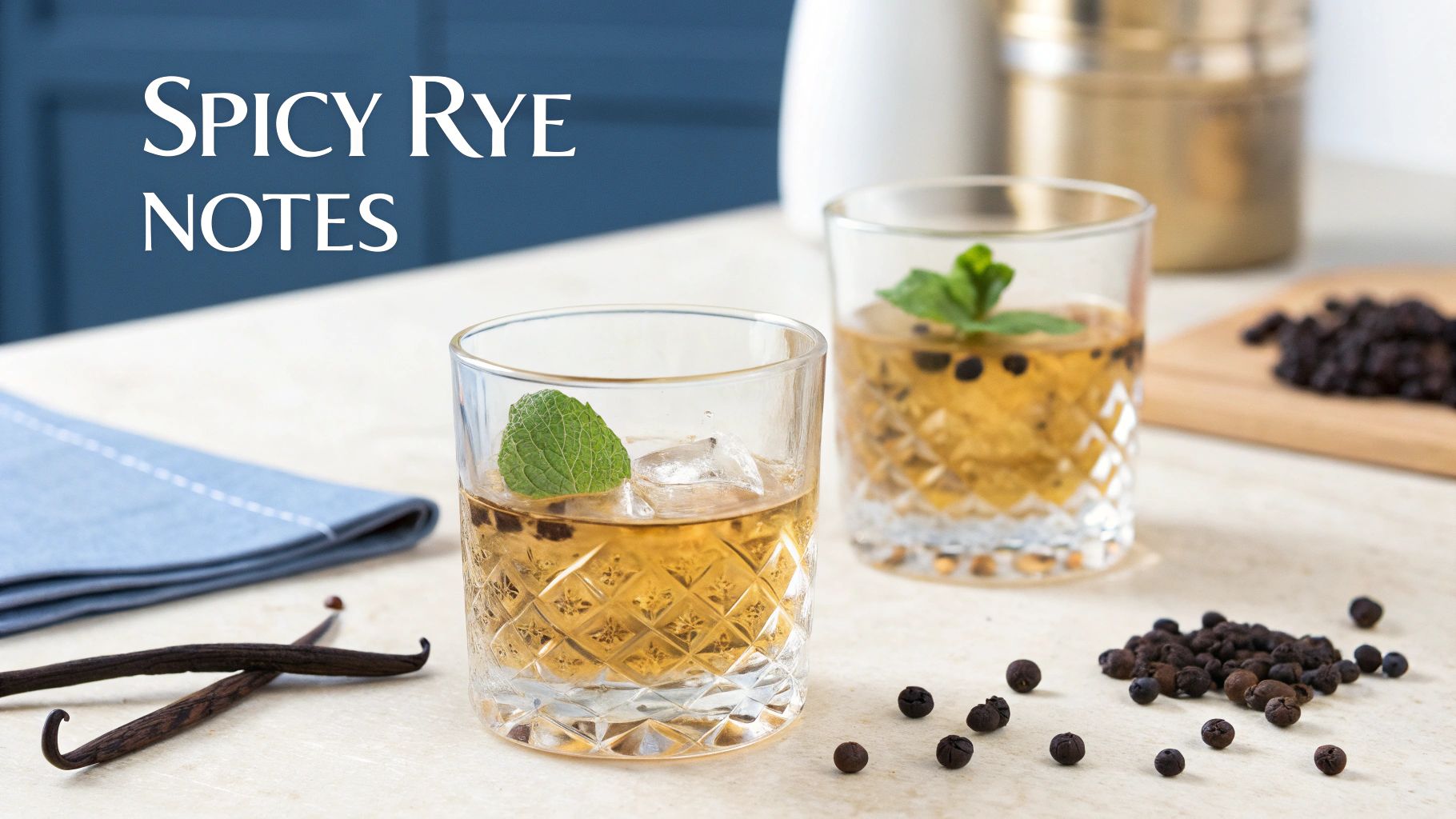
Understanding these profiles is the key to sharpening your palate, whether you're a seasoned pro or just pouring your first dram. It lets you appreciate the subtle choices craft distillers make to shape their spirits.
The Signature Spice of American Rye
Pour a glass of a classic American rye, and you’re hit with an assertive, unmistakable aroma. The headliner is almost always spice. I’m not talking about the heat from the alcohol, but a complex mix of notes that channels the rugged character of the rye grain.
Think of it like opening a well-stocked spice cabinet. You’ll often find notes like:
- Black Pepper: A sharp, zesty kick that usually leads the charge on the first sip.
- Baking Spices: Cinnamon, clove, and nutmeg are common, lending a familiar warmth and depth.
- Herbal Notes: In many ryes, especially those with a higher rye content, you might even get hints of mint, dill, or caraway.
Tip for New Drinkers: That "rye spice" everyone talks about isn't just a figure of speech; it's a real, peppery tingle on the tongue that defines the spirit. This bold profile is exactly why rye stands up so beautifully in classic cocktails where other whiskeys might get lost in the mix.
A great way for newcomers to experience this is to compare a "barely legal" rye (with around 51% rye grain) to a high-rye expression (like the popular 95% rye mash bills). You'll immediately notice how the spice and herbal notes jump out as the rye content goes up. It's a fantastic exercise for training your palate to pinpoint specific flavors.
Comparing Rye to Other Major Whiskey Styles
To really get what makes rye special, it helps to see how it stacks up against the other giants of the whiskey world. Each style has its own flavor DNA, largely dictated by its main grain and where it’s made.
This table breaks down the core flavor differences at a glance:
| Whiskey Type | Primary Grain | Dominant Flavor Profile |
|---|---|---|
| Rye Whiskey | Rye | Spicy, peppery, herbal, dry |
| Bourbon | Corn | Sweet, caramel, vanilla, oak |
| Scotch Whisky | Malted Barley | Malty, smoky, peaty, fruity |
| Irish Whiskey | Malted/Unmalted Barley | Smooth, honeyed, light fruit, floral |
As you can see, the contrast is stark. While rye brings the spice, bourbon delivers a wave of sweetness from its corn-heavy mash bill. A fantastic example of a craft distillery that plays with this balance is Kentucky's New Riff. They produce both a high-rye bourbon and a bold rye whiskey, offering a perfect side-by-side lesson in grain influence. Getting a handle on what rye whiskey tastes like in detail will really help you fine-tune your ability to distinguish these profiles.
Bourbon: The Sweet Counterpart
Bourbon is rye’s closest American relative, yet its flavor is a world away. The legally required 51% corn mash bill creates a spirit that's noticeably sweeter and rounder on the palate.
- Core Flavors: Expect a rush of caramel, vanilla, toffee, and brown sugar.
- Oak Influence: Since it’s aged in new charred oak barrels, bourbon often has a strong toasted oak and gentle char character.
- Mouthfeel: It tends to feel fuller and more viscous compared to the drier finish of most ryes.
If rye's peppery kick is a bit much for you at first, bourbon is often a much more welcoming starting point. That built-in sweetness makes it an easy sipper and a workhorse in cocktails.
Scotch and Irish Whiskey: A Different World
Hopping across the Atlantic, Scotch and Irish whiskeys offer entirely different experiences rooted in their use of barley.
Scotch Whisky is incredibly diverse. It’s often defined by two major camps: the smoky and peated styles (like those from Islay) or the lighter, fruitier, and malty expressions (common in Speyside). That iconic smoky flavor comes from drying the malted barley over a peat fire, a process that infuses the spirit with powerful notes of campfire, iodine, and damp earth.
Irish Whiskey, on the other hand, is famous for being exceptionally smooth. It's often triple-distilled, giving it a much lighter and more delicate profile with notes of honey, apple, and floral hints. This makes it incredibly approachable and a great entry point into the wider world of whiskey for anyone who prefers a gentler spirit.
Once you understand these fundamental flavor maps, you can start picking out the nuances in every glass and truly appreciate the difference between rye and the rest of the whiskey world.
Exploring the History and Styles of Rye Whiskey
To really get the difference between rye and whiskey, you have to rewind America’s spirited history. Long before bourbon became the quintessential American spirit, rye was king. It was the original American whiskey, born from the grain fields of the East Coast and first distilled by settlers who carried their traditions across the Atlantic.
Rye’s robust, spicy character made it the backbone of the first classic American cocktails. For most of the 18th and 19th centuries, if you walked into a saloon and ordered a whiskey, you were almost certainly getting rye. Its reign, however, was not meant to last.
The Rise and Fall of America's Original Spirit
Rye whiskey’s story is one of dramatic peaks and valleys. Its roots dig deep into the 18th century, with America’s first distillery firing up a rye-heavy mash back in 1791. By 1900, rye whiskey accounted for a staggering 90% of all whiskey made in the United States. But its dominance came to a screeching halt with Prohibition, a knockout blow that took nearly a century to recover from.
After WWII, corn was suddenly abundant and cheaper, which paved the way for bourbon’s rise and shoved rye’s market share down to less than 5% by the 1960s. The real comeback didn't start until 2006 when heritage brands like WhistlePig reintroduced aged expressions. This sparked a craft movement that led to a 300% surge in production by 2020. You can dive deeper into this fascinating history and market revival.
This resurgence owes a lot to the American craft distillery movement. Distillers rediscovered rye’s complexity and started playing with it again, breathing new life into forgotten mash bills and creating expressions that show off the grain in new and exciting ways.
American Rye vs. Canadian Rye
When you start exploring rye, it’s critical to understand a key geographical distinction that often trips people up: the difference between American and Canadian styles. The definitions are worlds apart.
- American Rye Whiskey: As we've covered, this is a legally defined category. Its mash bill must contain at least 51% rye, and it has to be aged in new, charred oak barrels. This law ensures the spicy, peppery character of the rye grain is front and center.
- Canadian Rye Whisky: In Canada, the term "rye" is more of a historical nickname than a legal requirement. Canadian whiskies can be labeled "rye" even if they have little to no rye grain at all. Historically, Canadian distillers used a splash of rye for flavoring, and the name just stuck.
Tip for New Drinkers: This is a vital piece of knowledge. If you're chasing that signature spicy kick, make sure the bottle explicitly says American Rye Whiskey. Otherwise, you might end up with a much lighter, smoother Canadian whisky that doesn't deliver the rye character you're expecting.
This distinction shows just how important it is to know a whiskey’s origin. A bottle from an American craft distillery like Dad's Hat Pennsylvania Rye Whiskey, which aims to recreate historical styles, is going to be a completely different experience than a mass-market Canadian rye.
The Spectrum of American Rye Styles
Within the world of American rye, there's a fantastic spectrum of flavor, mostly dictated by the mash bill. Knowing these styles will help you find the perfect rye for your palate.
"Barely Legal" Rye (51-60% Rye) These ryes just meet the legal minimum, with a good chunk of the mash bill often filled out with corn and malted barley. This creates a beautifully balanced spirit where the rye spice is present but softened by the sweetness and roundness of corn. They are often a perfect gateway for bourbon drinkers looking to explore the world of rye. A great craft example is the rye from Pikesville, produced by Heaven Hill.
High-Rye Rye (95-100% Rye) On the other end of the spectrum, you have the spice bombs. Popularized by MGP, a massive Indiana distillery that supplies countless brands, the 95% rye, 5% malted barley mash bill is an industry icon. These whiskies are intensely spicy, herbal, and peppery, showcasing the unadulterated power of the grain. Craft brands like Sagamore Spirit have built their reputation on perfecting this bold, assertive style, creating ryes that are phenomenal in cocktails precisely because their flavor refuses to get lost.
For anyone new to whiskey, trying these two styles side-by-side is an eye-opening experience. It’s the quickest way to understand how the mash bill translates directly to the flavors in your glass and appreciate the artistic choices craft distillers make.
How to Get the Most Out of Your Rye Whiskey
Rye's big comeback is fantastic, but let's be honest—that assertive, spicy character can feel a little intimidating if you're just starting your whiskey journey. The trick is knowing how to unlock its unique personality, whether you're sipping it neat or shaking up a classic cocktail. With just a few pointers, you'll see exactly why rye has earned its spot back on the top shelf.
This is your guide to finding your favorite way to drink rye. From the perfect Manhattan to some surprising food pairings, we'll walk you through how to create a memorable tasting experience.
Rye's Rightful Place: Classic Cocktails
That bold, peppery backbone is rye’s superpower in the world of mixology. Where a softer, sweeter whiskey might get drowned out by ingredients like sweet vermouth or potent bitters, rye holds its own. It’s exactly why rye is the original star in some of America’s most iconic cocktails.
- The Manhattan: This is rye’s most famous home, and for good reason. A proper Manhattan needs the sharp spice of rye to slice through the rich sweetness of the vermouth, creating a drink that’s perfectly balanced and deeply sophisticated.
- The Sazerac: As the official cocktail of New Orleans, the Sazerac absolutely depends on rye's herbal and peppery profile to stand up to the anise kick of absinthe. A bourbon Sazerac is fine, but the rye version is the one steeped in history.
- The Old Fashioned: While bourbon often takes center stage today, an Old Fashioned built with a quality rye delivers a spicier, drier, and more complex drink that many whiskey purists swear by.
If you're looking for a great place to start, try making a Manhattan with an American craft rye like Sagamore Spirit's Signature Rye. Its beautiful balance of spice and underlying sweetness makes for an incredible cocktail that shows just how well rye can play with others.
Tips for Sipping Rye Whiskey
If you really want to wrap your head around what makes rye different, you have to taste it on its own. Sipping rye lets you appreciate its full character arc, from the first spicy whiff in the glass to the long, lingering finish. For anyone new to drinking spirits neat, a few small tweaks can make a world of difference.
Tip for New Drinkers: Don't be afraid to add a few drops of water when tasting rye for the first time. This isn't "watering it down"—it's a technique master distillers use to open up the aromas and tame the alcohol's heat, letting more subtle flavors step forward.
Here are a few ways to approach sipping rye:
- Neat: The purest way to experience it. Pour about an ounce into a Glencairn or similar tasting glass and just let it breathe for a minute. Take in the aromas before you even take a sip.
- With a Drop of Water: Add just two or three drops of room-temperature water. Give the glass a swirl and taste it again. You might be shocked at how new notes of fruit, vanilla, or mint suddenly pop.
- With a Large Ice Cube: A single large cube or sphere will chill the whiskey without diluting it too quickly. This can mellow the spice and make for a more refreshing sip, especially with some of the higher-proof ryes out there.
The Perfect Food Pairings for Rye
Rye’s robust profile makes it a fantastic partner for flavorful foods. Its spice can cut right through rich, fatty dishes, while its deeper sweet and fruity notes can complement a whole range of flavors. You might be surprised at how versatile it is at the dinner table.
Next time you pour a glass, try it with one of these:
- Aged Cheeses: The salty, nutty punch of an aged cheddar or Gouda stands up beautifully to rye’s spice.
- Smoked Meats: Think charcuterie boards loaded with smoked sausage, cured ham, or even a good pastrami. The smoky, savory notes are a perfect match for that peppery kick.
- Dark Chocolate: A piece of high-quality dark chocolate (70% cacao or more) is a game-changer. It brings out the subtle vanilla, caramel, and fruit hiding in the rye, making for a truly decadent pairing.
Playing around with these different approaches will help you lock in your own preferences and build a deeper appreciation for great American craft rye.
How to Host a Blind Whiskey Tasting
Now that you know the key differences between rye and other whiskeys, it’s time to put your palate to the test. Hosting a blind tasting is a fun, engaging, and incredibly effective way to build your confidence. It strips away all the noise—fancy labels, price tags, and brand reputations—leaving just you and the spirit.
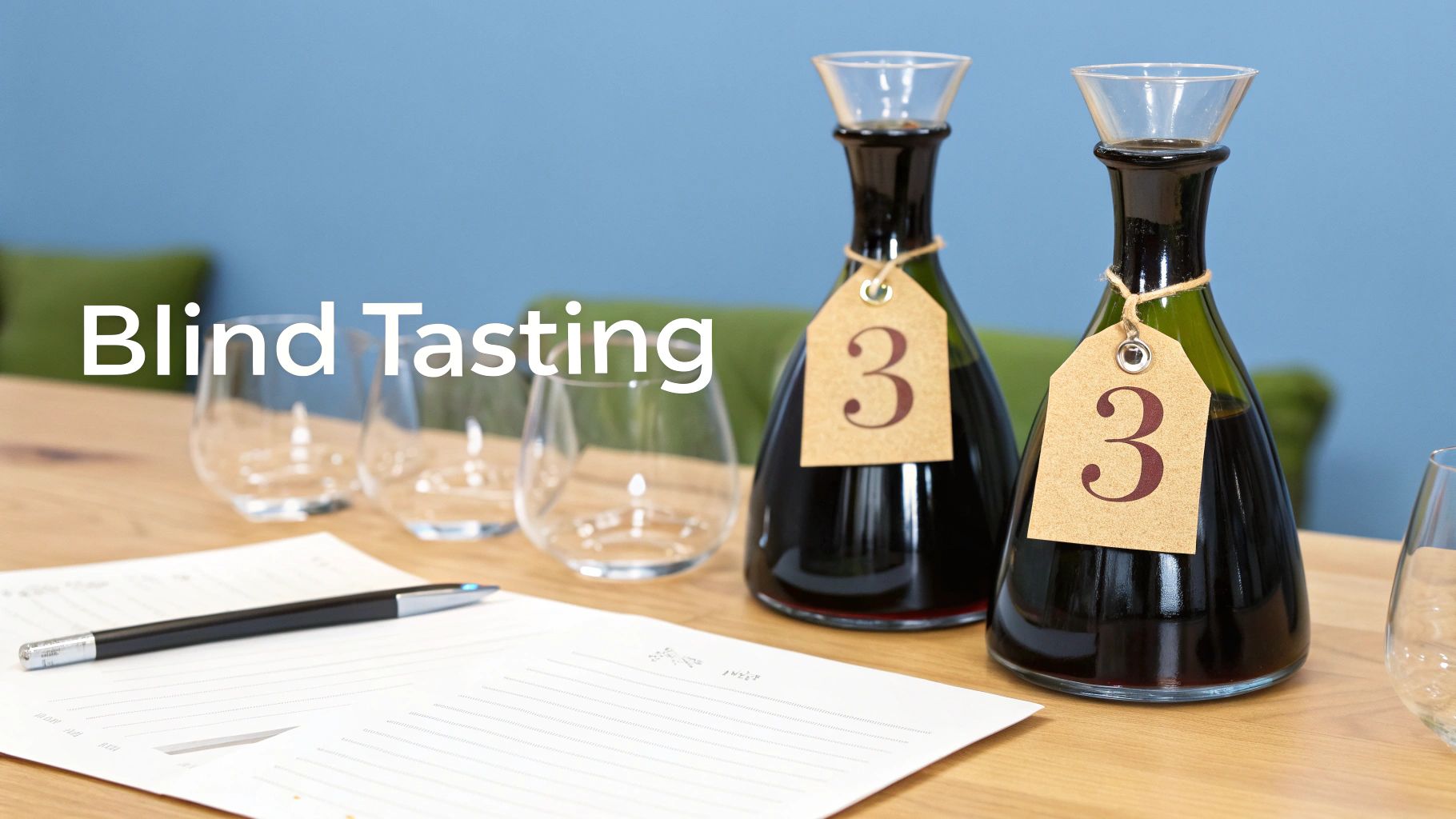
This simple exercise is the fastest way to learn what you genuinely enjoy and to truly grasp the spicy, peppery signature that defines American rye. Plus, it’s a perfect activity to share with friends.
Setting Up Your Blind Tasting
The goal here is to make the experience as unbiased as possible. You don't need a lot of fancy equipment, just some careful prep to ensure a fair and fun comparison.
Here’s a simple setup to get you started:
- Select Your Whiskeys: Choose three to four different bottles. A great starting lineup would include a high-rye whiskey (like one from Sagamore Spirit), a "barely legal" rye (around 51% rye), a classic bourbon (like one from New Riff), and maybe a wildcard like an Irish or Scotch whisky to really highlight the differences.
- Gather Your Materials: You'll need identical glasses for each participant (Glencairn glasses are ideal), water for cleansing the palate, and pens and paper for taking notes.
- Pour and Conceal: Have one person act as the host. They will pour about one ounce of each whiskey into numbered glasses, keeping a secret key to know which number corresponds to which bottle. You can cover the bottles in paper bags or simply pour them out of sight of the tasters.
This process removes any preconceived notions, allowing your senses to be the only judge.
The Four Steps of Tasting
Once everything is set up, guide your friends through a structured tasting process. Encourage everyone to take their time and share their thoughts at each stage. This collaborative approach makes it less intimidating for newcomers and a lot more fun.
Step 1: The Look (Color) Hold the glass up to a neutral light source. Is the color pale straw, deep amber, or rich mahogany? While color isn't a definitive indicator of flavor, it can offer clues about age or barrel type.
Step 2: The Nose (Aroma) Gently swirl the whiskey in the glass and take a sniff with your mouth slightly open. What do you smell? Encourage guests to look for key aromas:
- For Rye: Pepper, baking spices (cinnamon, clove), mint, or even dill.
- For Bourbon: Caramel, vanilla, toasted oak, or sweet corn.
Step 3: The Palate (Taste) Take a small sip and let it coat your entire tongue. Is it sweet upfront? Does a spicy kick emerge mid-palate? Try to pinpoint specific flavors. This is where the difference between a sweet bourbon and a spicy rye will become crystal clear.
Step 4: The Finish (Aftertaste) Swallow the whiskey and pay attention to the flavors that linger. Is the finish long and warming, or short and crisp? Rye often leaves behind a signature spicy tingle that can last for several minutes.
Tip for New Drinkers: A blind tasting is your personal palate trainer. It teaches you to trust your senses over marketing. You might discover your favorite whiskey isn’t the most expensive one on the shelf, but rather a hidden gem from a small American craft distillery.
Interestingly, this focus on niche flavors is reflected in the market itself. While the overall whiskey market reached an incredible USD 62.25 billion in 2023, rye whiskey remains a much smaller, craft-driven category valued at around USD 5.2 billion in 2024. This highlights rye's unique appeal to those seeking bolder, spicier profiles, and its faster growth rate suggests more innovation is on the horizon. Learn more about the rye whiskey market's impressive trajectory.
Hosting a blind tasting is more than just a party game; it's a direct path to becoming a more informed and confident whiskey drinker. It empowers you to understand the real difference between rye and whiskey on your own terms.
Ready to take the guesswork out of discovering incredible American craft whiskey? Blind Barrels delivers the ultimate blind tasting experience right to your door. Each quarterly kit features four unique, top-shelf samples from small-batch distilleries, complete with everything you need to host your own tasting, sharpen your palate, and find your next favorite bottle. Explore the Blind Barrels experience today!