

Here’s the simple truth: All bourbon is whiskey, but not all whiskey is bourbon.
Think of it this way: a square is always a rectangle, but a rectangle isn't always a square. Bourbon is simply a specific, legally protected type of whiskey, and that distinction comes down to a strict set of rules governing exactly how and where it’s made.
What Separates Bourbon From All Other Whiskeys
To really get what makes bourbon a unique American spirit, you have to look at its legal identity. While "whiskey" is a massive, globe-spanning category for any spirit made from fermented grain mash, bourbon must follow a very precise recipe and process defined by U.S. law.
These aren't just suggestions; they’re the regulations that guarantee a consistent foundation of quality and flavor. It’s what truly sets bourbon apart from Scotch, Irish, Japanese, or even other American whiskeys like those from Westward Whiskey in Oregon. The core rules are what create the fundamental difference between whiskey and bourbon.
At its heart, bourbon is a uniquely American spirit, defined by these key regulations:
- It must be made in the United States.
- The mash bill (the grain recipe) has to contain at least 51% corn.
- It can't be distilled to a proof higher than 160 (80% ABV).
- It must enter the barrel for aging at no more than 125 proof (62.5% ABV).
- It must be aged in new, charred oak barrels.
- No additives for flavor or color are allowed. What you see in the bottle is what came out of the barrel.
For anyone curious about the business side of this spirit, you can find more insights on the bourbon whiskey market here.
Whiskey vs. Bourbon At A Glance
For newcomers to the world of whiskey, keeping all the rules straight can feel a bit overwhelming. This table breaks down the critical differences in a simple, side-by-side format, helping you see the key distinctions at a glance.
| Key Attribute | Bourbon (A Specific Whiskey) | Whiskey (The Broader Category) |
|---|---|---|
| Origin | Must be made in the United States | Can be made anywhere in the world |
| Primary Grain | Must be at least 51% corn | Can be made from any grain (barley, rye, wheat, corn, etc.) |
| Aging Container | Must be aged in new, charred oak barrels | Can be aged in various types of barrels, often used ones |
| Flavor Additives | No additives for color or flavor are permitted | Some types of whiskey may permit additives |
A Tip for New Drinkers: When you're just starting out, zero in on two rules: "51% corn" and "new charred oak barrels." These two requirements are almost single-handedly responsible for bourbon's signature sweet flavor profile, packed with notes of vanilla and caramel. If you already know you enjoy sweeter spirits, bourbon is the perfect gateway into the wider world of whiskey.
Understanding The Legal Rules Of Bourbon
To really get the difference between whiskey and bourbon, you have to understand that "bourbon" isn't just a name—it's a legal designation with some serious teeth. Back in 1964, the U.S. Congress officially declared bourbon a "distinctive product of the United States," locking in its identity with a strict, non-negotiable set of rules.
These regulations are what make bourbon, well, bourbon. They’re the guardrails that separate it from the massive, globe-spanning category of whiskey and guarantee a certain character and quality in every bottle. Let's break down the six commandments every distiller must follow to earn that label.
The Six Commandments Of Bourbon
Think of these rules as the DNA of America’s Native Spirit. If a whiskey misses even one of these marks, it simply can't be called bourbon. Period.
- Made in the USA: While Kentucky is the undisputed heartland of bourbon—pumping out around 95% of the world's supply—it can legally be made anywhere in the United States. From Texas craft producers like Balcones Distilling to New York distillers, American artisans are crafting fantastic bourbons that nail this first requirement.
- Mash Bill of At Least 51% Corn: Corn is the soul of bourbon's flavor, giving it that signature sweetness. The grain recipe, or mash bill, has to be at least 51% corn. The rest is usually filled out with rye, wheat, or malted barley to add spice or softness.
- Distilled to No More Than 160 Proof: The spirit coming hot off the still can’t be more than 160 proof (80% ABV). This rule is crucial because it ensures the rich flavors from the grain mash aren't stripped away, preserving the whiskey's core character.
This little decision tree shows you the simple questions to ask to figure out if a whiskey qualifies as bourbon.

As you can see, the journey from a generic whiskey to a true bourbon hinges on three key checkpoints: where it's made, what it's made from, and how it's aged.
The Final Three Rules For Barrel And Bottle
The last three rules are all about the aging and bottling process. This is where bourbon develops its deep color and the complex flavors we all know and love.
- Aged in New, Charred Oak Containers: This might be the most important rule of all. Bourbon must be aged in a brand-new, charred oak barrel. This is non-negotiable and it’s where all the color and those classic notes of vanilla, caramel, and toffee come from. Unlike their counterparts in Scotland or Ireland, bourbon distillers get one—and only one—use out of each barrel.
- Entered into the Barrel at No More Than 125 Proof: When the raw, unaged spirit (often called "white dog") is put into the barrel for aging, its strength cannot exceed 125 proof (62.5% ABV). This lower entry proof allows for a better, more nuanced interaction between the spirit and the wood, pulling out more flavor over time.
- Bottled at 80 Proof or More: After its time in the barrel, the finished product has to be bottled at a minimum of 80 proof (40% ABV). If it's any weaker than that, it can't legally wear the bourbon label.
A Tip for New Drinkers: That "new, charred oak" rule has a huge ripple effect. The constant need for new barrels fuels a massive cooperage (barrel-making) industry. It also means used bourbon barrels are a hot commodity for producers of Scotch, rum, tequila, and even craft beer, who buy them up to finish their own products and add unique layers of flavor.
These strict laws stand in stark contrast to the more relaxed rules for other whiskies. Scotch, for example, has to be aged for at least three years, but producers can use old, pre-loved barrels. This single difference is a massive factor in the flavor profiles we explore in our guide to whiskey vs. bourbon vs. rye. Ultimately, this legal framework doesn’t just define bourbon’s taste—it shapes the entire ecosystem around it.
Comparing The Mash Bill Ingredients
If the legal rules are the blueprint, then the mash bill is where a distiller truly starts building a spirit’s soul. This is simply the specific recipe of grains that gets cooked up to begin the whiskey-making process. For bourbon, the law is crystal clear: the recipe must contain at least 51% corn. That corn is the source of bourbon's signature sweetness, laying down a foundation of caramel and vanilla.
But it’s the other 49% of the grain recipe where the magic really happens. This is the distiller's playground, a space where they can introduce other grains to create wildly different flavor profiles, turning a simple rule into an art form. This is a fundamental difference between bourbon and the broader whiskey world. While bourbon has to be corn-forward, other whiskeys have no such restriction. Scotch, for instance, relies almost entirely on malted barley, while rye whiskey must, by law, use at least 51% rye.
The Flavoring Grains That Define Your Drink
Think of corn as the sweet, dependable base of bourbon. The other grains are the "flavoring" ingredients that add spice, softness, and layers of complexity. The three most common supporting actors in a bourbon mash bill are rye, wheat, and malted barley.
-
Rye: This grain is bourbon’s spicy, feisty cousin. When a distiller uses a hefty portion of rye, they create a "high-rye" bourbon. This brings bold notes of black pepper, baking spices like cinnamon and clove, and sometimes even a hint of mint. A great example from the craft world is New Riff Distilling's Kentucky Straight Bourbon, which perfectly balances the corn's sweetness with a robust, spicy finish.
-
Wheat: Where rye adds spice, wheat adds softness. A "wheated" bourbon swaps out the rye for wheat, creating a much gentler, smoother, and often sweeter profile. Wheat introduces delicate flavors of honey, baked bread, and soft toffee, making for an exceptionally easy-sipping spirit. The iconic Maker's Mark is a classic example, but craft distilleries like Wyoming Whiskey also produce excellent, approachable wheated bourbons.
-
Malted Barley: Though usually used in smaller amounts, malted barley is a workhorse. Its main job is technical: it contains natural enzymes that are crucial for converting the starches from the other grains into fermentable sugars. But it’s no slouch on flavor, either, contributing subtle notes of biscuit, chocolate, and toasted nuts that add a foundational depth to the final product.
The exact combination of these grains is a closely guarded secret at many distilleries. You can dive deeper into how these percentages shape the final spirit in our guide to the bourbon mash bill.
A Tip for New Whiskey Drinkers: Don't know where to start? Think about what you already like. If you enjoy spicy foods and bold flavors, a high-rye bourbon is probably right up your alley. If you lean toward smoother, sweeter tastes, look for a "wheated" bourbon on the label.
How Mash Bills Create Different Whiskey Styles
The true beauty of the mash bill shines when you compare different styles of American whiskey side-by-side.
Imagine pouring three glasses: a high-rye bourbon, a wheated bourbon, and a true rye whiskey.
- The high-rye bourbon would greet you with sweetness from the corn, then finish with a satisfying kick of pepper and spice.
- The wheated bourbon would feel much softer and rounder on your palate, with gentle waves of caramel and fresh-baked bread.
- The rye whiskey, legally required to have at least 51% rye, would be the boldest of the bunch, leading with a distinct peppery spice that defines its entire character.
This incredible diversity is a testament to the distiller's art, all built on the highly regulated craft of American whiskey. Kentucky remains bourbon's undisputed heartland, filling an incredible 2.7 million barrels in 2022 alone and driving a $9 billion industry. The strict rules—especially that 51%+ corn mash bill—are what create a uniquely American spirit that stands apart from the sprawling global world of whiskey.
American Craft Pushing The Boundaries
Today, American craft distillers are taking the mash bill concept to a whole new level. Trailblazers like Frey Ranch Distillery in Nevada are champions of the "farm-to-bottle" movement. They grow all their own grains—corn, wheat, rye, and barley—to create a true "whiskey of a place" that reflects their unique terroir.
Down in Texas, Balcones Distilling became famous for using unique grains like roasted blue corn, which imparts a rich, nutty, and toasty flavor unlike anything you’ll find in a traditional bourbon. These distilleries prove that while the rules for bourbon are firm, the opportunities for innovation within those rules are absolutely endless.
Analyzing The Impact Of Barrel Aging
If the mash bill is what gives a whiskey its initial personality, the barrel is where it develops its soul. You could argue that the aging process is the single most transformative stage in a spirit’s life, and the strict rules governing bourbon’s maturation are a huge part of the difference between whiskey and bourbon. This is where raw, clear spirit becomes the complex, amber drink we know and love.
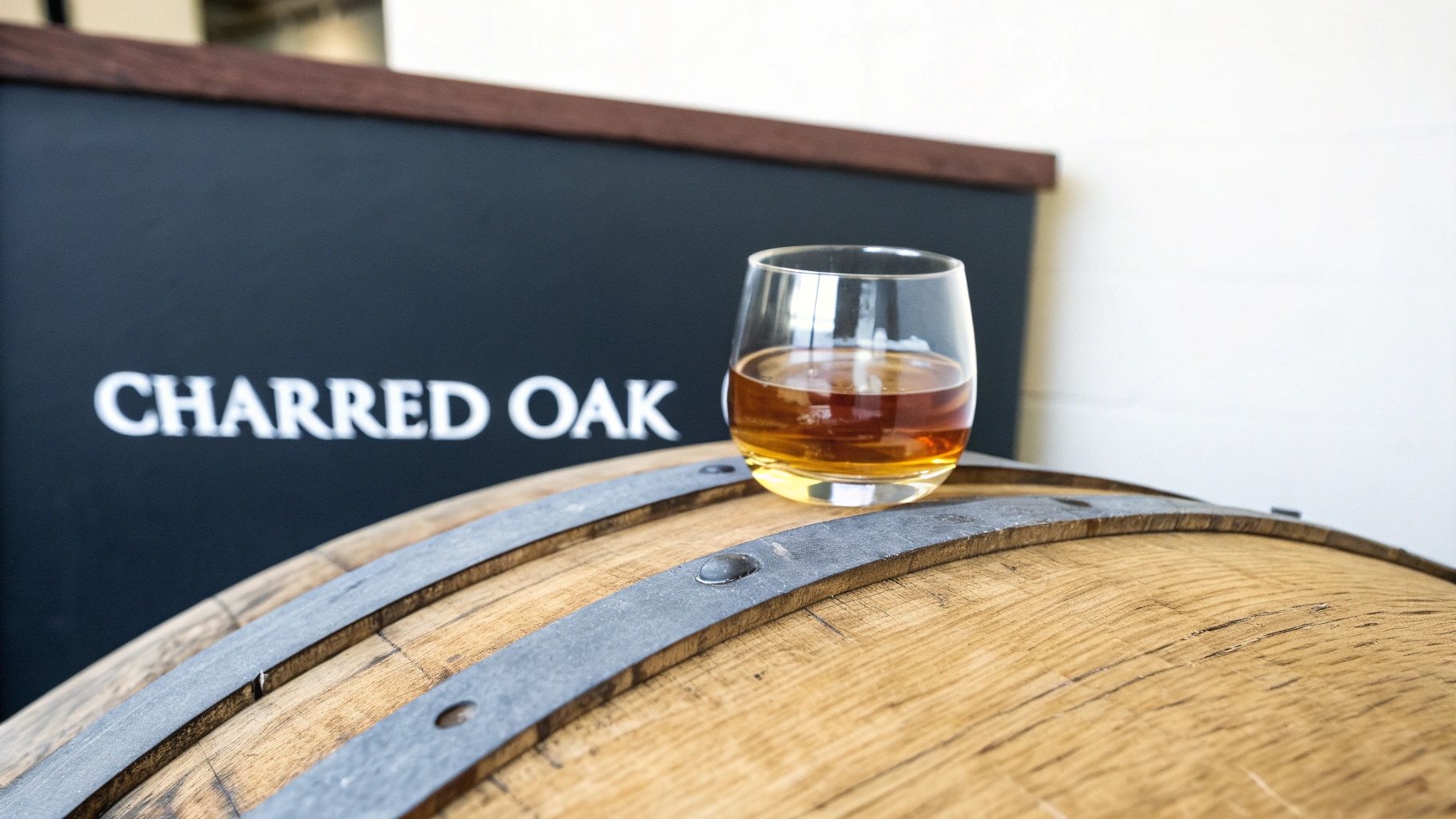
The cardinal rule for bourbon is its mandatory aging in brand-new, charred American white oak barrels. This isn't just a suggestion; it's a legal requirement. A distiller gets one shot with a barrel if the spirit inside is ever going to be called bourbon.
This single-use mandate is what gives bourbon its signature flavor profile. As the spirit rests, it pulls compounds directly from the wood. The charring process caramelizes the natural wood sugars, which then leach into the whiskey, creating those deep notes of vanilla, caramel, toffee, and baking spices we associate with a classic bourbon.
The World Of Used Barrels
This is where the broader whiskey world takes a completely different turn. While bourbon producers have to start fresh every time, other whiskey makers across the globe—especially in Scotland, Ireland, and Japan—almost exclusively use used barrels.
And what kind of used barrels are they using? More often than not, they're using ex-bourbon barrels. The booming American bourbon industry creates a massive surplus of once-used barrels that are perfect for aging other spirits.
- Scotch Whisky: Many Scotch producers rely heavily on ex-bourbon casks to impart gentle notes of vanilla and coconut without overwhelming the delicate malted barley spirit. They also frequently use ex-sherry casks from Spain, which lend rich flavors of dried fruit, raisin, and nuts.
- Irish Whiskey: Much like their Scottish counterparts, Irish whiskey distillers often use a mix of ex-bourbon and ex-sherry barrels to achieve their characteristically smooth and fruity profile.
- American Craft Whiskey: Innovative American distillers are playing with all sorts of barrel types. Stranahan's, a pioneer in American Single Malt, often uses new charred oak but also experiments with finishing in barrels that previously held tequila, rum, or even sherry.
This practice of using pre-seasoned barrels creates entirely different flavor landscapes. A Scotch aged in a sherry cask will have a flavor profile worlds away from a bourbon aged in virgin oak.
Finishing The Spirit
Beyond the primary aging, many whiskey producers use a technique called "finishing." This involves taking a mature whiskey that has spent years in one type of barrel and moving it to a different cask for a shorter period—anywhere from a few months to a couple of years—to add an extra layer of complexity.
A Tip for New Whiskey Drinkers: If you see a bottle labeled "Port Cask Finish" or "Sherry Cask Finish," it means the distiller has added a final, flavorful twist. This is a great way to explore how different barrels influence a spirit you already enjoy.
For bourbon, this is a heavily restricted practice. To be called "straight bourbon," no finishing is allowed. All the flavor must come from that initial new charred oak barrel. However, some craft producers get around this by creating a "bourbon finished in..." which must be clearly labeled to show the secondary maturation.
For example, Angel's Envy is a well-known Kentucky Straight Bourbon that is finished in port wine barrels, giving it a distinct ruby hue and notes of ripe red fruit. Similarly, Woodinville Whiskey Co. in Washington State has a popular Port Finished Straight Bourbon that showcases how finishing can beautifully complement a classic bourbon profile. This technique is far more common in the wider whiskey world, where it's a celebrated way to create unique and exciting expressions.
How To Taste The Difference For Yourself
Reading about the rules is one thing, but the real fun starts when you actually put that knowledge to the test. The absolute best way to get a feel for the difference between whiskey and bourbon is to taste them side-by-side. It takes a little practice to train your palate to pick out specific notes, but it's a rewarding journey that turns every single sip into an act of discovery.
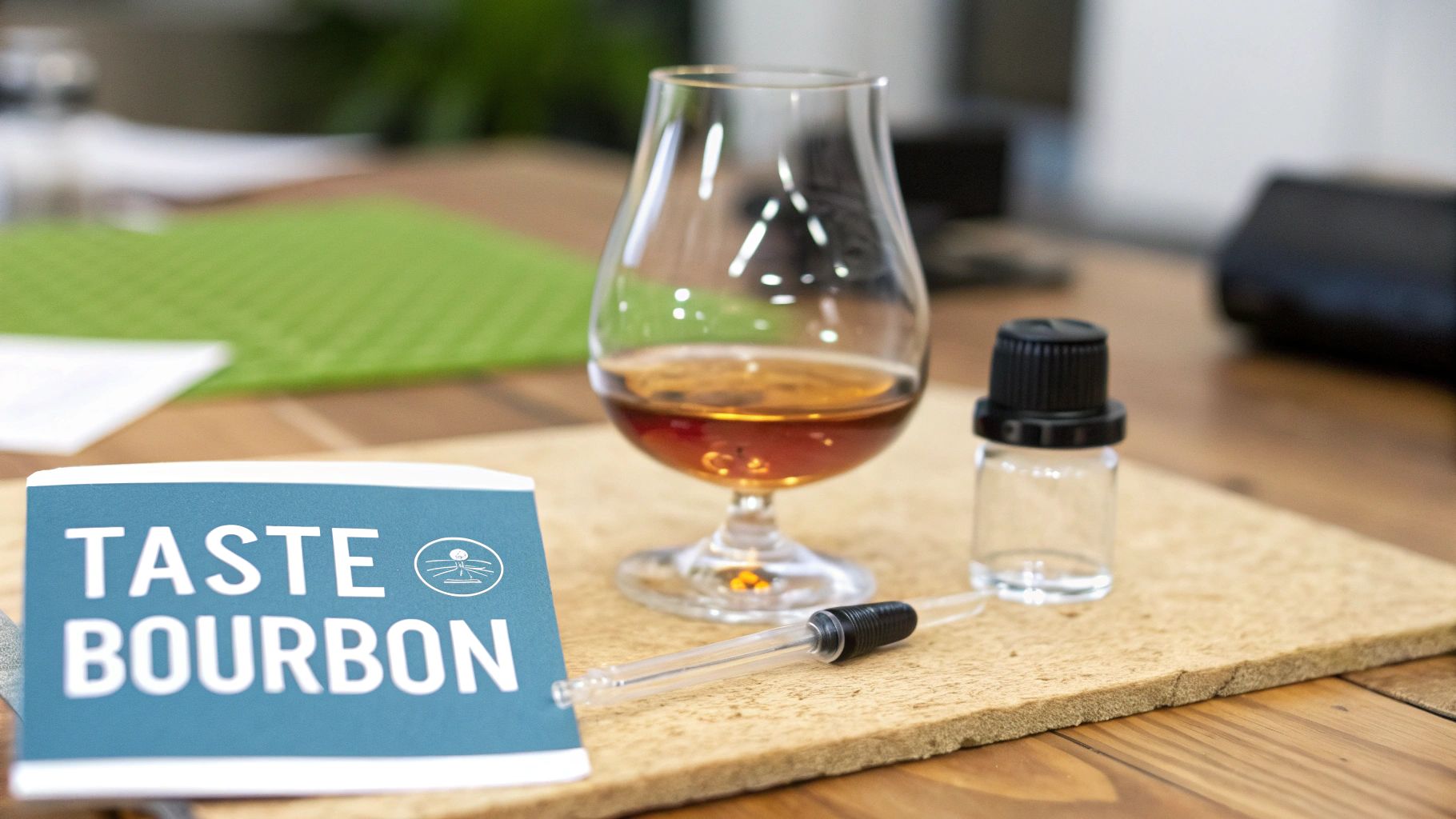
This hands-on approach is what helps you graduate from simply "liking" a whiskey to understanding why you like it. Is it the sweetness from the corn? The peppery kick of rye? Or the soft, bready notes from wheat that you're drawn to? Let's walk through how to taste like a seasoned pro.
A Step-By-Step Guide To Tasting
You don't need a fancy lab coat or an expensive setup. All it takes is a proper glass (a Glencairn is perfect, but a wine glass works in a pinch), some good whiskey, and your own senses. This simple four-step process is all you need to break down every aspect of the spirit.
- Look: Hold your glass up to a light source. The color alone can drop hints about its age and the type of barrel it rested in. Because bourbon is aged in new charred oak, it typically has a rich amber or deep copper hue.
- Nose: Give the glass a gentle swirl to wake up the aromas. With your mouth slightly open, bring the glass to your nose. Don't take a big, sharp inhale; instead, take short, gentle sniffs. This is called nosing, and it's your first real opportunity to pick up bourbon’s trademark sweetness.
- Taste: Take a small sip—just enough to coat your entire tongue. The first sip might feel a little hot, so give your palate a second to adjust. Pay attention to the texture. Does it feel thin and light, or is it more oily and creamy?
- Finish: After you swallow, notice the flavors and sensations that linger. Does a pleasant warmth stay with you? Do new flavors pop up after the initial taste is gone? A long, satisfying finish is usually the sign of a well-made spirit.
What To Look For Bourbon vs Other Whiskeys
When you're tasting, you're basically a detective hunting for clues left behind by the mash bill and the barrel. Here's a quick field guide to help you figure out what's in your glass.
When Tasting Bourbon, search for:
- Dominant Sweetness: That corn base provides a clear, sugary foundation. You'll want to look for notes like caramel, vanilla, toffee, and brown sugar.
- Oak Influence: Since it must be aged in new charred barrels, you'll almost always find hints of toasted oak, baking spices (like cinnamon and nutmeg), and sometimes even a little leather or tobacco.
- Grain Character: If it’s a high-rye bourbon, you'll get a distinct peppery spice. If it’s a wheated bourbon, you’ll find softer notes of honey, baked bread, and a much creamier texture.
When Tasting Other Whiskeys, you might find:
- Rye Whiskey: A bold punch of black pepper, mint, and sometimes dill. The spice is front and center.
- Scotch Whisky: This is a whole world unto itself. Depending on the region, you could find the aggressive smoke, peat, and iodine of an Islay Scotch or the delicate fruit, floral, and honey of a Speyside.
- Irish Whiskey: Generally known for its incredible smoothness and notes of green apple, vanilla cream, and a light, almost cereal-like sweetness.
A Tip for New Drinkers: Don’t get hung up on trying to find a dozen obscure flavor notes right away. Just start with the big ones. Can you taste sweetness? Spice? Smoke? Nailing down those primary notes is the most important first step in building your tasting skills.
Host Your Own Blind Tasting
The ultimate way to sharpen your palate and ditch any preconceived notions is with a blind tasting. When you don't know the brand, the price, or even the type of whiskey you're drinking, your taste buds are the only thing that matters. This is the entire philosophy behind our Blind Barrels tasting experience, which is designed to help members discover new favorites based purely on flavor.
It's surprisingly easy and a lot of fun to set one up at home:
- Select a Flight: Pick three or four different whiskeys. A great starting lineup would be a wheated bourbon (like Maker's Mark), a high-rye bourbon (like Old Grand-Dad), a straight rye whiskey (like High West Double Rye!), and maybe an Irish whiskey (like Jameson) to really highlight the contrast.
- Pour & Label: Pour a small amount of each into identical glasses. Have a friend secretly label the bottom of each glass (A, B, C, D) and keep the key hidden from the tasters.
- Taste & Discuss: Work your way through the tasting steps for each sample. Jot down what you find and then compare notes with your friends. Honestly, the discussion is half the fun!
- The Big Reveal: After everyone has their notes down, reveal which whiskey was which. You'll be amazed how often an affordable bottle can outshine a pricey one when brand bias is out of the picture.
Beyond Bourbon: Discovering American Whiskey's New Wave
While bourbon is rightfully celebrated as America's native spirit, the conversation often stops there, glossing over the incredible diversity simmering in the American craft whiskey scene. If you really want to understand what's happening, you have to look past the simple bourbon-or-not question. All across the country, distillers are making world-class spirits that both honor tradition and shatter expectations.
The American whiskey renaissance isn't just about making more of the same. It's an exploration of what's possible with different grains, novel aging methods, and a fierce dedication to local character. This movement is turning out exceptional rye whiskeys, pioneering American Single Malts, and crafting other spirits you simply won't find on a typical liquor store shelf.
The Pioneers of American Craft Whiskey
The heart and soul of modern American whiskey are the small, independent distilleries challenging the old guard. These are the places creating spirits that tell a story—of a specific place, a particular grain, and a whole lot of passion.
- Westward Whiskey (Oregon): A trailblazer in the American Single Malt category, Westward builds its whiskey from 100% locally grown malted barley. Their approach feels closer to brewing a rich, flavorful ale than making traditional bourbon. The result is a robust, fruity, and deeply complex spirit that can hang with the best single malts from anywhere in the world.
- Balcones Distilling (Texas): Known for its bold, unapologetic style, Balcones famously uses unique grains like roasted blue corn. This isn't a gimmick; it gives their whiskey a rich, nutty, and toasty profile that is unmistakably Texan. It's a perfect example of how regional agriculture can completely redefine a spirit’s flavor.
A Tip for New Whiskey Drinkers: Don't let the word "craft" scare you off. The best way in is to start with a style you already know. If you're a fan of spicier bourbons, track down a craft rye. Love Scotch? Give an American Single Malt a try. It makes discovering new distilleries feel less like a lecture and more like an adventure.
Exploring New Grains and Techniques
The real magic in American craft whiskey right now is happening in the experiments. Distillers are breaking free from the standard corn, rye, and barley playbook to explore heirloom grains and unconventional aging.
Take Dad's Hat Pennsylvania Rye Whiskey, for example. They're bringing back a historic, nearly forgotten style of rye that is spicy, floral, and worlds apart from its Kentucky cousins. At the same time, other distillers are playing with unique barrel finishes, letting their whiskey rest in casks that once held everything from stout beer to maple syrup. These creative decisions add layers of flavor you just can't get by sticking to the old rules.
When you seek out these hidden gems, you’re not just finding a new drink. You’re supporting a movement that champions creativity, quality, and the rich, unfolding story of American whiskey.
Common Questions About Whiskey and Bourbon
Even after laying out all the rules, a few questions always seem to bubble up. Let's tackle some of the most common ones to clear up any lingering confusion and get you sipping with confidence.
Does Bourbon Have to Come From Kentucky?
This is probably the biggest myth in the whiskey world, and the short answer is no. While it's true that Kentucky is the heartland of bourbon, producing about 95% of the world's supply, the spirit can legally be made anywhere in the United States.
So long as a distiller follows the strict rules—a mash bill of at least 51% corn, aging in new charred oak barrels, and so on—it’s a bourbon. It doesn't matter if it's distilled in Kentucky, crafted by an innovator like St. George Spirits in California, or bottled in New York.
How Long Does Bourbon Need to Be Aged?
Technically, a standard bourbon has no minimum aging requirement. It could touch a new charred oak barrel for a day and legally be called bourbon, though it wouldn't taste like much.
However, for a bottle to earn the label "Straight Bourbon," it must be aged for a minimum of two years. If that Straight Bourbon is aged for less than four years, the distiller has to state its age right on the label.
A Tip for New Drinkers: Always look for the words "Straight Bourbon" on the bottle. It's a simple way to guarantee the whiskey has spent a meaningful amount of time in the barrel developing the flavors we all love.
Why Does Bourbon Taste Sweeter Than Other Whiskeys?
Bourbon’s characteristic sweetness really boils down to two key factors. First up is the grain. Its mash bill must be at least 51% corn, which is a naturally sweet grain compared to the rye or barley that often dominate other whiskeys.
The second reason is the barrel. Bourbon has to be aged in brand-new, charred oak barrels. That charring process is like toasting a marshmallow—it caramelizes the natural sugars in the wood, which then leach into the spirit, giving it those rich, delicious notes of vanilla, caramel, and toffee.
Can I Add Ice or Water to My Bourbon?
Absolutely! Don't let anyone tell you there's a "wrong" way to enjoy your whiskey. The best way to drink it is the way you like it.
Adding a large ice cube will chill the spirit and provide a slow, gentle dilution, which can mellow out the alcohol's bite. A few drops of water, on the other hand, can actually "open up" the bourbon by lowering the proof just enough to release more subtle aromas and flavors. Experiment and see what works for you.
Ready to discover your next favorite whiskey without brand bias? The Blind Barrels tasting experience sends you curated flights of top-shelf American craft whiskeys to explore from the comfort of your home. Find your perfect pour today at Blind Barrels.