

Bourbon is mostly sweet in perception, not in literal sugar: straight bourbon generally contains 0 grams of sugar per 1.5-ounce serving. It tastes sweet because corn, charred oak, aroma compounds, texture, and proof can create notes of caramel, vanilla, honey, and toasted sugar without turning bourbon into a sugary drink.
So why does a whiskey with no meaningful residual sugar remind so many people of dessert? That question exposes the gap between what a drink contains and what your senses register. Your nose and palate don't experience “sugar” in isolation. They interpret aroma, alcohol, bitterness, texture, oak, and spice together.
A first pour may suggest brown sugar even when no sugar has been added. Another bourbon may seem dry, peppery, or woody, despite following the same basic legal framework. Is bourbon sweet? Yes, often. Is it sweet in the same way as a liqueur, soda, or dessert wine? No.
The Short Answer to Whether Bourbon Is Sweet
Is bourbon sweet, or does it only seem sweet? For many drinkers, the answer is both more precise and more interesting: bourbon often tastes sweet, but its sweetness is usually perceived rather than literal. A standard 1.5-ounce serving of straight bourbon contains 0 grams of sugar, as explained in this overview of bourbon's flavor profile and sugar content. The glass can suggest dessert without containing the sugar found in a liqueur, soda, or dessert wine.
Perceived sweetness versus actual sugar
Actual sweetness comes from sugar or another sweetening compound. Perceived sweetness is a sensory impression built from several signals at once. Your brain combines aroma, texture, bitterness, alcohol warmth, oak, and spice, then labels the overall effect as sweet, dry, rich, or sharp.
A bourbon may smell like vanilla, honey, toffee, butterscotch, or toasted sugar. Those aromas act like familiar signposts. Before the whiskey even reaches your tongue, your nose has prepared your brain to expect sweetness. A soft texture and gentle finish can reinforce that expectation, while bitterness or pepper can weaken it.
Practical rule: If bourbon reminds you of caramel, caramel was not necessarily added to the bottle.
Two bourbons can therefore taste very different while sharing the same basic legal identity. A corn-forward recipe with plenty of oak may feel round and dessert-like. A bourbon with more rye may bring pepper, grass, and baking spice to the front, making its sweetness seem drier or harder to notice.
What shapes the impression
Three controls guide that impression:
- The mash bill: The proportions of corn, wheat, rye, and malted barley influence body, grain character, and spice.
- Barrel aging: New charred oak can supply vanilla, caramel, toast, and maple-like aromas without adding table sugar.
- Proof: Alcohol strength changes how aroma and texture reach your palate. Higher proof can make some sweet notes feel muted, hotter, or more concentrated, depending on the bourbon's other flavor compounds.
The clearest answer is that “bourbon tastes sweet because it contains corn.” Its sweetness is a sensory result shaped by grain, wood, aroma, alcohol, and time.
Where the Sweetness Comes From in the Mash Bill
Bourbon's sweet character starts with its grain recipe, called the mash bill. Federal rules require that recipe to contain at least 51% corn. Bourbon must also be distilled to no more than 160 proof, placed in new charred oak at no more than 125 proof, and bottled at at least 80 proof. These requirements establish the category, while the remaining grains shape how sweet, soft, spicy, or dry the whiskey seems.
Corn provides the broad foundation. During mashing, heat and water release starches from the grains. Enzymes convert those starches into fermentable sugars, and yeast turns the sugars into alcohol. Distillation then separates and concentrates the spirit. The finished bourbon does not contain those sugars as a syrup, yet the grain recipe still affects its body, aroma, and perceived sweetness.
A fuller explanation of these grain proportions appears in this guide to the bourbon mash bill.
Four grains, four jobs
| Grain | Typical Share | Flavor Contribution | Sweetness Effect |
|---|---|---|---|
| Corn | At least 51% | Roundness, grain sweetness, fullness | Usually increases perceived sweetness |
| Wheat | Varies by recipe | Soft texture and gentle grain character | Often makes bourbon seem softer and sweeter |
| Rye | Varies by recipe | Pepper, mint, grass, and baking spice | Can make sweetness feel drier or less prominent |
| Malted barley | Varies by recipe | Fermentation support and subtle grain depth | May add gentle nutty or cereal-like sweetness |
The proportions vary by distillery and expression. A bourbon with a larger share of corn may taste rounder and more honeyed than one with more rye. Industry tasting guidance associates higher-corn recipes with brown sugar, caramel, honey, and maple impressions. Wheated bourbons are often described as softer than rye-based styles in this bourbon tasting guide.
Wheat does not add table sugar to the bottle. Its main effect is tactile and aromatic. With less rye spice in the way, vanilla, caramel, and fruit-like notes may seem clearer and sweeter.
Rye brings pepper, mint, grass, and baking spice. Those sharper flavors can make the same underlying bourbon seem leaner or drier. Rye does not remove sweetness. It changes the contrast around it.
Malted barley usually plays a supporting role. It helps fermentation and can add mild cereal, nutty, or malty depth. The 51% corn floor gives bourbon its broad identity, while the other grains act like seasoning in a recipe, changing how your palate registers the spirit's sweetness.
How Barrel Aging Creates Sweet Flavors Without Sugar
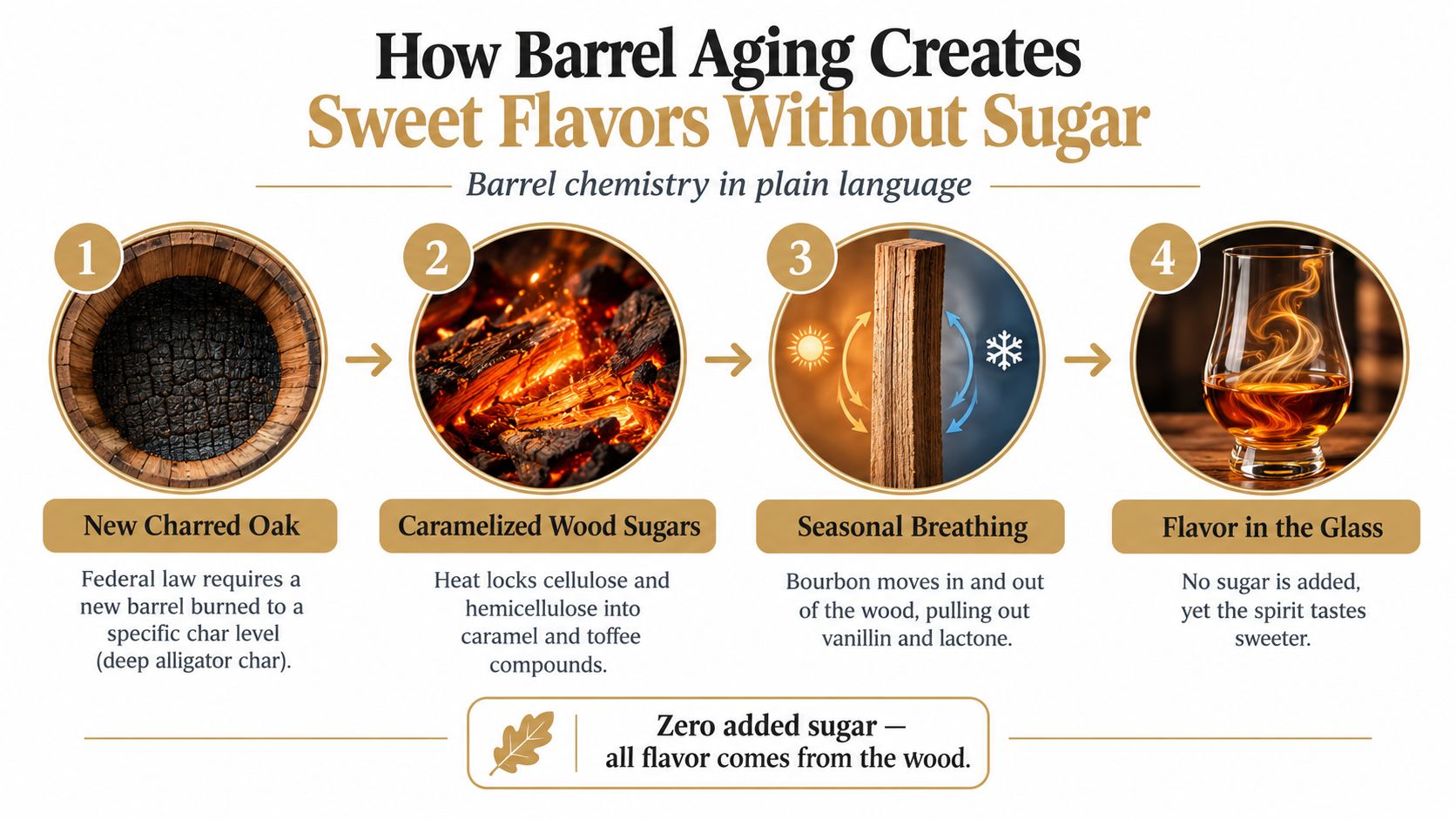
Why can bourbon taste like caramel when it contains no caramel syrup? The answer begins with new charred oak. Heat changes compounds inside the wood and forms a toasted surface layer that contributes caramelized flavors. As bourbon rests, alcohol moves into the oak and back into the spirit, carrying wood-derived compounds with it.
What the char contributes
Barrel chemistry explains how bourbon develops sweet-associated flavors without gaining table sugar. A peer-reviewed chemistry review identifies furfurals as contributors to caramel, toasted, and sweet notes. It also describes cyclotene, a compound linked with maple, caramel, and licorice character in aged spirits, in this review of whiskey barrel chemistry.
Other compounds from the wood contribute vanilla and coconut-like aromas. Your palate combines those aromas with the spirit's texture and taste, then recognizes the result as sweet-like. The impression is real, even though the sugar is not.
A bourbon barrel does not work like a flavoring bottle. The spirit draws compounds from the wood through contact, temperature changes, and time, a process explained in this guide to barrel aging whiskey. Warmer conditions can encourage deeper interaction between whiskey and oak, while cooler storage may create a leaner impression. Aging style changes the balance, so more oak contact does not automatically produce a better or sweeter bourbon.
Why aroma changes the sip
Smell bourbon before tasting it. Vanilla, toasted sugar, or maple in the aroma can make the next sip seem sweeter than the same whiskey tasted with your nose blocked. Aroma forms part of flavor perception, so this effect reflects how the senses work, not imagination.
Remember: The barrel supplies sweet-associated aromas. It doesn't need to supply actual sugar.
“Bourbon tastes sweet” is therefore more accurate than “bourbon is sugary.” The perceived sweetness comes from grain, char, oak extraction, and volatile compounds working together.
High-Corn Versus Wheated Versus Rye Bourbon Styles
Bourbon's grain recipe gives you a useful prediction before you lift the glass. It won't tell you exactly what you'll taste, because barrel selection, proof, fermentation, and blending also matter. It can, however, suggest whether sweetness will feel creamy, soft, or restrained by spice.
| Style | Typical Grain Mix | Dominant Sweet Notes | Spice Level | Example Bottle |
|---|---|---|---|---|
| High-corn | Corn is used well above the legal minimum, with other grains supporting it | Brown sugar, caramel, honey, and maple | Low to moderate | Booker's or Jim Beam White Label |
| Wheated | Corn with wheat replacing or reducing rye | Vanilla, caramel, honey, and soft fruit | Low | Maker's Mark or Larceny |
| Rye-forward | Corn with a more noticeable share of rye | Caramel and vanilla behind baking spice | Moderate to high | Four Roses Single Barrel or Woodford Reserve |
High-corn bourbon
A high-corn recipe tends to feel full and rounded. The sweetness may arrive early, with caramel, brown sugar, or honey-like impressions appearing before the finish. Booker's and standard Jim Beam White Label are useful bottles to place in this category when you're learning how corn-forward bourbon presents itself.
That doesn't mean every high-corn bourbon tastes identical. Proof and barrel influence can make one bold and nutty while another feels lighter and more oak-driven.
Wheated bourbon
Wheated bourbon often feels softer because wheat doesn't bring the same peppery edge as rye. Maker's Mark and Larceny are familiar examples for a tasting flight focused on gentle texture and sweet-associated aromas. Look for vanilla, caramel, baked fruit, or honey rather than expecting literal sugar.
This style is often approachable for people who find rye spice distracting. The softness can make the bourbon seem sweeter, even though the underlying reason is the balance of aroma, texture, and spice.
Rye-forward bourbon
Rye-forward bourbon places more emphasis on pepper, mint, grass, and baking spice. Four Roses Single Barrel and Woodford Reserve can help show how spice pushes caramel and vanilla into the background. The bourbon may still have sweet notes, but they can appear later, often after the initial peppery or herbal impression.
For a deeper comparison of how wheat and rye alter bourbon's character, use this guide to rye versus wheat bourbon. Taste the styles side by side rather than relying on a label. Your palate will notice the contrast faster than a definition can explain it.
Sweet Notes You Will Find in Small Craft Bourbons
American craft whiskey can make sweetness feel less predictable. Smaller distilleries often put a visible fingerprint on grain selection, fermentation, barrel choice, or maturation environment. That doesn't mean every craft bourbon is sweet, but it gives you more styles to compare beyond the familiar high-corn profile.
Three bottles offer useful starting points for an exploratory flight.
Balcones Baby Blue
Balcones Baby Blue is a Texas corn whiskey that many drinkers associate with a more pronounced corn character. Its blue-corn grist and toasted-oak finish make it a useful example for looking beyond standard caramel and vanilla language. Smell for a kettle-corn impression, then notice whether the oak adds toast rather than turning the pour into a dessert drink.
Wilderness Trail Settlers Select
Wilderness Trail Settlers Select gives you a Kentucky craft expression to consider alongside more widely distributed bottles. Its presentation is useful for hunting brown-sugar and dried-fig impressions. Those descriptors identify what your senses detect, not sugar added to the whiskey.
FEW Bourbon
FEW Bourbon offers another contrast for a tasting table. The expression is often discussed in terms of wheat, rye, stone fruit, and vanilla, making it a good candidate for noticing how a softer grain presence can let fruit-like sweetness come forward without eliminating spice.
Don't treat tasting notes as a test with one correct answer. A beginner may smell corn or oak where another drinker finds vanilla or dried fruit. For a non-glass way to explore whiskey-inspired aromas, whiskey-infused loose tea can help you think about how whiskey character translates into another sensory format.
Beginner's cue: Write down the first aroma you notice, then revisit the pour after a few minutes. Your second impression is often more specific.
Production details such as mash bill, barrel treatment, and proof can explain why these bottles differ, but don't let the label decide your conclusion before you taste. Start with the glass, the aroma, and the finish. Then compare your notes with the producer's description.
Common Misconceptions About Bourbon and Sweetness
Bourbon's sweet reputation creates three recurring misunderstandings. Each one disappears once you separate flavor perception from ingredient content.
Myth one, bourbon has added sugar
Straight bourbon generally contains 0 grams of sugar per 1.5-ounce serving, and its identity comes from grain, distillation, and new charred oak rather than sweetening. The caramel and vanilla impressions associated with bourbon come from the mash bill and barrel chemistry, not from pouring sugar into the finished spirit.
That doesn't mean every whiskey-flavored product on the market has the same formulation. Bourbon itself should be understood through its legal production framework, while flavored spirits and liqueurs belong to different categories.
Myth two, bourbon is a dessert liqueur
Bourbon can taste like caramel or vanilla, but that doesn't make it a dessert liqueur. Straight bourbon is a distilled spirit bottled at at least 80 proof, and the TTB framework sets limits for its grain recipe, distillation, barrel entry, and bottling. The category's sweet notes are sensory markers, not proof of candy flavoring or syrup.
Kahlúa and Drambuie may taste sweeter because liqueurs are built around a different product concept. Comparing them with neat bourbon is like comparing a coffee-flavored dessert with black coffee that happens to smell roasted.
Myth three, people with a sweet tooth can't handle bourbon
A preference for sweet flavors doesn't automatically predict your reaction to bourbon. Someone who dislikes sugary drinks may enjoy a dry, rye-forward pour, while someone who loves dessert may find high proof or oak bitterness challenging.
Start with aroma rather than forcing yourself to swallow a full glass. If sweetness feels overwhelming, choose a rye-forward bourbon with more pepper and baking spice. If the alcohol burn dominates, a balanced pour around 40% to 46% ABV is a common starting range recommended by whiskey tasting guidance in this beginner tasting guide.
Tips for New Whiskey Drinkers Tasting Sweetness
Your first bourbon tasting doesn't need expensive glassware or a trained palate. It needs a controlled comparison and enough time to notice what changes.
Set up the glass
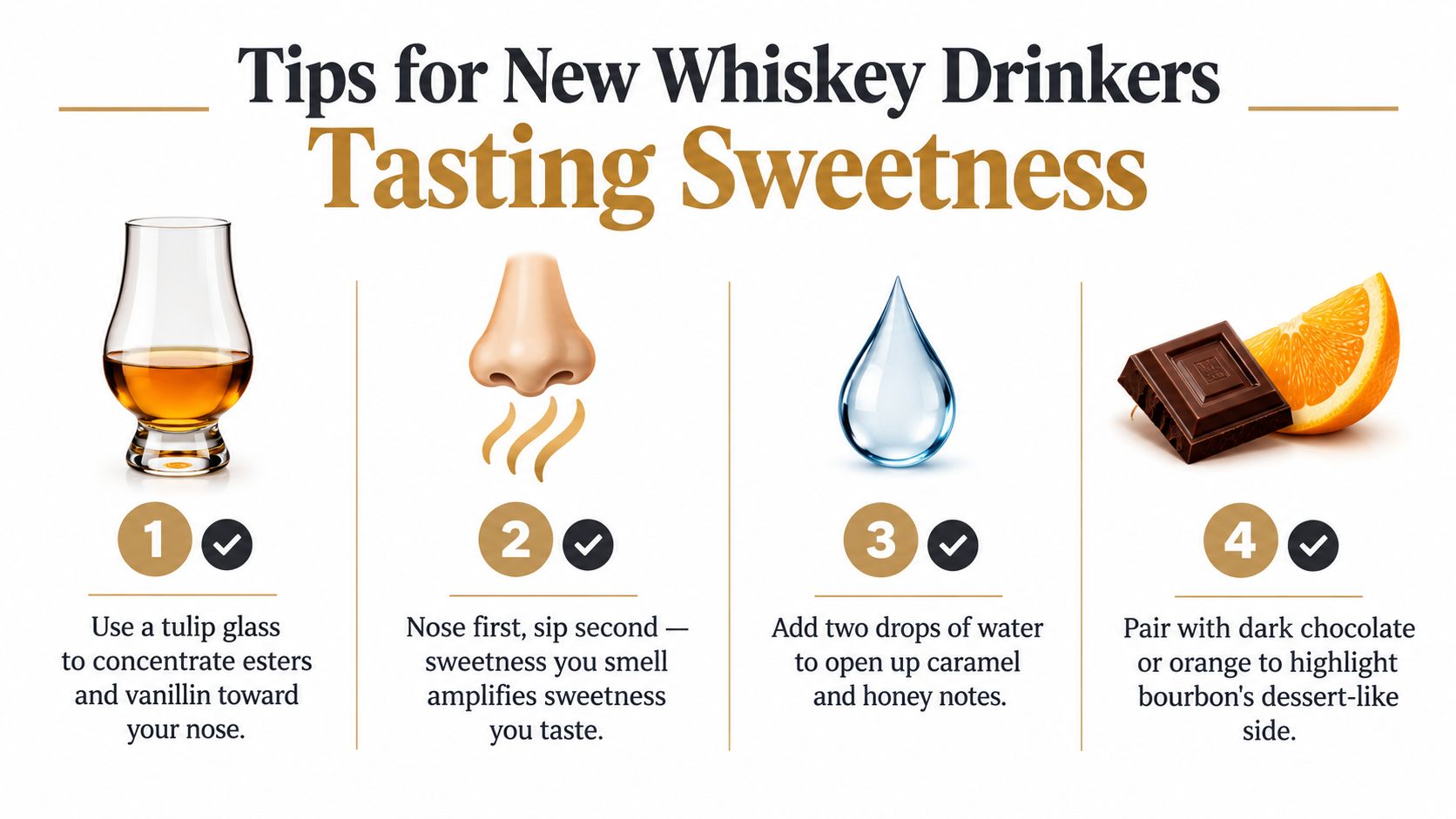
Use a tulip-shaped glass such as a Glencairn. The narrower opening concentrates aroma, helping you identify vanilla, caramel, honey, toasted oak, or grain before alcohol dominates.
Pour a small amount and smell gently. Don't push your nose deep into the glass, especially with a higher-proof bourbon. Take a small sip, let it move across your tongue, and notice whether the finish becomes sweeter, drier, spicier, or more bitter.
Add water carefully
Taste the bourbon neat before changing it. Then add a few drops of room-temperature water and smell again. Water can soften alcohol burn and open aromas, although the ideal amount depends on the pour and your preference.
Avoid treating dilution as a correction. Neat bourbon is one valid reference point, not a rule you have to follow forever. A small amount of water may reveal caramel, brown sugar, or toasted oak that was hidden behind alcohol heat.
Build a simple flight
For a structured comparison, arrange six pours, two high-corn, two wheated, and two rye-forward. Keep the labels hidden if possible. The beginner whiskey tasting guidance recommends tasting neat before deciding whether to dilute and allowing time between sips.
Rank each sample on a simple sweet-to-dry scale. Plain water and unsalted crackers can reset your palate between pours. Write down aroma, first taste, texture, and finish rather than trying to identify the brand.
A useful question: Did the bourbon taste sweet because of caramel-like aroma, or did its texture make the sweetness feel fuller?
Putting It All Together for Your Next Pour
Bourbon's sweetness is best treated as a flavor profile, not a sugar question. The legal framework begins with a grain mixture containing at least 51% corn, continues through distillation and entry into new charred oak, and ends with a spirit whose aroma and texture can suggest caramel, vanilla, honey, or maple without tasting like a sweetened drink.
Barrel chemistry adds another layer. Furfural can contribute caramel and toasted impressions, while cyclotene can contribute maple, caramel, and licorice character. Those compounds help explain why oak can make bourbon seem sweeter even though the bottle doesn't contain dessert-level sugar.
The recipe then determines how that sweetness sits on the palate. High-corn bourbon tends to feel rounder, wheated bourbon often feels softer, and rye-forward bourbon can place pepper, mint, grass, and baking spice ahead of caramel. Proof changes the presentation again, sometimes muting sweetness and sometimes making concentrated aromas more noticeable.
Try this tasting challenge:
- Pour one high-corn bourbon and one rye-forward bourbon at the same 100-proof strength.
- Taste them side by side, first neat and then with a few drops of water.
- Note where vanilla and caramel appear, then compare those impressions with spice, grain, pepper, and dryness.
Record your impressions in a notebook. Don't worry about finding the “correct” answer. The useful discovery is learning whether your palate calls a bourbon sweet because of its aroma, its texture, its finish, or the balance of all three.
Blind Barrels offers quarterly blind whiskey tasting kits with four samples from small American craft distilleries, tasting tables, QR-code reveals, bottle access, and a game that lets you guess age, proof, and whiskey type. Visit Blind Barrels to turn this sweet-versus-dry question into a guided tasting you can share.