

When it comes to rye, bourbon, and scotch, the whole game comes down to a single ingredient: the primary grain. Rye whiskey must use at least 51% rye, bourbon needs at least 51% corn, and scotch is built on a foundation of malted barley. This one simple difference is the key to their signature flavors—rye’s tell-tale spice, bourbon’s characteristic sweetness, and scotch’s earthy or smoky soul.
Deciding which you prefer is really about what you're in the mood for: a bold, peppery kick, a smooth, caramel richness, or a complex, layered profile that can range from fruity to deeply smoky.
Your Definitive Guide to Whiskey Differences
Stepping into the world of whiskey can feel like trying to learn a new language. You see bottles from Kentucky, Scotland, and everywhere in between lining the shelves, and it's easy to feel a little lost. Think of this guide as your map, designed to cut through the noise and demystify the three titans of the whiskey world.
The first thing to understand is that these aren't just different labels for the same brown spirit. Each one has its own unique history, strict legal identity, and time-honored production methods that create a completely different experience in the glass.
A Quick Comparison
I like to think of these spirits as cousins, each with a personality shaped by where they grew up. Bourbon is the sweet, easy-going American classic, while rye is its spicier, more assertive sibling. Scotch is the well-traveled relative from across the pond, bringing a massive spectrum of flavors to the table, from light and floral to intensely smoky.
| Feature | Bourbon | Rye | Scotch |
|---|---|---|---|
| Primary Grain | At least 51% Corn | At least 51% Rye | Malted Barley |
| Primary Origin | United States | United States | Scotland |
| Typical Flavor | Sweet, Caramel, Vanilla | Spicy, Peppery, Herbal | Smoky, Peaty, Fruity |
| Aging Barrel | New, Charred Oak | New, Charred Oak | Used Oak Barrels |
This table gives you the thirty-thousand-foot view, but the real magic is in the details. Those strict production rules aren't just for show; they are the very reason each whiskey tastes the way it does.
A New Era of Whiskey Exploration
While tradition runs deep, the modern whiskey scene is absolutely buzzing, especially here in the United States. A new wave of American craft distilleries is putting a fresh spin on these classic styles, playing with unique grain combinations, innovative aging techniques, and regional ingredients that add a whole new dimension.
Tip for New Whiskey Drinkers: There has never been a better time to start exploring. The sheer diversity out there means there’s a perfect bottle for every palate, from familiar sweet bourbons from craft producers like New Riff Distilling to boundary-pushing American single malts that give traditional scotch a run for its money.
This guide will give you the knowledge to look past the label and understand what’s really in your bottle. You’ll learn to pick out key characteristics, see how production choices influence taste, and gain the confidence to pick your next pour. Whether you're a seasoned enthusiast or just starting out, the key is to stay curious. If you keep an open mind, you can turn a simple drink into a genuine adventure in taste.
Understanding the Legal Rules of Whiskey
To really get to the heart of the rye vs. bourbon vs. scotch debate, you have to start with the rulebook. Each of these iconic spirits is governed by a strict set of laws that dictate everything from its core ingredients to how and where it’s aged. These aren't just casual suggestions; they are the non-negotiable standards that define the very character of each whiskey.
These rules are precisely why bourbon tastes so different from rye, and why scotch sits in a category all its own. They are the spirit's DNA, guaranteeing consistency and protecting the heritage behind every single bottle. Without these legal guardrails, the distinct identities of these whiskies would just blur into a generic brown spirit.
This visual guide breaks down the essential differences in grain, geography, and aging that give each spirit its unique identity.
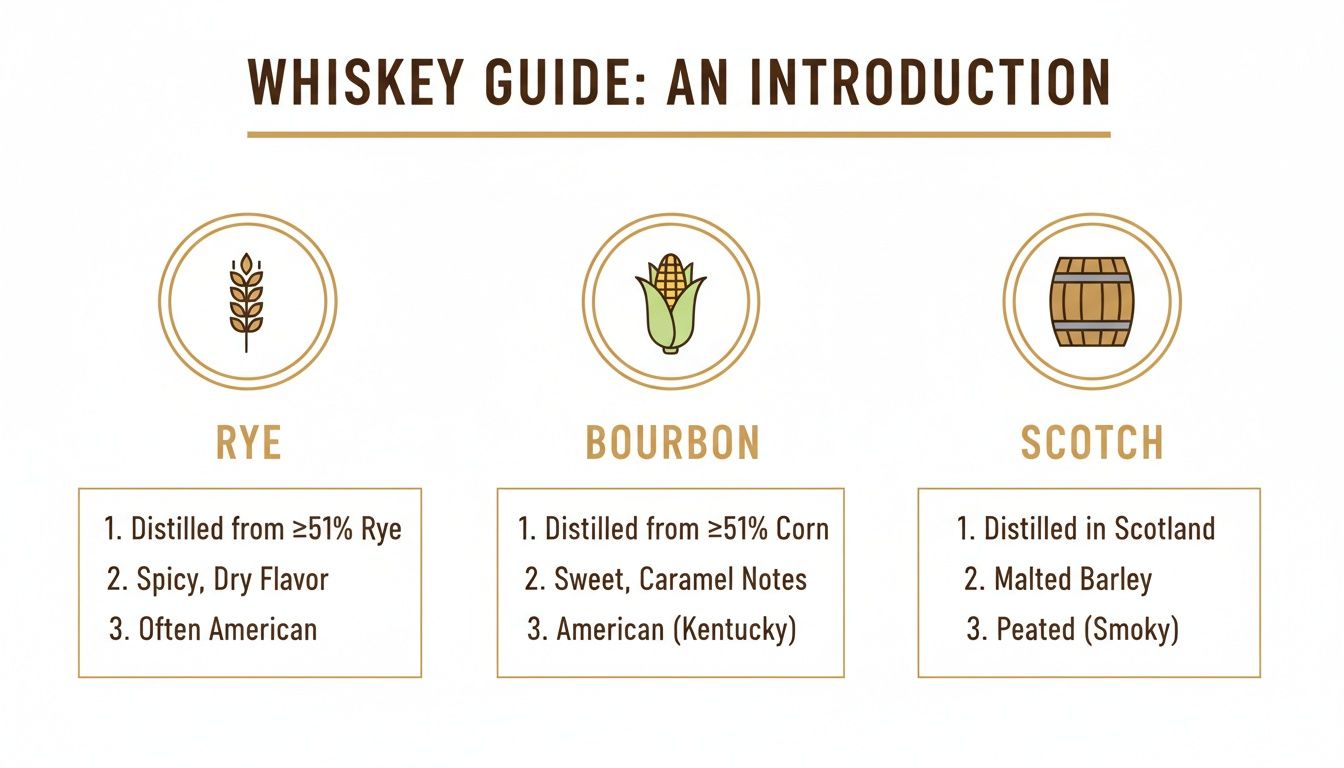
As you can see, American whiskeys like bourbon and rye are defined by their dominant grain. Scotch, on the other hand, is all about its country of origin and its foundational ingredient: malted barley.
To give you a quick side-by-side, here’s how the big three stack up legally.
Whiskey Showdown At a Glance
This table cuts right to the chase, summarizing the core legal and production differences between these major whiskey types.
| Attribute | Bourbon | Rye | Scotch |
|---|---|---|---|
| Main Ingredient | At least 51% corn | At least 51% rye | Primarily malted barley |
| Geography | Must be made in the U.S. | Must be made in the U.S. | Must be made in Scotland |
| Aging Container | New, charred oak | New, charred oak | Typically used oak casks |
| Minimum Aging | No minimum (2 yrs for "Straight") | No minimum (2 yrs for "Straight") | 3 years |
These distinctions might seem small on paper, but they create wildly different tasting experiences in the glass.
The American Whiskey Rules: Bourbon and Rye
For American whiskeys like bourbon and rye, the laws run on parallel tracks, with one critical fork in the road: the grain recipe, also known as the mash bill. To legally wear the "bourbon" or "rye" label in the United States, a whiskey must follow several strict federal standards.
Both bourbon and rye must be:
- Made in the United States.
- Aged in new, charred oak containers—a uniquely American requirement.
- Distilled to no more than 160 proof (80% ABV).
- Put into the barrel for aging at no more than 125 proof (62.5% ABV).
- Bottled at a minimum of 80 proof (40% ABV).
So what's the big difference? It all comes down to that primary grain. Bourbon's mash bill must contain at least 51% corn, which is where it gets its signature sweetness. On the flip side, rye whiskey's mash bill has to be at least 51% rye grain, giving it that classic spicy, peppery kick. If you want to go deeper, you can explore the fundamental differences between bourbon and whiskey in more detail.
It’s a classic myth that bourbon has to be made in Kentucky. While it's true that about 95% of the world's bourbon comes from the Bluegrass State, it can legally be produced anywhere in the U.S. as long as it plays by the rules. Many incredible craft bourbons now come from places like New York, Texas, and even Nevada.
The Laws of Scotch Whisky
Scotch whisky operates under its own set of geographically protected laws. These regulations are recognized worldwide and ensure that any bottle labeled "Scotch" is the real deal, held to incredibly high standards.
To earn the name Scotch, a whisky must be:
- Produced entirely at a distillery in Scotland.
- Matured in oak casks for a minimum of three years.
- Made from only water, malted barley, and other whole cereal grains.
- Bottled at a minimum of 80 proof (40% ABV).
Unlike its American cousins, scotch is almost always aged in used oak barrels, often casks that previously held bourbon or sherry. This tradition allows the character of the distilled spirit and the subtle influence of the Scottish climate to take center stage, rather than the powerful wood notes from a brand-new barrel. Understanding these legal frameworks is the first step to truly appreciating the vast world of whiskey.
How Grain and Oak Shape Every Sip
The legal definitions are the blueprint, but the real magic happens in the distillery and the rickhouse. The specific grains a distiller chooses, the type of still they fire up, and how the spirit lives its life inside an oak barrel—these are the choices that turn simple ingredients into the complex whiskeys we love. Every decision directly shapes the character of what ends up in your glass.
For American whiskeys like bourbon and rye, it all starts with the mash bill, which is just the distiller's grain recipe. This is where their core personalities are forged.
The Foundation: Grains and Distillation
Bourbon’s signature sweetness comes directly from its legal mandate to use at least 51% corn. The high sugar content in corn creates those classic notes of caramel, vanilla, and a full-bodied mouthfeel that makes it so welcoming to newcomers. If you want to go deeper on this, we have a complete guide to understanding the bourbon grain bill and how distillers use it to create unique flavors.
Rye, on the other hand, must be made from at least 51% rye grain. This tough cereal grain is loaded with compounds that translate into the spicy, peppery, and sometimes herbal or minty notes that define the category. It results in a drier, more assertive spirit that really sings in classic cocktails.
Tip for New Drinkers: If you have a sweet tooth, start with a "wheated" bourbon. It uses wheat as the secondary grain instead of rye, creating an even softer, smoother profile. If you're after bold, spicy flavors, a "high-rye" bourbon or a straight rye whiskey is right up your alley.
Scotch production follows a different playbook. It begins with malted barley, which is soaked to kickstart germination before being dried out. This crucial step unlocks enzymes needed for fermentation. For many scotches, particularly those from the Islay region, the barley is dried over a fire fueled by peat—basically decomposed bog matter. This peat smoke infuses the barley with phenols, creating the iconic earthy, smoky, and sometimes medicinal flavors scotch is famous for.
The still itself also plays a huge role. American whiskeys typically run through massive column stills, an efficient and continuous process that creates a lighter, cleaner spirit. Meanwhile, many Scotch distilleries stick with traditional copper pot stills. These operate in batches and produce a heavier, oilier, and often more complex spirit.
The Influence of Oak Barrels
If the grain is a whiskey's soul, the barrel is its body. The long, slow dance between spirit and wood is where all of the color and a huge chunk of the flavor comes from.
Bourbon and rye have a strict rule: they must be aged in new, charred American oak barrels. This is a massive point of difference in the rye vs bourbon vs scotch debate. That fresh wood, combined with the charcoal layer from the charring process, acts like a filter while imparting powerful notes of vanilla, caramel, coconut, and toasted oak.
Scotch is almost always aged in used oak casks, most often barrels that previously held American bourbon or Spanish sherry. This gentler approach lets the original character of the distillate shine, while picking up subtle notes from the barrel's former life. An ex-bourbon barrel might add hints of vanilla and spice, while an old sherry cask can impart rich flavors of dried fruit, nuts, and chocolate.
American Craft Distillers Pushing Boundaries
Today’s American craft distilleries are the innovation labs of the whiskey world, taking these time-honored methods and putting their own creative spin on them. They're experimenting with every single step of the process.
- Heirloom Grains: Distilleries like Frey Ranch Distillery in Nevada are true farm-to-glass operations. They grow their own unique grains like winter cereal rye and two-row barley, creating flavor profiles you simply can't find anywhere else.
- Unique Mash Bills: Some craft producers are making "four-grain" bourbons that include corn, rye, wheat, and malted barley all in one recipe, striking a beautiful balance between sweet, spicy, and soft.
- Innovative Aging: Craft distillers are playing with everything from different char levels and toasted barrel heads to unique wood finishes. For instance, Hillrock Estate Distillery in New York has become famous for finishing their whiskeys in casks that once held fine wines, adding incredible layers of complexity to the final spirit.
A Sensory Showdown of Flavor Profiles
Alright, let's get to what really matters: the taste. The legal definitions and production methods are the blueprint, but the real story unfolds when you nose the glass and take that first sip. This is what truly separates rye, bourbon, and scotch. Each one offers a completely different sensory journey, and learning their core flavors is how you’ll find what you truly love.
This is where the theory ends and the tasting begins. Once you know what to look for, you can start training your palate to pick up on the subtleties and decide what hits the spot for you.
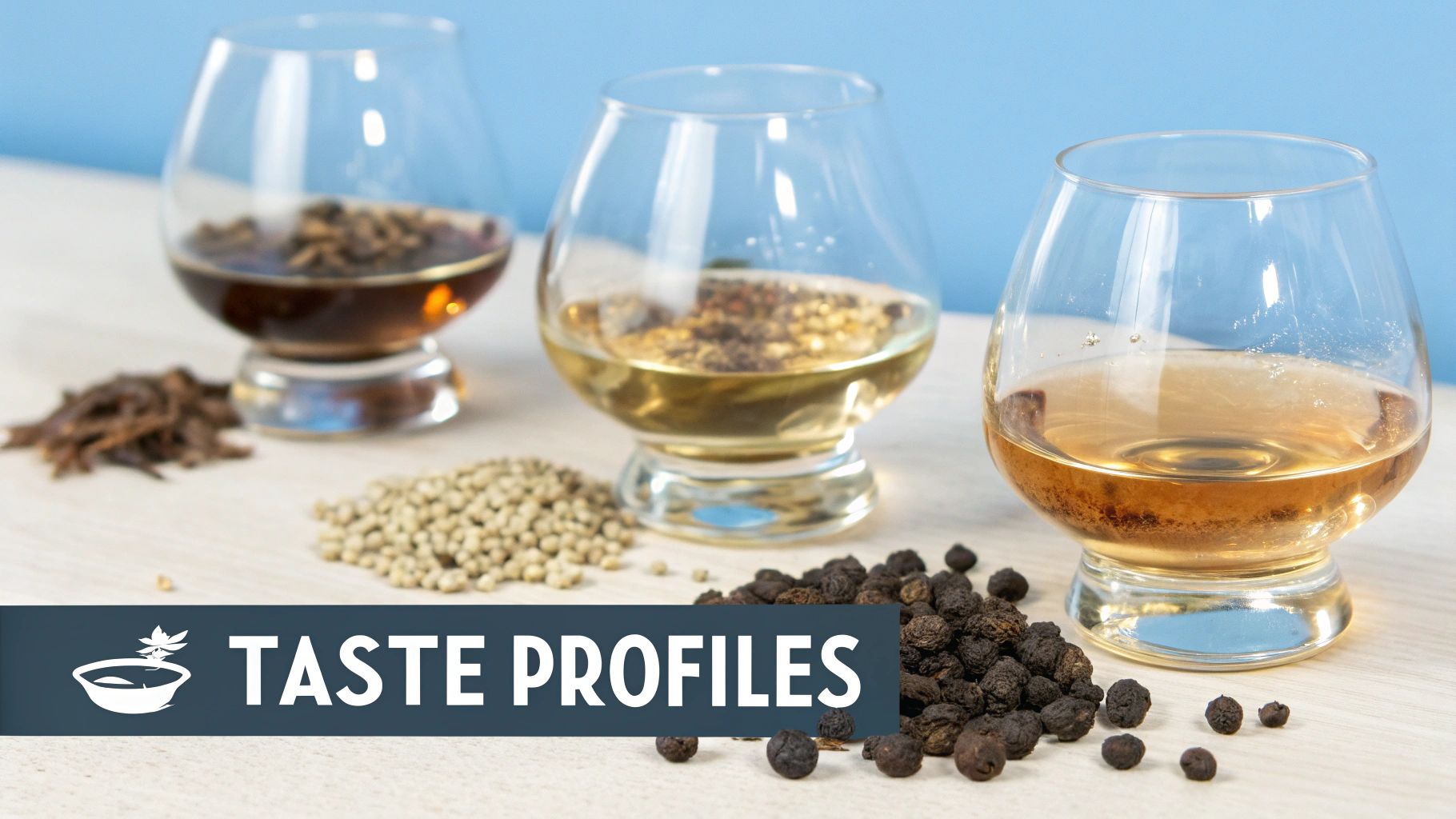
Bourbon: The Sweet and Approachable Classic
There’s a good reason bourbon is the gateway for so many new whiskey drinkers. Its corn-heavy mash bill gives it a natural sweetness and a warm, inviting profile that’s just easy to get along with.
When you lift a glass of bourbon, you’re usually met with rich, comforting smells.
- Primary Notes: You'll almost always find deep caramel, warm vanilla, and a bit of brown sugar.
- Secondary Notes: Dig a little deeper, and you might get toasted oak, baking spices like cinnamon, and maybe some dark fruits like cherry or fig.
That new charred oak barrel is the real hero here, working its magic to pull out all that classic vanilla and caramel goodness. For a textbook example, a distillery like New Riff Distilling in Kentucky often hits these quintessential bourbon notes perfectly, sometimes with a high-rye twist that adds another layer of flavor.
Rye: The Spicy and Assertive Contender
If bourbon is a warm hug, rye is a firm, confident handshake. Its flavor profile is noticeably drier, spicier, and packs more of a punch than its corn-based cousin.
Rye announces its presence right away with a bold, aromatic spice that you can't miss.
- Primary Notes: The hallmark is black pepper, often joined by baking spices like clove, nutmeg, and allspice.
- Secondary Notes: It's not uncommon to find herbal or grassy undertones, a hint of mint, or even a touch of dill, which all lead to a crisp, clean finish.
That peppery kick is why bartenders love it; rye’s assertive character refuses to get lost in classic cocktails. Craft distilleries are driving a massive rye revival, with producers like Sagamore Spirit in Maryland crafting ryes that are both powerful and beautifully balanced, showing just what the grain can do.
A Tip for Tasting: When you’re trying bourbon and rye side-by-side, pay close attention to how they feel in your mouth. Bourbon often feels rounder and creamier, while rye has a sharper, crisper texture that really cleanses the palate.
The incredible growth in American whiskey is no accident. Driven by both bourbon and rye, the U.S. whiskey market is projected to hit USD 14.1 billion in 2025 and is on a trajectory toward USD 46.6 billion by 2035, growing at an impressive 12.7% CAGR. This boom is fueled by drinkers looking for premium, small-batch spirits that deliver something distinct—from rye’s spicy punch to bourbon’s sweet embrace. With younger drinkers aged 21-44 now making up 39% of whiskey fans, the demand for these authentic profiles is reshaping the entire industry. You can explore more about the whiskey trends that are currently shaping the market.
Scotch: A World of Flavor in One Spirit
Scotch isn't just one flavor; it's an entire spectrum. The taste can swing wildly depending on which part of Scotland it comes from and whether peat was used during the malting process.
This sheer diversity is what makes scotch so fascinating. You could spend a lifetime exploring all its different expressions and never get bored.
- Speyside: Often light, fruity, and floral. Think notes of green apple, pear, honey, and vanilla.
- Highlands: A massive region with a mix of styles, from rich and robust to delicate and aromatic.
- Islay: Home to the iconic "peat monsters." Get ready for powerful notes of campfire smoke, iodine, seaweed, and salty brine.
- Lowlands: Typically gentle and mellow, known for being grassy, citrusy, and light-bodied.
For someone just starting out, a Speyside scotch is a fantastic entry point with its approachable, fruit-forward profile. But if you’re feeling adventurous, an Islay scotch delivers one of the most intense and unforgettable flavor experiences in the spirits world. This is what makes the rye vs bourbon vs scotch comparison so dynamic; while American whiskeys are largely defined by their grain, scotch is all about geography and tradition.
Choosing the Right Whiskey for Any Occasion
Getting a handle on the legal definitions and typical flavor profiles is one thing, but the real fun starts when you put that knowledge into practice. The choice between rye, bourbon, and scotch isn't just about what you like—it's about the moment. The right whiskey can take a cocktail from good to great, turn a meal into a perfect pairing, and set the entire mood for an evening.
This is where we move past the "rye vs. bourbon vs. scotch" debate and start making confident choices for any situation. Whether you're behind the bar, at the dinner table, or just kicking back, there's a perfect whiskey waiting for you.
Mastering Classic Whiskey Cocktails
The personality of each whiskey style makes it a natural fit for certain classic cocktails. A good bartender never chooses a spirit at random; they're picking a base that will either complement the other ingredients or stand up to them.
-
For a Bolder Cocktail, Choose Rye: Rye’s spicy punch and dry finish make it the traditional go-to for cocktails that need a serious backbone. Those peppery notes slice right through the sweetness of vermouth and the herbal punch of bitters, creating a drink that’s all about balance. This is exactly why rye is the star in classics like the Manhattan and the Sazerac.
-
For a Smoother Drink, Go with Bourbon: Bourbon’s inherent sweetness, thanks to all that corn, is perfect for cocktails where you want a richer, rounder flavor. It absolutely shines in an Old Fashioned, where its caramel and vanilla notes melt into the sugar and bitters. It also makes for a much more approachable Whiskey Sour.
If you're looking to really sharpen your mixing skills, there's no substitute for getting your hands dirty. To see just how versatile whiskey can be, consider joining a hands-on experience like cocktail making classes.
A Tip for New Drinkers: The next time you make an Old Fashioned, try it once with bourbon and once with rye. You'll immediately taste how bourbon gives you a sweeter, smoother experience, while the rye brings a spicier, more robust character. It’s a simple experiment that perfectly illustrates the core difference.
Scotch, especially the heavily peated stuff from Islay, is usually thought of as a sipping spirit. But don't count it out for cocktails. Lighter, unpeated scotches from Speyside or the Lowlands can create some incredible modern drinks. A Penicillin, which marries blended scotch with ginger, honey, and just a wisp of smoky Islay scotch on top, is a perfect example of its hidden potential.
Perfect Pairings: Food and Whiskey
Pairing whiskey with food works a lot like pairing wine: you’re looking to either complement similar flavors or create a delicious contrast. The wildly different profiles of rye, bourbon, and scotch give you a huge playground for culinary creativity.
A great rule of thumb is to match the intensity of the whiskey to the richness of the food. A high-proof, in-your-face rye might completely overwhelm a delicate fish, but it’ll stand up beautifully to big, bold flavors.
Bourbon's Sweetness and Richness The deep caramel, vanilla, and oak notes in bourbon are a natural fit for rich, savory, and even sweet dishes.
- Best Pairings: Think smoked and grilled meats like BBQ ribs or brisket. It’s also fantastic with aged cheddar cheese and desserts built around caramel, chocolate, or pecans.
- American Craft Example: A rich, complex bourbon from a distillery like Hillrock Estate Distillery would be a showstopper next to a decadent dessert.
Rye's Assertive Spice Rye’s spicy, peppery character is tailor-made to cut through rich foods and complement sharp, savory flavors.
- Best Pairings: It sings alongside cured meats like pastrami or salami, funky cheeses like aged Gruyère or a good blue cheese, and high-cacao dark chocolate.
- American Craft Example: A classic rye from Sagamore Spirit has the perfect spicy kick to hold its own on a charcuterie board piled high with bold bites.
Scotch's Diverse Complexity With a flavor map that spans the entire country, scotch pairings are all about the region.
- Light & Fruity (Speyside): These delicate drams are perfect with equally delicate foods like smoked salmon, sushi, or a creamy goat cheese.
- Smoky & Peaty (Islay): These heavy hitters need something just as robust to stand up to them. Think grilled steak, briny oysters, or a powerful, salty blue cheese.
Choosing the right spirit for the moment elevates drinking whiskey from a simple act to a thoughtful experience, making every single sip that much better.
Discovering Your Palate with Blind Tasting
After digging into the rules, grains, and flavor profiles, it’s time to put your palate to the test. And there’s truly no better way to figure out your genuine preferences in the rye vs. bourbon vs. scotch debate than a good old-fashioned blind tasting. When you strip away the fancy label, the hefty price tag, or the famous distillery name, your taste buds get to be the only judge.
This isn't just about identifying whiskeys; it's about building confidence in your own palate. Trusting what you taste helps you appreciate the subtle craft in every pour, letting you notice nuances you might have otherwise missed. It’s the most honest journey of discovery you can take in the world of whiskey.
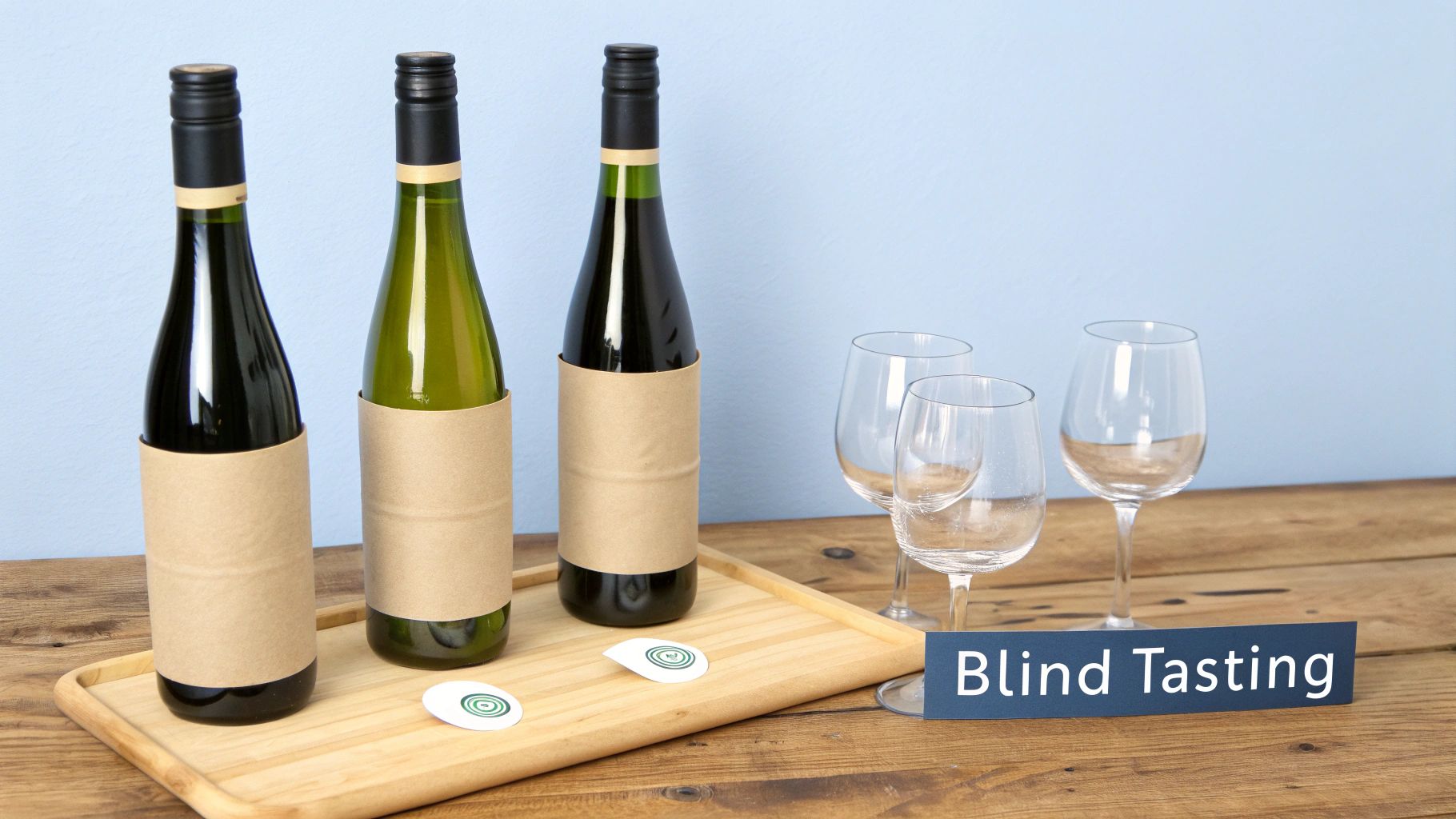
How to Conduct a Simple Blind Tasting at Home
You don't need to be a seasoned pro to host a great tasting. A few glasses, a friend to pour, and a curious mind are all it takes to get started.
- Select Your Whiskeys: Grab one bourbon, one rye, and one scotch. For your first go-around, pick classic, representative examples of each style—it’ll make the differences pop.
- Pour and Conceal: Ask a friend to pour a small amount of each whiskey into identical glasses. Have them label the bottom of each glass (A, B, C) and keep the key hidden until you're done.
- Evaluate Each Sample: Take your time with each one. First, give it a good nosing to assess the aroma. Then, take a small sip and let it coat your mouth. Pay attention to the flavors and the finish.
- Take Notes: Jot down what you smell and taste. Is it sweet and full of caramel (bourbon)? Spicy with a peppery kick (rye)? Or is there something smoky or fruity going on (scotch)?
- The Big Reveal: Once you’ve logged your impressions, check the key. You might just be surprised which spirit your palate gravitated toward when all the marketing and preconceptions were out of the picture.
Tip for New Whiskey Drinkers: This method strips away everything but the liquid itself. It's the most honest way to figure out if you're truly drawn to the sweetness of corn, the spice of rye, or the layered complexity of malted barley.
Why Blind Tasting Matters Now More Than Ever
The whiskey world is going through a massive shift. A wave of "premiumization" is reshaping the industry, with sales of high-end American bourbon and rye exploding by over 190% in the past decade. This incredible growth is pushing the U.S. market toward a projected USD 34.3 billion in 2025, and bourbon's soaring popularity has the segment on track to hit USD 46.6 billion by 2035.
With cocktail culture booming and younger drinkers—now making up 39% of the market under 44—seeking out authentic craft spirits, blind tasting is the perfect tool to cut through the noise and find true quality. You can discover more insights about the whiskey market's incredible expansion on gminsights.com.
This focus on craft and personal discovery is exactly why curated experiences are so valuable. Using a dedicated blind whiskey tasting kit can take your home tasting to the next level, offering expertly chosen samples from amazing small-batch American craft distilleries and guiding you with professional tools. It's the perfect next step for any aspiring whiskey enthusiast looking to truly hone their palate.
Answering Your Whiskey Questions
Diving into the world of whiskey always kicks up a few questions, especially when you're trying to wrap your head around the big three: rye, bourbon, and scotch. Getting some straight answers is the fastest way to build confidence and really start enjoying the exploration.
Is One Whiskey Better for Beginners?
If you're just starting out, bourbon is usually the smoothest entry point. Its corn-heavy mash bill gives it a natural sweetness that's easy to like, with those classic caramel, vanilla, and soft oak notes. This makes it really approachable whether you're sipping it neat, over ice, or in a simple cocktail.
Rye, with its signature spicy and peppery kick, can be a bit more of a jolt for a new palate. Likewise, the heavy smoke and peat you find in many scotches can be an acquired taste. It's best to work your way up to those.
Does a Higher Price Tag Mean Better Whiskey?
Not at all. A whiskey's price is often a mix of factors like its age, how rare it is, the marketing budget behind the brand, and even the fancy bottle it comes in—not just the quality of the spirit itself. You can find some absolutely incredible, award-winning craft whiskeys from distilleries like Frey Ranch that deliver amazing complexity without breaking the bank.
Tip for New Whiskey Drinkers: At the end of the day, your own palate is the only thing that matters. The "best" whiskey is simply the one you enjoy drinking the most, price tag be damned. Blind tasting is the ultimate way to figure that out without any preconceived notions.
Can Bourbon or Rye Be Made Outside the USA?
This is a great question with a two-part answer. While bourbon is the quintessential American spirit and legally must be made in the U.S. to be sold here, other countries can technically follow the same grain recipe. They just can't call it "bourbon."
Rye whiskey, however, is a globetrotter—it can be produced anywhere. Canadian Rye is a huge category all on its own, famous for a style that's often lighter and smoother than its American cousins. For anyone curious about the collectible side of things and the potential worth of old containers, you might be interested in learning about valuing vintage bottles.
What Is Single Malt vs Blended Scotch?
A single malt scotch is the pure expression of one distillery. It's made from 100% malted barley at a single location in Scotland, and it’s treasured for showcasing the unique character and "house style" of that specific producer.
A blended scotch, on the other hand, is a combination of one or more single malts mixed with grain whiskies from different distilleries. Blends are all about achieving consistency and a smooth, balanced profile. This approach makes them the most popular and widely consumed style of scotch in the world.
Ready to put your palate to the test and discover your personal favorites without bias? The Blind Barrels tasting experience sends you four curated, top-shelf samples from America's best craft distilleries every quarter. It’s the most exciting way to explore the world of whiskey. Start your blind tasting journey today.