

For years, wine has hogged the spotlight at the dinner table. It’s been the default choice for food pairings, the safe bet. But something delicious is happening—whisky is finally getting its due as an incredibly versatile partner for a great meal.
The old, stuffy rules are being tossed out, replaced by a spirit of pure curiosity and exploration, especially in the vibrant world of American craft whiskey.
Your Journey Into Whisky and Food Pairings Begins Here
Pairing whisky with food is more than just having a drink with your dinner. It's about creating a sensory experience, a conversation between the spirit and the meal that unlocks hidden flavors in both.
Forget any idea that this is some complicated art form reserved for sommeliers. For new whiskey drinkers, the core concept is dead simple: think of your whisky as another ingredient, just like a sauce or a spice. Its character—whether it’s the sweet corn and vanilla of a bourbon from a small distillery like Corsair Artisan Distillery or the sharp, peppery spice of a rye from WhistlePig—can completely transform a dish. The goal is to find that perfect harmony on your palate, where the food and the spirit lift each other up.
The Two Core Principles of Pairing
To get started, you only really need to wrap your head around two fundamental strategies. Once you grasp these, you'll have the confidence to start experimenting with any bottle and any plate.
-
Complementary Pairings: This is the most intuitive approach for beginners. You're matching like with like to create a seamless, harmonious experience. Think of a classic bourbon, heavy with notes of caramel and vanilla, served alongside a rich crème brûlée. The flavors echo each other, amplifying the sweetness and decadent character of both. It just works.
-
Contrasting Pairings: This is where things get really interesting. The idea here is to create balance through opposition. By pairing opposite flavors, you can highlight unique characteristics in both the food and the whisky. A perfect example is a bold, spicy rye squaring off against a rich, funky blue cheese. The rye’s peppery kick cuts right through the fat of the cheese, while the creamy cheese mellows the whiskey’s heat. It's a beautiful push and pull.
Tip for New Drinkers: The real magic of whisky and food pairings happens when you forget about the label on the bottle and focus purely on what’s in the glass. A blind tasting is the ultimate way to discover what you genuinely enjoy, letting your palate lead the way without any preconceived ideas about a brand or price tag.
Ultimately, the best pairing is whatever you enjoy the most. This guide is here to give you a solid foundation, take away the intimidation, and get you excited to experiment. You'll learn what makes a whisky tick, how to pinpoint its core flavors, and how to use that knowledge to create some truly amazing moments at the dinner table.
For a deeper dive into the building blocks of these flavors, a great next step is understanding what makes whisky taste the way it does.
How to Decode the Flavors in Your Whisky
Before you can start nailing incredible food and whisky pairings, you have to become a bit of a flavor detective. It’s the single most important skill for this whole journey. Think of it like a musician learning their scales before they can write a symphony—you have to know the notes to create harmony.
Whisky isn’t just one thing; it’s a complex spirit telling the story of its grain, its time in wood, and the hands that made it. For newcomers, that can sound intimidating, but it’s simpler than you might think. We can break down the huge world of aromas and tastes into four fundamental categories.
Your Whisky Flavor Compass
Picture a simple compass pointing in four main directions. Almost every whiskey you’ll ever taste will lean heavily into one or more of these profiles. Your first step to becoming a pairing pro is just figuring out which way the compass is pointing.
- Sweet: Think classic dessert notes. Vanilla, caramel, rich honey, and maple syrup. This profile often comes straight from the grain, especially corn, which is why bourbons from brands like Garrison Brothers are so famously sweet.
- Spicy: We're not talking about chili heat here. This is the warm, tingling spice of cinnamon, clove, nutmeg, and black pepper. Rye grain is the big player here, giving so many American craft rye whiskeys that signature peppery kick.
- Fruity: These notes can swing from fresh orchard fruits like apple and pear all the way to rich, dried fruits like figs and raisins. The type of barrel used for aging is huge, with old wine or sherry casks layering in those deep, jammy fruit flavors.
- Smoky: This is the unmistakable profile that comes from peat—decomposed vegetation burned to dry the barley. It can deliver anything from gentle woodsmoke and toasted marshmallow to the intense, medicinal, and earthy notes you’ll find in many peated American single malts from distilleries like Westland Distillery.
This infographic boils down the core strategies for how you can approach pairing once you've identified these flavors.
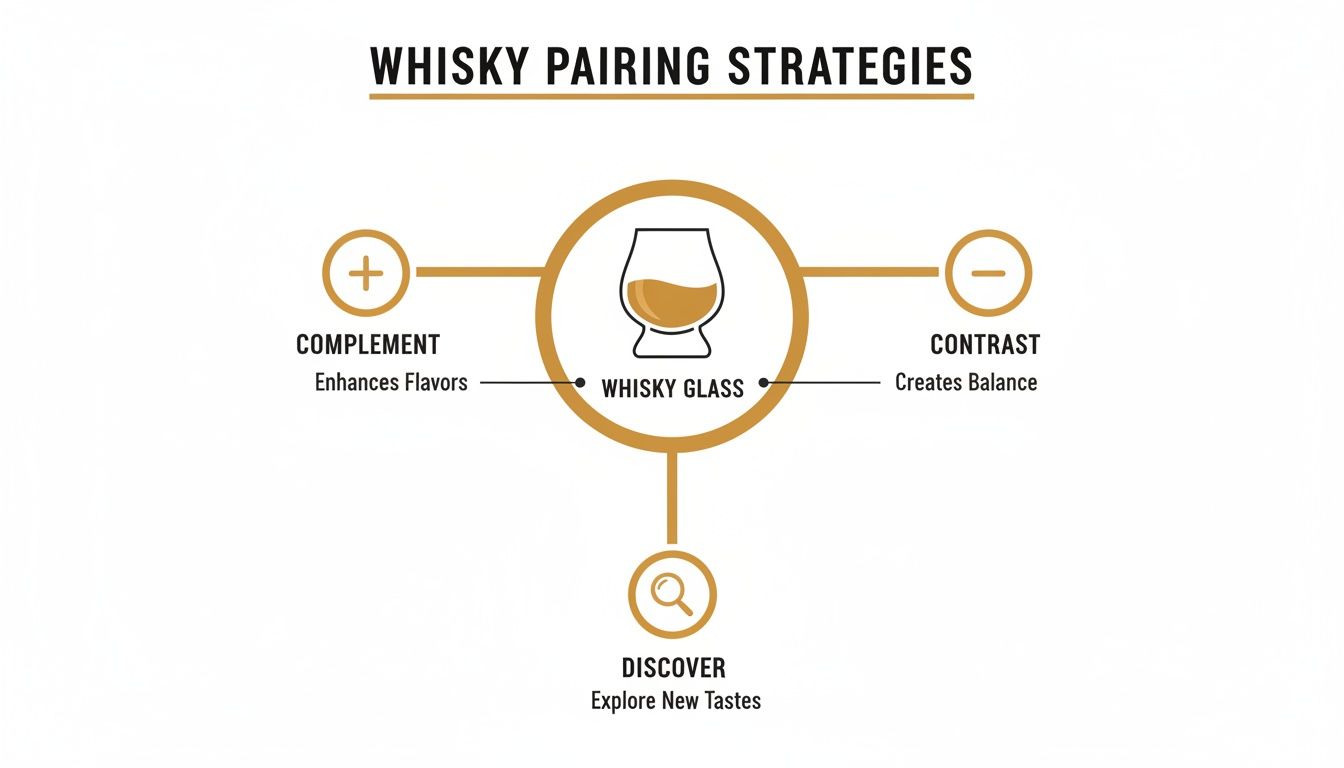
As you can see, you can either match flavors to complement each other, go in the opposite direction for a compelling contrast, or just get creative and discover something totally new.
Connecting Flavor to American Craft Whiskey
Okay, let’s make this practical. You can start predicting a whiskey’s flavor profile just by knowing its style, which is a massive shortcut when you're planning pairings.
Take a high-rye bourbon from a craft distillery like FEW Spirits. You can bet it will have a beautiful balance of sweet and spicy. The corn lays down that classic caramel foundation, but the high rye content adds a layer of cinnamon and black pepper. That tells you it’ll play well with foods that can handle both of those elements, like a good smoked barbecue.
On the other hand, an American Single Malt from a producer like Stranahan's might be aged in some really unique casks, pushing it toward fruity or smoky notes. A whiskey finished in a sherry cask will bring those rich, dark fruit flavors that are just perfect with aged cheeses or a square of dark chocolate.
The most rewarding part of all this is training your own palate to pick up on these nuances. It turns every sip into an active, engaging experience instead of just a passive drink.
For a quick reference, here’s a table that connects some of these core profiles to common food matches.
Whisky Flavor Profiles and Common Food Matches
| Whisky Flavor Profile | Common Notes | Example American Whiskey Style | Complementary Food Pairing | Contrasting Food Pairing |
|---|---|---|---|---|
| Sweet | Caramel, vanilla, honey, butterscotch, maple | High-Corn Bourbon | Caramel desserts, pecan pie, glazed ham, sweet potatoes | Salty cured meats (prosciutto), sharp cheeses |
| Spicy | Cinnamon, black pepper, clove, nutmeg, mint | High-Rye Whiskey | Spiced nuts, ginger snaps, barbecue ribs, charcuterie | Creamy cheeses, rich chocolate, sweet fruits |
| Fruity | Apple, pear, cherry, raisin, fig, citrus | Sherry or Port Cask Finished Whiskey | Fruit tarts, aged cheddar, roasted duck, dark chocolate | Smoky grilled meats, spicy dishes |
| Smoky | Woodsmoke, campfire, bacon, leather, iodine | Peated American Single Malt | Smoked salmon, grilled steak, oysters, blue cheese | Sweet pastries, creamy desserts |
This table is just a starting point, of course. The real fun begins when you start experimenting on your own.
A Simple Palate Training Exercise for Beginners
Ready to start decoding? Grab any American craft whiskey you have at home. Pour a small amount and just spend a few moments nosing the glass. Don't overthink it. Just write down the very first things that pop into your head. Sweet like candy? Spicy like a baking cabinet?
Now, take a small sip and let it coat your tongue. Tip for new drinkers: Try not to swish it like mouthwash. Just let it sit for a moment. How does the taste compare to the smell? Do you pick up the vanilla from the oak? That peppery note from the rye? The more you practice this simple exercise, the faster you'll build your own flavor vocabulary. For a more structured approach, you can check out our detailed guide on how to taste whiskey, which breaks the process down step-by-step.
Mastering the Core Principles of Pairing
Now that you can pinpoint the key flavors swirling in your glass, it's time for the fun part: becoming the architect of your own perfect whisky and food pairings. This isn't about memorizing a stuffy rulebook. Think of it less like following a rigid recipe and more like learning to cook—once you get the hang of a few core techniques, you can start getting creative in the kitchen.
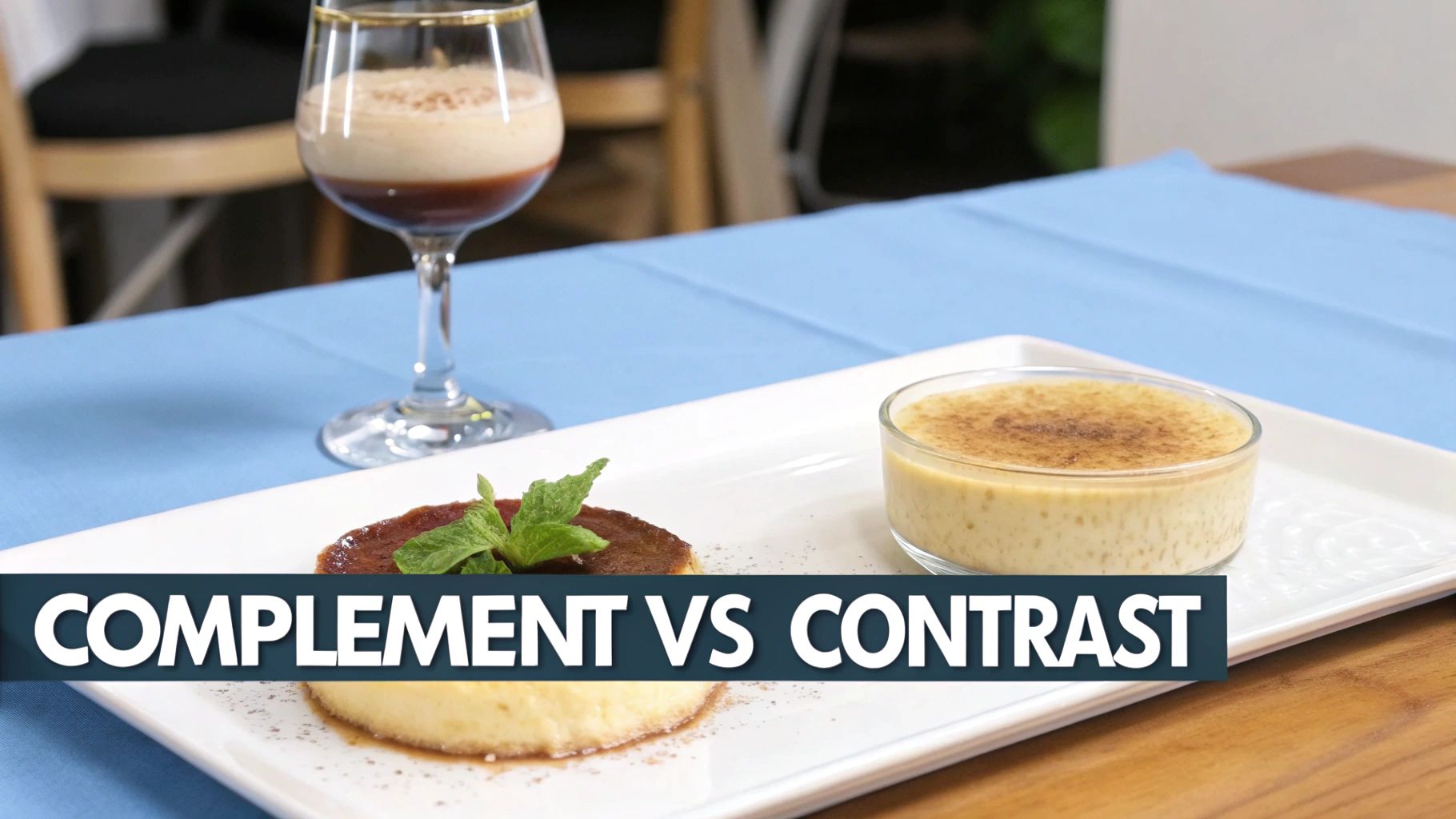
At the heart of every truly great pairing, you'll find two simple but powerful ideas: creating harmony by complementing flavors or generating a bit of excitement by contrasting them.
The Art of Complementing Flavors
The most direct route to a winning pairing is the complementary approach. The goal here is simple: match similar flavor profiles to amplify each other. When it works, you get a seamless, unified taste experience that’s bigger than the sum of its parts. It’s like a lead singer hitting a perfect harmony with their backup vocalist—the result is richer and more powerful than either could be alone.
A classic example, and a great place to start for new drinkers, is pairing a sweet, corn-heavy bourbon with a decadent dessert. Take a bourbon loaded with caramel and vanilla—like many you’ll find from American craft distilleries such as Kings County Distillery—and try it with a warm slice of pecan pie or a crème brûlée. The whisky’s inherent sweetness just grabs hold of the dessert's sugars, making the whole experience feel more cohesive and indulgent.
This strategy is your friend across the entire flavor spectrum:
- Smoky & Smoky: A peated American single malt finds a perfect partner in smoked salmon. The whisky's campfire notes echo the smokiness of the fish, building a deep, layered flavor.
- Spicy & Spicy: Got a high-rye whiskey? Try it with gingerbread cookies. The cinnamon and nutmeg in the cookie are beautifully mirrored by the spicy kick from the rye grain.
- Fruity & Fruity: A sherry cask-finished whiskey alongside a fig and prosciutto flatbread is a game-changer. Those dark fruit notes from the cask finish just elevate the sweetness of the figs.
The Thrill of Contrasting Flavors
While complementing is all about harmony, contrasting is about creating a dynamic, exciting balance. Here, you’re using opposing flavors to make unique characteristics pop in both the whisky and the food. Just think about how a tiny pinch of salt makes caramel taste even sweeter—that’s contrast doing its magic.
A fantastic place to dive in is pairing a bold, spicy rye whiskey with something rich and creamy. Imagine that peppery rye slicing right through the fat of a triple-cream brie or a funky blue cheese. The whisky’s spice acts like a palate cleanser, keeping the cheese from feeling too heavy, while the creamy texture of the cheese tames the whisky's fiery edge. Each one makes the other better by providing exactly what it lacks.
This principle is also a huge reason why flavored whiskeys have taken the food world by storm. The flavored whiskey market is absolutely booming, valued at nearly $37.41 billion and projected to rocket to $49.34 billion by 2030. This incredible growth is fueled by drinkers who love to experiment with flavors like honey—which holds a major market share—to create that perfect sweet-and-savory contrast with grilled pork or to balance the tang in a creamy cheesecake. You can dig deeper into this trend in this detailed industry report on MordorIntelligence.com.
The Pairing Toolkit: At its core, pairing is a balancing act. You are either adding to a flavor that already exists (complementing) or providing a flavor that is missing (contrasting) to create a more complete picture.
Beyond Flavor: Matching Intensity and Texture
Complement and contrast are your primary tools, but a couple of secondary principles can take your pairings from just good to truly great. These are the little details that separate a thoughtful pairing from a random one.
First, match the intensity. A delicate, light-bodied whiskey will be completely steamrolled by a heavy, spicy beef stew. On the flip side, a bold, high-proof, cask-strength monster will obliterate the subtle notes of a piece of flaky white fish. A tip for new whiskey drinkers: start by comparing the "weight" of the food and the whiskey in your mind. Is it a light salad or a heavy steak? Is it a light, floral whiskey or a dark, syrupy one? Aim for partners of equal weight.
Second, consider texture. This adds a whole other dimension to the experience. The smooth, oily mouthfeel of certain whiskies can be a fantastic counterpoint to something with a bit of crunch, like fried chicken. Or think about how the creamy texture of a rich chocolate mousse can coat the palate, softening the finish of a higher-proof bourbon. Paying attention to how the food and spirit feel in your mouth can unlock a whole new level of pairing mastery.
Pairing Ideas for Every Style of American Whiskey
Alright, you've got the core principles of complementing and contrasting down. Now it's time to move from theory to the dinner table. This is where the real fun begins—building a full experience around a specific style of whiskey and seeing just how versatile it can be.
We'll walk through some classic combinations and even a few modern twists for four key categories: Bourbon, Rye, American Single Malt, and Finished Whiskeys. For each one, I’ll lay out a complete three-course meal that puts our pairing principles into practice, turning your next dinner into a seriously memorable tasting journey.
The Classic Bourbon Experience
Bourbon, with that signature sweetness from its corn-heavy mash bill, is often the most welcoming style for newcomers and a fantastic launchpad for food pairings. Its familiar notes of caramel, vanilla, and toasted oak make it a natural partner for rich, savory, and sweet dishes. An accessible American craft bourbon like one from Laws Whiskey House is a perfect choice here.
-
Appetizer: Bacon-Wrapped Dates
This one is a masterclass in complementing sweetness while hitting it with a salty contrast. The deep caramel in the bourbon sings in harmony with the sugary dates, but then the smoky, salty bacon cuts right through it all. It’s a perfect, bite-sized flavor explosion. -
Main: Slow-Smoked BBQ Ribs
A true match made in heaven. The smoky char from the ribs and that sweet, tangy barbecue sauce link up perfectly with the oak and vanilla notes in the bourbon. The whiskey's inherent sweetness also helps to tame any heat from the sauce, creating a deeply satisfying and balanced main course. -
Dessert: Warm Pecan Pie
This is the ultimate complementary pairing, hands down. The nutty, buttery, brown-sugar richness of the pie feels like a seamless extension of the bourbon's own flavor profile. The whiskey’s proof and oaky backbone are just enough to keep the whole thing from becoming cloyingly sweet.
The Bold and Spicy Rye Menu
Rye whiskey brings a completely different energy to the meal. It's known for that peppery spice, herbal character, and an often drier finish, which makes it brilliant for cutting through rich, fatty foods and standing up to seriously bold flavors. A good craft rye from a distillery like High West can be an incredibly dynamic partner for dinner.
-
Appetizer: Smoked Salmon Blinis with Dill Cream Cheese
Here, the spicy rye creates a fantastic contrast. Those sharp, peppery notes slice cleanly through the oily richness of the salmon and the cool, creamy cheese. It totally cleanses the palate and gets you ready for the next bite. -
Main: A Hearty Pastrami on Rye Sandwich
This pairing just works on so many levels. The rye bread, obviously, echoes the rye grain in the whiskey. But more importantly, the whiskey's spicy personality holds its own against the intensely savory and peppery pastrami, making sure neither one bullies the other off your palate. -
Dessert: Dark Chocolate Torte
Rye and dark chocolate are a classic contrasting duo. The subtle bitterness of a 70% or higher cacao chocolate tames the whiskey's spicy kick, while the rye, in turn, keeps the rich chocolate from feeling too heavy.
The Nuanced American Single Malt Dinner
American Single Malts are a true playground of flavor, showing incredible diversity based on a distillery’s unique process and cask choices. They can run the gamut from light and fruity to rich and smoky, offering a massive canvas for creative pairings. For this menu, let's imagine we're working with an unpeated, fruit-forward style from Balcones Distilling.
-
Appetizer: Baked Brie with Apple Slices
A fruit-forward single malt often carries notes of apple and pear. This appetizer complements those notes perfectly. Meanwhile, the creamy, earthy brie provides a beautiful textural contrast to the crispness of both the fresh apple and the spirit itself. -
Main: Roasted Duck with a Cherry Glaze
Duck is a rich, flavorful meat that demands a whiskey with enough character to stand beside it. The dark fruit notes you often get from a single malt aged in wine or sherry casks will beautifully complement the cherry glaze, while the whiskey's malty body matches the intensity of the duck. -
Dessert: Spiced Apple Crumble
This brings the entire meal full circle. The baked apple and warming spices like cinnamon in the crumble harmonize with the fruity, malty notes of the whiskey, creating a comforting and perfectly cohesive finish. And don't just stick to the classics—feel free to experiment with a unique sweet treat like stroopwafel pancakes, which can create some surprisingly delightful harmonies.
How to Host Your Own Blind Pairing Party
Alright, you've got the theory down. Now it's time to put that knowledge to the test, and there’s no better way than by hosting your own blind pairing party. This is where the magic really happens—it’s one thing to read about flavor pairings, but it's another thing entirely to experience them firsthand. It's a fun, interactive, and genuinely eye-opening way to discover incredible whisky and food pairings without any preconceived notions getting in the way.
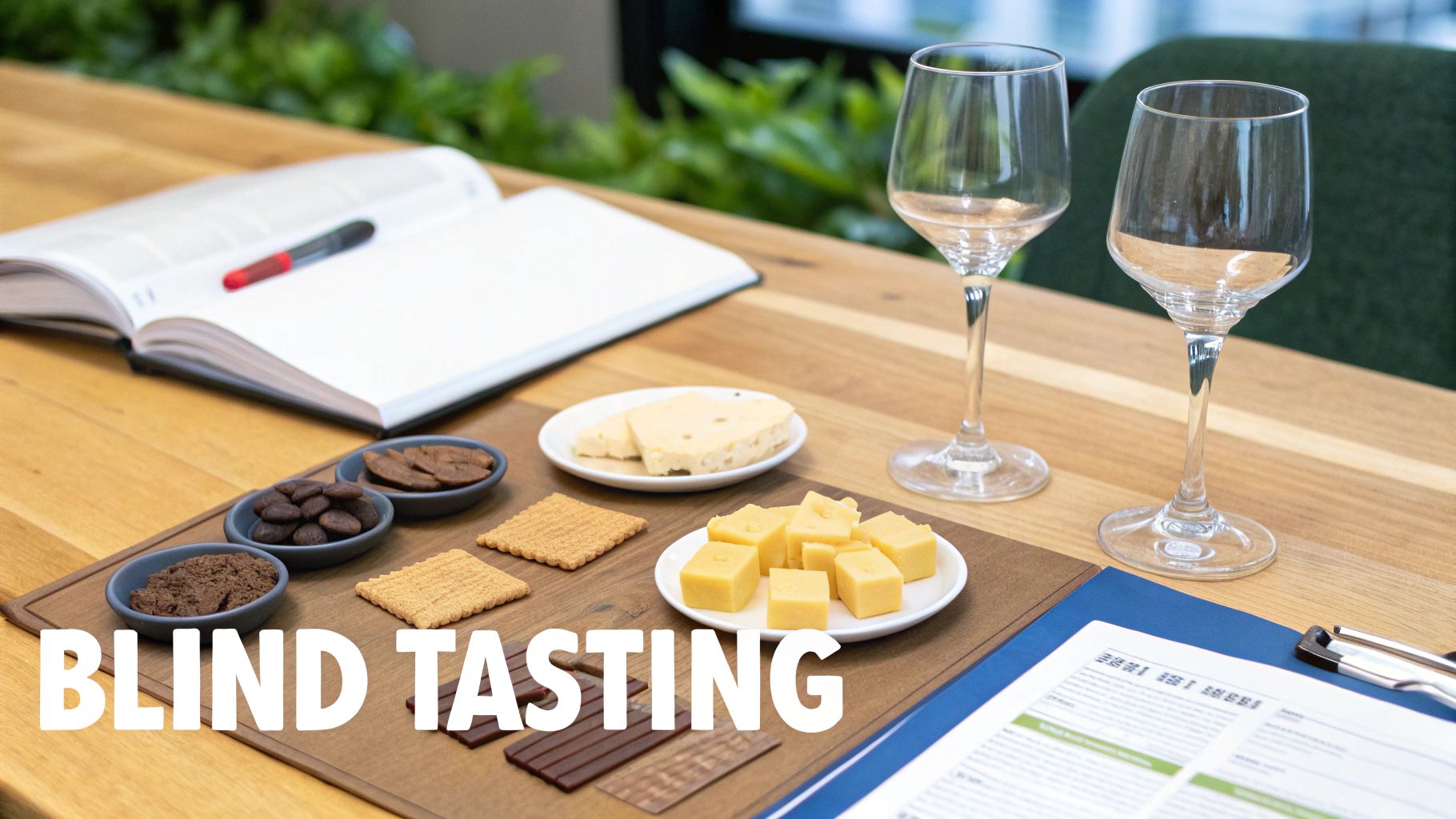
The whole point is to let your palate call the shots. When you strip away the labels and expectations, you and your guests can zero in on the pure interplay of taste and aroma. This is how you stumble upon those unforgettable combinations that become your new go-to pairings.
Setting Up Your Tasting
The secret to a great tasting party is keeping it simple. You don’t need to orchestrate a five-course meal; a thoughtfully chosen selection of high-impact foods will do the trick far more effectively. Think about a handful of items that can dance with a wide range of different whiskeys.
A fantastic starting lineup for beginners could include:
- Cheeses: A small variety goes a long way. Try a sharp aged cheddar, a creamy brie, and something funky like a blue cheese.
- Chocolates: Grab a couple of different cacao percentages. A 55% milk chocolate next to a 75% dark chocolate can create wildly different results.
- Cured Meats: Prosciutto or a spicy salami brings in that salty, savory element that often works wonders.
- Fruits and Nuts: Sliced apples, dried figs, or a bowl of spiced pecans can add crucial texture and sweetness.
For the whiskey, pour about a half-ounce to one ounce for each guest. To keep things truly blind, you can use numbered glasses or even hide the bottles in paper bags. For a completely hassle-free setup, consider using a pre-made blind whiskey tasting kit, which takes all the guesswork out of portioning and selection.
Guiding the Experience
Once everyone has their samples, walk them through the process. Encourage them to first taste the whiskey by itself. Then, take a bite of one of the food items, and follow it up with another sip of the same whiskey.
Tip for a great party: The big question to ask is: "How did the food change the whiskey?" Did that piece of dark chocolate suddenly pull out a hidden cherry note? Did the salty prosciutto mellow out the spirit’s fiery kick? This simple, focused approach transforms a tasting into a genuine shared discovery.
This kind of hands-on experience is tapping into a massive trend. The global whiskey market is set to explode from $110.7 billion to $318.3 billion by 2033, and a huge part of that growth is driven by people looking for new ways to enjoy their drink, including food pairings. Blind tastings are the perfect way to cut through all the marketing noise and figure out what you actually like.
As your guests explore the different combinations, have them jot down their favorites. The final reveal is always the most exciting part of the night—people are often shocked to discover which American craft whiskeys they gravitated towards. If you're planning a larger gathering, this practical guide to hosting an event has some invaluable tips for managing the logistics. It’s an incredible way to share your passion and learn something new together.
Common Pairing Mistakes to Avoid
Every expert was once a beginner, and let's be honest, the road to mastering whisky and food pairings is paved with a few… learning experiences. Think of a "bad" pairing not as a failure, but as a valuable lesson that sharpens your palate for next time.
By getting a handle on a few common pitfalls, you can sidestep them and get to the good stuff faster. The key is to remember that pairing is an act of balance. You wouldn't shout over a quiet conversation, and you shouldn't let a booming whisky drown out a delicate dish. These simple adjustments will help you create harmony on your plate and in your glass.
Mistake 1: Overpowering Delicate Foods
This is probably the most frequent misstep for newcomers: pitting a high-proof, cask-strength whisky against a light, subtle food. Pouring a bold, smoky American single malt next to a beautiful piece of flaky white fish is a classic example. The intense, powerful character of the spirit will completely steamroll the gentle flavors of the fish, leaving you tasting nothing but whisky.
- Instead, try this: Match intensity with intensity. That powerful, peated whisky is a true superstar next to an equally robust blue cheese or a rich, grilled steak. For that delicate fish, reach for a lighter, fruit-forward whisky or a low-proof bourbon whose gentle sweetness will complement, not crush, the dish.
Mistake 2: Doubling Down on Intensity
This is what happens when you pair two things that are just too similar in their strongest characteristic, creating an overwhelming, one-note experience. Think of an incredibly spicy, high-rye whisky paired with a fiery Thai curry. Instead of complementing each other, the spice levels just clash and can lead to serious palate fatigue, basically numbing your taste buds to any other flavors.
- Instead, try this: Use contrast to your advantage. When a dish has a dominant, intense flavor like spice, pick a whisky that can cool things down. A sweeter, corn-forward bourbon with notes of caramel and vanilla provides a beautiful, soothing counterpoint to the heat, making the whole experience much more enjoyable.
Mistake 3: Forgetting About Sauces and Sides
It’s easy to focus only on the main event, like a grilled chicken breast, and completely forget that the garlic-herb sauce or spicy chutney it’s served with is the real star of the show. Your whisky isn't just pairing with the chicken; it's pairing with everything on the fork.
A pairing is a conversation between the entire dish and the spirit in your glass. Ignoring the supporting actors—the sauces, glazes, and spices—can lead to an unexpected and often clashing combination. Beginner Tip: taste the sauce or dressing by itself first, then taste the whiskey to see if they work together.
Whisky and food pairing is truly entering a golden age as more people discover its incredible versatility. While restaurants have long favored wine, whisky pairings are now booming. The overall whiskey market was valued at $89.56 billion and is projected to hit $139.8 billion by 2034, and a lot of that growth is fueled by bars and restaurants showcasing innovative pairings that consider every single element on the plate.
You can learn more about this expanding market on MordorIntelligence.com.
Your Questions About Whisky Pairings Answered
Jumping into the world of whisky and food pairings can feel a little intimidating. It's totally natural to have questions, especially when you're just starting out. Getting a handle on a few key concepts is all it takes to build the confidence to start experimenting and find what really clicks for you.
Here are a few of the most common questions we hear from fellow drinkers diving into the adventure.
Can I Pair Whisky with Spicy Food?
Absolutely! In fact, it can be a phenomenal combination when you get it right. Think about a sweet, corn-heavy bourbon next to a spicy barbecue sauce—the whiskey's rich caramel notes are the perfect thing to cool and complement the heat. In the same way, a gutsy rye has the backbone to go toe-to-toe with the complex spices you’d find in an Indian curry.
The real secret here is balance. You probably don't want to pit an incredibly high-proof, fiery whiskey against an intensely spicy dish. That's a quick way to blow out your palate. Start with something moderately spicy and a flavorful whiskey to feel out how they play together.
What Is the Best Beginner Whisky and Food Pairing?
If you're looking for a first-time pairing that's almost guaranteed to be a home run, you can't go wrong with classic bourbon and dark chocolate. It's a simple, elegant combination that perfectly shows off the power of complementary flavors. Honestly, it's a fantastic entry point.
Grab a quality American craft bourbon that has those lovely, prominent caramel and vanilla notes. Pair it with a nice piece of 70% cacao (or higher) dark chocolate. The sweetness from the bourbon beautifully mellows the chocolate's richness, while that slight bitterness from the cacao cuts right through the spirit, creating a decadent experience that’s just perfectly balanced.
Do I Need Special Glassware for a Whisky Pairing?
While it’s not a deal-breaker, using the right glassware can definitely elevate the whole experience. A proper Glencairn or tulip-shaped glass is specifically designed to concentrate the aromas, and smell is a huge part of appreciating any whisky and food pairing.
But let's be real—the most important thing is to have fun and just focus on the flavors. Don't ever let a lack of "perfect" glassware stop you from the joy of discovery.
If you're sitting down for dinner, a simple rocks glass will do the trick just fine. What's more important than the glass is having some water nearby to cleanse your palate between sips and bites. This one simple step ensures you can actually taste the subtle notes of each new combination clearly. The goal is to explore, not to get bogged down by rigid rules.
Ready to stop guessing and start discovering your next favorite American craft whiskey? The Blind Barrels subscription sends a curated blind tasting kit to your door every quarter, letting your palate lead the way without any brand bias. Start your tasting adventure today!