

You're standing in front of a whiskey shelf, reading labels that say bourbon, rye, Tennessee, and single malt, but none of them explains what the first sip will feel like. The answer starts with production rules. Grain composition, barrel type, proof, maturation, and filtration all shape the aromas and texture in your glass.
The fastest way to learn the best whiskey types isn't to memorize a ranking. Taste contrasting styles side by side. Start with approachable bourbon and Tennessee whiskey, move through softer wheat and sharper rye, then explore corn whiskey, American single malt, bottled-in-bond releases, and finally cask-strength bourbon. A blind comparison shows what you actually enjoy before brand reputation influences you.
Blind Barrels' quarterly kits offer one practical way to run that experiment at home. Each kit includes four blind samples, a tasting table for aroma, taste, and finish notes, and a game that lets you guess age, proof, and whiskey type. If cocktails are your preferred entry point, you can also browse the Pep Tea cocktail tag for serving inspiration. Here are the eight styles, arranged from gentler introductions to more intense pours.
1. Straight Bourbon
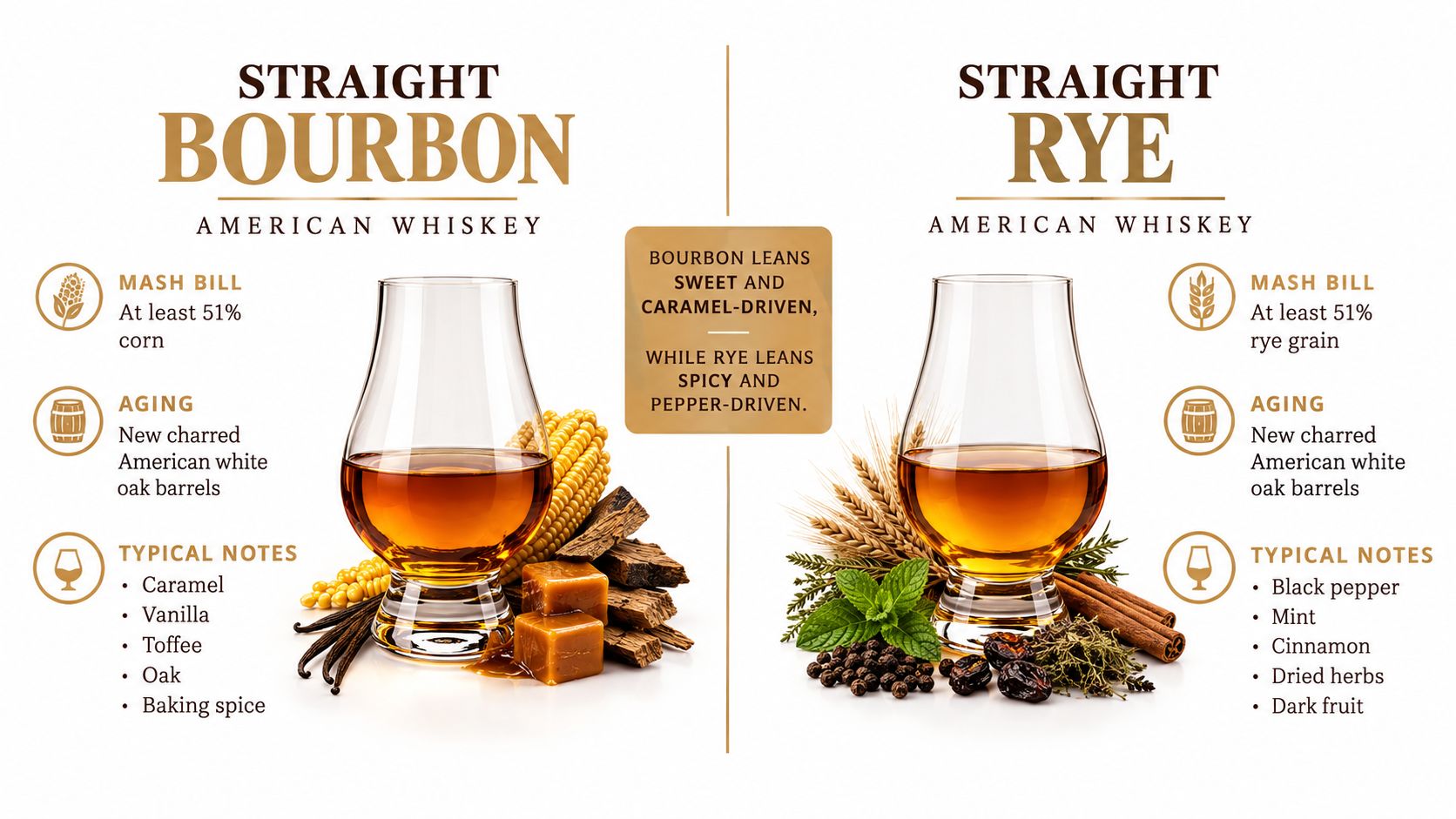
Straight bourbon is the clearest starting point for many new American whiskey drinkers because corn gives the style a naturally sweet foundation. Federal rules require bourbon to be made in the United States with a mash bill containing at least 51% corn. It must be distilled to no more than 160 proof, enter new charred-oak containers at no more than 125 proof, and bottled at a minimum of 80 proof. Bourbon itself has no federally mandated minimum maturation period, but straight bourbon must mature for at least two years in new charred oak.
The secondary grains create much of the variation. Rye can add pepper and lift, while wheat generally makes the profile softer. New charred oak contributes familiar impressions of vanilla, caramel, toasted wood, and baking spice. Examples worth seeking include Wilderness Trail Bourbon, Willett Pot Still Reserve, Smooth Ambler Old Scout, and Southern Star Bourbon.
How to taste it
Start with a bourbon around 90 to 100 proof if you can find one. That range offers enough concentration to show flavor without making alcohol heat the main event. Smell before sipping, then take a small taste and let it move across your tongue.
Add only a few drops of water to a second taste. Dilution can make vanilla and caramel easier to notice, but the neat pour gives you a useful baseline. Record whether the sweetness seems more like caramel, vanilla, ripe fruit, or grain.
Blind comparison: Put straight bourbon beside straight rye. Ask which glass feels sweeter, which finishes drier, and where the pepper appears. The contrast teaches you more than tasting several similar bourbons together.
2. Tennessee Whiskey
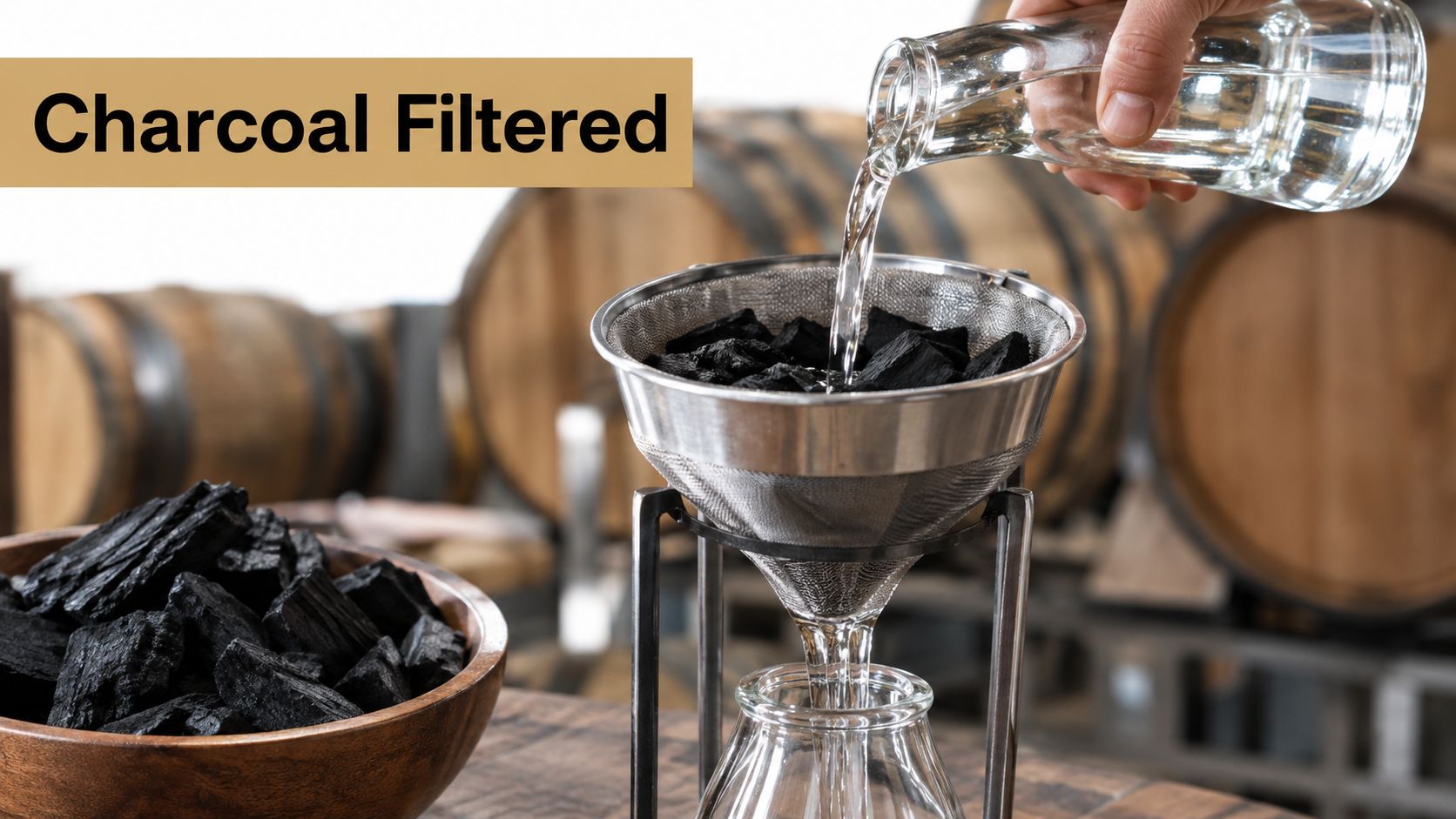
Tennessee whiskey resembles bourbon in its grain and barrel requirements, but it adds a defining production step. Tennessee whiskey is made in Tennessee, uses at least 51% corn, enters new charred oak, and follows the relevant American whiskey proof rules. Before aging, the new spirit passes through maple charcoal in the Lincoln County Process. That filtration often gives the finished whiskey a softer, rounder texture.
The difference is easiest to understand with two glasses poured at similar proof. Bourbon may show more direct corn sweetness or oak intensity, while Tennessee whiskey can feel smoother across the middle of the palate. That doesn't mean every Tennessee bottle tastes gentle, but charcoal filtration gives newcomers a useful point of comparison.
Uncle Nearest 1856 Premium Whiskey, Prichard's Tennessee Whiskey, and George Dickel No. 12 offer different ways into the category. Uncle Nearest also connects the bottle to Nearest Green, the enslaved distiller who taught Jack Daniel. For a deeper look at the style, use this guide to Tennessee whiskey.
A better first serving
Try the whiskey neat first, then serve it chilled over one large ice cube. The large cube slows dilution while lowering the temperature and softening the alcohol. If you're new to whiskey and bourbon feels too sweet or hot, Tennessee whiskey can provide a gentler bridge.
- Compare texture: Notice whether the whiskey feels oily, silky, sharp, or light.
- Track the finish: A softer entry can still lead to oak, spice, or lingering sweetness.
- Use equal pours: Similar serving sizes and proof keep the comparison focused on style.
3. Wheated Bourbon
Wheated bourbon replaces rye with wheat as the principal secondary grain. Bourbon still needs at least 51% corn, so the legal foundation hasn't changed. The shift in the remaining grain bill changes the drinking experience. Rye tends to bring spice and dryness, while wheat often creates a softer, sweeter, more rounded profile.
Michter's Kentucky Straight Bourbon, Weller Special Reserve, and Old Fitzgerald Bottled-in-Bond are useful reference points. They can show honey, bread, vanilla, soft oak, and dessert-like sweetness rather than the peppery lift associated with a rye-forward recipe. That doesn't make wheated bourbon automatically better. It makes it better suited to drinkers who want gentler edges.
Train your palate by contrast
The most useful pairing is a wheated bourbon against a high-rye bourbon. Pour them without showing the labels, and taste each in the same glassware. First identify the softer whiskey, then look for the source of the difference. Does one suggest honey and fresh bread while the other gives black pepper, herbs, or a drier finish?
Wheated bourbon often rewards a slower sip. Let a small amount rest on the tongue rather than swallowing immediately, and pay attention to the transition from sweetness to oak. New drinkers can check the mash bill on the bottle or use the QR code on a tasting table after writing down their guesses.
“Soft” doesn't mean flavorless. In a blind flight, wheat may reveal itself through texture first, then through honeyed, bready, or rounded flavors.
Try a few drops of water only after tasting neat. Water can expose aroma, but too much can flatten a delicate profile and make the comparison less clear.
4. Straight Rye
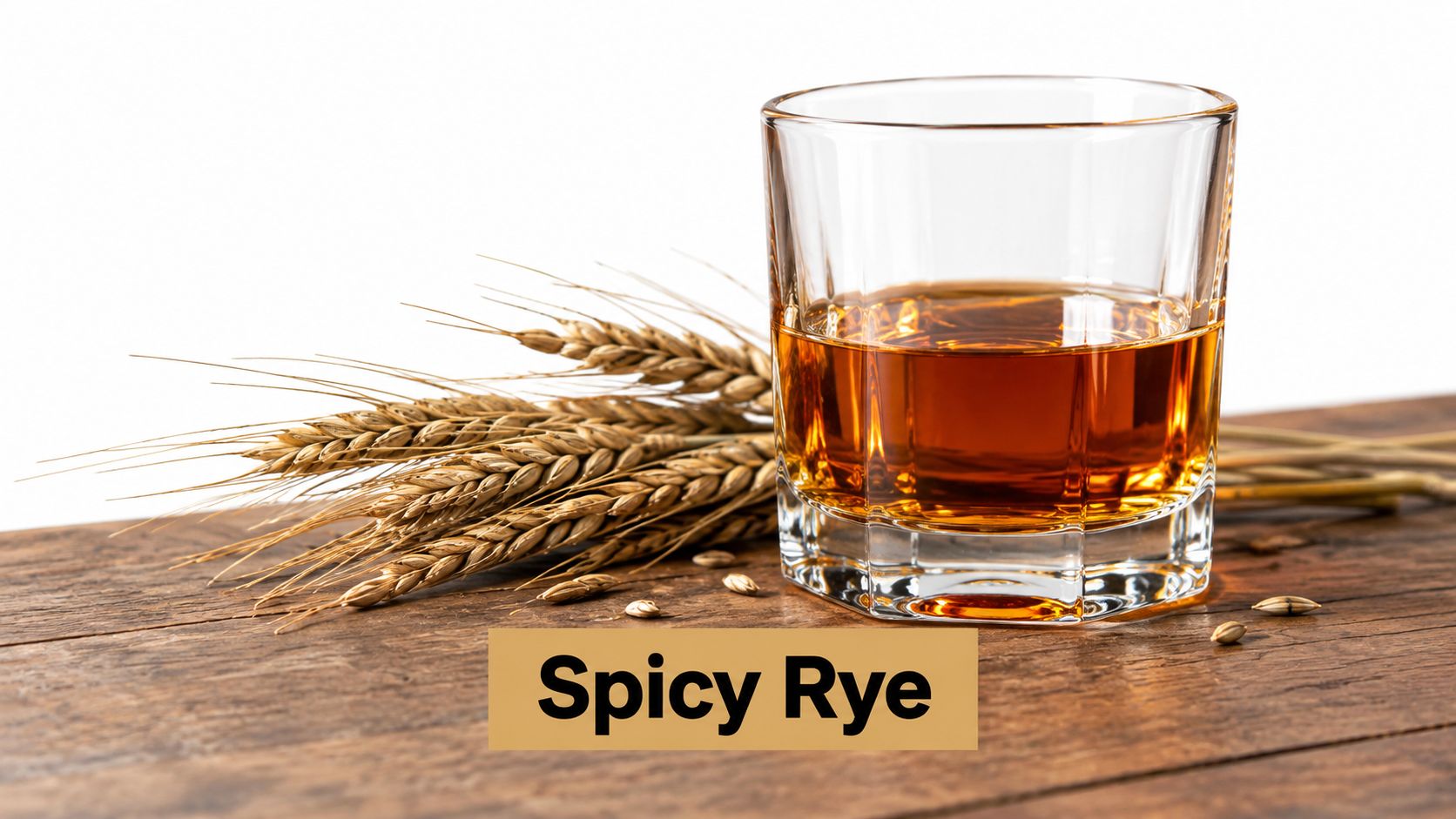
Straight rye changes the balance dramatically. American rye whiskey must contain at least 51% rye grain, and straight rye must mature for at least two years in new charred oak. Rye's dominant grain typically brings pepper, baking spice, herbal notes, and a drier finish than bourbon.
WhistlePig PiggyBack Rye, Westward American Single Malt Rye, Koval Rye, and Michter's US*1 Rye give drinkers several interpretations of the style. Rye doesn't always taste aggressive, and bourbon doesn't always taste soft. Still, the grain requirement makes rye a reliable candidate when you want more spice and less overt sweetness.
Make the contrast obvious
Taste rye immediately after bourbon. The bourbon's corn-led sweetness gives your palate a reference point, so rye's pepper and dryness become easier to identify. Smell both glasses first. Rye may suggest herbs, citrus peel, mint, or baking spice, while bourbon more often leans toward vanilla, caramel, and toasted oak.
Drink the rye neat before using it in a cocktail. Then try it in a Manhattan, where sweet vermouth and bitters test whether the whiskey's spice remains present after mixing. This also shows why rye works for people who find bourbon too sweet.
- Choose rye neat: Look for pepper, herbs, dryness, and a firm finish.
- Choose rye for cocktails: Use it when you want the spirit to remain noticeable beside vermouth and bitters.
- Choose high-rye bourbon: Use this middle ground when you want rye spice with a sweeter corn base.
A high-rye bourbon makes a useful follow-up because it demonstrates that mash bills exist on a spectrum. The label may still say bourbon, but the whiskey can lean noticeably toward rye's sharper character.
5. Corn Whiskey
Corn whiskey is built around a mash containing at least 80% corn, which is a higher corn requirement than bourbon. Its barrel rules are different too. Corn whiskey doesn't have to enter new charred oak, so producers may use used or uncharred barrels, or bottle the whiskey without barrel maturation. That's why the style can appear clear, pale, grain-forward, or richly colored depending on how the distiller handles it.
Balcones Corn Whisky and Heaven Hill Mellow Corn provide recognizable reference points. Craft distillers in Kentucky and Texas also use corn whiskey to explore a sweeter, more direct expression of the grain. The style can feel less polished than heavily oak-influenced bourbon, but that directness is its appeal.
Use it as a palate reset
Pour corn whiskey between bourbon and rye when a tasting starts to feel dominated by oak or spice. Its grain character can clear the palate and give you a different sensory reference. Serve it chilled or in a highball if the raw grain profile feels intense neat.
Check the label for aging details before you taste. A pale or clear corn whiskey may show sweet cereal, corn husk, or light fruit, while a barrel-aged version can bring vanilla and oak. Don't assume color tells you the whole story. The barrel type and maturation details matter more than appearance alone.
Practical rule: Taste corn whiskey for grain character before judging it for smoothness. It's designed to show a different relationship between spirit and barrel.
A useful blind pairing is corn whiskey against bourbon. Ask whether the sweetness comes from fresh grain or charred oak. That distinction helps explain why two corn-led whiskeys can taste unrelated even when both seem sweet.
6. American Single Malt Whiskey
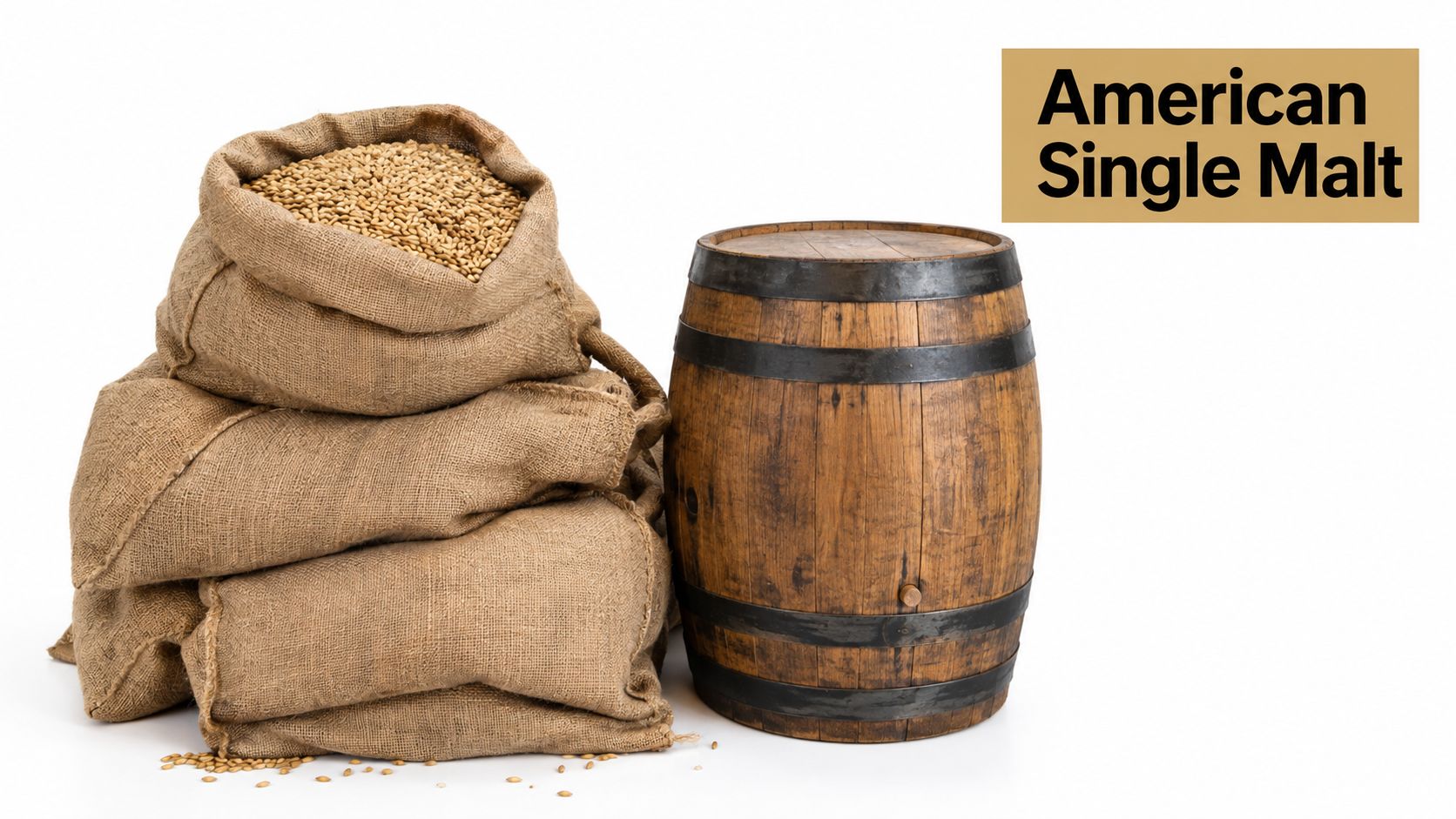
American single malt is a malt-forward American style made with malted barley, distilled at a single distillery, and aged in oak barrels. Unlike Scotch single malt, it isn't federally defined as a single category in the same way, so American producers have more freedom in grain, wood, maturation, and finishing choices.
That flexibility is why American single malt can't be reduced to one flavor profile. Westland American Single Malt, Balcones Texas Single Malt, and Stranahan's Colorado Whiskey show how climate and production choices can move the style from nutty and malty to rich, fruity, or oak-driven. Copper Fox Rye Whiskey is another craft example for drinkers interested in malt-forward experimentation.
Compare grain character, not prestige
Put American single malt beside bourbon. Bourbon usually leads with corn sweetness and new-oak influence, while a malt-forward whiskey may show toasted grain, cereal, nuts, fruit, or a savory edge. Taste both neat at room temperature, then revisit them as they warm. Malt character can become more obvious after the glass has rested.
Scotch offers another useful contrast. Scotch must be produced and matured in Scotland, aged in oak casks for at least three years, and made from water and cereal grains. Single malt Scotch comes from one distillery, uses only malted barley and water, and is distilled in pot stills. American single malt shares the single-distillery, malt-led idea, but the American interpretation gives producers a broader experimental canvas.
- Start with unpeated malt: This lets you learn barley and oak before smoke dominates.
- Explore finishes next: A different barrel can shift fruit, spice, or sweetness.
- Try peated releases later: Smoke adds intensity, but it can mask subtle grain notes for beginners.
The best way to taste this category is slowly. Don't chase a list of tasting notes. Decide whether you notice malt, oak, fruit, smoke, or texture first.
7. Bottled-in-Bond Whiskey
Bottled-in-bond is a classification that gives beginners unusually clear production information. Under the Bottled-in-Bond Act of 1897, the whiskey must come from one distiller, one distillery, and one distilling season. It must mature for at least four years in a federally bonded warehouse and be bottled at exactly 100 proof.
That fixed proof makes bottled-in-bond a strong benchmark. You can compare it with another whiskey without wondering whether a large difference in alcohol strength is driving the result. Wilderness Trail Bottled-in-Bond Bourbon, Old Forester Bottled-in-Bond, and Rittenhouse Bottled-in-Bond Rye cover both bourbon and rye interpretations.
Read the label as a tasting tool
Look for the bottled-in-bond designation, then check the distillery and season information on the back label or tasting-table QR code. The designation doesn't promise that every drinker will love the flavor. It tells you that the whiskey meets a specific set of age, proof, and production conditions.
Taste a bottled-in-bond bourbon beside a non-bottled-in-bond bourbon at a similar price and note what changes. Then compare bottled-in-bond bourbon with bottled-in-bond rye to isolate the grain difference while keeping proof consistent.
For a plain-language guide to the category, read about bourbon whiskey types. The useful beginner habit is to write your impressions before revealing the label.
A reliable benchmark isn't the same as a guaranteed favorite. Use bottled-in-bond whiskey to calibrate your palate, not to outsource your preference.
If the whiskey feels hot, don't immediately add a large splash of water. Taste it neat, add a small measured amount, and compare both versions. Keeping the original pour beside the diluted one shows whether water improves the balance for you.
8. Cask-Strength Bourbon
Cask-strength, also called barrel-proof, bourbon is bottled with little or no water added after maturation. Standard bourbon often reaches the bottle after proof has been reduced, while cask-strength releases preserve more of the alcohol and flavor concentration present in the barrel. Many releases sit around 110 to 135 proof or higher, though the exact proof varies by barrel and bottling.
Wilderness Trail barrel-proof single-barrel releases, Frey Ranch barrel-proof releases, and Southern Star barrel-strength bottlings give craft-focused drinkers several ways to explore the style. High proof doesn't automatically mean higher quality. It means alcohol intensity becomes a larger part of the tasting decision.
Dilute with control
Let the glass rest for five to ten minutes before your first sip. That pause gives the alcohol time to settle, making the aroma easier to assess. Taste a very small amount neat, then add a few drops of water and reassess.
A gradual approach works better than pouring in a large amount immediately. Water changes the balance between alcohol and aromatic compounds, and dilution can make some aromas more available at the surface. Keep a neat comparison glass so you can decide whether the added water improves the whiskey rather than assuming it will.
- Start with aroma: Look for oak, caramel, fruit, spice, and alcohol intensity.
- Take small sips: High proof can overwhelm the palate if you drink as though it were standard-strength whiskey.
- Add water slowly: Stop when the texture and flavor feel balanced to you.
Final-flight test: Compare cask-strength bourbon with a standard-proof bourbon. Ask which flavors become more intense and which disappear behind alcohol.
For a clearer explanation of the style, read what cask strength means. If you enjoy barrel-aged drinks beyond whiskey, Carbon 6 Brewing's barrel-aged guide offers another perspective on how wood and time influence flavor.
Top 8 Whiskey Types Comparison
| Style | Implementation complexity | Resource requirements | Expected outcomes | Ideal use cases | Key advantages |
|---|---|---|---|---|---|
| Straight Bourbon | Standard bourbon rules; straightforward production and aging | ≥51% corn mash, new charred oak barrels, ≥2 years aging | Sweet, caramel-vanilla, oak-driven; commonly 80–110 proof | Entry-level sipping, cocktails, blind-tasting baseline | Approachable, widely available, broad price range |
| Tennessee Whiskey | Bourbon process plus Lincoln County (charcoal) filtering | ≥51% corn, maple charcoal filtration, produced in Tennessee | Softer, rounder mouthfeel; vanilla-toffee notes; ~80–100 proof | Beginners, smooth sipping, cocktails | Distinctively smooth texture; strong regional identity |
| Wheated Bourbon | Bourbon process with wheat replacing rye in mash bill | Wheat as secondary grain, new charred barrels, ≥2 years | Soft, sweet, dessert-like (honey, butterscotch); ~80–100 proof | Sipping, dessert pairings, grain-comparison tastings | Exceptionally smooth; highlights grain-driven sweetness |
| Straight Rye | Same aging rules; mash bill ≥51% rye, often higher proof | Rye-dominant mash, new charred oak barrels, often longer aging | Spicy, peppery, drier finish; typically 90–115+ proof | Cocktails (Manhattan/Old Fashioned), bold tasting flights | Bold spice and complexity; stands out in mixes |
| Corn Whiskey | Simpler production; may be unaged or aged in used/uncharred barrels | ≥80% corn mash; used or uncharred barrels or unaged | Sweet, grainy, cornbread notes; lighter color and variable depth | Palate resets, contrast samples, budget options | Distinctive corn character; often affordable |
| American Single Malt Whiskey | Varied methods; malted-barley focus, no strict legal standard | 100% malted barley, pot/column stills, oak aging; varied finishes | Malt-forward, layered (malt, dried fruit, chocolate); variable proof | Scotch fans, experimental tastings, regional expression | Complex, malt-driven flavors; craft experimentation |
| Bottled-in-Bond Whiskey | Highly regulated: single distiller/season, bonded aging, 100 proof | One distiller/season, ≥4 years in federally bonded warehouse, bottled at 100 proof | Consistent, transparent 100-proof profile with age guarantee | Benchmark comparisons, beginner education, value buys | Government-backed standards; reliable age and proof |
| Cask-Strength (Barrel-Proof) Bourbon | Bottled undiluted from barrel; batch variability | Standard mash and barrels; no dilution step; often single barrels | Concentrated, intense flavors; typically 110–135+ proof | Advanced tastings, dilution experiments, collectors | Full-flavor intensity; drinker-controlled strength |
Build Your Palate One Blind Comparison at a Time
The best whiskey types aren't arranged in a universal ranking. The right choice depends on whether you want corn sweetness, rye spice, a soft wheat profile, malt complexity, cocktail structure, or the concentrated intensity of a barrel-proof pour. A whiskey that feels too hot to one drinker may be exactly what another wants after dilution.
Start with two styles that sit far apart. A high-rye bourbon and Tennessee whiskey make a useful pairing because both can share a corn-led foundation while differing in spice, texture, and charcoal filtration. Bourbon and American single malt create a wider grain contrast. Standard-proof bourbon and cask-strength bourbon isolate the effect of alcohol concentration.
Pour the samples into identical glasses and hide the bottles. Keep the room free from strong food aromas, and give yourself enough time to smell each glass before tasting. You don't need elaborate vocabulary. Write down what you notice in three stages:
- Aroma: Record the first clear impressions, such as vanilla, grain, fruit, oak, herbs, or smoke.
- Taste: Note sweetness, spice, bitterness, texture, and alcohol heat.
- Finish: Decide whether the whiskey fades quickly, stays dry, grows sweeter, or leaves pepper and oak behind.
Then check your notes against the tasting table. If you're using a Blind Barrels kit, scan the QR code after making your guesses to reveal the samples and access the bottle information. The attached game lets you estimate age, proof, and whiskey type, then gives you a score that shows how accurate your palate was on that flight.
Don't treat the score as a verdict on your tasting ability. Use it as feedback. If you correctly identify rye because of pepper and dryness but miss the proof, your next comparison should hold the grain style steady and vary strength. If you mistake Tennessee whiskey for bourbon, repeat the comparison while focusing on texture and finish instead of sweetness.
Blind tasting also protects you from price and packaging bias. A familiar label can make you expect a certain experience before the whiskey reaches your mouth. Removing that information lets you notice what you prefer, whether that's a small American craft distillery, a classic bourbon profile, or a high-proof release that needs water to show its balance.
Choose one comparison this week and keep the pours modest. Taste the first sample neat, add a few drops of water to a second portion, and write down your impressions before revealing anything. Over time, your notes will show whether you consistently prefer sweetness, spice, malt, smoke, oak, or a softer texture. That personal pattern is more useful than any fixed list of the best whiskey types.
Blind Barrels sends four blind samples each quarter, featuring small American craft distilleries, with a tasting table, bottle-reveal QR code, and palate-scoring game. Visit Blind Barrels to turn these whiskey-type comparisons into a guided tasting experience at home.