

When you grab a bottle of bourbon, one of the first things you’ll notice on the label is its proof. So, what does that number really tell you?
Simply put, bourbon whiskey proof is a measure of its alcohol content, and it’s always exactly double its Alcohol by Volume (ABV). If a bourbon is labeled 90 proof, that means it’s 45% ABV. It’s a straightforward way to gauge the whiskey’s strength right off the bat.
What the Proof Number on Bourbon Actually Means
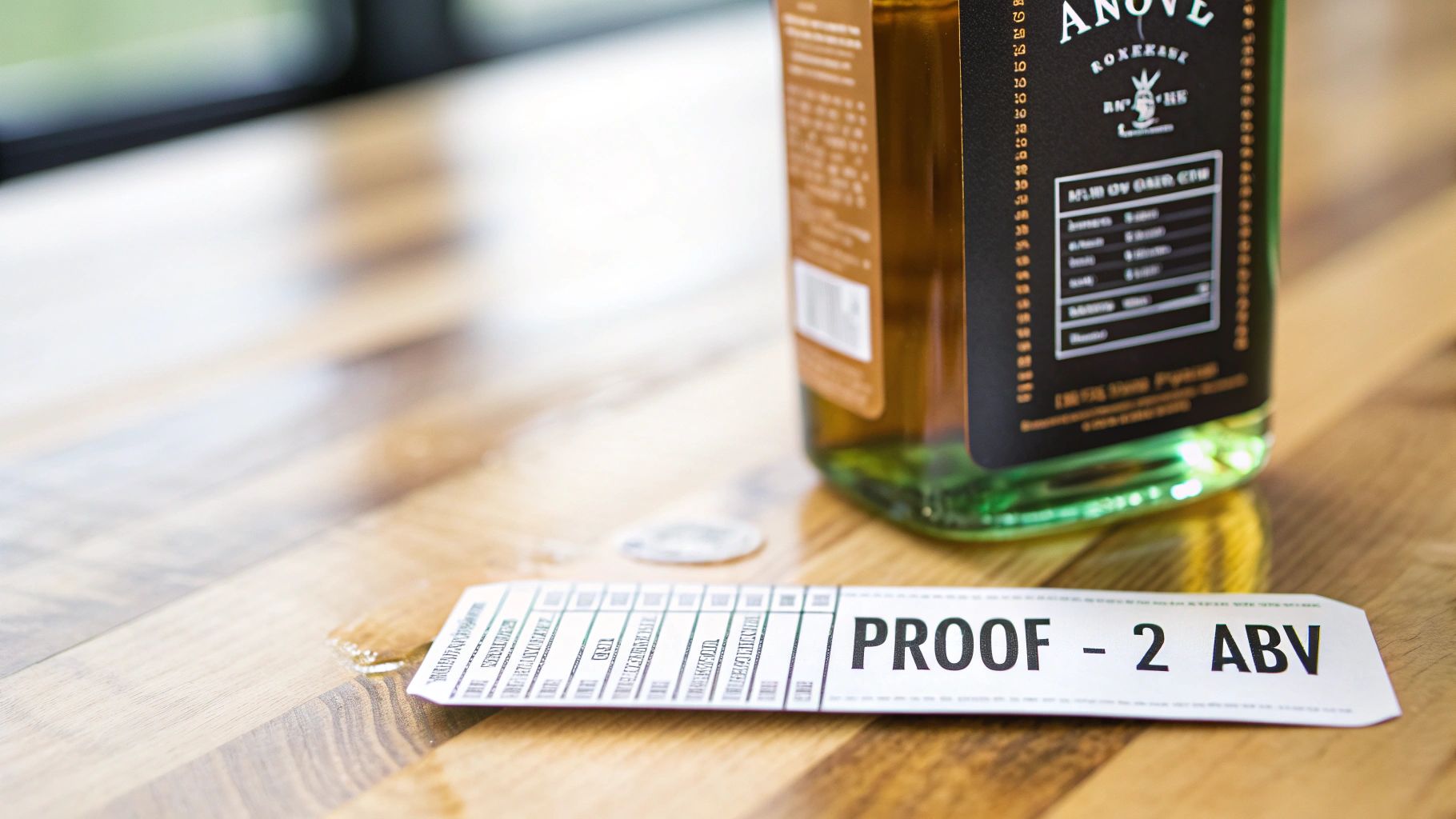
It helps to think of proof and ABV like Fahrenheit and Celsius—they're just two different scales measuring the same thing. While U.S. law requires spirits to list their ABV, proof remains the traditional, more common way we talk about a whiskey's intensity. For anyone new to whiskey, getting a handle on this simple two-to-one relationship is the first step to decoding a label like a pro.
This isn’t just some bit of trivia, either. It’s woven into the very legal definition of bourbon itself. To earn the name "bourbon," a whiskey must be bottled at a minimum of 80 proof (40% ABV). Any lower than that, and it legally can’t be called bourbon, a rule that sets a baseline of quality and character for every bottle you find.
Your Guide to Common Proof Ranges
As you start exploring the vast world of bourbon, especially from some of the incredible American craft whiskey brands out there, you'll run into a few key proof categories. Each one offers a totally different tasting experience.
- Standard Proof (80-99): This is the most common and approachable range. It's perfect for newcomers or for mixing in classic cocktails where you want the bourbon’s flavor to shine without completely taking over.
- Bottled-in-Bond (Exactly 100): A historic mark of quality, these bourbons are always bottled at precisely 100 proof. This category is a stamp of authenticity and consistency, making it a go-to choice for anyone who appreciates tradition and a robust profile.
- Cask Strength (110+): Often called barrel proof, this is bourbon in its rawest, most unadulterated form. It’s bottled at the exact proof it came out of the barrel—uncut and unfiltered—delivering the most intense and complex flavors the distillery can produce.
Getting to know these proof levels is absolutely essential for any enthusiast. To get a better grasp on the lingo, you can dig deeper into what proof means in alcohol and how it’s measured in different spirits. That knowledge really helps you appreciate the craft behind each bottle.
Bourbon Proof to ABV Quick Conversion Guide
To make it even easier, I've put together a simple conversion table. Keep this handy when you're at a shop or a bar, and you'll always know exactly what you're sipping. While our focus is on alcohol, it’s interesting to see how other beverages quantify their potent components, like when people discuss the caffeine content in your double shot espresso.
| Common Bourbon Proof | Alcohol by Volume (ABV) | Typical Bourbon Style |
|---|---|---|
| 80 Proof | 40% ABV | Minimum for Bourbon, great for cocktails |
| 90 Proof | 45% ABV | A common proof for accessible daily sippers |
| 100 Proof | 50% ABV | The standard for Bottled-in-Bond releases |
| 125 Proof | 62.5% ABV | A high but common cask strength bottling |
Hopefully, this gives you a quick and easy way to translate the numbers on the label into a real-world understanding of what's inside the bottle.
The Story Behind Proof Regulations
The numbers you see on a bourbon label aren't just random; they tell a story of tradition, science, and good old-fashioned government oversight. The rules around bourbon whiskey proof, especially the proof when that raw spirit first hits the barrel, have a surprisingly rich history that directly shapes the whiskey in your glass today. It’s a fascinating mix of hard-earned distilling wisdom and economic reality.
Right after Prohibition ended, the federal government stepped in and set a maximum barrel entry proof at 110. This meant the raw, unaged whiskey—what distillers call "white dog"—couldn't be any stronger than 55% ABV when it was first poured into a brand-new charred oak barrel. For decades, that was the law of the land, and it defined the character of American whiskey for generations. But as distilleries grew and poured money into research, they started to wonder if that number was really the best it could be.
The Shift to a Higher Proof
Distillers started running detailed studies on how barrel entry proof actually affected the aging process. They looked at everything: how much flavor was pulled from the oak, the rate of evaporation (the famous "angel's share"), and the overall chemical dance happening inside the barrel. What they found was pretty compelling. Aging at a slightly higher proof could be more efficient and produce a different, often very desirable, flavor profile.
This research lit a fire under the industry and led to a major change. The move away from the old standard is a key chapter in American whiskey history, and it ended with a new rule that really helped distillers out. The maximum barrel-entry proof was bumped up from 110 to 125 proof, and the minimum requirement was scrapped entirely. You can get the full story on the history of this 125-proof rule and see just how big of a deal it was.
This wasn't just about changing a number; it was all about efficiency. Distilling to a higher proof and barreling it at 125 meant distilleries needed fewer barrels and less warehouse space to make the same amount of whiskey. That’s a huge economic win.
Today, that 125-proof ceiling is still the legal maximum for bourbon. This one rule has a massive influence on the final product, giving distillers a crucial lever to pull. For anyone new to whiskey, understanding this bit of history helps explain why two bourbons can taste so incredibly different—their journeys might have started at completely different proof points before they even spent a single day in the barrel.
How Proof Shapes Your Bourbon's Flavor Profile
The numbers and legal hoops behind bourbon proof are one thing, but what really matters is what happens in the glass. Honestly, proof is probably the single most important lever a distiller can pull to shape a bourbon’s aroma, taste, and finish. It’s the engine driving the entire sensory experience, dictating everything from the intensity of the flavors to the specific notes that stand out.
Think of it like reducing a sauce in a pan. A lower-proof bourbon, say in the 80-90 proof range, is like a sauce that’s been gently simmered. The flavors are softer, a bit more delicate, and often lean sweeter. On the flip side, a high-proof, cask-strength bourbon is the reduction—the flavors are bold, concentrated, and pack a serious punch.
The Science of Flavor Extraction
This difference isn't just about the alcoholic heat; it’s pure chemistry. As the spirit ages in a charred oak barrel, it's constantly pulling out flavor compounds from the wood. The specific ratio of alcohol to water (its proof) determines which compounds get extracted most effectively.
- Water-soluble compounds: These are the sugars from the wood's hemicellulose. They’re responsible for those delicious notes of caramel, toffee, and brown sugar.
- Alcohol-soluble compounds: This group includes things like tannins, vanillin, and lactones, which give us flavors of vanilla, spice, coconut, and toasted oak.
A spirit with a lower barrel entry proof has more water, making it a superstar at grabbing those sweet, sugary notes. Higher entry proofs, with their greater alcohol content, are much more efficient at extracting the spicier, oak-driven characteristics. This is exactly why distillers obsess over their barrel entry proof—it sets the stage for everything that follows.
This chart gives you a great visual of how the industry's understanding of this process has guided regulations over the decades.
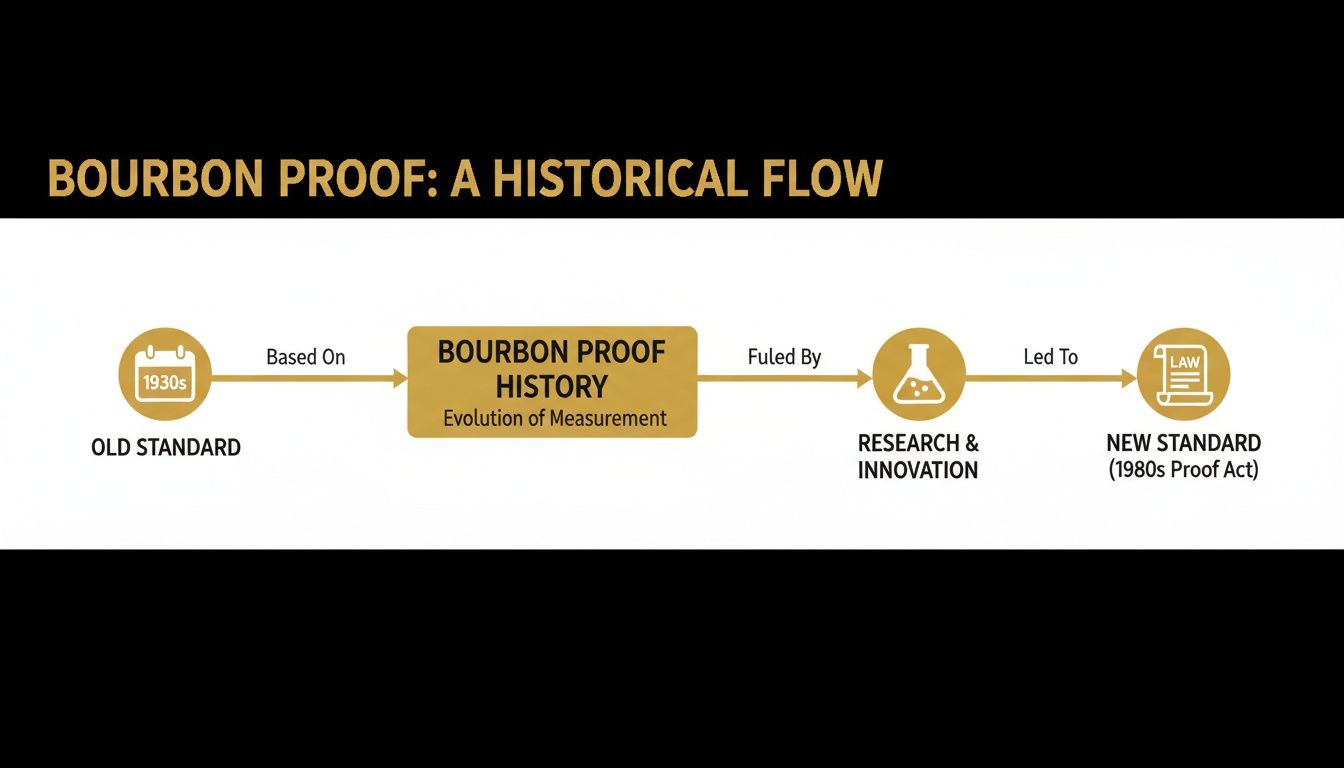
You can see a clear path from the early, simpler standards to the more scientifically-backed regulations we see today, all driven by the relentless quest for the perfect flavor profile.
Proof in Practice at Craft Distilleries
What's really interesting is that the science isn't always a straight line. While some early research suggested higher entry proofs could actually decrease flavor extraction, modern distillery experiments have often shown the opposite when it comes to taste. Buffalo Trace, for instance, ran tests and found their sensory panels consistently preferred bourbon that went into the barrel at 125 proof. In the same vein, Four Roses has dialed in its signature style using a medium-high entry proof of 120. You can dive deeper into these fascinating distillery experiments to see how they directly shape the whiskeys we love.
This is an area where American craft distilleries are really making their mark. Many, like Kentucky's New Riff Distilling, have built their entire philosophy around a lower barrel entry proof of 110 for all their whiskeys. They’re betting that this specific proof point creates a richer, more complex bourbon over the long haul, even if it's not the most economical approach.
For anyone new to whiskey, a great way to taste this difference firsthand is to try a New Riff single barrel next to a high-proof release from a brand like Elijah Craig. The impact of proof becomes immediately obvious.
Tip for New Drinkers: Don't just look at the final proof on the bottle. Try to find the distillery's barrel entry proof. That single number tells you a massive amount about the intended style and flavor journey of the bourbon before it ever got to your glass.
Navigating the Different Bourbon Proof Levels
Understanding the science behind proof is one thing, but the real fun begins when you start exploring the different categories on the shelf. The bourbon whiskey proof staring back at you from the bottle is your first, and maybe most important, clue to its character, intensity, and how you might enjoy it best.
Let’s walk through the three main tiers you'll find out there. Think of it like different cuts of a steak or roast levels of coffee beans. One isn't automatically better than another; they're just different expressions of the distiller's art, each suited for different palates and different moments.
Standard Proof: The Approachable Start
Bourbons bottled between 80 and 99 proof are the absolute workhorses of the whiskey world. There's a reason this range is the most common one you'll see—it’s incredibly versatile and welcoming.
If you’re just starting your bourbon journey, this is the perfect place to land. The lower alcohol content means less "heat" on the palate, allowing the core flavors of corn, sweet caramel, and vanilla to really shine through without being overwhelming.
This accessibility makes standard proof bourbon a bartender's best friend. It has enough backbone to stand up to mixers in an Old Fashioned or Whiskey Sour but won't completely take over the drink.
Bottled-in-Bond: The Mark of Quality
When you see "Bottled-in-Bond" on a label, you're looking at a piece of American history—a guarantee of quality backed by the federal government. To earn this designation, a bourbon must be exactly 100 proof (50% ABV), come from a single distillery during a single distilling season, and be aged at least four years in a federally bonded warehouse.
At 100 proof, the flavors become much richer and more defined. It’s a fantastic middle ground, offering more complexity and punch than standard proof but without the raw intensity of cask strength. For a newer drinker ready to take the next step up, Bottled-in-Bond is an excellent choice.
Tip for New Whiskey Drinkers: If you're looking to explore more complex flavors without the intensity of cask strength, Bottled-in-Bond is your best friend. It’s a fantastic and consistent category to explore.
Cask Strength: The Purest Expression
Also known as barrel proof, cask strength bourbon is the real deal—bottled straight from the barrel, completely uncut and unfiltered. Because of this, the proof can vary dramatically, often soaring between 110 and 135+ proof. This is bourbon in its most raw, powerful, and unadulterated form.
For anyone curious about how certain brands, especially sought-after ones, present their unique characteristics at different proof points, the story behind W.L. Weller 12 Year Old bourbon offers fantastic insight.
Cask strength is typically for the seasoned enthusiast who wants to experience the whiskey exactly as the master distiller does in the rickhouse. These bourbons are complex, fiery, and deeply rewarding, delivering an explosion of concentrated flavor. To get the most out of these potent pours, our guide on cask strength bourbon offers some great tips on how to properly taste and appreciate them.
How to Taste High Proof Bourbon Like a Pro
Staring down a glass of cask strength bourbon can feel a little intimidating. Don't worry, it doesn't have to be. With the right game plan, you can sidestep the alcohol heat and unlock the incredibly intense, complex flavors these powerful whiskeys are famous for. This is your toolkit for confidently approaching any high bourbon whiskey proof sample and getting the most out of every single sip.
Your first sip should be a small one—just enough to coat your tongue. This is all about getting your palate used to the high alcohol content before you dive in. A great technique for this is the famous "Kentucky Chew," where you gently swish the bourbon around your mouth for a few seconds. This lets the whiskey hit all your taste buds and preps you for the full flavor bomb that’s about to follow.
The Power of Adding Water
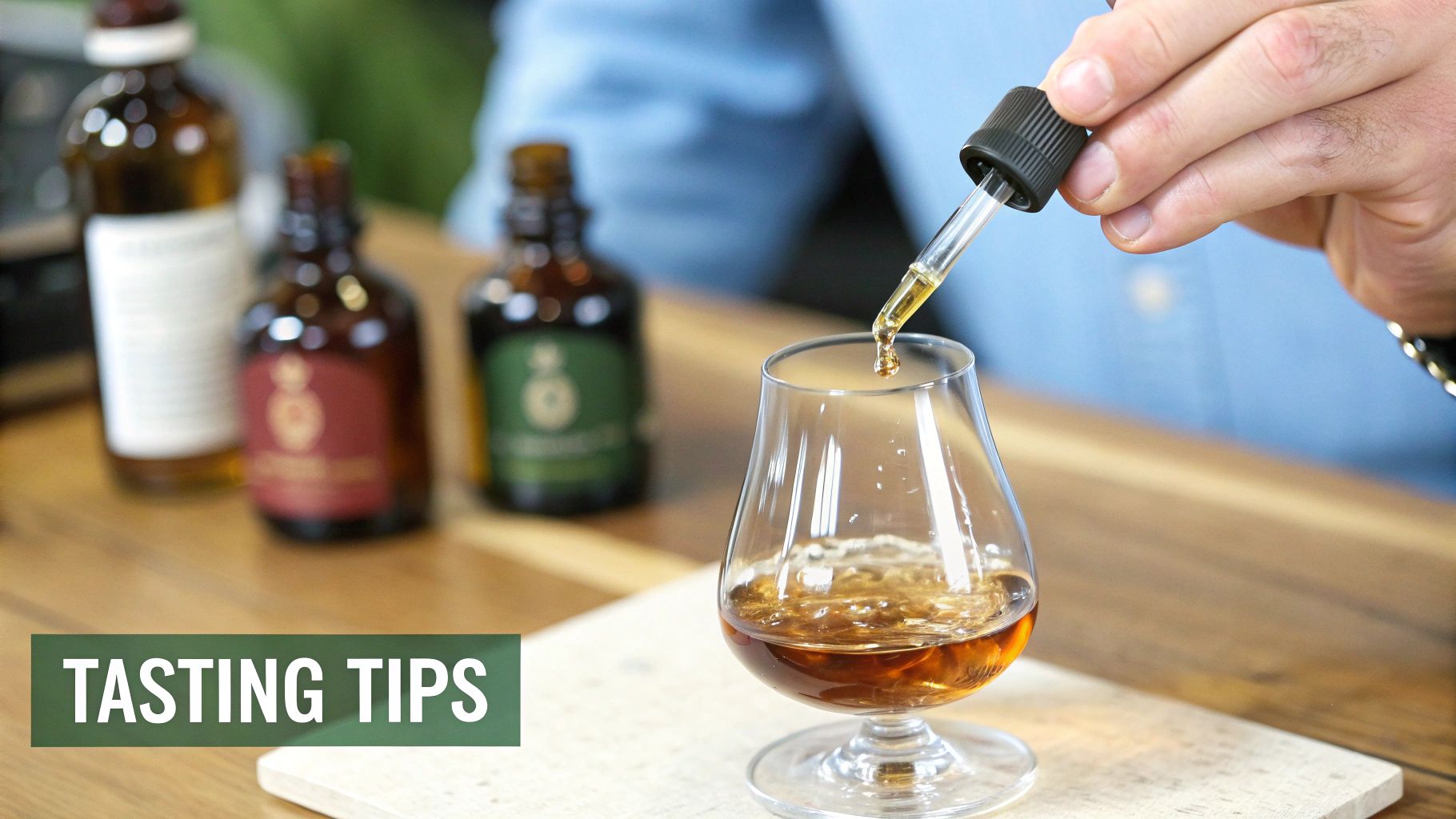
Here it is: the single most important trick in the book for tasting high-proof bourbon. Add a few drops of water. This isn’t about watering down your whiskey; it’s about “opening it up.” By lowering the proof just a touch, you can tame that initial alcohol burn, allowing much more subtle aromas and flavors to step out from the shadows.
Tip for New Drinkers: Don't be afraid to add water to high-proof whiskey! It's what the pros do. This simple step can completely transform the experience from hot and overpowering to rich and flavorful. It's a key skill for any new whiskey fan.
It’s like turning down the volume on the alcohol so you can finally hear the complex music of the whiskey itself. This is where the real fun and personal discovery begins. Try adding just one drop at a time, tasting after each addition, until the bourbon finds that perfect sweet spot for your palate. You'll be amazed at how a whiskey can evolve with just a tiny bit of water.
A Step-by-Step Approach for New Drinkers
For anyone new to the cask strength offerings from American craft whiskey brands, this simple process can make all the difference. It turns what could be an intimidating pour into an enjoyable exploration. And if you really want to build a solid foundation, our complete guide on how to taste whiskey provides even more detailed steps and techniques.
- Observe: Before you even think about sipping, give the whiskey a gentle swirl in the glass. Check out its color and notice the "legs"—the oily streaks running down the side. Thicker, slower legs often point to a higher proof.
- Nose (Carefully): Bring the glass toward your nose slowly, and it helps to keep your mouth slightly open. High-proof spirits can singe your nostrils, so don't bury your nose in the glass. Take note of those first aromas.
- Take a Small Sip: Take your first tiny sip neat. This is how you experience the whiskey exactly as the distiller intended. Pay attention to the mouthfeel and the first wave of flavors.
- Add Water and Repeat: Now, add a single drop of room-temperature water. Swirl the glass again, then nose and taste it. Keep doing this, paying close attention to how the aroma and palate change with each little addition.
- Find Your Proof: Stop when the bourbon tastes best to you. There's no right or wrong here—the whole point is to find the expression of that whiskey you enjoy the most.
Using Proof to Sharpen Your Blind Tasting Skills
Ready to put your palate to the test? Blind tasting is one of the best ways to sharpen your senses, ditch any brand bias, and focus on what’s really going on inside the glass. And one of the biggest clues you have at your disposal is the bourbon whiskey proof.
With a bit of practice, you can learn to use the strength of a whiskey to your advantage, helping you make smarter, more confident guesses. It's less about having a "golden palate" and more about learning to pick up on the specific sensory cues the bourbon is giving you.
Decoding the Sensory Cues
One of the first things you'll notice with a higher-proof bourbon is that distinct, warming sensation that spreads through your chest—what enthusiasts affectionately call a "Kentucky hug." For anyone new to whiskey, the real trick is learning to tell the difference between this alcoholic warmth and the spicy kick you get from a high-rye mash bill. They can feel similar at first.
The warmth from high proof is usually a broad, lingering heat. In contrast, the spice from rye grain feels more like a localized, peppery tingle right on the tip and sides of your tongue. Nailing down the difference between these two sensations is a huge leap forward in your blind tasting game.
But before you even take a sip, there’s another clue waiting for you. Give the glass a gentle swirl and watch the "legs" (or "tears") as they run down the side.
- Higher Proof: Tends to create thicker, slower-moving legs because of the higher viscosity and alcohol content.
- Lower Proof: Usually leaves thinner, faster-moving legs that disappear more quickly.
It's not a perfect science, but watching the legs can give you a solid first impression of the bourbon’s strength before it ever hits your lips.
Practical Tips for Your Next Blind Tasting
If you're just getting started, try this: set up a flight with bourbons at different, known proof points. Grab an 80-proofer, a 100-proof Bottled-in-Bond, and a cask strength expression. Tasting them side-by-side helps you build a mental library of what each proof level feels like on your palate.
Blind tasting is the ultimate equalizer in the whiskey world. It strips away the marketing, the price tag, and the fancy bottle, forcing you to trust your own senses. It’s here that the true character of a bourbon, heavily influenced by its proof, really gets to shine.
Many American craft whiskey brands offer incredible single barrel selections at barrel proof, giving you a pure, undiluted look at their work. Tossing a bottle from a distillery like New Riff or Frey Ranch into your next blind tasting is a fantastic way to challenge your palate. Over time, you'll discover that proof is one of the most reliable anchors you have for figuring out what makes a whiskey tick.
Answering Your Questions About Bourbon Proof
As you dive deeper into the world of bourbon, a lot of questions pop up, especially around the idea of "proof." It can seem a bit confusing at first, but it's pretty straightforward once you get the hang of it. Let's tackle some of the most common questions to get you feeling like a pro.
What Is the Highest Legal Proof for Bourbon?
This one's a bit of a trick question. While there’s no official cap on how high the proof can be in the bottle, the production process itself is tightly regulated. By law, bourbon can't be distilled any higher than 160 proof (that's 80% alcohol by volume). Then, when it's time for aging, it can't go into a brand new, charred oak barrel at more than 125 proof (62.5% ABV).
Does a Higher Proof Mean Better Bourbon?
Not at all. Think of it this way: a higher bourbon whiskey proof delivers a more concentrated, intense flavor experience, which many seasoned drinkers absolutely chase after. But on the other hand, a lower-proof bourbon can be more delicate and approachable, letting softer, sweeter notes shine through. "Best" is purely in the eye of the beholder—or rather, on the palate of the taster.
Tip for New Drinkers: If you're just starting out, grabbing a 90-proof bourbon from a great craft distillery like Frey Ranch is a fantastic move. It gives you a beautifully balanced flavor profile to build your palate on before you cannonball into the deep end with cask strength offerings.
Why Do So Many Bourbons Have the Same Proof?
If you see a shelf full of bottles at exactly 100 proof, it's no accident. That's the magic number for any bourbon labeled "Bottled-in-Bond," a historic quality-control designation that acts as a guarantee of authenticity. Other popular numbers you'll see—like 80, 86, and 90 proof—are simply tried-and-true targets that distilleries have found hit a real sweet spot between flavor, smoothness, and drinkability.
Can You Drink Cask Strength Bourbon Neat?
You sure can, and many enthusiasts wouldn't have it any other way. Drinking it neat allows you to experience the whiskey exactly as it came out of the barrel, in its most raw and powerful form.
But there's absolutely no shame in adding a few drops of water. A little dilution can tame the alcoholic "burn" and actually open up the whiskey, revealing subtle, complex aromas and flavors that were hiding behind the heat. The only rule is to experiment and find what you love.
Ready to put your newfound knowledge to the test? With Blind Barrels, you can explore incredible American craft whiskeys without any brand bias getting in the way. Our blind tasting kits are the perfect way to discover how different proof levels affect your experience and figure out what you truly enjoy. Join the club and start your tasting adventure today!